

In the United States, you usually cannot drive your own car through a traditional dark ride. Most dark rides use small ride vehicles that stay on a track, follow a fixed route, and operate under the amusement park’s control.
A few attractions are built as true drive-through experiences. These may include haunted trails, holiday light displays, safari parks, and special event routes. They are not usually traditional dark rides, even if they take place in the dark.
Always follow the attraction’s posted rules. If the operator does not clearly say that personal vehicles are allowed, do not enter with your car.
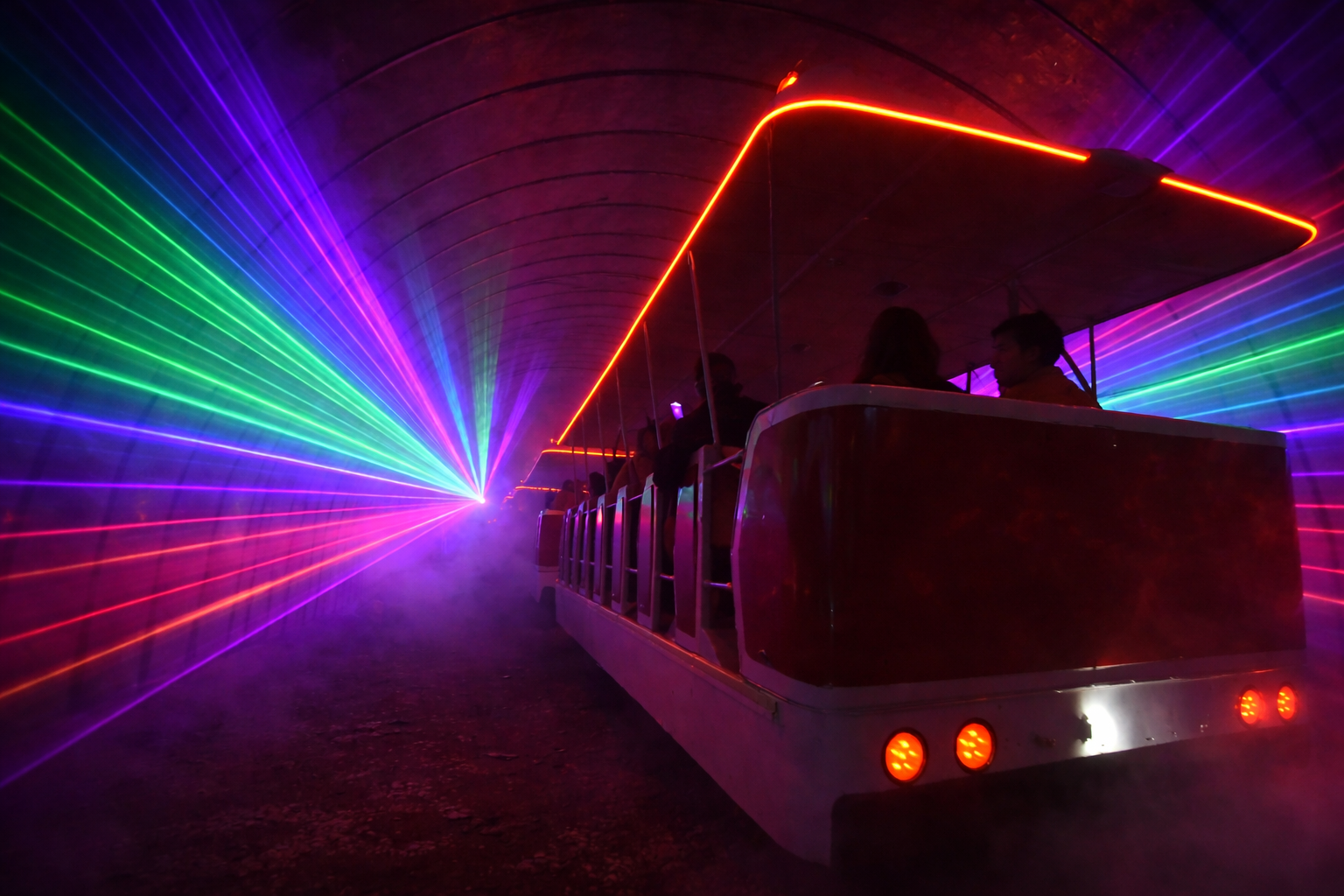
What Is a Dark Ride?
A dark ride is an indoor or covered amusement ride that takes passengers through a series of dimly lit scenes. The ride may use figures, projection screens, sound, special effects, and moving sets to tell a story.
Common dark ride vehicles include:
- Small cars that move on a track
- Boats that travel through indoor water channels
- Trams or multi-car trains
- Trackless ride vehicles guided by sensors
- Moving platforms or suspended vehicles
The word “car” can cause confusion. A dark ride may have a vehicle that looks like a car, but it is part of the ride system. It is not a regular passenger vehicle that guests can operate.
Traditional dark rides are designed for controlled movement. The operator controls the route, speed, spacing, and stopping points. This helps the attraction manage guests, effects, staff, and emergency procedures.
A personal vehicle does not normally meet those requirements. It may be too large, too tall, too wide, or too heavy for the ride path.

Why Can’t You Take Your Own Car Into a Traditional Dark Ride?
The main reason is that a dark ride is built around a specific vehicle system. The ride path, loading area, safety restraints, sensors, and emergency plans are all designed for the vehicles supplied by the operator.
The ride path may not fit a normal car
Dark rides often use narrow paths, low ceilings, sharp turns, ramps, and small loading areas. A standard American car or SUV may not fit.
Even if the vehicle fits through the entrance, it may not clear every turn or special effect inside the ride. A vehicle that is too wide or too tall could damage the attraction or become stuck.
The ride system controls the vehicle
Many dark rides use a track, guide rail, conveyor, or floor sensor. The ride vehicle must connect with that system.
A personal car cannot usually:
- Lock onto the track
- Communicate with the ride controls
- Maintain the required distance from other vehicles
- Stop at the correct emergency points
- Work with the ride’s restraint or dispatch system
Some modern dark rides use trackless vehicles. That does not mean guests can drive through them. Trackless vehicles still use programmed controls, sensors, and operator supervision.
The attraction needs controlled spacing
Dark rides send vehicles out at set intervals. This spacing prevents one vehicle from hitting another and gives staff time to respond if a ride stops.
A personal car could create a dangerous gap or close the gap too quickly. Drivers may also react differently to darkness, fog, loud sounds, flashing lights, or sudden effects.
The ride may not be licensed for personal vehicles
An amusement attraction is usually approved and operated for a specific design. That design includes the vehicle type and operating method.
Allowing private cars could change the attraction’s safety conditions. It could also affect insurance, staff training, emergency access, and local operating requirements.
The exact rules vary by state, city, attraction, and event. The operator’s instructions control.

Are There Dark Attractions You Can Drive Through?
Yes. Some U.S. attractions let visitors use their own cars, but these are usually called drive-through attractions, not traditional dark rides.
Examples may include:
- Drive-through haunted events
- Halloween light displays
- Christmas light shows
- Wildlife or safari parks
- Large outdoor art installations
- Promotional or seasonal events
- Temporary routes at fairgrounds or speedways
These attractions normally use roads, paved paths, or open outdoor routes. They do not use the same enclosed ride system as a theme park dark ride.
A drive-through event may still have darkness, music, actors, lights, smoke, or themed scenes. The key difference is that the visitor remains in a road vehicle and follows instructions from event staff.
Check the vehicle rules before you go
A drive-through event may allow only certain types of vehicles. Rules can vary based on the event.
Check whether the attraction allows:
- Sedans
- Pickup trucks
- SUVs
- Vans
- Convertibles
- Motorcycles
- Recreational vehicles
- Limousines
- Commercial vehicles
Some events limit vehicle height or length. Others may ban motorcycles because of low visibility, uneven surfaces, actors, or special effects.
The event may also require the driver to keep windows closed. This can matter if the attraction uses fog, water, foam, scents, or airborne effects.

How Can You Tell Whether Your Car Is Allowed?
Look for clear wording from the attraction itself. Good signs include phrases such as:
- “Drive-through attraction”
- “Stay in your vehicle”
- “Use your own car”
- “One vehicle per ticket”
- “Cars, trucks, and SUVs welcome”
- “Remain in your vehicle during the experience”
Do not rely only on photos or customer comments. A picture of a car near a dark attraction does not prove that guests may drive their own cars inside.
Before visiting, check the attraction’s official website or call the ticket office. Ask these direct questions:
- May guests use their own vehicles?
- Is the route indoors, outdoors, or both?
- Are there vehicle height or length limits?
- Are trucks, SUVs, motorcycles, or vans allowed?
- Must passengers keep windows closed?
- Are headlights required?
- Is the event suitable for children or pets?
- What happens if the vehicle breaks down?
- Does the ticket cover the car or each passenger?
- Can guests leave the vehicle during the route?
If staff members give different answers, ask for the written policy. Save the event’s instructions on your phone before you arrive.
Signs that your car is not allowed
Your car is probably not allowed if the attraction:
- Provides a vehicle at the loading platform
- Uses a lap bar or shoulder restraint
- Has a track or guide rail
- Requires guests to board in groups
- Has a ride operator at every dispatch point
- Describes the experience as a “ride” rather than a drive-through
- Lists a minimum or maximum height for riders but no vehicle rules
When in doubt, park in the normal guest lot and ask an employee. Do not attempt to follow a ride vehicle into a restricted area.

What Should You Do Before Driving Through a Drive-Through Attraction?
Prepare the vehicle and passengers before entering. Most problems are easier to prevent than to solve inside the route.
1. Read the attraction rules
Review the official instructions before you arrive. Pay close attention to:
- Speed limits
- Headlight rules
- Window rules
- Vehicle size limits
- Parking brake instructions
- Passenger restrictions
- Photography rules
- Emergency procedures
Some attractions require drivers to stay in low gear or maintain a very low speed. Others may direct drivers to turn headlights off, use parking lights, or keep them on. Follow the event’s rule, even if it differs from normal driving habits.
2. Choose a suitable driver
The driver should be alert and comfortable driving slowly in dark areas. Avoid assigning the task to someone who is tired, impaired, distracted, or anxious about the effects.
Never use a phone while moving through the attraction. Set navigation, music, and climate controls before entering.
3. Secure passengers and loose items
Everyone should remain seated and use the vehicle’s seat belts. Secure bags, drinks, cameras, and other loose items.
Children should use the correct child restraint for their age, height, and weight. Do not allow children to sit in laps or move between seats while the car is moving.
4. Check visibility
Clean the windshield and mirrors before entering. Turn on the defroster if the glass may fog.
Darkness, flashing lights, smoke, and rain can reduce visibility. If you cannot see the route clearly, slow down and follow staff instructions. Do not stop in a travel lane unless an employee tells you to stop.
5. Keep a safe gap
Follow the car ahead at the distance set by the operator. Do not tailgate, pass, or stop to watch a scene.
The attraction may use actors, props, animals, or special effects near the route. Stay inside the vehicle and keep doors locked if the operator recommends it.

Can You Drive Through a Haunted House?
Usually, no. A normal haunted house is a walk-through attraction or a ride with operator-controlled vehicles. Guests typically cannot drive their own cars through it.
Some Halloween events use the phrase “drive-through haunted house.” In that case, the attraction is built for cars and usually takes place outdoors or along a temporary route.
Read the event description carefully. These terms do not always mean the same thing:
| Description | Can you usually use your own car? | What it normally means |
|---|---|---|
| Traditional dark ride | No | Ride in an attraction vehicle |
| Walk-through haunted house | No | Walk through the scenes |
| Drive-through haunted event | Often yes | Stay in your own vehicle |
| Haunted hayride | No | Ride on a wagon or truck supplied by the event |
| Safari drive-through | Often yes | Drive on a controlled outdoor route |
| Immersive car experience | Maybe | Check the operator’s specific rules |
The name alone is not enough. Confirm the vehicle policy before buying a ticket.

Is It Safe to Drive in Complete Darkness?
A properly managed drive-through attraction should give drivers enough guidance to move safely. Still, the conditions may be more difficult than normal road driving.
The route may include:
- Very low light
- Flashing lights
- Fog or mist
- Loud sounds
- Sudden movement near the vehicle
- Uneven pavement
- Tight turns
- Pedestrians or performers
- Temporary signs and barriers
Drive slowly and keep your attention on the route. Do not stare at displays while the car is moving.
If a special effect makes it hard to see, reduce speed. If you cannot drive safely, stop only when you can do so without blocking the route, or follow the attraction’s emergency instructions.
When you should not enter
Consider skipping the drive-through event if:
- The driver has a condition made worse by flashing lights
- Someone in the vehicle is highly sensitive to loud sounds
- A passenger may need to exit quickly
- The car has poor visibility or mechanical problems
- Severe weather affects the route
- The operator says the event is not suitable for your group
People with seizure disorders, severe light sensitivity, breathing conditions, or strong reactions to smoke and fog should review the event warnings and speak with a health professional if needed. Attraction staff cannot provide personal medical advice.

What Happens If Your Car Breaks Down Inside?
If your car stops working, stay calm and follow the attraction’s instructions. Do not get out unless staff direct you to do so.
In general:
- Turn on the hazard lights if you can do so safely.
- Keep your seat belt fastened.
- Tell staff what happened.
- Keep doors and windows closed unless instructed otherwise.
- Do not try to push or repair the vehicle on the route.
- Follow directions from event staff or emergency personnel.
The event may have a recovery vehicle or a designated procedure. The exact response depends on the site.
Before entering, check whether roadside assistance is available. Some events may tow the vehicle out, while others may require the driver to arrange help after staff move passengers to a safe location.

Common Mistakes to Avoid
The most common mistake is confusing a ride vehicle with a personal vehicle attraction. A dark ride may look like a car ride, but the vehicles are part of the equipment.
Avoid these mistakes:
- Driving into a ride entrance without permission
- Assuming an SUV fits because a small car fits
- Ignoring a height or length limit
- Turning off headlights when staff require them
- Using high beams around other drivers
- Stopping to take photos
- Opening doors for performers or actors
- Letting children stand or move around
- Driving after consuming alcohol or cannabis
- Following another car through a restricted gate
- Relying on old event information
- Assuming last year’s rules still apply
If the attraction’s website is unclear, contact the operator before you travel. A short call can prevent a wasted trip and a dangerous mistake.

Traditional Dark Ride vs. Drive-Through Attraction
This comparison shows the practical difference between the two formats.
| Feature | Traditional dark ride | Drive-through attraction |
|---|---|---|
| Vehicle | Supplied by the operator | Usually your own vehicle |
| Route | Indoor or enclosed | Usually outdoor or open-air |
| Driver | No guest driving | Guest drives |
| Movement | Controlled by ride system or operator | Controlled by the driver |
| Seating | Assigned ride seats | Vehicle seats and seat belts |
| Route control | Track, guide, sensors, or programmed system | Signs, staff, barriers, and road layout |
| Typical examples | Story rides, boat rides, track rides | Light shows, safari parks, haunted routes |
| Main rule source | Ride operator | Event operator and posted traffic rules |
The biggest difference is who controls the vehicle. In a traditional dark ride, the attraction controls movement. In a drive-through event, the guest controls the car under the attraction’s rules.

Frequently Asked Questions
Can I drive my car through a Disney or Universal dark ride?
Generally, no. Major theme parks use attraction vehicles for their dark rides. Guests normally park their cars and board the ride vehicle provided by the park.
Some parks may offer separate drive-through events or vehicle-based experiences. Check the specific attraction’s current rules rather than assuming all rides at the park follow the same format.
Can I drive through a dark ride if I have a disability?
Usually, you cannot use your personal car in a traditional dark ride. However, the attraction may offer accessible ride vehicles, transfer procedures, wheelchair spaces, or other accommodations.
Contact the park’s accessibility team before your visit. Explain the specific access need and ask what options are available for that attraction.
Can I use a motorcycle at a drive-through light show?
It depends on the event. Some drive-through shows allow motorcycles, while others ban them because of visibility, weather, road design, or safety concerns.
Check the official rules before buying a ticket. Do not assume that a motorcycle follows the same rules as a passenger car.
Do I need to keep my windows closed?
Many drive-through attractions require closed windows, especially when they use fog, water, smoke, actors, or airborne effects. Others may permit open windows.
Follow the operator’s instructions. Keeping windows closed may also help protect passengers from sudden effects and keep children or pets inside the vehicle.
Can I leave my car during a drive-through attraction?
Usually, no. The route may not have safe space for pedestrians, and other vehicles may continue moving.
Leave the vehicle only if staff direct you to do so or there is an emergency. If you need a break, restroom visit, medical help, or passenger adjustment, ask staff where you may safely stop.

Key Takeaways
- You generally cannot drive your own car through a traditional dark ride.
- Dark rides use operator-controlled vehicles designed for the attraction.
- Drive-through haunted events, light shows, and safari parks may allow personal cars.
- Check the official vehicle rules before you visit.
- Follow speed, window, headlight, and passenger instructions.
- Do not enter a restricted ride area without clear permission.
- If the rules are unclear, contact the attraction directly.
Conclusion
A traditional dark ride is not a place for your personal car. Its vehicle, route, controls, and safety systems are designed to work together.
You may drive your own car through a separate drive-through attraction, but only when the operator clearly allows it. Before you go, confirm the vehicle limits, route rules, lighting requirements, and emergency instructions.
The safest rule is simple: if the attraction does not clearly say “drive-through,” park your car and use the vehicle provided by the operator.
