

Introduction
Yes, rotating car seats can be safe in the United States when they meet federal standards, fit the child and vehicle, and are used exactly as the manufacturer directs. The rotating feature itself does not make a seat automatically safer or less safe.
A rotating car seat has a base or shell that turns, often toward the vehicle door. This can make it easier to place a child in the seat and tighten the harness. But the seat still must be installed correctly, locked in the proper travel position, and used on every trip.
The key question is not only, “Does it rotate?” Ask instead: Is this specific seat approved for my child, my vehicle, and the direction of travel I plan to use?

What Is a Rotating Car Seat?
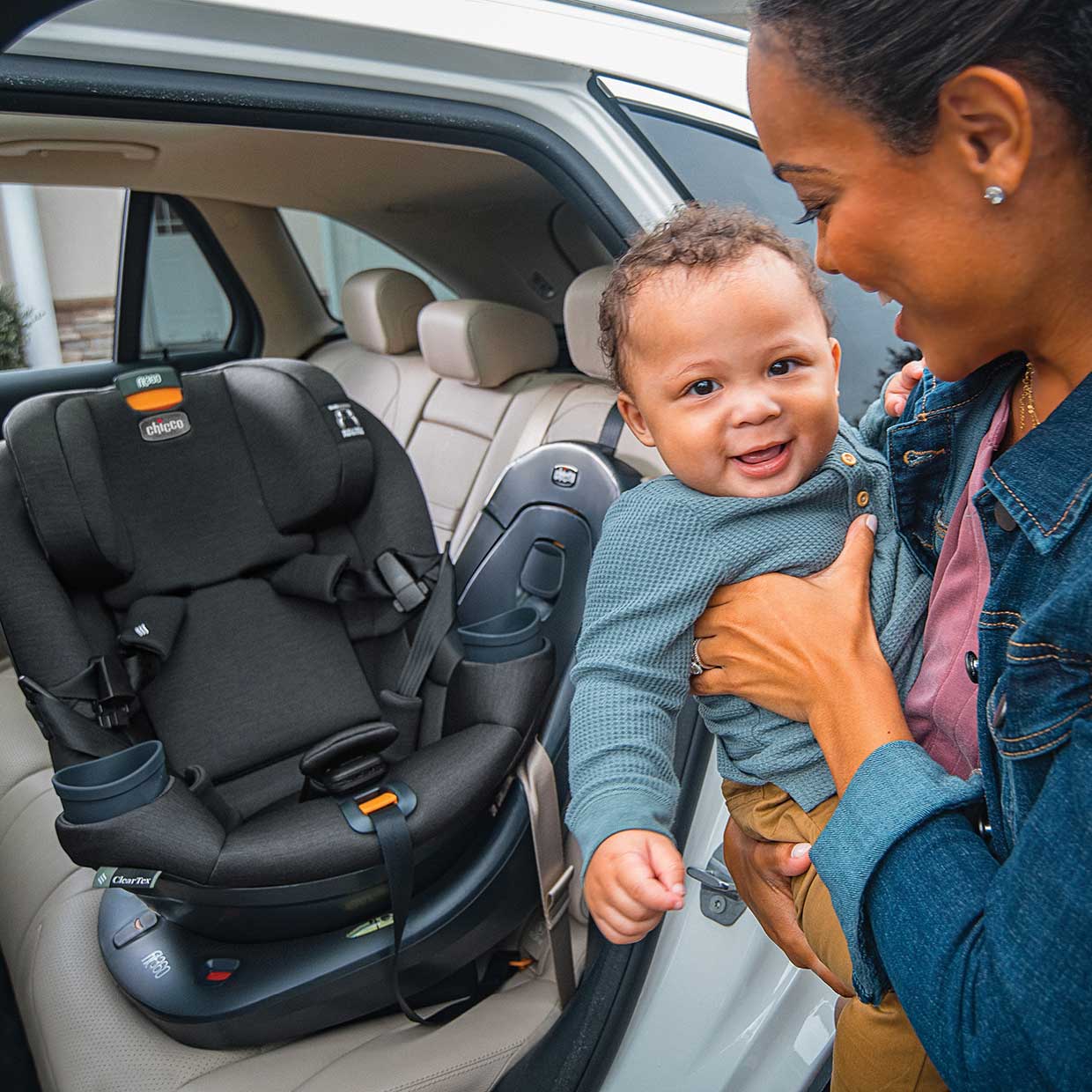
A rotating car seat uses a pivoting mechanism to turn the child seat on its base. Many models rotate toward the door for loading. Some can turn from rear-facing to a more accessible side position.
Most must face forward or rearward, as allowed by the manual, before the vehicle moves.

This design may help caregivers:
- Lift a child into the seat with less twisting.
- See the harness more clearly.
- Reach the buckle and straps.
- Use the seat in a small or crowded parking space.
- Reduce some strain on the back, hips, or shoulders.
A rotating seat is not the same as a booster with a swivel cushion. It is a child restraint with a built-in turning system. The base, lock, release handle, rotation path, and travel position all matter.
In the U.S., a child restraint sold for road use must meet applicable Federal Motor Vehicle Safety Standard No. 213, known as FMVSS 213. The National Highway Traffic Safety Administration (NHTSA) sets and enforces federal motor vehicle safety rules. Parents should still check the seat label, manual, recalls, and fit. Federal compliance does not mean every seat fits every child or vehicle equally well.

Are Rotating Car Seats as Safe as Fixed Car Seats?
A rotating car seat can provide protection comparable to a fixed car seat when both are installed and used correctly. However, there is not enough independent evidence to say that rotating seats are safer than traditional fixed seats in every crash.
The turning feature mainly improves access. It does not replace the parts that protect a child in a crash:
- A properly fitted five-point harness.
- Correct rear-facing or forward-facing use.
- A stable installation.
- A seat that fits the vehicle.
- A child who stays within the seat’s height and weight limits.
- Correct use on every ride.
A rotating seat also has more moving parts than a fixed seat. That creates more opportunities for misuse. For example, a caregiver might forget to return the seat to the locked travel position or might misunderstand when rotation is allowed.
This leads to a practical conclusion: a simple seat that is used correctly may be safer for a family than a complex seat that is often used incorrectly. Ease of use can be a real safety benefit, but only when the feature works as intended.
The insurance Institute for Highway Safety (IIHS) evaluates child seat ease-of-use features, but its ratings do not replace federal compliance tests or a hands-on installation check. NHTSA and the American Academy of Pediatrics (AAP) focus on correct restraint use, appropriate child fit, and rear-facing travel for as long as the seat allows.


How Rotating Seats May Improve Real-World Safety
The main safety advantage of a rotating car seat may be better daily use, not a special crash shield.
A caregiver who can turn the seat toward the door may find it easier to:
- Place the child’s back against the seat.
- Position the child’s hips correctly.
- Set the shoulder straps at the right height.
- Remove slack from the harness.
- Place the chest clip at armpit level.
- Check that the seat is locked before driving.
A snug harness helps keep the child in the safest position during a crash. If a rotating design makes correct harness use easier, it may help reduce common errors.
The feature may also help caregivers with limited mobility. Less bending and twisting can make loading more manageable. That matters because a seat that is too hard to use may lead to loose straps, poor positioning, or skipped checks.
Still, these are practical benefits. They should not be confused with proof that the rotating mechanism lowers injury risk compared with a fixed seat. Strong claims about superior crash protection need direct, independent evidence for the exact model and use condition.

When Can a Rotating Car Seat Be Dangerous?
A rotating seat can become unsafe when the child seat is not in the required travel position. The most serious mistake is driving while the seat is turned toward the door or left between locked positions.
Before every trip, confirm that:
- The seat faces the correct direction.
- The rotation lock is fully engaged.
- The base is attached as the manual shows.
- The harness is snug.
- The chest clip is at armpit level.
- The harness straps are not twisted.
- The child’s back and bottom are against the seat.
- The seat has not passed its expiration date.
- No recall affects the seat or base.
Do not add aftermarket straps, cushions, toys, head supports, or covers unless the manufacturer permits them. Extra items can change how the harness holds the child. A thick coat can also create dangerous slack. Use thin clothing and place a blanket over the harness after buckling, if needed.
Never assume the seat is safe because it clicks. A click may indicate that one part latched while another part remains unlocked. Read the manual and look for the specific visual or audible confirmation required by the manufacturer.
Rear-Facing and Forward-Facing Use
The safest direction depends on the child’s age, size, seat limits, and developmental needs. The AAP recommends that children ride rear-facing as long as possible, until they reach the highest height or weight allowed by their car seat.
Rear-facing seats support the head, neck, and spine in a frontal crash. This is especially important for infants and young toddlers. A child’s legs touching the vehicle seat does not, by itself, mean the child is too tall to ride rear-facing.
Once a child outgrows the rear-facing limits, the child can usually use the seat forward-facing with the harness and top tether, if the seat allows it. The top tether can help limit forward movement of a forward-facing child restraint. Follow the car seat and vehicle manuals for the correct tether location.
A rotating feature does not change these basic rules. Rotation must not be used as a reason to turn a child forward-facing early.


A simple use check
Before choosing a position, confirm:
| Question | What to check |
|---|---|
| Child’s age and size | The seat’s rear-facing and forward-facing limits |
| Seat direction | The manufacturer’s approved travel positions |
| Harness fit | Straps at the correct height and snug against the child |
| Vehicle position | The seat fits without blocking safe use of other seats |
| Tether use | Required or recommended for forward-facing installation |
| Rotation lock | Fully locked before the vehicle moves |

Installation: The Most Important Safety Step
Correct installation matters more than whether a seat rotates. Use both manuals: the car seat manual and the vehicle owner’s manual.
1. Choose an approved seating position
Check whether the seat may be installed in the center, outboard position, or a specific row. Some vehicles have narrow seats, raised surfaces, unusual seat belts, or fixed head restraints that affect fit.
Do not place a rear-facing child restraint in front of an active air bag. A rear-facing seat must be in the back seat unless the vehicle manual and local rules clearly allow another arrangement with the air bag disabled.
2. Select the correct installation method
A seat may use the vehicle seat belt, lower anchors, or both only when the manufacturer permits it. Do not assume that using every available attachment creates a stronger installation.
Lower anchors have child-weight limits. When the child and seat exceed that limit, the manual may require a seat belt installation. The vehicle manual may provide a separate limit.
3. Remove slack
Route the belt or lower-anchor strap through the correct path. Push down on the seat as directed, then remove slack. The belt should be locked according to the vehicle and car seat instructions.
4. Test the installed base
At the belt path, try to move the installed seat from side to side and front to back. NHTSA advises that movement should not exceed 1 inch in any direction when checked at the belt path.
Do not judge the whole seat by pushing on the rotating shell. The base may move differently from the belt path. Check the point and method shown in the manual.
5. Check the rotation lock
Turn the seat only when the vehicle is parked. Return it to the required rear-facing or forward-facing position. Confirm the lock before each trip.
If the base moves more than allowed, does not lock, blocks the seat belt, or creates a poor fit, stop using that installation until the problem is corrected.

Rotating Car Seat Safety Compared With a Traditional Seat
A fixed seat is often lighter, simpler, and easier to move between vehicles. A rotating seat may be easier to load but can be heavier and more costly. Neither type is automatically safer in every family’s situation.
| Factor | Rotating car seat | Traditional fixed car seat |
|---|---|---|
| Loading the child | Often easier from the door | May require more reaching |
| Moving between cars | Usually less convenient | Often easier, depending on weight |
| Moving parts | More locks and mechanisms | Fewer moving parts |
| Installation | Can be more complex | Often simpler, but varies by model |
| Space needs | May need room to turn | Usually needs only travel space |
| Best fit | Families who value access and can follow the lock steps | Families who want a simpler setup |
The best choice is the one that fits the child, vehicle, caregiver, and daily routine. A rotating seat may be useful for a caregiver with back pain or limited reach. A fixed seat may be better for a family that frequently switches vehicles or wants the lightest setup.
Do not buy based only on the rotation feature. Check the seat’s dimensions, weight, rear-facing limits, forward-facing limits, base design, expiration date, and return policy.


Common Mistakes to Avoid
Driving with the seat turned
Rotation is for loading and unloading unless the manual specifically allows another use. The seat must be in its approved travel position before driving.
Forgetting the base lock
A seat may appear straight while still being unlocked. Make the lock check part of every buckle routine.
Installing with both anchors and the seat belt without permission
More attachment points do not always mean a safer installation. Use the method approved by the manual.
Using a thick coat under the harness
Bulky clothing can compress in a crash and leave the harness too loose. Buckle the child in normal indoor clothing and add warmth over the straps.
Adding unapproved padding
Aftermarket inserts can affect harness fit and crash performance. Use only parts supplied with the seat or approved in its instructions.
Ignoring the top tether
For forward-facing use, the top tether is often required or strongly recommended. It can reduce forward movement. Follow both manuals for the correct anchor.
Moving the seat without checking the new car
A seat that fits one vehicle may not fit another. Recheck the belt path, recline angle, door clearance, and rotation space after every move.

How to Check a Rotating Car Seat Before Buying
Use this short checklist in a store or at home:
- Read the full manual before purchase. Look for travel-position rules, installation methods, and rotation limits.
- Measure the vehicle space. Check front-to-back depth, door clearance, and space needed for the seat to turn.
- Confirm child limits. Make sure the rear-facing height and weight limits support your plan.
- Check the harness. It should adjust smoothly and fit your child without rubbing or leaving slack.
- Test the lock. The seat should clearly show when it is in a safe travel position.
- Review the weight. A heavy seat may be difficult to move or install correctly.
- Check recalls. Search the model and manufacture date at NHTSA.gov/recalls.
- Use a certified inspection location. NHTSA’s child passenger safety locator can help you find a trained Child Passenger Safety Technician.
A technician can help identify installation problems, but they cannot approve a seat for a use that the manufacturer does not allow. Keep the manual with the seat and follow the latest instructions from the manufacturer.

What to Do If the Seat Does Not Fit
Do not force a poor installation. First, remove the seat and start again with the vehicle and car seat manuals open.
Check these issues in order:
- Is the seat belt routed through the correct path?
- Is the belt locked?
- Is the base sitting flat on the vehicle seat?
- Is the vehicle head restraint blocking the shell?
- Is the recline angle correct?
- Is the seat contacting the vehicle seat in an unapproved way?
- Is the rotation space blocked by a door, front seat, or center console?
- Is the child seat attached to the correct base?
If the seat still moves too much or will not lock, use another approved seating position or another compatible seat. Contact the manufacturer for model-specific help. A local Child Passenger Safety Technician can also inspect the setup.
Do not use a seat with a cracked shell, damaged base, missing parts, failed lock, frayed strap, or unknown crash history. NHTSA advises replacing a child restraint after a moderate or severe crash. Some manufacturers allow reuse after a minor crash only if all stated conditions are met.

Are Rotating Car Seats Worth It?
A rotating car seat may be worth the added cost and weight if it helps you buckle your child correctly every time. It may also help a caregiver who struggles to reach into a deep vehicle seat.


The added feature may not be worth it if:
- You move the seat between cars often.
- The vehicle has limited space.
- The seat is too heavy for regular installation.
- The rotating lock is hard to understand.
- The seat does not fit the child for the needed rear-facing period.
- A less complex seat is easier for your family to use correctly.
The right decision is practical, not trendy. Choose the seat you can install tightly, use correctly, and maintain for the full period your child needs it.

Frequently Asked Questions
Do rotating car seats meet U.S. safety standards?
They should meet FMVSS 213 if they are legally sold for use in the United States. Check the label and instructions. Federal compliance is a baseline, not a guarantee that the seat will fit every child or vehicle.
Can a rotating car seat rotate while driving?
Usually, no. The seat must be locked in the approved rear-facing or forward-facing travel position before the vehicle moves. Follow the exact manual for the model.
Are rotating car seats safe for newborns?
Some are approved for newborns, while others are not. Check the minimum weight, height, recline position, harness fit, and newborn insert instructions. A newborn’s head should not slump forward, and the harness must fit snugly.
Do rotating car seats need a top tether?
A top tether is commonly required or recommended for forward-facing installation, but rules vary by seat and vehicle. Check both manuals. Do not attach the tether to an unapproved location.
Can I use a rotating car seat in the front seat?
Do not place a rear-facing child seat in front of an active air bag. The back seat is generally safer for children. Follow the vehicle manual and state law for any front-seat use.
How often should I check the seat?
Check the harness and travel-position lock before every trip. Recheck the installation after moving the seat, changing vehicles, adjusting the recline, or reaching a new child weight limit.
Conclusion
Rotating car seats can be safe in the U.S. when they meet federal requirements, fit the child and vehicle, and stay locked in the correct travel position. The rotating feature may make daily harness use easier, but it does not provide automatic extra crash protection.
Before buying, compare the seat’s fit, limits, installation method, weight, and lock system. After buying, read both manuals and consider an inspection by a certified Child Passenger Safety Technician.
The safest next step is simple: check your specific model for recalls, install it according to the manuals, and confirm that the seat cannot move more than 1 inch at the belt path.
