

On U.S. roads, a car spoiler helps manage airflow around the vehicle. Its main job is to reduce unwanted lift or create more downward force, which can improve stability at speed. Some spoilers also make a car look sportier, but appearance is not their only purpose.
A spoiler does not automatically make a car faster. It can add drag, increase fuel use, create wind noise, and provide little benefit during normal city driving. The result depends on the spoiler’s design, its location, the car’s shape, and how fast the car travels.

What Does a Car Spoiler Do?
A car spoiler changes the way air moves over or under the vehicle. It “spoils” a smooth airflow pattern that may cause the car to lift, which is where the name comes from.
As a car moves, air flows around the hood, roof, windows, trunk, and underside. At higher speeds, this airflow can create lift. Lift reduces the force pressing the tires onto the road.
Less tire contact can mean less grip, especially during hard cornering, braking, or quick lane changes.

A properly designed spoiler can:
- Reduce rear lift
- Add stability at higher speeds
- Help the tires maintain contact with the road
- Improve balance between the front and rear of the car
- Direct air away from the rear window or trunk
- Support the cooling needs of some performance cars
A spoiler does not pull the car forward. Instead, it changes aerodynamic force. That change may improve control, but it often comes with extra drag.
Lift, downforce, and drag
Three basic forces help explain how spoilers work:
| Force | Meaning | Possible effect |
|---|---|---|
| Lift | Air force that pushes the car upward | Can reduce tire grip |
| Downforce | Air force that pushes the car downward | Can improve grip at speed |
| Drag | Air resistance that slows the car | Can reduce fuel economy and top speed |
A small factory spoiler may mainly reduce lift. A large racing spoiler may create strong downforce. These are not the same thing.
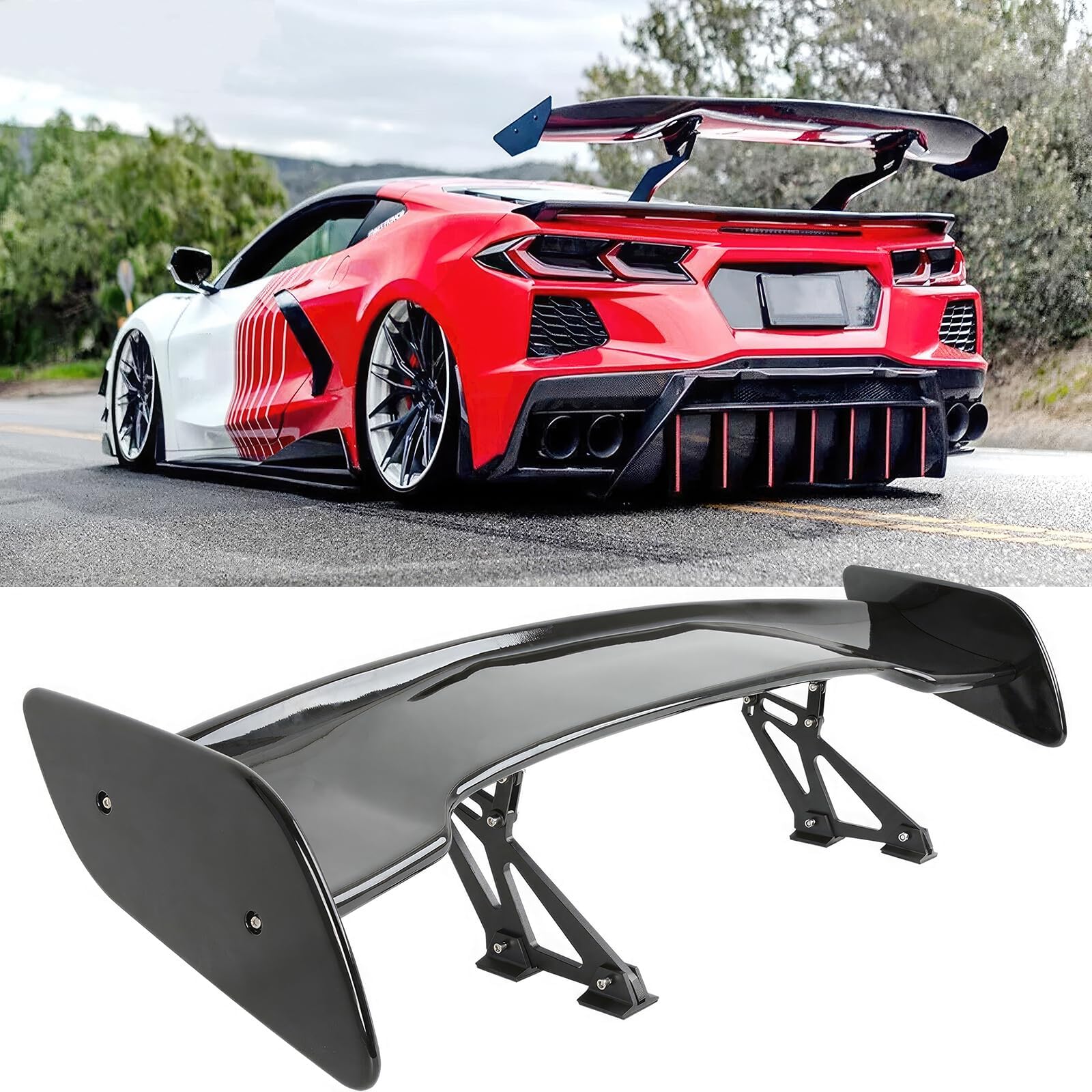
For example, a trunk lip spoiler may smooth airflow at the rear edge of the car. It may reduce turbulence and rear lift without producing a large amount of downforce. A large adjustable wing can create much more downforce, but it can also create much more drag.
Why Do Some Cars Have Rear Spoilers?
Most rear spoilers are used to manage airflow behind the car. The rear of a sedan, coupe, hatchback, or SUV can create a low-pressure area and turbulent air. A spoiler changes how the airflow separates from the body.
The effect varies by body style.
Sedans and coupes
A trunk-mounted spoiler can help control airflow as it leaves the rear deck. On some cars, it reduces rear lift and may make the car feel more settled at highway speeds.
The effect is usually modest on a standard street car. The spoiler must match the car’s body shape. A universal part that does not fit the car’s airflow pattern may add drag without offering a useful handling gain.
Hatchbacks
Hatchbacks often have a roofline that ends more abruptly than a sedan’s trunk. This can cause airflow to separate sharply at the rear. A roof spoiler or hatch spoiler may help guide that flow.
Some hatchback spoilers also help keep air from carrying as much dirt onto the rear glass. This is a secondary benefit, not the main reason every spoiler works.


SUVs and crossovers
A roof spoiler on an SUV or crossover may help manage airflow near the rear hatch. It can also shield the upper part of the rear glass from some direct airflow. However, the large shape and high ride height of an SUV create different aerodynamic needs than those of a low sports car.
Pickup trucks
Pickup trucks use different aerodynamic solutions. A small spoiler or tailgate device may try to control air near the bed and tailgate. The result depends on the truck’s bed design, tailgate position, speed, and other parts already fitted to the vehicle.
A spoiler designed for one truck may not produce the same result on another. Aerodynamics is highly sensitive to body shape.

Does a Spoiler Make a Car Faster?
Usually, no. A spoiler can help a car remain stable, but it does not automatically increase acceleration or top speed.
A spoiler often adds drag. More drag means the engine must work harder to push the car through the air. If the spoiler creates useful downforce, the car may corner more confidently. But that extra grip does not mean the car will accelerate faster in a straight line.
A spoiler may improve lap times when:
- The car travels at high speed
- The car enters and exits corners quickly
- The tires, suspension, and brakes can use the added grip
- The spoiler is designed for that specific vehicle
- The added drag is acceptable
For normal U.S. street driving, the handling gain from an aftermarket spoiler may be small. Speed limits, traffic, road surfaces, and tire grip usually matter more than a decorative spoiler.
Why a spoiler can slow a car down
A spoiler can increase:
- Air resistance
- Engine load
- Fuel use
- Wind noise
- Rear axle load
- The need for suspension and tire balance
A large rear spoiler can also upset the balance of a car if the front and rear aerodynamics do not work together. More rear downforce without enough front grip may make the car feel stable in a straight line but less balanced in a turn.

What Is the Difference Between a Spoiler and a Wing?
A spoiler and a wing are related, but they are not the same part.
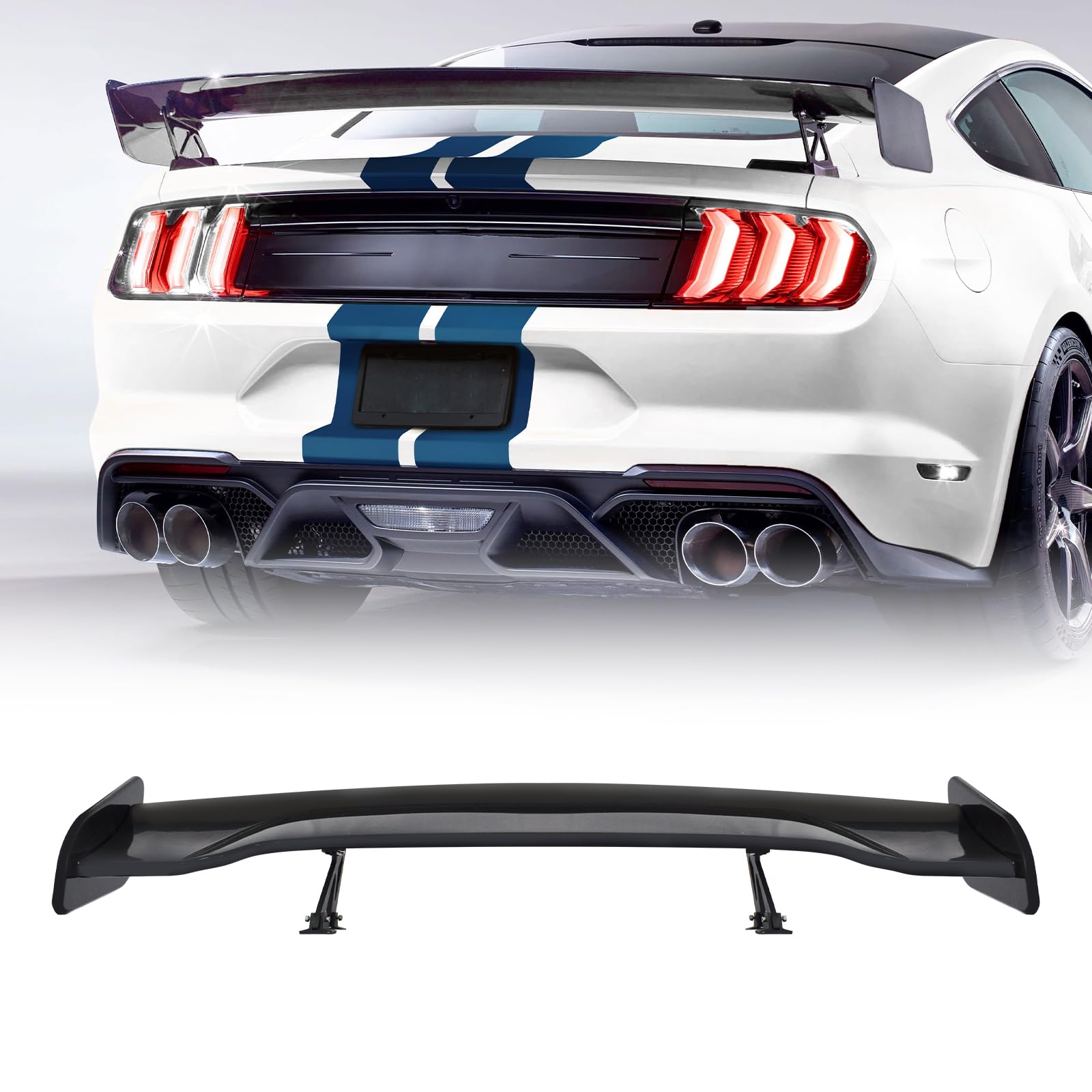
A spoiler usually sits on or near the body and changes the airflow that would otherwise pass over the vehicle. A wing is raised away from the body and uses air moving around both its upper and lower surfaces to create downforce.
| Part | Typical position | Main purpose | Common use |
|---|---|---|---|
| Lip spoiler | Edge of trunk or hatch | Changes airflow with a small profile | Street cars |
| Roof spoiler | Top of a hatch or rear glass | Guides airflow at the rear | Hatchbacks and SUVs |
| Decklid spoiler | Mounted on the trunk | Reduces lift or adds some downforce | Sedans and coupes |
| Wing | Raised on supports | Creates stronger downforce | Track and race cars |
| Front spoiler or air dam | Lower front bumper | Manages air under the front | Performance cars |
| Front splitter | Extends from lower front edge | Helps create front downforce | Track-focused cars |
People often call a wing a spoiler in everyday speech. That is understandable, but the aerodynamic behavior can be very different.
A tall wing usually creates more force than a small decklid spoiler. It also tends to create more drag and may block rear visibility. A wing can require stronger mounting points because the aerodynamic load acts on the supports and the trunk or hatch.


Do Spoilers Improve Handling?
A spoiler can improve handling at speed, but only when it is correctly designed and matched to the rest of the car.
Downforce increases the force pressing the tires into the road. This can improve cornering grip without adding weight to the vehicle. The benefit becomes more noticeable as speed rises because aerodynamic force generally increases rapidly with speed.
That does not mean a spoiler improves every part of handling. It may:
- Make the rear feel more planted
- Reduce nervous movement at high speed
- Improve rear tire grip in fast corners
- Change the car’s front-to-rear balance
It cannot fix worn tires, weak brakes, poor alignment, or a damaged suspension. A spoiler also cannot replace safe speed choices on public roads.
The importance of balance
Cars need balanced aerodynamic forces. If a rear spoiler adds downforce but the front of the car becomes too light, the car may develop more understeer. Understeer happens when the front tires lose grip before the rear tires.
If the front creates too much downforce compared with the rear, the car may become unstable at the back. The safest setup is not always the one with the largest spoiler. It is the one that works with the car’s suspension, tires, ride height, and front aerodynamics.
Are Car Spoilers Useful on Public Roads?
For most drivers, a spoiler’s practical benefit is limited during ordinary street driving. At legal highway speeds, a small factory spoiler may help reduce lift, but the change may be difficult to feel from the driver’s seat.
A spoiler can still be useful when it is:
- Designed by the vehicle manufacturer
- Properly fitted to the exact model
- Part of a complete performance package
- Installed for a specific handling goal
- Made from strong, weather-resistant materials
An aftermarket spoiler is more likely to cause problems when it is:
- Too large for the vehicle
- Poorly mounted
- Heavy enough to strain the trunk or hatch
- Made without proper clearance
- Installed without considering front-to-rear balance
- Sold with unsupported performance claims
A cosmetic spoiler can be a reasonable style choice. The buyer should simply treat it as an appearance upgrade unless measured testing shows a handling benefit.
A practical decision guide
| Your goal | Most sensible choice |
|---|---|
| Improve the car’s appearance | A light, model-specific lip or decklid spoiler |
| Reduce rear lift | A spoiler tested or engineered for that vehicle |
| Improve track performance | A complete aerodynamic setup, not just a large wing |
| Improve fuel economy | Do not assume a spoiler will help; check measured data |
| Keep the rear window cleaner | A properly shaped roof or hatch spoiler may help |
| Add maximum downforce | Use a professional setup with matching front aero |

Do You Need a Spoiler for Better Fuel Economy?
Usually, no. A spoiler is not a reliable fuel-saving upgrade for an ordinary passenger car.


Some aerodynamic parts can reduce drag when they are carefully designed as part of the whole vehicle. However, many aftermarket spoilers increase drag rather than reduce it. A spoiler that creates downforce often does so by making the air work harder around the car.
Fuel economy depends on many factors, including:
- Vehicle speed
- Tire pressure
- Tire type
- Alignment
- Roof racks and cargo
- Wind
- Road grade
- Engine condition
- Acceleration habits
- Air-conditioning use
If fuel economy is the goal, checking tire pressure and reducing unnecessary cargo will usually be more practical than adding a spoiler. Use the vehicle maker’s recommended tire pressure, not the maximum pressure printed on the tire sidewall.

How to Choose an Aftermarket Spoiler
Choose a spoiler based on the car, the intended use, and the quality of the installation. Do not choose only by size or appearance.
1. Confirm exact vehicle fit
Check the year, make, model, body style, trim, and trunk or hatch design. A part made for a sedan may not fit a hatchback, even when both vehicles share a name.
2. Define the real goal
Decide whether you want:
- A visual change
- Lower lift at speed
- Track downforce
- Better airflow near the rear glass
- A factory-style replacement
A cosmetic goal does not require a race-style wing. A track goal may require much more than a bolt-on spoiler.
3. Check the mounting method
A spoiler may attach with bolts, studs, adhesive, or a mix of methods. Strong aerodynamic loads should not rely on weak mounting points.
The installer should check:
- Trunk or hatch reinforcement
- Metal or plastic panel strength
- Seal condition
- Drain paths
- Wiring near the mounting area
- Opening and closing clearance
- Rear camera and sensor clearance
Drilling into a body panel can create a path for water and corrosion if the holes are not sealed correctly.
4. Consider visibility and safety equipment
The spoiler should not block:
- The center brake light
- The rear camera
- License plate lighting
- Rear lamps
- The driver’s view through the rear glass
A spoiler must also stay secure in rain, snow, heat, and high winds.


5. Check local requirements
Vehicle equipment rules differ by state and local area. Check your state’s requirements for lighting, visibility, body modifications, and license plate placement before installing a large or unusual part.
For a track-only setup, follow the rules of the track and the event organizer. A part suitable for a closed course may not be suitable for a public road.

Common Spoiler Mistakes to Avoid
The most common mistake is assuming that a bigger spoiler must work better. Size alone does not show how much useful downforce a part creates or how much drag it adds.
Avoid these errors:
- Installing a universal spoiler without checking airflow and fit
- Treating a decorative part as a tested performance upgrade
- Adding rear downforce without considering front grip
- Using weak adhesive for a heavy or highly loaded part
- Drilling holes without sealing them
- Covering a brake light or camera
- Ignoring trunk, hatch, or rear-glass clearance
- Expecting a spoiler to improve braking
- Using a racing wing for daily traffic without checking visibility
- Forgetting that added weight can affect the trunk or hatch
After installation, inspect the part for movement, gaps, water leaks, paint damage, and contact with the body. Recheck all fasteners after the first few drives, following the maker’s instructions.
If the car pulls, feels unstable, or develops unusual wind noise, stop and inspect the installation. A qualified body or performance technician should check any structural or aerodynamic problem that is not easy to identify.

Frequently Asked Questions
What is the main purpose of a spoiler on a car?
The main purpose is to manage airflow and reduce lift or create downforce. This can help keep the car more stable at speed. On many street cars, the spoiler also serves mainly as a styling feature.
Does a spoiler improve braking?
A spoiler does not directly improve the brakes. It may help the tires stay loaded during high-speed driving, but stopping distance depends much more on tires, brakes, road conditions, speed, and driver input.
Can a spoiler damage a car?
Yes, if it is too heavy, poorly mounted, or installed without sealing the holes. It can cause panel stress, paint damage, water leaks, corrosion, wind noise, or reduced visibility.
Is a spoiler worth it on a daily driver?
It may be worth it for appearance or for a model-specific factory-style upgrade. For a normal daily driver, the handling benefit is often small. Buy one for performance only when the maker provides credible fit and aerodynamic information for that vehicle.
Does every spoiler create downforce?
No. Some spoilers mainly reduce lift or change airflow. A large wing is more likely to create noticeable downforce, but it also creates more drag and needs stronger mounting and better vehicle balance.

The Bottom Line
A car spoiler is an aerodynamic part that changes airflow around the vehicle. It can reduce rear lift, add downforce, improve stability at speed, or simply change the car’s appearance.
For most U.S. street drivers, a small, properly fitted spoiler offers a modest aerodynamic effect. A large wing is more useful on a track, where high cornering speeds can justify its added drag and installation demands. Before buying one, decide whether your goal is style or performance, confirm exact vehicle fit, and make sure the installation does not affect lights, cameras, visibility, or body integrity.
