

Yes, you can often install a 55-series tire on a vehicle designed for a 60-series tire—but only if the tire fits the wheel and vehicle safely. The tire must have the same rim diameter, a suitable rim width, enough load capacity, and enough clearance.
The numbers 55 and 60 are aspect ratios. They do not describe the wheel size. A 55-series tire has a shorter sidewall than a 60-series tire with the same width.
For example, a 205/55R16 tire and a 205/60R16 tire both fit a 16-inch wheel. However, the 55-series tire is smaller in overall diameter. That can affect speedometer accuracy, ground clearance, ride comfort, handling, and electronic safety systems.

What Do 55 and 60 Mean on a Tire?
The 55 and 60 show the tire’s aspect ratio. This is the sidewall height as a percentage of the tire’s width.


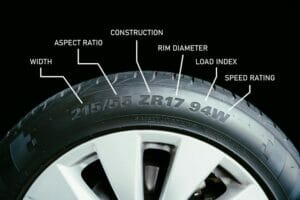
A tire size such as 205/55R16 means:
- 205: Tire width in millimeters
- 55: Sidewall height equals 55% of the tire width
- R: Radial construction
- 16: Tire fits a 16-inch wheel
A 205/60R16 tire has the same width and wheel diameter. Its sidewall is taller because it uses 60% of the 205-millimeter width.
The aspect ratio is not the same as the rim diameter. You cannot install a tire designed for a 16-inch wheel on a 17-inch wheel, even if both tires have a 55 or 60 aspect ratio.
Can a 55-Series Tire Replace a 60-Series Tire?
A 55-series tire can replace a 60-series tire in some cases, but it is not automatically a safe swap.
The most important checks are:
- The wheel diameter must match.
- The tire must fit the wheel’s approved rim-width range.
- The tire must have enough load capacity.
- The overall diameter should stay close to the original size.
- The tire must clear the suspension, fenders, brakes, and steering components.
- The replacement must be suitable for the vehicle’s speed rating and use.
A 55-series tire is usually shorter than a 60-series tire when both use the same width. That reduces the tire’s overall diameter and can create a noticeable difference in how the vehicle drives.
The vehicle manufacturer’s tire placard, owner’s manual, and replacement-tire guidance should be the starting point. The tire placard is usually found on the driver-side doorjamb or inside the fuel-door area.

55 vs. 60 Tire Size: A Simple Example
Consider these two tire sizes:
- 205/55R16
- 205/60R16
The basic sidewall calculation is:
Tire width × aspect ratio = sidewall height
For the 205/55R16:
- 205 × 0.55 = 112.75 mm sidewall height


For the 205/60R16:
- 205 × 0.60 = 123 mm sidewall height
Because the tire has a sidewall above and below the wheel, the total diameter difference is about:
- 2 × 10.25 mm = 20.5 mm
The approximate overall diameters are:
| Tire size | Approximate diameter | Approximate difference |
|---|---|---|
| 205/55R16 | 631.9 mm, or 24.9 in | — |
| 205/60R16 | 652.4 mm, or 25.7 in | 20.5 mm smaller for the 55 |
The 205/55R16 is about 3.1% smaller in diameter than the 205/60R16.
That means the vehicle sits about 10 mm, or 0.4 inch, lower at the axle centerline. The change may seem small, but it can affect speed readings and vehicle systems.
How Does a 55-Series Tire Affect the Speedometer?
A smaller 55-series tire usually makes the speedometer read faster than the vehicle is actually traveling.
For example, if the original tire is a 205/60R16 and the replacement is a 205/55R16, the smaller tire turns more times over the same distance. At a displayed speed of 60 mph, the vehicle may be traveling roughly 58 mph, depending on the exact tire dimensions and the vehicle’s original speedometer calibration.
This is an estimate, not a guaranteed reading. Tire brands can have slightly different measured diameters, and speedometers are not always perfectly calibrated.
A diameter difference of about 3% is large enough to deserve attention. It can also change the readings used by:
- Anti-lock brakes
- Traction control
- Electronic stability control
- Adaptive cruise control
- Tire-pressure monitoring systems
NHTSA advises following the vehicle manufacturer’s tire information and maintaining the correct tire size, load rating, and inflation pressure. See the NHTSA TireWise safety guidance.

What Changes When You Use a 55 Instead of a 60?
A 55-series tire normally has a firmer, lower sidewall than a 60-series tire of the same width. This creates several trade-offs.
Ride comfort
The 60-series tire has more sidewall to absorb bumps. It may provide a softer ride on rough U.S. roads, potholes, and broken pavement.
The 55-series tire has less sidewall flex. The ride may feel firmer, especially when the tire is inflated to the pressure required by the vehicle.
Handling
A shorter sidewall can make steering feel more direct. The tire may flex less during cornering.


That does not mean the 55-series tire will always handle better. Tread design, rubber compound, tire construction, alignment, road surface, and inflation pressure also matter.
Ground clearance
The smaller tire lowers the vehicle slightly. This can reduce clearance under the vehicle and increase the chance of contact with road debris, steep driveways, or parking stops.
Odometer reading
Because the smaller tire turns more times per mile, the odometer may record more miles than the vehicle actually travels.
Fuel economy
A size change can affect fuel use, but the result is not predictable from aspect ratio alone. Tire weight, rolling resistance, pressure, alignment, and driving conditions may have a greater effect.
Wheel and tire damage
A shorter sidewall provides less cushion between the wheel and the road. On a pothole, the wheel may be more exposed to impact damage, and the tire may be more likely to suffer a sidewall injury.
How to Check Whether a 55 Tire Will Fit
Use this process before buying or mounting the tire.
1. Confirm the complete tire size
Compare the complete size, not only the 55 or 60 number.
For example, compare:
- 215/55R17
- 215/60R17
Then check whether the wheel diameter is the same. A 55-series tire with a different final number may not fit your wheel.
2. Check the vehicle’s original tire size
Read the driver-side door-jamb label and owner’s manual. Some vehicles use different tire sizes on different trim levels.
Do not rely only on the size printed on a tire that is already on the vehicle. A previous owner may have installed a nonstandard size.
3. Calculate the diameter difference
Use this formula:
Overall diameter = (2 × width × aspect ratio ÷ 25.4) + wheel diameter
Use width in millimeters and wheel diameter in inches.
For a 215/55R17 tire:
(2 × 215 × 0.55 ÷ 25.4) + 17 = about 26.3 inches
For a 215/60R17 tire:
(2 × 215 × 0.60 ÷ 25.4) + 17 = about 27.2 inches
The 55-series tire is about 3.3% smaller in this example.


4. Compare the load index
The load index appears on the tire sidewall after the size, such as:
215/55R17 94V
The number 94 is the load index. A replacement tire should meet or exceed the vehicle manufacturer’s required load rating unless a qualified tire professional confirms another specification.
A tire that physically fits but has too little load capacity is not a safe replacement.
5. Check the speed rating
The final letter is the speed rating. The replacement should meet the vehicle maker’s requirement for the vehicle and its intended use.
A higher speed rating does not fix an incorrect diameter, load rating, or clearance problem.
6. Check rim width
Tire manufacturers list an approved rim-width range for each tire size. A tire may mount on the same wheel diameter but still be unsuitable for the wheel’s width.
Check the tire maker’s current technical data for the exact tire model. Do not assume that every 205/55R16 tire has identical measurements.
7. Check clearance
After installation, inspect clearance with the steering turned fully left and right. Check under:
- The front fenders
- The inner wheel wells
- The suspension
- Brake components
- Mud flaps and liners
The tire should not touch any part of the vehicle during steering, braking, suspension movement, or normal loading.

Is It Better to Use a 55 or 60 Tire?
The better size is the one approved for the vehicle and closest to the original overall diameter.
A 55-series tire may make sense when:
- The vehicle manufacturer lists it as an approved option
- The replacement keeps the overall diameter close to the original
- The load and speed ratings meet the requirements
- The rim width is correct
- There is adequate clearance
- The driver accepts a firmer ride and less pothole protection
A 60-series tire may be the better choice when:
- It is the factory size
- The vehicle regularly travels on rough roads
- Ride comfort matters more than sharper steering response
- The vehicle needs the extra sidewall height
- The smaller 55-series tire would create a large diameter change


Do not choose a tire only because it is cheaper or available. A tire that is close in appearance can still change the vehicle’s behavior.
Can You Put a 55 Tire on a 60 Rim?
The phrase “60 rim” is not technically precise. A rim does not have a 55 or 60 aspect ratio.
If someone says a “60 rim,” they may mean a wheel currently fitted with a 60-series tire. For example, a 205/60R16 tire is mounted on a 16-inch wheel. A 205/55R16 tire can also mount on that same wheel if the rim width and tire manufacturer’s specifications allow it.
You cannot use a 16-inch tire on a 17-inch wheel, or a 17-inch tire on a 16-inch wheel. The last number in the tire size must match the wheel diameter.
Can You Mix 55 and 60 Tires on the Same Vehicle?
Mixing 55- and 60-series tires is usually not recommended unless the vehicle manufacturer specifically designed the vehicle for different sizes front and rear.
Different tire diameters can cause differences in wheel speed. That may affect:
- Traction control
- Stability control
- Anti-lock braking
- Handling balance
- Differential operation on some all-wheel-drive vehicles
Never mix different sizes on the same axle unless the tire and vehicle manufacturers allow it. Ideally, use four matching tires. If only two tires are replaced, follow the vehicle and tire manufacturer’s guidance about placement. Many vehicles require the tires with greater tread depth to be installed on the rear axle, but the correct choice depends on the vehicle and drive system.
For all-wheel-drive vehicles, even small differences in tire circumference may matter. Check the owner’s manual or ask a qualified tire shop before changing sizes.

Common Mistakes to Avoid
Looking only at the aspect ratio
The 55 or 60 number is only one part of the size. Width, wheel diameter, load index, speed rating, tread width, and actual measured diameter all matter.
Assuming the same width means the same fit
Two tires with the same width may have different approved rim widths, overall diameters, and tread shapes.
Ignoring the door-jamb label
The door label provides the manufacturer’s recommended size and cold inflation pressure for that vehicle. It is more useful than guessing from a similar car.
Using the old air-pressure number
The correct pressure is based on the vehicle and tire combination. Do not automatically use the pressure printed on the old tire’s sidewall. That number is usually the tire’s maximum allowed pressure, not the vehicle’s recommended setting.
Changing only one tire
One new tire with a different diameter can create handling and traction differences. This is especially important on vehicles with all-wheel drive.


Assuming a tire shop will approve any combination
A tire shop can check fitment, but the final answer depends on the vehicle maker’s specifications, the exact tire model, and local safety requirements. Ask the installer to confirm the full size, load index, speed rating, rim width, and clearance.
When Should You Not Make the Change?
Do not use a 55-series tire in place of a 60-series tire when:
- The wheel diameter does not match
- The replacement has a lower load index
- The replacement has an unsuitable speed rating
- The diameter difference is large
- The tire rubs or comes close to rubbing
- The vehicle has all-wheel drive and the manufacturer does not approve the change
- The tire-pressure monitoring system cannot be serviced or reset correctly
- The change conflicts with the owner’s manual or vehicle placard
If you are unsure, have a qualified tire professional compare the proposed size with the vehicle’s original equipment specification. A tire store can also check the exact tire model’s approved rim-width range and measured dimensions.
Key Takeaways
- Yes, a 55-series tire may fit where a 60-series tire was used, but it is not automatically safe.
- The 55 and 60 numbers are aspect ratios, not wheel sizes.
- The wheel diameter must match the last number in the tire size.
- A 55-series tire is shorter than a 60-series tire with the same width.
- A smaller tire can affect speedometer readings, odometer accuracy, ride comfort, handling, ground clearance, and electronic safety systems.
- Check the vehicle placard, owner’s manual, load index, speed rating, rim width, overall diameter, and clearance before installing it.
Frequently Asked Questions
Will a 55 tire make my car lower?
Usually, yes. If the width and wheel diameter stay the same, a 55-series tire has a shorter sidewall than a 60-series tire. The vehicle will sit lower by about half of the total diameter difference.
Will a 55 tire fit the same wheel as a 60 tire?
It may. The wheel diameter must match, and the wheel width must fall within the tire manufacturer’s approved range. The complete tire size and exact tire model must be checked.
Is a 55 tire safer than a 60 tire?
Neither aspect ratio is automatically safer. A 55-series tire may provide more direct steering response, while a 60-series tire may offer more sidewall cushioning. Correct size, load capacity, pressure, tread, and clearance matter more.
Can I use 205/55R16 instead of 205/60R16?
The 205/55R16 is about 3.1% smaller in diameter than the 205/60R16. It may physically fit the same 16-inch wheel, but you should use it only if the vehicle maker or a qualified tire professional confirms that the size is suitable.
Do I need to recalibrate the speedometer?
A tire-size change can alter speedometer and odometer accuracy. Whether recalibration is possible depends on the vehicle. Ask a dealer or qualified repair shop before making the change.
Conclusion
You can sometimes put a 55-series tire on a vehicle that uses a 60-series tire, but the aspect ratio alone does not decide fitment. The complete tire size, wheel diameter, rim width, load rating, speed rating, clearance, and vehicle electronics all matter.
Compare the proposed tire with the size on the driver-side door label. If the new tire is more than a small amount different in overall diameter—or if the vehicle has all-wheel drive—confirm the change with a qualified tire professional before mounting it.
