

A car may shake at idle because the engine is not running evenly, the engine mounts are worn, or the transmission places extra load on the engine. A small amount of vibration can be normal. A strong shake, a changing idle speed, or a flashing check engine light is not.
In the United States, many modern cars use an onboard diagnostics system, or OBD-II. This system can detect engine misfires and other faults. A scan can often narrow the problem before you replace parts.
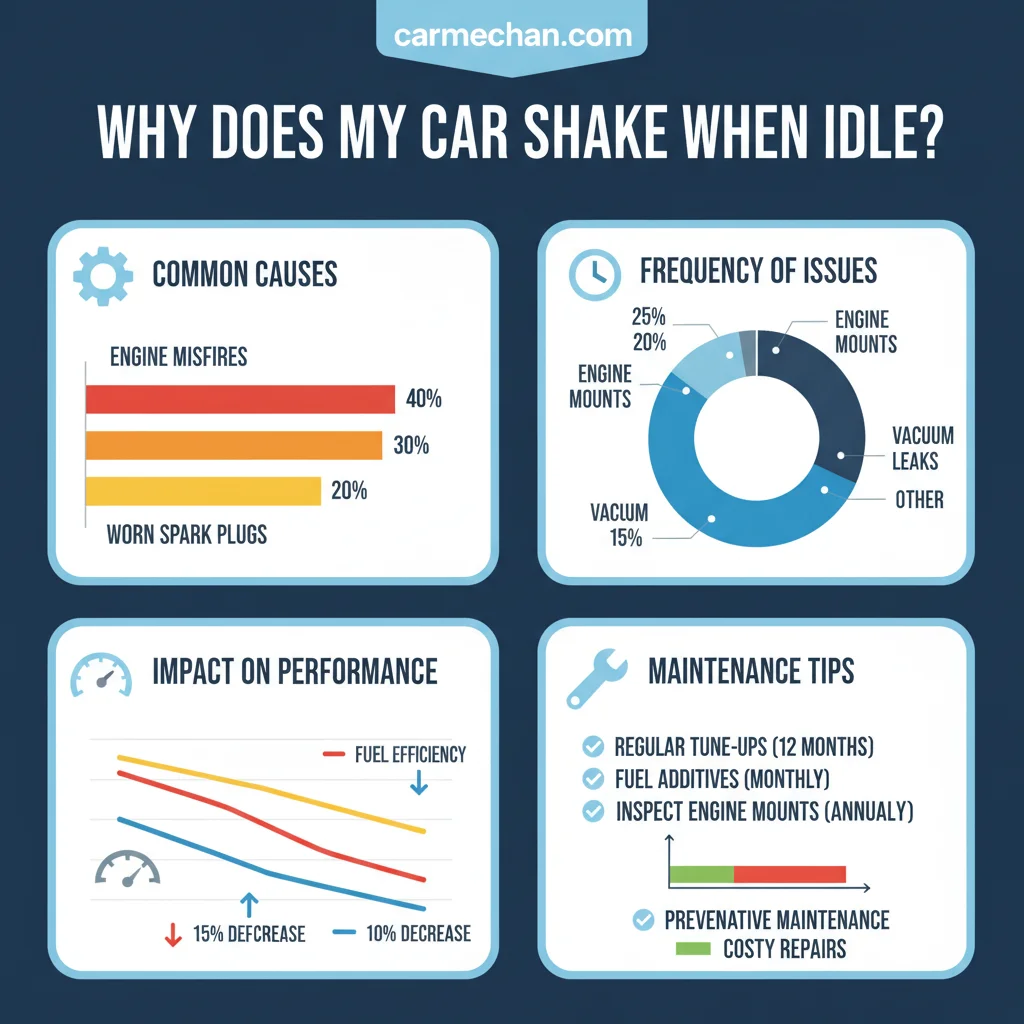
What a Shaking Idle Usually Means
Your engine should keep a steady speed when the car is stopped. The engine computer adjusts air, fuel, and ignition many times each second to do this.
If the engine speed rises and falls, one or more cylinders may not be burning fuel well. This is called a misfire. If the engine speed stays steady but the body or steering wheel vibrates, a worn engine mount may be more likely.


The most useful clues are:
- Does the car shake in Park, Neutral, or only in Drive?
- Does the shake change when you turn the air conditioner on?
- Is the check engine light on?
- Does the engine speed move up and down?
- Did the problem start after a repair or fuel fill-up?
- Do you smell fuel, sulfur, or exhaust?
- Does the car shake only when cold, or also after it warms up?
A rough idle is a symptom, not a diagnosis. The same symptom can come from a spark plug, an air leak, a broken mount, or a fuel problem.
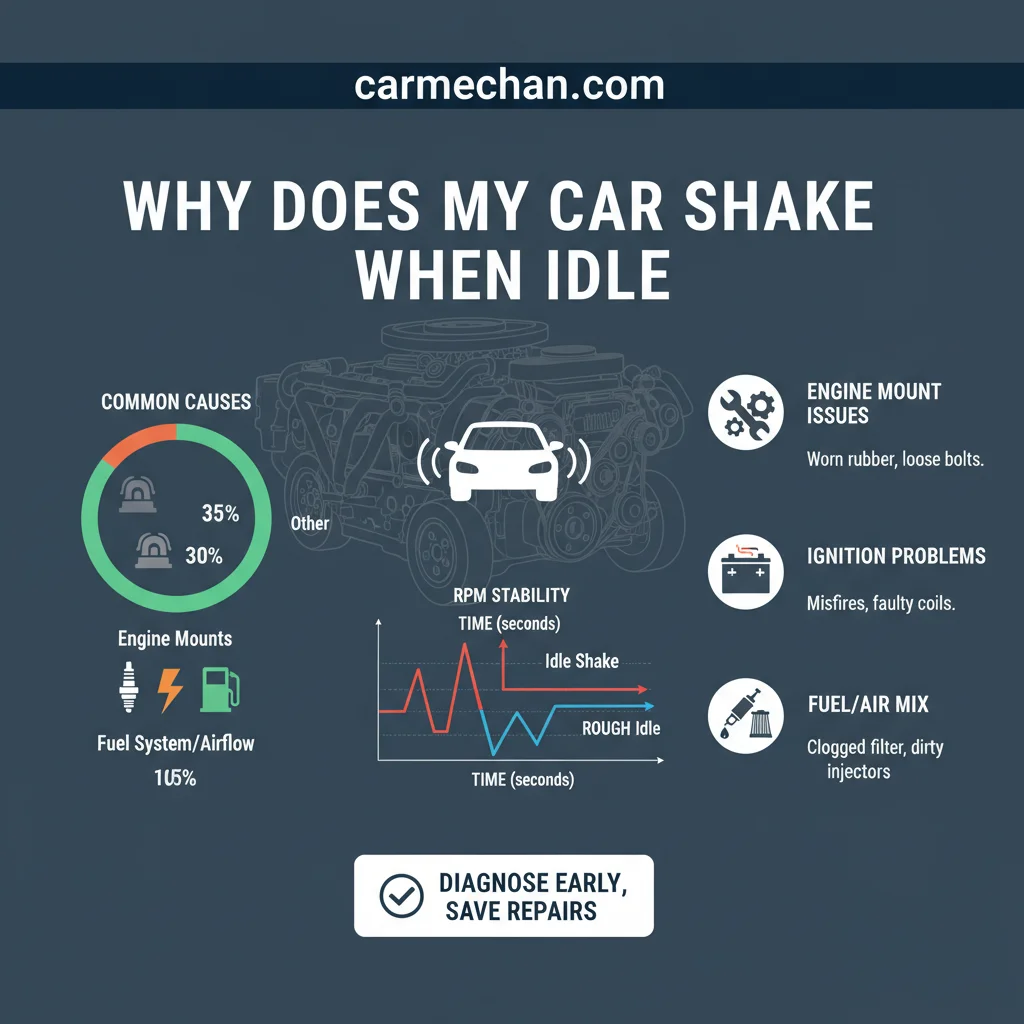
Common Causes of a Car Shaking at Idle
The most common causes fall into four groups: engine misfire, air or fuel faults, worn parts, and transmission load.
1. Engine misfire
A misfire happens when one cylinder does not burn its air-and-fuel mixture correctly. The engine then produces uneven power. You may feel this as a shake through the seat, floor, or steering wheel.
Common misfire causes include:
- Worn or damaged spark plugs
- A weak ignition coil
- A damaged plug wire on older vehicles
- A faulty fuel injector
- Low fuel pressure
- Low compression
- Incorrect valve timing
A misfire often turns on the check engine light. A flashing check engine light is more urgent. It can mean that unburned fuel is entering the catalytic converter. Continued driving may cause costly damage.
Do not assume that replacing all spark plugs will fix every misfire. A scan tool may show a code such as P0301, which points to a misfire in cylinder 1. That code identifies the cylinder, but it does not prove which part failed.
2. Vacuum or intake air leak
The engine needs a measured amount of air. A cracked hose or leaking intake gasket can let in air that the sensors did not measure.
This can make the air-fuel mixture too lean. A lean mixture has too much air or too little fuel. The result may include:
- A rough or shaking idle
- A high idle speed
- A hissing sound
- Stalling when you stop
- A check engine light
- Fuel trim codes such as P0171 or p0174
small vacuum leaks often affect idle more than highway driving. At idle, the engine has little airflow, so an extra leak has a larger effect.


Do not spray flammable fluids around a hot engine to find a leak. That method can cause a fire. A repair shop can use a smoke test instead.
3. Dirty throttle body or idle air control problem
The throttle body controls air entering the engine. Carbon buildup can restrict or disturb that airflow. Some older cars use a separate idle air control valve. Many newer cars control idle through an electronic throttle body.
A dirty throttle body may cause:
- A rough idle
- Stalling after the engine starts
- A low or unstable idle speed
- Trouble keeping the engine running with the air conditioner on
Cleaning procedures vary by vehicle. Some electronic throttle bodies can be damaged by forced movement or incorrect cleaning. Check the service information for your exact year, make, model, and engine before cleaning it.
4. Worn or broken engine mounts
Engine mounts hold the engine in place and reduce vibration. Rubber inside a mount can crack, collapse, or separate from its metal frame.
A bad mount is more likely when:
- The engine speed stays steady
- The car shakes more in Drive than in Park
- The vibration changes when shifting from Reverse to Drive
- You hear a clunk during gear changes
- The engine moves too much when the throttle changes
A mount does not usually cause an uneven engine speed. It transfers normal engine movement into the cabin. This distinction helps separate a mount problem from a misfire.
Never place any part of your body under a car supported only by a jack. Mount checks may require lifting or supporting the engine. That work is best left to a qualified technician.
5. Air conditioning load
The air conditioner adds load to the engine. A healthy engine should compensate with a small change in idle speed.
If the car shakes only when the air conditioner runs, possible causes include:
- A weak idle control system
- A worn compressor
- Excessive compressor load
- A low engine idle
- A weak ignition or fuel system that cannot handle the added load
Turn the air conditioner off for a short test. If the shake stops, the air conditioning system may be part of the problem. Do not keep running the system if it makes a grinding noise or causes the engine to stall.
6. Fuel delivery problems
The engine may shake when it receives too little fuel or fuel in an uneven pattern.
Possible causes include:
- A clogged fuel injector
- A weak fuel pump
- A restricted fuel filter
- Poor electrical power to an injector
- Contaminated fuel


A fuel problem may also cause hard starting, poor acceleration, or loss of power. A fuel pressure test and injector test can help confirm the cause.
Do not use fuel additives as a substitute for diagnosis. Some products may help with minor deposits, but they cannot repair a failing pump, injector circuit, or compression problem.
7. Transmission or drivetrain issues
An automatic transmission can add load when the car is in Drive. A mild change in engine feel may be normal. A strong vibration or a shake that occurs only in Drive may point to:
- A worn engine or transmission mount
- A low or incorrect transmission fluid level
- A torque converter problem
- An engine idle problem made worse by transmission load
A manual transmission may shake when the clutch is engaged if the clutch, flywheel, or engine is not running smoothly. A drivetrain fault can be costly, so note exactly when the shake occurs.
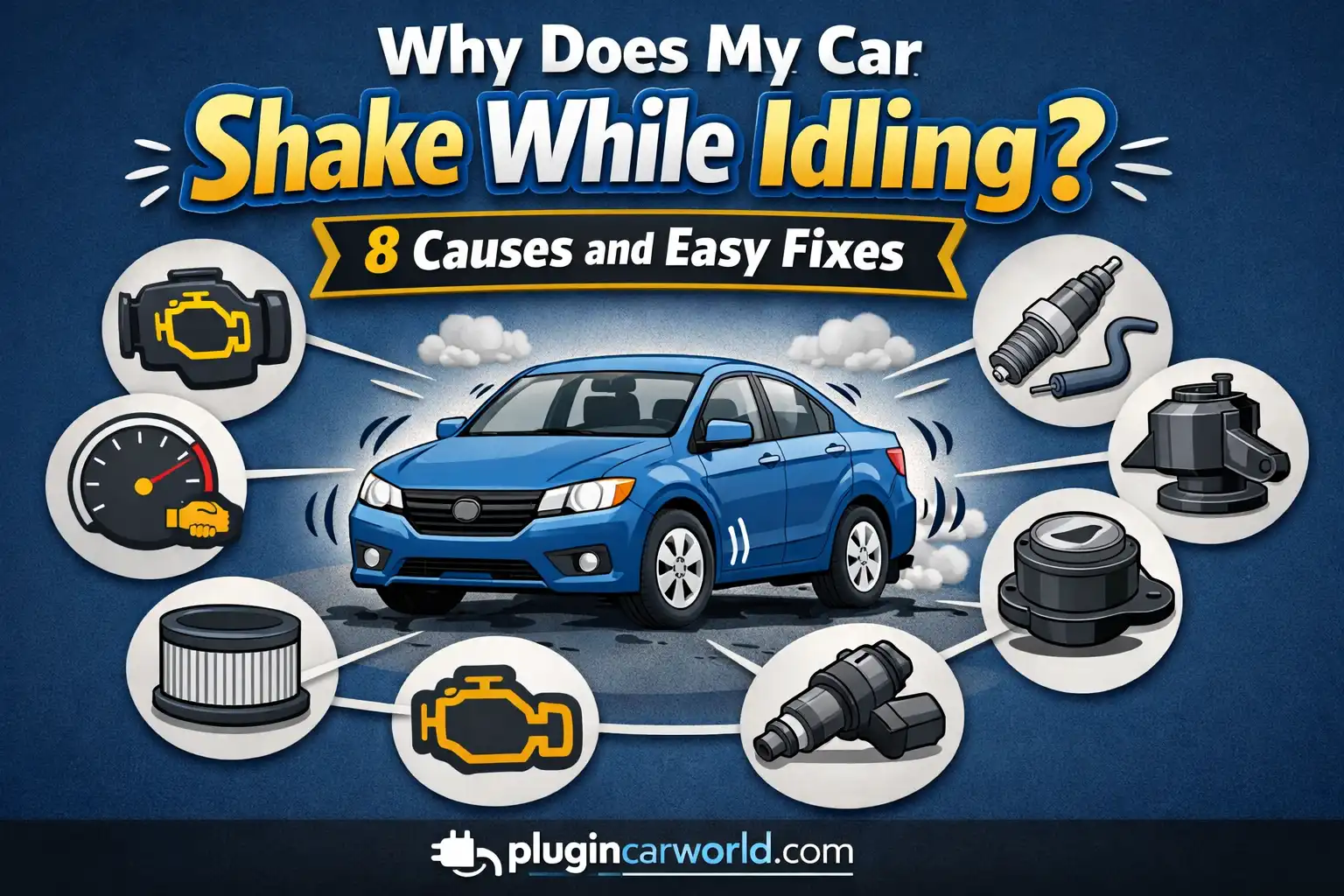
How to Diagnose a Shaking Idle
Start with safe observations. Then use a scan tool and targeted tests. Avoid replacing parts at random.
Step 1: Check the warning lights
Look at the check engine light.
- No light: A mount, minor air leak, or early fault is still possible.
- Steady light: Schedule diagnosis soon.
- Flashing light: Reduce driving and seek service promptly, especially if the engine shakes badly.
The U.S. Environmental Protection Agency explains that the OBD system monitors emissions-related parts and can store diagnostic trouble codes. A code is a clue, not a complete repair instruction.
Step 2: Note when the shake happens
Record the conditions:
| Condition | What it may suggest |
|---|---|
| Shakes in Park and Drive | Misfire, air leak, fuel fault, or mount |
| Shakes only in Drive | Mount, low idle, or transmission load |
| Shakes only with air conditioning on | Idle control or compressor load |
| Shakes only when cold | Vacuum leak, sensor issue, or cold-start fuel problem |
| Shakes after warming up | Ignition, fuel, mount, or heat-related fault |
| Engine speed rises and falls | Air, fuel, throttle, or control issue |
| Engine speed stays steady | Mount or vibration transfer is more likely |
This table cannot identify the fault by itself. It helps you choose the next test.
Step 3: Inspect simple items with the engine off
With the engine off and cool, look for:
- Loose intake hoses
- Cracked vacuum lines
- Disconnected electrical plugs
- Damaged air filter housing
- Oil or coolant near spark plug wells
- Broken mount rubber
- Signs of rodent damage
Do not touch belts, fans, or other moving parts while the engine runs. Keep clothing, hair, and tools away from the engine bay.
Step 4: Scan for trouble codes
A basic OBD-II scanner can read many engine codes on U.S.-market vehicles built from the 1996 model year onward. Some vehicles may need a more advanced scan tool for manufacturer-specific data.


Useful code groups include:
- P0300: Random or multiple-cylinder misfire
- P0301–P0308: Misfire in a named cylinder
- P0171 or P0174: System too lean
- Throttle position or airflow-related codes
- Camshaft or crankshaft timing codes
Do not clear the code before recording it. Clearing codes can erase useful freeze-frame information and reset readiness monitors.
Step 5: Test instead of guessing
A technician may use:
- Spark and ignition tests
- Injector pulse and balance tests
- Fuel pressure testing
- Smoke testing for intake leaks
- Compression or leak-down testing
- Throttle body inspection
- Engine mount inspection
- Live scan data, such as fuel trims and misfire counts
The correct test depends on the symptoms and codes. For example, a cylinder misfire may require moving the ignition coil to another cylinder to see whether the misfire follows it. This should be done only when the vehicle service procedure allows it.

When Is a Shaking Idle Dangerous?
A shaking idle needs prompt attention if the check engine light flashes, the engine stalls, or the car loses power.
Stop driving and arrange professional help if you notice:
- A flashing check engine light
- Strong fuel or exhaust fumes
- Smoke from the engine bay
- Overheating
- Low oil pressure
- A loud knock or repeated clatter
- Severe shaking that worsens quickly
- A broken mount or loose engine component
- Stalling in traffic
A mild shake with no warning light may not mean immediate danger, but it can become worse. A misfire can damage the catalytic converter. A bad mount can allow excessive engine movement and place stress on hoses, wiring, and exhaust parts.
If the vehicle is under warranty or covered by a service campaign, use the vehicle identification number to check with the manufacturer or the National Highway Traffic Safety Administration at NHTSA.gov/Recalls.
What You Can Check Yourself
You can safely gather useful information without taking the engine apart.
Safe checks
- Park outdoors or in a well-ventilated area.
- Set the parking brake.
- Check whether the shake changes in Park, Neutral, and Drive.
- Turn the air conditioner off briefly.
- Read the owner’s manual for warning-light guidance.
- Inspect visible hoses and connectors with the engine off.
- Read, but do not erase, OBD-II codes.
Checks to avoid
Avoid these actions unless you have the correct tools and training:
- Working near a running belt or fan
- Disconnecting ignition coils on a live engine
- Spraying flammable fluid near hot parts
- Supporting the vehicle with a jack alone
- Opening a hot cooling system
- Replacing parts based on one code
- Driving with a flashing check engine light
A repair manual for the exact vehicle is more reliable than a general online procedure. Electrical layouts, throttle systems, ignition systems, and engine mounts differ by model.


How Much Does It Cost to Fix a Shaking Idle?
The cost depends on the failed part, vehicle design, local labor rates, and whether more than one fault exists.
A diagnosis may be relatively simple if the issue is a loose hose or worn spark plug. It may cost much more if the engine has low compression, a failed catalytic converter, a damaged fuel system, or a transmission fault.
Before approving repairs, ask the shop:
- What test confirmed the failed part?
- Which codes were stored?
- Is the car safe to drive?
- Are there related parts that should be checked?
- What happens if the repair does not correct the shake?
- Are parts and labor covered by a warranty?
A clear diagnosis is often cheaper than replacing several parts without proof.

Key takeaways
- A shaking idle is often caused by a misfire, air leak, dirty throttle body, or worn engine mount.
- If the engine speed changes, look first at air, fuel, ignition, or idle control.
- If the engine speed stays steady but the cabin shakes, inspect the mounts.
- A flashing check engine light means you should limit driving and seek service.
- Scan the car and record codes before clearing them.
- Do not work near moving or hot engine parts without the right tools and training.
Frequently Asked Questions
Why does my car shake when idle but drive fine?
A small misfire or vacuum leak may affect the engine most at idle. At higher speeds, the engine produces more power and the vibration may feel less noticeable. A worn engine mount can also cause a shake at idle while the car drives normally.
Why does my car shake when stopped in Drive but not in Park?
Drive places extra load on the engine. That load can expose a weak idle system or make a worn engine mount easier to feel. If the engine speed remains steady, inspect the mounts and transmission-related causes. If the speed drops or surges, check for an engine control problem.
Can low engine oil cause a shaking idle?
Low oil can contribute to engine noise, timing problems, or serious damage, but it is not the most common cause of a mild rough idle. Check the oil level on level ground with the engine off. If the oil pressure warning light is on, stop driving and follow the owner’s manual instructions.
Can bad gas make a car shake at idle?
Yes. Contaminated or incorrect fuel can cause rough running, hard starting, loss of power, or a misfire. If the problem began soon after refueling, save the fuel receipt and ask a repair shop to test fuel quality and pressure before replacing ignition parts.
Is it safe to drive a car that shakes at idle?
It depends on the severity and warning signs. A mild shake with no warning light may allow a short trip to a repair shop. Do not continue driving if the check engine light flashes, the engine stalls, the car overheats, or you smell fuel or exhaust.
Conclusion: Find the Cause Before Replacing Parts
A car that shakes when idle is telling you that the engine is not running smoothly or that normal engine movement is reaching the cabin. Start by checking when the shake occurs, whether the engine speed changes, and whether a warning light is on.
Read the OBD-II codes, inspect visible hoses and mounts with the engine off, and use targeted testing to confirm the fault. If the shake is severe or the check engine light flashes, stop driving and arrange professional service.
