

A professional car wrap usually takes 2 to 5 business days for a full wrap in the United States. A small partial wrap may take one day, while a color-change wrap on a large SUV, truck, or vehicle with complex body lines may take five to seven days.
The vinyl installation itself may take less than a day. Most of the total time goes toward washing, paint inspection, removing trim, applying the film, trimming edges, post-heating, curing, and checking the finished work.
A rushed wrap can lift, wrinkle, or show seams. Good preparation often matters more than speed.

Quick answer: How long does a car wrap take?
The time depends on the type of wrap and the vehicle.
| Wrap type | Typical shop time | What affects the estimate |
|---|---|---|
| Small decals or logos | A few hours | Number, size, and placement of graphics |
| Partial wrap | 1–2 days | Bumper coverage, design detail, and prep |
| Full car wrap | 2–5 days | Vehicle size, body shape, trim removal, and paint condition |
| Full color-change wrap | 3–7 days | Full coverage, door jambs, mirrors, and disassembly |
| Large SUV, van, or work truck | 4–7 days | More surface area and complex panels |
| DIY wrap | Several days to more than a week | Skill, tools, workspace, and available time |
These are planning ranges, not guaranteed deadlines. A small coupe with clean paint may finish quickly. A large SUV with damaged paint and many trim pieces can take much longer.
A shop may also keep the vehicle overnight. This gives the installer time to inspect edges, apply heat where needed, and let the film settle before final delivery.
What happens during a professional car wrap?
A proper wrap follows several steps. Each step protects the appearance and lifespan of the vinyl.
1. The shop inspects the vehicle
The installer checks the paint, body panels, trim, dents, rust, scratches, and previous repairs. Vinyl sticks best to sound, smooth paint.
Loose clear coat, peeling paint, deep chips, and rust can cause problems. The film may stick to the damaged surface at first, but it can pull away when the weak paint moves.
This inspection can change the quote and the schedule. A vehicle that needs paint repair may require bodywork before wrapping.
2. The vehicle is cleaned
The shop removes road film, wax, grease, tar, tree sap, and other residue. Small bits of dirt can create bumps under the film.
Many professional installers use a combination of soap, water, isopropyl alcohol, and specialized cleaners. The exact products depend on the vinyl manufacturer and the surface.
The vehicle must also be dry. Moisture under the film can interfere with adhesion.
3. Trim and hardware may be removed
Installers may remove or loosen items such as:
- Door handles
- Mirrors
- Emblems
- Side markers
- License plate brackets
- Headlight or taillight trim
- Window moldings
- Bumpers or bumper inserts
Removing parts can create cleaner edges and reduce visible seams. It also adds time and creates a risk of broken clips or damaged hardware.
Not every shop removes the same parts. Ask what the quoted price includes.
4. The vinyl is measured and applied
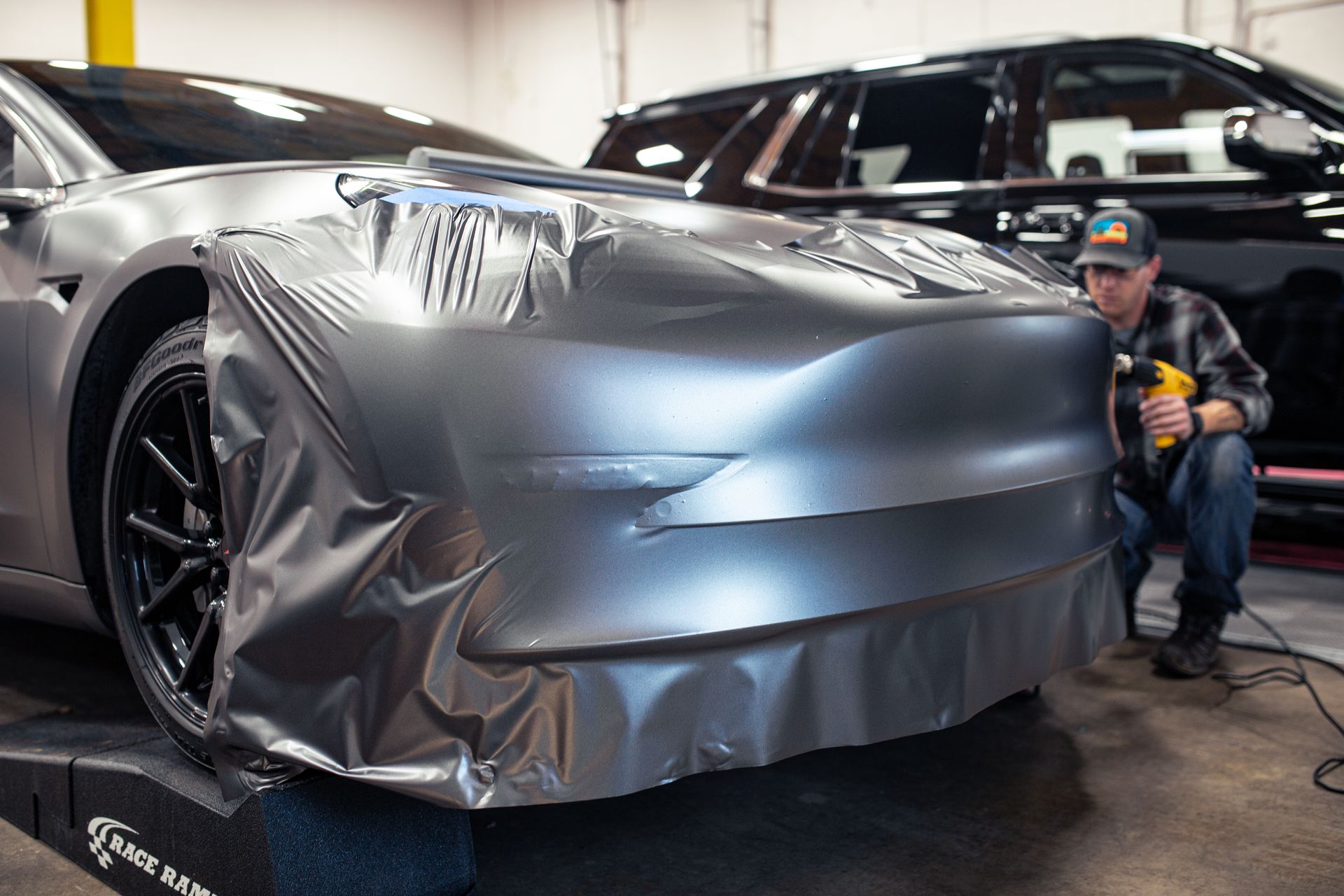
The installer places large sheets of vinyl over each panel. The film is heated and worked around curves, recesses, handles, and body lines.
Modern automotive wrap film often uses air-release technology. This helps the installer push out air during application. It does not make the process easy or remove the need for skill.
The installer must control tension. Too much stretch can make the film shrink later. Too little stretch can leave wrinkles or poor coverage.
5. The film is trimmed and post-heated
The installer trims the film along panel edges and around hardware. Good trimming leaves a clean finish without cutting into the paint.
Many cast vinyl manufacturers require post-heating on stretched areas. Post-heating helps the film conform and reduces memory-related lifting. The correct temperature and method depend on the film brand and product line.
A professional should follow the film maker’s installation instructions rather than rely on one temperature for every material.
6. The vehicle receives a final inspection
The shop checks for:
- Lifted edges
- Wrinkles
- Bubbles
- Exposed paint
- Uneven seams
- Contamination
- Poor coverage around trim
- Loose or missing hardware
The shop may correct small issues before delivery. Some areas need time to settle before the installer can judge them properly.
What factors change the installation time?
The biggest time differences come from the vehicle, the wrap design, and the condition of the paint.
Vehicle size and shape
A two-door sports car has less surface area than a three-row SUV. A boxy vehicle may have broad, simple panels, while a modern crossover can have deep recesses, sharp creases, and complex bumpers.
More surface area means more material handling, trimming, and inspection.
Paint condition
Clean, factory-finished paint usually gives the installer the best starting point. Scratches, dents, chips, rust, and clear-coat failure can slow the job.
A wrap does not repair body damage. In fact, glossy vinyl can make dents and surface flaws easier to see.
If the paint is peeling, the film may remove more paint when it comes off. Ask the shop to document existing damage before work begins.
Wrap coverage
A basic exterior wrap may cover the visible outside panels only. A premium color change may also cover:
- Door edges
- Inside door edges
- Mirror bases
- Trunk openings
- Fuel-door edges
- Door jambs
Wrapping these areas takes extra time and may require more disassembly.
Design complexity
A solid color is often simpler than a custom graphic. Printed images, stripes, logos, gradients, and panel-to-panel patterns require careful alignment.
A design that must line up across doors can take longer than a design with independent panels. Large commercial graphics may also require design approval and print time before installation starts.
Trim removal
Some shops work around trim. Others remove more parts for a cleaner finish.
More disassembly can improve the result, but it adds labor. It can also extend the schedule if a fastener breaks or a replacement part is not available.
Installer experience and shop workload
Two shops may quote different timelines for the same vehicle. One may have several installers and a dedicated clean bay. Another may perform the work alone.
The shop’s workload also matters. “Three days” may mean three installation days after the car enters the bay. It may not include the time before the appointment.
Always separate shop queue time from hands-on installation time.
A realistic car wrap timeline
A typical full wrap may follow this schedule:
Day 1: Inspection, cleaning, and preparation
The shop examines the paint, washes the vehicle, removes contamination, and begins removing agreed-upon trim.
If the vehicle needs extra cleaning or minor surface preparation, this day may run longer.
Day 2: Main panel installation
The installer may apply vinyl to the hood, roof, fenders, doors, and quarter panels. The order depends on the vehicle and the shop’s process.
Large panels often require two people to position correctly.
Day 3: Bumpers, mirrors, and detail work
Bumpers and mirrors usually have more curves than doors. They may require more heating, stretching, and trimming.
The installer may also finish edges, door handles, spoilers, and smaller sections.
Day 4: Inspection and corrections
The shop checks the wrap, repairs small defects, reinstalls trim, and cleans the vehicle.
Some jobs finish here. A complex truck, SUV, van, or color change may need another day.
After pickup: Initial care
The wrap may need time to settle after installation. Follow the shop’s care instructions for washing, parking, and pressure around edges.
Do not assume that a wrapped vehicle can receive the same treatment as an unwrapped vehicle immediately after pickup.
Can a car be wrapped in one day?
Yes, but one-day service is usually limited to smaller or simpler jobs.
A one-day wrap may be realistic for:
- A roof wrap
- A hood wrap
- A small partial wrap
- Door logos
- Fleet lettering
- A simple two-door vehicle with excellent paint
A full color change in one day is a warning sign unless the shop clearly explains the scope. Speed may mean fewer parts are removed, less attention is given to edges, or the installer is working under unsafe time pressure.
Ask whether the one-day estimate includes preparation, trim removal, post-heating, reassembly, and quality inspection.
How long does a DIY car wrap take?
A first-time DIY installer should expect several days to more than a week for a full vehicle. The time depends on the workspace, tools, weather, vehicle size, and whether another person can help.
DIY work takes longer because the installer must learn how to:
- Clean and prepare the paint
- Position large sheets
- Use a squeegee without trapping air
- Control heat
- Avoid over-stretching
- Trim without damaging paint
- Work around corners and recesses
A clean, enclosed space helps. Dust, wind, cold temperatures, and direct sun can make the job harder.
For a first project, start with a small panel or simple accent. A full vehicle wrap is expensive practice if the first attempt goes wrong.
What should you ask a wrap shop before booking?
Get the scope in writing before leaving a deposit. Ask these questions:
- How many installation days do you need for my exact vehicle?
- Does the estimate include cleaning and paint preparation?
- Which parts will you remove?
- Will you wrap door edges, jambs, and the trunk opening?
- How will you handle chips, dents, rust, or peeling paint?
- Which vinyl brand and product line will you use?
- What warranty applies to the material and installation?
- How long should I wait before washing the car?
- What washing methods should I avoid?
- What happens if an edge lifts after delivery?
A clear answer is more useful than a low time estimate. The cheapest or fastest quote may not include the same level of preparation or coverage.
Common mistakes that make a wrap take longer
Several avoidable issues can delay a project.
Bringing in a dirty vehicle
Mud, wax, sap, and road film add cleaning time. Wash the car before delivery, but do not apply wax, ceramic spray, tire dressing, or oily protectants.
Follow the shop’s instructions if it requests a specific type of wash.
Hiding paint damage
Tell the installer about previous repairs and peeling paint. Covering up damage can lead to poor adhesion and unexpected repair costs.
Changing the design late
A late change to color, graphics, coverage, or finish can affect both material and labor. Approve the design before production begins.
Expecting paint correction from vinyl
A wrap covers color. It does not straighten panels or restore failing clear coat.
Some light surface marks may become less visible under certain films. Deep damage usually remains visible.
Using pressure around edges
Pressure washers can lift vinyl if used too close to seams or edges. Automatic brush washes can also scratch or catch the film.
Use the care instructions supplied by the wrap manufacturer and installer.
How long does a car wrap last?
A quality wrap can last several years when the film is correctly installed and maintained, but lifespan varies widely.
Key factors include:
- Film brand and product type
- Sun exposure
- Climate
- Vehicle storage
- Washing method
- Vertical versus horizontal surfaces
- Installation quality
- Paint condition
Horizontal surfaces such as roofs and hoods often receive more sunlight than vertical doors. Extreme heat, cold, snow, road salt, and frequent outdoor parking can also affect appearance.
The U.S. manufacturer pages from 3M and Avery Dennison provide care and installation guidance for their automotive films. Their instructions can differ by product, so use the instructions for the exact film installed on your vehicle.
How much does it cost to wrap a car?
The price varies by location, vehicle size, film type, design, and labor. A partial wrap costs less than a full wrap, while custom printed graphics and extensive disassembly increase the total.
A shop may charge separately for:
- Paint correction
- Rust or body repair
- Removal of old vinyl
- Door-jamb coverage
- Custom design
- Printed graphics
- Removal and replacement of trim
- Ceramic coating for vinyl
Ask for an itemized estimate. A quote without coverage details can make two apparently similar prices impossible to compare.
Signs the wrap was installed well
A finished wrap should have clean edges and consistent coverage. Look closely at:
- Door handles
- Bumper corners
- Mirror caps
- Wheel arches
- Trunk edges
- Panel seams
- Recessed body lines
Small seams can be normal, especially in difficult areas. Large wrinkles, visible dirt under the film, lifting edges, exposed body color, or uneven alignment deserve attention.
Inspect the vehicle in daylight before accepting delivery. Photograph any concern and ask the shop how it will correct it.
Frequently asked questions
Can I drive my car immediately after it is wrapped?
Many shops allow pickup and normal driving after the final inspection. However, the film may need time to settle. Ask the installer how long to avoid washing, high-pressure spray, or parking in extreme conditions.
Does wrapping a car damage the paint?
Properly installed and removed vinyl should not damage sound factory paint. Risks increase when the paint is weak, repainted, peeling, rusted, or improperly cured.
A professional should inspect and document the paint before installation.
Can a wrap cover dents and scratches?
A wrap can cover the color of a minor scratch, but it does not remove dents or level deep damage. Dents and rough repairs may remain visible through the film.
Is a wrap faster than a paint job?
A wrap may take less time than a full repaint, but the comparison depends on the work. A wrap still needs careful preparation, and some vehicles need paint repair before installation.
How long does it take to remove a car wrap?
Removal may take a few hours for a small section or one to two days for a full vehicle. Age, sun exposure, adhesive condition, and paint quality affect the process.
Old or brittle vinyl can come off in small pieces and leave adhesive behind.
Final answer
For most cars in the United States, plan on 2 to 5 business days for a professional full wrap. Allow one to two days for a partial wrap and three to seven days for a complex color-change wrap.
Before booking, confirm the exact coverage, preparation work, trim removal, material, warranty, and pickup date. A realistic schedule gives the installer enough time to prepare the surface, apply the vinyl correctly, finish the edges, and inspect the vehicle.
