

Most U.S. tire shops pay about 50% to 75% of the tire’s advertised retail price when buying new tires through a distributor. That is a planning range, not a fixed industry rule.
For example, if a tire sells for $180, a shop may pay roughly $90 to $135 for the tire itself. The shop may then add labor, disposal fees, taxes, shipping, credit-card costs, warranty coverage, and overhead.
The actual wholesale cost depends on the tire brand, size, supply level, order volume, distributor, and customer price. A shop may pay less for a high-volume economy tire and more for a rare truck, run-flat, electric-vehicle, or performance tire.
Introduction: What tire shops really pay
A tire shop usually does not buy tires at the price shown to consumers. It buys from a manufacturer, regional distributor, warehouse, buying group, or another tire dealer.


The shop’s invoice price is only one part of its cost. Freight, storage, payment fees, warranty risk, and unsold inventory can raise the real cost of selling the tire.
There is also no public database that lists the exact price every U.S. tire shop pays for every tire model. Public companies report broad margin results, while private distributors and independent shops often keep their invoices confidential. The ranges in this guide are practical estimates, not guaranteed quotes.

Typical wholesale tire prices in the United States
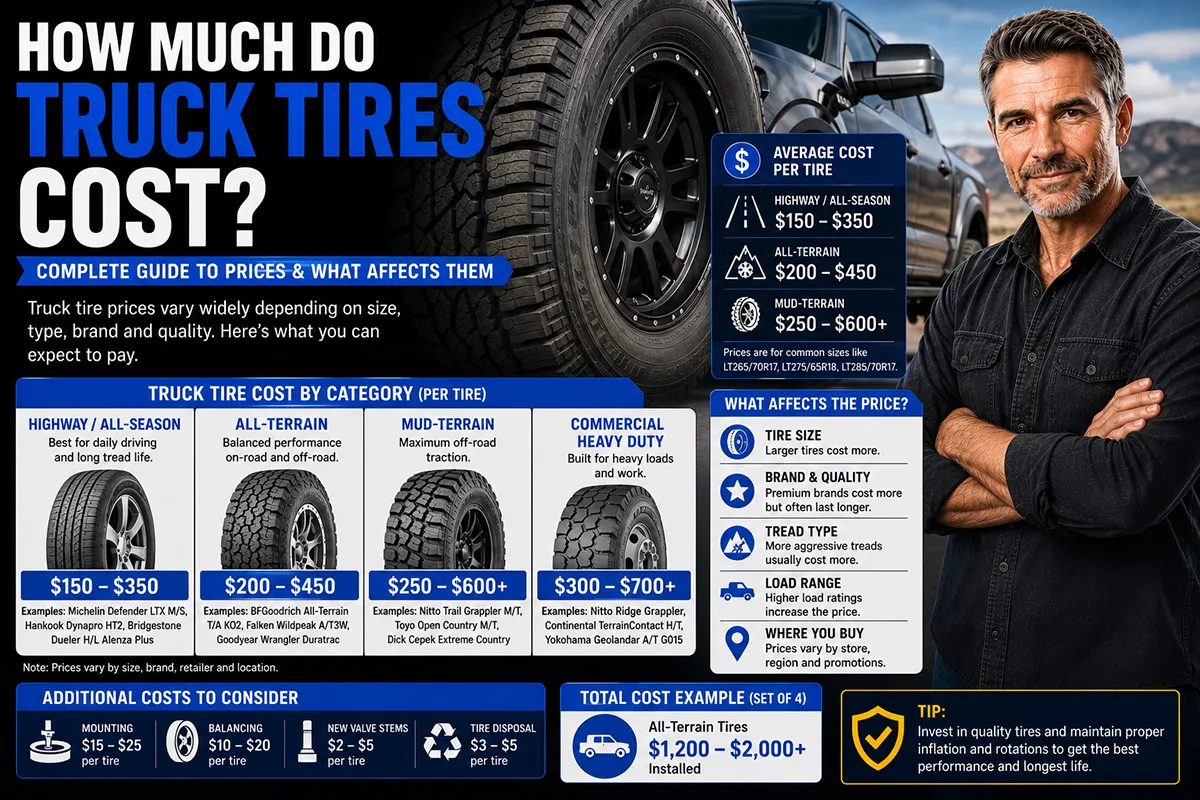
The following table shows broad planning ranges for common new-tire categories. These are estimated shop costs before installation labor, sales tax, and other customer charges.
| Tire category | Common consumer price per tire | Possible shop purchase price |
|---|---|---|
| Economy passenger tire | $60–$120 | $35–$85 |
| Mid-range passenger tire | $100–$190 | $60–$140 |
| Premium passenger tire | $160–$300+ | $100–$225+ |
| Small SUV or crossover tire | $110–$220 | $70–$165 |
| Light-truck tire | $150–$350+ | $95–$265+ |
| Performance tire | $180–$450+ | $110–$340+ |
| Run-flat tire | $180–$500+ | $115–$375+ |
| Commercial or heavy-duty tire | $250–$900+ | $160–$675+ |
These ranges overlap because size and construction matter as much as the brand. A 15-inch economy tire may cost far less than a 20-inch tire from the same brand.
A shop may also receive rebates, volume credits, or end-of-season discounts. Those credits can lower the final cost, but they may not appear on the first invoice.
A simple example
Suppose a shop lists a tire at $180.
- Distributor invoice: $115
- Freight allocation: $4
- Credit-card cost: $5
- Warranty or adjustment reserve: $2
- Estimated landed cost: $126
- Tire sale price: $180
- Gross profit before labor and overhead: $54
The shop does not keep the full $54. It still must pay rent, wages, equipment costs, software, insurance, utilities, taxes, and other bills.
Wholesale price is not the same as profit
A tire shop’s gross margin is the difference between its selling price and its direct cost. Net profit is what remains after the business pays all operating costs.
The basic formulas are:
Gross profit = Tire selling price − Tire cost
Gross margin = Gross profit ÷ Tire selling <a href="https://en.wikipedia.org/wiki/Tires_(TV_series)" target="_blank" rel="dofollow" style="color: #6b21a8; text-decoration: underline; font-weight: 600;">price
markup</a> = Gross profit ÷ Tire cost
Using the example above:


Gross profit = $180 − $115 = $65
Gross margin = $65 ÷ $180 = 36.1%
Markup = $65 ÷ $115 = 56.5%
The margin changes if the shop sells the tire at a discount or pays extra freight.
A shop may also bundle the tire with mounting, balancing, valve stems, road-hazard coverage, alignment work, or other services. That makes it difficult to judge tire profit by looking only at the advertised tire price.

What affects the price a tire shop pays?
The biggest factors are purchase volume, tire size, brand, supply, and the shop’s distributor relationship.
Order volume
Large chains and busy independent dealers can order hundreds or thousands of tires. Their volume may qualify them for:
- Lower distributor prices
- Manufacturer rebates
- Free or reduced freight
- Quarterly sales bonuses
- Early-payment discounts
- Access to private-label products
A small shop may pay more per tire because it places smaller orders or buys one tire at a time for a customer.
Brand and product position
Premium brands often have higher wholesale prices and higher suggested retail prices. Economy brands usually cost less, but the shop may face stronger price competition.
A shop’s margin percentage can also differ by brand. A tire with a lower retail price may produce a similar dollar profit if the shop receives a strong cost basis.
Tire size and construction
Large tires need more material and cost more to ship. The following features can increase the price:
- Large wheel diameters
- Heavy load ratings
- Reinforced sidewalls
- Run-flat construction
- Severe-snow or winter compounds
- Off-road tread designs
- Commercial-grade casings
- Special electric-vehicle fitments
A tire marked for passenger use is not automatically interchangeable with one designed for a truck or commercial van.
Local supply and urgency
A shop may pay more when it needs a tire quickly. A local warehouse may charge more than a national distributor, but the local option can still be cheaper overall when it avoids overnight freight or lost business.
Rare sizes can also have less favorable pricing. If a shop stocks a tire for months, its money remains tied up in inventory.
Distributor agreements
Many tire distributors use account pricing. Two shops may see different prices for the same tire because they have different sales volume, payment terms, regions, and rebate agreements.
The price on a public website is not always the same as a dealer’s cost. Some online prices include shipping. Others do not include installation, disposal, or state fees.


How tire shops make money on tire sales
Tire shops generally earn money from both the tire and the services connected with it. The tire itself may have a modest margin, while installation and related services help cover labor and facility costs.
Common charges include:
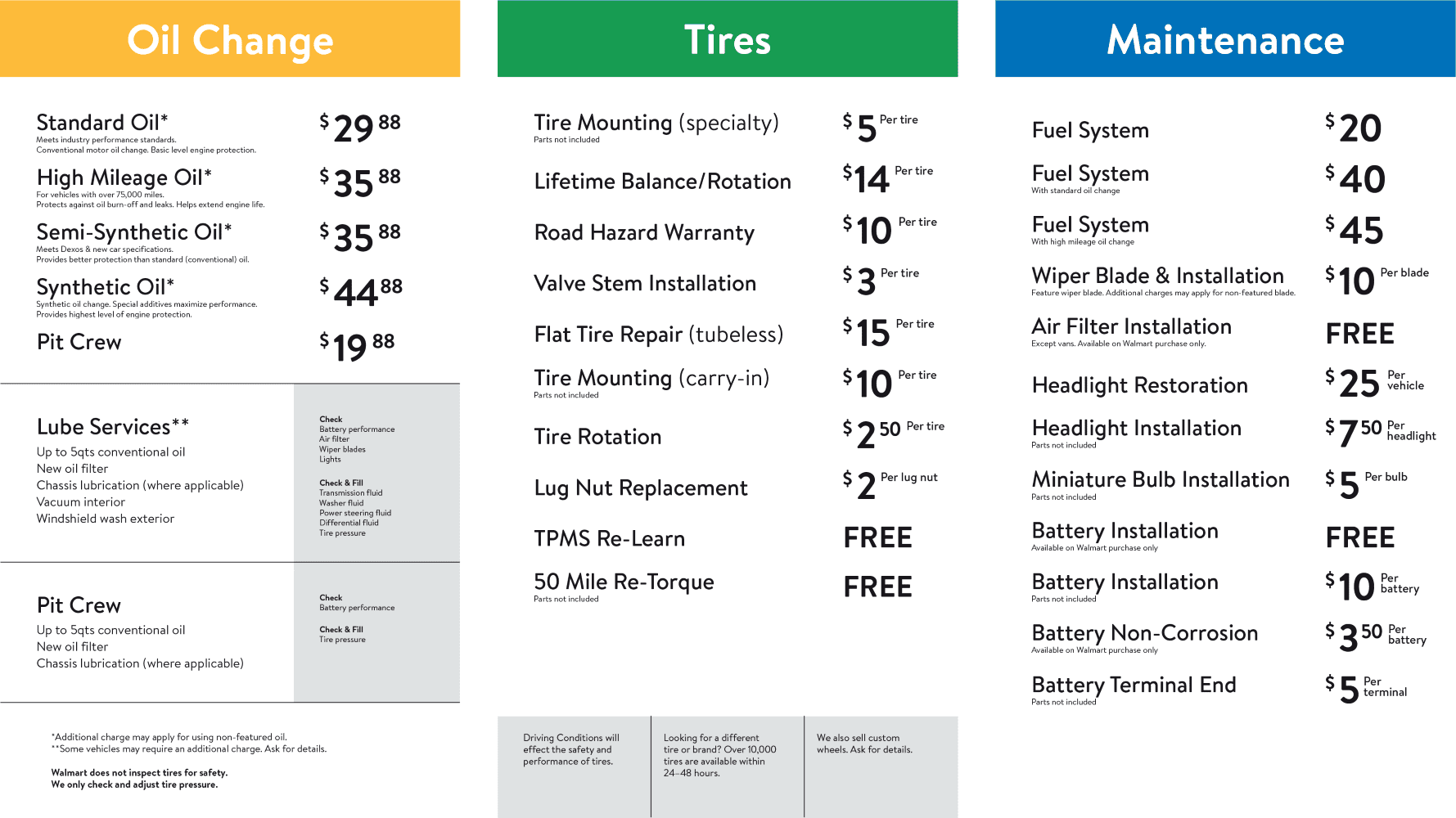
- Mounting
- Computer balancing
- New valve stems
- Tire-pressure monitoring system service
- Tire disposal
- Road-hazard protection
- Alignment
- Rotation packages
- Flat repair
- Seasonal storage
A shop may advertise a low tire price and recover part of its operating cost through installation fees. Another shop may charge more for the tire but include basic installation.
For this reason, compare the out-the-door price for four tires, not just the price printed beside the tire model.
Example of a complete customer invoice
A hypothetical four-tire purchase might look like this:
| Charge | Amount |
|---|---|
| Four tires at $180 each | $720 |
| Mounting and balancing at $25 each | $100 |
| Valve stems and shop supplies | $20 |
| Tire disposal at $5 each | $20 |
| Road-hazard plan | $60 |
| Subtotal before tax | $920 |
The shop’s tire cost may be $460, but the shop still has labor and other costs connected to the sale. The customer’s final bill cannot be used to calculate tire profit without knowing the shop’s invoice and operating expenses.
Do tire shops pay less than online tire sellers?
Sometimes they do, and sometimes they do not. Online sellers can have large warehouses, national purchasing power, and lower storefront costs. Local shops may pay more for the tire but offer immediate fitting, inspection, warranty handling, and local support.
Online prices may also exclude:
- Shipping
- Installation
- Disposal
- Sales tax
- Mobile service
- Return shipping
- Tire-pressure sensor service
A local shop may match an online tire price, but it may set conditions. For example, the shop might require installation there or limit the price match to an identical model, size, speed rating, and load index.
The fair comparison is:
Complete online cost = Tire price + shipping + tax + installation
Complete local cost = Tire price + shop fees + tax
Check the tire’s full identification before comparing prices. Two tires can look similar online but have different load ratings, speed ratings, tread designs, or manufacturer specifications.
How much do tire shops pay for used tires?
Used tire costs vary much more than new tire costs. A shop may acquire used tires through trade-ins, wholesale salvage channels, auctions, tire recyclers, or another dealer.
A used tire might cost a shop around $10 to $60 in many ordinary cases, but unusual sizes and premium models can cost more. Some tires may have little or no resale value because of age, damage, low tread, uneven wear, or an unknown history.
A responsible shop should inspect a used tire before selling it. The inspection should include:
- Remaining tread
- Sidewall condition
- Repairs
- Bead damage
- Cracks and bulges
- Uneven wear
- Tire age
- Correct size and load rating
The U.S. Tire Manufacturers Association warns consumers not to rely on tread depth alone when judging a used tire. Internal damage may not be visible from the outside.


Do not buy a used tire if the shop cannot explain its condition or if the tire has serious damage. A low purchase price does not make an unsafe tire a good deal.
How much do tire shops pay for tire disposal?
Many shops pay a tire recycler or waste contractor to collect scrap tires. The cost can range from a few dollars per tire to more, depending on state rules, tire size, pickup volume, and local recycling markets.
Some states charge a tire fee at the time of sale. The fee may appear as a separate line on the invoice, but the amount and name vary by state.
A shop may also pay for:
- Pickup service
- Sorting
- Storage
- Transportation
- Oversize-tire handling
- State reporting or compliance
The disposal fee is not the same as the shop’s cost for a new tire. It is a separate cost created when the old tire leaves the vehicle.
How to estimate a tire shop’s cost from a retail price
You cannot know the exact invoice price from retail price alone, but you can build a reasonable estimate.
Step 1: Identify the exact tire
Record the:
- Brand
- Model
- Tire size
- Load index
- Speed rating
- Run-flat or standard construction
- Original-equipment marking, if any
For example, “225/65R17” is not enough by itself. Several brands and models use that size.
Step 2: Find several comparable retail prices
Check multiple U.S. retailers and confirm whether each price includes shipping. Use the same tire model and specification.
Do not compare a premium tire with an economy tire simply because both fit the same vehicle.
Step 3: Apply a broad wholesale estimate
For a basic planning estimate, multiply the retail tire price by 0.50 to 0.75.
Example:
Retail price: $180
Estimated shop cost:
$180 × 0.50 = $90
$180 × 0.75 = $135
Estimated range: $90–$135
This estimate does not include freight, credit-card fees, warranty costs, or other business expenses.
Step 4: Add the cost of selling the tire
For a more realistic estimate, include:
- Freight
- Warehouse handling
- Sales commissions
- Payment processing
- Warranty adjustments
- Inventory loss
- Discounts and rebates


The result is the shop’s landed cost, not merely the distributor invoice.
Step 5: Compare the complete installed price
Ask for an itemized quote. Confirm whether the quote includes mounting, balancing, valve stems, disposal, taxes, and any required tire-pressure monitoring service.
Can a customer negotiate a tire shop’s price?
Yes, but the amount of flexibility varies. A shop may have little room on a tire with a fixed distributor cost, especially when the tire is rare or in short supply.
You have a better chance of receiving a discount when:
- You purchase a full set
- The shop has the tires in stock
- You also buy installation or alignment service
- Another local dealer offers the same tire for less
- You are flexible about the exact brand
- The shop is running a documented rebate or promotion
Ask for the out-the-door price, not only a lower tire price. A discount on the tire may be offset by higher installation fees.
Do not ask a shop to install a tire with the wrong size, load rating, or speed rating just because it costs less. Fit and safety come first.

Common mistakes when estimating tire shop costs
The most common mistake is treating the manufacturer’s suggested retail price as the shop’s true cost. MSRP is a reference price, not proof of what a dealer paid.
Other mistakes include:
Confusing markup with margin
A shop that pays $100 and sells a tire for $150 has a $50 markup on cost. Its gross margin is $50 divided by $150, or 33.3%.
Those are different measurements.
Ignoring rebates
A manufacturer rebate may reduce the final cost after the sale. But a rebate may depend on volume, timing, or product mix. Do not assume every shop receives the same rebate.
Counting service revenue as tire profit
Mounting and balancing charges pay for labor, equipment, and shop time. They should not automatically be counted as profit from the tire itself.
Comparing different tire specifications
Two tires in the same size may have different load indexes, speed ratings, tread compounds, warranties, or original-equipment markings.
Assuming a low advertised price is the final price
A tire advertised at $100 may cost more after shipping, installation, disposal, taxes, and required services.
What should a fair tire quote include?
A clear quote should identify the exact tire and separate the main charges.
Before approving the work, ask:
- What is the exact brand and model?
- What size, load index, and speed rating is included?
- Is the tire new, and when was it made?
- Does the price include mounting and balancing?
- Are valve stems or tire-pressure sensor services extra?
- Is tire disposal included?
- Are taxes and shop fees included?
- What warranty applies?
- Is road-hazard protection included or optional?
- What is the final out-the-door total?


A tire’s age can matter, especially when buying old stock. The Department of Transportation’s National Highway Traffic Safety Administration provides guidance on tire safety and maintenance, but tire-age recommendations can also vary by vehicle maker and tire maker. Check the vehicle manual and tire manufacturer guidance when age is a concern.

Frequently asked questions
Do tire shops get tires at half price?
Some shops may buy certain tires near half of the retail price, especially through large-volume programs or special promotions. Many tires cost more than that. A broad estimate of 50% to 75% of retail is more realistic for planning than assuming every tire costs 50%.
What is a normal tire shop markup?
There is no single normal markup for all U.S. shops. The markup can change by brand, size, competition, and service package. Ask about the complete installed price rather than trying to infer the markup from one tire.
Do tire shops make more money on tires or installation?
It depends on the shop’s costs and pricing model. Tire sales create product revenue, while installation charges help pay technicians, equipment, rent, and utilities. A shop may earn money from both, but neither category is pure profit.
Can a tire shop charge more than the online price?
Yes. A local shop may charge more for the tire because its price can include inventory, immediate fitting, local warranty support, and business overhead. The online price may not include installation, shipping, disposal, or taxes.
How can I tell if a tire quote is fair?
Compare the exact tire model and specification at several U.S. sellers. Then compare the full installed price, including labor, disposal, taxes, shipping, and warranty options. A lower tire-only price is not always the lower final cost.
Conclusion
Most U.S. tire shops likely pay roughly 50% to 75% of the advertised retail price for many new tires, but the real figure depends on purchasing volume, brand, size, supply, rebates, freight, and the distributor relationship.
For a $180 tire, a rough shop purchase estimate might be $90 to $135. That estimate is not an invoice and does not show the shop’s final profit.
If you are comparing prices, request an itemized out-the-door quote for the exact tire. Compare the full cost, verify the tire’s size and ratings, and treat very low prices with care when they involve old, damaged, or incorrectly specified tires.
