

Introduction
To clean throw up out of a car, remove the solids, blot the moisture, wash the surface with a mild cleaner, treat the odor, and dry the area fully. Work as soon as you can. Vomit can stain fabric, seep into seat foam, and leave a strong smell if it stays warm and damp.
This guide applies to cars in the United States, including cloth seats, leather, vinyl, carpets, floor mats, and seat belts. Use the car maker’s care instructions when they differ from general cleaning advice.

What You Need Before You Start
Gather your supplies before you begin. This helps you work quickly and keeps you from spreading the mess around the cabin.
You may need:
- Disposable gloves
- A face mask if the smell is strong
- Paper towels or old towels
- A plastic scraper, spoon, or piece of cardboard
- Two or three trash bags
- Cool or lukewarm water
- Mild dish soap or upholstery cleaner
- An enzyme-based odor cleaner labeled for the surface
- A soft brush
- Clean microfiber cloths
- Baking soda
- A wet/dry vacuum, if available
- A fan or the car’s ventilation system
- Leather cleaner and conditioner for leather seats


Open the doors or windows before cleaning. Wear gloves, especially if the vomit may be linked to illness. The Centers for Disease Control and Prevention recommends careful hand hygiene and proper disinfection when vomit may contain a stomach virus such as norovirus.
Do not use a household vacuum on wet vomit. Moisture and solids can damage the vacuum and spread contamination. Use a wet/dry vacuum only after removing the larger material and checking that the machine is designed for wet pickup.
How to Clean Throw Up Out of Cloth Car Seats and Carpet
Cloth seats and carpet need a careful balance. You must use enough cleaner to lift the mess, but too much liquid can push it deeper into the padding.
1. Remove the solid material
Put on gloves. Use a spoon, scraper, or folded piece of cardboard to lift the solids from the seat or carpet.
Work from the outside toward the center. This reduces the chance of spreading the mess. Place used towels and solids into a sturdy trash bag, then tie the bag closed.
Do not rub the area at this stage. Rubbing can force vomit into the fabric fibers and seat foam.
2. Blot the wet area
Press clean paper towels or an old towel onto the spot. Lift the towel straight up, move to a dry section, and repeat.
Keep blotting until the surface is damp rather than soaked. If the vomit reached the seat seam, press gently along the seam to draw out moisture, but do not force liquid farther into the cushion.
3. Apply a mild cleaning solution
For most cloth upholstery, mix a small amount of mild dish soap with cool or lukewarm water. A few drops of soap in a cup of water is a reasonable starting point.
Spray the solution onto a cloth instead of soaking the seat. Dab the stain from the outside toward the center. Use a soft brush only if the fabric allows it.
Before treating a visible area, test the cleaner on a hidden part of the seat. Check for color loss, fading, or a rough texture after the area dries.


4. Rinse without soaking
Soap left in fabric can attract dirt and create a stiff patch. Dampen a clean cloth with plain water and blot the treated area to remove cleaner.
Use as little water as possible. Car seats contain foam and, in some vehicles, sensors or wiring beneath the upholstery. Heavy saturation can cause odor, mold growth, electrical problems, or expensive repairs.
5. Extract and dry the area
Use a wet/dry vacuum to extract moisture if you have one. Move the nozzle slowly over the area without pressing too hard.
Then leave the doors or windows open in a safe place. Use a fan to move air across the seat. Do not close the car while the upholstery is still damp.
The area is dry when it feels the same as the surrounding fabric and no cool, damp feeling remains after several hours. A damp smell means the seat may still hold moisture below the surface.
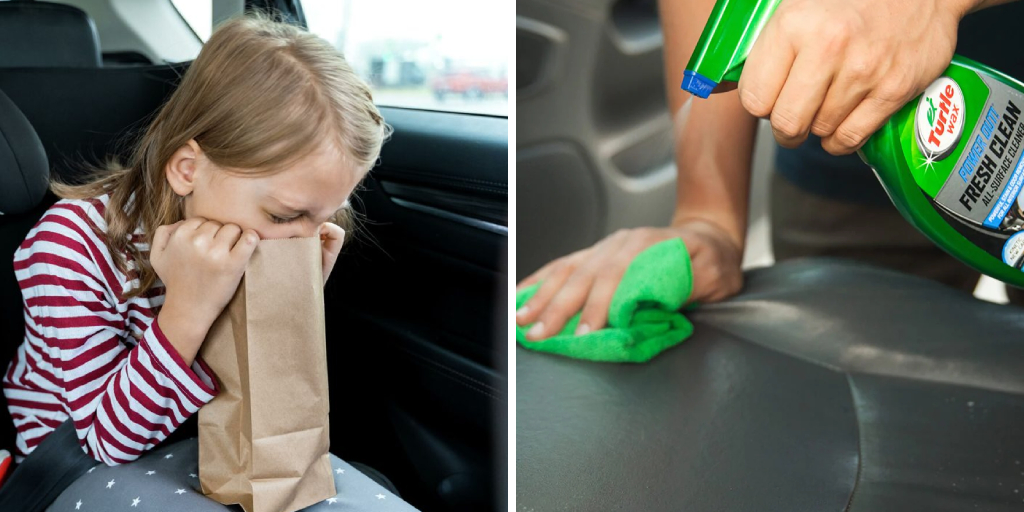
How to Remove Vomit Odor From a Car
Cleaning removes the source of the smell. Deodorizing works only after you remove the material and clean the affected surface.
An enzyme cleaner can help break down the organic residue that causes lingering odor. Choose one that is labeled for automotive upholstery or the specific material you need to clean. Follow the product label and test it first in a hidden spot.
Apply the cleaner lightly. Do not flood the seat. Let it remain on the surface for the label’s stated contact time, then blot or rinse as directed.
After the area dries, sprinkle a thin layer of baking soda on cloth upholstery or carpet. Leave it for several hours, or overnight if the car is in a dry, secure place. Then remove it with a vacuum that is safe for dry material.
Do not use baking soda as a substitute for cleaning. It can absorb some odor, but it will not remove vomit trapped in fabric or foam.
If the smell remains, inspect places that are easy to miss:
- Seat tracks
- The gap between the seat and center console
- Carpet under the floor mat
- Door pockets
- The lower edge of the seat
- Seat belt webbing
- Air vents near the affected area
- The spare-tire well or trunk carpet
Avoid spraying perfume or air freshener over the smell. This usually creates a stronger mixed odor and does not remove the source.

How to Clean Leather or Vinyl Car Seats
Leather and vinyl are less absorbent than cloth, but liquid can still enter seams, stitching, perforations, and seat cracks.
First, remove solids and blot the area. Then wipe the surface with a clean cloth dampened with mild soap solution or a cleaner approved for automotive leather or vinyl.


Do not scrub hard. Strong rubbing can remove leather finish or create a shiny patch on vinyl.
For genuine leather, use a leather cleaner after the mess is gone. Once the surface is fully dry, apply a small amount of leather conditioner if the vehicle’s care guide permits it. Keep conditioner away from cloth inserts and perforated sections unless the product label says it is suitable.
Avoid these products on leather or vinyl:
- Undiluted bleach
- Ammonia-based glass cleaner
- Acetone or nail-polish remover
- Abrasive powders
- Strong degreasers
- Large amounts of water
If vomit entered perforated leather, the seat seam, or a powered seat control, professional cleaning may be safer. The material can look clean while residue remains below the surface.

How to Clean a Car Seat Belt After Vomit
Seat belts need special care because harsh cleaners can weaken or damage the webbing.
Pull the belt out slowly and hold it extended. Support it so it does not retract while wet. Wipe the belt with a cloth dampened with mild soap and water.
Do not soak the belt. Do not use bleach, solvents, disinfectant sprays not approved for seat belts, or abrasive brushes. These products may affect the belt’s fibers or stitching.
Blot the belt with a clean, damp cloth to remove soap. Leave it fully extended until it dries. Do not let it retract while damp.
If the belt smells after cleaning, has visible residue inside the retractor, or was heavily soaked, ask a dealer or qualified auto interior professional about replacement or inspection. Do not take apart the retractor yourself.

How to Clean Floor Mats and Removable Carpet
Remove the floor mats from the vehicle before cleaning them. This prevents dirty water from running into the car’s carpet.
For rubber or all-weather mats:
- Remove the solids.
- Rinse the mat outdoors with water.
- Apply mild soap.
- Scrub with a soft brush.
- Rinse until no soap remains.
- Dry the mat completely before replacing it.
For carpet mats, scrape off solids and blot the wet area first. Use an upholstery cleaner or mild soap solution that is approved for carpet. Avoid soaking the mat’s backing.
Dry mats in a well-ventilated area. Do not put them back in the car while damp. A wet mat can trap moisture under the vehicle carpet and create a stale smell.
Check the carpet beneath the mat. Vomit often spreads under the mat’s edge. If the underlay is wet, lift the carpet edge only if you can do so without damaging trim, clips, wiring, or airbag components.


When to Use Disinfectant
Cleaning and disinfecting are different steps. Cleaning removes dirt and organic material. Disinfecting uses a chemical product to kill certain germs on a surface.
For a typical one-time mess with no known illness, careful cleaning may be enough for many vehicle surfaces. If someone has symptoms of a stomach virus, or if the mess contains blood, follow public health guidance and the disinfectant label.
Use only a product whose label allows the surface and intended germ. A product labeled for a hard, nonporous bathroom surface may damage car upholstery, leather, plastic trim, or electronics.
Never mix bleach with ammonia, vinegar, acids, or other cleaners. Dangerous gases can form. Bleach can also discolor fabrics, damage leather, corrode metal, and harm vehicle trim.
The CDC provides guidance for cleaning areas contaminated by norovirus, including the use of an appropriate bleach solution or an EPA-registered disinfectant with a norovirus claim. In a vehicle, the surface type and manufacturer’s instructions matter, so do not apply bleach to seats or carpet unless the material and product directions specifically allow it.
After cleaning, wash your hands with soap and water. Hand sanitizer is not a reliable substitute for handwashing after possible norovirus exposure.

What to Do if the Vomit Reached the Seat Foam
If the vomit soaked into the cushion, surface cleaning may not solve the problem. Seat foam can hold moisture and odor well below the fabric.
Signs that the foam is affected include:
- The smell returns after the surface dries
- The seat feels damp days later
- A dark mark spreads around the original spot
- Odor becomes stronger when the car heats up
- The stain comes back after cleaning
- Mold-like spots appear
Do not keep adding cleaner. More liquid may push the residue deeper.
A professional auto detailer can use extraction equipment and suitable interior cleaners. Tell the detailer what happened and which products you already used. If vomit reached seat wiring, a seat heater, an airbag area, or electrical controls, have the vehicle inspected by a qualified technician.
If the odor cannot be removed because the foam is heavily contaminated, replacing the affected foam or upholstery may be more practical than repeated cleaning.

Common Mistakes to Avoid
Scrubbing too soon
Scrubbing spreads fresh material and presses it into the fabric. Lift solids first, then blot, then clean.
Using hot water
Hot water can spread protein-based stains and make some odors harder to remove. Start with cool or lukewarm water unless the cleaner’s label says otherwise.
Soaking the seat
A wet seat may look clean while the foam stays damp. Use light applications and extract moisture after cleaning.


Using bleach on everything
Bleach is not a universal car cleaner. It can damage upholstery, dyes, leather finish, metal, and plastic.
Closing the car before it dries
A closed, damp cabin traps odor. Airflow is part of the cleaning process.
Cleaning only what you can see
Check seams, gaps, floor mats, seat rails, and the carpet below the mat. Small hidden areas can keep the smell alive.
Using a regular vacuum on wet material
A standard household vacuum is not designed for wet pickup. Use a wet/dry vacuum or wait until the area is dry.

Quick Decision Guide
| Surface or problem | Best first step | Main caution |
|---|---|---|
| Cloth seat | Remove solids, blot, lightly clean, extract, dry | Do not soak the foam |
| Carpet | Remove mat, blot, clean, extract, dry | Check below the mat |
| Rubber mat | Rinse and scrub outdoors | Dry both sides |
| Leather seat | Wipe with approved leather cleaner | Avoid harsh chemicals |
| Vinyl seat | Use mild soap or vinyl cleaner | Do not scrub the finish |
| Seat belt | Wipe with mild soap and water | Do not bleach or soak |
| Strong odor after cleaning | Use a labeled enzyme cleaner | Treat the source, not just the smell |
| Odor from seat foam | Stop adding liquid | Use a professional detailer |
| Possible stomach virus | Clean, then use suitable disinfectant guidance | Follow the product label |
The main trade-off is moisture. More liquid may help loosen residue, but it also raises the risk of wet foam, hidden odor, and electrical damage.

Frequently Asked Questions
Can I use vinegar to clean vomit out of a car?
Vinegar may reduce some odors, but it is not a complete cleaner or disinfectant for every germ. It can also harm some finishes and should never be mixed with bleach or other cleaners. A surface-approved cleaner is the safer choice.
Will baking soda remove vomit smell from a car?
Baking soda may absorb some surface odor after the area is cleaned and dried. It will not remove residue trapped in upholstery or foam. Use it as a final odor step, not as the main treatment.
Can I use a steam cleaner on car seats?
Steam can add substantial heat and moisture. It may also push contamination deeper into foam or affect adhesives, dyes, leather finishes, and electrical parts. Use it only when the vehicle maker and equipment instructions support it.
How long does it take for a car seat to dry?
Drying time depends on the amount of water, humidity, temperature, airflow, and seat material. A lightly damp cloth seat may dry in several hours with good airflow. A soaked cushion can take much longer. Do not close the car or reinstall a wet mat until the material is fully dry.
Should I replace the car seat after a child vomits in it?
If you mean a child safety seat, follow the car seat maker’s cleaning instructions. Do not use bleach or chemicals that the manufacturer does not approve. Replace the seat if the manufacturer says it cannot be cleaned, if the harness is damaged, or if the seat was involved in a crash. The National Highway Traffic Safety Administration advises caregivers to follow the specific child restraint manual.
Final Steps for a Clean, Fresh-Smelling Car
After cleaning, inspect the area in bright light. Run your hand over the fabric to check for dampness, and smell the seat again once it is dry.
If the surface is clean, dry, and odor-free, replace the floor mats and dispose of the gloves and waste. Wash your hands with soap and water.
If the smell returns, the stain spreads, or the seat remains damp, stop adding products. The residue may be inside the foam or under the carpet. At that point, a professional detailer or qualified technician can prevent further damage and address the source.


