

Use a multimeter and a simple load test: check resting voltage, crank voltage, and charging voltage.
I’ve been testing and replacing car batteries for years, both in my shop and on the roadside. This guide walks you through how to test a car battery step by step, using tools you can buy or find at an auto shop. I’ll explain safe procedures, what numbers to expect, how to interpret results, and when to call a pro. Read on to feel confident diagnosing battery problems and avoiding being stranded.

Why and When to Test a Car Battery
Batteries fail slowly most of the time. A battery might still start your car one day and die unexpectedly the next. Testing helps you spot a weak battery before it leaves you stranded.
Testing is wise when any of these happen:
- The car cranks slowly or takes longer to start.
- Dashboard lights are dim at idle.
- The battery is older than three to five years.
- You notice corrosion, leakage, or a swollen case.
Regular testing saves time and money. Knowing how to test a car battery helps you determine whether to charge, repair, or replace it. I’ve seen many drivers replace batteries that only needed a charge or terminal clean, and others who kept a dying battery too long and lost data on vehicle systems.
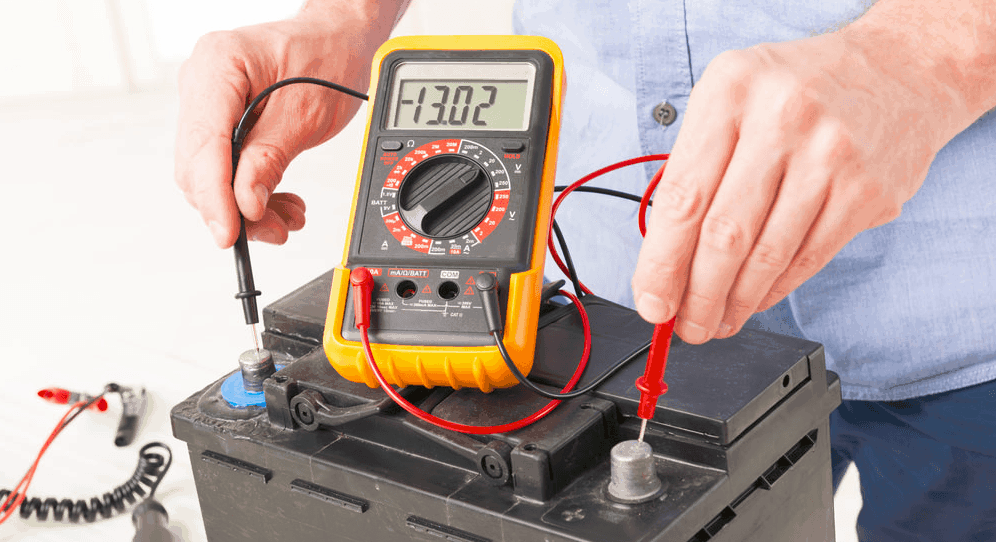
How to Test a Car Battery: Tools You Need
A few simple tools let you test reliably at home or on the road. Each tool adds a layer of confidence when you evaluate battery health.
Essential tools:
- Multimeter or digital voltmeter. Use this to measure static and dynamic voltages.
- Basic socket set and wire brush. For safe disconnection and terminal cleaning.
- Safety goggles and gloves. Batteries can emit acid and hydrogen gas.
- Battery charger or maintainer. Useful for charging and reconditioning.
Nice-to-have professional tools:
- Load tester. Simulates engine starting load to test performance.
- Conductance tester. Gives state-of-health without heavy loads.
- Hydrometer. For flooded batteries, checks specific gravity of cells.
Choosing the right tool matters when you want clear answers about how to test a car battery. In my experience, a good multimeter covers most homeowner needs, while a conductance or load tester is worth it for shops and frequent drivers.
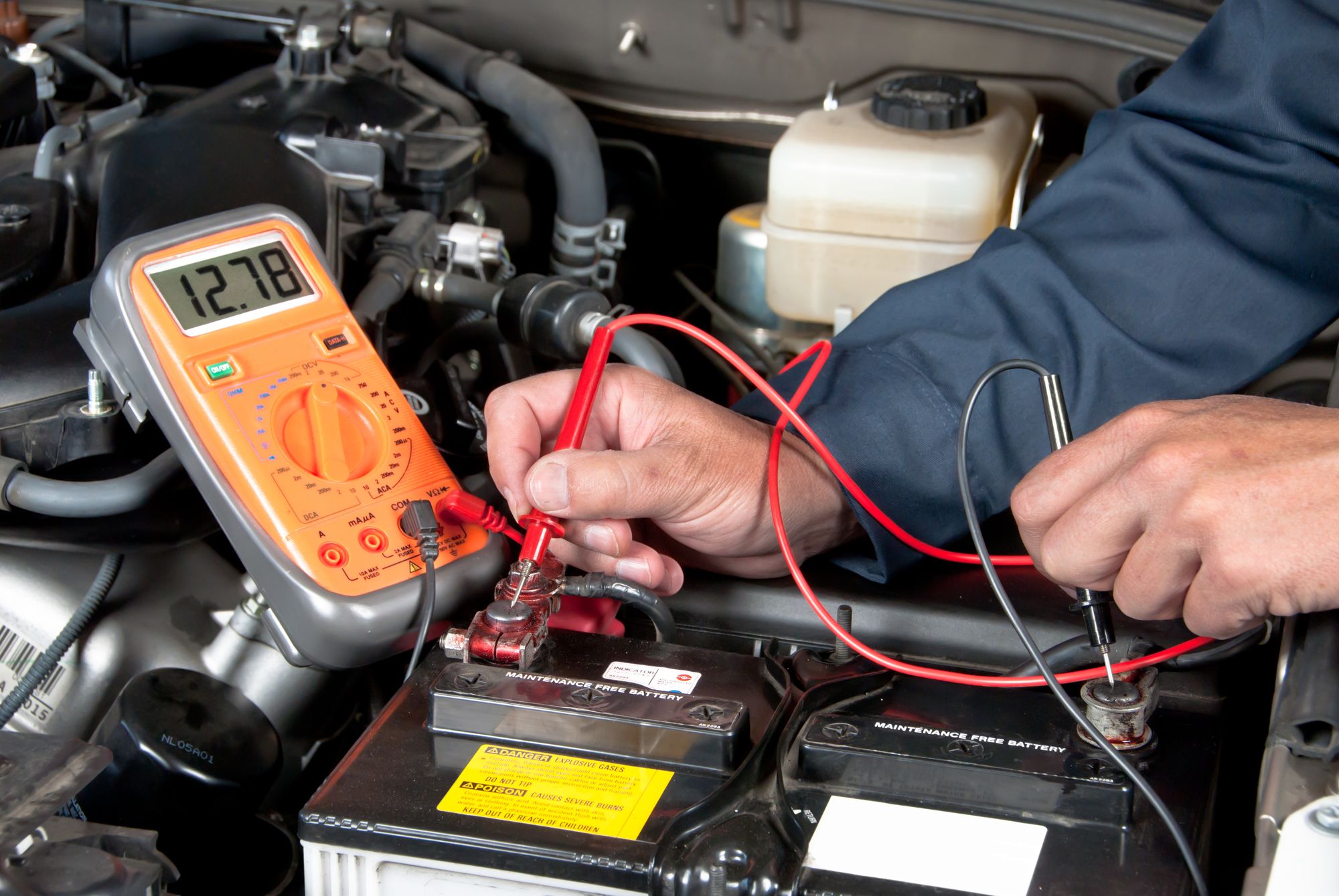
How to Test a Car Battery: Step-by-Step with a Multimeter
The multimeter test is the most accessible method to learn how to test a car battery. It shows voltage and reveals if the battery can hold a charge.
Safety first:
- Park on level ground, turn off the engine, and set the parking brake.
- Wear goggles and gloves. Keep flames and sparks away.
- Remove jewelry and metal objects to avoid shorting terminals.
Step-by-step:
- Visual inspection. Look for cracks, bulges, corrosion, or leaks. Clean terminals with a wire brush if needed.
- Resting voltage test. With the car off and after 30 minutes of rest, set the multimeter to DC volts and touch red to positive and black to negative. A healthy battery reads about 12.6 volts or higher. Anything below 12.4 volts suggests partial discharge.
- Crank (load) voltage test. Have someone crank the engine while you measure voltage. Voltage should not drop below about 9.6 volts for a healthy battery at normal temperatures. A deeper drop implies low cranking capability.
- Charging voltage test. Start the engine and measure across the battery. A functioning alternator should show 13.7 to 14.7 volts. Lower or higher means charging-system issues.
- After charging or driving, recheck resting voltage. If the battery won’t hold 12.4–12.6 volts after a full charge, it likely needs replacement.
Tips and numbers to remember:
- 12.6 V = fully charged (approx)
- 12.4 V = about 75% charged
- 12.2 V = about 50% charged
- 12.0 V or lower = discharged or bad
- Cranking voltage under 9.6 V = poor cranking performance
I once misdiagnosed a slow-cranking issue as an alternator problem. A quick multimeter crank test showed the battery fell to 8.2 volts under load. Replacing the battery fixed the issue and saved a needless alternator replacement.

How to Test a Car Battery: Load Testing and Bench Tests
A load test simulates the strain of starting the engine. This is the next step after voltage checks if you need a definitive answer.
What a load test does:
- Applies a controlled load equal to half the battery’s cold cranking amps (CCA) for 15 seconds.
- Monitors voltage response to that load.
- Determines if the battery can deliver starting current reliably.
How to perform a basic load test:
- Fully charge the battery first.
- Connect the load tester per the tool’s instructions.
- Apply the load for 10–15 seconds and watch the voltage. If the voltage under load stays above 9.6 V (at around 70°F / 21°C) the battery passes. Falling below that indicates failure.
Conductance and bench testers:
- Conductance testers estimate battery health without heavy loads. They are fast and safe for installed batteries.
- Professional shops often remove the battery for a bench test that simulates cold conditions and measures internal resistance.
Flooded-cell batteries:
- Use a hydrometer to check specific gravity of each cell. Readings should be consistent and near the charged value. A bad cell shows low gravity compared to others.
Limitations and realities:
- Load and conductance testers give the best on-the-spot verdict on battery condition.
- Temperature affects results. Batteries test weaker in cold weather.
- A charging-system problem can mask or mimic a bad battery. If charging voltage is wrong, evaluate the alternator and wiring.
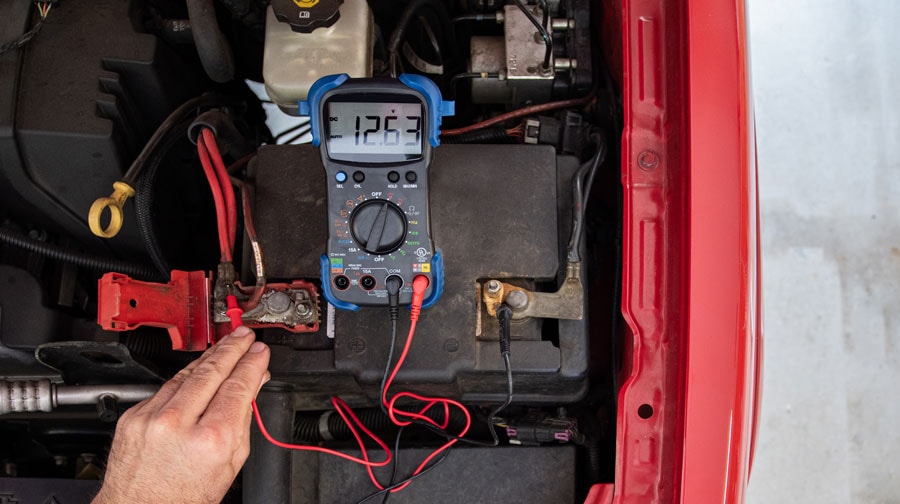
How to Test a Car Battery: Additional Checks and Tips
Real-world issues often involve more than the battery itself. Here’s how to test related systems and avoid common mistakes.
Parasitic draw test:
- If your battery drains overnight, test for excessive current draw with a clamp meter or ammeter in series. Typical acceptable draw is under 50 milliamps for many modern cars.
Terminal and cable checks:
- Corroded or loose terminals can mimic a bad battery. Clean terminals, tighten clamps, and test voltage drop while cranking. Voltage drop across a bad cable will be noticeable.
Alternator checks:
- A healthy alternator produces 13.7–14.7 volts at the battery with the engine running. Test under load (lights, HVAC) to ensure the alternator can cope.
Battery age and replacement:
- Most lead-acid batteries last 3–5 years. High heat reduces lifespan. If your battery is older than three years and tests borderline, replace it proactively.
Winter tips:
- Cold reduces cranking amps. If you live in cold climates, choose a battery with higher CCA and keep it fully charged to prevent freeze damage.
PAA-style quick questions:
- Will a dead battery always show low voltage? Not always. A battery can show decent resting voltage but fail under load, so always do a crank or load test when in doubt.
- Can charging a battery fix it? Charging restores capacity temporarily if the battery is healthy. If internal damage or sulfation is present, charging won’t fix the problem long term.
- Is a conductance test as good as a load test? Conductance testers are fast and accurate for most cases, but a load test remains the gold standard for definitive starting performance.
Personal note from experience:
- I once bought a used car with a near-perfect resting voltage. The car stalled on cold mornings because the battery’s internal resistance was high. A conductance test caught it, and the owner avoided being stranded by replacing the battery.

Frequently Asked Questions of how to test a car battery
How often should I test my car battery?
Test at least once a year and before long trips. Test more often if the battery is older than three years or you live in extreme temperatures.
Can I test a car battery without tools?
You can do a visual check and try starting the car, but accurate testing requires a multimeter or professional tester to confirm health and charging function.
What voltage means my battery is bad?
A resting voltage under 12.2 volts typically indicates a weak battery. If the battery drops below about 9.6 volts during cranking, it likely fails a load test.
Will my battery recover after a complete discharge?
Some batteries can be recharged after deep discharge, but repeated deep discharges shorten life. If internal damage occurred, replacement is often needed.
Does a slow crank always mean a bad battery?
Not always. Slow crank can result from poor terminals, bad starter, low fuel, or a failing alternator. Perform a battery load test and charging check to isolate the cause.
Conclusion
Testing your car battery is simple when you know the steps. Use a multimeter for quick checks, perform a load or conductance test for certainty, and inspect terminals and charging systems. Regular testing protects you from unexpected failures and saves money by preventing unnecessary replacements.
Take action this week: check your battery’s resting voltage, clean the terminals, and schedule a load test if your battery is more than three years old. If you found this guide helpful, leave a comment with your experience or subscribe for more practical auto-care tips.