

Use a spare key, remote unlock app, hidden key, or a licensed locksmith before forcing a car door.
A broken car door handle is frustrating, but it does not always mean you are locked out for good. The safest way to unlock a car door with a broken handle depends on whether the outside handle, inside handle, lock cylinder, or latch cable has failed. This guide explains practical steps, common mistakes, repair limits, and when professional help is the best choice.
Identify What Actually Broke
Before trying to unlock a car door with a broken handle, check which part has failed. A door handle is only one part of the entry system. The lock, latch, linkage rod, cable, and electronic actuator may still work.
Look for these signs:
• The outside handle moves but does not open the door. The connecting rod or cable may have come loose.
• The handle feels loose or hangs lower than normal. The handle mount may be cracked.
• The key turns, but the door stays locked. The lock cylinder may not connect to the latch.
• The inside handle works, but the outside handle does not. The outside handle or its linkage may be damaged.
• Neither handle works. The latch, cable, actuator, or door mechanism may have failed.
• The remote unlock button does nothing. The car battery, key fob battery, fuse, or door actuator may be the cause.
A quick inspection can save time. Test the other doors, the trunk, the key fob, and the mechanical key. Do not pull hard on a damaged handle, because the rod or cable can break completely.
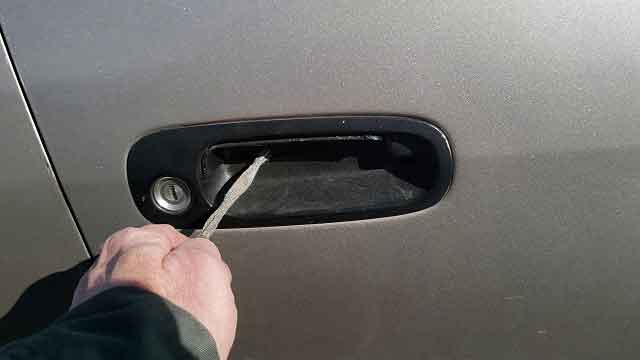
Safe Ways to Unlock a Car Door With a Broken Handle
Several methods may work without damaging the vehicle. Start with the easiest option and stop if the door resists.
Use the spare key
A spare key is the simplest solution. Some vehicles have a key slot hidden under a small cover on the driver’s door handle. Your owner’s manual will show how to remove that cover.
If the key will not turn, do not force it. A seized or damaged lock cylinder can break the key and create a larger repair.
Try the key fob
Stand close to the vehicle and press the unlock button once. If the car does not respond, replace the key fob battery if you have one available.
Some vehicles require two presses to unlock all doors. Others unlock only the driver’s door first. Check the dashboard or owner’s manual for the correct sequence.
Use the hidden mechanical key
Many modern key fobs contain a small metal key. Look for a release tab on the side or back of the fob. Slide the key out and use it in the hidden door lock.
This method is useful when the fob battery is dead. It may also work when the vehicle battery is weak, although the alarm may sound after entry.
Unlock the car through a connected app
Some vehicles allow remote unlocking through a manufacturer app. This requires an active account, a working phone signal, and a vehicle with connected services.
This method can be very helpful at home or in a parking lot. It will not work if the service has expired or the car cannot receive the signal.
Check another door or the trunk
A broken driver’s door handle does not always affect the other doors. Try the passenger door, rear door, or trunk with the key or remote.
If you enter through another door, unlock the car from inside before driving. Do not drive with a door that cannot latch safely.

How to Unlock the Door From Inside
If you can enter the vehicle through another door, you may be able to open the damaged door from the inside. Use the interior lock switch first, then pull the inside handle once.
Some cars have a child safety lock on the rear doors. When it is active, the rear door will not open from inside. In that case, open the door from outside after unlocking it.
If the inside handle also fails, do not yank it repeatedly. The handle may be connected to a thin cable or plastic clip. Repeated force can damage the latch and make the repair more expensive.
Move the door gently while operating the lock and handle. A small change in pressure can release a latch that is under tension. If the door remains stuck, stop and call a locksmith or repair shop.
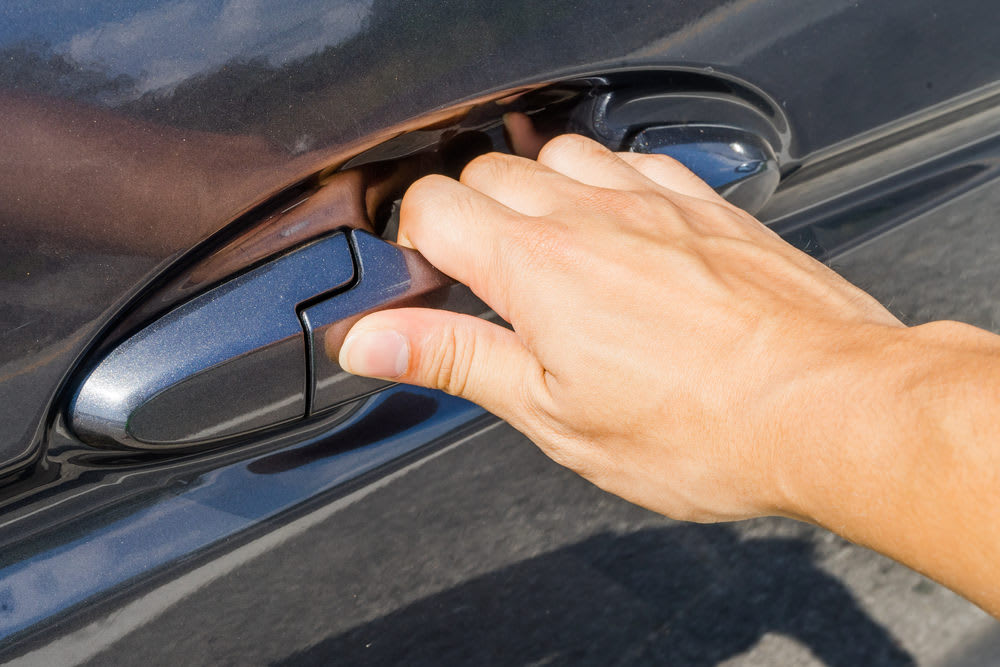
What to Do When the Door Is Completely Stuck
A fully stuck door needs extra care. The problem may involve the latch, hinges, wiring, actuator, or a broken linkage inside the door.
Try these low-risk checks:
• Press the unlock button while gently pushing the door inward. This can reduce pressure on the latch.
• Pull the handle lightly while pressing unlock again.
• Test the central locking button from another open door.
• Check whether the vehicle battery is dead.
• Look for a manual lock button or emergency release.
Avoid inserting tools between the glass and weather seal. This can damage the seal, scratch the glass, bend the window frame, or trigger wiring problems. It can also interfere with side airbags found inside some doors.
If a child, pet, or vulnerable person is trapped inside, call emergency services immediately. Do not spend time trying several entry methods when there is a safety risk.

Unlocking a Car With a Dead Battery
A dead vehicle battery can make a broken handle seem worse. The remote may not work, and power locks may stop responding.
First, check whether the key fob has a mechanical key. Then look for the manufacturer’s approved method for accessing the hood or jump-start terminal. Some vehicles provide a protected positive terminal under the hood or near the front bumper.
Do not connect a jump pack unless you know the correct terminals. Reversing polarity can damage electronic control modules. If the battery is fully dead and every door is locked, roadside assistance is usually safer than trying to pry the door open.
Many automakers provide detailed emergency entry instructions in the owner’s manual. Use the instructions for your exact year and model because designs vary widely.

When to Call a Locksmith
A licensed automotive locksmith is often the fastest solution when no key or app works. Locksmiths have specialized tools and training for opening vehicles with less risk of damage.
Call a professional when:
• The key is locked inside the vehicle.
• The lock cylinder is damaged.
• The handle and latch both fail.
• The car has a dead battery and no accessible mechanical key.
• The vehicle has side airbags or complex door electronics.
• You are not sure whether you own or are authorized to access the vehicle.
A reputable locksmith may ask for identification and proof of ownership. This is normal and helps prevent unlawful vehicle entry. Ask for the total price before work begins, including service fees, after-hours charges, and replacement parts.
Roadside assistance through an auto club, insurance policy, vehicle warranty, or dealership may also cover lockout service.
Temporary Repairs After You Get Inside
Once the door is open, inspect the handle before using the car normally. A temporary fix may help you move the vehicle, but it should not replace a proper repair.
A technician may find:
• A disconnected linkage rod
• A broken plastic retaining clip
• A damaged exterior handle
• A failed door latch
• A faulty actuator
• A stretched or broken cable
• Corrosion inside the lock assembly
Do not rely on tape, wire, or glue for a safety-critical latch. The door must close and lock firmly. A door that appears closed but does not latch can open during movement, which is dangerous.
Take photos before removing the door panel. Keep screws and clips in a small container. Many clips break when removed, so order the correct replacement part for the vehicle’s year, trim, and door position.

Common Mistakes to Avoid
Many vehicle owners make the problem worse by rushing. A calm approach protects the paint, glass, seals, and electronics.
Avoid these mistakes:
• Do not use a coat hanger or sharp rod near the window. It can damage wiring and weather seals.
• Do not wedge the top of the door away from the frame. Bending the frame can cause wind noise and water leaks.
• Do not force a key that does not turn. The key may snap inside the cylinder.
• Do not keep pressing the remote if the vehicle battery is dead. It will not restore power.
• Do not remove the door panel while the door is shut unless a trained technician knows the model-specific procedure.
• Do not drive if the door cannot latch securely.
A useful lesson from automotive repair work is that the first attempted entry often causes more damage than the original failure. Gentle checks should come first. Tools should be the last resort, not the starting point.

How Much Does Repair Usually Cost?
The price depends on the failed part, vehicle model, labor time, and local rates. A simple handle or retaining clip may cost less than a complete latch or actuator.
Typical cost factors include:
• Emergency unlock service
• Replacement exterior or interior handle
• Door latch assembly
• Lock cylinder or key programming
• Labor to remove the door panel
• Paint matching for a body-colored handle
• Diagnostic testing for electronic locks
A locksmith may solve the immediate lockout, while a mechanic or body shop completes the repair. For newer vehicles, a dealership may be needed if the key, immobilizer, or electronic module must be programmed.
Ask for a written estimate. A low initial quote may not include parts, programming, travel, or after-hours charges.

How to Prevent Another Lockout
After you unlock a car door with a broken handle, take steps to reduce the chance of being stranded again.
Keep these items ready:
• A working spare key
• A fresh key fob battery
• The manufacturer’s roadside assistance number
• A charged phone
• Proof of insurance and vehicle ownership
• The owner’s manual or a saved digital copy
Have weak handles repaired early. A handle that feels loose, sticks, or needs extra force is giving you a warning. Lubricate the lock only with a product approved for automotive locks, and avoid spraying random oil into electronic components.
Store a spare key in a secure place, not inside the vehicle. For households with several drivers, make sure each person knows how to use the mechanical key hidden in the fob.
Frequently Asked Questions
Can I unlock a car if the outside handle is broken?
Yes, you may still unlock it with the key, key fob, connected app, another door, or the trunk. If the latch or lock cylinder is also damaged, a locksmith may be needed.
Can I open the door from inside if the outside handle is broken?
Often, yes. Unlock the vehicle from inside and pull the interior handle gently. If the inside handle also fails, avoid forcing it because the latch cable or linkage may break.
What should I do if my car key will not turn?
Check that you are using the correct key and that the steering wheel is not applying pressure to the lock system. Do not force the key; call a locksmith if the cylinder is frozen, damaged, or blocked.
Can roadside assistance unlock a car with a broken handle?
Most roadside assistance plans can send a trained technician for a vehicle lockout. Tell the provider that the handle is broken so the technician brings suitable tools and understands that normal entry may not work.
Is it safe to use a coat hanger to open a locked car?
No. A coat hanger can damage weather seals, wiring, airbags, and the locking mechanism. It can also scratch the vehicle or bend the window frame.
How do I unlock a car with a dead battery and broken handle?
Use the mechanical key inside the key fob if your vehicle has one. If that does not work, contact roadside assistance or a licensed automotive locksmith rather than forcing the door.
Conclusion
The safest way to unlock a car door with a broken handle is to start with the spare key, mechanical key, remote app, or another working door. Check whether the failure involves only the handle or also the latch, lock cylinder, actuator, or vehicle battery.
Avoid prying tools and force. They can turn a small handle repair into expensive glass, paint, seal, or electrical damage. If the door will not open safely, contact roadside assistance or a licensed locksmith, then arrange a proper repair before driving. Keep a spare key and emergency contact details ready, and share your experience or questions in the comments.