

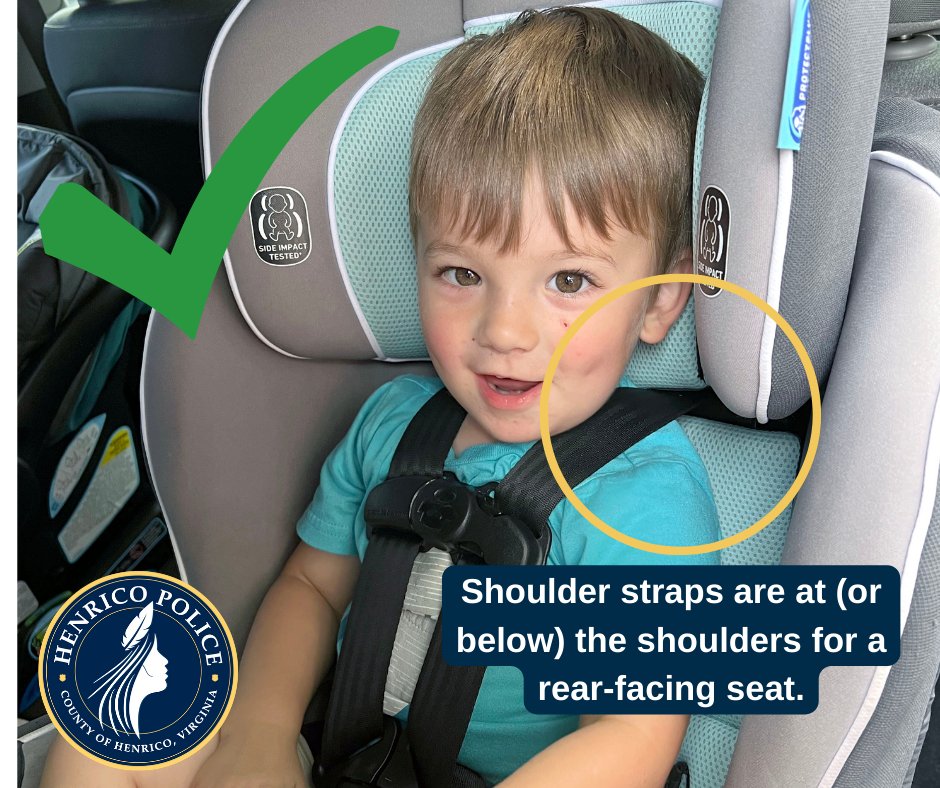
For a rear-facing infant car seat, the shoulder straps should sit at or just below the baby’s shoulders. The straps should lie flat, pass through the correct harness slots, and feel snug against the child’s body without pressing into the neck.
This position helps the harness hold the baby in the safest way during a sudden stop or crash. Always check the car seat manual, because some seats use different slot systems or have special instructions.

The Correct Harness Height for a Rear-Facing Infant Seat
The shoulder straps on a rear-facing infant car seat should come from the harness slots at or below the child’s shoulders.
Look at the baby from the side. The strap should leave the car seat shell level with the shoulders or slightly lower. It should not come from a slot well above the shoulders.
Why does the height matter? In a rear-facing seat, crash forces push the baby toward the back of the seat. Straps placed at or below the shoulders help hold the child down and back in the shell.
Use the following guide:
| Car seat direction | Correct shoulder strap position |
|---|---|
| Rear-facing | At or just below the shoulders |
| Forward-facing | At or just above the shoulders |
| Booster seat | No shoulder harness; use the vehicle seat belt |
Most infant-only seats are used rear-facing. If your child rides in an infant seat, the rear-facing rule is usually the one that applies.
The harness should not sit on the baby’s neck. It also should not come from a slot far below the shoulders. If the straps are too low, they may press into the child’s back or fail to fit correctly.

How to Find the Right Harness Slot
The correct harness slot is the lowest slot that is level with or slightly below the baby’s shoulders while the child sits in the seat.
Follow these steps:
- Place the car seat on a flat surface.
- Put the baby in the seat without a coat or bulky clothing.
- Make sure the baby’s back and bottom rest flat against the seat.
- Check that the child’s shoulders are centered between the harness straps.
- Look at the strap entry point on the back or side of the seat.
- Choose the slot that is at or just below the shoulders.
- Rethread the straps only as the manual explains.
Many seats have two or more harness height options. Some seats use a movable headrest or harness system. If the headrest and harness move together, adjust the headrest so the straps leave the seat at the correct height.
Do not rely only on the strap position at the baby’s chest. The key point is where the straps enter the seat behind the child.
When to move the straps up
Raise the harness when the child’s shoulders are above the current rear-facing strap slots. The straps should still come from at or just below the shoulders.
Do not move the straps up simply because the baby looks tall or the straps seem short. First check the manual and confirm that the child has not outgrown the seat by height or weight.
A child may still fit the seat even when the head appears close to the top. Each car seat has its own rules for head clearance, height, weight, and harness fit. Follow the limits printed on the seat and listed in the manual.
A special warning about harness covers
Some infant seats have padded harness covers. These covers may make it hard to see the strap’s true position. Check where the webbing leaves the seat, not just where the padding rests on the baby.
Never add aftermarket strap pads, inserts, cushions, or head supports unless the car seat maker specifically approves them for that seat. Extra padding can change how the harness works.
How Tight Should Infant Car Seat Straps Be?
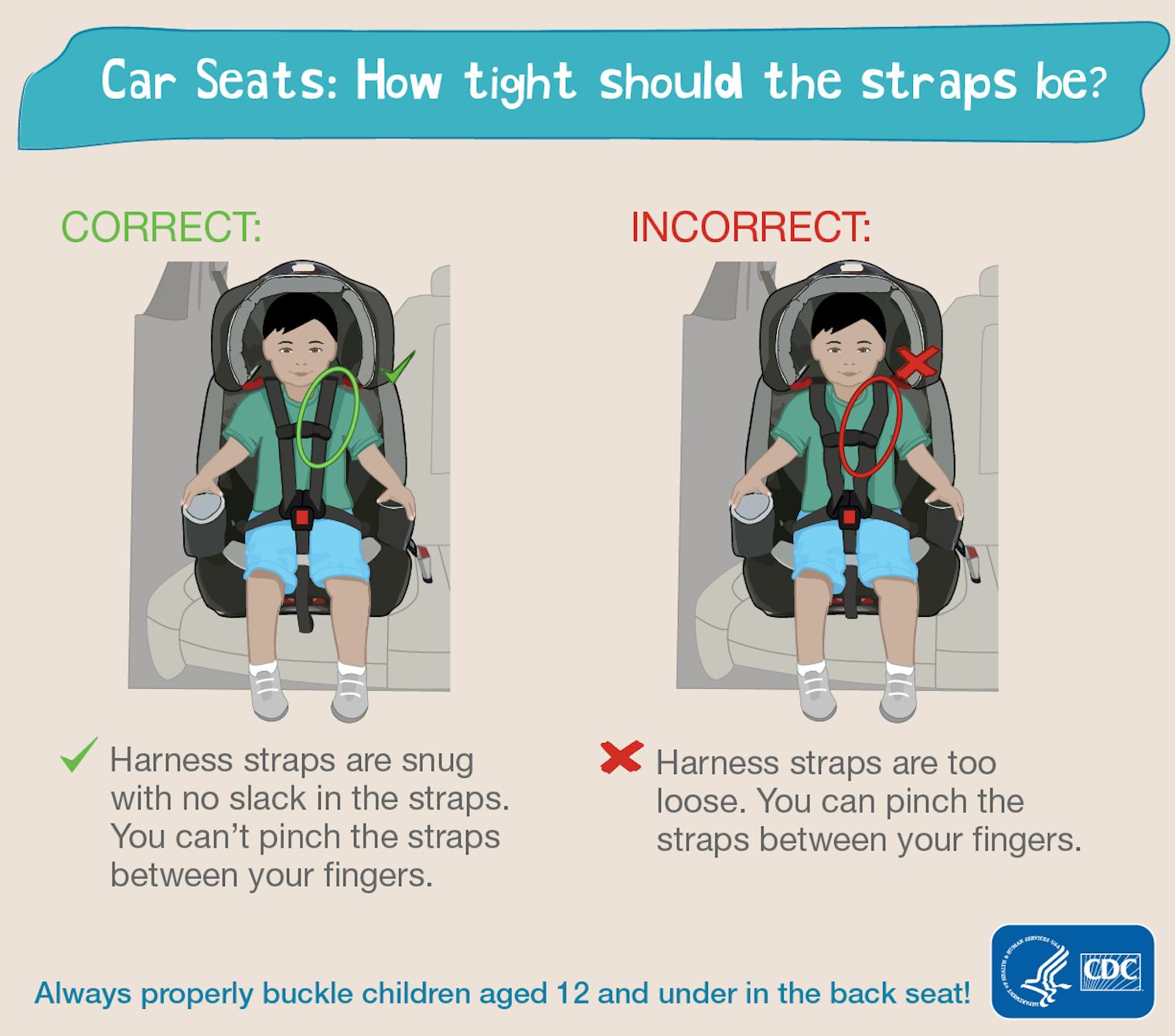
The harness should be snug enough that you cannot pinch any slack at the child’s shoulder.
After placing the baby in the seat:
- Buckle the harness.
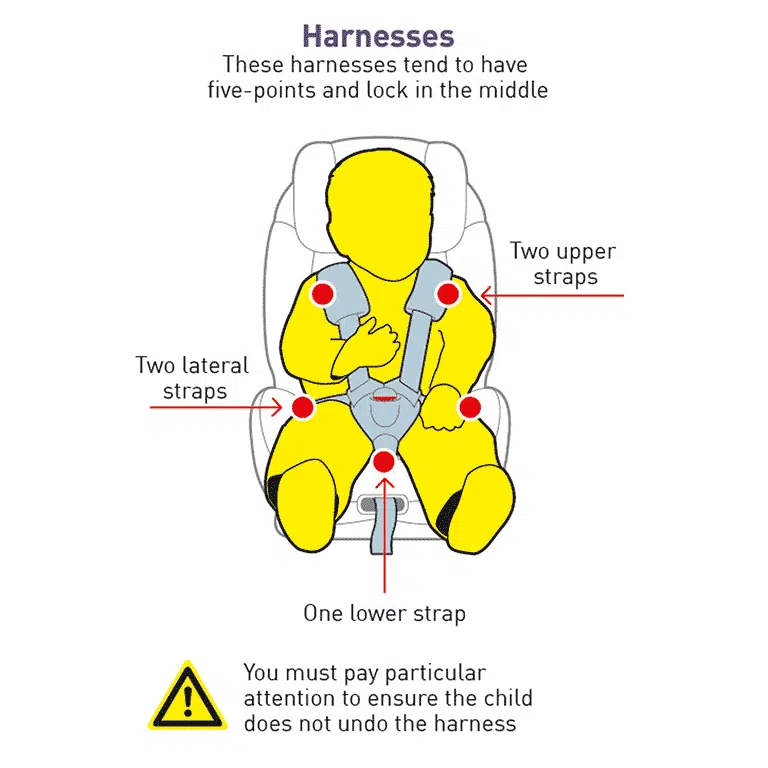
- Position the chest clip at the baby’s armpit level.
- Pull the harness adjuster strap until the webbing is snug.
- Try to pinch the harness strap near the shoulder.
- If you can pinch a fold of webbing, tighten the harness.
- Check that the straps lie flat and do not twist.
The pinch test checks for slack in the harness. It is not a test of whether the straps feel comfortable to an adult. A properly tightened harness may look firm, but it should not press the baby’s skin or restrict normal breathing.
The chest clip helps keep the shoulder straps in the right place. It should sit across the chest at armpit level, not across the belly or neck. The clip is not a substitute for a tight harness.
Do not pull the harness so tight that the baby’s skin turns red or the chest clip presses into the neck. If the harness seems too short even after you remove bulky clothing, check the seat manual. The straps may be routed incorrectly, or the child may have reached the seat’s height or weight limit.
Clothing Can Change the Harness Fit
Avoid thick coats, snowsuits, and bulky layers under the harness. They can create hidden space between the child and the straps.
The harness may seem tight when the baby is dressed, but the padding can compress during a crash. This can leave the harness too loose to hold the child well.
Instead:
- Dress the baby in thin layers.
- Buckle the harness directly over the clothing.
- Add a blanket over the buckled harness if needed.
- Keep the blanket below the chest clip.
- Use only an approved cold-weather cover that does not go under the baby.
A thin fleece layer is often less bulky than a winter coat, but the car seat maker’s instructions still control. Never place a blanket, pillow, aftermarket insert, or coat between the baby and the harness unless the manufacturer allows it.
This rule applies even on short trips. A quick ride can still involve a sudden stop.

Common Shoulder Strap Mistakes
The most common mistake is choosing a strap slot based on convenience instead of the child’s shoulder height. The correct slot may change as the baby grows.
Straps are above the shoulders
For a rear-facing baby, straps that come from above the shoulders are usually too high. Move the straps to a slot at or just below the shoulders, if the seat allows that position.
If no approved slot is at or below the shoulders, stop and read the manual. The child may not fit the seat correctly, or the straps may be routed through the wrong openings.
Straps are below the shoulders
Straps that come from far below the shoulders may also be wrong. They can pull down on the child’s shoulders and may not provide the intended fit.
Use the lowest slot that lines up with the shoulders or sits slightly below them. Do not use a lower slot just to make the straps seem longer.
The straps are twisted
A twisted strap does not spread force across the webbing as designed. Untwist each strap before buckling the child.
Run your fingers along the webbing from the buckle to the seat. If it twists behind the cover, consult the manual for the correct way to remove and replace the cover.
The chest clip is too low
A chest clip on the stomach is too low. A clip near the neck is too high. Place it at armpit level after tightening the harness.
The baby slouches
Slouching can change the apparent strap height and create extra space. Make sure the baby’s bottom is against the seat back and the back is supported according to the seat’s instructions.
Do not add rolled towels or positioners unless the seat maker specifically permits them. If the baby’s head falls forward, check the seat’s recline angle and installation before adding anything.
What If the Infant Car Seat Straps Do Not Fit?
If the straps do not seem to fit, check the problem in a safe order.
1. Read the car seat manual
Find the sections on:
- Harness height
- Rear-facing use
- Newborn positioning
- Harness routing
- Recline angle
- Height and weight limits
- Approved inserts and accessories
The manual for the exact model is more reliable than a general rule. Do not assume that two seats from the same brand use the same harness system.
2. Check the harness routing
Make sure both straps pass through matching slots. One strap should not be higher than the other unless the manual clearly permits a special design.
Check the back of the seat if the harness was recently changed. A strap may have been routed over a metal bar, under the wrong guide, or through an incorrect slot.
3. Check the baby’s position
Place the baby’s bottom fully into the seat. Make sure the baby is not sitting on a blanket or insert that changes the position.
Newborns may need the manufacturer’s included infant insert. Use it only as directed. Remove it when the manual says the child has outgrown it.
4. Check the recline angle
Use the level indicator on the seat. The correct angle can vary by the child’s age, size, and the vehicle seat. An incorrect angle can affect the baby’s position and harness fit.
5. Get hands-on help
A certified Child Passenger Safety Technician can check the harness fit and installation. The National Highway Traffic Safety Administration provides a car seat inspection station search tool.
A technician can help, but the car seat manual and vehicle owner’s manual still control the final installation. Ask the technician to explain what they changed so you can repeat the check later.

Infant Car Seat Harness Fit Checklist
Use this short checklist before each trip:
- The seat is installed in the rear-facing position.
- The baby’s back and bottom rest against the seat.
- The shoulder straps come from at or just below the shoulders.
- The straps lie flat and are not twisted.
- The harness is snug; you cannot pinch slack at the shoulder.
- The chest clip sits at armpit level.
- The baby wears no bulky coat under the harness.
- The seat recline indicator is in the approved range.
- The seat has not passed its expiration date.
- The seat has not been involved in a crash.
- The seat is used within its height and weight limits.
A useful final check is to look at the baby from the front and side. The harness should keep the child centered, with the straps resting on the shoulders and the chest clip across the middle of the chest.

Infant Car Seat Strap Position by Child Size
Shoulder strap height depends on the child’s position, not only age. Two babies of the same age may need different harness slots.
| Situation | What to check |
|---|---|
| Newborn | Use the lowest approved rear-facing slot and any included insert as directed |
| Growing infant | Move the straps when the shoulders rise above the current slot |
| Large infant | Check the seat’s height and weight limits, not only the strap setting |
| Small child with head slump | Check recline angle and body position before adding support |
| Child nearing the top limit | Read the manual for the exact height and head-clearance rule |
Do not use age alone to decide when to change the harness height. The child’s shoulder position and the seat’s instructions matter more.
A rear-facing infant seat should remain rear-facing until the child reaches the seat’s stated height or weight limit. The American Academy of Pediatrics recommends keeping children rear-facing as long as possible, within the limits of the specific car seat.

When Should You Replace or Stop Using the Seat?
Replace the seat when the child reaches any stated height or weight limit, or when the manufacturer says the seat has expired.
Also stop using a seat if:
- It has been in a moderate or serious crash.
- The harness webbing is cut, frayed, or damaged.
- The shell is cracked.
- The buckle does not work properly.
- Parts are missing.
- The seat’s history is unknown.
- The manufacturer says it must be replaced after a crash.
NHTSA advises replacing a car seat after a moderate or severe crash. A minor crash may meet specific conditions for continued use, so check the federal guidance and the manufacturer’s instructions.
Do not buy a used seat unless you can confirm its history, age, crash history, condition, and all parts. A lower price does not offset an unknown safety history.

Frequently Asked Questions
Should infant car seat straps be above or below the shoulders?
For a rear-facing infant car seat, the straps should come from at or just below the baby’s shoulders. They should not come from well above the shoulders.
Should the shoulder straps be level with the shoulders?
Yes. The best fit is usually a harness slot that is level with the shoulders or slightly below them for rear-facing use. Check the exact seat manual for model-specific instructions.
Where should the chest clip sit?
The chest clip should sit at the baby’s armpit level. It should not rest on the stomach or near the neck.
Can my baby wear a winter coat in the car seat?
A baby should not wear a bulky winter coat under the harness. Use thin layers and place a blanket over the secured harness, or use a manufacturer-approved cover that does not go beneath the harness.
What if the straps are too low for my baby?
Read the manual and check the seat’s height and weight limits. If the child’s shoulders are above the highest approved rear-facing slot, the child may have outgrown that seat. A certified Child Passenger Safety Technician can check the fit.
Can I add strap pads or a head support?
Only use accessories approved by the car seat manufacturer for that exact model. Unapproved padding can change the harness fit and may interfere with the seat’s performance.
Bottom Line
For most rear-facing infant car seats, place the shoulder straps at or just below the baby’s shoulders. Keep the harness flat and snug, put the chest clip at armpit level, and avoid bulky clothing under the straps.
The next step is to compare your baby’s shoulder height with the harness slots while the baby sits correctly in the seat. Then confirm the fit with the car seat manual or a certified Child Passenger Safety Technician.
Sources for Safe Car Seat Use
- National Highway Traffic Safety Administration: Car Seats and Booster Seats
- NHTSA: Find a Child Passenger Safety Technician
- American Academy of Pediatrics: Car Seats and Booster Seats
- The owner’s manual for the exact infant car seat model
- The vehicle owner’s manual for installation instructions