

Introduction
Yes, a baseless infant car seat can be safe in the United States when the seat is approved for baseless use and installed correctly with the vehicle seat belt. The base is often a convenience feature. It lets you click an infant carrier in and out without reinstalling it each time.
Still, not every car seat can be used without its base. The answer depends on the exact seat model, the instructions, the vehicle seat belt, and the quality of the installation. A loose or incorrectly routed belt can make a baseless installation unsafe, even when the car seat itself meets federal standards.
This guide explains how baseless car seat use works in the U.S., when it is allowed, how to install it, and when you should use the base instead.
What does “baseless car seat” mean?
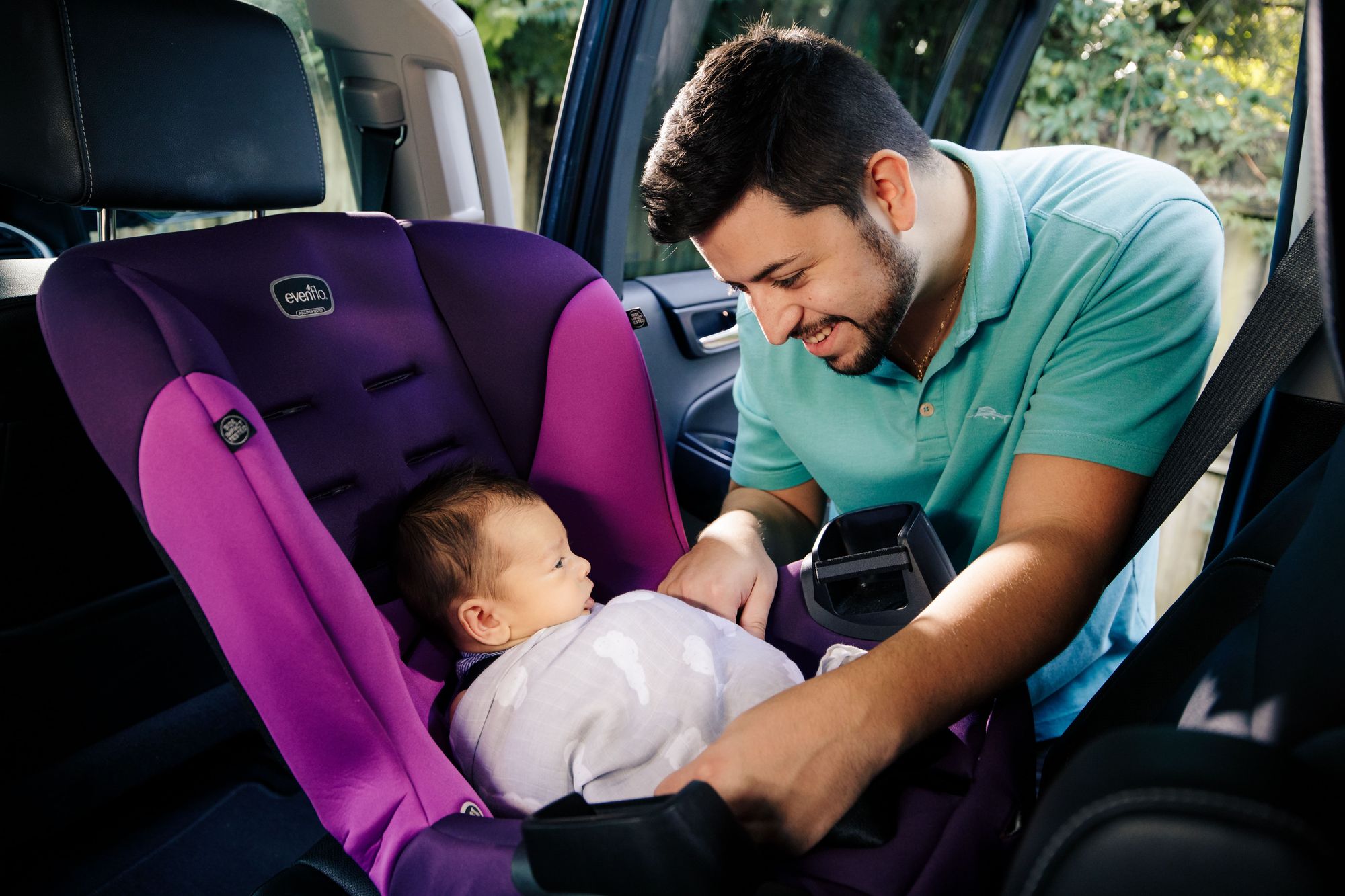
A baseless car seat usually means an infant carrier installed directly in a vehicle without its detachable car seat base. The carrier uses the vehicle’s seat belt to stay in place.
Most infant travel systems have two parts:
- The infant carrier, which holds the child.
- The detachable base, which stays installed in the vehicle.
The carrier often connects to the base with a click. Without the base, the carrier may use a belt path built into its shell. The belt path may sit across the child’s lap area and behind the carrier, depending on the model.
Some infant seats also allow installation without the base on an airplane. An aircraft seat belt normally passes through the same approved belt path used for baseless vehicle installation. However, an airplane seat and a passenger vehicle have different safety conditions. Follow the car seat manual and airline rules for air travel.
A convertible car seat is different. It normally stays in the vehicle and does not have a detachable carrier. People may call any seat without a base “baseless,” but the term usually refers to a removable infant carrier.
Always use the exact wording in the seat manual. Phrases such as “without base,” “baseless installation,” or “European belt routing” describe different approved methods.
Are baseless infant car seats safe?
A baseless infant seat may provide appropriate protection when the manufacturer permits that method and the seat is installed tightly in the correct direction. The lack of a base alone does not make the installation unsafe.
In the U.S., child restraints are required to meet Federal Motor Vehicle Safety Standard No. 213. The National Highway Traffic Safety Administration explains that federal standards apply to child restraint performance, labeling, and other requirements. Meeting the standard does not mean every installation is correct or that every seat works in every vehicle.
The key safety factors are:
- The seat is approved for baseless use.
- The child is within the seat’s height and weight limits.
- The seat is rear-facing when required by the manual.
- The vehicle belt follows the correct belt path.
- The seat moves less than 1 inch from side to side or front to back at the belt path.
- The harness is snug and positioned correctly.
- The seat does not rest against the vehicle door or another unsafe surface.
The base can make installation easier and more repeatable. It does not automatically make every trip safer than a correctly installed baseless carrier. The more useful comparison is:
A correctly installed baseless seat is safer than a poorly installed seat attached to a base.
A base may reduce mistakes because it remains secured in the car. It can also provide features such as lower anchors, an adjustable recline foot, a built-in lock-off, or an anti-rebound bar. These features may make a proper fit easier, but they do not remove the need to follow the manual.
The American Academy of Pediatrics recommends that infants and young children ride rear-facing as long as possible, within the limits set by the car seat maker. See the AAP car seat safety guidance.

How to install an infant car seat without the base
Before installing the carrier, read both the car seat manual and the vehicle owner’s manual. The vehicle manual can show which seating positions allow child restraints and how the seat belts lock.
1. Choose a permitted seating position
Use a rear seating position when possible. The back seat generally gives children more distance from a frontal crash.
Do not place a rear-facing infant seat in front of an active passenger air bag. A front air bag can cause severe injury or death to a rear-facing child.
The center position is not always the best position. It may have a lap-only belt, a short belt, unusual seat contours, or poor access. Use the position that gives the most secure installation according to both manuals.
2. Set the carrier at the correct recline angle
Most infant carriers have a recline indicator. It may be a line, bubble, or colored marker.
Adjust the carrier so the indicator shows the correct angle on the vehicle seat. A newborn needs enough recline to help keep the airway open, but too much recline can change how the seat performs in a crash.
Do not place towels, pool noodles, or other items under the carrier unless the manufacturer allows them. Some manuals permit a tightly rolled towel or noodle for angle correction. If so, use only the method described by the manufacturer.
3. Route the vehicle belt through the approved path
Place the carrier rear-facing on the vehicle seat. Thread the lap-and-shoulder belt through the belt path marked for installation without the base.
Many seats use one of these designs:
- American belt routing: The shoulder belt passes across the front of the carrier or through a designated path.
- European belt routing: The shoulder belt wraps around the back of the carrier and attaches to a separate guide.
Do not guess which path to use. A belt route that looks secure may not be approved for that model.
If the vehicle has a lap-and-shoulder belt, keep the lap portion low and flat across the approved path. Remove slack before locking the belt.
4. Lock the vehicle seat belt
The seat belt must stay tight during normal driving and a crash. Depending on the vehicle, the belt may lock through:
- A switchable retractor.
- A locking latch plate.
- A built-in car seat lock-off.
- A belt-shortening or locking method described in the manual.
A common method is to pull the shoulder belt all the way out, then let it retract while holding the carrier in place. Some newer vehicles use a different locking system. Check the vehicle manual if the belt does not remain tight.
Do not use both the lower anchors and the vehicle belt unless the car seat manufacturer specifically allows that combination. Using both systems can be prohibited, and more attachment points do not always create a safer installation.
5. Press down and remove slack
Push down on the carrier near the belt path while tightening the belt. Do not pull on the handle or the canopy to tighten the installation.
After tightening, test the seat by holding it at the belt path. It should move less than 1 inch from side to side and front to back. Do not test the top of the carrier. Movement at the top can be normal because the seat pivots around the belt path.
6. Check the harness on the child
Place the baby’s back flat against the carrier. The harness straps should lie flat and pass through the slots approved for rear-facing use.
For a rear-facing infant:
- The harness straps should come from at or below the child’s shoulders.
- The chest clip should sit at armpit level.
- The harness should be snug enough that you cannot pinch extra webbing at the shoulder.
- Bulky coats should not go under the harness.
A blanket may go over the secured harness if it does not interfere with the straps. A thick coat under the harness can compress in a crash and leave too much space around the child.
Base versus baseless installation: Which is better?
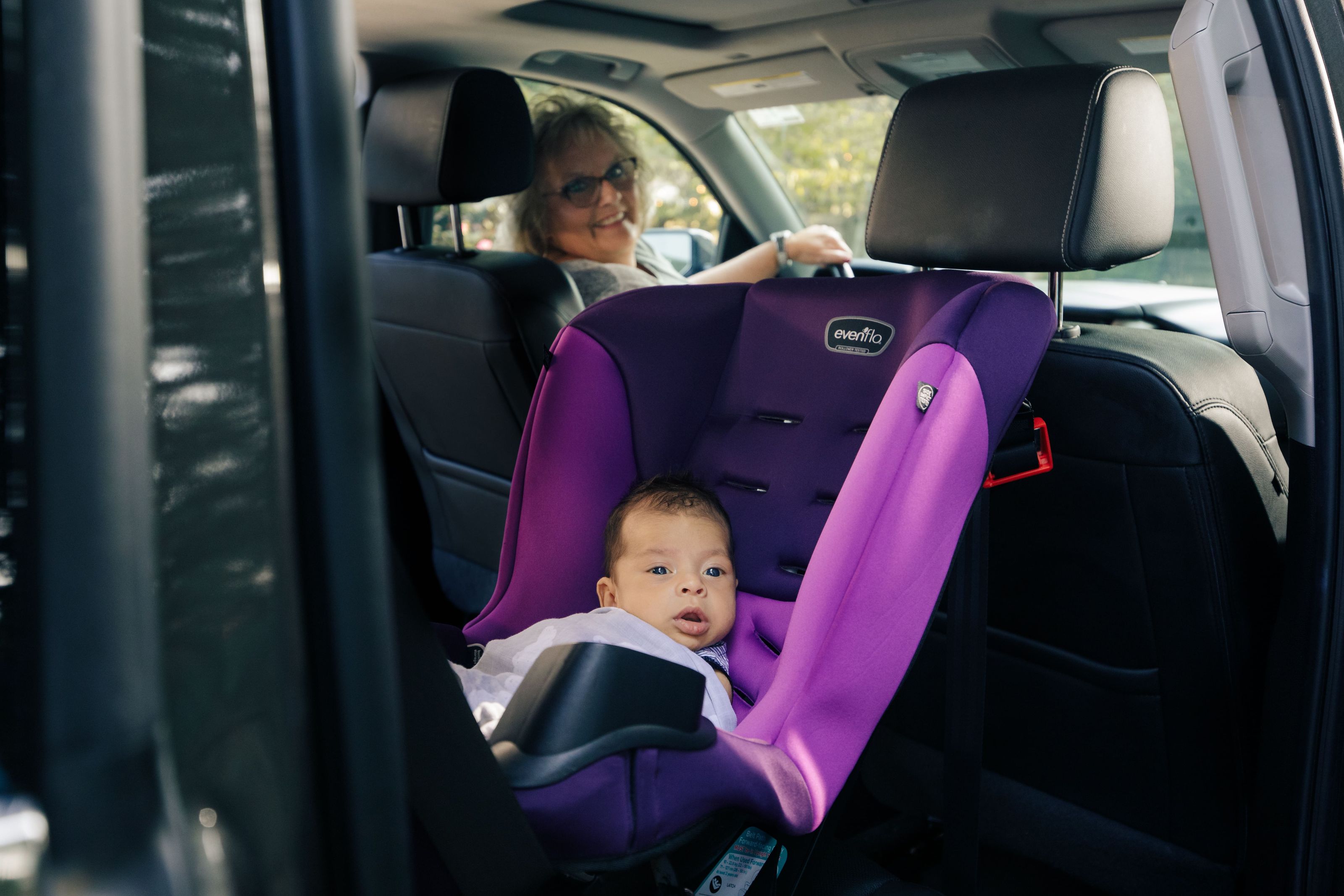
Neither method is automatically safer in every situation. The best method is the one allowed by the manual that produces a tight, correct installation every time.
| Factor | With the base | Without the base |
|---|---|---|
| Convenience | Usually easier for frequent in-and-out trips | Requires a new installation when moved |
| Installation | The base stays in the vehicle | The carrier must be secured directly |
| Travel | Can be harder to use in taxis or rental cars | Often useful for occasional travel |
| Error risk | May reduce repeated installation errors | Requires careful belt routing each time |
| Vehicle fit | Base geometry may not work well in every position | Carrier may fit better in some seating positions |
| Features | May include recline adjustment or lock-off | May have fewer adjustment features |
| Cost | Requires the base to be available | Does not require carrying or buying a base |
The base is often the better choice for a family that uses the same vehicle every day. It can stay installed, and the caregiver can check it once and leave it in place.
A baseless installation may be useful when:
- You use taxis or rideshare vehicles.
- You travel in a rental car.
- You move the carrier between several cars.
- You use public transportation.
- The base is not available during travel.
- The vehicle belt gives a better fit than the base in a specific position.
Convenience should not decide the issue by itself. If a baseless carrier takes too long to install or caregivers are unsure about the belt path, a base may reduce the chance of misuse.
When is a baseless car seat not safe?
A baseless car seat is not safe to use when the manufacturer does not approve that method. The same is true when the carrier cannot be tightened, the belt path is unclear, or the seat sits at the wrong angle.
Do not use a baseless installation if:
- The manual says the base is required.
- The carrier has no approved belt path for direct installation.
- The seat moves more than 1 inch at the belt path.
- The vehicle belt cannot lock or stay tight.
- The carrier rests on an unsafe part of the vehicle seat.
- The seat’s recline indicator cannot reach the correct range.
- The seat is expired, damaged, recalled, or missing important parts.
- The child exceeds the seat’s height or weight limit.
- The seat is installed beside an active air bag.
- The carrier is held in place only by the lower anchors when the manual requires the base.
- The seat is modified with unapproved inserts, padding, straps, or accessories.
Do not use an infant carrier as a routine sleep space outside the vehicle. The AAP warns that sitting devices, including car seats, are not intended for routine sleep. Move a sleeping infant to a firm, flat sleep surface when practical.
Also avoid using a secondhand car seat unless you can confirm its history. You should know that it has never been in a moderate or severe crash, has all parts, has not been recalled, and has not passed its expiration date. If you cannot verify those points, replacement is the safer choice.

How to check a baseless car seat before driving
Use this short checklist each time the carrier is installed:
- Manual check: Does this exact model allow installation without the base?
- Direction check: Is the carrier rear-facing?
- Angle check: Is the recline indicator in the approved range?
- Belt check: Is the belt routed through the correct path?
- Lock check: Does the belt stay tight after you release it?
- Movement check: Is movement less than 1 inch at the belt path?
- Harness check: Are the straps flat, snug, and at the correct height?
- Chest clip check: Is the clip at armpit level?
- Air bag check: Is the seat away from an active frontal air bag?
- Part check: Are no straps, pads, or parts missing or damaged?
If the seat fails the movement test, remove it and start again. Press down near the belt path while tightening. If it still fails, try another approved seating position or use the base.
A certified child passenger safety technician can inspect the installation. The National Highway Traffic Safety Administration provides a child passenger safety technician inspection and help locator. Many fire stations, hospitals, police departments, and local child-safety programs offer checks, but services and schedules vary.
Do not rely on a technician to approve a method that the manual does not allow. A technician can help correct the installation, but the manufacturer’s instructions remain central.
What to look for when choosing a car seat for baseless use
If you expect to travel without a base, check the manual before buying the seat. Look for a clearly described baseless installation method, simple belt routing, and an angle indicator that is easy to read.
Useful questions include:
- Is baseless installation allowed in a vehicle?
- Is the same method approved for aircraft?
- Does the seat support European belt routing?
- Does the carrier have a built-in lock-off?
- Will the carrier fit the rear seats in your vehicle?
- Can all regular caregivers follow the installation steps?
- Does the seat have clear instructions for belt locking?
- Are replacement parts available from the manufacturer?
- How will you check recalls and register the seat?
- What are the seat’s expiration date and child size limits?
Do not select a seat based only on its weight, price, number of features, or the presence of a base. A seat that fits your child, vehicle, and caregivers is often the more practical choice.
Registration matters because the manufacturer can use it to notify you about recalls or safety notices. You can also check the NHTSA recall database and the manufacturer’s instructions for model-specific information.
Manufacturers may change designs over time. Use the manual for your exact model and production version, not a video or review for a similar-looking seat.

Key takeaways
- Baseless infant car seats can be safe in the U.S. when the manufacturer permits direct installation with the vehicle seat belt.
- The carrier must be installed rear-facing, at the correct angle, with the correct belt path.
- The seat should move less than 1 inch at the belt path.
- A base can improve convenience and reduce repeated installation errors, but it does not fix a poor installation.
- Never use lower anchors or the vehicle belt in a way the manual does not approve.
- Check the harness, recalls, expiration date, missing parts, and crash history.
- Ask a certified child passenger safety technician for help when the seat will not install tightly.
FAQs about baseless car seats
Can I use an infant car seat without the base in a taxi?
Often, yes, but only if that specific infant carrier permits baseless installation. Use the vehicle seat belt through the approved belt path. Do not assume that every infant carrier can be installed this way.
Is it safer to use the base than the seat belt?
Not automatically. A properly installed seat belt installation can be safe when the manual allows it. The base may be easier to use and may help prevent repeated installation mistakes, which can make it the better practical choice for some families.
Can I use a baseless car seat in an airplane?
Many infant carriers are approved for aircraft use, but check the label and manual for the exact model. Aircraft seats usually have lap belts, so the carrier must use the belt path approved for aircraft installation. Never use the base on an airplane unless the airline and car seat manufacturer specifically allow it.
Can I use both the base and the seat belt?
Use only the attachment method described in the car seat manual. Some bases use lower anchors, while others use the vehicle belt. Do not combine attachment methods unless the manufacturer clearly permits it.
Why does my baseless car seat move more than 1 inch?
Possible causes include a loose belt, the wrong belt path, an unlocked retractor, a poor seating position, or an incorrect recline angle. Remove the carrier and reinstall it from the beginning. If it still moves too much, try another approved position, use the base, or ask a certified technician to inspect it.
Conclusion
A baseless car seat is not automatically unsafe. In the United States, it can be a safe and useful option when the exact infant carrier allows it and the vehicle belt creates a tight, correct installation.
The safest next step is simple: read the car seat manual, check the vehicle manual, install the carrier rear-facing, and perform the 1-inch movement test. If the carrier does not fit securely or you are unsure about the belt path, use the base or get an installation check from a certified child passenger safety technician.
