

BFGoodrich is the best all-terrain tire brand for many U.S. drivers who want strong off-road traction, tough construction, and proven light-truck fitments. Its All-Terrain T/A KO3 line is a leading choice for pickups, SUVs, and Jeep-type vehicles.
That said, no single brand is best for every driver. Falken is often the better pick for a quiet daily ride and wet-weather balance. Toyo suits drivers who want long tread life and a firm road feel. Goodyear and Cooper also offer strong choices for specific trucks and driving needs.
The best brand depends on where you drive, how much weight you carry, and how often you leave paved roads. A tire made for rocky trails may be a poor choice for a driver who spends 95% of the year on U.S. highways.
Quick answer: Which all-terrain tire brand should you choose?
Use this guide as a starting point:
| Driver or vehicle need | Best brand to consider | Why |
|---|---|---|
| Frequent off-road use | BFGoodrich | Strong off-road focus and rugged truck fitments |
| Best road and trail balance | Falken | Good mix of comfort, wet grip, and trail use |
| Long highway trips | Toyo | Stable road manners and many truck sizes |
| Snow-capable all-terrain use | Falken or BFGoodrich | Several sizes carry the 3PMSF severe-snow symbol |
| Heavy-duty truck use | Goodyear or BFGoodrich | Many LT-rated options for work and towing |
| Mild trails and daily driving | Cooper | comfortable designs for mixed use |
| Lowest purchase price | Varies by size and sale | Compare the full installed price, not just the brand |
These are general recommendations, not test results from one controlled tire test. Tire performance can change by size, load range, vehicle, air pressure, alignment, and road surface.

What makes a good all-terrain tire?
A good all-terrain tire balances four traits:
- On-road control
- Off-road grip
- Durability
- Comfort and noise
All-terrain tires use open tread blocks and deeper grooves than most highway tires. These features help the tire clear loose dirt, gravel, mud, and light snow. They also create more road noise and may reduce fuel economy.
Many all-terrain tires have reinforced sidewalls. Some include extra rubber near the shoulder or sidewall to help resist cuts and punctures. This helps on rocks and rough trails, but it does not make the tire immune to damage.
The term “all-terrain” also covers a wide range of designs. Some tires are mild and highway-friendly. Others are close to mud-terrain tires. Always look at the tread pattern, sidewall rating, size, and winter marking rather than trusting the label alone.
All-terrain versus all-season tires
An all-season tire is usually designed first for paved roads. An all-terrain tire is designed for both pavement and loose surfaces.
An all-terrain tire may offer:
- Better traction on gravel
- More stable grip on dirt
- Stronger sidewall protection
- More usable tread on rough ground
An all-season tire may offer:
- Less noise
- Better fuel economy
- Smoother handling
- Lower purchase cost
If you rarely drive on dirt, a highway-terrain tire may serve you better. It can be safer and more comfortable for daily use because it is designed around paved-road grip.
Best all-terrain tire brands by driving need
Best overall for serious mixed use: BFGoodrich
BFGoodrich is a strong overall choice for drivers who use their trucks and SUVs on both roads and trails. The All-Terrain T/A KO3 is built for light trucks and off-road use. The line includes many common U.S. pickup, SUV, and Jeep sizes.
Its main strengths are:
- Strong off-road tread design
- Reinforced construction on many fitments
- Wide availability
- Many LT and flotation-size options
- A long history in the off-road tire market
The trade-off is that a rugged tire may feel firmer and louder than a highway tire. Some large LT sizes also weigh more. That extra mass may affect ride comfort and fuel use.
BFGoodrich is best for a driver who wants one tire for pavement, gravel roads, campsites, hunting roads, and regular trail use. It may be more tire than needed for a city-only SUV.
Best balance of road comfort and trail grip: Falken
Falken’s Wildpeak all-terrain family is popular with drivers who want strong trail traction without giving up too much highway comfort. The Wildpeak A/T4W is aimed at light trucks and SUVs and is available in many sizes.
Falken is worth considering when you want:
- A stable highway ride
- Strong wet-road manners
- Useful dirt and gravel traction
- Many LT-rated choices
- Available severe-snow-rated fitments
Some Falken sizes carry the Three-Peak Mountain Snowflake, or 3PMSF, symbol. This symbol means the tire passed a defined snow traction test. It does not mean the tire equals a dedicated winter tire on ice.
Falken is often the best match for an owner who commutes during the week and visits trails on weekends. Check the exact size before buying. The rating and tread design can vary within one product family.
Best for a firm, stable truck feel: Toyo
Toyo’s Open Country A/T III is another strong choice for pickups and SUVs. It is known for a firm feel and a broad range of sizes. Some versions carry the 3PMSF symbol, while others do not.
Toyo may suit you if you value:
- Highway stability
- A durable tread design
- Strong gravel and dirt performance
- Many truck and SUV fitments
- A planted feel when carrying a load
A firm tire is not always the most comfortable tire. Some drivers like the stable steering response. Others may prefer the softer ride of a less aggressive design.
Toyo is a good choice for drivers who tow, haul, or travel long distances but still need regular trail access.
Best for work trucks and towing: Goodyear
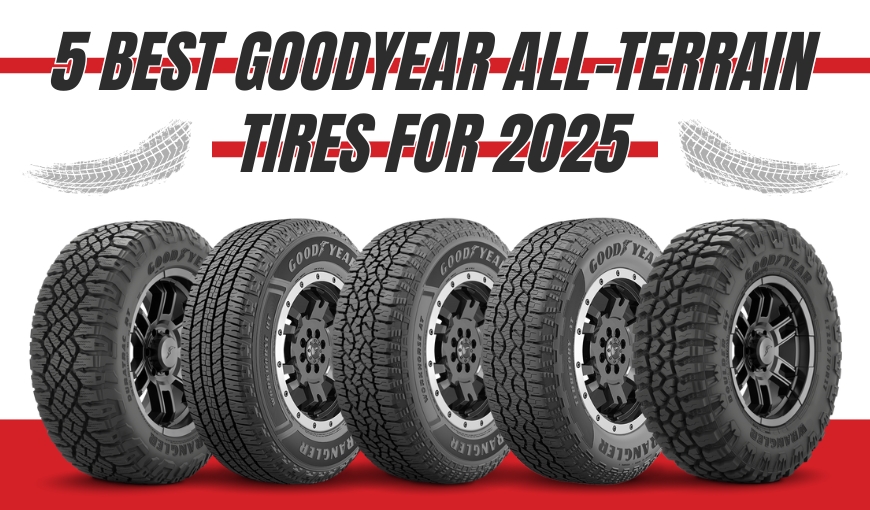
Goodyear offers several Wrangler all-terrain models for U.S. pickups and SUVs. Its lineup includes highway-friendly and more rugged options. The correct model depends on your truck, load needs, and terrain.
Goodyear is worth a close look if you need:
- A familiar national service network
- Work-truck fitments
- Towing and hauling options
- A large range of sizes
- A balance between road use and light off-road travel
Do not assume that every Wrangler tire has the same construction or winter rating. Check the full model name. Also check whether the tire is marked LT, P-metric, or another load type.
Best for mild trails and daily driving: Cooper
Cooper offers all-terrain tires that can work well for drivers who spend most of their time on pavement. Its Discoverer AT3 family includes designs aimed at highway comfort, wet roads, and light off-road use.
Cooper may be a smart choice when you want:
- Moderate trail ability
- A less aggressive road feel
- A broad selection for SUVs and pickups
- Competitive pricing
- A tire for dirt roads rather than deep mud
Cooper is not automatically the cheapest option in every size. Compare the installed cost, warranty terms, and local stock.
BFGoodrich vs. Falken vs. Toyo: which is better?
The choice comes down to your main road surface.
| Factor | BFGoodrich | Falken | Toyo |
|---|---|---|---|
| Rocky trail use | Very strong | Strong | Strong |
| Highway comfort | Moderate to good | Good | Moderate to good |
| Road noise | Moderate to high in rugged sizes | Moderate | Moderate |
| Snow-rated choices | Available in selected sizes | Available in selected sizes | Available in selected sizes |
| Towing and load use | Strong range | Strong range | Strong range |
| Best fit | Frequent off-road use | Mixed daily and trail use | Stable road and load use |
This table compares product positioning and common fitment traits. It is not a universal performance ranking. The exact tire size can change the result.
For example, a P-metric tire may ride more softly than an LT tire from the same brand. An LT tire may carry more load, but it can also feel stiffer. Two tires with the same outside diameter may have different weights and load ratings.
How to choose the right all-terrain tire for your vehicle
Start with the vehicle, not the brand. The tire must fit the wheel, suspension, brakes, and load needs of your vehicle.
1. Confirm the original tire size
Read the tire label on the driver-side door jamb. You can also check the owner’s manual. The label lists the recommended size and cold inflation pressure.
A tire marked 265/70R17 has:
- 265 millimeters of section width
- A 70-series sidewall
- Radial construction
- A 17-inch wheel fit
Do not change the size without checking clearance and load capacity. A larger tire may rub the fender, suspension, or frame. It may also affect the speedometer and vehicle systems.
2. Match or exceed the load rating
The tire must support the vehicle’s weight, passengers, cargo, and trailer tongue weight.
A higher load rating is not always an upgrade for ride quality. A heavier LT tire can increase steering effort and reduce comfort. Never use a tire with a lower load capacity than the vehicle maker specifies.
3. Choose the right construction
Common choices include:
- P-metric tires: Often softer and more comfortable
- LT tires: Built for higher loads and demanding truck use
- Flotation tires: Sized for certain off-road and truck applications
If you tow or carry heavy loads, ask a qualified tire professional to confirm the correct load range. Follow the vehicle maker’s pressure guidance unless a documented wheel or tire change requires a revised setup.
4. Check the severe-snow symbol
The 3PMSF mark looks like a mountain with a snowflake inside it. It identifies a tire that meets a defined severe-snow traction test.
It does not guarantee safe travel on ice. It does not replace winter tires in areas with frequent ice, packed snow, or very low temperatures.
For much of the United States, an all-terrain tire with 3PMSF may be a useful compromise. In mountain states and the Upper Midwest, dedicated winter tires may still provide better cold-weather control.
5. Compare tread depth and tread design
A deeper tread often gives more room for wear. It does not guarantee longer service life. Alignment, pressure, rotation, speed, load, and road surface have a major effect.
Look for:
- Open shoulder blocks for loose terrain
- Stone ejectors for gravel roads
- Strong sidewall protection
- Sipes for wet and snow grip
- A tread pattern that is not overly aggressive for your road use

Are all-terrain tires good in rain and snow?
All-terrain tires can perform well in rain and light snow, but results vary by model and size. Open grooves help move water away from the contact patch. Sipes create more biting edges for wet and snowy roads.
Still, an all-terrain tire is not automatically a strong winter tire. Some rugged designs have large tread blocks with fewer sipes. These can work well on rocks but feel less sure on wet pavement or ice.
Use this simple rule:
- Rain and dry roads: Most modern all-terrain tires can work well when properly inflated.
- Light snow: A 3PMSF-rated all-terrain tire may be a useful choice.
- Frequent ice or deep winter: Use dedicated winter tires when conditions call for them.
- Mud: Choose a more open tread only if you accept more noise and weaker road manners.
Reduce speed in rain and snow. Keep extra following distance. No tire can create grip where the surface offers very little traction.
How long do all-terrain tires last?
Many all-terrain tires may last roughly 40,000 to 60,000 miles, but this is only a broad planning range. Some last less. Some last more.
Service life depends on:
- Tire model and compound
- Vehicle weight
- Alignment
- Tire pressure
- Rotation schedule
- Highway versus trail use
- Towing and payload
- Heat and sun exposure
- Driving speed and style
A warranty mileage figure is not a promise that every tire will reach that mileage. It usually includes conditions and exclusions. Read the actual warranty for the tire model and region.
Rotate tires at the interval listed by the vehicle or tire maker. Inspect them for uneven wear, cuts, bulges, exposed cords, and embedded objects.
Replace a tire when it reaches the legal tread limit or shows serious damage. In the United States, state rules can vary, so check your state’s requirements. NHTSA also advises drivers to inspect tires and replace damaged or worn tires.

Do all-terrain tires reduce gas mileage?
They can reduce fuel economy, especially when compared with highway-terrain tires. All-terrain tires often weigh more and have greater rolling resistance. Wider sizes and heavier LT construction can increase the effect.
The actual change depends on the vehicle and tire. A small crossover may show a different result from a full-size diesel pickup.
You can limit the loss by:
- Choosing the correct size
- Avoiding unnecessary oversizing
- Keeping the tires at the recommended cold pressure
- Rotating them on schedule
- Removing unused cargo
- Using a highway-friendly all-terrain design
Never lower pressure on public roads just to improve trail grip. Lower pressure can increase heat, sidewall stress, and the risk of tire damage. Use the vehicle and tire maker’s guidance, and reinflate before returning to pavement.
Common mistakes when buying all-terrain tires
Choosing the most aggressive tread
A deep, open tread looks ready for any trail. But it may be noisy and less smooth on highways. It can also wear faster if the vehicle is used mainly on pavement.
Ignoring the load range
A tire that fits the wheel may still be wrong for the vehicle’s weight. Confirm the load index and load range before purchase.
Mixing different tire types
Mixing brands, tread patterns, or tire sizes can change handling. Four-wheel-drive and all-wheel-drive vehicles may have strict limits on tire diameter differences. Check the owner’s manual before replacing only one or two tires.
Buying by brand alone
A well-known brand can still offer several very different tire models. Compare the exact model, size, load rating, speed rating, warranty, and winter symbol.
Using the sidewall maximum as the normal pressure
The pressure printed on the tire sidewall is not always the vehicle’s recommended operating pressure. Use the pressure on the vehicle placard unless a qualified professional gives a documented reason to change it.
Forgetting fitment clearance
A larger tire may rub only when the steering is fully turned or the suspension is compressed. Ask the installer to check clearance under realistic conditions.
How much should you pay for all-terrain tires?
Prices vary by size, construction, brand, and region. A full-size LT tire can cost much more than a small SUV tire.
Compare the full purchase cost:
- Four tires
- Mounting and balancing
- Valve stems or tire pressure sensors
- Disposal fees
- Alignment, if needed
- Road-hazard coverage
- Rotation service
- Taxes
A cheaper tire can cost more over time if it wears quickly or causes frequent repairs. A premium tire may not be the best value if you do not use its off-road features.
The best value is the tire that matches your real use. Do not pay for a heavy trail tire if your vehicle only sees pavement and maintained gravel roads.

Evidence and limits behind this recommendation
This guide compares brand and model traits using manufacturer specifications, official tire guidance, and general fitment principles. Manufacturer specifications document size, load, rating, warranty, and design features. They do not prove that one brand will outperform every competitor in every condition.
Independent performance testing is more useful for wet braking, snow traction, noise, and tread wear. Results must match the exact tire size, vehicle, weather, and test method. A test of one size should not be treated as proof for every size in a product family.
For that reason, the recommendation is conditional:
- Choose BFGoodrich for frequent and serious off-road use.
- Choose Falken for a strong road-and-trail balance.
- Choose Toyo for a stable, durable truck feel.
- Choose Goodyear when work-truck fitments and local service matter.
- Choose Cooper for mild trails and a more road-focused design.
These are buying recommendations, not laboratory rankings.
Useful reference sources include:
- NHTSA tire safety guidance
- USTMA tire safety information
- BFGoodrich All-Terrain T/A KO3
- Falken Wildpeak A/T4W
- Toyo Open Country A/T III
- Goodyear Wrangler tires
- Cooper Discoverer tires

Frequently asked questions
Is BFGoodrich better than Falken for all-terrain tires?
BFGoodrich may be better for frequent off-road use and rugged trail work. Falken may be better for drivers who want a quieter and more balanced daily ride. The exact model, size, and load rating matter more than the logo alone.
What is the best all-terrain tire for a 4WD truck?
There is no single answer for every 4WD truck. BFGoodrich, Falken, Toyo, and Goodyear all offer suitable options. Check the truck’s original size, load needs, wheel size, and the amount of towing or trail driving you do.
Are all-terrain tires worth it for daily driving?
They can be worth it if you drive on gravel, dirt, snow, or rough roads. If you drive only on pavement, a highway-terrain tire may offer lower noise, better comfort, and better fuel economy.
Should I buy LT all-terrain tires?
Buy LT tires when the vehicle, load, towing use, or trail conditions justify them. LT tires can provide higher load capacity and stronger construction. They can also weigh more and ride more firmly than P-metric tires.
How often should I replace all-terrain tires?
Inspect them often and replace them when the tread reaches the legal limit, when damage appears, or when the tire maker’s age guidance calls for replacement. A tire can age even when it has plenty of tread. Ask a tire professional to inspect older tires for cracking and other damage.
Final recommendation
For most U.S. truck and SUV owners who truly need all-terrain performance, BFGoodrich is the best overall brand to consider. Its rugged designs fit drivers who spend real time on gravel, dirt, rocks, and trails.
For a vehicle used mainly on pavement with weekend trail trips, Falken may be the smarter choice. For towing and a firm truck feel, compare Toyo and Goodyear. For mild trails and daily comfort, look closely at Cooper.
Before you buy, confirm the exact tire size, load rating, winter marking, clearance, warranty, and installed price. The best all-terrain tire is not the most aggressive one. It is the one that fits your vehicle and matches the roads you actually drive.
