

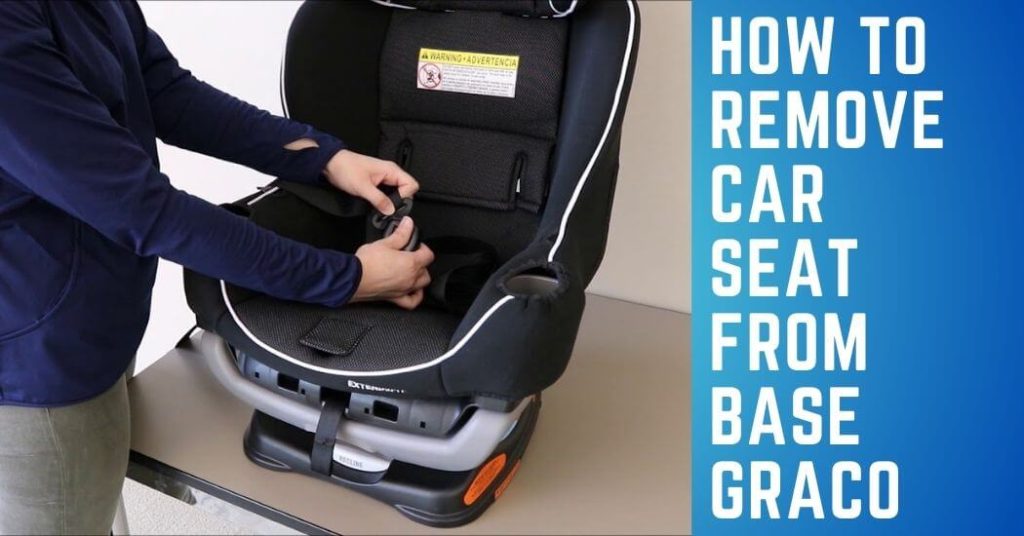
To disconnect a detachable infant car seat from its base, first secure the car, support the carrier with one hand, press the carrier-release handle or button, and lift the seat straight up. The release point differs by brand and model, so check the car seat manual before you begin.
Do not force the seat. If it will not release, stop and check whether the carrier is fully locked into the base or whether another release lever must be moved first.
This guide applies mainly to rear-facing infant car seats with a separate base in the United States. A convertible or all-in-one car seat usually does not detach from its installed base.
Key Takeaways
- Park the vehicle before removing the carrier.
- Keep one hand on the carrier while using the release control.
- Look for a handle, lever, strap, or button marked “release.”
- Lift the carrier straight up after the lock disengages.
- Never pry, kick, twist, or pull hard on the carrier.
- Check that the carrier locks back into the base with a clear click.
- Always follow the manual for your exact car seat model.
- Replace a car seat after a moderate or severe crash unless the manufacturer says otherwise.
What You Need Before You Start
You need the car seat, its installed base, and the owner’s manual if the release control is not clear. You do not need a tool for a normal release.
Before disconnecting the seat:
- Park the vehicle.
- Put the transmission in Park.
- Set the parking brake.
- Turn off the vehicle.
- Open the car door fully.
- Make sure you have a firm grip on the carrier.
If the child is in the carrier, support the seat with both hands before lifting it. Keep the carrier level and move slowly. If you can safely remove the child first, that may make the lift easier, especially with a heavy child or an awkward parking spot.
Know which type of car seat you have
| Car seat type | Does it normally detach from a base? | Usual action |
|---|---|---|
| Infant carrier with separate base | Yes | Press a release control and lift |
| Convertible car seat | No | Remove the child, then uninstall the full seat if needed |
| All-in-one car seat | Usually no | Follow the model manual |
| Rotating car seat | Depends on model | Use the specific rotation or release instructions |
| Travel system stroller seat | Usually yes | Use the same carrier release system |
A detachable infant carrier is the part that holds the baby and can be used with a stroller. The base stays installed in the vehicle. The carrier connects to the base through attachment points, often called anchors, hooks, or connectors.
How to Disconnect an Infant Car Seat From the Base
The basic process is simple: support the carrier, operate the release, and lift. Do not pull the carrier forward before the release mechanism opens.
1. Find the carrier-release control
Look along the back, top, front, or sides of the carrier. Common designs include:
- A large handle behind the child’s head
- A lever at the back of the carrier
- A button near the foot end - A strap that you pull upward
- Two side buttons that must be pressed together
The release control may be marked with an arrow or the word release. Some models hide the control below the carrying handle or inside a small opening.
If you cannot find it, use the manual for the exact model number. The model name may be printed on a label near the child’s head, on the side of the shell, or underneath the seat.
2. Place one hand on the carrier handle
Hold the carrier’s approved carrying handle with one hand. Keep your other hand near the release control.
Do not hold the harness straps, canopy, stroller adapter, or vehicle seat belt. Those parts are not designed to lift the carrier from the base.
3. Press or pull the release control
Use the release control as shown in the manual. On some seats, you press a button. On others, you lift a handle or pull a strap.
Keep steady pressure on the control. You may hear or feel a click when the carrier unlocks. Do not continue pulling if the control feels stuck.
4. Lift the carrier straight up
Once the lock releases, lift the carrier upward. Keep it level as you clear the base.
If the back of the carrier stays hooked, lower it slightly and repeat the release step. A carrier that lifts only on one side may still be attached.
5. Move the carrier to a safe place
Set the carrier on the floor, a stroller, or another approved surface. Do not place it on a high table, counter, sofa arm, or vehicle roof.
If the carrier holds a child, keep the child’s head supported. Never leave a baby alone in a carrier outside the vehicle.
How to Disconnect Common Release Designs
The exact method depends on the seat. These examples describe common designs, not every model.
Rear release handle
A rear release handle sits behind the child’s head. Hold the carrier, lift or pull the handle, and raise the carrier from the base.
Front release button
A front button is often near the child’s feet. Press the button while lifting the carrier by its approved handle.
Side release buttons
Some carriers use two buttons on the sides. Press both at the same time, then lift the carrier evenly.
Pull strap
A strap may sit at the rear or front of the carrier. Pull the strap in the direction shown in the manual. Do not yank it or use a substitute strap.
Integrated rotating or specialty system
Some newer systems use a rotating base or a special lock. The carrier may need to face a certain direction before it can release. Follow the model’s instructions rather than trying to use the standard lift method.
What to Do If the Car Seat Will Not Release
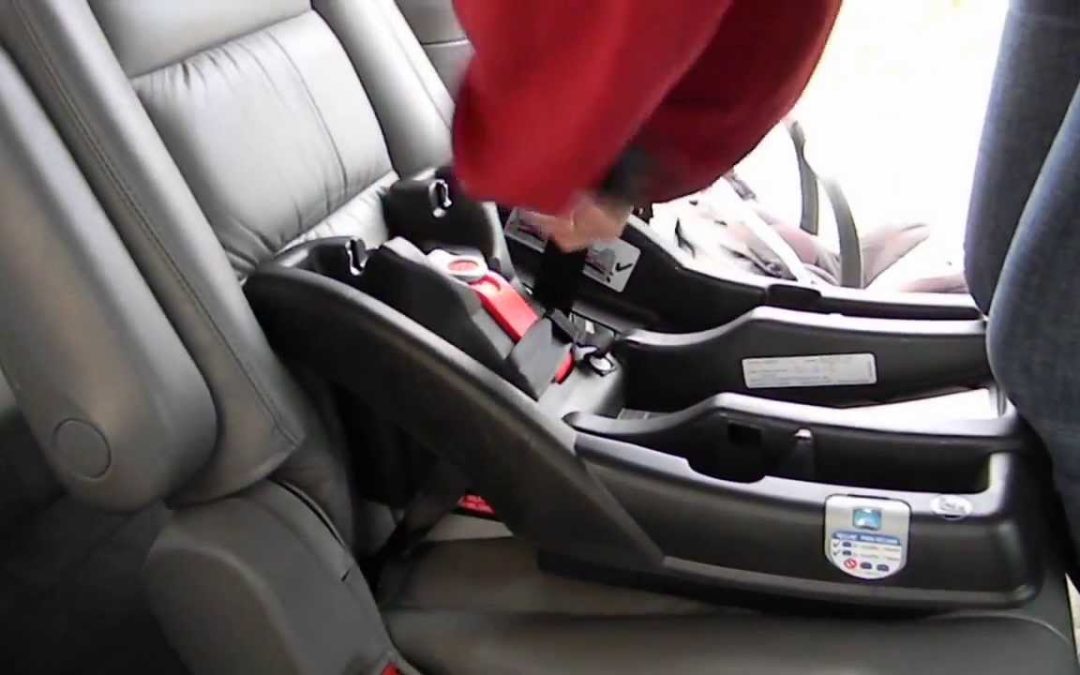
A stuck carrier usually means the release is not fully engaged, the carrier is under pressure, or the carrier is not aligned with the base. Work through the checks below in order.
Check that you are using the correct control
A recline handle, harness adjuster, stroller release, and carrier release can look similar. Compare the control with the manual.
Do not press random buttons. Doing so can change the recline angle or loosen a part that is not meant to release the carrier.
Remove pressure from the carrier
A carrier can bind if it is pushed against the vehicle seat, door, or base. Hold the carrier steady and gently settle it back into the base. Then operate the release control again.
Do not rock the carrier sharply from side to side. Small, controlled movement is safer than force.
Check for a twisted canopy or strap
A canopy, blanket, stroller adapter, or loose item may block the release area. Remove only items that are not part of the car seat.
Never add padding or accessories around the release mechanism unless the manufacturer approves them for that model.
Check both sides
Some bases use two attachment points. One side may release while the other remains locked. Lower the carrier, reset it, and try again with the carrier level.
If the carrier appears crooked, do not lift it. A crooked carrier may be only partly attached.
Stop if plastic or metal is damaged
Stop using the base if you see:
- A cracked shell
- A bent connector
- A broken release handle
- A missing screw or part
- A loose attachment point
- A release control that does not return to its normal position
Contact the manufacturer for instructions. Do not glue, drill, bend, or modify the seat.
Get help when the problem continues
Use the manufacturer’s customer service or a certified child passenger safety technician. The National Highway Traffic Safety Administration provides information about car seat inspection resources through NHTSA.gov.
A local inspection can help when the issue involves both detachment and installation. A technician cannot replace the manufacturer’s instructions, but they can often identify a setup problem.
How to Reconnect the Car Seat to the Base
To reconnect the carrier, line up the attachment points and lower the carrier into the base until it locks. You should hear a click, but sound alone is not enough.
Use this check:
- Place the carrier above the base.
- Align the front and rear attachment points.
- Lower the carrier evenly.
- Listen and feel for the lock.
- Check the visual indicator, if the base has one.
- Hold the carrier near the head and foot areas.
- Pull upward with moderate force.
The carrier should stay attached. It may move slightly as part of the base design, but it should not lift free or sit at an odd angle.
If it does not lock, remove it and try again. Do not drive with a carrier that is only partly attached.
Infant Carrier Versus Convertible Car Seat
The phrase “disconnect car seat from base” can refer to two different tasks.
An infant carrier is designed to separate from its base. It often has a handle and a shell that carries the child.
A convertible car seat stays in the vehicle. It may have a detachable cover, infant insert, or harness system, but those parts do not turn it into a removable carrier. Trying to lift a convertible seat out of its installed position can damage the seat or its installation.
If your seat has no carrying handle and no separate carrier shell, read the manual before attempting to disconnect anything.
Safety Checks After Removal
Removing the carrier does not replace a safety check. Inspect the seat and base from time to time, especially after a difficult release or a crash.
Check that:
- The carrier shell has no cracks.
- The base has no broken or loose parts.
- The release control works smoothly.
- The harness is not twisted.
- The buckle closes and opens as intended.
- The carrier locks fully into the base.
- The base remains installed according to the manual.
- The seat has not passed its stated expiration date.
- The seat has not been recalled.
The NHTSA recommends registering a car seat so the manufacturer can send recall notices. You can also check recalls through the NHTSA recall database.
A car seat involved in a moderate or severe crash should generally be replaced. For a minor crash, use the manufacturer’s crash-replacement guidance. The NHTSA lists conditions used to identify a minor crash, but the manufacturer’s instructions control for that specific seat.

Common Mistakes to Avoid
Pulling before pressing the release
The carrier may feel stuck because the lock is still engaged. Press or pull the release first, then lift.
Lifting by the harness
Harness straps hold the child in place. They are not lifting handles. Use only the approved carrying handle.
Using the base as a step
Do not stand on the base or press down with your foot while trying to release the carrier. This can damage the base and may create a fall risk.
Forcing a partly released seat
If one side releases and the other does not, stop. Reset the carrier and check alignment.
Guessing from a similar model
A release button may move between product versions. Two seats from the same brand may use different systems. The exact manual is the best source.
Leaving the baby in the carrier for long periods
The American Academy of Pediatrics advises using car seats for travel and not as a routine sleep space outside the vehicle. When you arrive, move the baby to a firm, flat sleep surface as soon as practical.
A Quick Model-Specific Decision Guide
Use this guide if you are unsure what to do next.
| What you see | Most likely situation | Safe next step |
|---|---|---|
| A separate carrier and base | Normal infant travel system | Find the carrier-release control |
| No carrying handle | Convertible or all-in-one seat | Do not try to detach it as a carrier |
| Carrier lifts on one side only | Partial release or poor alignment | Lower it and reset both sides |
| Release button moves but seat stays locked | Pressure or a second lock | Check the manual and remove pressure |
| Cracked or bent release part | Damage | Stop using it and contact the manufacturer |
| Base moves in the vehicle | Installation issue | Reinstall according to the manual or seek a check |
| Seat was in a crash | Possible hidden damage | Follow crash-replacement guidance |
Frequently Asked Questions
Can I remove the car seat from the base with my baby inside?
Many infant carriers are designed to be removed with a child inside. Support the carrier with both hands, keep it level, and use the approved handle. If the seat is heavy or the path is difficult, remove the child first when you can do so safely.
Why is my infant car seat stuck in the base?
Common causes include a missed release lever, pressure from the vehicle seat, a twisted accessory, poor alignment, or a damaged lock. Reset the carrier and check the manual. Do not force it.
Should the base stay in the car?
Yes. With a typical infant travel system, the base remains installed while the carrier is removed. Check the base each time to make sure it has not shifted or loosened.
Can I use an infant car seat without its base?
Some infant carriers allow installation with the vehicle seat belt alone. Others require their base. The answer depends on the exact model and its manual. Never assume that a carrier can be used without the base.
What if I lost the car seat manual?
Find the manufacturer and model number on the seat label. Many manufacturers provide manuals on their US websites. If you cannot identify the model or its parts, contact the manufacturer before using the seat.
How do I know the carrier is locked back in place?
The carrier should sit level, the visual indicator should show the correct position if provided, and the carrier should remain attached during a firm upward pull. A click helps, but always perform the pull check.
Sources and Model-Specific Guidance
This guide relies on general US car seat safety guidance and manufacturer-specific operating principles. The exact release method, crash policy, expiration period, and baseless installation rules vary by model.
Consult:
- National Highway Traffic Safety Administration: Car Seats and Booster Seats
- NHTSA: Car Seat Recommendations for Children
- NHTSA: Recalls
- The owner’s manual for your exact car seat and base
- The manufacturer’s US customer service team

Conclusion
To disconnect a removable infant car seat from its base, support the carrier, operate the correct release control, and lift it straight up. If the seat does not release easily, reset it and check the manual instead of using force.
Before the next trip, reconnect the carrier and perform an upward pull test. If any part is cracked, bent, loose, recalled, or unclear, stop using it and contact the manufacturer or a certified child passenger safety technician.
