

For most light trucks in the United States, the Falken Wildpeak A/T4W is the best all-around all-terrain tire. It offers strong wet-road grip, winter traction, off-road control, and a useful balance of ride comfort and tread life.
That answer changes with your truck, load, climate, and driving plans. The BFGoodrich All-Terrain T/A KO3 is a strong choice for rocky trails and severe-use conditions. The Michelin Defender LTX M/S2 is better for highway travel and fuel economy. The Toyo Open Country A/T III suits drivers who want firm handling and long-distance durability.
This guide focuses on light trucks sold and used in the United States, including the Ford F-150, Chevrolet Silverado 1500, GMC Sierra 1500, Ram 1500, Toyota Tundra, Nissan Titan, Ford Ranger, Chevrolet Colorado, GMC Canyon, Jeep Gladiator, and similar models.
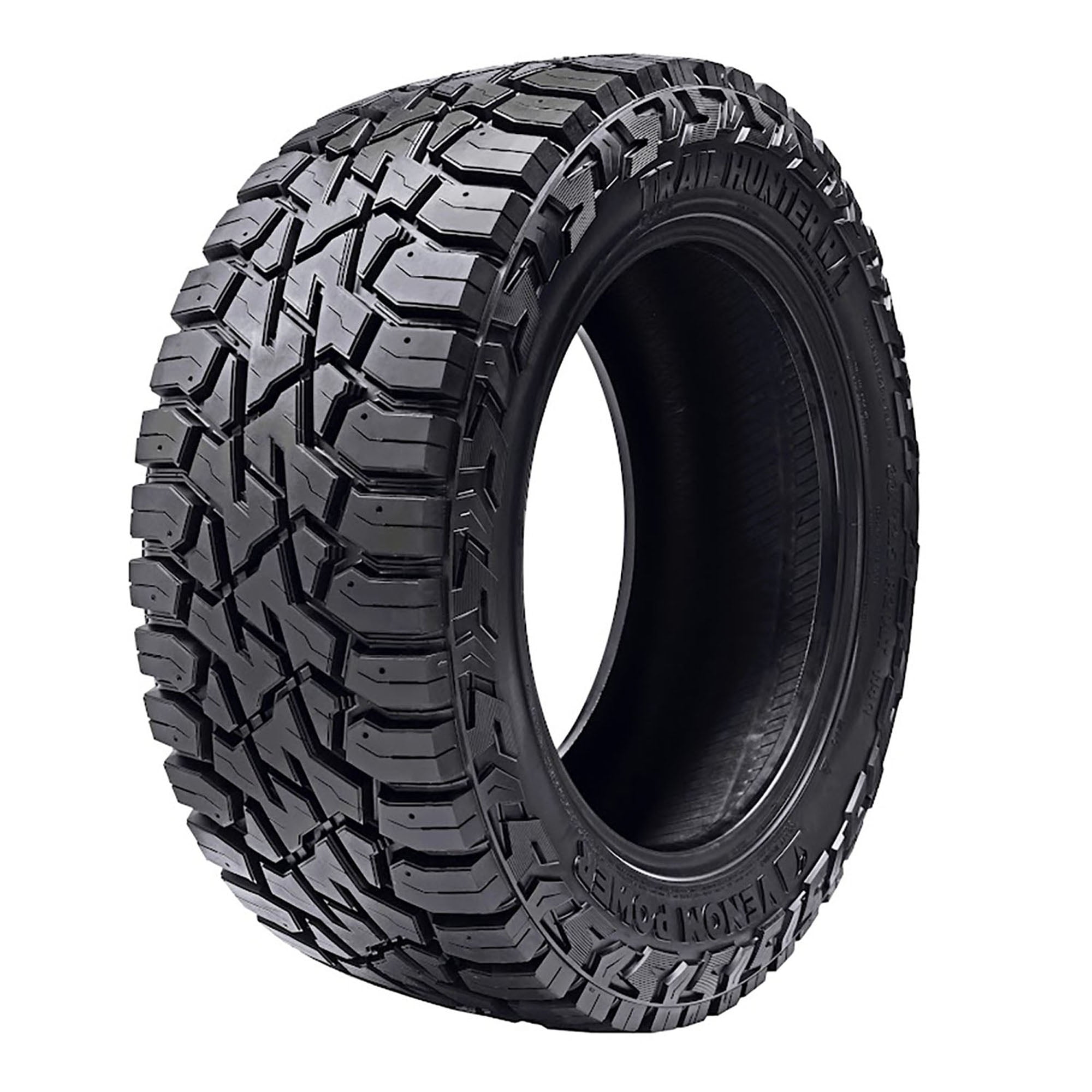
Quick answer: Which light truck all-terrain tire is best?
The best tire depends on the job. Use this table as a starting point:
| Best for | Recommended tire | Why it fits |
|---|---|---|
| Best overall balance | Falken Wildpeak A/T4W | Strong road manners, snow grip, and trail control |
| Rocky trails and heavy off-road use | BFGoodrich All-Terrain T/A KO3 | Tough construction and strong off-road focus |
| Highway miles and comfort | Michelin Defender LTX M/S2 | Quiet road behavior and highway-oriented design |
| Towing and firm handling | Toyo Open Country A/T III | Stable feel and strong load-focused options |
| Value-focused all-terrain use | General Grabber A/TX | Good mix of road use, trail use, and winter ability |
There is no single best light truck all-terrain tire for every driver. A tire that works well on a work truck in Montana may be a poor match for a half-ton pickup that spends nearly all its time on Florida highways.
For a sound choice, match the tire to four things:
- Your truck’s required tire size and load rating.
- Your usual road and trail surfaces.
- Your climate, especially snow and ice.
- Your towing, payload, and fuel-economy needs.
What makes a good light truck all-terrain tire?
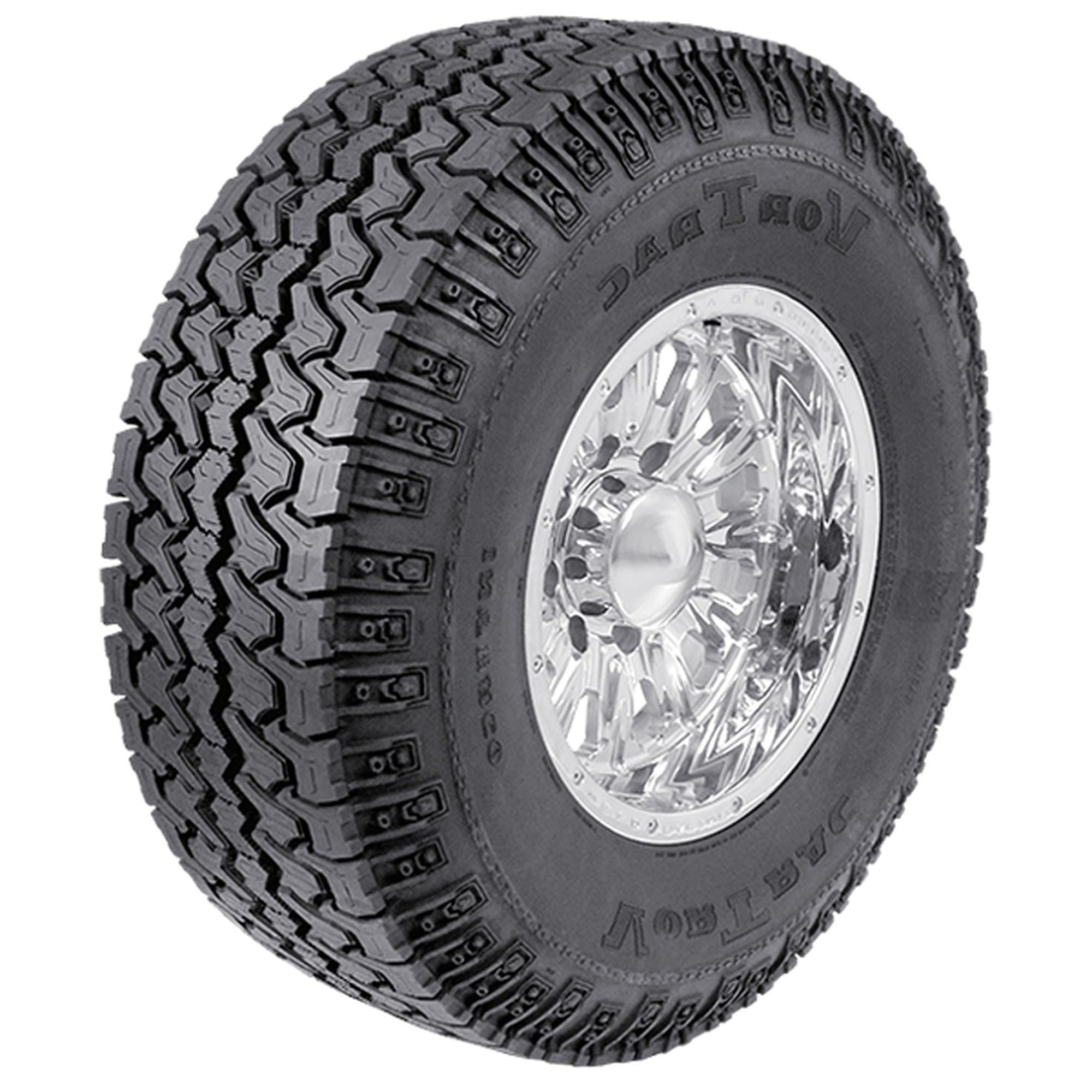
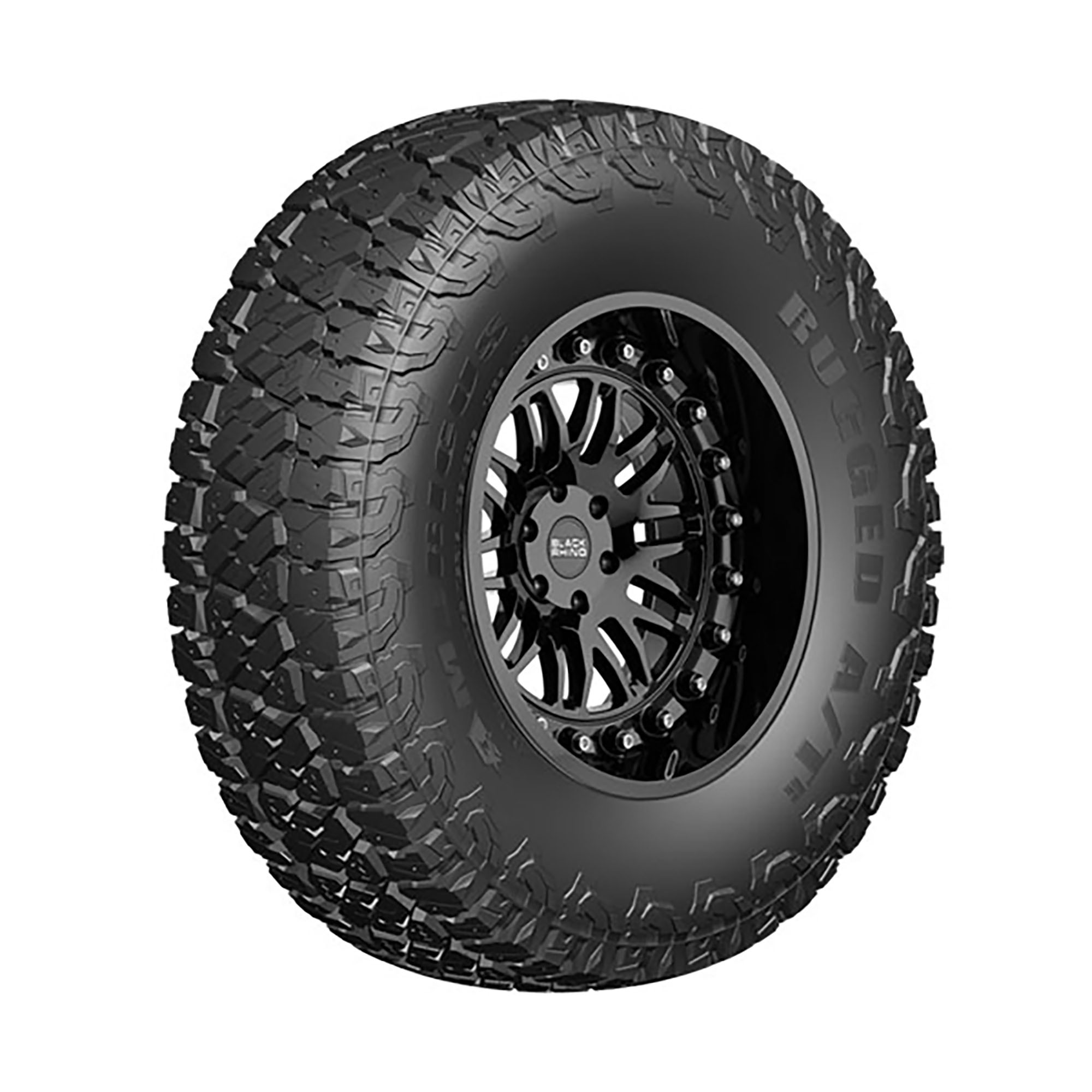
A light truck all-terrain tire, often called an A/T tire, is built for both paved roads and moderate off-road use. Its tread has larger blocks and wider grooves than a highway tire, but it is usually less aggressive than a mud-terrain tire.
A good A/T tire should provide:
- Stable handling on dry pavement.
- Predictable braking in rain.
- Traction on gravel, dirt, and shallow mud.
- Useful performance in snow when properly marked and sized.
- Strong sidewalls for rocks and rough roads.
- Acceptable noise and comfort for daily driving.
The trade-off is simple: more off-road traction usually brings more tread noise, weight, rolling resistance, or cost. No tire can maximize every trait at once.
A/T, highway, and mud-terrain tires
Highway-terrain tires use smaller tread blocks and more closed patterns. They usually offer the quietest ride, best fuel economy, and strongest highway comfort.
All-terrain tires use open tread blocks and more biting edges. They are suited to drivers who use paved roads but also travel on gravel roads, forest roads, work sites, beaches, or mild trails.
Mud-terrain tires have very open tread patterns and large voids. They can work well in deep mud and loose terrain, but they often produce more noise and may perform worse on wet pavement.
For most US pickup owners, an A/T tire is the most useful middle ground.
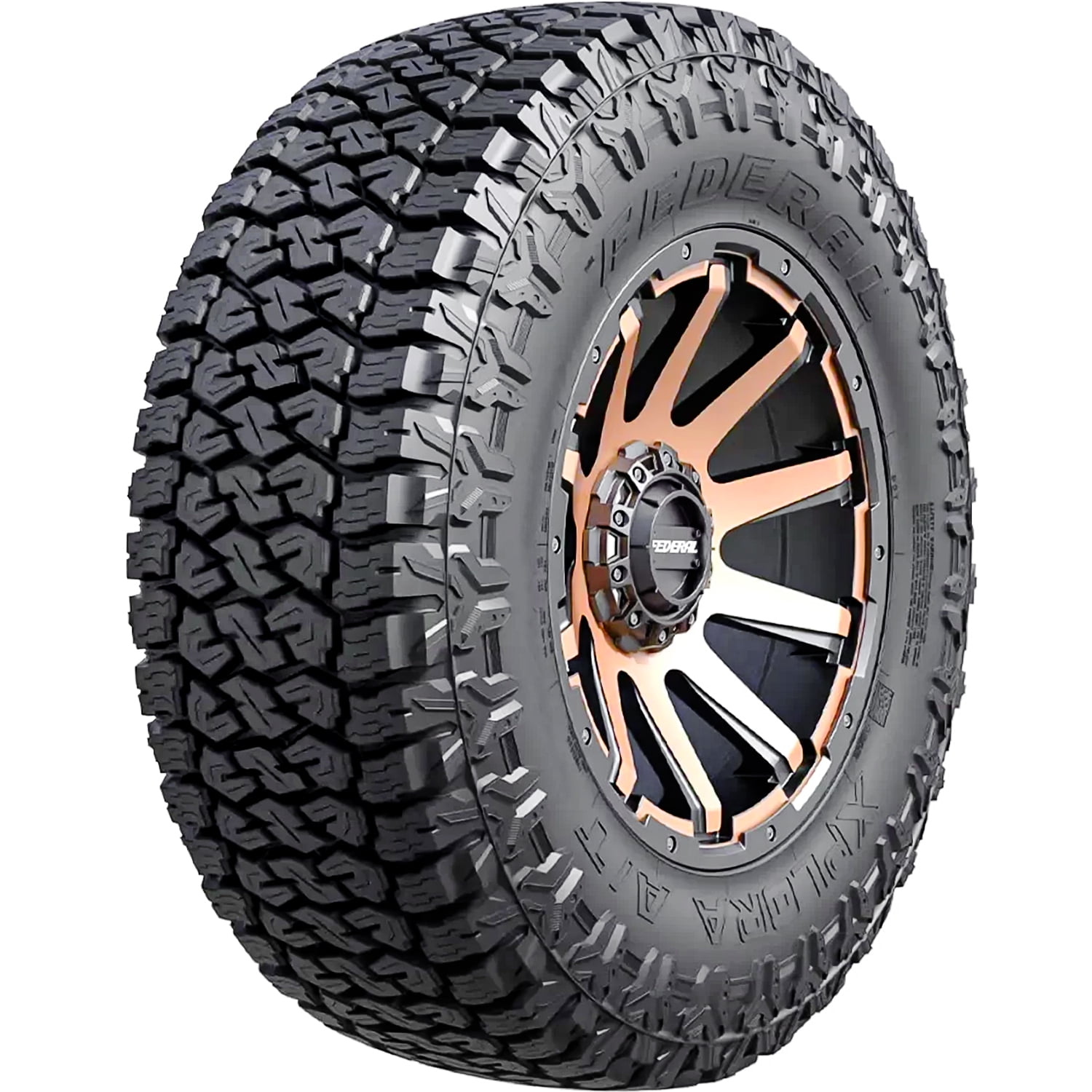
Best light truck all-terrain tires by driving need
Falken Wildpeak A/T4W: best overall for many drivers
The Falken Wildpeak A/T4W is a strong default choice for a light truck used on pavement, gravel, snow, and moderate trails. Its design places clear emphasis on wet roads, winter traction, and off-road stability.
Many sizes carry the Three-Peak Mountain Snowflake, or 3PMSF, symbol. This mark means the tire passed a standardized severe-snow traction test. It does not mean the tire is a dedicated winter tire, and it does not guarantee safe performance on ice.
The A/T4W is a good fit for:
- Drivers in northern states.
- Pickups that see snow and gravel roads.
- Owners who want an aggressive look without a mud tire.
- Daily drivers that still visit campsites, trails, and work sites.
Its limits are weight, road noise, and possible fuel-economy loss compared with a highway tire. Check the exact size because features and ratings can vary.
BFGoodrich All-Terrain T/A KO3: best for demanding off-road use
The BFGoodrich All-Terrain T/A KO3 is designed for drivers who place a high value on rough-road durability and trail traction. BFGoodrich lists features such as tougher sidewall construction, stone rejection, and improved wet-road and snow performance compared with the preceding KO2 design.
The KO3 makes sense for:
- Rocky trails.
- Remote gravel roads.
- Construction and utility work.
- Drivers who often deal with sharp rocks and rough ground.
- Pickup owners who want a well-known off-road tire line.
It may not be the best choice for a truck that spends nearly all its time on smooth pavement. A heavier, more aggressive tire can reduce ride comfort and fuel economy. As with any A/T tire, use the exact load range and size recommended for your truck.
Michelin Defender LTX M/S2: best for highway-focused pickup use
The Michelin Defender LTX M/S2 is more highway-oriented than the other tires in this guide. It is a better fit for drivers who want light gravel ability but spend most of their time on interstates, city streets, and paved rural roads.
Its strengths include:
- Quiet highway behavior.
- Comfortable ride quality.
- Stable handling.
- Good wet-road performance when properly maintained.
- Strong fit for frequent road trips and towing on pavement.
This tire is not the first choice for deep mud, sharp rocks, or technical trails. Its more closed tread pattern favors road use. It also may not be available in every aggressive LT size or load range needed for a heavily loaded truck.
Toyo Open Country A/T III: best for a firm, stable feel
The Toyo Open Country A/T III is a balanced all-terrain option with a strong focus on handling, durability, and winter capability. Many sizes carry the 3PMSF symbol, but buyers should confirm the mark on the exact tire size.
The Toyo is worth considering for:
- Towing on paved and mixed roads.
- Long-distance travel.
- Drivers who prefer firm steering response.
- Pickup owners who want an all-terrain tread without a mud-tire design.
- Mixed use in dry, wet, and snowy conditions.
Its feel may be firmer than a highway tire. Some drivers may also find it louder than a road-focused tire, especially as the tread wears.
General Grabber A/TX: best value-oriented choice
The General Grabber A/TX is a practical option for drivers who want all-terrain traction without moving to the most expensive choices. It is designed for pavement, gravel, light trails, and winter use in applicable sizes.
It can suit:
- Older pickups.
- Work trucks with mixed road use.
- Drivers who want a 3PMSF-rated option.
- Owners who need a capable tire at a more controlled price.
- Moderate off-road use rather than constant rock crawling.
Price and availability vary by size. Compare the exact load range, speed rating, warranty terms, and local pricing before choosing it over a premium tire.
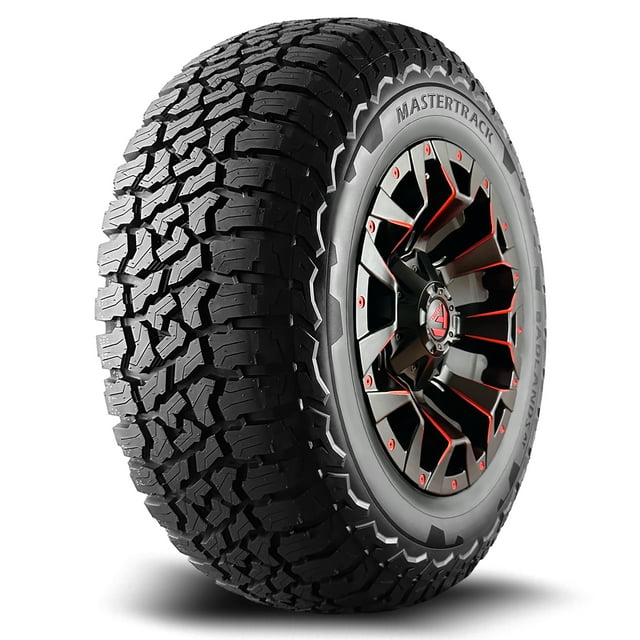
How to choose the right tire size and load rating
The tire must match the truck, not just the wheel. Start with the information on the driver-side door-jamb label. It lists the original tire size, recommended cold inflation pressure, and maximum vehicle load information.
Do not use the tire sidewall’s maximum pressure as your normal inflation setting unless the vehicle maker says to do so.
P-metric versus LT tires
P-metric tires are passenger-type tires. They can be suitable for many half-ton pickups used for daily driving and light loads.
LT tires are built for light trucks and commonly have stronger load-carrying construction. They are often better for regular towing, payload work, rough roads, and commercial use.
An LT tire is not automatically safer or better. It may also be:
- Heavier.
- Firmer.
- Louder.
- More expensive.
- Less efficient.
A P-metric tire can be a poor choice if the truck regularly carries heavy payloads. An LT tire can be unnecessary if the truck is a daily commuter with little cargo.
Load range and load index
Load range describes a tire’s construction and pressure category. Common LT labels include Load Range C, D, and E. The load index is a separate number that states the tire’s maximum load under specified conditions.
Always compare the replacement tire with the vehicle maker’s original requirement. Do not reduce the load rating simply to gain a softer ride.
Oversized tires can also create problems. They may rub the suspension, alter the speedometer reading, affect steering clearance, and reduce power or fuel economy. A tire shop should check clearance at full steering lock and full suspension travel.
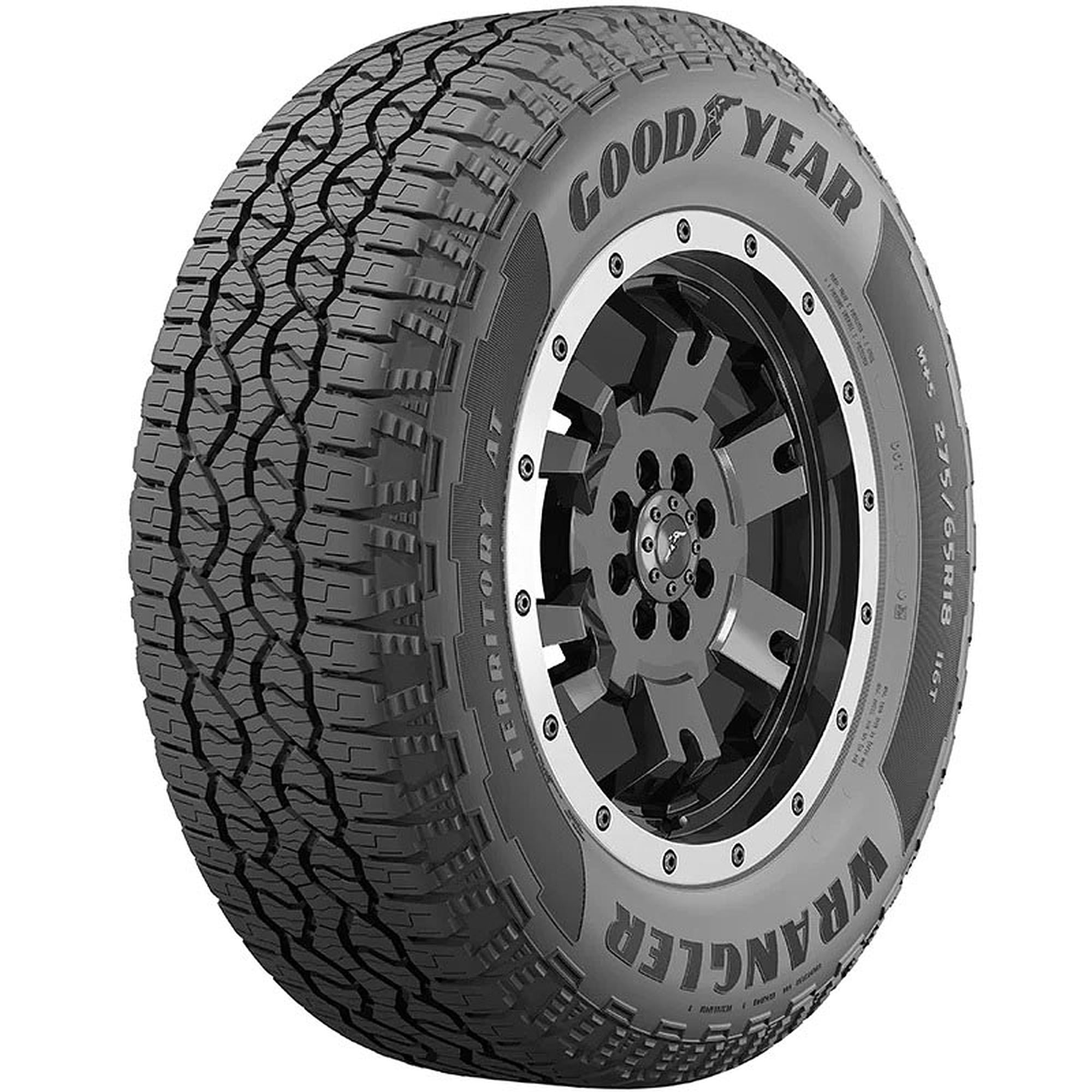
How weather and terrain change the best choice
The best light truck all-terrain tire changes with the surface beneath it.
Snow and ice
For frequent snow, look for the 3PMSF symbol rather than relying only on the words “all-season” or “all-terrain.” The symbol indicates a severe-snow test result under a defined standard.
Still, an A/T tire is not the same as a winter tire. A dedicated winter tire usually uses rubber that stays more flexible in very cold weather and a tread designed for snow and ice.
For icy roads, speed, following distance, braking skill, and road treatment matter as much as the tire. Four-wheel drive can help a truck accelerate, but it does not shorten braking distance on ice.
Rain and wet pavement
Wet-road safety depends on tread depth, rubber condition, inflation, speed, and road surface. Wider grooves can help move water away from the contact patch, but no tire can prevent hydroplaning at every speed.
Replace a tire when it reaches the legal or manufacturer tread limit, shows damage, or becomes badly aged or cracked. Use a tread-depth gauge rather than judging by appearance alone.
Gravel and dirt roads
For frequent gravel use, choose a tire with strong chip resistance and sidewall protection. Keep speeds reasonable. Sharp stones can damage even a highly rated tire.
A slightly lower pressure may improve comfort on loose roads, but do not reduce pressure below the vehicle or tire maker’s safe guidance. After leaving the trail, restore the recommended road pressure.
Mud and sand
A/T tires can handle shallow mud and loose sand, but deep mud favors a mud-terrain design. Sand driving may require lower pressure, but this creates a risk of tire unseating, rim damage, and sidewall failure.
Follow the tire maker’s deflation guidance and carry a way to reinflate the tires. Never drive at highway speed with trail pressure.
What does an all-terrain tire cost to own?
Purchase price is only one part of tire cost. A useful comparison includes:
- Purchase price.
- Expected tread life.
- Rotation needs.
- Fuel use.
- Alignment and suspension wear.
- Repair or replacement risk.
- Seasonal tire changes, if applicable.
A heavier LT tire may cost more to buy and may use more fuel. That extra cost can be worthwhile for work and trail use. It may not make sense for a truck that drives 20,000 highway miles each year.
Treadwear warranties can help compare products, but they are not a promise of a set mileage. Warranty terms often require documented rotations, even inflation, proper alignment, and replacement of all four tires under certain conditions.
Published treadwear numbers are not directly comparable between brands. Tire size, truck weight, climate, alignment, road surface, and driving style all affect wear.
Common mistakes when buying light truck all-terrain tires
Choosing by appearance alone
Large sidewall letters and deep tread look capable, but appearance does not show wet braking, winter behavior, noise, or load suitability.
Mixing different tire models
Use four matching tires whenever possible. Mixing models can change handling and traction, especially on wet or slippery roads.
Some four-wheel-drive and all-wheel-drive vehicles require closely matched tire circumference. Check the owner’s manual before replacing only one tire.
Ignoring inflation pressure
Underinflation creates heat, increases rolling resistance, and can damage the tire. Overinflation can reduce the contact patch and make the ride harsh.
Check pressure when the tires are cold. Do this at least once each month and before towing or carrying a heavy load.
Buying an LT tire without checking wheel fit
Some LT tires need higher inflation pressure to carry their rated load. The wheel, valve stem, suspension, and vehicle system must support the change.
Have a qualified tire professional verify the complete setup.
Assuming four-wheel drive solves tire problems
Four-wheel drive helps deliver power to the tires. It does not replace suitable tires, safe speed, or proper braking distance.
A simple buying method
Use this five-step process:
- Read the door-jamb label. Record the original size, load requirement, and cold pressure.
- List your real driving. Estimate the share of highway, city, gravel, snow, mud, and rock use.
- Choose the tire category. Select highway-terrain, all-terrain, or mud-terrain based on that mix.
- Compare exact sizes. Check load index, load range, 3PMSF marking, warranty, and clearance.
- Install and maintain the set. Balance the tires, check alignment, rotate them on schedule, and monitor pressure.
The best choice is usually the tire that meets your hardest regular task without making your everyday driving unpleasant.
Key takeaways
- The Falken Wildpeak A/T4W is a strong all-around pick for many US light trucks.
- The BFGoodrich KO3 suits tougher off-road and rocky-road use.
- The Michelin Defender LTX M/S2 is better for highway-focused drivers.
- The Toyo Open Country A/T III offers a firm, stable mixed-use feel.
- The General Grabber A/TX is a useful value-oriented option.
- Always match the tire size and load rating to the truck.
- The 3PMSF symbol helps identify severe-snow-rated sizes, but it does not make an A/T tire a winter tire.
- Four-wheel drive does not improve braking on ice.
- Exact features can vary by tire size, load range, and production version.
Frequently asked questions
Are all-terrain tires good for daily driving?
Yes. Many A/T tires work well as daily tires, especially for pickup owners who use gravel roads, worksites, or light trails. They may be noisier and less fuel-efficient than highway tires.
Are all-terrain tires good in snow?
Some are. Look for the 3PMSF symbol on the exact tire. A 3PMSF-rated A/T tire can perform well in packed snow, but a dedicated winter tire remains the better choice for frequent ice and very cold conditions.
Should I buy P-metric or LT all-terrain tires?
Use the vehicle maker’s required size and load rating as the starting point. P-metric tires often suit daily-use half-ton trucks. LT tires are more appropriate when the truck regularly carries heavy loads, tows, or travels on rough roads.
How long do light truck all-terrain tires last?
There is no reliable single mileage figure. Wear depends on alignment, inflation, rotation, truck weight, climate, road surface, and driving style. Follow the tread-depth and age guidance from the tire maker and inspect the tires regularly.
Can I put larger all-terrain tires on my truck?
Only if the size fits the wheel, suspension, steering, gearing, and vehicle systems. Larger tires can rub, change speedometer accuracy, reduce acceleration, and add load to suspension parts. Verify the change with a qualified tire shop.
Should all four tires be the same?
For the most predictable handling, use four tires of the same model, size, load rating, and speed rating. Four-wheel-drive and all-wheel-drive vehicles may require closely matched tread depths and tire circumferences.
Conclusion: the best choice for most light trucks
For a balanced mix of US highway driving, rain, snow, gravel, and moderate trails, start with the Falken Wildpeak A/T4W. Choose the BFGoodrich KO3 when rough trails and sidewall durability matter more than quiet pavement travel. Choose the Michelin Defender LTX M/S2 when highway comfort and efficiency are the main goals.
Before buying, confirm the exact size, load index, load range, clearance, and winter marking for your truck. The right tire is not the most aggressive one. It is the one that safely matches how you use the truck most often.
