

A de-icer spray for a car helps loosen frost and thin ice on windows, mirrors, locks, and wiper blades. In the United States, the safest method is to spray a product labeled for automotive use, wait for the ice to soften, then clear the glass with a scraper while the vehicle’s defroster warms the cabin.
Do not pour hot water on a frozen windshield. Sudden temperature changes can stress the glass, and water may refreeze around the wipers, doors, or locks. Start the car only in an open area, follow the owner’s manual, and never leave an unattended vehicle running in a garage.

What Is Car De-Icer Spray?
Car de-icer spray is a liquid made to weaken the bond between ice and a vehicle’s surface. Most formulas use alcohols or other solvents that lower the freezing point of water. Some also contain surfactants, which help the liquid spread across glass.
A de-icer spray is not the same as:
- Windshield washer fluid: Made for cleaning while driving, though some winter formulas also help with light frost.
- Engine coolant: Protects the cooling system. It must never be sprayed on a windshield.
- Household glass cleaner: May not be designed for freezing conditions or vehicle materials.
- Salt water: Can leave residue and may speed corrosion on metal parts.
The main job of a car de-icer is to soften or release ice. It does not always melt thick ice at once. A scraper and the vehicle’s defroster may still be needed.
How Does De-Icer Spray Work?
De-icer works by changing how water freezes. When the spray reaches ice, its active ingredients mix with the thin layer of liquid water on the ice surface. This lowers the mixture’s freezing point and helps separate the ice from the glass.
Common ingredients include:
- Isopropyl alcohol: Often used in consumer de-icers and cleaning products.
- Ethanol: Used in some winter fluids and sprays.
- Methanol: Found in some automotive fluids, but it is highly toxic and requires careful handling.
- Propylene glycol: Used in some low-temperature formulas and other vehicle fluids.
- Surfactants: Help the product spread and lift dirt or residue.
The exact formula differs by product. Read the label and safety data sheet before use. A product’s stated temperature range applies only under the conditions described by its maker. Heavy ice, wind, very low temperatures, and dirty glass can reduce performance.
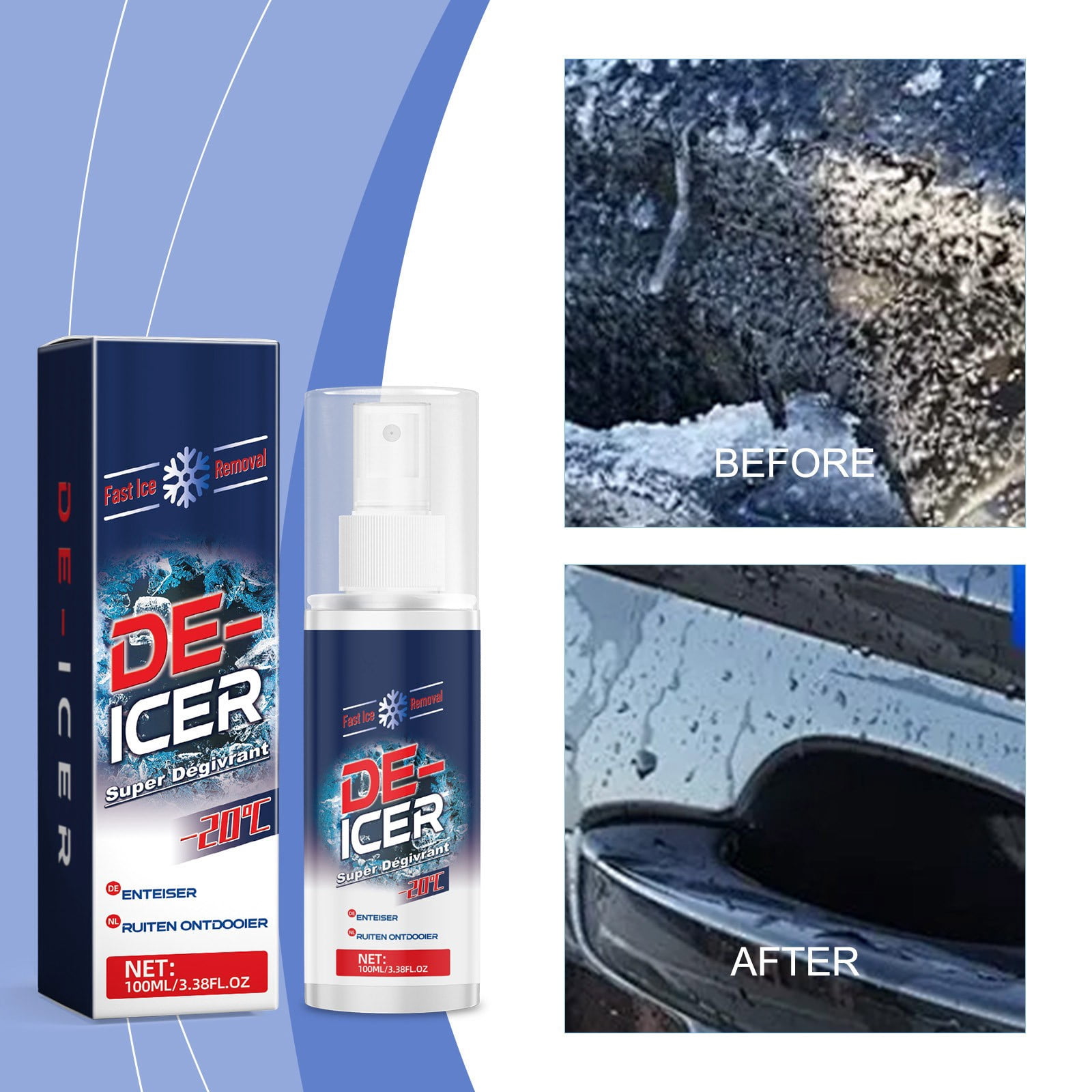
How to Use De-Icer Spray on a Frozen Windshield
Use the spray as one part of a careful ice-removal process. Do not rely on it alone when the glass has a thick layer of ice.
1. Start safely
Move the vehicle outdoors before starting the engine. Clear snow from the tailpipe area. Make sure the exhaust pipe is not blocked by snow or ice.
Turn on the vehicle’s defroster according to the owner’s manual. Use a low or moderate fan setting at first if the manual gives no special instructions. Do not use recirculated air if it causes the glass to fog.
2. Remove loose snow
Brush loose snow from the roof, hood, trunk, lights, mirrors, and windows. Snow left on the roof can slide forward during braking and block your view.
Use a soft snow brush made for vehicles. Avoid household brooms with stiff bristles, which can scratch paint or trim.
3. Spray the de-icer
Hold the container as directed on the label. Apply a light, even coat across the frozen area. Focus on the ice, not on large areas of exposed paint.
If the ice is thick, allow the product to sit for the time stated on the label. Do not scrape immediately if the surface is still hard. The spray needs time to work through the ice.
4. Scrape with a plastic ice scraper
Use a clean plastic scraper with a firm edge. Push the softened ice away from the glass instead of grinding hard against it.
Do not use:
- A metal blade
- A knife
- A credit card you need to keep
- A rough brush
- A sharp tool around rubber seals
Replace a scraper if its edge becomes damaged. A cracked or dirty scraper can scratch glass.
5. Clear the wipers
Never force frozen windshield wipers across the glass. Lift them only if the vehicle’s design allows it and the wiper arms are not frozen in place.
Spray a small amount of de-icer around the wiper blade and its contact area. Wait, then free the blade gently. Check that the rubber is flexible and not torn before driving.
6. Finish with the defroster
Once the ice is mostly gone, let the defroster clear the remaining haze and thin frost. Use the climate controls recommended in the owner’s manual.
Before driving, confirm that you can see through:
- The entire windshield
- Both side windows
- The rear window
- Exterior mirrors
- Forward-facing cameras and sensors, if equipped
A small clear patch is not enough for safe driving.
When the spray does not work
If the ice remains hard, the product may be too cold for the conditions, too diluted, expired, or applied to a thick layer. Add more time rather than more force.
You can also:
- Keep the defroster running.
- Apply a second light coat if the label allows it.
- Scrape again with a plastic tool.
- Check for a frozen film on the inside of the windshield.
- Stop if the glass, wiper, or trim may be damaged.

How to Choose a De-Icer Spray for Your Car
Choose a product based on temperature, surface, ingredients, and how you plan to store it. The lowest advertised temperature is not the only factor.
| What to check | Why it matters |
|---|---|
| Automotive use on the label | Confirms the product is intended for vehicle surfaces |
| Stated temperature range | Helps you match the spray to your local winter conditions |
| Trigger or aerosol design | Affects ease of use with cold hands and gloves |
| Ingredient and hazard warnings | Shows flammability, toxicity, and ventilation needs |
| Paint, plastic, and rubber guidance | Helps prevent damage to trim and seals |
| Residue or streaking notes | Matters for visibility and camera lenses |
| Child-resistant or secure storage | Reduces the risk of accidental exposure |
| Spray pattern | A wide pattern can cover glass faster, while a narrow pattern may reduce overspray |
For most drivers, an automotive de-icer with clear directions, a usable temperature range, and a clean-rinsing formula is more practical than a homemade mixture.
Aerosol versus trigger spray
An aerosol can may spray well in cold weather, but it can be flammable and should not be stored near heat. A trigger bottle may be easier to control, but some pumps become difficult to operate when the liquid is very cold.
Follow the storage directions on the container. Do not puncture, burn, or leave an aerosol can in a hot vehicle.
Commercial spray versus homemade mixture
Many online recipes use water mixed with rubbing alcohol. These mixtures may help with light frost, but the result depends on the alcohol concentration, water quality, temperature, and spray bottle.
A homemade mix also creates uncertainty about:
- Freezing point
- Flammability
- Paint and trim compatibility
- Streaks or residue
- Label instructions
- Safe storage
A commercial product labeled for automotive use provides clearer directions and hazard information. If you make any mixture, never put it in an unlabeled bottle or a container that could be mistaken for a drink.

Can You Use De-Icer Spray on Car Paint?
Use caution. A product made for glass may not be approved for painted surfaces, clear coat, plastic, chrome, or rubber.
A small amount of overspray may not cause visible harm, but repeated exposure or long contact can affect wax, coatings, or sensitive trim. The risk depends on the ingredients, the surface condition, and the product’s directions.
To reduce risk:
- Spray close to the frozen glass instead of across the whole vehicle.
- Wipe overspray from paint and trim as soon as practical.
- Do not leave a wet product sitting on the vehicle.
- Test an unfamiliar product on a hidden area first.
- Follow the label’s surface warnings.
Do not spray de-icer into door locks, cameras, or sensors unless the label specifically permits that use. Modern vehicles may contain delicate electronics behind small openings.
Can You Use De-Icer Spray on Car Door Locks?
Some products are made for frozen locks, but windshield de-icer is not automatically suitable. Check the label before spraying into a key cylinder or electronic handle.
If a traditional lock is frozen, a lock de-icer designed for that purpose may work better. Apply only the amount directed. Do not force the key, pour hot water into the lock, or use an open flame.
For electronic locks, try the vehicle’s approved backup method. This may involve a hidden mechanical key, a key fob procedure, or an emergency release described in the owner’s manual.
After the door opens, inspect the seal. A frozen rubber gasket can tear if the door is pulled hard. Warm the seal slowly and apply only a vehicle-safe rubber conditioner if the owner’s manual or product label supports it.

Is De-Icer Spray Safe for Windshield Wipers, Cameras, and Sensors?
It depends on the product and the vehicle. Windshield glass is usually the intended surface, but wiper rubber, camera covers, radar sensors, and plastic lenses may have different limits.
For wipers, use a product that does not warn against rubber contact. Do not use a scraper on camera lenses. Remove loose snow with a soft cloth or brush, then follow the vehicle maker’s instructions.
For cameras and sensors:
- Keep the lens or sensor area free of ice and snow.
- Do not rub grit across a camera cover.
- Avoid strong solvents unless the manual permits them.
- Do not assume a clean windshield also means a clean forward sensor.
- Check the dashboard for sensor warnings before driving.
Driver-assistance systems may not work correctly when cameras or radar sensors are blocked. Treat any warning as a reason to slow down and inspect the vehicle safely.
Common Car De-Icer Mistakes
The most common mistakes involve heat, force, and poor visibility.
Pouring hot water on the windshield
Hot water can create a sharp temperature difference across cold glass. It may also refreeze around the wipers, doors, or locks. Use the defroster, de-icer, and a plastic scraper instead.
Using the wipers to remove ice
Frozen ice can damage the rubber blades or overload the wiper motor. Free the blades first.
Scraping with metal
Metal tools can scratch glass and damage tint, seals, or trim. Use a purpose-made plastic scraper.
Driving with only a small viewing area
A small opening does not provide enough visibility. Clear the full windshield, side windows, mirrors, lights, and rear glass before moving.
Spraying inside a closed cabin
Solvent vapors can build up in a small space. Use sprays as directed, provide ventilation, and keep the product away from flames, sparks, and cigarettes.
Mixing products
Do not combine de-icers, bleach, ammonia cleaners, acids, or other chemicals. Mixing products can create harmful vapors or change how they affect vehicle materials.
Leaving the car idling unattended
Rules about unattended idling vary across the United States, and a running vehicle can be stolen. More importantly, carbon monoxide can build up if the vehicle runs in a garage or near a blocked exhaust. Stay with the vehicle when practical and follow local law and the owner’s manual.
De-Icer Spray Safety and Storage
Read the product label before the first use. The label is the best source for application limits, first-aid instructions, disposal, and storage for that specific formula.
General precautions include:
- Keep the container away from children and pets.
- Avoid breathing concentrated spray mist.
- Do not spray near flames, sparks, heaters, or smoking materials.
- Wash hands after use.
- Do not transfer the liquid to a food or drink container.
- Keep the original label attached.
- Store the product in the temperature range listed by the maker.
- Dispose of the container according to local waste rules.
Many automotive chemicals are flammable or harmful if swallowed. Methanol-containing products deserve special care because methanol can cause serious poisoning. The Poison Control Help line in the United States is 1-800-222-1222. Call 911 for trouble breathing, unconsciousness, seizures, or other severe symptoms.
For chemical exposure, use the first-aid steps on the label or safety data sheet. Do not make someone vomit unless a medical professional tells you to do so.
What to Do If Your Windshield Still Will Not Clear
Do not drive if frost, ice, fog, or snow still blocks your view. Check the problem in this order:
- Confirm the defroster is set correctly. Use the owner’s manual for the correct mode.
- Check whether the ice is on the inside. Exterior spray will not remove interior frost.
- Inspect the cabin air filter. A clogged filter can reduce airflow, though replacement details vary by vehicle.
- Look for blocked vents. Remove items covering the dashboard or defroster outlets.
- Check the washer fluid. A summer fluid may freeze in winter conditions.
- Inspect the wipers. Damaged blades can leave a wet, blurry film.
- Stop if the heating system fails. A mechanic may need to inspect the blower, thermostat, coolant level, or climate controls.
Do not open a hot cooling system or add coolant without following the vehicle’s instructions. If the car overheats, produces a warning, or cannot maintain clear visibility, arrange professional help.

De-Icer Spray Alternatives
A de-icer spray is useful, but prevention often saves more time.
Use a windshield cover
A properly fitted cover can block frost and light snow. Secure it so it does not blow onto the road or scratch the vehicle.
Park under cover
A garage, carport, or sheltered space can reduce frost. Never run the engine in a closed garage, even if the door is open.
Maintain winter washer fluid
Use washer fluid rated for the temperatures expected in your area. Do not dilute a winter formula unless the label permits it.
Keep a winter kit in the vehicle
A useful kit may include:
- Plastic ice scraper
- Soft snow brush
- Gloves
- Flashlight
- Blanket
- Jumper cables or a tested jump pack
- Reflective warning device
- Extra washer fluid
AAA and the National Highway Traffic Safety Administration recommend preparing vehicles and clearing snow and ice before driving. A de-icer helps with one task; it does not replace tires, lights, battery care, or safe winter driving habits.

Frequently Asked Questions
Does de-icer spray damage windshield glass?
A product made for automotive glass should be used as directed and normally should not damage ordinary windshield glass. Damage is more likely from grit, metal scrapers, sharp tools, or improper use. Check the label if the windshield has aftermarket tint, a special coating, or a repaired chip.
Can I use rubbing alcohol as car de-icer?
A water-and-rubbing-alcohol mixture may loosen light frost, but its performance and material safety depend on the concentration. It can also be flammable. A labeled automotive product gives you clearer use and hazard instructions.
How long should car de-icer sit?
Use the waiting time on the product label. If no time is given, apply a light coat and wait for the ice to soften before scraping. Thick ice and very low temperatures may require more time.
Can I spray de-icer on frozen windshield wipers?
Only if the product label allows contact with rubber. Spray around the frozen area, wait, and free the blade gently. Never turn on frozen wipers to do the work.
Should I use de-icer spray on the inside of the windshield?
Only if the label says it is suitable for interior use. Interior frost may indicate moisture inside the vehicle. Use the defroster and ventilation first, and wipe the glass with a clean, dry microfiber cloth once it clears.
Final Recommendation
A de-icer spray for a car works best when you use it with a defroster and plastic scraper. Choose an automotive-labeled product, check its temperature and surface limits, avoid hot water and metal tools, and clear every window, mirror, light, camera, and sensor before driving.
Store the spray safely, keep the original label, and treat thick ice or a failed defroster as a reason to wait rather than force the process.
