How To Clean Car Seat Belts: Easy, Safe Guide
Introduction
For drivers in the United States, the safest way to clean car seat belts is to wipe the belt webbing with mild soap and lukewarm water, then let it air-dry fully before use. Do not use bleach, strong cleaners, solvents, steam, or a washing machine. These products and methods can weaken the belt or affect the restraint system.
Car seat belts collect sweat, food, dust, sunscreen, and spills. Regular cleaning can remove odors and stains without harming the belt. However, cleaning cannot repair cuts, fraying, melted fibers, or damage from a crash. Always check the vehicle owner’s manual first, since instructions can vary by make and model.

What You Need Before You Start
Gather a few simple items:
- Mild liquid soap or a small amount of gentle dish soap
- Lukewarm water
- Two or three clean microfiber cloths
- A soft-bristled toothbrush or soft detailing brush
- A bowl
- A dry towel
- A vacuum with a soft brush attachment, if available
Avoid household bleach, ammonia, hydrogen peroxide, stain removers, alcohol, acetone, gasoline, abrasive powders, and disinfectant wipes unless the vehicle manufacturer specifically approves them.
The seat belt has several parts:
- Webbing: The fabric belt that crosses the body.
- Buckle: The receiver that locks the tongue in place.
- Tongue: The metal plate that slides into the buckle.
- Retractor: The mechanism that pulls the belt back.
- Anchor and guide: The parts that hold and direct the belt.
- Pretensioner: A crash-safety device found in many modern vehicles.
The webbing is the part most people need to clean. Keep water and soap away from the retractor, anchor, and pretensioner whenever possible.
How to Clean Car Seat Belts Step by Step
1. Read the vehicle manual
Check the owner’s manual before cleaning. Look under sections such as “seat belts,” “restraint system,” or “interior care.”
The manual may list approved cleaners or special limits. If the manual gives different instructions, follow it instead of this general guide. If you cannot find the manual, look for the vehicle maker’s official online manual using the exact year, make, and model.
2. Inspect the belt before cleaning
Pull the belt out slowly and examine both sides. Look for:
- Frayed edges
- Cuts or tears
- Loose stitching
- Melted or hardened areas
- Chemical stains
- Discoloration after a crash
- A belt that does not retract
- A buckle that will not latch or release
Do not clean and reuse a damaged belt as if it were safe. Contact an authorized dealer or the vehicle manufacturer for inspection and replacement advice. Never sew, glue, cut, or modify seat belt webbing.
3. Extend and secure the belt
Pull the belt out as far as it will go. Hold it in place with a clean clamp or a soft clothespin near the belt guide.
Do not use a sharp clip, binder clip, or metal clamp directly on the webbing. A sharp edge can cut or pinch the fabric. Keep the belt away from the door so it does not become trapped.
4. Remove loose dirt
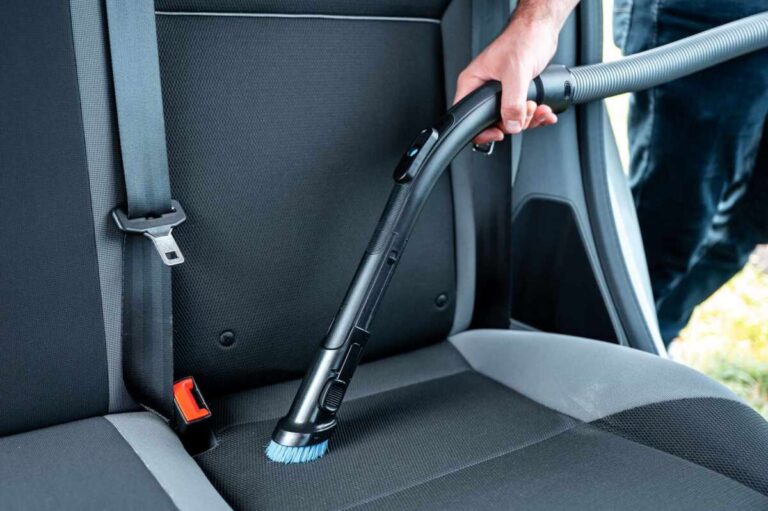
Use a dry microfiber cloth or a vacuum with a soft brush to remove loose dust and crumbs.
Do not scrub dry grit into the belt. Dirt can act like fine sandpaper and wear the fibers during cleaning.
5. Mix a mild cleaning solution
Add a small amount of mild soap to lukewarm water. The water should feel warm, not hot.
A good starting point is about one teaspoon of mild soap in two cups of water. This is a practical cleaning mix, not a universal vehicle specification. Use less soap if the belt is only dusty.
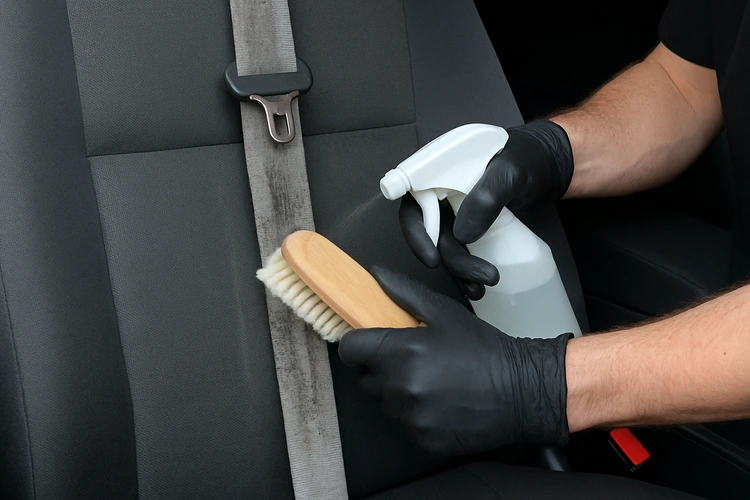
6. Clean the webbing
Dip a microfiber cloth into the solution and wring it out well. The cloth should be damp, not dripping.
Wipe the belt from the upper guide toward the buckle. Clean one section at a time. For stuck-on dirt, use a soft toothbrush with light pressure.
Do not twist, yank, stretch, or aggressively scrub the belt. Do not remove the belt from the vehicle. Seat belt assemblies can contain safety parts that require proper service procedures.
7. Wipe away soap
Use a second cloth dampened with clean water. Wipe the belt to remove soap residue.
Too much soap can leave a sticky film that attracts more dirt. Keep the cloth only lightly damp, and prevent water from running into the retractor or buckle.
8. Clean the buckle and metal tongue
Wipe the metal tongue with a damp cloth. For the buckle, clean the outside and the area around the opening.
Do not pour liquid into the buckle. Do not insert cotton swabs, pins, screwdrivers, or other objects inside it. If the buckle sticks, fails to latch, or does not release normally, have it inspected rather than forcing it.
9. Let the belt dry completely
Leave the belt fully extended until it is dry. Keep the vehicle in a well-ventilated place, but do not use a hair dryer, heat gun, iron, or other direct heat source.
Do not retract a wet or damp belt. Moisture trapped inside the retractor can cause odor and may contribute to corrosion. More importantly, the belt should be dry before the next trip.
10. Test the belt
After drying, allow the belt to retract slowly. It should move smoothly without sticking.
Then check that:
- The belt latches with a clear click.
- The buckle releases when you press the release button.
- The belt retracts without excessive slack.
- The belt locks when pulled sharply.
- The belt lies flat and is not twisted.
A belt that fails any of these checks needs professional inspection.

How to Clean Different Seat Belt Problems
Light dust and daily grime
For light dirt, a damp microfiber cloth is often enough. Wipe the belt, rinse the cloth, and wipe again with clean water.
This approach uses less moisture and reduces the chance of water reaching the retractor.
Food, drink, and sticky spills
Remove fresh spills quickly. Blot the area instead of rubbing it deeper into the fibers.
Use mild soap and lukewarm water. Work from the outside of the stain toward the center. Rinse with a clean damp cloth, then let the belt dry while fully extended.
If milk, juice, or another drink reached the retractor, do not flood the belt with water to chase the liquid inside. Clean only the exposed webbing and ask a dealer or qualified restraint technician whether the assembly needs inspection.
Sunscreen, body oil, or grease
These stains may need more than one gentle cleaning. Apply the mild soap solution to a cloth, not directly to the belt.
Wipe in short sections and rinse the cloth often. Avoid degreasers and strong solvents. They may remove the stain while also damaging the belt material.
Mold or mildew odor
Mold or mildew can develop when a belt stays wet for a long time. Clean the exposed webbing with mild soap and water, then dry it completely in a ventilated area.
Do not use bleach or spray a mold killer on the belt. If the odor returns, the belt may have moisture inside the retractor or trim. A professional should inspect it.
Vomit, blood, or other biological material
Wear disposable gloves and remove solid material with paper towels. Place used towels and gloves in a sealed bag.
Clean the exposed belt with mild soap and water, then rinse with a clean damp cloth. Do not use bleach unless the vehicle manufacturer specifically permits it. If the belt cannot be cleaned without soaking the retractor, ask the manufacturer or an authorized dealer about replacement.
Pet hair
Use a dry rubber glove, lint roller, or soft vacuum brush first. Do not wet the belt until loose hair and dirt are gone.
Once the belt is clean, wipe it with mild soap and water. Check that pet hair has not packed into the buckle.
What Not to Use on Seat Belts
Some common cleaning methods can create a safety problem.
| Cleaning method | Why to avoid it |
|---|---|
| Bleach | May weaken or discolor the webbing |
| Solvents and degreasers | Can damage synthetic fibers or coatings |
| Alcohol-based cleaners | May dry or affect belt materials |
| Steam cleaners | Use heat and moisture near restraint parts |
| Pressure washers | Force water into retractors and buckles |
| Washing machines | Twist, stretch, and mechanically stress the belt |
| Boiling or very hot water | Can damage fibers and nearby parts |
| Hair dryers and heat guns | May overheat or deform the webbing |
| Abrasive brushes | Can roughen or cut the belt surface |
| Removing the belt | Can disturb the restraint assembly |
| Spraying liquid into the buckle | May interfere with the latch mechanism |
The manufacturer’s instructions control if they differ from this general list. A product labeled “safe for fabric” is not automatically safe for seat belt webbing.
When Cleaning Is Not Enough
Cleaning cannot fix structural damage. Replace or professionally inspect the belt if you see fraying, cuts, burns, melted fibers, loose stitching, or severe discoloration.
A seat belt may also require service after a crash. Many vehicles use pretensioners that tighten the belt during a collision. These parts may deploy even when the belt looks clean and intact.
Have the restraint system checked after a significant crash, airbag deployment, or warning-light event. Do not attempt to reset or repair a pretensioner at home.
A replacement should match the exact vehicle position and model. Do not use a used belt from an unknown vehicle, an aftermarket webbing repair, or a homemade replacement.

How Often Should You Clean Car Seat Belts?
Clean seat belts when they look dirty, feel sticky, or develop an odor. Many vehicles need only occasional spot cleaning.
A practical schedule is:
- Monthly: Check for stains, damage, twisting, and smooth retraction.
- As needed: Clean spills, food marks, sunscreen, and pet hair.
- After a major spill: Clean the exposed webbing as soon as practical.
- After a crash: Have the restraint system inspected, even if it does not look dirty.
- Before selling or returning a vehicle: Clean the belts and document any damage for the next owner or vehicle company.
Frequent heavy cleaning is not better. Excess water and strong chemicals create more risk than ordinary dust.
How to Keep Seat Belts Cleaner
Small habits can reduce buildup:
- Keep food and drinks away from the belt path.
- Wipe sunscreen from your hands before pulling the belt.
- Keep pets properly restrained.
- Clean children’s hands after messy snacks.
- Do not close the door on the belt.
- Keep the belt flat and untwisted.
- Deal with spills before they dry.
- Vacuum around the seat and belt guide.
- Avoid hanging accessories from the belt.
- Do not place seat belt covers on the belt unless the vehicle or restraint maker approves them.
Seat belt covers and add-on pads can change how the belt sits on the body. They may also interfere with the belt’s movement or fit, especially for children. Follow the vehicle and child-restraint manufacturer’s guidance.

How to Tell Whether the Belt Is Safe After Cleaning
A clean belt should also function normally. Use this short check:
- Pull the belt out slowly.
- Confirm that the webbing is flat and free of twists.
- Insert the tongue into the buckle.
- Listen and feel for a secure latch.
- Pull the belt sharply to confirm that it locks.
- Press the release button.
- Let the belt retract without forcing it.
- Check that no warning light remains on.
This check does not replace professional inspection. A belt can appear clean while hiding internal damage. Stop using that seating position and seek service if the belt does not latch, lock, retract, or release correctly.
Frequently Asked Questions
Can I put a car seat belt in the washing machine?
No. Do not remove and machine-wash a vehicle seat belt unless the vehicle manufacturer gives specific instructions to do so. Machine washing can twist, stretch, and stress the webbing and may damage connected safety parts.
Can I use disinfectant wipes on seat belts?
Only if the vehicle manufacturer specifically approves the product. Many disinfectants contain alcohol, bleach, solvents, or other ingredients that may affect the webbing. Mild soap and water are the safer general choice.
Can I use a carpet cleaner on a seat belt?
It is best not to. Carpet cleaners often add too much moisture and may contain chemicals that are not approved for restraint webbing. Use a damp cloth with mild soap instead.
Why does my seat belt smell after cleaning?
The smell may come from moisture trapped in the retractor, residue left by soap, or a spill that reached the belt mechanism. Let the belt dry fully while extended. If the odor remains or returns, have the assembly inspected.
Can I clean a child car seat harness the same way?
Not always. Child safety seat harnesses have their own cleaning rules. Check the child restraint manual before using soap, removing the harness, or applying any disinfectant. Do not use harsh cleaners or machine-wash the harness unless the manufacturer permits it.
Should I replace a seat belt after a crash?
The answer depends on the vehicle and the crash. A crash can activate a pretensioner or damage the webbing without leaving an obvious mark. Have the vehicle manufacturer, an authorized dealer, or a qualified restraint professional inspect the system.
Key Takeaways
- Use mild soap, lukewarm water, and a damp cloth.
- Clean the exposed webbing gently and keep water away from the retractor and buckle.
- Never use bleach, solvents, steam, heat, or a washing machine unless the manufacturer expressly allows it.
- Let the belt dry fully before retracting or using it.
- Replace or professionally inspect belts with fraying, cuts, melted fibers, faulty buckles, or crash history.
- Check the vehicle owner’s manual before cleaning.
Conclusion
The safest way to clean car seat belts is simple: remove loose dirt, wipe the webbing with mild soapy water, rinse with a clean damp cloth, and air-dry it fully. Gentle cleaning protects the belt better than strong chemicals or aggressive scrubbing.
If the belt is damaged, will not latch, will not retract, or was involved in a crash, cleaning is not the solution. Stop using that seating position and contact the vehicle manufacturer or an authorized service professional.