How To Get Smell Out Of Car Seats: Easy Fixes
Most car-seat odors come from spilled drinks, food, sweat, smoke, mildew, or trapped moisture. To remove the smell, first find and clean the source. Then dry the seat fully and use a mild odor absorber if needed.
Do not cover a strong odor with air freshener alone. That only mixes scents. For most cloth vehicle seats, the safest method is vacuuming, spot cleaning with mild soap, careful rinsing, and full air drying. For leather, vinyl, or a child safety seat, use a different method.
Introduction
A car seat can hold odor deep in its foam, seams, carpet, and seat tracks. A quick spray may make the cabin smell better for a day, but the odor often returns when heat and humidity rise.
This guide covers both types of “car seats”:
- Vehicle seats: the seats built into your car.
- Child car seats: removable infant, convertible, booster, or all-in-one safety seats.
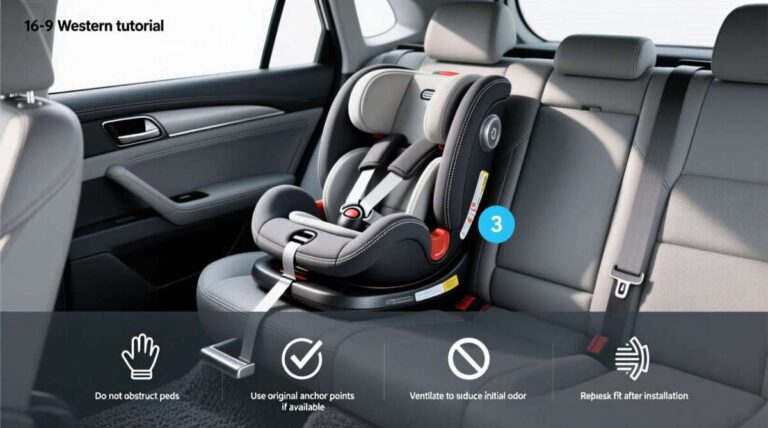
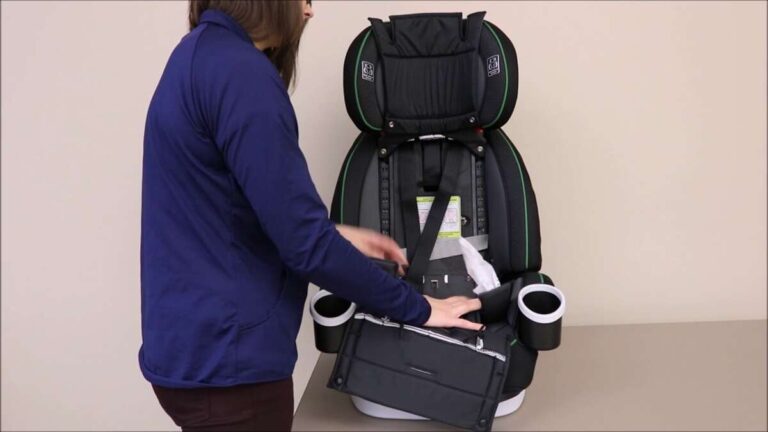
The cleaning rules are not the same. A vehicle seat may tolerate light upholstery cleaning, while a child restraint has parts that affect crash safety. Always follow the owner’s manual for a child car seat. The National Highway Traffic Safety Administration advises parents to use the manufacturer’s instructions for installation and care.
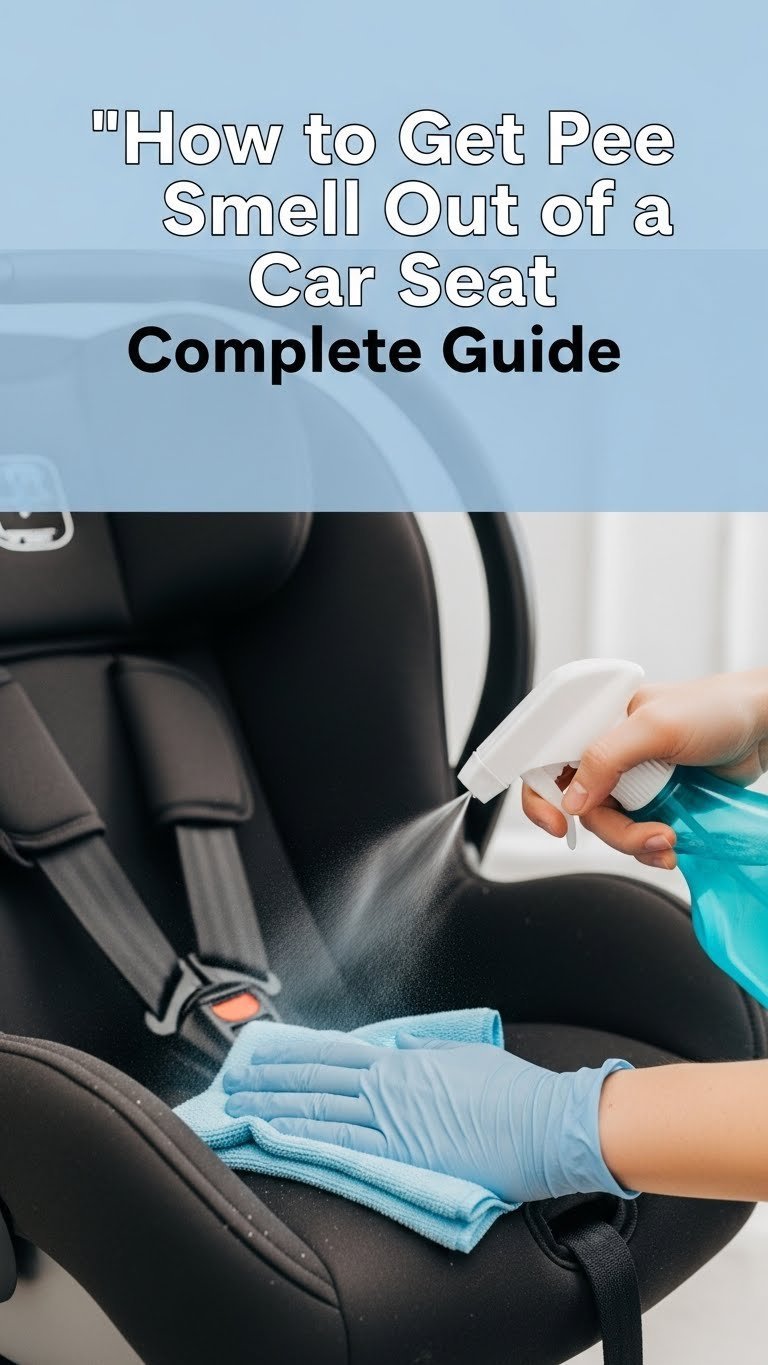
Find the Source of the Odor Before Cleaning
The best way to remove a smell is to find what caused it. Check the seat, the gap between the seat and center console, the floor under the seat, and nearby door pockets.
Common sources include:
- Milk, juice, coffee, or soda
- Food crumbs and grease
- Pet accidents
- Sweat and body oils
- Cigarette or cannabis smoke
- Wet clothing, umbrellas, or floor mats
- Mold or mildew from a leak
- Vomit or other biological fluids
- A forgotten diaper, bottle, or gym bag
- Damp padding after an earlier cleaning
Move the seat forward and back if it is safe to do so. Use a flashlight to inspect dark gaps. Smell the seat when the car is cool, then again after it sits in the sun. Heat often makes hidden odors easier to locate.
A musty smell that returns after cleaning may point to moisture beneath the carpet or inside the seat foam. A sweet smell may come from a drink spill or, in some cases, a vehicle fluid leak. If the odor smells like gasoline, exhaust, burning plastic, or chemicals, stop cleaning and have the vehicle checked.

Gather the Right Cleaning Supplies
You do not need a large collection of products. Start with simple tools and add a specialty cleaner only when the material requires it.
For cloth vehicle seats
Use:
- A vacuum with a crevice tool
- Two or three clean microfiber cloths
- A soft upholstery brush
- Warm water
- A small amount of mild dish soap or upholstery cleaner
- A spray bottle
- Dry towels
- Baking soda or activated carbon for lingering odor
For leather or vinyl seats
Use:
- A vacuum
- A clean microfiber cloth
- A leather cleaner made for automotive leather, if applicable
- A leather conditioner recommended for the seat material
- A soft brush for seams
Do not assume that all “leather” seats are natural leather. Many vehicles use coated leather, vinyl, or synthetic leather. Check the vehicle manual before applying a cleaner.
For a child car seat
Use only:
- The car seat manual
- Mild soap, if the manual allows it
- Water
- A soft cloth or sponge
- A soft brush for approved parts
Avoid steam cleaners, bleach, strong solvents, essential oils, and heavy fragrances. Never clean a harness with harsh chemicals unless the manufacturer specifically allows it.
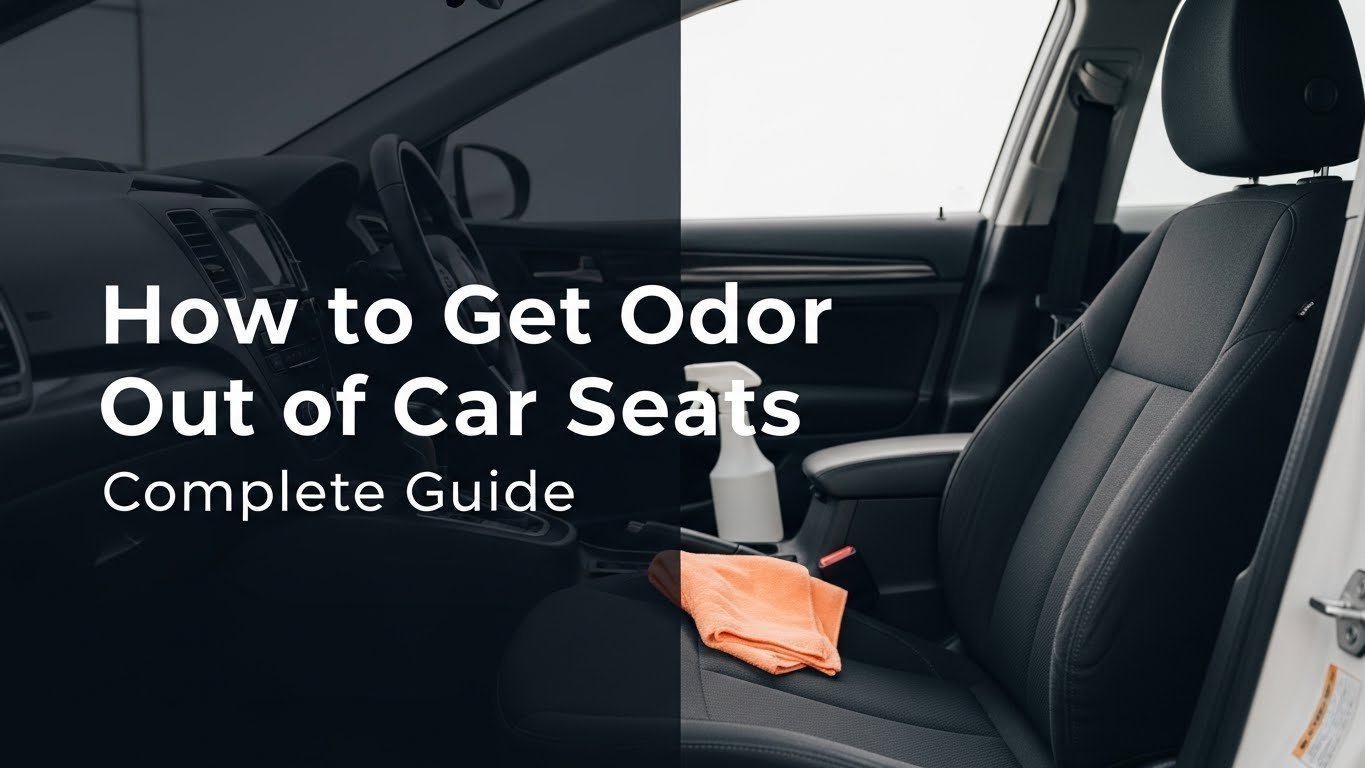
How to Remove Smell From Cloth Car Seats
For cloth vehicle seats, remove loose debris first, clean the stained area with limited moisture, and dry it as fast as possible.
1. Remove trash and vacuum well
Take out trash, mats, and removable items. Vacuum the seat surface, seams, cracks, and the area under the seat.
Use the crevice tool around:
- Seat belt openings
- Seat hinges
- The center console
- Seat rails
- The gap between the backrest and cushion
Vacuuming matters because crumbs and dust can hold odor. It also prevents you from turning dry debris into wet paste during the next step.
2. Test the cleaner
Mix a small amount of mild soap with warm water, or use an automotive upholstery cleaner. Test it on a hidden area first.
Wait until the spot dries. Check for:
- Color change
- Staining
- Water rings
- Rough texture
- Sticky residue
If the fabric changes, stop and use a cleaner made for that material.
3. Clean small areas at a time
Spray the cleaner onto a cloth or brush, not directly onto the seat when possible. Work in a small section.
Gently brush the fabric. Do not scrub hard. Heavy scrubbing can push the spill deeper into the foam and may damage the fibers.
Wipe the area with a clean, damp cloth. The cloth should be damp, not dripping wet. Repeat until you remove the cleaner and visible residue.
4. Dry the seat completely
Press dry towels against the cleaned area. Then leave the car in a safe, dry place with the doors or windows open.
Use a fan if available. Do not close the car while the seat is still damp. Moisture trapped under the fabric can create a musty smell or support mold growth.
The seat is ready when it feels dry and no longer smells damp. A thick cushion may need many hours to dry.
5. Use baking soda only after the seat is dry
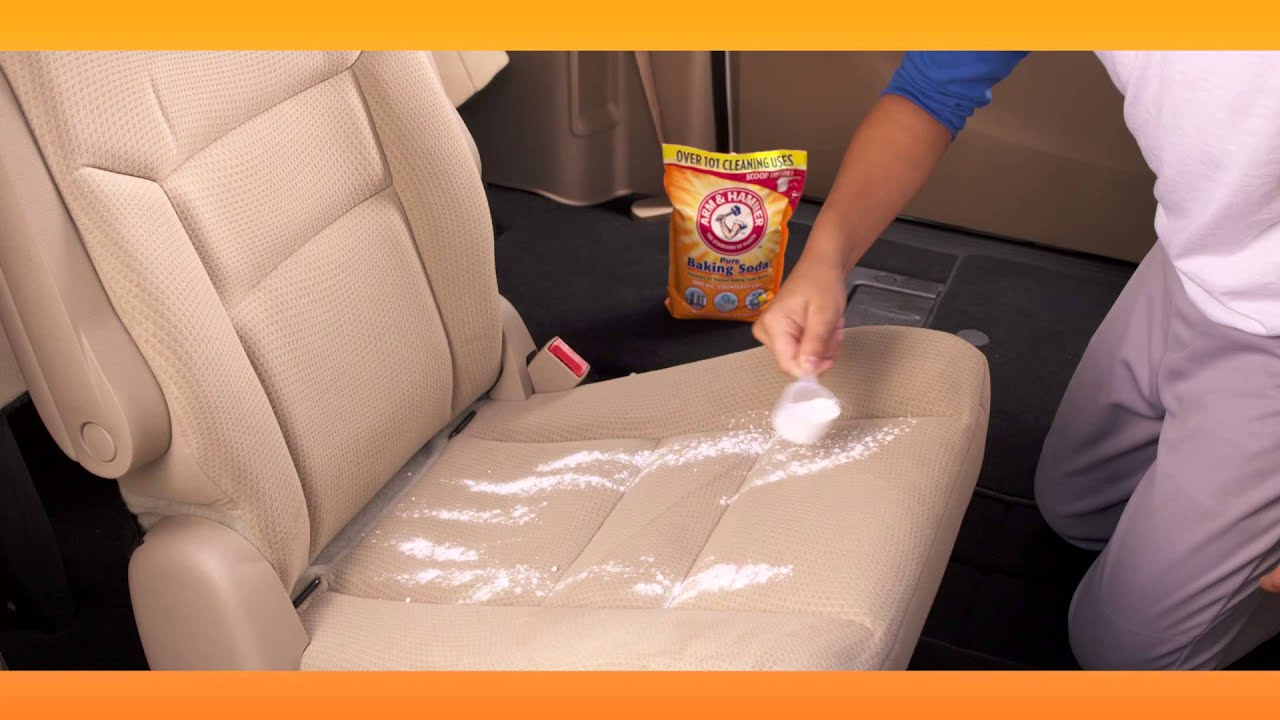
Sprinkle a light layer of baking soda over the dry fabric. Leave it for several hours or overnight, then vacuum it thoroughly.
Baking soda can help absorb some surface odors. It does not remove a deep spill, smoke residue, mold, or a large amount of biological contamination. If the smell returns, clean the source again rather than adding more powder.

How to Remove Odor From Leather or Vinyl Car Seats
Leather and vinyl do not absorb liquid in the same way as cloth, but odors can collect in seams, perforations, and the foam below the surface.
Start by vacuuming the seat. Wipe it with a slightly damp microfiber cloth. If the odor remains, use a cleaner made for automotive leather or vinyl and follow its label.
Pay close attention to:
- Stitching
- Perforated sections
- Seat belt gaps
- The edge of the seat cushion
- Areas where skin touches the seat
Do not flood perforated leather or vinyl. Liquid can pass through the small holes and reach the foam.
After cleaning, dry the seat with a clean towel. If the material is genuine or coated leather, apply a compatible conditioner only if the vehicle manual or product instructions support it. Do not use household oils, furniture polish, or greasy conditioners. They can leave a film that collects dust and creates more odor.
For smoke odor, surface wiping may not be enough. Smoke particles can settle on the headliner, dashboard, carpet, door panels, and air vents. Clean the whole cabin instead of focusing on one seat.
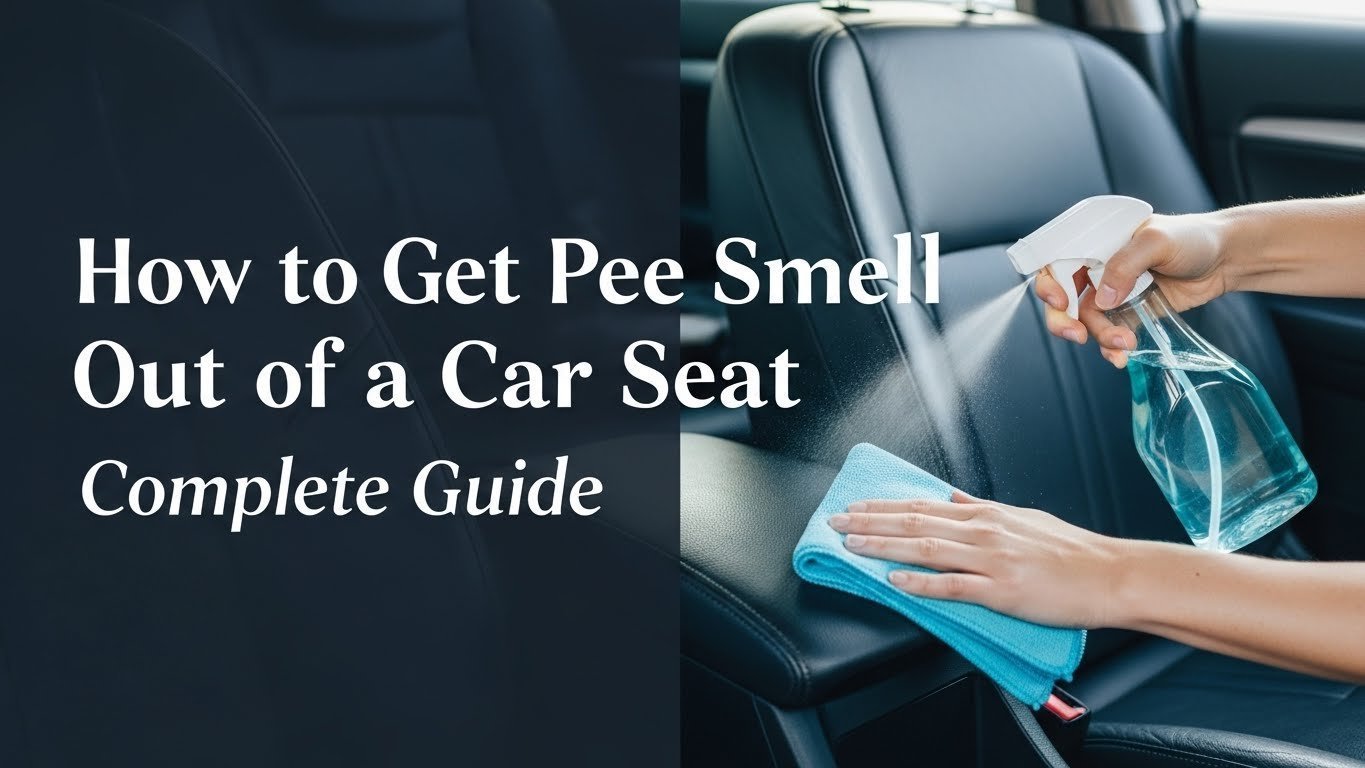
How to Clean a Child Car Seat Without Damaging It
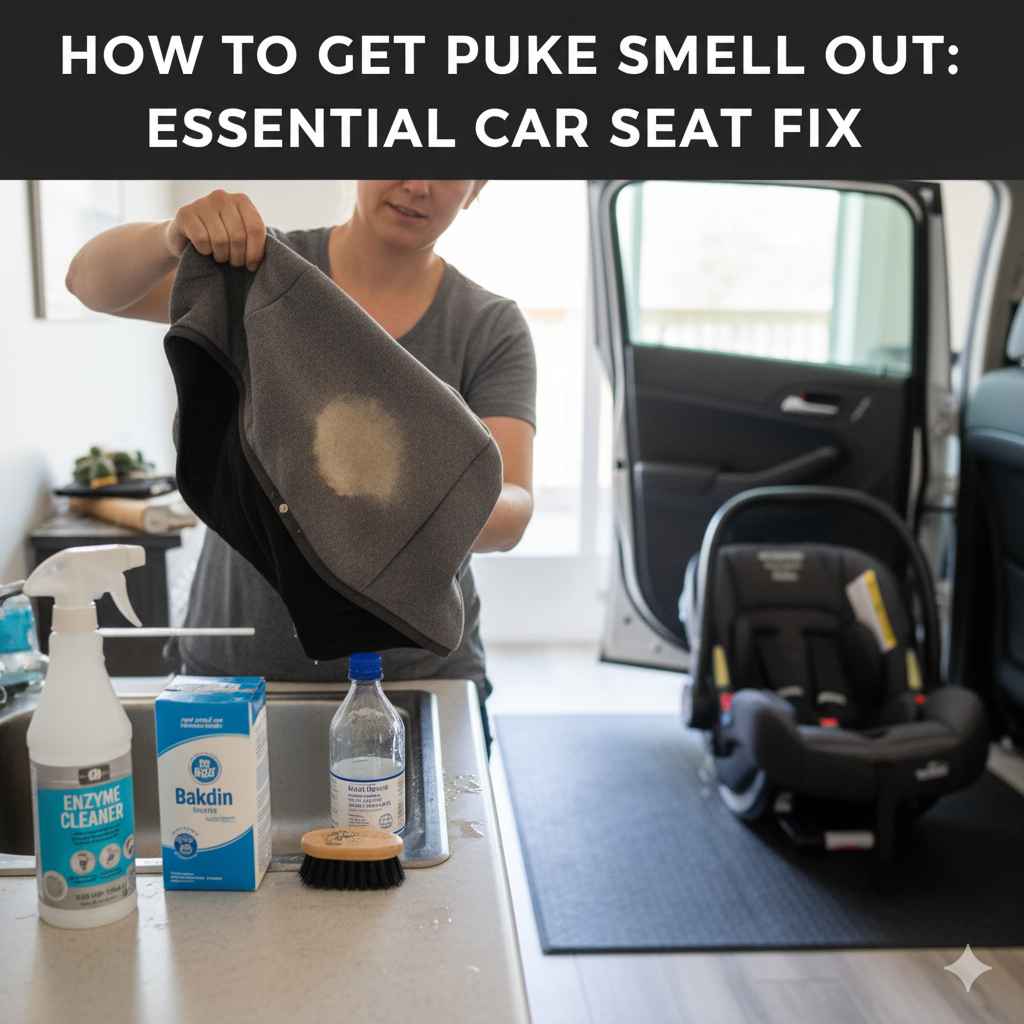
A child car seat needs extra care because the cover, harness, buckle, and shell all play different roles. Start by identifying the brand and model. Find the manual online if you no longer have the paper copy.
Clean the removable cover
Many covers can be removed and machine washed. The manual may specify:
- Water temperature
- Detergent type
- Wash cycle
- Air drying or machine drying
- Whether bleach is allowed
Follow those instructions exactly. Do not reinstall the cover until it is fully dry.
Clean the harness
Most manufacturers advise wiping the harness with water or a mild soap solution. Do not soak, machine wash, bleach, iron, or use harsh chemicals on the harness unless the manual clearly permits it.
Do not scrub the harness aggressively. The webbing must stay flat and intact.
Clean the buckle
Remove crumbs and debris from around the buckle. Some manufacturers allow rinsing the buckle with warm water. Others give different instructions.
Do not use oil, lubricant, bleach, or household cleaner on the buckle. The buckle must click and release as designed.
Clean the plastic shell
Wipe the shell with a damp cloth and mild soap if allowed. Dry it before reassembly.
Do not use a steam cleaner or strong solvent. Excess heat and chemicals may affect plastic parts.
Replace parts when required
A cover or harness that still smells strongly after proper cleaning may need replacement. Replace the entire child restraint after a crash when required by the manufacturer or safety guidance. Also check the expiration date and recall status.
You can search for recalls through the NHTSA car seat recall page.

Remove Smoke, Mildew, and Biological Odors
Some smells need more than normal upholstery cleaning.
Smoke odor
Smoke can cling to fabric, plastic, glass, carpet, the headliner, and the ventilation system. Clean the whole interior:
- Remove trash and washable mats.
- Vacuum seats, carpet, and cracks.
- Wipe hard surfaces with a suitable interior cleaner.
- Clean the inside of the windows.
- Wash or replace cabin air filters when the vehicle manual calls for it.
- Air out the vehicle in a dry, safe place.
Do not rely on a fragrance spray. It may hide the smell without removing smoke residue.
Mildew or musty odor
Find the moisture source first. Check door seals, sunroof drains, windshield seals, trunk areas, and wet carpet.
Drying the surface alone may not solve the problem if water reached the padding. If you see widespread mold, the carpet stays wet, or the odor returns quickly, use a professional automotive detailer or mold-remediation provider.
Do not mix bleach with ammonia or other cleaners. Chemical mixtures can release dangerous vapors.
Vomit, urine, or other biological fluids
Wear gloves. Remove solid material with disposable towels. Clean the affected area with a product labeled for the material and the type of contamination.
Avoid soaking a powered seat, seat heater, airbag area, or child restraint. If fluid entered deep foam or remains strongly contaminated, professional cleaning may be safer and more effective.
Choose the Right Method for the Problem
This table helps match the odor to a practical first step.
| Odor or condition | Best first step | Main caution |
|---|---|---|
| Food or drink spill | Vacuum, spot clean, rinse lightly, dry fully | Do not soak the foam |
| Sweat or body odor | Clean fabric or wipe leather, then air out | Fragrance does not remove residue |
| Smoke | Clean the whole cabin and check the cabin filter | One-seat cleaning may not be enough |
| Musty smell | Find and stop the moisture source | Hidden damp foam may need professional help |
| Pet accident | Remove solids, use a compatible enzyme cleaner, dry fully | Test the cleaner first |
| Child car seat odor | Follow the exact manual | Do not use harsh chemicals on the harness |
| Gasoline or exhaust smell | Stop and inspect the vehicle | This may be a safety problem, not a cleaning problem |
Enzyme cleaners can help break down some organic residues, but product labels differ. Confirm that the cleaner is safe for automotive fabric, leather, plastic, and any nearby materials.

Common Mistakes That Make Car Seat Odors Worse
Several cleaning habits can spread odor or damage the seat.
Using too much water
Water carries residue deeper into foam. It also takes longer to dry. Use the least moisture that can do the job.
Spraying fragrance over the smell
Air fresheners mask odor for a short time. They do not remove the material causing it.
Using bleach or ammonia
These chemicals can damage fabric, discolor surfaces, irritate the lungs, and create dangerous fumes when mixed with other products.
Using a steam cleaner without checking the material
Steam may damage adhesives, coatings, leather finishes, electronics, or child restraint parts. Check the manual first.
Scrubbing too hard
Hard scrubbing can spread a stain and damage fabric. Gentle cleaning in small sections is safer.
Closing the car while it is damp
This traps moisture. Use airflow and give the seat enough time to dry.
Cleaning a child restraint like household furniture
A child car seat is a safety device. Its harness, buckle, shell, and cover have different care rules. The manufacturer’s manual takes priority over general cleaning advice.
When Home Cleaning Is Not Enough
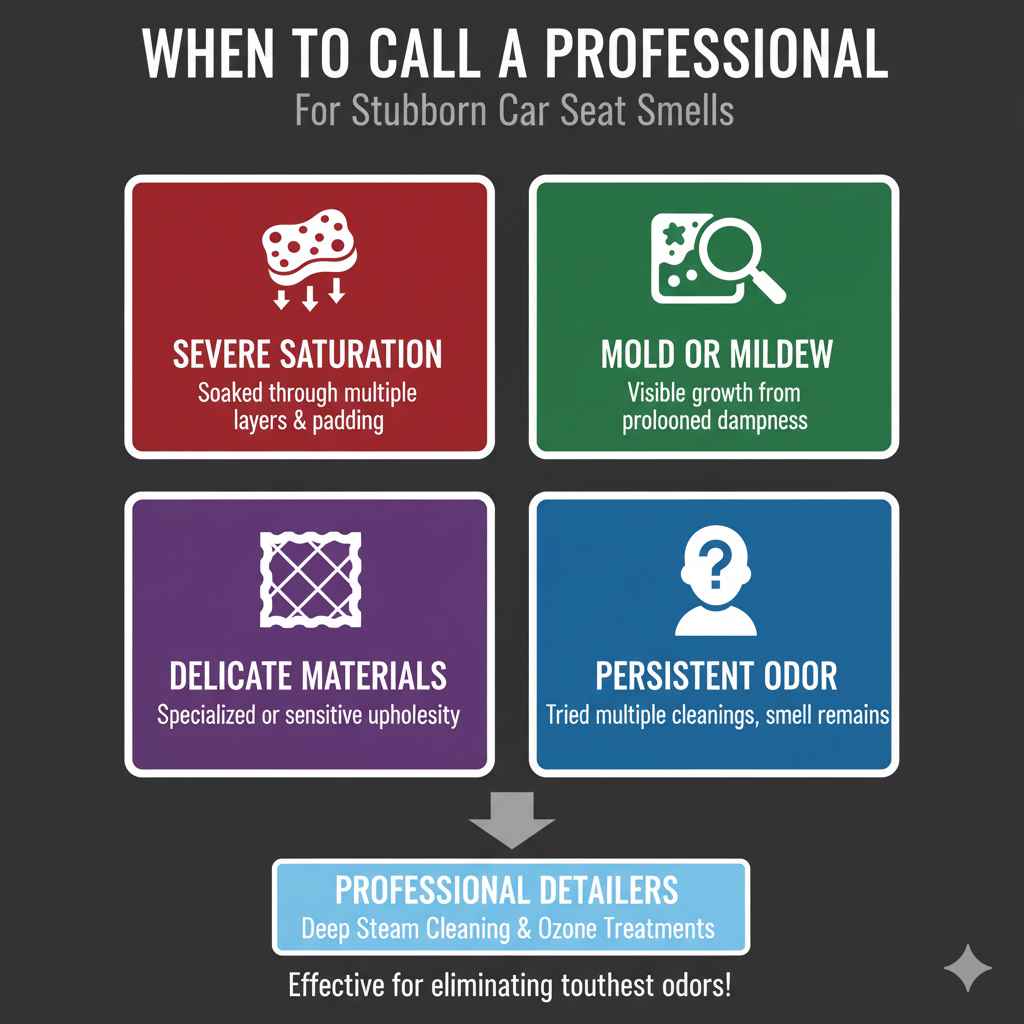
Try professional cleaning when the odor remains after two careful cleaning cycles, the foam is soaked, or the smell comes from mold, smoke, or biological contamination.
Professional help is also wise when:
- Water entered powered seat controls
- The seat has a built-in airbag or heater
- Mold covers a large area
- A fluid leak may be involved
- The odor returns within a day or two
- A child safety seat has contamination inside the harness or padding
- You cannot remove and dry the seat safely
Before hiring a detailer, ask what method will be used and whether the service is suitable for leather, heated seats, ventilated seats, or child restraints. A good detailer should explain how the seat will dry.
How to Keep Car Seats From Smelling Again
Prevention is easier than repeated deep cleaning.
- Remove food and drink from the car each day.
- Use a sealed container for wet items.
- Clean spills as soon as possible.
- Vacuum the seat gaps every few weeks.
- Keep floor mats dry.
- Air out the vehicle after transporting wet pets or sports gear.
- Check door, trunk, and sunroof seals if the cabin smells musty.
- Follow the vehicle manual for cabin air filter replacement.
- Do not leave baking soda or loose powders where children or pets can reach them.
For child car seats, check the cover and buckle area often. A small spill is much easier to clean before it reaches the padding.

Frequently Asked Questions
How long should baking soda sit on a car seat?
Leave it on a dry cloth seat for several hours or overnight, then vacuum it well. Baking soda is most useful for mild surface odor. It will not fix mold, soaked foam, or a hidden spill.
Can I spray vinegar on car seats?
A diluted vinegar solution may help with some odors on certain fabric surfaces, but it can leave its own smell and may harm leather, coatings, or sensitive materials. Test a hidden spot first and follow the material’s care instructions. Never mix vinegar with bleach or ammonia.
Can I use an ozone generator to remove car-seat odor?
Ozone can irritate the lungs and damage some rubber, plastic, and fabric materials. Do not use it around people, pets, or children. If you are considering ozone treatment, use a qualified professional and follow all safety instructions.
Why does my car seat smell worse when it gets hot?
Heat increases the release of odor compounds from fabric, foam, smoke residue, and old spills. A stronger smell in warm weather often means the source is still inside the seat or nearby padding.
What if the smell is coming from under the car seat?
Move the seat only as the vehicle manual allows, especially if it has electrical wiring or side airbags. Inspect the carpet, seat rails, and floor beneath it. If the area is wet or the odor resembles fuel, exhaust, or burning plastic, stop and arrange a vehicle inspection.
Conclusion
To get smell out of car seats, remove the source, vacuum first, use a small amount of material-safe cleaner, and dry the seat completely. Cloth seats can usually be spot cleaned with mild soap and water. Leather and vinyl need compatible cleaners and very little moisture.
For a child car seat, follow the manufacturer’s manual for every part. If the odor comes from mold, deep foam, smoke, chemicals, or a vehicle fluid, stop masking it and address the underlying problem.