Symptoms Of A Bad Upper Ball Joint: Warning Signs
Introduction
A bad upper ball joint can cause clunking, loose steering, uneven tire wear, and poor wheel control. The joint links the steering knuckle to the upper control arm. It lets the wheel move up and down while still turning left and right.
The signs can look like a bad tie-rod end, wheel bearing, control arm bushing, or lower ball joint. So, a noise alone does not prove the upper ball joint is bad. A proper inspection must confirm the source before you drive far or buy parts.
This guide applies to vehicles sold and driven in the United States. Suspension layouts differ by make, model, and year. Always use the factory service manual for your vehicle’s test method and torque values.

What Is an Upper Ball Joint?
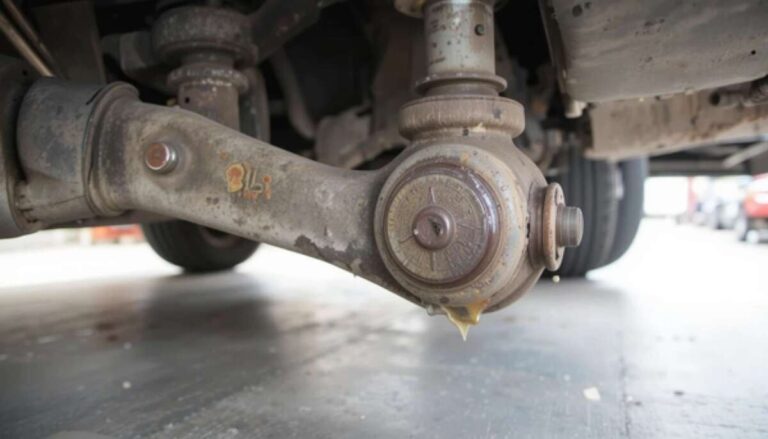
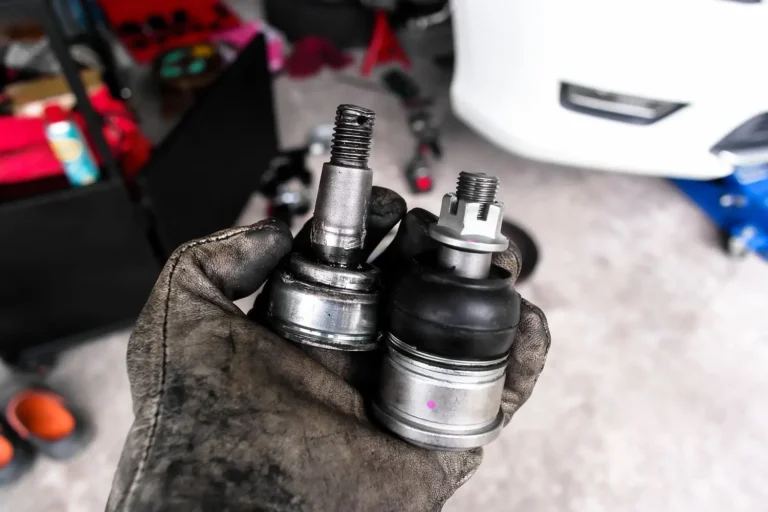
An upper ball joint is a pivot point in the front suspension. It usually connects the upper control arm to the steering knuckle.
The joint has a ball and socket. This design allows the steering knuckle to move in several directions. The joint also helps keep the wheel in its correct position.
Some vehicles use a separate upper and lower control arm. These vehicles often have an upper ball joint. Many vehicles with MacPherson struts do not have an upper ball joint. They may use a strut mount and bearing at the top instead.
That difference matters. A noise near the top of the wheel does not always mean the vehicle has an upper ball joint.
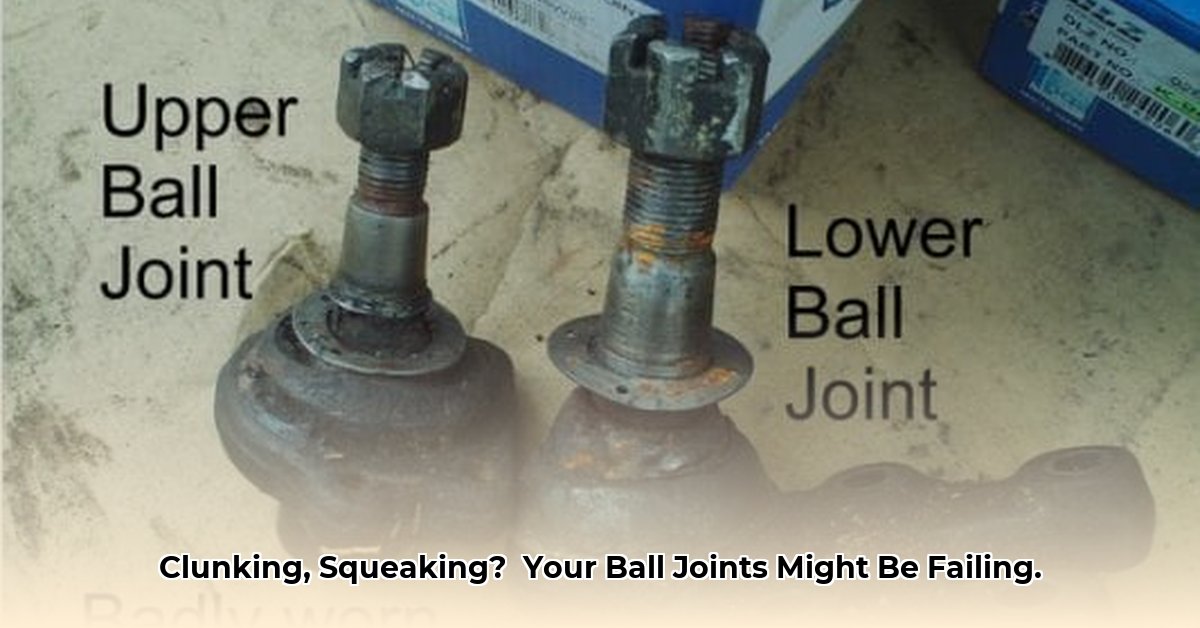
Upper ball joint vs. lower ball joint
The upper and lower ball joints may share similar symptoms. Their jobs can also change with the suspension design.
In some systems, the upper joint carries part of the vehicle load. In others, the lower joint carries most of the load. A worn upper joint can still affect steering and wheel alignment even when it carries less weight.
The part’s location is not enough for a diagnosis. The inspection must follow the vehicle maker’s instructions.
The Most Common Symptoms of a Bad Upper Ball Joint
The most common signs are movement at the joint, a dull clunk, steering changes, and uneven tire wear. These signs can happen alone or together.
1. Clunking or knocking over bumps
A worn upper ball joint may make a dull clunk, knock, or pop when the wheel moves over bumps.
The sound may be strongest when:
- Driving over potholes
- Crossing speed bumps
- Turning into a driveway
- Braking on rough pavement
- Accelerating on an uneven road
- Moving the steering wheel at low speed
A dry or loose joint may move inside its socket. That movement can create the noise.
Noise from a ball joint often travels through the control arm. As a result, it may sound like it comes from the wheel, fender, or dashboard. This makes sound location an unreliable test by itself.
2. Loose or wandering steering
A worn joint can let the steering knuckle move more than it should. You may feel this as loose steering or a vehicle that does not track straight.
The vehicle may:
- Wander on a straight road
- Need frequent steering corrections
- Feel less stable in turns
- Pull after hitting a bump
- Change direction during braking
Other parts can cause the same feeling. Tie-rod ends, steering racks, control arm bushings, and wheel bearings also affect steering control.
3. Uneven front tire wear
A failing ball joint can change the wheel’s camber or toe angle. These are alignment angles that control how the tire meets the road.
Possible wear patterns include:
- Wear on the inside edge
- Wear on the outside edge
- Feathered tread blocks
- A tire that wears faster than the tire on the other side
Tire wear is not proof of a bad ball joint. Incorrect alignment, low tire pressure, worn bushings, and bent suspension parts can create similar patterns.
4. Steering-wheel vibration or shimmy
A worn joint may contribute to vibration through the steering wheel. The vibration may become worse on rough roads or during turns.
Still, vibration has many possible causes. Common examples include:
- An unbalanced tire
- A bent wheel
- A damaged tire
- A worn wheel bearing
- A warped brake rotor
- A loose tie-rod end
A ball joint is more likely when vibration appears with looseness, clunking, or visible joint wear.
5. The vehicle pulls or feels unstable during braking
A damaged suspension joint can allow the wheel to shift under braking force. The driver may feel a pull to one side or a change in steering feel.
A pull during braking can also come from a sticking brake caliper, unequal tire pressure, tire damage, or an alignment problem. Do not assume the ball joint is the cause without an inspection.
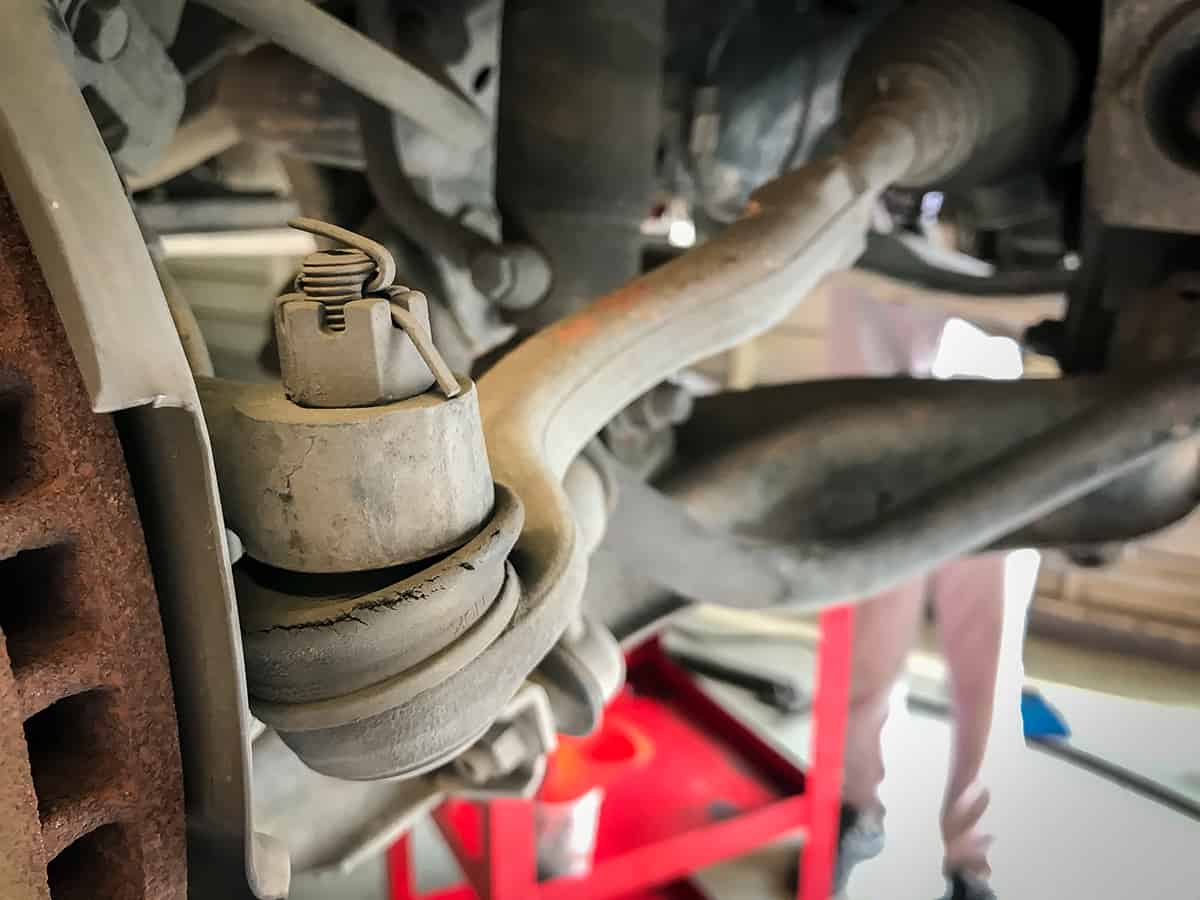
6. Visible damage to the dust boot
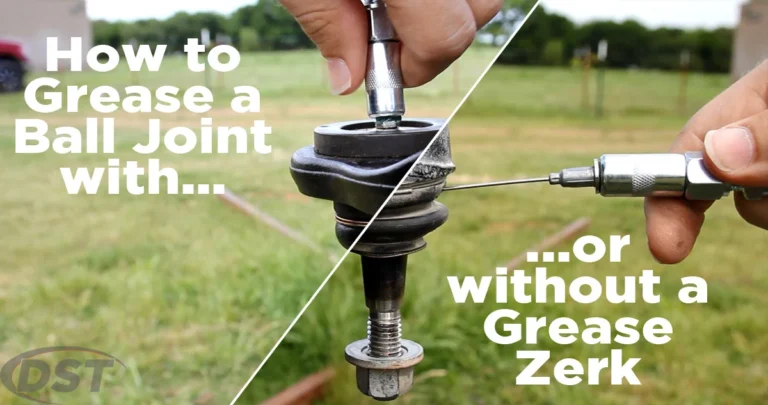
Many ball joints have a rubber or synthetic dust boot. The boot keeps dirt and water out and holds grease in.
Warning signs include:
- A split or torn boot
- Missing boot material
- Grease around the joint
- Rust or dirt inside the joint area
- A boot that has separated from its seat
A torn boot does not always mean the joint is already loose. It does mean the joint may be contaminated and should be checked soon. Some ball joints are sealed and cannot be greased.
7. A failed inspection for joint play
The clearest sign is excess movement found during a proper inspection.
A technician may find that the ball stud moves beyond the limit set by the vehicle maker. Some joints have a wear indicator or a specific measurement method. Others require a load test with a dial indicator.
There is no single safe movement limit for every vehicle. Do not use a universal “acceptable” measurement from another model.

How to Check for a Bad Upper Ball Joint
A safe inspection starts with the vehicle’s service information. The correct method depends on the suspension design and whether the ball joint is loaded or unloaded when the vehicle is lifted.
Step 1: Look for basic clues
Park on a level surface. Set the parking brake. Check the front tires for uneven wear. Then look through the wheel opening for:
- A torn dust boot
- Leaking grease
- A loose fastener
- A damaged control arm
- Rust around the joint
- Contact marks from unusual movement
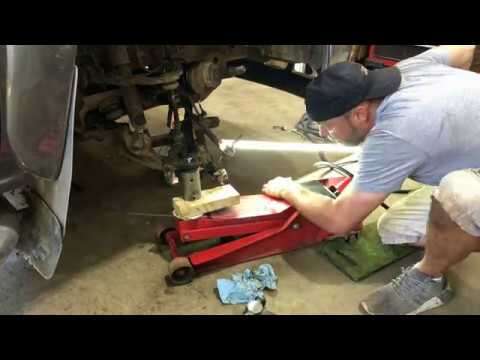
Do not place any part of your body under a vehicle supported only by a jack.
Step 2: Check the wheel for play
A common screening check is to grasp the tire at the 12 and 6 o’clock positions and rock it in and out.
Movement can point to:
- An upper or lower ball joint
- A wheel bearing
- A bent suspension part
- Another loose connection
This check is only a clue. It cannot identify the exact failed part.
Some vehicles require the suspension to remain loaded. Others require the wheel to hang free. A spring or control arm can hide or create movement during the wrong test.
Step 3: Separate ball-joint play from wheel-bearing play
If the wheel moves, have an assistant press the brake pedal while you repeat the check. A change in movement may point toward a wheel bearing, but this is not a universal rule.
A technician should also inspect the joint directly. They may use a pry bar or dial indicator as described in the service manual.
Do not force a joint with a pry bar unless you know the correct contact point. A pry bar can damage the boot or another suspension part.
Step 4: Check related steering parts
Inspect the tie-rod ends, sway-bar links, control-arm bushings, and wheel bearing. These parts can make the same noise or create similar looseness.
A good inspection checks the complete corner of the vehicle. Replacing the wrong part wastes money and may leave a dangerous fault in place.
Step 5: Compare both sides
Compare the left and right sides for boot condition, noise, and movement. A side-to-side comparison can help reveal a problem.
It is not a final test. Some suspension designs allow normal movement on one side or use different joint positions. Factory limits still control the decision.
Symptoms vs. Other Common Problems
The table below helps narrow the cause. It does not replace a hands-on inspection.
| Symptom | Possible upper ball joint cause | Other common causes |
|---|---|---|
| Clunk over bumps | Loose or dry joint | Sway-bar link, control-arm bushing, strut mount |
| Wheel movement at 12 and 6 | Ball-joint play | Wheel bearing, lower ball joint |
| Wandering steering | Knuckle movement | Tie rod, alignment, tire pressure |
| Inner-edge tire wear | Alignment change from joint wear | Toe error, camber issue, worn bushing |
| Clicking while turning | Joint movement in some cases | CV axle, strut bearing, tire contact |
| Steering vibration | Loose suspension connection | Wheel balance, bent wheel, tire damage |
| Grease near the joint | Torn or failed dust boot | Grease from another component |
The key point is simple: a symptom identifies a system, not always a part. The front suspension has many connected parts. Movement at one part can be felt at another.
Is It Safe to Drive With a Bad Upper Ball Joint?
Driving safety depends on the amount of wear and the joint’s design. A joint with a torn boot but no measurable play may need prompt service. A joint with severe looseness may create a serious loss-of-control risk.
Stop driving and arrange a tow if you notice:
- Severe wheel looseness
- A wheel that sits at an odd angle
- Loud repeated clunks
- Sudden steering changes
- A broken ball-joint stud
- The tire rubbing the suspension or body
- A wheel that shifts during braking
- A suspension part that looks partly separated
A ball-joint failure can allow the steering knuckle to move out of position. In some designs, the wheel can fold under the vehicle or separate from normal alignment.
Do not rely on reduced noise as proof that the problem is fixed. A joint can become quieter while its condition gets worse.
What Causes an Upper Ball Joint to Fail?
Ball joints usually fail because of wear, contamination, impact, or age. The exact service life varies widely.
Common causes include:
- A torn dust boot
- Loss of grease
- Water and road salt
- Dirt entering the joint
- Repeated pothole impacts
- Heavy loads or severe use
- Corrosion
- Poor-quality replacement parts
- Damage to the control arm or knuckle
Road salt can speed corrosion in areas such as the Northeast and Midwest. Rough roads can add impact loads in any part of the United States.
Mileage alone cannot predict failure. A vehicle with moderate mileage may need a joint after years of corrosion. Another vehicle may run much longer under mild conditions.
Repair and Replacement Options
The repair depends on how the manufacturer built the suspension.
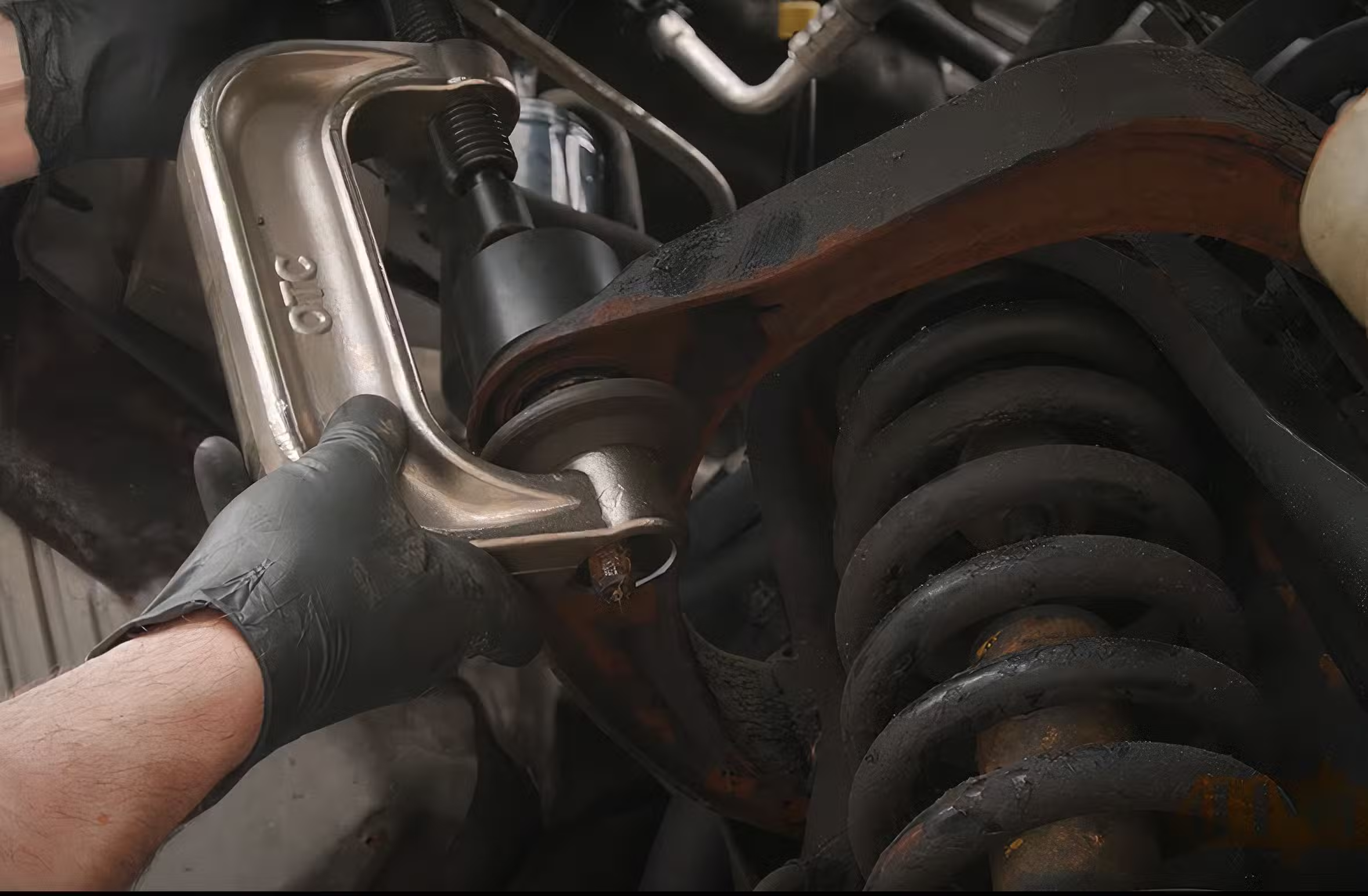
Some vehicles use a replaceable ball joint. A technician can remove the old joint and install a new one in the control arm.
Other vehicles use a control arm with a factory-installed joint. In that case, replacing the complete control arm may be the approved repair. This can also replace worn control-arm bushings at the same time.
A proper repair should include:
- Confirming the failed part.
- Checking the opposite side and related parts.
- Using the correct replacement part.
- Following the specified fastener torque.
- Installing a new cotter pin when required.
- Checking wheel alignment after the repair.
- Road-testing the vehicle in a safe area.
Do not reuse a cotter pin unless the service instructions clearly allow it. Never guess at torque values. Suspension fasteners need the correct clamp force.
Should both upper ball joints be replaced?
Not always. Replace both sides when both joints fail inspection or when the vehicle maker’s procedure calls for it.
Some repair shops recommend replacing both sides because the parts have similar age and use. That may be reasonable, but it is not an automatic rule. Ask for the inspection result for each side.
Does a ball-joint replacement require an alignment?
An alignment check is often wise after suspension work. The need depends on the vehicle design and the parts removed.
A replacement joint may change alignment if the joint position affects camber or if the control arm moves during repair. The alignment check also helps find damage that caused the joint to wear.
Common Mistakes to Avoid
Mistake 1: Replacing a part based on noise alone
Many suspension parts can clunk. Confirm the source before ordering a ball joint.
Mistake 2: Using a universal test
The 12-and-6 o’clock check is useful, but it is not correct for every vehicle. Follow the service manual.
Mistake 3: Ignoring the lower ball joint
A lower ball joint can produce nearly the same symptoms. Inspect both joints when the suspension uses both.
Mistake 4: Replacing only the boot
A new boot cannot restore metal surfaces that have already worn. If the joint has measurable play, the joint may need replacement.
Mistake 5: Driving after a serious warning sign
Severe looseness is not a minor comfort issue. Stop driving if the wheel or steering feels unstable.
Mistake 6: Skipping the alignment check
A suspension repair can affect wheel angles. Incorrect alignment can quickly damage a tire.
When to Call a Professional
Call a qualified repair shop when you cannot identify the suspension design, measure joint play, or support the vehicle safely.
Professional help is especially important when:
- The vehicle has a loaded suspension spring
- The joint is pressed into the control arm
- The joint shows major looseness
- A fastener is seized or damaged
- The vehicle has air suspension
- The wheel position looks abnormal
- You need to drive on a highway before repair
A repair manual can show the correct procedure, but it does not remove the risks of spring energy, heavy parts, or a poorly supported vehicle.
Frequently Asked Questions
Can a bad upper ball joint cause a shaking steering wheel?
Yes, it can contribute to steering shake if it allows the wheel or knuckle to move. But tire imbalance, wheel damage, tire defects, wheel bearings, and brake problems are also common causes.
How long can you drive with a bad upper ball joint?
There is no safe mileage estimate. A joint with severe play may fail without much warning. If the joint is loose, have the vehicle repaired or towed rather than planning more driving.
Can an alignment fix a bad ball joint?
No. An alignment can set wheel angles, but it cannot remove mechanical play. The worn joint must be repaired first. The vehicle may then need an alignment check.
Does a torn ball-joint boot always mean the joint must be replaced?
No. A torn boot means the joint needs inspection. If dirt or water has entered, or if the joint has play, replacement is often needed. A boot alone may be replaceable only on designs that support that repair.
Can a bad upper ball joint damage tires?
Yes. If the joint changes wheel alignment, it can cause uneven or rapid tire wear. The tire may still look normal at first, so check the tread across its full width.
Do all cars have an upper ball joint?
No. Some vehicles use upper and lower control arms with two ball joints. Many MacPherson-strut systems use a lower ball joint and an upper strut mount instead.
Conclusion
The main symptoms of a bad upper ball joint are clunking over bumps, loose or wandering steering, uneven tire wear, vibration, and visible boot damage. These signs overlap with several other suspension faults.
Treat wheel looseness or a sudden steering change as a safety issue. Use the correct vehicle-specific inspection method, confirm the failed part, and repair the suspension before driving normally again. After the repair, check the fastener torque and wheel alignment.
Sources for further verification
- National Highway Traffic Safety Administration: Vehicle Safety
- Federal Motor Vehicle Safety Standards, 49 CFR Part 571
- The vehicle manufacturer’s factory service manual for the exact year, make, model, and suspension system
- The applicable repair procedure from a recognized automotive service information provider