How To Read A Tire Sidewall: Easy Guide
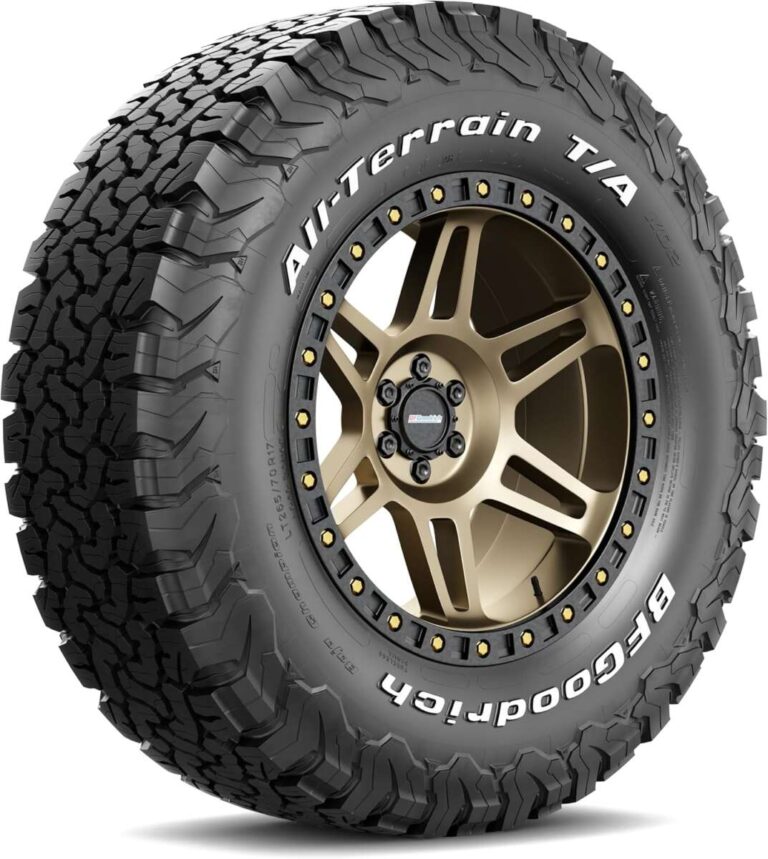
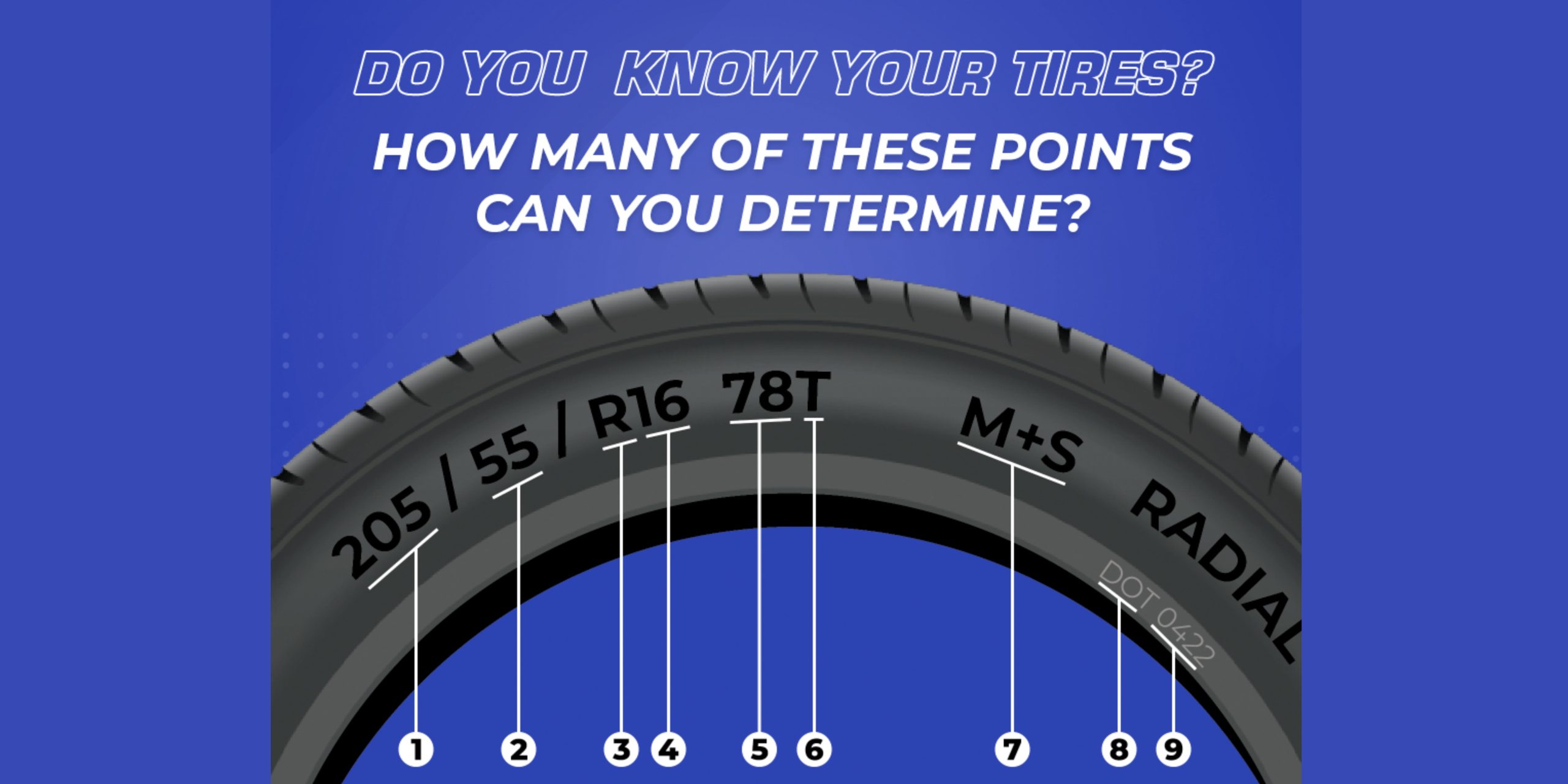
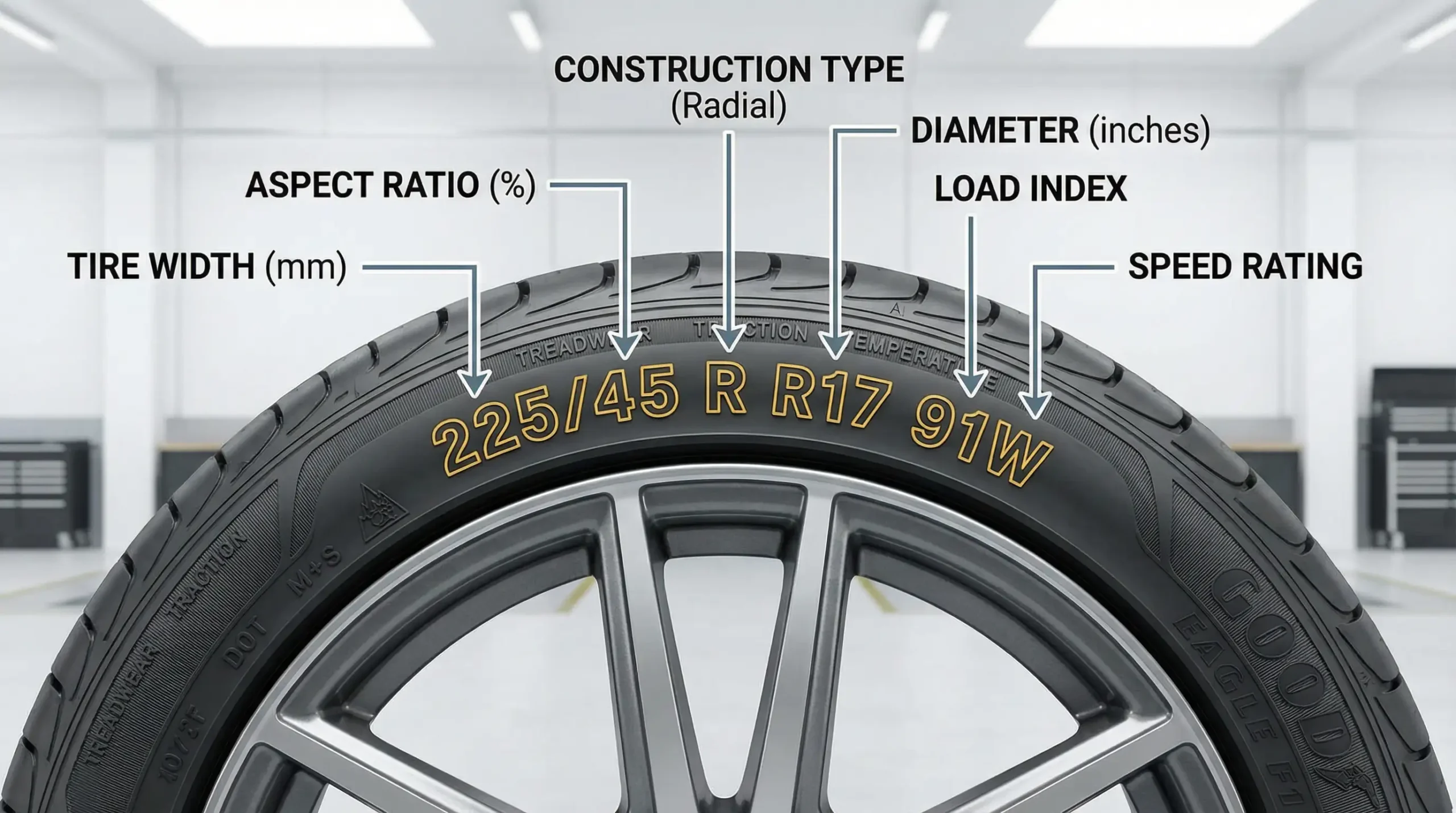
To read a tire sidewall in the United States, find the raised code on the tire’s outer wall and break it into parts. A code such as P225/65R17 102H tells you the tire’s type, width, height, construction, wheel size, load capacity, and speed rating.
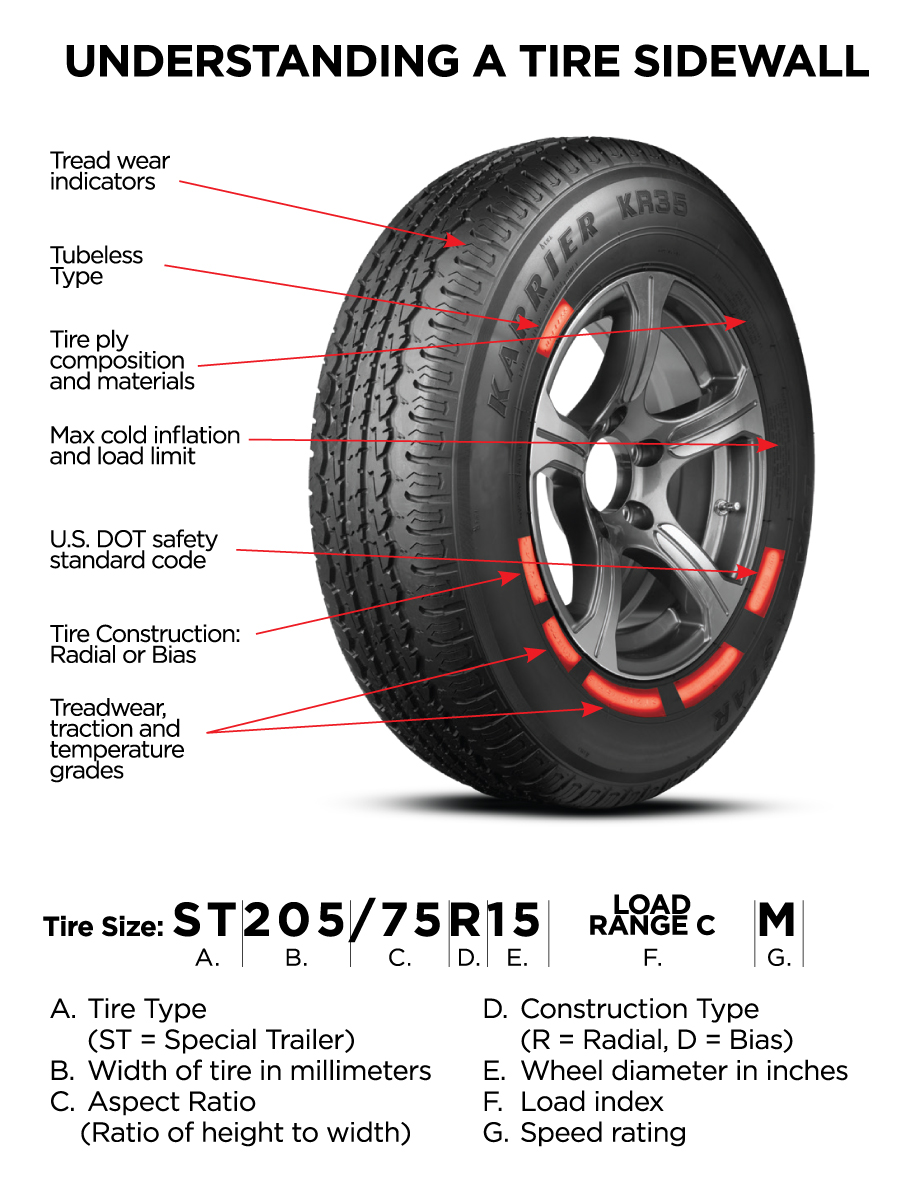
The sidewall also shows the tire’s maximum cold inflation pressure, maximum load, Department of Transportation (DOT) identification number, production date, traction grade, temperature grade, and winter or mud-and-snow markings.
This guide explains each marking and shows which numbers matter when you buy, inflate, replace, or inspect a tire in the U.S.
Start with the Tire Size Code
The tire size code is usually the largest marking on the sidewall. For example:
P225/65R17 102H
Read it from left to right:
| Marking | Meaning | Example |
|---|---|---|
| Tire type | Vehicle or service category | P |
| Width | Section width in millimeters | 225 |
| Aspect ratio | Sidewall height as a percentage of width | 65 |
| Construction | Internal design | R |
| Wheel diameter | Rim size in inches | 17 |
| Load index | Maximum load code | 102 |
| Speed rating | Maximum tested speed category | H |
The first five parts identify the tire’s basic size. The final two parts describe how much weight the tire can carry and its speed rating.
What the first letter means
The first letter identifies the tire’s intended service.
- P means passenger-car tire. This is common on sedans, minivans, crossovers, and some light-duty vehicles.
- LT means light-truck tire. These tires are designed for certain pickups, vans, and heavier loads.
- ST means special trailer tire. It is intended for trailer use, not regular passenger vehicles.
- T means temporary spare tire. This marking often appears on compact spare tires.
- No letter may appear on some metric tire sizes. These are often called Euro-metric tires.
A P-metric tire and a Euro-metric tire with similar dimensions are not always identical in load capacity. Use the tire size and load information listed in the vehicle owner’s manual or on the vehicle certification label.
What the three-digit width means
The first number is the tire’s nominal width in millimeters, measured from sidewall to sidewall.
In 225/65R17, the tire is about 225 millimeters wide. The actual installed width can vary slightly by rim width and tire design, so this number is not a precise measurement of the tread.
To convert the nominal width to inches:
225 ÷ 25.4 = about 8.9 inches
This is a conversion only. It does not replace the tire maker’s fitment specifications.
What the aspect ratio means
The number after the slash is the aspect ratio. It tells you the sidewall height as a percentage of the tire’s width.
For 225/65R17:
225 × 0.65 = 146.25 millimeters
Each sidewall is about 146 millimeters high, or about 5.8 inches.
A lower aspect ratio usually means a shorter sidewall. A higher aspect ratio usually means a taller sidewall. Changing this number can affect ride comfort, handling, ground clearance, and speedometer accuracy.
What “R” means
The letter R means radial construction. Most modern passenger-vehicle tires in the United States use radial construction.
A radial tire has body cords that run across the tire from bead to bead, with reinforcing belts under the tread. You may also see D for diagonal construction or B for bias-belted construction on some specialty tires.
What the final number means
The last number before the load index is the wheel diameter in inches.
In P225/65R17, the tire fits a 17-inch wheel. This is the wheel diameter, not the tire’s total outside diameter.
A 17-inch tire must be mounted on a 17-inch wheel. Never install a tire on a wheel with a different diameter.
Read the Load Index and Speed Rating
The code after the tire size is called the service description. In 102H, the number is the load index and the letter is the speed rating.
Load index
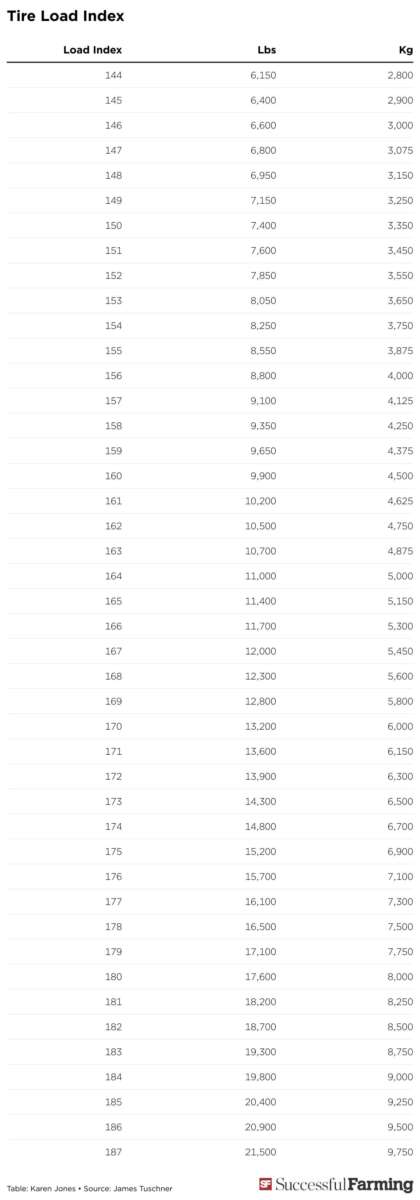
The load index is a code, not a direct weight measurement. Each number matches a maximum load in a standardized table.
For example, a load index of 102 corresponds to 1,874 pounds per tire under the applicable rating conditions. Four tires with that rating have a theoretical total of 7,496 pounds, but you must not use that simple total as the vehicle’s legal or safe payload limit.
The vehicle manufacturer sets the vehicle’s gross axle weight ratings and gross vehicle weight rating. Those limits also include passengers, cargo, fuel, and accessories.
Use the load index to confirm that a replacement tire meets or exceeds the vehicle’s required rating. Do not choose a lower load index just because the tire fits the wheel.
Speed rating
The speed rating is a letter that indicates the tire’s rated speed capability under specified test conditions.
Common ratings include:
| Rating | Rated speed |
|---|---|
| Q | 99 mph |
| R | 106 mph |
| S | 112 mph |
| T | 118 mph |
| U | 124 mph |
| H | 130 mph |
| V | 149 mph |
| W | 168 mph |
| Y | 186 mph |
These ratings do not mean you should drive at that speed. They describe a controlled test rating, not a safe speed for public roads. Weather, traffic, tire condition, vehicle condition, road surface, and posted speed limits still control safe driving.
Some high-speed tires use ZR in the size marking. Check the tire maker’s specifications when the marking includes ZR, because the complete rating may depend on the service description.
Example: reading a full size
Take this example:
P225/65R17 102H
It means:
- P: Passenger-car tire
- 225: Nominal width of 225 millimeters
- 65: Sidewall height is 65% of the width
- R: Radial construction
- 17: Fits a 17-inch wheel
- 102: Load index of 1,874 pounds per tire
- H: Speed rating of 130 mph
The tire size alone does not tell you whether the tire is the correct choice for your vehicle. Confirm the complete specification against the owner’s manual and the vehicle’s tire information placard.

Find the Correct Tire Pressure
The tire sidewall shows the tire’s maximum allowed cold inflation pressure, not usually the recommended pressure for your vehicle.
You can find the vehicle’s recommended cold tire pressure in one or more of these places:
- The label inside the driver’s doorjamb
- The glove box door
- The fuel-door area
- The vehicle owner’s manual
- The manufacturer’s digital owner information
For example, a sidewall might say:
MAX PRESS 44 PSI
Your vehicle placard might recommend:
35 PSI cold
In that case, inflate the tire to 35 PSI when cold, unless the vehicle manufacturer provides a different instruction for a specific load condition. Do not inflate to 44 PSI simply because it is printed on the sidewall.
Why cold pressure matters
“Cold” means the vehicle has been parked for several hours or has been driven only a short distance at low speed. Driving heats the tire and raises the pressure.
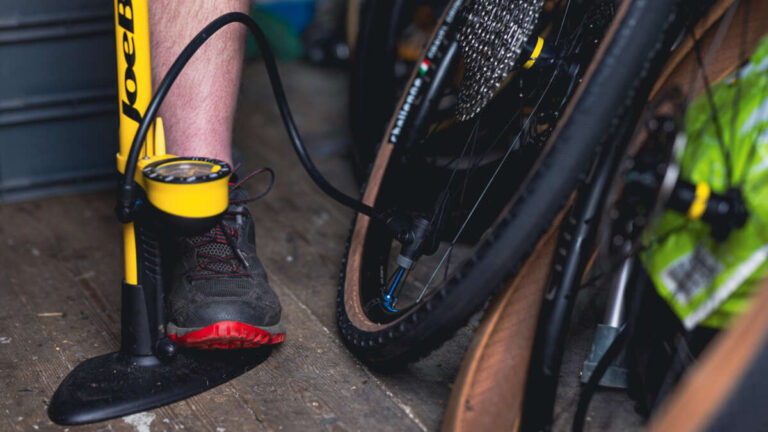
Check pressure before driving when possible. If you check a warm tire, do not release air just to reach the cold-pressure number. Let the tire cool, then measure it again.
The National Highway Traffic Safety Administration recommends checking tire pressure regularly and before long trips. A reliable tire-pressure gauge is more useful than judging pressure by appearance.
Do not use the sidewall number as a target
The maximum pressure on the sidewall is tied to the tire’s maximum rated load. It does not account for:
- Your vehicle’s suspension
- Vehicle weight distribution
- Handling requirements
- Ride comfort
- Front-to-rear pressure differences
- Normal passenger or cargo use
The vehicle placard is the primary source for normal inflation pressure.
When the pressure changes
Your tire pressure can fall as outdoor temperature drops. It can also change after a tire repair, wheel replacement, seasonal temperature change, or extended storage.
If the tire pressure warning light comes on, check all four tires and the spare if it has a pressure sensor. Do not rely only on the dashboard light. The light may not identify which tire is low, and some systems do not monitor a temporary spare.

Decode the DOT Tire Identification Number
A tire made for sale in the United States normally has a DOT marking followed by a tire identification number, often called a TIN.
The DOT code identifies information such as the manufacturing plant, tire size code, and production details. The final four digits show the week and year the tire was made.
For example:
3523
This means the tire was manufactured in the 35th week of 2023.
Where to find the full date code
Many tires show the complete DOT identification number on only one sidewall. The opposite side may show a shortened code without the four-digit date.
If you cannot find the date, look on the inner sidewall. You may need to inspect the tire from inside the wheel well or ask a tire shop to read it safely.
What the DOT marking does and does not mean
The DOT marking indicates that the tire is identified under U.S. federal tire regulations. It does not mean:
- The tire was made in the United States
- The tire is new
- The tire is suitable for your vehicle
- The tire has a particular performance level
- The tire has no damage or aging
The date code tells you when the tire was produced, not when it was sold or installed.
When an older tire needs attention
Tire age is one factor in replacement decisions. Rubber and internal materials can age even when tread remains.
There is no single age number that applies to every tire in every condition. Tire makers may publish their own replacement guidance. The NHTSA tire safety guidance advises consumers to follow the tire manufacturer’s recommendations and inspect older tires carefully.
Replace a tire sooner if it has:
- Cracks in the sidewall or tread
- Bulges or bubbles
- Cuts, punctures, or exposed cords
- Severe weather cracking
- A history of underinflation or overload
- Uneven wear that cannot be corrected
- Damage from an impact
A date code cannot reveal how the tire was stored, overloaded, driven, or maintained. Treat age as a screening tool, not as the only inspection.
Understand UTQG, Traction, and Temperature Grades
Many passenger tires sold in the United States include a Uniform Tire Quality Grading, or UTQG, marking. It may look like this:
Treadwear 500 Traction A Temperature A
UTQG markings help compare certain aspects of tire performance. They are not a complete rating of tire quality or safety.
Treadwear grade
The treadwear number is a comparative index. A tire marked 500 is expected to wear longer in the government test than a tire marked 300, assuming similar conditions.
The number is not a mileage guarantee. Real tread life depends on:
- Alignment
- Inflation
- Rotation
- Vehicle weight
- Driving style
- Road surfaces
- Climate
- Tire maintenance
A high treadwear number does not automatically mean the tire has the best wet grip, snow traction, ride, or braking performance.
Traction grade
Traction grades are usually AA, A, B, or C. They relate to wet braking performance in a specified test.
The grade does not measure:
- Dry braking
- Snow or ice grip
- Cornering
- Hydroplaning resistance in every condition
- Tread life
A higher traction grade is useful information, but it is only one part of the tire’s performance picture.
Temperature grade
Temperature grades are A, B, or C. They indicate the tire’s resistance to heat generation and its ability to dissipate heat under specified test conditions.
Heat can build up from high speed, heavy loads, low inflation, hot weather, and tire damage. A temperature grade is not a permission slip to exceed the tire’s speed, load, or pressure limits.
Why UTQG comparisons have limits
Compare UTQG numbers only among tires in the same general category and size. Different brands may use different tread compounds and designs, and the test does not represent every real-world road or weather condition.
Also, UTQG markings do not apply in the same way to every tire type. Temporary spares, winter tires, light-truck tires, and certain specialty tires may have different labeling requirements.

Identify Winter, Mud-and-Snow, and Other Markings
Sidewall symbols can tell you how a tire is classified for certain conditions.
M+S marking
M+S, M/S, or M-S means mud and snow. This marking indicates a tread design intended to provide better performance than a conventional tire in some mud and light-snow conditions.
M+S does not mean the tire is a dedicated winter tire. It does not guarantee strong grip on ice or packed snow.
Three-Peak Mountain Snowflake symbol
The Three-Peak Mountain Snowflake, often shown as a mountain with a snowflake, means the tire met a defined snow-traction performance test.
This symbol is a better indicator of severe-snow capability than M+S alone. It still does not guarantee safe traction on every winter road. Speed, temperature, ice, tread depth, tire pressure, and driving technique all matter.
XL or Extra Load
XL or Extra Load means the tire can carry more load than a standard-load version of the same basic size when inflated to the specified pressure.
Do not assume XL means the tire is right for every heavy vehicle. Match the tire to the vehicle’s required load rating and fitment.
Reinforced markings
Some tires use markings such as RF, REINF, or another manufacturer-specific symbol for reinforced construction. The exact meaning can vary by tire maker.
Read the tire maker’s product data when a marking is unfamiliar. Do not treat “reinforced” as a substitute for checking the load index.
Run-flat markings
Run-flat tires may use markings such as RFT, ROF, ZP, or another brand-specific code. The marking depends on the manufacturer.
Run-flat systems have limits on speed and distance after air loss. The vehicle may also need a tire-pressure monitoring system and specific wheels. Follow the vehicle and tire manufacturer’s instructions after a run-flat warning.

Read the Maximum Load and Pressure Information
A sidewall often lists a statement similar to:
MAX LOAD 1,874 LBS AT 44 PSI COLD
This gives the tire’s maximum rated load and the pressure associated with that rating.
The wording can vary. Some tires list kilograms and kilopascals along with pounds and PSI. These are unit conversions, not separate ratings.
Maximum tire load is not vehicle payload
The tire’s maximum load is only one part of the vehicle’s weight limits. The vehicle itself may have a lower limit because of:
- Axles
- Wheels
- Suspension parts
- Brakes
- Frame strength
- Transmission or drivetrain limits
Find the vehicle’s GVWR and GAWR on the certification label or in the owner’s manual. Never exceed the lowest applicable limit.
Load range on light-truck tires
Light-truck tires may show a load range, such as:
- Load Range C
- Load Range D
- Load Range E
- Load Range F
Load range relates to the tire’s intended load and pressure category. It is not the same as the passenger-tire load index, though both help describe load capacity.
A pickup owner should check the vehicle placard, axle ratings, tire load index, load range, wheel rating, and intended use. A higher load range does not automatically improve ride or handling on a vehicle designed for a lighter tire.

Check the Sidewall for Damage Before Driving
Reading the markings is useful, but a sidewall inspection can reveal a safety problem that numbers cannot.
Look for:
- Bulges or bubbles
- Deep cuts
- Cracks between tread blocks
- Cracks around the rim
- Exposed cords
- Abrasion from a curb or road hazard
- A section that looks lower or distorted
- Foreign objects near the sidewall
A bulge often indicates damaged internal cords. It is not a cosmetic issue and cannot be safely fixed with air or sealant.
Do not drive on a tire with a bulge, exposed cord, major cut, or sudden air loss. Use the spare if it is safe and properly inflated, or call a qualified roadside service or tire professional.
Check tread depth, too
The sidewall does not show tread depth. Inspect the tread wear indicators built into the grooves. These bars show when the tread has worn to the legal minimum in many situations, but a tire can lose wet-weather performance before reaching that point.
The U.S. Tire Manufacturers Association recommends regular tire inspection and proper maintenance. Its tire safety resources explain inspection, inflation, rotation, and replacement concerns.
Uneven wear can point to:
- Incorrect inflation
- Poor alignment
- Worn suspension parts
- Tire imbalance
- Excessive toe or camber
- Rotation problems
Fix the cause, not just the worn tire. Otherwise, the replacement may wear in the same pattern.

Use the Sidewall Information When Replacing Tires
When replacing a tire, compare the new tire with the vehicle’s original requirements—not just its outside appearance.
Check these items:
- Tire size: Match the size shown on the vehicle placard or owner’s manual.
- Load index: Do not install a tire with a lower required load index.
- Speed rating: Meet the vehicle manufacturer’s required rating.
- Construction: Confirm passenger, light-truck, trailer, or temporary-spare use.
- Wheel diameter: Match the wheel exactly.
- Seasonal marking: Choose M+S or Three-Peak Mountain Snowflake tires when your driving conditions require them.
- Clearance: Confirm that the tire does not contact suspension parts, body panels, or fenders.
- Wheel compatibility: Use a tire approved for the wheel’s width and design.
Can you use a different tire size?
Sometimes a vehicle can use an alternative tire size, but the change should be approved for that vehicle. A different size can affect:
- Speedometer readings
- Anti-lock brakes
- Stability control
- Gear ratios
- Ground clearance
- Steering feel
- Fuel use
- Spare-tire compatibility
Do not rely on a tire shop’s visual fit alone. Check the vehicle manufacturer’s fitment information and the tire maker’s approved rim-width range.
Should all four tires match?
For vehicles with all-wheel drive, four-wheel drive, or electronically controlled drivetrains, tire diameter differences can create mechanical or electronic problems. Follow the vehicle manufacturer’s replacement rules.
For two-wheel-drive vehicles, replacing only one or two tires can still affect handling. New tires generally have more tread than worn tires, so placement matters. Ask a qualified tire professional where the tires should go based on the vehicle and remaining tread.
Mixing tire types
Avoid mixing different tire sizes, construction types, or service descriptions unless the vehicle manufacturer allows it. Mixing winter and non-winter tires can reduce predictable handling.
If you must use a temporary spare, follow its specific speed, distance, and inflation limits. Temporary spares are not normal replacement tires.
Common Mistakes When Reading a Tire Sidewall
Mistake 1: Inflating to the maximum sidewall pressure
The sidewall maximum is not usually the vehicle’s recommended pressure. Use the doorjamb placard or owner’s manual.
Mistake 2: Treating the DOT code as a quality score
The DOT code identifies the tire and its production date. It does not rate the tire’s performance or prove that it was made in the United States.
Mistake 3: Assuming a larger number is always better
A larger load index or higher speed rating may not suit the vehicle’s wheels, suspension, ride needs, or manufacturer specifications.
Mistake 4: Confusing wheel size with tire diameter
The 17 in P225/65R17 means the tire fits a 17-inch wheel. It does not mean the tire is 17 inches tall.
Mistake 5: Treating M+S as a winter-tire guarantee
M+S is not the same as the Three-Peak Mountain Snowflake symbol. For regular snow and ice driving, look for a tire designed and marked for severe-snow conditions.
Mistake 6: Ignoring the inner sidewall
The full DOT date code may be on the inside. Check both sidewalls when determining tire age.
Mistake 7: Trusting appearance alone
A tire can look fine while being underinflated, internally damaged, badly aged, or incorrectly matched to the vehicle. Use the markings, a pressure gauge, and a physical inspection.

A Quick Tire Sidewall Reading Example
Suppose a tire says:
LT265/70R17 121/118S
Here is what it means:
- LT: Light-truck tire
- 265: Nominal width of 265 millimeters
- 70: Sidewall height is 70% of the width
- R: Radial construction
- 17: Fits a 17-inch wheel
- 121/118: Dual and single tire load indexes, respectively
- S: Speed rating of 112 mph
The two load indexes matter because some light trucks use the same tire in single-wheel and dual-wheel applications. Use the correct load value for the way the vehicle is configured.
The complete tire sidewall may also show the maximum load, pressure, DOT code, UTQG information, M+S or snowflake marking, and manufacturer-specific codes.
Frequently Asked Questions
Where is the recommended tire pressure printed?
It is usually on the driver’s doorjamb label or in the owner’s manual. The number on the tire sidewall is normally the tire’s maximum cold pressure, not the vehicle’s normal target pressure.
How do I find the tire’s manufacture date?
Find the DOT code and read its last four digits. The first two digits show the production week, and the final two show the production year. For example, 1824 means the 18th week of 2024.
Does a higher speed rating make a tire safer?
Not by itself. A higher speed rating describes a test capability under set conditions. It does not overcome worn tread, low pressure, bad alignment, poor weather, excessive load, or unsafe driving.
Is a tire with M+S safe for winter driving?
M+S indicates a mud-and-snow tread classification, but it is not a guarantee of strong snow or ice grip. For severe snow conditions, look for the Three-Peak Mountain Snowflake symbol and drive according to road and weather conditions.
Can I replace a tire with one that has a higher load index?
A higher load index may be acceptable if the tire fits the wheel, has the correct size and construction, and does not conflict with the vehicle manufacturer’s requirements. A tire professional should confirm compatibility before installation.
What should I do if I cannot read the sidewall?
Clean the sidewall and use a flashlight. Check the inner sidewall for the complete DOT code. If the markings are damaged or unclear, ask a tire shop to identify the tire before you inflate, repair, or replace it.
Final Checklist
Before buying or servicing a tire, confirm:
- The tire size matches the vehicle requirement.
- The load index meets or exceeds the required rating.
- The speed rating meets the vehicle requirement.
- The tire fits the wheel diameter and width.
- The cold pressure comes from the vehicle placard or manual.
- The DOT date is known, especially for an older tire.
- The tread and sidewall show no serious damage.
- The seasonal marking suits your local driving conditions.
- Any temporary spare or run-flat limits are understood.
When a sidewall shows damage, the tire loses air quickly, or the correct replacement is uncertain, stop driving and have the tire inspected by a qualified professional.