Best Ball Joints For Jeep JK: Buying Guide
For most 2007–2018 Jeep Wrangler JKs, the best replacement ball joints are the ones that match your front axle, wheel size, lift, and driving style. Spicer ball joints are a strong OEM-style choice for daily use. Dynatrac Pro Steer and Synergy Manufacturing are better fits for larger tires, frequent off-road use, or added steering load. Mopar remains a sensible pick when factory-style fit and behavior matter most.
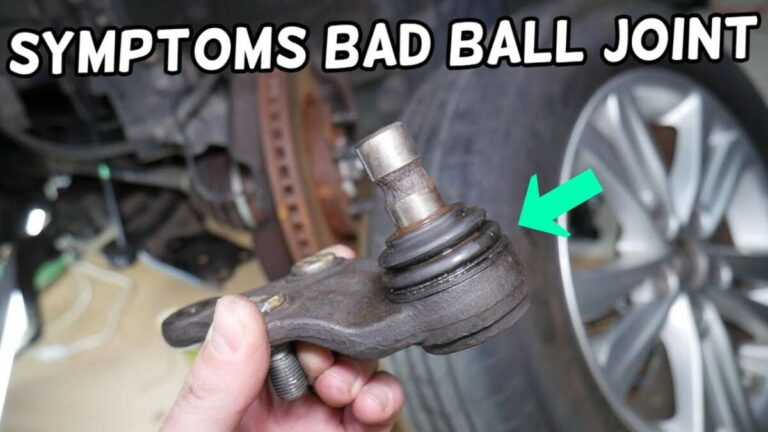
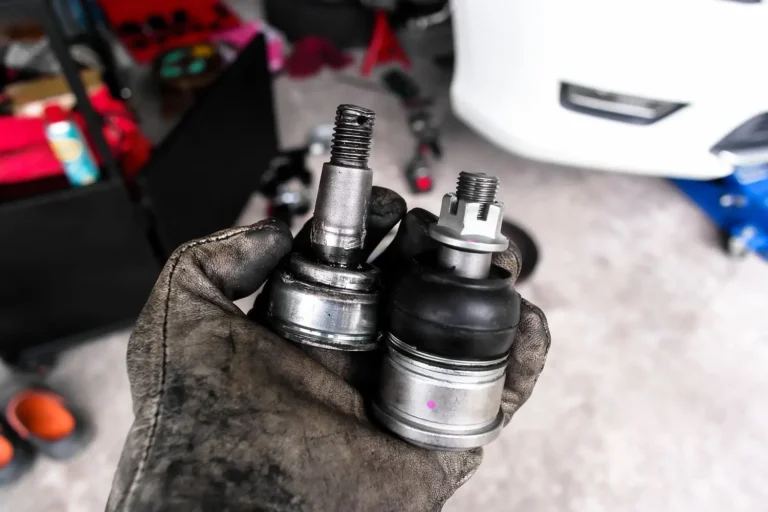
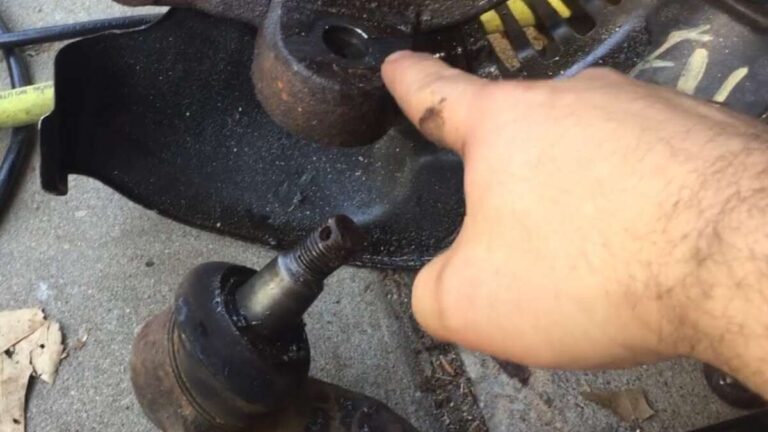
A ball joint connects the steering knuckle to the front axle housing. It lets the knuckle turn while also carrying part of the vehicle’s weight. Worn ball joints can cause loose steering, uneven tire wear, clunks, and unsafe wheel movement.
This guide focuses on Jeep JKs sold in the United States, including the two-door Wrangler, Unlimited four-door, Sport, Sahara, Rubicon, and related factory front axle options.

What Jeep JK Ball Joints Do
Jeep JK ball joints allow the front steering knuckle to move in two ways. It can turn left and right for steering, and it can move with the suspension as the axle travels.
Each front knuckle uses:
- One upper ball joint
- One lower ball joint
- A steering knuckle
- A unit bearing and wheel hub
- A front axle C or steering knuckle housing
The lower ball joint often carries more vertical load. The upper joint helps hold the knuckle in the correct position. Both joints matter, and replacing only one joint may not solve the problem if the other is also worn.
Ball joints are not the same as tie-rod ends. Tie-rod ends transfer steering force through the linkage. Ball joints support and guide the steering knuckle.
Why JK owners replace them
Factory ball joints can wear faster when a JK has:
- Oversized tires
- Heavy beadlock-style wheels
- Wheel spacers
- A large suspension lift
- Poor wheel alignment
- Frequent rock crawling
- Mud and water exposure
- High mileage
- Damaged axle or steering parts
A mild lift does not automatically require heavy-duty ball joints. Tire weight and steering load often matter more than lift height alone.
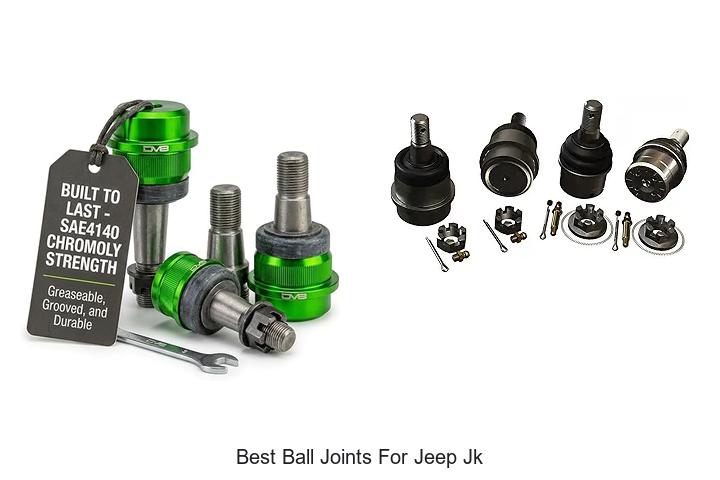
Best Ball Joints for Jeep JK: Quick Comparison
The table below shows which type fits common Jeep JK needs. Always confirm the exact part number for your axle before ordering.
| Ball joint type | Best for | Main advantage | Main limitation |
|---|---|---|---|
| Mopar replacement | Stock or near-stock JKs | Factory-style fit and operation | Usually costs more than some aftermarket choices |
| Spicer replacement | Daily drivers and mild builds | Strong OEM-style option with broad axle coverage | Not designed for every extreme off-road setup |
| Dynatrac Pro Steer | Larger tires and serious trail use | Heavy-duty design and serviceable construction on applicable models | Higher cost and careful setup required |
| Synergy Manufacturing | Modified JKs and hard trail use | Strong aftermarket design with adjustment features on some kits | Installation and adjustment require care |
| Economy replacement joints | Budget repairs | Lower purchase cost | Quality, service life, and support can vary widely |
There is no single “best” ball joint for every Jeep JK. A stock daily driver has different needs from a Rubicon on 37-inch tires.
1. Spicer Ball Joints: Best OEM-Style Choice
Spicer ball joints are a strong all-around choice for many Jeep JK owners. They are often selected for stock vehicles, daily drivers, and mild trail builds that need a reputable replacement without moving to a full heavy-duty system.
Spicer is part of Dana Incorporated, a major supplier of driveline and axle components. Some Spicer ball joints are sold as direct replacement parts for Dana front axles used in Jeep applications.
Why choose Spicer?
Spicer ball joints can make sense when you want:
- A known axle-component brand
- OEM-style fit
- Normal street manners
- A reasonable price
- Replacement parts for a stock or lightly modified JK
Some Spicer models use greaseable fittings. That can help with service, but only if the joint is installed correctly and lubricated with the right grease.
Best use case
Choose Spicer when your JK has:
- Factory-size tires or a moderate increase
- Factory or near-factory wheels
- Limited hard rock use
- A standard Dana 30 or Dana 44 front axle
- A focus on road comfort and reliable fit
Limits
Spicer does not turn a stock axle into a heavy-duty axle. If you run very heavy tires, deep offset wheels, or frequent rock-crawling trails, a premium adjustable or heavy-duty ball joint may be a better long-term choice.
Do not order by “Jeep JK” alone. Confirm the axle, model year, and part number. The front axle may differ by trim, especially between Sport, Sahara, and Rubicon models.
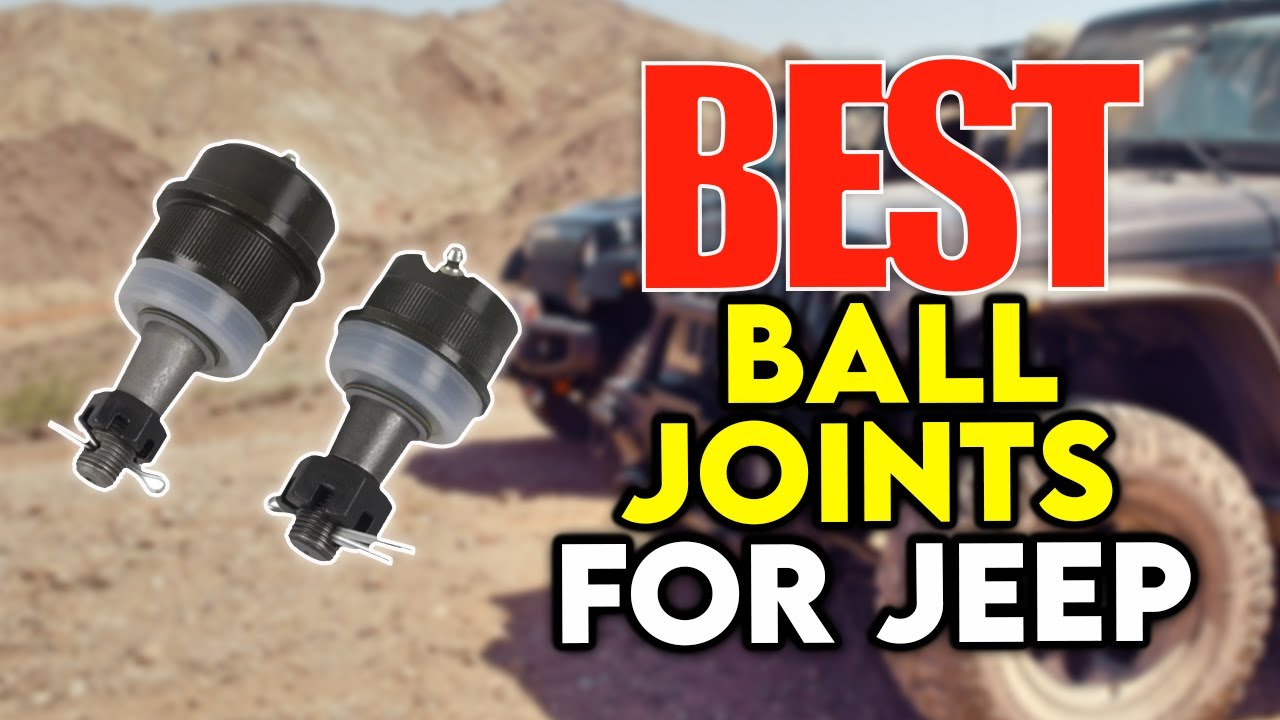
2. Dynatrac Pro Steer: Best for Heavy-Duty JK Builds
Dynatrac Pro Steer ball joints are a leading choice for JKs with large tires, added weight, and frequent off-road use. They are designed for demanding axle loads and are commonly considered when a stock replacement joint may not provide enough adjustment or service life.
Dynatrac offers application-specific ball joints for Jeep platforms. Product versions and fitment can change, so verify the current model for your exact axle and year.
Why choose Dynatrac?
A heavy-duty ball joint system may offer:
- Stronger construction than a basic replacement
- Serviceable components
- Better support for modified JKs
- Adjustment options on applicable designs
- More control over front-end wear
This matters because larger tires create more leverage at the steering knuckle. The same leverage can increase when the wheel has a deep offset or a large amount of backspacing change.
Best use case
Dynatrac is worth considering for a JK with:
- 35-inch or larger tires
- Heavy steel wheels
- Frequent rock crawling
- A winch, armor, or other added front-end weight
- A Dana 30 that sees more stress than a stock vehicle
- A Dana 44 with a high-use trail setup
Limits
A stronger ball joint cannot fix a bent axle housing, worn unit bearing, loose control arm joint, or damaged steering knuckle. It also cannot prevent every failure caused by excessive tire size or abusive use.
Premium ball joints cost more and may need careful setup. Some designs use an adjustment sleeve or preload procedure. Incorrect adjustment can cause binding, premature wear, or loose steering.
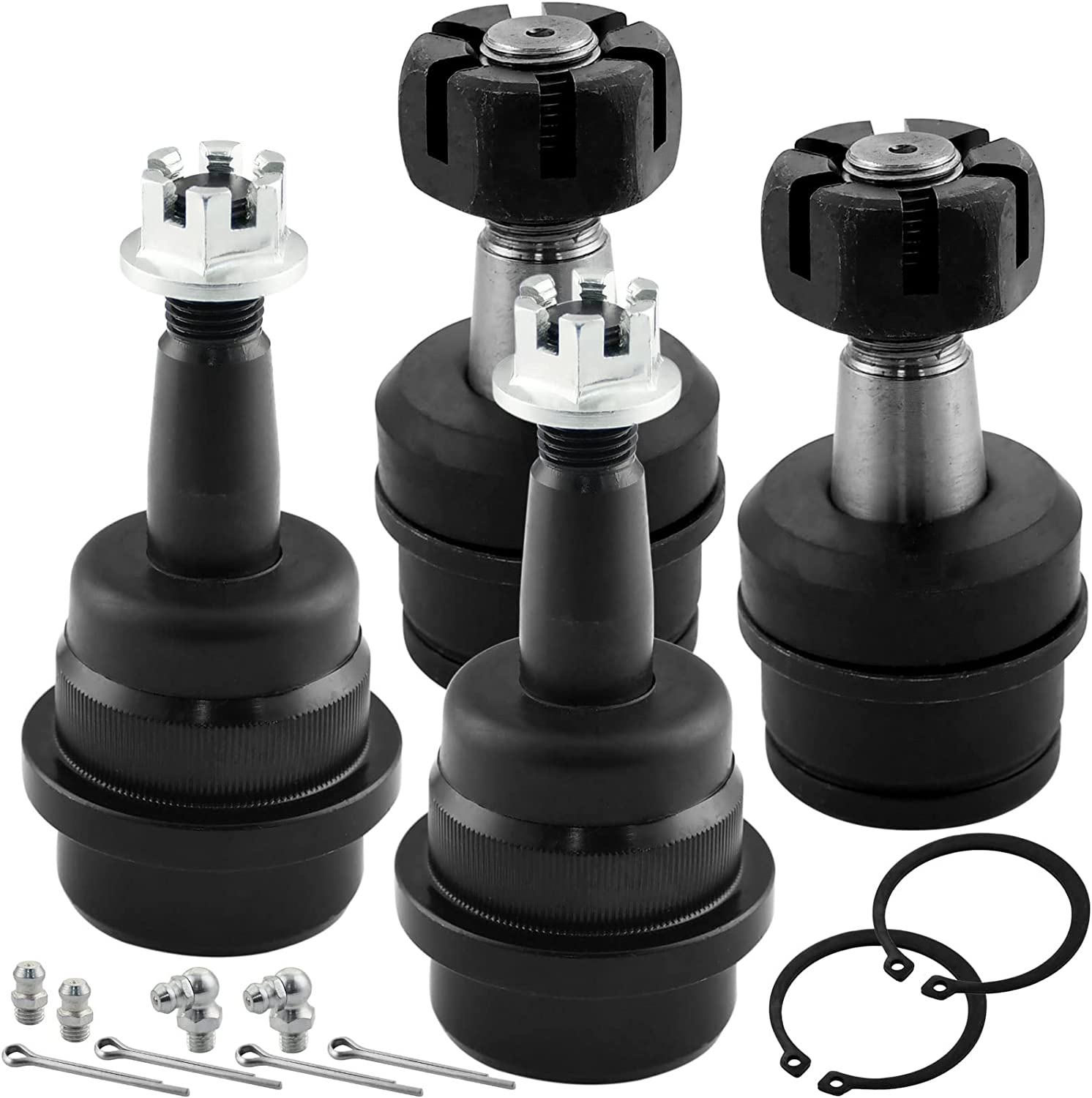
3. Synergy Manufacturing Ball Joints: Best for Adjustable Aftermarket Builds
Synergy Manufacturing ball joints are a good option for Jeep JK owners who want a serviceable, adjustable solution for a modified front axle. They are often aimed at lifted Jeeps and trail builds rather than stock daily drivers.
Synergy’s product range has included Jeep JK ball joint systems with features such as:
- Heavy-duty bodies
- Greaseable designs
- Replaceable wear parts
- Adjustment capability
- Fitment for common JK front axle applications
The exact features depend on the product version. Check the current manufacturer instructions before purchase.
Why choose Synergy?
An adjustable ball joint can help compensate for wear and maintain proper preload over time. That may extend service life, but it also adds an installation step that a basic replacement joint does not require.
Synergy can fit owners who want:
- A rebuildable or serviceable design
- More control over joint preload
- A serious trail setup
- An alternative to factory-style parts
- Support for larger-than-stock tires
Best use case
Consider Synergy when your JK has:
- A suspension lift
- Larger tires
- Regular trail use
- An aftermarket axle or knuckle setup
- A need for serviceable front-end components
Limits
An adjustable ball joint is not automatically better for a street-driven JK. If it is set too tight, the steering may bind. If it is too loose, the knuckle can move and the joint may wear quickly.
Follow the manufacturer’s torque, preload, grease, and break-in instructions. Do not guess at adjustment.

4. Mopar Ball Joints: Best for Factory-Style Repairs
Mopar replacement ball joints are a sensible choice for a stock Jeep JK when you want factory-style fit and driving behavior. They may cost more than some aftermarket parts, but they offer a clear path for owners who want to stay close to the original design.
Mopar fitment depends on the vehicle and axle. A dealer or parts catalog can verify the correct number through the JK’s vehicle identification number, axle code, and build information.
Choose Mopar when:
- The Jeep is mostly stock
- You drive mainly on pavement
- You want factory-style service parts
- The vehicle is still covered by a parts warranty
- You prefer dealer-supported fitment
Limits
Mopar joints are not a guaranteed upgrade for a heavily modified JK. If you run large tires and hard trails, an aftermarket heavy-duty design may offer features that a factory-style joint does not.
The right choice depends on the full front-end setup, not the brand name alone.
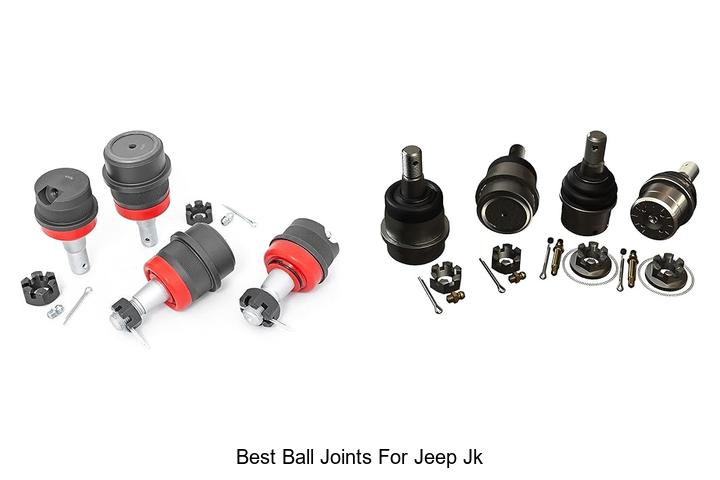
How to Choose the Right Ball Joints for Your JK
Use this process before buying. It helps prevent the most common mistake: ordering a part for the wrong axle.
1. Confirm the model year
The Jeep Wrangler JK was sold in the United States from 2007 through 2018. The 2018 model year can create confusion because Jeep also introduced the JL.
Confirm that the vehicle is a JK, not a JL. The front axle and suspension parts are not interchangeable in every case.
2. Identify the front axle
Many JKs use a Dana 30 front axle. Rubicon models commonly use a Dana 44 front axle. However, axle details can vary by year and configuration.
Check:
- The axle tag
- The vehicle build sheet
- The owner’s manual
- A trusted Jeep parts catalog
- The axle housing and differential cover
- The VIN-based parts record
Do not rely only on trim level if the axle has been swapped.
3. Record tire and wheel details
Write down:
- Tire diameter
- Tire width
- Wheel diameter
- Wheel offset or backspacing
- Wheel spacer use
- Approximate tire weight
A heavy 35-inch tire can place far more stress on the front end than a light 33-inch tire. Wheel offset also changes leverage at the ball joint.
4. Match the joint to the axle housing
Ball joints must match the housing bore and knuckle design. A Dana 30 joint is not automatically correct for every Dana 44 application.
Ask the manufacturer or seller to confirm:
- 2007–2018 JK fitment
- Dana 30 or Dana 44 application
- Upper and lower joint inclusion
- Right and left side requirements
- Compatibility with aftermarket knuckles
- Press-fit dimensions
- Required tools and adjustment parts
5. Decide between fixed and adjustable designs
A fixed replacement joint is usually easier for a stock Jeep. An adjustable design can be more useful on a modified Jeep, but it requires proper setup.
As a simple rule:
- Stock or mild JK: Mopar or Spicer
- Moderate trail JK: Spicer, Dynatrac, or Synergy
- Large tires and hard trails: Dynatrac or Synergy, if correctly matched
- Axle swap: Follow the axle builder’s specified parts

Signs Your Jeep JK Ball Joints Are Worn
Common symptoms include:
- Clunking from the front axle
- Steering that feels vague
- Wandering on the highway
- Uneven tire wear
- A shake that changes with road speed
- Visible movement at the steering knuckle
- A failed inspection
- Grease leakage or a damaged dust boot
These symptoms can also come from other parts. A bad unit bearing, track bar joint, tie-rod end, control arm bushing, steering damper, or bent wheel can feel similar.
A safe driveway check
Park on level ground. Set the parking brake and chock the rear wheels. Use a properly rated floor jack and jack stands on solid support points.
Then:
- Lift the front axle or one front corner.
- Support the Jeep with jack stands.
- Check the wheel for movement at the top and bottom.
- Have a helper watch the ball joints and unit bearing.
- Move the wheel while checking for separate joint movement.
- Compare the left and right sides.
Top-and-bottom wheel play does not prove that the ball joint is bad. The unit bearing can create the same symptom. A qualified technician can use a dial indicator and the manufacturer’s service limits to identify the source.
Never work under a Jeep supported only by a jack.

Ball Joint Replacement: What the Job Involves
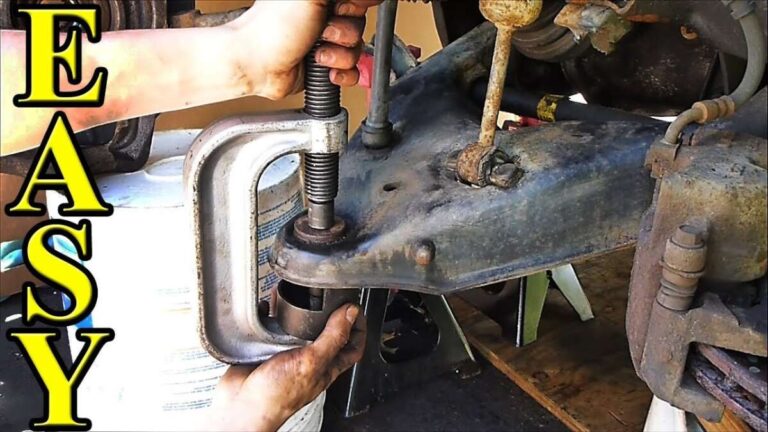
Replacing JK ball joints is a press-fit repair. It is not usually a simple bolt-on job.
The work commonly includes:
- Removing the wheel
- Removing the brake assembly
- Removing the unit bearing
- Removing the axle shaft
- Removing the steering knuckle
- Pressing out the old joints
- Cleaning and inspecting the housing
- Pressing in the new joints
- Setting preload when required
- Reassembling with correct torque
- Checking alignment and steering
Special tools may include:
- Ball joint press
- Correct press adapters
- Torque wrench
- Snap-ring pliers
- Hub removal tools
- Pry tools
- A way to support the axle and knuckle safely
Do not hammer a new ball joint into place. That can damage the joint, housing bore, or steering knuckle.
When professional installation makes sense
Use a qualified shop if:
- The joint is seized in the housing
- The axle bore is damaged
- The axle is bent
- You lack a proper press
- The vehicle has an aftermarket axle
- You are installing adjustable joints
- You are not sure which part has failed
After installation, check wheel bearing play, steering linkage, brake hose routing, axle shaft seals, and alignment.

Common Buying and Installation Mistakes
Buying by year alone
The year does not identify every front axle. Confirm the axle and joint application.
Replacing only one joint
If one joint has high wear, the other may be close behind. Inspect both upper and lower joints on the affected side. Many owners replace all four front joints when wear is present on more than one joint.
Ignoring the unit bearing
A loose unit bearing can mimic ball joint failure. Test both parts before ordering.
Using large tires without checking front-end load
Ball joints are only one part of the steering system. Large tires also increase stress on:
- Unit bearings
- Axle shafts
- Tie rods
- Drag links
- Track bars
- Control arms
- Steering knuckles
Over-greasing
Greaseable does not mean “fill until the boot expands.” Follow the product instructions. Excess pressure can damage the boot or force grease past the seal.
Skipping the alignment check
Ball joint work can change steering geometry. Check toe, steering wheel position, and overall alignment after the repair.
Best Ball Joint Choice by Jeep JK Setup
Use this as a starting point, not a substitute for fitment verification.
Stock daily driver
Choose Mopar or Spicer. Prioritize correct fit, warranty support, and normal road behavior.
Mild lift with 33-inch tires
Choose Spicer for a factory-style repair. Consider a premium aftermarket joint if the Jeep sees frequent trails or carries heavy accessories.
35-inch tires with regular trail use
Consider Dynatrac Pro Steer or Synergy Manufacturing. Check wheel offset, axle condition, and installation requirements before buying.
37-inch tires or aggressive rock crawling
A heavy-duty ball joint may help, but it is not the only upgrade to consider. The axle housing, knuckles, unit bearings, steering links, and axle shafts may also need attention.
Axle-swapped JK
Follow the axle manufacturer’s parts list. “JK fitment” does not guarantee compatibility with an aftermarket housing or knuckle.
Key Takeaways
- Spicer is a strong all-around choice for many stock and mildly modified Jeep JKs.
- Dynatrac Pro Steer suits heavier tires and demanding off-road use.
- Synergy Manufacturing fits owners who want a serviceable and adjustable aftermarket design.
- Mopar makes sense for factory-style repairs on mostly stock Jeeps.
- Confirm the 2007–2018 JK model, front axle, wheel setup, and exact part number before ordering.
- Diagnose unit bearings and steering joints before blaming the ball joints.
- Use a proper press, follow torque and preload instructions, and never work under a Jeep held only by a jack.
Frequently Asked Questions
Are Jeep JK ball joints the same as JL ball joints?
No. Jeep JK and JL front suspension parts are not universally interchangeable. Confirm the vehicle generation before ordering. A 2018 JK and a 2018 JL may both exist, so the model generation matters more than the calendar year.
Should I replace all four ball joints at once?
Replace all four when multiple joints show wear, when the Jeep has high mileage, or when labor access makes a complete repair more practical. If only one joint has failed and the others pass inspection, a single-side repair may be reasonable.
Do bigger tires require heavy-duty ball joints?
Not always. Larger tires increase steering and suspension loads, but tire weight, wheel offset, driving style, and axle condition also matter. A light 35-inch tire used on pavement creates a different load from a heavy tire used on rocks.
Can bad ball joints cause death wobble?
They can contribute to front-end shake, but they are not the only possible cause. Death wobble can involve the track bar, tie-rod ends, drag link, control arms, unit bearings, alignment, tire balance, or damaged wheels. Inspect the complete front end.
Do greaseable ball joints last longer?
Grease fittings make service possible, but they do not guarantee longer life. Service interval, grease type, seal condition, installation quality, water exposure, and vehicle load all affect service life.
Should I replace the ball joints or the whole axle?
Replace the ball joints when the axle housing, knuckle, and related parts are sound. Consider a larger axle only when the current axle cannot safely support the tire size, use, or vehicle weight. A new ball joint will not correct a bent or cracked housing.
Final Recommendation
For most United States Jeep JK owners, Spicer is the best starting point for a stock or mildly modified daily driver. Choose Mopar when factory-style replacement is the priority. Move to Dynatrac Pro Steer or Synergy Manufacturing when larger tires, heavy wheels, or serious trail use place greater demands on the front axle.
Before you buy, identify the JK generation, verify the front axle, inspect the unit bearings and steering joints, and match the ball joint to the manufacturer’s current fitment chart. That short check can prevent an expensive and unsafe parts mistake.