How Do You Rev A Car: Safe Engine Revving Guide
Introduction
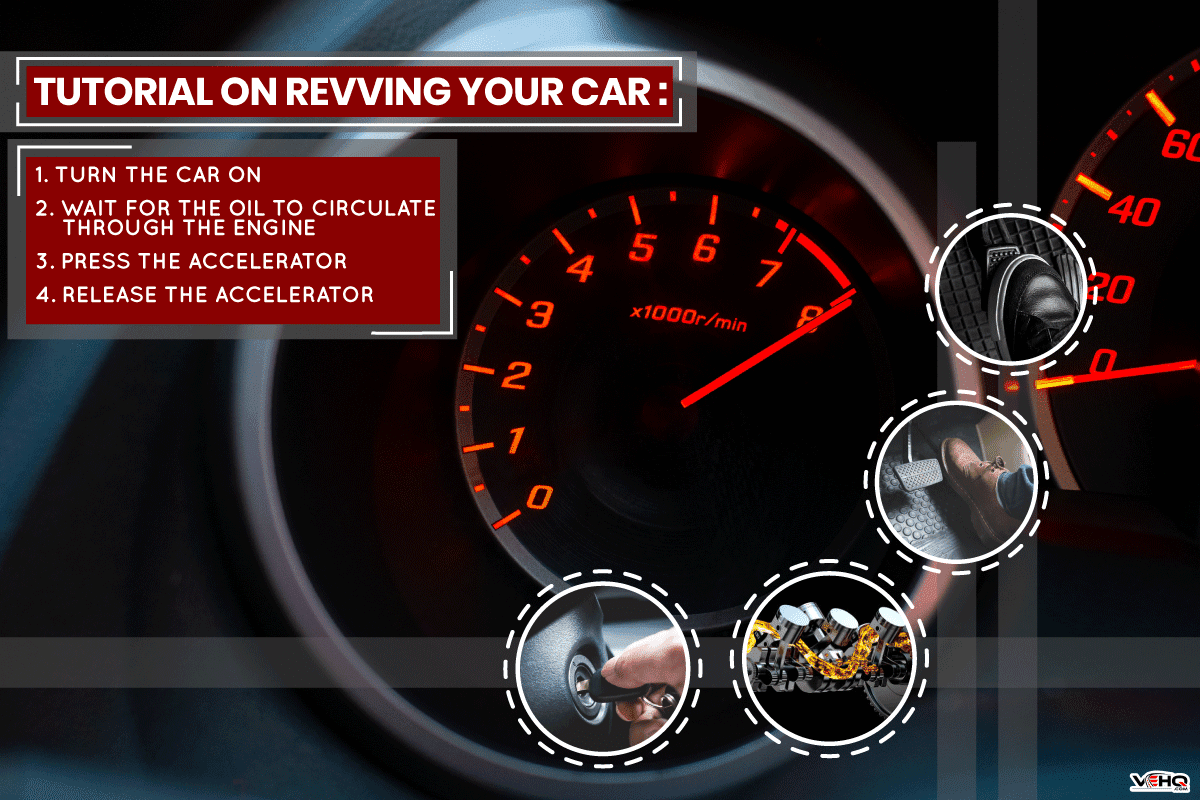
To rev a car, press the accelerator for a short time while the engine is running. The engine speed rises, and the tachometer needle moves up. In a U.S.-market automatic car, keep the vehicle stopped and place the transmission in Park or Neutral. In a manual car, press the clutch and select Neutral before you blip the throttle.
Use light, brief presses. Do not rev a cold engine hard, hold the engine near the redline, or run a car inside a garage. The Centers for Disease Control and Prevention warns that carbon monoxide from vehicle exhaust can build up in enclosed spaces. Check the owner’s manual for any model-specific limits.
What Does “Revving a Car” Mean?
“Rev” is short for revolutions per minute, or RPM. RPM tells you how many times the engine’s crankshaft turns in one minute.
The tachometer shows engine speed. It is often marked from 0 to 8, 9, or 10, with numbers representing thousands of RPM. For example, a reading of 3 means about 3,000 RPM.
Revving the engine means opening the throttle so more air and fuel enter the engine. The engine then spins faster. You may hear a deeper or sharper exhaust sound, depending on the engine and exhaust system.
Revving is different from accelerating the car:
- Revving while parked: The engine speed rises, but the car does not move.
- Accelerating: The engine sends power through the transmission to move the car.
- Rev matching: The driver raises engine speed to match a lower gear before releasing the clutch.
- Redlining: The engine reaches the upper RPM limit marked on the tachometer.
A short throttle press is often called a blip. A blip raises RPM for a moment and then lets the engine return to idle.

What Should You Do Before Revving a Car?
Before you rev, make sure the car is in a safe place, the engine is running, and the transmission is in the correct position.
Use this checklist:
- Park on a level surface.
- Set the parking brake.
- Make sure people, pets, and objects are clear of the vehicle.
- Keep the car outdoors or in a well-ventilated open area.
- Start the engine normally.
- Check that the oil pressure warning light goes out after startup.
- Let the engine idle for a short time, especially in cold weather.
- Confirm the transmission position.
- Find the tachometer and redline.
- Press the accelerator gently.
Do not use revving as a way to warm up a cold car. Modern fuel-injected engines usually warm more effectively through gentle driving after the engine has run briefly. Ford, General Motors, Toyota, and other automakers give model-specific startup and warm-up advice in their owner’s manuals.
A cold engine has not yet reached its normal operating temperature. Its oil may also be thicker than normal. Hard acceleration at this point adds stress before the engine is fully ready.
Never rev in an enclosed garage, even if the garage door is open. Exhaust gases can collect quickly. If you notice a warning light, unusual knocking, smoke, or a strong fuel smell, stop and inspect the problem instead of continuing.

How Do You Rev an Automatic Car?
To rev an automatic car while it is stopped, place the transmission in Park or Neutral, then press the accelerator briefly.
Follow these steps:
- Start the engine.
- Keep your foot on the brake.
- Confirm that the parking brake is set.
- Select Park or Neutral.
- Look at the tachometer.
- Press the accelerator lightly for less than a second.
- Release the accelerator and let the engine return to idle.
- Repeat only if needed.
A small press may raise the engine to about 1,500–2,500 RPM. That range is only a general example, not a requirement. The correct limit depends on the vehicle, engine, temperature, and manufacturer instructions.
Do not shift an automatic transmission into Drive or Reverse while pressing the accelerator. The car may move suddenly. Do not select Neutral while driving just to rev the engine. This can remove normal engine braking and may create a control problem.
Many automatic cars limit RPM in Park or Neutral. This is a built-in protection feature. If the engine will not rev beyond a certain speed while parked, do not try to defeat the limit.
Can you rev an automatic car in Neutral?
Yes, most automatic cars can be revved briefly in Neutral. However, Park is often the simpler choice when the car is stationary.
Keep your foot on the brake when changing between Park, Neutral, Drive, and Reverse. Use the gear position shown in the owner’s manual if the manufacturer gives a different instruction.

How Do You Rev a Manual Car?
To rev a manual car while it is stopped, press the clutch pedal fully, shift into Neutral, and press the accelerator gently.
Follow these steps:
- Start the engine.
- Press the clutch pedal all the way down.
- Move the gear lever into Neutral.
- Release the clutch if the car remains in Neutral.
- Press the accelerator lightly.
- Watch the tachometer.
- Release the accelerator.
- Let the engine return to idle.
You can also keep the clutch pressed while revving, but this is not needed when the transmission is safely in Neutral. Keeping the clutch depressed for long periods may add unnecessary wear to the release bearing.
Before moving away, press the clutch, select first gear, and release the clutch smoothly while applying light throttle. Do not rev high and drop the clutch. That can cause wheel spin, driveline shock, or loss of control.
How do you rev match in a manual car?
Rev matching means raising engine speed before engaging a lower gear. It helps the engine speed match the speed needed for that gear.
A basic downshift sequence is:
- Lift off the accelerator.
- Press the brake as needed.
- Press the clutch.
- Select the lower gear.
- Give the accelerator a quick, small blip.
- Release the clutch smoothly.
The correct blip depends on vehicle speed, gear choice, road slope, engine size, and clutch feel. You do not need to reach a specific RPM number. The goal is a smooth shift, not a loud engine sound.
Practice rev matching only in a legal, low-risk setting. Keep your attention on the road. Smooth braking and steering matter more than a perfect blip.

How Do You Rev a Car While Driving?
While driving, the engine revs when you press the accelerator or select a lower gear. The safe method depends on the transmission.
In an automatic car, press the accelerator smoothly. The transmission may downshift by itself and raise engine speed. Some vehicles have a sport mode, manual shift mode, or paddle shifters. Use these only as described in the owner’s manual.
In a manual car, engine speed rises when you press the accelerator in the current gear. If you need more power, select a lower gear at a suitable road speed. Press the clutch, shift, and release the clutch smoothly.
Do not downshift only to make exhaust noise. A lower gear can raise RPM quickly. If the engine reaches the redline, the car may suffer mechanical damage. In a manual car, an incorrect downshift can force the engine beyond its safe speed even if the accelerator is not pressed.
The safest rule is simple: choose a gear that keeps the engine responsive without reaching the redline.
What is the difference between revving and engine braking?
Engine braking happens when you release the accelerator while the car remains in gear. The engine resists the car’s motion, which helps slow the vehicle.
Revving increases engine speed. Engine braking does not require you to press the accelerator. A downshift can create more engine braking, but it should be smooth and appropriate for the road speed.
Use the brake pedal for normal stopping. Engine braking can support braking, but it should not replace safe braking technique.

How High Should You Rev a Car?
For a parked car, use only enough RPM to hear or observe the response. There is rarely a good reason to approach the redline while stationary.
The redline is the tachometer area that marks the upper engine-speed limit. It may be shown with red markings or a red zone. Stay below it unless a manufacturer’s procedure specifically requires another range.
These factors affect safe RPM:
| Situation | Safer approach |
|---|---|
| Cold engine | Use gentle throttle and avoid high RPM |
| Warm engine at idle | Use short, light blips |
| Automatic in Park | Follow the vehicle’s built-in limit |
| Manual in Neutral | Stay well below the redline |
| Driving uphill | Use a suitable lower gear if needed |
| Downshifting | Match road speed and gear carefully |
| Warning light or odd noise | Stop revving and investigate |
The redline is not a target. It is a limit. Repeated high-RPM operation can increase heat, wear, and the chance of engine or valvetrain damage.
Turbocharged engines may also need care after hard driving. Some vehicles use systems that manage turbo temperature, but the owner’s manual remains the best source for shutdown and cool-down instructions.

Why Do People Rev a Car?
People rev a car for several different reasons. The correct method depends on the goal.
To check engine response
A short blip can show whether the engine responds smoothly. A delayed response, stumble, or stall may point to an issue with fuel delivery, air flow, ignition, or electronic controls.
This is not a complete diagnosis. Modern vehicles may also limit throttle response when a fault is stored. Check the dashboard for warning lights and use a proper diagnostic scan when needed.
To hear the engine
Some drivers rev briefly to hear the exhaust or engine. Keep the sound level reasonable and follow local noise rules. Excessive noise can disturb neighbors and may violate state or local law.
To demonstrate the tachometer
A light blip can help a new driver learn how engine speed changes. Demonstrate this while parked, with the transmission secure and the driver’s attention inside the vehicle.
To rev match
Manual-transmission drivers use a short throttle blip before a downshift. The purpose is a smooth gear change, not maximum engine speed.
To diagnose a problem
Revving can reveal a vibration, misfire, or unusual noise. If the car shakes, knocks, smokes, or shows a warning light, stop the test. Continued revving can turn a small fault into a costly repair.

What If the Car Will Not Rev?
If the engine will not rev, start with the safest and simplest checks. Do not keep pressing the accelerator if the car behaves abnormally.
The engine stays at idle
Possible causes include:
- The transmission is not in Park or Neutral.
- The electronic throttle system has entered reduced-power mode.
- The accelerator pedal sensor has a fault.
- The engine has a fuel, ignition, or air problem.
- A safety system is limiting RPM.
Check the dashboard for a check-engine or reduced-power warning. Turn the car off only if the owner’s manual allows it and conditions are safe. If the fault remains, have the vehicle scanned or inspected.
The engine revs but the car barely moves
In a manual car, a worn clutch may slip. In an automatic car, the issue may involve the transmission, fluid, or drivetrain.
Signs of clutch slip include rising RPM without matching vehicle speed, a burning smell, and weak acceleration in a higher gear. Arrange a professional inspection rather than continuing to test it under heavy load.
The engine shakes when you rev it
A rough response can result from a misfire, damaged engine mount, air leak, fuel problem, or ignition fault. Stop if the check-engine light flashes. A flashing light can indicate a fault that may damage the catalytic converter.
The engine makes a knock or harsh metal sound
Do not continue revving. A knock, grinding sound, or sudden tapping may indicate a serious mechanical problem. Shut the engine off when safe and contact a qualified repair shop.

Common Mistakes When Revving a Car
Avoid these mistakes:
- Revving a cold engine hard.
- Revving in Drive with the brake held down.
- Shifting into gear while pressing the accelerator.
- Holding the engine near the redline.
- Revving inside a garage.
- Dropping the clutch at high RPM.
- Downshifting at an unsafe road speed.
- Ignoring a flashing check-engine light.
- Treating loud sound as proof of more power.
- Using revving to diagnose a problem without proper tools.
A loud engine is not always a healthy engine. Exhaust modifications, intake changes, leaks, and ignition faults can all change the sound. Listen for changes from the car’s normal behavior instead of judging the sound alone.

Key Takeaways
- To rev a parked automatic car, use Park or Neutral and press the accelerator briefly.
- To rev a parked manual car, select Neutral before using light throttle.
- Keep the engine away from the redline.
- Avoid high RPM when the engine is cold.
- Never run a vehicle in an enclosed garage.
- Use a lower gear and a small throttle blip for manual rev matching.
- Stop if the car shakes, knocks, smokes, or displays a serious warning light.
Frequently Asked Questions
Is revving a car bad for it?
Occasional, gentle revving is usually part of normal vehicle use. High RPM, repeated redline operation, cold-engine revving, and aggressive clutch use can increase wear and heat.
Should you rev a car in Park or Neutral?
For most automatic cars, either Park or Neutral works when the vehicle is stopped. Park is often the simpler option. Follow the owner’s manual and keep the brake applied when changing gear positions.
Can revving charge the car battery?
Revving is not a reliable way to charge a weak battery. The alternator charges the battery during normal engine operation, but the charging rate depends on the vehicle and electrical load. A battery with a fault may need testing or replacement.
Why does my car stop revving at 3,000 RPM?
Many vehicles limit engine speed when in Park or Neutral. A reduced-power fault, electronic throttle problem, or transmission control setting can also limit RPM. Check the owner’s manual and dashboard warnings.
Is it safe to rev a car in a garage?
No. Do not run or rev a gasoline or diesel vehicle in an enclosed garage. Carbon monoxide can build up without a clear warning smell. Move the vehicle outdoors before starting it.
How often should you rev a car?
You do not need to rev a healthy car on a schedule. Rev it only for a clear purpose, such as a brief response check or smooth manual downshift. Normal driving already changes engine speed through the transmission.
Conclusion
Revving a car is simple: secure the vehicle, select the correct transmission position, and use a short, gentle press of the accelerator. Automatic drivers should use Park or Neutral. Manual drivers should use Neutral with the clutch handled correctly.
The safe limit is set by the car, not by the sound you want to create. Keep the engine warm, stay below the redline, avoid enclosed spaces, and stop when the vehicle shows unusual noise, smoke, shaking, or warning lights. When a problem remains, a scan or inspection by a qualified technician is safer than more revving.