Best Ball Joints For Ram 2500: Stronger Steering
Introduction
The best ball joints for a Ram 2500 depend on the truck’s model year, drive system, front axle, suspension height, and workload. A stock 4WD Ram 2500 used for towing in the United States may need a different part than a lifted truck used on rough trails.
For most owners, the safest starting points are Mopar OEM, Spicer, MOOG, or Dynatrac ball joints, provided the exact part matches the truck’s VIN and axle. No brand is correct for every Ram 2500. The wrong joint can create steering play, uneven tire wear, and a serious loss of control.
This guide covers Ram 2500 trucks sold in the U.S., including common Dodge Ram and Ram model generations. It explains how to choose the right ball joint, which brands suit different uses, how to spot failure, and what to check before installation.

Quick answer: Which ball joints are best for a Ram 2500?
For a stock or lightly modified Ram 2500, Mopar OEM or Spicer ball joints are usually the strongest first choices when the part number is confirmed for the truck.
Consider these options:
| Best for | Recommended direction | Why |
|---|---|---|
| Factory replacement | Mopar OEM | Closest match to the original design and factory fit |
| Heavy towing and daily use | Spicer | Strong reputation for Dana axle parts and OE-style fit |
| Broad aftermarket availability | MOOG | Easy to find and often offers improved grease fittings or design updates |
| Lifted or high-load off-road use | Dynatrac or another specialized heavy-duty system | Built for specific axle and suspension applications |
| Lower-cost repair | Reputable premium aftermarket brand | Can work when fitment and warranty support are verified |
The key point is simple: buy by application, not by brand name alone. A high-quality ball joint that does not match the axle or year is still the wrong part.

What ball joints do on a Ram 2500
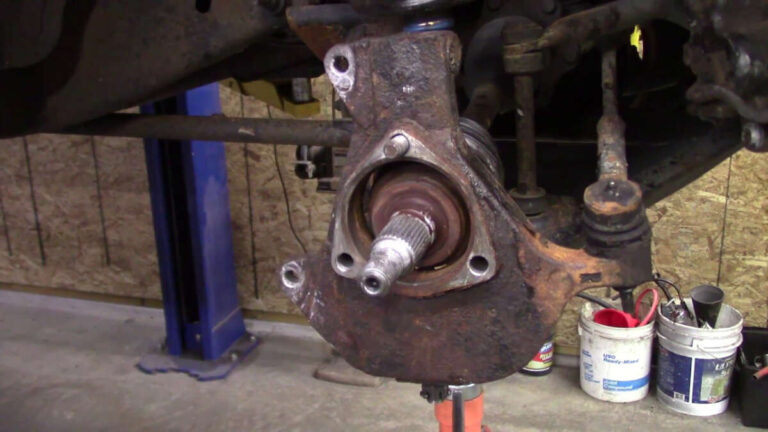
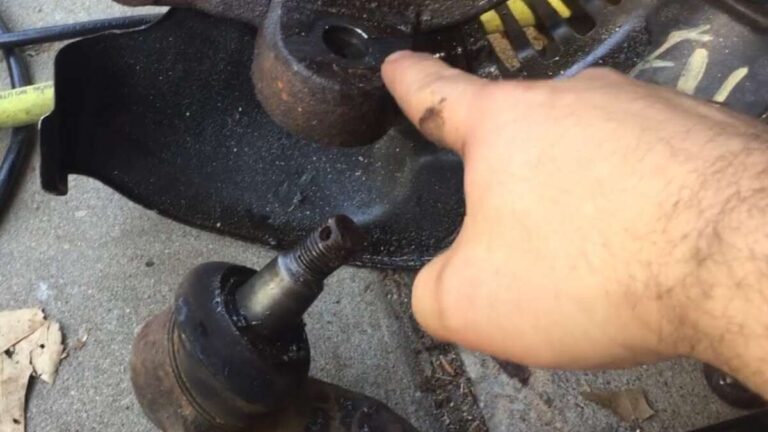
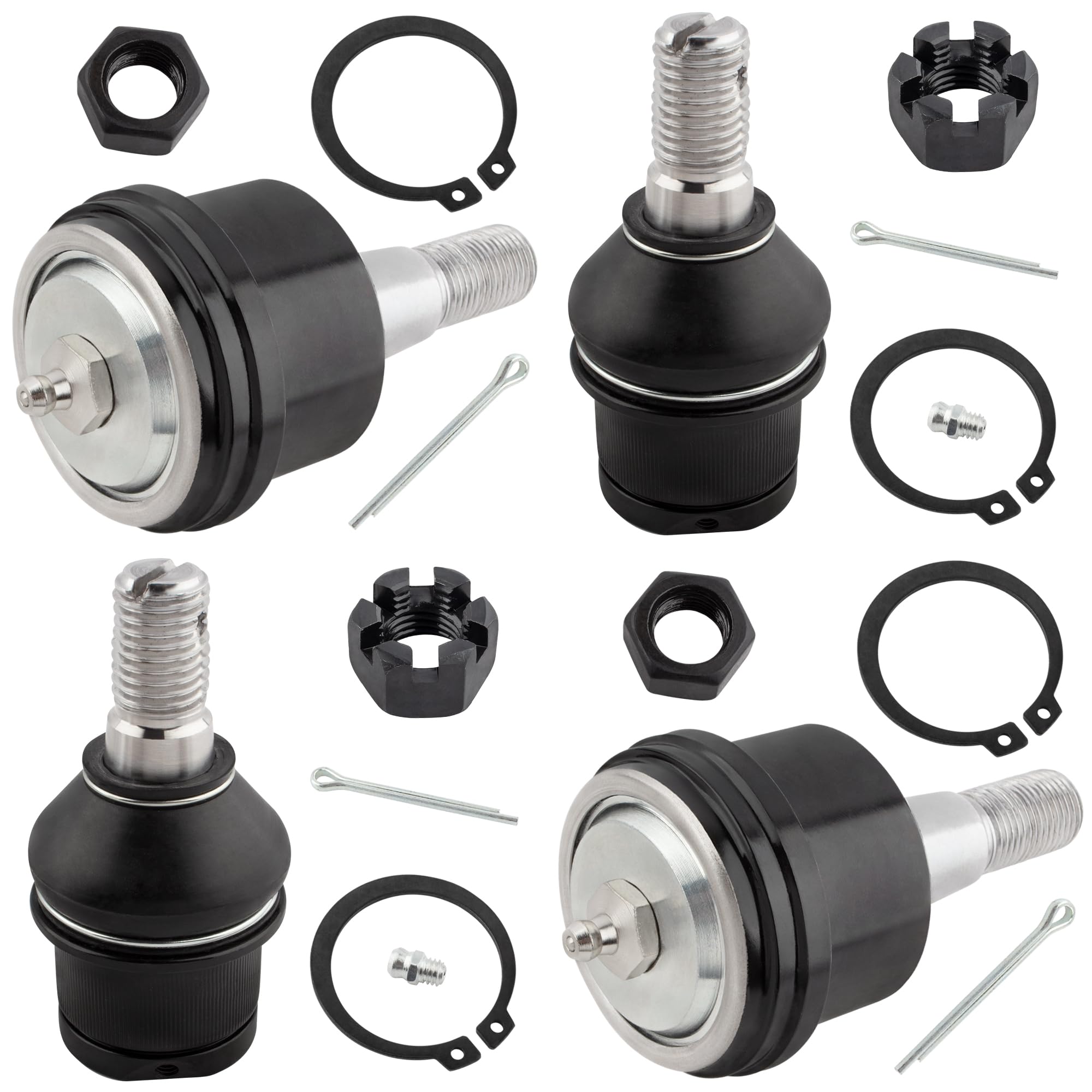
Ball joints connect the steering knuckle to the control arm or axle housing. They let the front wheel turn left and right while also moving up and down with the suspension.
Many 4WD Ram 2500 trucks use a solid front axle with an upper and lower ball joint on each side. The lower joint often carries much of the vehicle’s front-end load. Both joints matter, and replacing only one side may not solve the problem if the other joint is also worn.
A worn ball joint can affect:
- Steering control
- Front-end alignment
- Tire wear
- Braking stability
- Suspension noise
- Track-bar and steering-link life
A ball joint is not the same as a tie-rod end, drag link, or control-arm bushing. These parts can show similar symptoms, so a proper inspection is needed before buying parts.

Ram 2500 fitment: year, axle, and drive system come first
The most important buying step is confirming the truck’s exact fitment. Ram 2500 ball joints are not interchangeable across all years.
Check these details before ordering:
- Model year
- 2WD or 4WD
- Front axle type
- Cab and body configuration
- Factory or aftermarket lift
- Current steering and suspension parts
- VIN or original part number
Common U.S. model groups include:
- 1994–2002 Dodge Ram 2500
- 2003–2009 Dodge Ram 2500
- 2010–2018 Ram 2500
- 2019 and newer Ram 2500
These ranges are only a starting point. Mid-year changes, axle options, and aftermarket conversions can alter the correct part.
How to confirm the correct part
Use at least two checks:
- Search the manufacturer’s catalog by year, engine, drivetrain, and axle.
- Compare the result with a Mopar parts catalog or dealer listing.
- Use the truck’s VIN when a catalog gives more than one option.
- Compare the new part with the old part before pressing anything out.
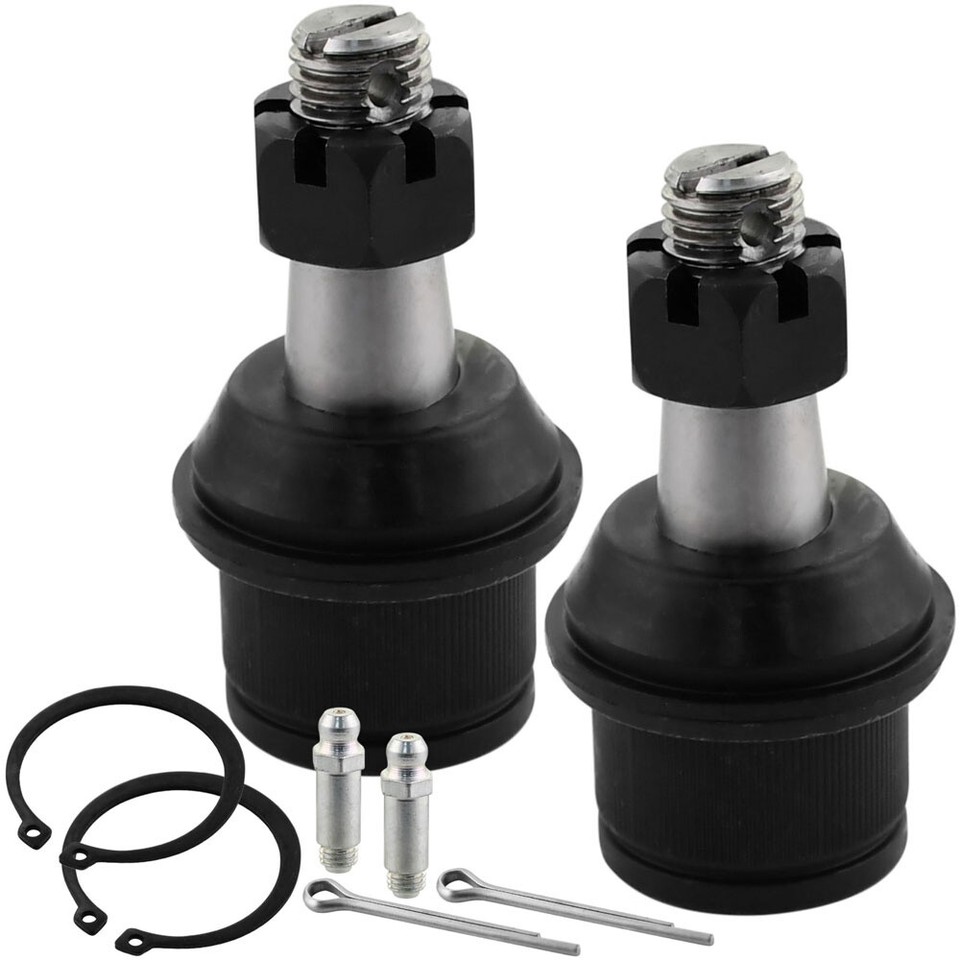
- Check whether the kit includes the upper joint, lower joint, nuts, boots, and grease fittings.
Do not rely on a marketplace listing that says “fits Ram 2500” without showing the exact year and drivetrain range.
Why 2WD and 4WD matter
A 4WD Ram 2500 usually has a different front suspension and steering layout than a 2WD truck. Parts designed for a solid front axle may not fit a 2WD configuration.
A lift can also change the required design. Some lifted trucks use replacement axle components or altered steering geometry. In that case, the correct ball joint may depend on the axle manufacturer and the lift kit, not only on the truck’s original year.

Best ball joint brands for Ram 2500
1. Mopar OEM ball joints
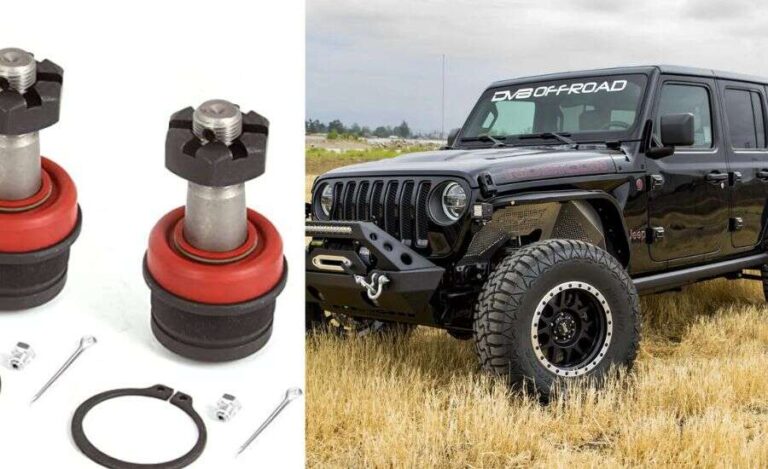
Mopar OEM ball joints are the most direct choice for a stock Ram 2500. They are designed around the original suspension and axle application.
Best for:
- Factory-height trucks
- Owners who want stock-style fit
- Work trucks and tow rigs
- Repairs where exact factory compatibility matters
Advantages:
- Factory application support
- Correct dimensions when matched by VIN
- Fewer surprises during installation
- Good choice when the truck has no suspension modifications
Limitations:
- Often costs more than aftermarket parts
- May not be ideal for a heavily lifted or competition truck
- Availability can vary by model year
OEM does not automatically mean that the joint will last forever. Installation quality, axle wear, lubrication, tire size, and vehicle use still affect service life.
2. Spicer ball joints
Spicer is a strong option for Ram 2500 owners who want a heavy-duty replacement for a Dana-equipped front axle. The company is well known for driveline and axle components.
Best for:
- Towing and hauling
- Daily work trucks
- Stock or mildly modified 4WD trucks
- Owners who want an OE-style replacement from an established axle-parts maker
Advantages:
- Strong axle application focus
- Good availability through parts suppliers
- Suitable for many demanding street and work uses
- Often available with complete hardware kits
Limitations:
- The correct application must still be verified
- Some listings may cover only one position or one side
- Availability differs by generation
Spicer is not a universal answer for every Ram 2500. Confirm the axle and model-year listing before purchase.
3. MOOG ball joints
MOOG offers a wide range of aftermarket chassis parts. Some Ram 2500 applications include design features such as grease fittings, improved boots, or revised materials.
Best for:
- Owners who need broad parts availability
- Stock trucks and moderate-duty use
- Repairs through local parts stores
- Buyers who want an established aftermarket warranty
Advantages:
- Commonly stocked
- Multiple application listings
- Helpful catalog information
- Often available as separate upper and lower joints
Limitations:
- Product design can vary by application
- A MOOG part number for one generation may not fit another
- “Problem Solver” branding does not replace fitment checks
- Marketplace sellers may mix old and new catalog data
Inspect the supplied boot, stud, grease fitting, and hardware before installation. If the design differs from the catalog image, stop and verify the part number.
4. Dynatrac and specialized heavy-duty ball joints
Specialized brands such as Dynatrac may make sense for trucks with large tires, a suspension lift, frequent off-road use, or a high-load axle build.
Best for:
- Lifted Ram 2500 trucks
- Severe off-road use
- Oversized tires
- Custom axle or steering systems
Advantages:
- Designed for specific heavy-duty applications
- May offer stronger materials or serviceable designs
- Better suited to some modified axle setups
Limitations:
- Higher purchase cost
- More limited fitment
- May require matching axle parts or special installation steps
- Not automatically better for a stock truck
Use a specialized joint only when the manufacturer lists the exact axle and suspension setup. A stronger part can create new fitment or geometry problems if it is not part of a matched system.

How to choose the right ball joint for your use
The best ball joint changes with the truck’s job. Use this decision guide.
For a stock daily driver
Choose a Mopar, Spicer, or premium MOOG replacement that matches the original application. A factory-style joint is usually the most practical choice.
For frequent towing
Choose a joint from a trusted OEM or axle-focused brand. Towing adds load and heat to the front suspension, especially on rough roads and during hard braking.
Also inspect the track bar, tie-rod ends, wheel bearings, and steering damper. Replacing ball joints will not correct wear in those parts.
For a lifted truck
Do not order a stock replacement until you know what axle and steering parts are installed. A lift may use different joints, axle components, or steering geometry.
The deciding factor is not only lift height. Tire size, wheel offset, axle type, and steering design can place extra load on the joint.
For large tires and off-road use
A serviceable or heavy-duty ball joint may be worth considering. However, it must match the axle and the intended use.
Large tires increase leverage on the steering knuckle. Low tire pressure, impacts, added vehicle weight, and aggressive steering can all increase joint stress.
Ball joint symptoms and how to confirm failure
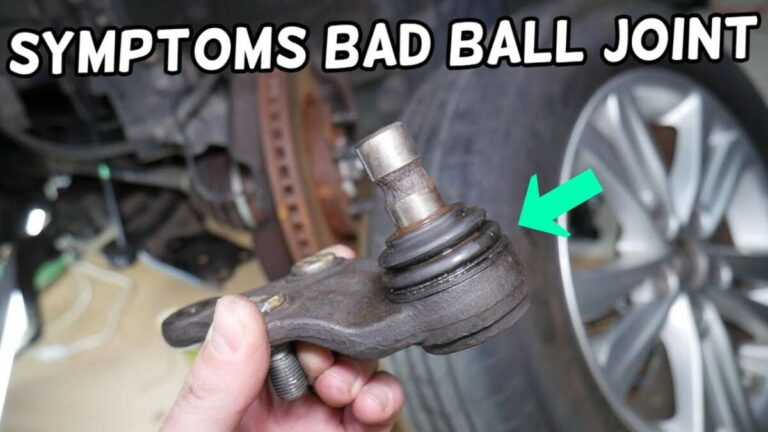
Common symptoms include:
- Clunking over bumps
- Wandering steering
- Uneven front tire wear
- A loose or vague steering feel
- Pulling during braking
- A change in camber
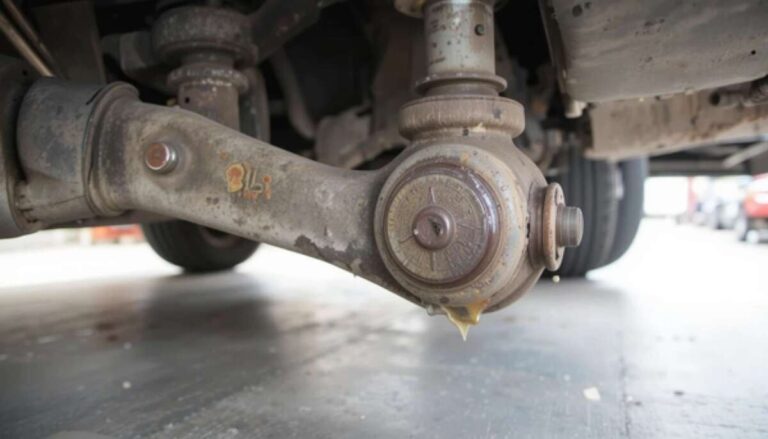
- Grease leaking from a torn boot
- Movement at the steering knuckle
These signs do not prove that the ball joint has failed. A loose track bar, wheel bearing, tie-rod end, control-arm bushing, or steering box can create similar symptoms.
Basic inspection process
A safe inspection should include:
- Park on a level surface.
- Chock the wheels.
- Raise and support the truck with correctly rated jack stands.
- Follow the service manual’s procedure for checking vertical and horizontal movement.
- Watch the ball joint while another person moves the wheel or steering.
- Inspect the boot for cuts, separation, or missing grease.
- Check nearby steering and suspension joints.
Never rely on a hydraulic jack alone. A Ram 2500 is heavy, and a failed support can cause fatal injuries.
Some ball joints show wear only under load. If the result is unclear, have a qualified shop inspect the front axle with the proper tools and specifications.
What to replace with the ball joints
Replacing related worn parts at the same time can prevent repeat labor. Inspect:
- Upper and lower ball joints
- Steering knuckle bore
- Axle C-joints or universal joints
- Wheel bearings and hub assemblies
- Tie-rod ends
- Drag link
- Track bar
- Steering damper
- Front axle seals
- Brake hoses and ABS wiring
Do not replace sound parts simply because they are nearby. Replace them when inspection shows wear, damage, contamination, or a fitment problem.
If both upper and lower joints on one side are worn, replacing the complete set on both sides may provide more even steering behavior. The service manual and inspection results should guide that decision.

Ball joint replacement: important installation points
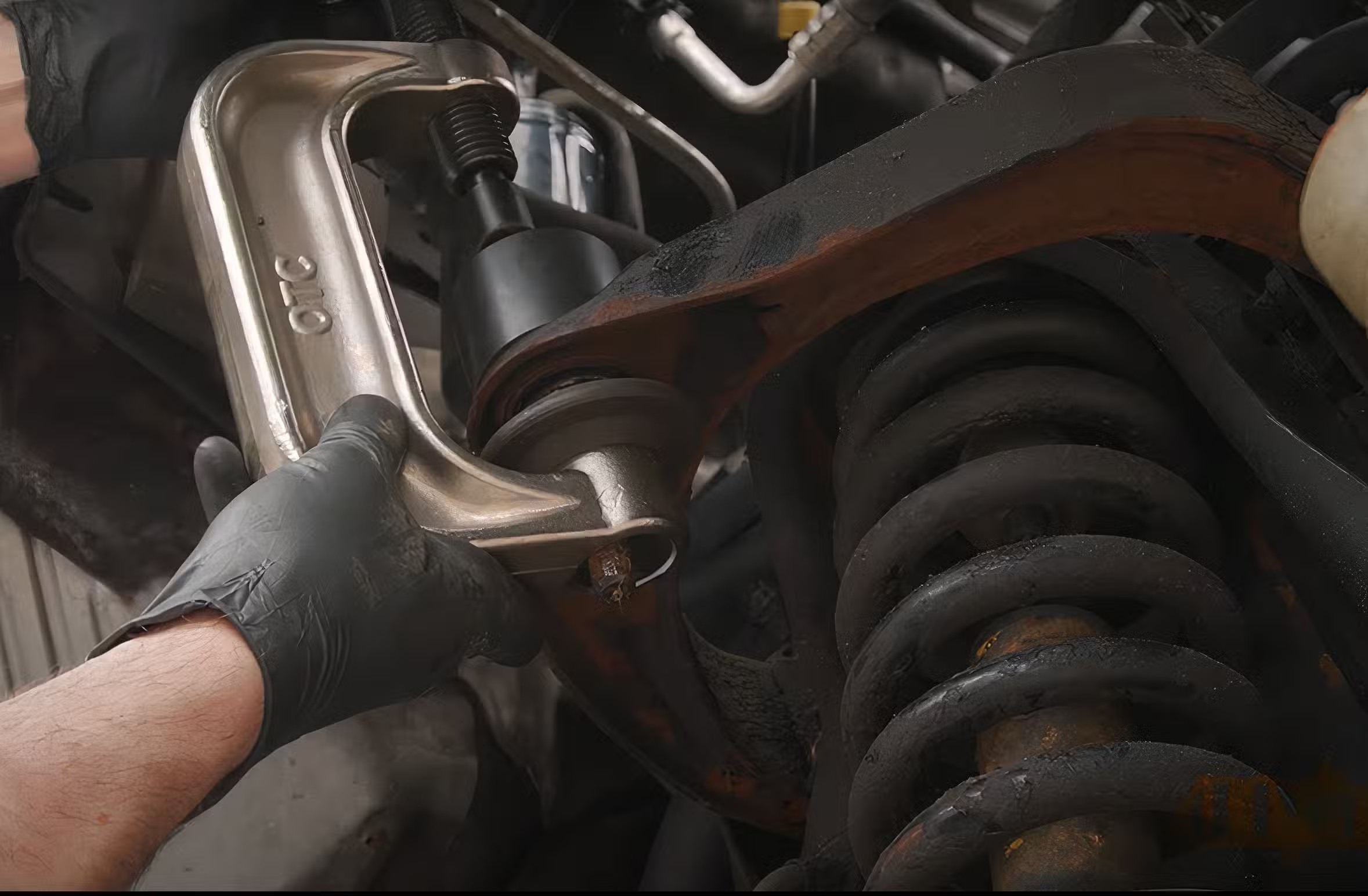
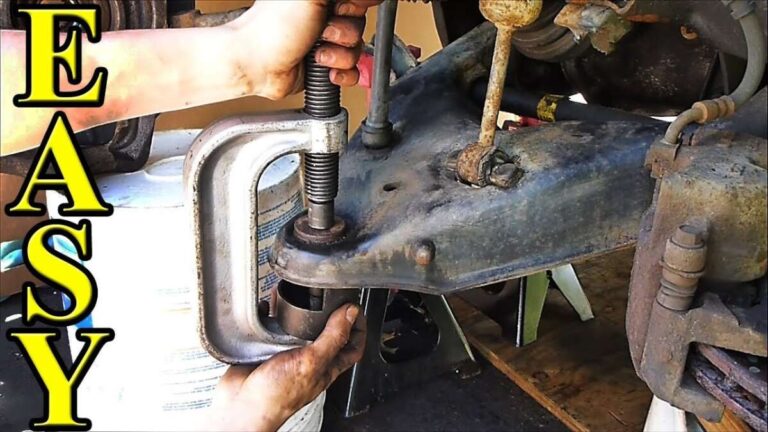
Ball joint replacement on a Ram 2500 is not a simple bolt-on job. Many solid-axle applications require a press and special adapters.
A proper repair usually involves:
- Supporting the truck safely.
- Removing the wheel, brake assembly, hub, axle shaft, and steering knuckle as required.
- Removing the old joints with the correct press tools.
- Cleaning and inspecting the axle housing and knuckle bores.
- Pressing the new joints in at the correct orientation.
- Installing new retaining hardware.
- Reassembling the axle and steering parts.
- Tightening fasteners to the exact service-manual torque.
- Greasing the joints when required.
- Checking steering movement, ABS wiring, and brake operation.
- Completing a front-end alignment.
Do not use an impact gun to guess torque on ball joint nuts. Over-tightening can damage parts. Under-tightening can allow movement and create a dangerous steering failure.
The exact procedure and torque values vary by year and axle. Use the factory service information for the specific truck. If the joint is pressed in at the wrong angle, the part may bind, fail early, or damage the axle housing.

Common buying and installation mistakes
Buying by year only
A year range is not enough. The same model year can have different drivetrain and axle options.
Replacing only the noisy part
Noise may come from another steering component. Diagnose the source before ordering.
Ignoring a worn axle bore
A loose or damaged bore can prevent a new ball joint from seating correctly. The axle housing may need professional repair or replacement.
Using the wrong grease
Use the lubricant specified by the ball joint maker. Some joints are sealed, while others require periodic greasing.
Skipping the alignment
Ball joint replacement can alter front-end geometry. A professional alignment helps detect steering or camber problems after the repair.
Keeping damaged hardware
Use new nuts, snap rings, cotter pins, and other supplied hardware when the manufacturer requires them. Do not reuse a deformed locking nut or damaged retainer.
Choosing a very cheap unknown brand
A low price does not show quality. Steering and suspension parts deserve traceable packaging, a clear warranty, and a real application catalog.

FAQs about Ram 2500 ball joints
How long do Ram 2500 ball joints last?
There is no reliable mileage limit for every truck. Service life depends on road conditions, tire size, towing, axle load, lubrication, alignment, and installation quality.
A stock truck on paved roads may last much longer than a lifted truck with oversized tires used on rocky trails. Inspect the joints when symptoms appear or during routine front-end service.
Should I replace upper and lower ball joints together?
Usually, replace both joints on the affected side when both show wear. If the truck has high mileage or both sides have similar wear, replacing all four may reduce repeat labor.
The inspection should decide. A good upper joint does not need replacement only because the lower joint failed.
Can bad ball joints cause tire wear?
Yes. Excess movement can change wheel alignment and create uneven wear. However, worn tie rods, wheel bearings, track bars, incorrect toe settings, and damaged suspension parts can cause similar patterns.
Find and repair the source before installing new tires.
Are greaseable ball joints better?
Not always. A grease fitting can allow periodic lubrication, but it does not make an incorrectly fitted or poorly made joint safe.
Follow the manufacturer’s grease interval and use the specified lubricant. A sealed joint can also perform well when correctly designed and installed.
Do Ram 2500 ball joints need an alignment after replacement?
An alignment check is strongly recommended. Replacement can change front-end geometry, and the inspection may reveal other worn parts.
An alignment cannot fix a loose ball joint. All unsafe play must be repaired first.

Final recommendation
For a stock U.S.-market Ram 2500, start with a VIN-verified Mopar or Spicer ball joint. A premium MOOG part can be a practical alternative when its catalog confirms the exact year, drivetrain, axle, and position.
For a lifted truck, oversized tires, or custom axle, choose a specialized heavy-duty system only after confirming compatibility with the installed axle and suspension. Do not choose by price, online reviews, or a broad “Ram 2500” label alone.
Before ordering, record the truck’s year, 2WD or 4WD status, axle type, VIN, suspension changes, and the exact upper or lower position. Before driving, confirm correct pressing, torque, cotter pins, brake and ABS routing, steering movement, and alignment.
Conclusion
The best ball joints for Ram 2500 trucks are the ones that match the truck’s exact axle and use. Mopar and Spicer are strong factory-style choices. MOOG offers broad aftermarket support, while Dynatrac and similar brands may suit carefully planned heavy-duty builds.
Fitment and installation matter more than the logo on the box. If you cannot verify the axle or safely press the joints, have a qualified heavy-duty suspension shop complete the repair.