

A car note is the regular payment you make on an auto loan until the vehicle is fully paid off.
If you are buying a car with borrowed money, understanding what is a car note can help you compare loans, avoid costly mistakes, and plan your budget. A car note includes more than the vehicle price. It may also include interest, taxes, fees, and optional products rolled into the loan. This guide explains how car notes work, what they cost, and how to manage one wisely.
What Is a Car Note?
A car note is a common term for an auto loan payment or the auto loan itself. When you finance a vehicle, a bank, credit union, dealership lender, or online lender pays the seller. You then repay that lender over time.
Your car note usually includes two main parts:
• Principal: The amount borrowed to buy the car.
• Interest: The cost charged by the lender for providing the money.
For example, imagine you buy a $25,000 car. You make a $5,000 down payment and finance the remaining $20,000. Your car note will be based on that $20,000, plus interest and any financed fees.
The phrase “car note” can mean two things in everyday speech. Some people use it to describe the full loan balance. Others use it to describe the monthly payment. When discussing a loan, ask which meaning the person intends.
A car note is similar to a mortgage in one important way. The lender gives you money to buy an asset, and the asset secures the debt. If you stop making payments, the lender may have the legal right to repossess the vehicle.
:max_bytes(150000):strip_icc()/dotdash-070915-personal-loans-vs-car-loans-how-they-differ-v2-f8faff14abb1488d869f4026c406a86c.jpg)
How Does a Car Note Work?
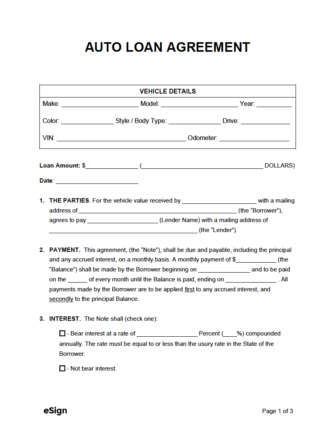
A car note starts with a loan agreement. That agreement lists the amount borrowed, annual percentage rate, payment schedule, loan term, and total cost of the loan.
Most auto loans use simple interest. Interest builds on the unpaid principal balance. As you make payments, the balance usually falls, so the interest portion may also fall over time.
Your monthly payment may include:
• Loan principal
• Interest charges
• Sales tax, if financed
• Registration or documentation fees, if financed
• Optional products, such as an extended warranty or debt cancellation coverage
A lender may send your payment through an amortization schedule. Early payments often contain more interest. Later payments usually apply more money to the principal.
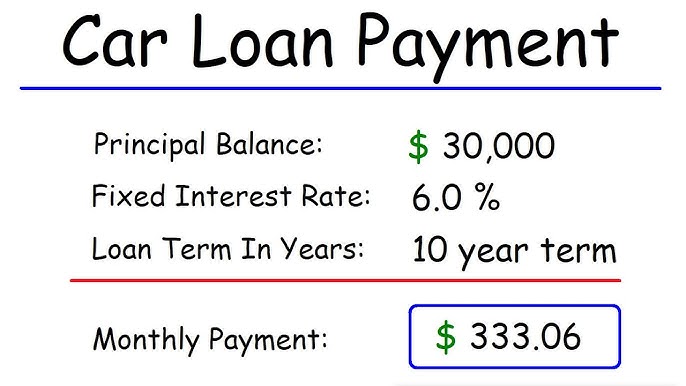
Consider a $25,000 loan with a 7% annual percentage rate for 60 months. The payment would be about $495 per month before taxes, fees, or optional products. The exact payment depends on the lender’s calculation and the final amount financed.
Your payment alone does not show the full cost. A lower monthly payment may simply come from a longer loan term. Always review the total of payments before signing.
What Determines Your Car Note Payment?
Several factors shape the size of your car note. Two people can buy the same car and receive very different payments because their credit, loan terms, and down payments differ.
Loan Amount
The more you borrow, the higher your car note will usually be. A larger down payment reduces the amount financed and may lower your monthly payment.
The amount financed may also rise when you add:
• Sales tax
• Dealer fees
• Registration costs
• Service contracts
• Guaranteed asset protection coverage
• Negative equity from an old vehicle
Interest Rate
The interest rate shows the basic cost of borrowing. The annual percentage rate, or APR, may also include certain loan charges.
Lenders often consider your:
• Credit history
• Credit score
• Income
• Employment history
• Debt payments
• Down payment
• Vehicle age and mileage
A strong credit profile may help you qualify for a lower rate. A weaker profile can lead to a higher rate and a more expensive car note.
Loan Term
The loan term is the time allowed to repay the loan. Common terms range from 36 to 72 months, although some lenders offer longer terms.
A 72-month loan can make the monthly payment look easier. However, it often increases total interest and may leave you owing more than the car is worth for a longer period.
Down Payment
A down payment reduces the loan balance. It can also lower the lender’s risk and improve your approval odds.
A useful rule is to put down as much as you can without draining your emergency savings. A down payment should make the car affordable, not leave you unable to handle rent, food, repairs, or other bills.
:max_bytes(150000):strip_icc()/Heres-how-get-car-no-down-payment_final-1c94e62ad4644532a18289cf826f6cce.png)
Car Note Example: Monthly Payment and Total Cost
Suppose you finance $22,000 at a 7% APR for 60 months. Your monthly car note would be about $436.
Over five years, you would pay about $26,160 in total. That means interest would cost roughly $4,160, not counting taxes or other charges.
Now compare a 72-month loan at the same rate. The payment would fall to about $375 per month, but the total paid would rise to about $27,000. The lower payment costs more over time.
This example shows why you should compare both figures:
• Monthly payment
• Total amount paid
• Total interest
• Loan term
• APR
• Amount financed
When I help people review car financing, the most common mistake is focusing only on the monthly payment. A payment that fits today may still create a costly loan over six years. Look at the full contract, not just the number in large print.

Car Note Versus Car Lease
A car note usually refers to a loan used to buy a vehicle. A lease is different because you pay to use the vehicle for a set period rather than purchase it through a traditional loan.
With a car note:
• You build ownership as you repay the loan.
• You usually have no mileage limit.
• You may sell or trade the car at any time, subject to the loan balance.
• You receive the vehicle title after satisfying the lender’s lien.
With a lease:
• You make payments for the right to use the vehicle.
• You may face mileage and wear charges.
• You normally return the vehicle at the end of the lease.
• You may have the option to buy the vehicle for a stated residual value.
Neither option is best for every driver. Buying may suit someone who keeps cars for many years. Leasing may appeal to someone who wants a newer vehicle and changes cars often.
A lease payment is not usually called a car note. Still, both choices affect your monthly transportation budget.
What Happens When You Finish Paying a Car Note?
After you make the final payment, the lender should release its lien on the vehicle. A lien gives the lender a legal interest in the car until the debt is paid.
The process varies by state and lender. You may receive a paper title, an electronic title update, or a lien release document. Contact the lender if you do not receive confirmation within the expected time.
After payoff:
• Confirm that the account balance is zero.
• Keep the final statement.
• Verify that the lien is removed.
• Update your insurance if your policy required lender coverage.
• Store the title in a safe place.
Some lenders charge a small payoff or document fee. Your contract should explain any permitted charges.
Paying off the car note does not erase your need for insurance. Most states require liability coverage, and comprehensive or collision coverage may still protect you from major losses.
What If You Miss a Car Note Payment?
A missed car note payment can lead to fees, credit reporting, collection activity, and, in serious cases, repossession. The exact timeline depends on your contract and state law.
Contact the lender as soon as you know you may miss a payment. Possible options may include:
• A due-date change
• A short payment extension
• A temporary hardship plan
• Loan modification
• Refinancing
Do not ignore letters or calls from the lender. Early communication gives you more choices.
A late payment may be reported to the credit bureaus after it reaches the lender’s reporting threshold. Repossession can also leave a deficiency balance. This happens when the lender sells the vehicle for less than the amount you owe, including allowed fees.
For example, if you owe $18,000 and the lender sells the repossessed car for $13,000, you could still owe the difference. State laws control how lenders may collect that balance.

Can You Refinance a Car Note?
Refinancing means replacing your current auto loan with a new loan. The new lender pays off the old loan, and you make payments under the new agreement.
Refinancing may help when:
• Your credit has improved.
• Market rates have fallen.
• Your current APR is unusually high.
• You want a different payment schedule.
However, refinancing is not automatically a money-saving move. A longer term can lower the payment while increasing total interest. Check for application fees, title fees, prepayment penalties, and other charges.
Before refinancing, compare:
• New APR
• New monthly payment
• New loan term
• Remaining balance
• Total remaining cost
• Total cost of the replacement loan
You also need enough vehicle value and loan eligibility. Some lenders may reject a loan if the car is too old, has high mileage, or is worth less than the balance.
How to Choose an Affordable Car Note
A car note should fit your full budget, not just your paycheck. Your transportation cost may include the payment, fuel, insurance, maintenance, parking, and repairs.
Before shopping, follow these steps:
Review your monthly income and fixed bills.
Estimate insurance and fuel costs for the vehicle.
Set a maximum total transportation budget.
Get loan preapproval from a bank or credit union.
Compare the preapproval with dealer financing.
Negotiate the vehicle price separately from the financing.
Read the final contract before signing.
Confirm the APR, amount financed, and total payments.
Preapproval can give you a clear price range. It also helps you avoid judging a car only by the dealer’s advertised payment.
Be careful with “buy here, pay here” financing. These dealers may approve borrowers with poor credit, but rates and fees can be high. Review the contract closely and compare other lenders first when possible.
Common Car Note Mistakes to Avoid
A car note can become a financial burden when the loan is too large or the terms are misunderstood. The following mistakes appear often in real-world auto financing.
• Choosing a car based only on the monthly payment: A long term can hide a high total cost.
• Skipping the loan comparison: Dealer financing is convenient, but it may not be the cheapest offer.
• Rolling old debt into a new loan: This increases the new balance and can create negative equity.
• Buying unnecessary add-ons: Optional products raise the amount financed.
• Using all your savings for a down payment: You still need cash for emergencies and repairs.
• Ignoring the contract: Verbal promises do not replace written terms.
• Trading in too soon: You may owe more than the vehicle’s trade-in value.
• Paying late: Even one missed payment can create fees and credit problems.
One lesson worth remembering is simple: a car note is a long-term promise. Treat it with the same care you would give any major household bill.
Important Terms in a Car Note Agreement
Auto loan contracts contain terms that may seem technical. Knowing the basic language makes the agreement easier to review.
• Amount financed: The amount of credit provided to buy the vehicle.
• Finance charge: The dollar cost of borrowing under the contract.
• APR: The yearly cost of credit, shown as a percentage.
• Principal: The unpaid amount borrowed.
• Term: The number of months in the repayment schedule.
• Collateral: The vehicle securing the loan.
• Lien: The lender’s legal claim against the vehicle.
• Prepayment: Paying extra or paying off the loan early.
• Negative equity: Owing more than the car is worth.
• Co-signer: A person who agrees to repay the debt if the main borrower does not.
Read the federal lending disclosures before signing. They should show key details such as the APR, finance charge, amount financed, total payments, and payment schedule.
Frequently Asked Questions About What Is a Car Note
Is a car note the same as a car loan?
In everyday conversation, people often use “car note” and “car loan” to mean the same thing. More precisely, a car loan is the financing agreement, while a car note often means the monthly payment or remaining debt.
How much is a typical car note?
There is no single typical payment because prices, rates, terms, and credit profiles vary. Calculate the payment from the amount financed, APR, and term rather than relying on a national average.
Does a car note build credit?
On-time auto loan payments may help build a positive credit history when the lender reports them. Late payments can harm your credit, so confirm the lender’s reporting practices and pay by the due date.
Can you pay off a car note early?
Many auto loans allow early payoff, but review your contract for any prepayment penalty. Ask the lender for a payoff quote because the amount may differ from the balance shown on your latest statement.
What happens if you cannot afford your car note?
Contact the lender before missing a payment and ask about hardship options. You may also consider selling the car, refinancing, or trading it only after comparing the loan balance with the vehicle’s value.
Is a lower car note always better?
A lower payment is not always cheaper. It may result from a longer loan term, a larger down payment, or more money rolled into the loan, so compare the total amount paid.
Conclusion
A car note is the debt or payment tied to financing a vehicle. Its cost depends on the loan amount, APR, term, down payment, fees, and credit profile. The smartest way to manage a car note is to compare total costs, read every contract detail, and choose a payment that leaves room for savings and daily needs.
Before signing, seek preapproval, check the vehicle’s price, and calculate the full transportation cost. Use these steps to make a confident choice, then explore more personal finance resources or share your car-buying experience in the comments.