

Yes, most automatic cars have clutch components, but they work without a driver-operated clutch pedal.
The question “do automatic cars have a clutch” has a more detailed answer than a simple yes or no. Traditional automatic transmissions, dual-clutch transmissions, and automated manuals all use clutch technology in different ways. The key difference is who controls it: the driver or the vehicle’s computer and hydraulic system. This guide explains how each system works, what can go wrong, and how to drive and maintain an automatic car correctly.
Do automatic cars have a clutch?
Yes, many automatic cars have one or more clutches. However, you do not press a clutch pedal or shift gears by hand.
In a manual car, one dry clutch connects the engine to the transmission. Your left foot controls the clutch pedal. When you press the pedal, the clutch separates the engine from the gearbox so you can change gears.
An automatic transmission handles this process for you. It uses hydraulic pressure, electronic controls, and internal clutch packs to select gears. The system can apply and release these clutches in a fraction of a second.
So, do automatic cars have a clutch? The answer depends on the transmission type:
• Traditional automatic transmissions use several internal clutch packs.
• Dual-clutch transmissions use two clutches.
• Automated manual transmissions use a computer-controlled clutch.
• Continuously variable transmissions may use a starting clutch or a torque converter.
• Electric vehicles usually do not need a traditional multi-speed clutch system.
The clutch is still there in many designs, but it is hidden inside the transmission.
How a traditional automatic transmission uses clutches
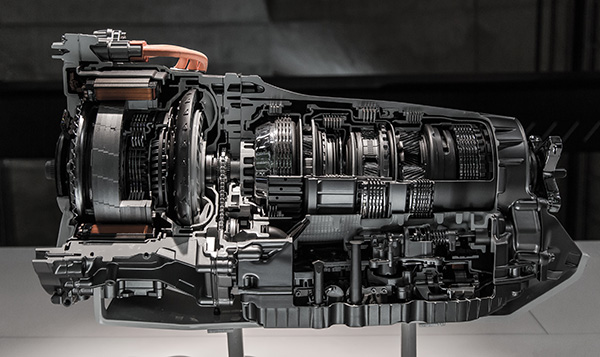
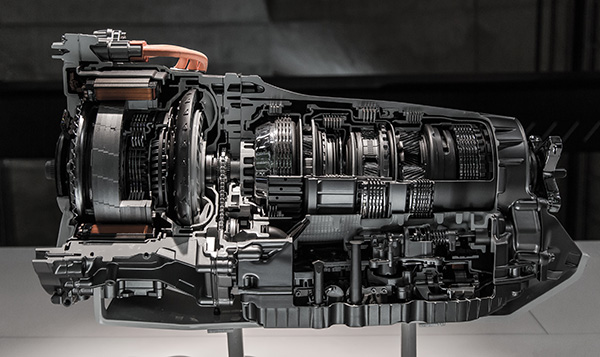
A traditional automatic transmission usually uses a torque converter instead of a manual clutch. The torque converter sits between the engine and transmission and transfers power through transmission fluid.
Inside the gearbox, several clutch packs control the gears. A clutch pack contains friction plates and steel plates. When hydraulic pressure squeezes the plates together, that clutch locks part of the gearset and creates a specific gear ratio.
The transmission control module decides when to apply each clutch. It studies information such as:
• Vehicle speed
• Engine speed
• Throttle position
• Road slope
• Transmission temperature
• Brake pedal use
This is why an automatic car can shift gears while you simply keep your right foot on the accelerator.
The role of the torque converter
A torque converter performs some jobs that a manual clutch does. It allows the engine to keep running while the car is stopped in Drive. It also multiplies engine torque during initial acceleration.
The torque converter contains three main parts:
• Impeller, which sends fluid outward
• Turbine, which receives fluid power
• Stator, which redirects fluid to improve efficiency
Many newer automatic cars also have a lockup clutch inside the torque converter. At cruising speed, this clutch locks the converter to reduce slip and improve fuel economy.
That means a conventional automatic may have both a torque converter clutch and several transmission clutch packs.
Do automatic cars have a clutch pedal?
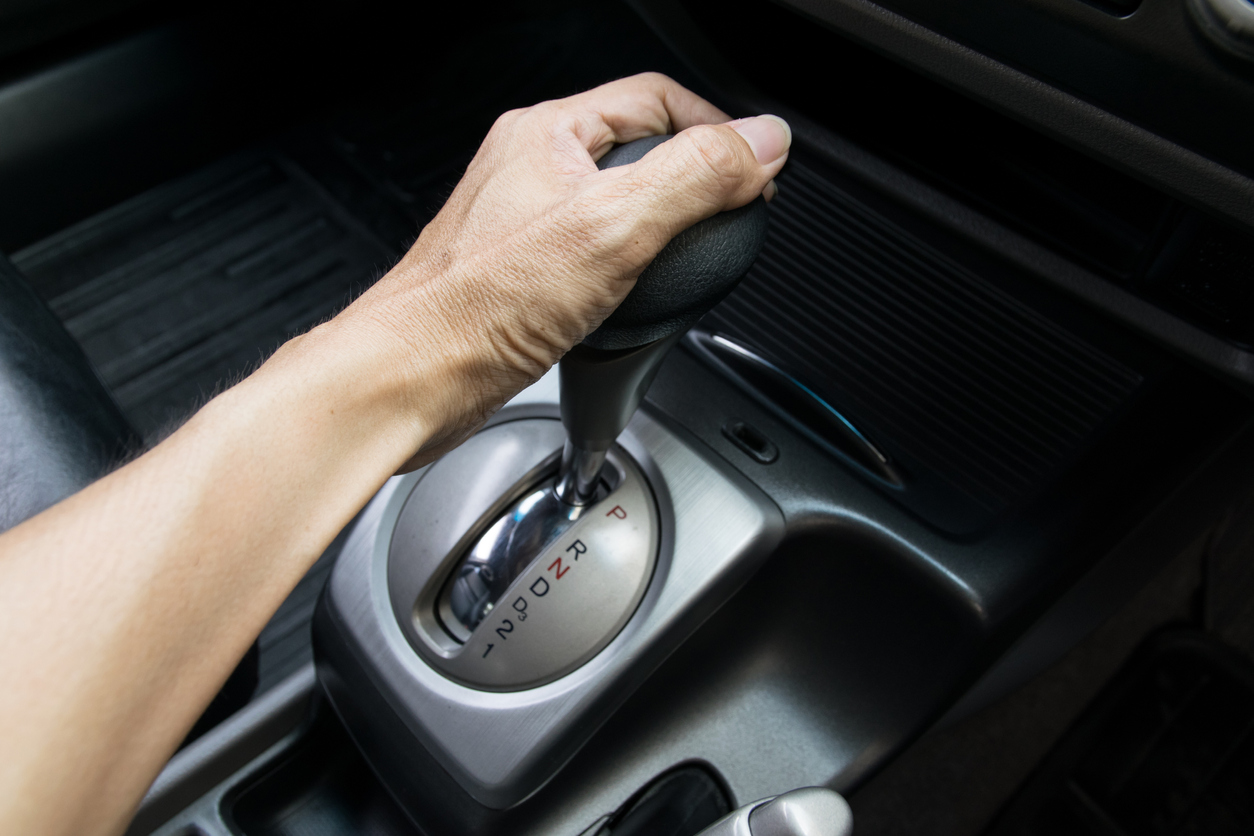
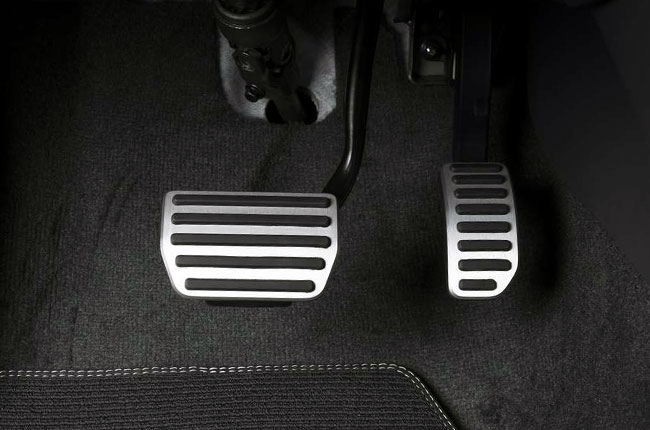
Most automatic cars do not have a clutch pedal. They usually have only two pedals:
• Brake pedal
• Accelerator pedal
Your left foot should normally rest on the floor. Use your right foot for both the brake and accelerator.
The transmission computer controls the internal clutches. It also controls gear changes based on driving conditions. This makes automatic cars easier to operate in traffic, especially on hills or during repeated stops.
A common mistake is to use both feet. Left-foot braking can make it harder to control the car smoothly. It may also cause accidental brake and accelerator use at the same time.
When learning to drive an automatic, keep these habits:
Press the brake before selecting Drive or Reverse.
Release the parking brake only when you are ready to move.
Accelerate gently.
Stop fully before changing from Drive to Reverse.
Use the parking brake when parking on a slope.
The absence of a clutch pedal does not mean the vehicle has no clutch system. It only means the car operates it automatically.

Different types of automatic transmissions and their clutches
The phrase automatic car covers several different transmission designs. They do not all use clutches in the same way.
Traditional automatic transmission
A conventional automatic uses a torque converter and a set of planetary gears. Internal clutch packs engage different gears.
This system is known for smooth operation and strong low-speed performance. It is common in family sedans, SUVs, trucks, and luxury vehicles.
Dual-clutch transmission
A dual-clutch transmission, or DCT, uses two separate clutches. One clutch controls odd-numbered gears, such as first, third, and fifth. The other controls even-numbered gears, such as second, fourth, and sixth.
The next gear can be selected before it is needed. This allows very fast shifts and can improve performance.
However, some DCTs may feel slightly jerky at low speeds. Stop-and-go traffic can also create extra heat and clutch wear, especially with a dry-clutch design.
Automated manual transmission
An automated manual transmission uses a manual gearbox and a computer-controlled clutch. Electric motors or hydraulic actuators operate the clutch and gear selector.
This design can be efficient, but shifts may feel less smooth than those from a traditional automatic. The system is essentially a manual transmission that changes gears without a clutch pedal.
Continuously variable transmission
A CVT usually does not use fixed gears. Instead, it uses two variable-width pulleys and a belt or chain to provide a range of ratios.
Many CVTs use a torque converter for starting. Some use a launch clutch. Hybrid vehicles may use a specialized motor-and-clutch layout.
A CVT can feel different because the engine may hold a steady speed while the car continues to accelerate. That behavior is normal for this design.
Hybrid transmission
Hybrid vehicles use electric motors to assist or replace some transmission functions. Some hybrids have no conventional multi-speed gearbox. Others use clutches to connect and disconnect electric motors, engine components, or different gear paths.
Always check the owner’s manual before assuming how a hybrid transmission works.

How automatic transmission clutches wear out
Automatic transmission clutches can wear just like a manual clutch. The difference is that the wear happens inside the transmission and is controlled by the car.
Friction material can become thin over time. Heat can also damage clutch plates and seals. When the system cannot build enough hydraulic pressure, the clutches may slip.
Common causes of automatic clutch wear include:
• Old or incorrect transmission fluid
• Low fluid level
• Frequent towing beyond the vehicle’s rating
• Repeated hard acceleration
• Excessive stop-and-go driving
• Overheating
• Faulty solenoids or sensors
• Delayed transmission service
A slipping transmission may feel like the engine is racing while the vehicle barely speeds up. You may also notice delayed engagement, harsh shifting, or a burning smell.
From my hands-on experience with automatic vehicles, fluid condition is one of the most overlooked issues. Drivers often assume automatic transmissions need no service because there is no clutch pedal. In reality, the fluid helps cool, lubricate, and operate the internal clutches.
Always follow the service schedule in the owner’s manual. Some vehicles need regular fluid changes, while others use a longer interval or require special inspection procedures.
Signs that an automatic transmission clutch may be failing
A failing automatic clutch does not always produce the same warning signs. Symptoms depend on the transmission design and the failed component.
Watch for these problems:
Slipping during acceleration
The engine speed rises, but the car does not accelerate as expected. This often points to clutch slip, low fluid pressure, or worn friction plates.
Delayed Drive or Reverse
The vehicle takes several seconds to move after you select Drive or Reverse. This may indicate low fluid, worn seals, or a hydraulic problem.
Harsh or confused shifting
The car may shift with a strong bump or select the wrong gear. A bad sensor, solenoid, software problem, or internal clutch fault can cause this symptom.
Shuddering
A vibration during light acceleration may come from a worn torque converter lockup clutch. It can also result from incorrect fluid or another drivetrain problem.
Burning smell
A burnt odor may signal overheated transmission fluid or slipping friction material. Stop hard driving and have the vehicle inspected.
Warning light
A check engine light or transmission warning light should not be ignored. Modern cars can store fault codes that help identify pressure, sensor, or clutch-control issues.
Do not assume every shift problem means the transmission needs replacement. A scan, fluid inspection, and road test can identify simpler causes.
How to protect the clutch in an automatic car
Good driving habits can reduce heat and stress. They cannot prevent all failures, but they can help the transmission last longer.
Use these practical tips:
• Come to a complete stop before selecting Reverse.
• Do not shift into Park while the car is moving.
• Avoid holding the car on a hill with the accelerator.
• Use the brake pedal or parking brake on inclines.
• Do not tow more than the vehicle rating allows.
• Check the transmission fluid only as the manufacturer instructs.
• Use the exact fluid type listed in the owner’s manual.
• Allow the transmission to warm up in very cold weather through gentle driving.
• Respond quickly to slipping, shuddering, or delayed engagement.
One parking habit deserves special attention. On a slope, stop with the brake, apply the parking brake, and then select Park. This helps reduce pressure on the parking pawl, a small locking part inside the transmission.
When I have driven automatic cars on steep roads, using the parking brake this way has made selecting Park and later shifting out of Park much smoother. It is a small habit, but it can reduce unnecessary strain.

Automatic clutch replacement and repair costs
Repair costs vary widely because “automatic clutch” can refer to different parts. A torque converter clutch fault may need a valve body repair, software update, or torque converter replacement. Internal clutch wear may require transmission removal and rebuilding.
The final price depends on:
• Vehicle make and model
• Transmission type
• Labor rates
• Availability of parts
• Extent of internal damage
• Whether the transmission is rebuilt, repaired, or replaced
A simple sensor or solenoid repair is usually far less expensive than a complete rebuild. This is why early diagnosis matters.
Ask a repair shop for a written diagnosis. It should explain the symptoms, fault codes, fluid condition, pressure test results, and recommended repair. Be cautious if someone recommends a full transmission replacement without testing the vehicle.
Transmission service can also have limits. A fluid change may improve shift quality when fluid is old, but it cannot restore badly worn clutch plates. In some high-mileage vehicles, changing fluid may reveal existing problems rather than cause them.
Manual clutch versus automatic clutch
A manual clutch and an automatic clutch perform a similar basic job: they connect and disconnect engine power. Their design and control are very different.
| Feature | Manual clutch | Automatic clutch |
|---|---|---|
| Driver control | Clutch pedal | Computer and hydraulic system |
| Typical location | Between engine and gearbox | Inside transmission or torque converter |
| Number used | Usually one | Often several |
| Gear selection | Driver shifts gears | Transmission selects gears |
| Common wear sign | Clutch pedal slip or high engagement point | Delayed shifts or engine flare |
| Fluid role | Usually limited to hydraulic control | Essential for cooling and clutch operation |
A manual clutch is easier to understand because you can feel and see how it operates. An automatic clutch is more like a hidden team of workers. Sensors tell the computer what is happening, hydraulic pressure moves the parts, and friction plates transfer power.
Both systems need correct use and maintenance. Neither is completely immune to wear.
Do electric cars have a clutch?
Most battery-electric cars do not use a traditional clutch. Many use a single-speed reduction gearbox because electric motors produce strong torque across a wide speed range.
Without multiple gears, there is usually no need for a clutch to disconnect the engine during gear changes. Electric motors can also stop and start without the same idle concerns as gasoline engines.
Some electric and hybrid vehicles may use clutches for special purposes. These can connect an engine, electric motor, or different gear paths. The design varies by manufacturer.
This means the answer to “do automatic cars have a clutch” is not the same for every electrified vehicle. Check the vehicle’s technical information before applying advice meant for a gasoline automatic.
Frequently asked questions about do automatic cars have a clutch
Do automatic cars have a clutch plate?
Many automatic cars have multiple clutch plates inside clutch packs. These plates engage and release automatically, so the driver does not operate them with a pedal.
Do automatic cars have a clutch pedal?
Most automatic cars do not have a clutch pedal. The vehicle’s computer, hydraulic system, or electric actuators control the internal clutch parts.
Can an automatic transmission clutch wear out?
Yes, automatic clutch packs and torque converter clutches can wear out. Slipping, delayed engagement, shuddering, and harsh shifts may be warning signs.
Is a torque converter the same as a clutch?
No. A torque converter transfers power through fluid, while a clutch uses friction plates to connect rotating parts. Many traditional automatics use both a torque converter and internal clutches.
Do dual-clutch automatic cars have two clutches?
Yes, a dual-clutch transmission uses two clutches. One usually controls odd gears, while the other controls even gears.
Can bad transmission fluid damage an automatic clutch?
Yes, incorrect, old, or low fluid can reduce lubrication, cooling, and hydraulic pressure. This may cause slipping, overheating, and accelerated clutch wear.
Should you use both feet to drive an automatic car?
Most drivers should use the right foot for both the accelerator and brake. Keeping the left foot off the pedals reduces the chance of pressing both pedals by mistake.
Conclusion
So, do automatic cars have a clutch? Many do, but the clutch is hidden inside the transmission and controlled automatically. Traditional automatics use clutch packs and often a torque converter, while dual-clutch systems use two clutches and electric cars may use little or no conventional clutch hardware.
Learn your vehicle’s transmission type, follow the correct service schedule, and take slipping or delayed shifting seriously. A small warning today can become a major repair tomorrow. Check your owner’s manual, schedule a proper inspection when needed, and share your experience or questions in the comments.
