

Dish soap can wash a car in an emergency, but regular use may damage its protective finish.
If you are asking, “can you use dish soap to wash your car,” the honest answer is yes, but only with care and only when you have no better option. Dish soap cuts through grease well, yet that same strength can remove wax, dry rubber trim, and leave your paint without its usual protection. This guide explains when it is safe, how to reduce the risks, and which car wash products work better.
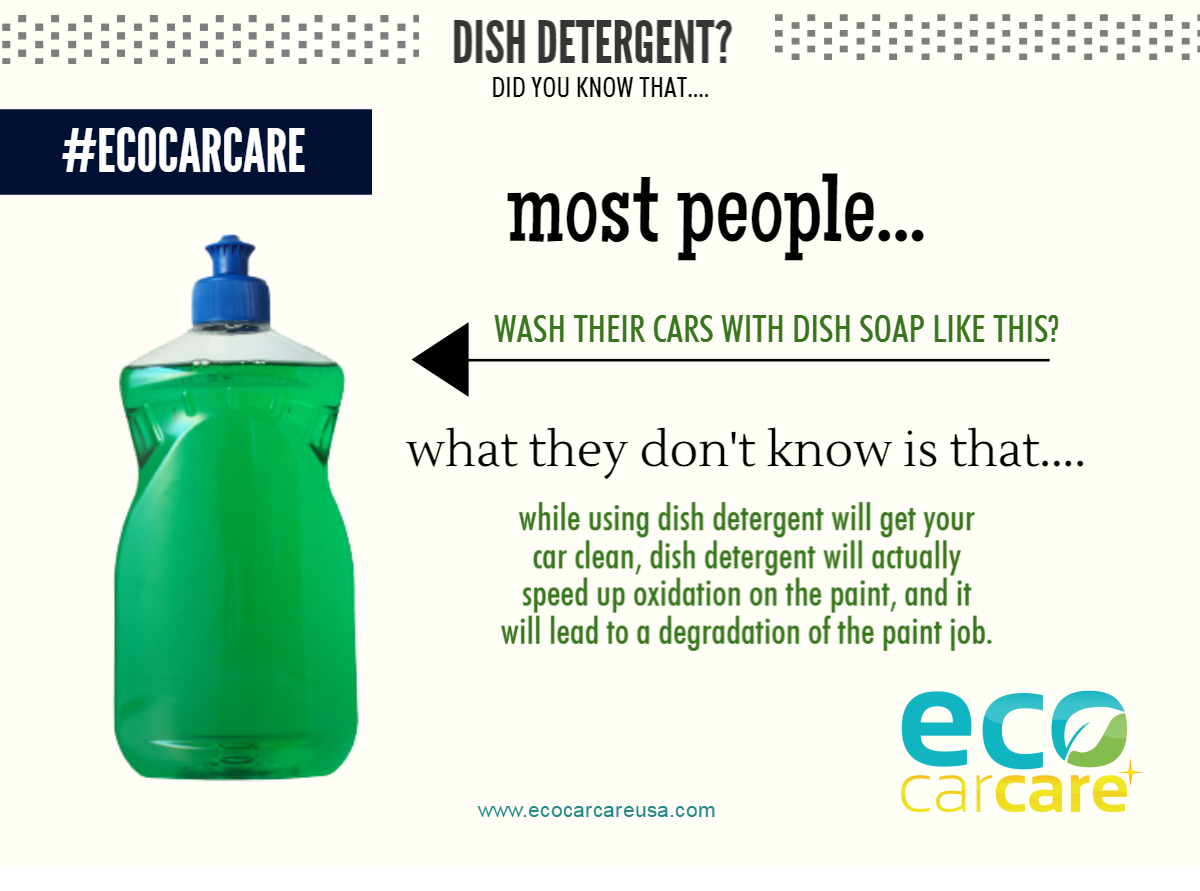
Can you use dish soap to wash your car?
Yes, you can use dish soap to wash your car once in a while. It will remove dirt, road film, and grease from the body. It will not usually damage a healthy clear coat after one careful wash.
The problem is repeated use. Dish soap is made to break down food oils on plates. Car paint needs some protection from wax, sealants, or ceramic coatings. Strong grease-cutting soap can slowly strip that protection.
A car’s clear coat is like a thin shield over the colored paint. It helps guard against sunlight, water spots, bird droppings, road salt, and light chemical damage. Dish soap does not instantly destroy this layer, but frequent use can leave the surface more exposed.
So, can you use dish soap to wash your car every week? It is not a good habit. Use a shampoo made for cars whenever possible.

Why dish soap is not the best car wash soap
Dish soap and car wash shampoo have different jobs. Dish soap is designed to remove cooking oil from hard kitchen surfaces. Car shampoo is designed to lift dirt while helping protect automotive paint.
Here are the main concerns:
• It can remove wax and sealants. Dish soap may break down some surface oils and protection products.
• It can dry rubber and plastic trim. Repeated exposure may make older trim look dull or chalky.
• It may reduce lubrication. Car shampoos help a wash mitt glide over paint. Less lubrication can increase the chance of fine scratches.
• It can leave residue. Some dish soaps include fragrances, dyes, or additives that are not ideal for vehicle surfaces.
• It may be too strong for delicate finishes. Matte paint, vinyl wraps, and custom coatings need special care.
Modern automotive paint is tough, but it is not scratch-proof. Most wash damage comes from dirt being rubbed across the surface. A soap that provides good slip helps reduce that risk.
This is why professional detailers use the two-bucket method. One bucket holds soapy water, and the other holds clean water for rinsing the mitt. That simple step keeps grit away from the paint.

When can you use dish soap to wash your car?
There are times when dish soap can be useful. For example, you may need to clean a car before applying a new wax, sealant, or paint coating. In that case, removing old wax can be helpful.
Dish soap may also work during an urgent cleanup. A bird dropping, spilled drink, or greasy mark should not sit on paint for days. If dish soap is the only cleaner available, a gentle, well-rinsed wash is better than leaving harmful material on the surface.
You might also use a small amount to clean:
• Greasy tools or engine parts away from painted surfaces
• Rubber floor mats
• Heavy grime on a work vehicle
• Old wax before a planned paint correction
Still, use caution. Dish soap should not be your first choice for a new car, a ceramic-coated car, or a vehicle with a fresh wax job.
If you wonder, can you use dish soap to wash your car before waxing, the answer is sometimes yes. However, a dedicated surface prep shampoo or automotive wax remover gives you more control and less risk.

How to wash your car with dish soap safely
If dish soap is your only option, use a small amount and wash in the shade. A hot panel can dry soap before you rinse it, which may create streaks and water marks.
Follow these steps:
Park in a cool, shaded place. Avoid washing on hot paint or in direct midday sun.
Rinse the entire car first. Use a hose to remove loose sand, dust, and grit.
Add only a few drops of mild dish soap to a bucket of clean water. Do not pour a large amount into the bucket.
Use a clean microfiber wash mitt or a soft car sponge. Avoid old towels, rough brushes, and kitchen sponges.
Wash from the roof downward. The lower panels usually hold more dirt.
Clean one small area at a time. Rinse the mitt often in a second bucket of clean water.
Rinse the car well. Soap left on the surface can dry into streaks.
Dry with a clean microfiber drying towel. Do not let the car air-dry if your water leaves mineral spots.
Do not scrub hard. Let the water and soap loosen the dirt. Pressure and friction cause more paint damage than most people realize.
A common mistake is using the same sponge on the wheels and the paint. Brake dust can contain sharp metal particles. Keep wheel tools separate from bodywork tools.

A safer way to wash your car
A pH-balanced car shampoo is the better choice for routine washing. These products are made to clean road grime while maintaining a useful level of lubrication.
Look for a shampoo that offers:
• A pH-balanced formula
• Strong lubricity
• Easy rinsing
• No harsh solvents
• Compatibility with waxes and sealants
You do not need the most expensive product. A basic automotive shampoo, two buckets, a microfiber mitt, and a drying towel can produce excellent results.
The best routine is simple:
• Rinse the car well.
• Wash from top to bottom.
• Use straight, light passes instead of circular scrubbing.
• Rinse the mitt after each panel.
• Dry the car soon after rinsing.
• Apply wax or a paint sealant as needed.
Touchless automatic washes can also be useful when the vehicle is heavily muddy. However, some automatic systems use strong cleaners and brushes. Brush-style washes may create swirl marks, especially on dark paint.
Hand washing gives you more control, but only if your tools are clean. A careful wash with an affordable car shampoo is usually safer than a rough wash with premium soap.

Can dish soap damage car paint?
Dish soap is unlikely to ruin your paint after one normal wash. The bigger concern is repeated use, poor washing technique, or leaving the soap on the surface.
Paint damage often happens through several small problems:
• Washing a dry, dusty car
• Using a dirty towel
• Scrubbing with pressure
• Washing in direct sun
• Using one bucket for the whole car
• Drying with an old bath towel
Dish soap may also remove wax faster than a gentle car shampoo. Once that protection is gone, water may stop beading. The paint can then collect more contamination and become easier to stain.
If your car has a ceramic coating, follow the coating maker’s care instructions. Some coatings need a specific shampoo. Strong cleaners may reduce the coating’s water behavior, even if they do not remove the coating at once.
The same rule applies to vinyl wraps and matte finishes. These surfaces can show marks more easily than standard glossy paint. Use a product labeled for that finish.

What I learned from washing cars
One lesson I have seen again and again is that the product matters less than the process. A gentle soap used with a dirty sponge can scratch paint. A basic car shampoo used with clean tools can give a much better result.
I once used a kitchen sponge on a small, dirty section of a vehicle. The sponge looked soft, but it held grit against the surface. Under bright light, the panel showed fine lines that were not visible in the shade. That mistake taught me to focus on clean tools and light pressure.
Another common mistake is adding too much soap. More suds do not always mean more cleaning power. Too much soap can make rinsing harder and may leave a film behind.
My practical advice is simple:
• Rinse first, even when the car looks only slightly dirty.
• Use a clean mitt for paint.
• Keep a separate brush for tires and wheels.
• Wash in shade when possible.
• Never let soap dry on the car.
• Dry with a clean microfiber towel.
• Replace towels that feel rough or hold trapped grit.
These steps protect your paint far more than chasing a specific brand. Good technique is the real foundation of safe car care.

Dish soap versus car wash soap
The difference becomes clearer when you compare the two products.
| Feature | Dish soap | Car wash shampoo |
|---|---|---|
| Main purpose | Removing food oils | Cleaning automotive surfaces |
| Paint protection | May remove wax | Usually designed to preserve protection |
| Lubrication | Varies | Usually high |
| Best use | Occasional emergency cleaning | Regular vehicle washing |
| Finish compatibility | Limited | Often available for paint, wraps, and coatings |
| Rinsing | Can leave residue | Usually made for easy rinsing |
Dish soap can be effective because it is strong at removing grease. That does not make it the best choice for every surface. A car needs a cleaner that balances soil removal with paint safety.
If you wash your car only a few times each year, one dish soap wash is not likely to cause major harm. If you wash weekly, buy a proper car shampoo. The cost is small compared with paint correction or replacing faded trim.

Common mistakes to avoid
Even when you know can you use dish soap to wash your car, the wrong method can create problems. Avoid these mistakes:
• Washing under a hot sun. Heat dries soap and creates spots.
• Using dish soap at full strength. It wastes product and makes rinsing difficult.
• Scrubbing bird droppings. Soak them first and lift them gently.
• Using a pressure washer too close to the paint. High pressure can damage loose trim or old decals.
• Using household glass cleaner on every surface. Some formulas are not made for plastic, tint, or coated surfaces.
• Skipping the final rinse. Soap residue attracts dirt and leaves streaks.
• Letting dirty towels touch clean paint. Keep used and clean towels separate.
• Washing in circles with force. Straight, gentle passes make it easier to spot and remove contamination.
If the vehicle has heavy mud, rinse until the loose dirt is gone before touching the paint. This one step can prevent many fine scratches.
Frequently Asked Questions
Can you use dish soap to wash your car once?
Yes, one careful wash with diluted dish soap is unlikely to harm a healthy automotive finish. Rinse it well and consider applying wax or a sealant afterward if the old protection has been reduced.
Can you use dish soap to wash your car every week?
You can, but you should not. Weekly use may remove wax more quickly and can dry exterior trim over time, so a pH-balanced car shampoo is a safer choice.
Does dish soap remove car wax?
Dish soap may weaken or remove some wax, especially with repeated washing or a strong formula. It may not remove every layer in one wash, but it is not designed to protect wax.
Can you use dish soap on a ceramic-coated car?
It is better to use a shampoo approved for ceramic coatings. A mild dish soap wash may not cause immediate damage, but repeated use can affect the coating’s performance and water behavior.
Can you use dish soap to wash car windows?
A small amount of diluted dish soap can clean exterior glass, but it may leave a film if you use too much. Rinse well and dry with a clean glass towel.
What is the best soap for washing a car?
The best option is a pH-balanced automotive shampoo with good lubrication and easy rinsing. Choose a product that matches your finish, especially if the car has wax, a ceramic coating, or a vinyl wrap.
Conclusion
So, can you use dish soap to wash your car? Yes, but treat it as an occasional emergency option rather than your normal car wash soap. One careful wash should not ruin healthy paint, but regular use may strip wax, reduce lubrication, and dry exterior trim.
For the safest results, rinse first, use clean microfiber tools, work in the shade, wash from top to bottom, and rinse every trace of soap. When possible, choose a pH-balanced car shampoo made for automotive paint.
Take a few minutes to improve your washing method today. Your paint will stay cleaner, glossier, and easier to protect. Share your car washing tips or explore more vehicle care guides for practical ways to keep your finish looking its best.
