

Introduction
On most cars with an automatic transmission, “L” means Low. It tells the transmission to stay in a lower gear instead of shifting up through all available gears. This can give you more pulling power at low speeds and more engine braking on steep roads.
The exact meaning can vary by make and model. On some vehicles, L may mean Low gear, a specific low gear range, or a special drive mode. Always check your owner’s manual before using it for towing, hills, snow, or other demanding conditions.
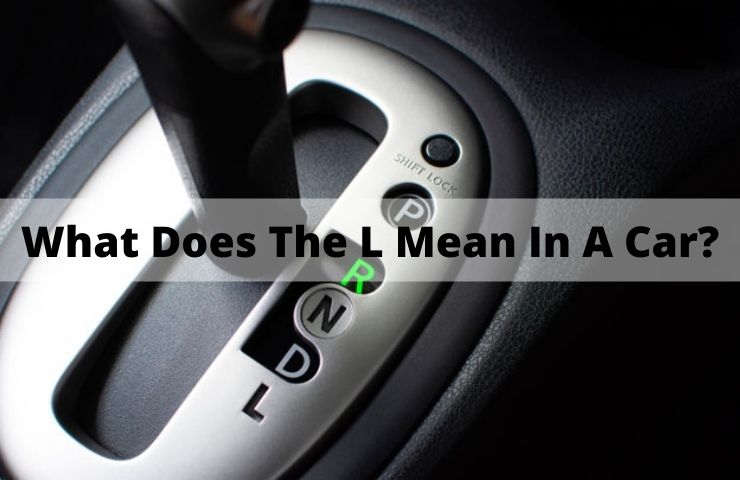
What Does L Mean on an Automatic Gear Shift?
L usually means Low gear or Low range on an automatic transmission. It limits the transmission to lower gears, often first gear or first and second gears.
A normal automatic transmission shifts through several gears as the car gains speed. In D, or Drive, the transmission chooses the gear for you. In L, the car holds a lower gear for stronger engine response.


The gear selector may show:
- P — Park
- R — Reverse
- N — Neutral
- D — Drive
- L — Low
- S — Sport or a special shift mode on some cars
- B — Increased engine braking on some hybrids
- Numbers such as 1, 2, or 3 — A maximum gear limit
The letter L does not usually mean the car is broken. It is most often a driver-selected transmission setting.
However, a letter L on the instrument panel may mean something else. It could be part of a warning message, a low-fluid alert, or a system indicator. The location of the symbol matters.
How Does Low Gear Work?
Low gear makes the engine turn more times for each turn of the drive wheels. This creates a mechanical advantage, much like using a small gear on a bicycle when climbing a hill.
In practical terms, Low can provide:
- More force at the wheels
- Better control at very low speeds
- Stronger engine braking when you release the accelerator
- Less automatic shifting on steep grades
- More control when pulling a load
The trade-off is higher engine speed. The engine may sound louder, and fuel use may increase. Using L on a flat road at normal highway speed is usually unnecessary and may cause excessive engine speed.
Low gear does not make the brakes stronger. It only helps slow the car through the drivetrain. You still need the brake pedal when traffic, road conditions, or speed require it.

When Should You Use L on a Car?
Use L when you need low-speed control, extra pulling force, or engine braking. Common situations include steep hills, slow descents, heavy loads, and some slippery conditions.
Driving down a steep hill
Selecting L can help the engine slow the vehicle. This is called engine braking. It reduces the need to ride the brake pedal, which may help limit brake heat on a long descent.
Before going downhill, select the correct low range. Do not wait until the vehicle has gained too much speed. Keep your speed controlled with the brakes, and follow the vehicle maker’s instructions.


Climbing a steep hill
Low gear can help prevent the transmission from shifting repeatedly between gears. This is sometimes called gear hunting. Holding a lower gear can keep the engine in a stronger operating range.
The best setting depends on the vehicle. Some cars use L to hold first gear. Others allow the transmission to use several low gears while preventing higher gears.
Towing or carrying a heavy load
A lower gear may help when towing a trailer or carrying a heavy load, especially on a steep road. It can reduce unwanted upshifts and improve control.
Do not assume that L alone makes a vehicle safe for any trailer. Check the vehicle’s towing limits, trailer brakes, weight ratings, and owner’s manual.
Driving slowly on loose surfaces
Low gear can help maintain steady movement on some rough roads, gravel paths, or uneven surfaces. Smooth throttle control matters more than speed.
On snow or ice, follow the vehicle manual. Low gear may help in some cases, but too much wheel torque can also cause wheel spin. Modern vehicles may have a dedicated Snow, Winter, or Mud mode that works better than L.

When Should You Avoid Using L?
Avoid using L for ordinary highway driving unless the owner’s manual specifically allows it. Low gear keeps engine speed higher and may make the car noisy, less efficient, and harder to drive smoothly.
You should also avoid these common mistakes:
- Selecting L at high speed without checking the manual
- Leaving the car in L after a steep hill
- Using L as a substitute for regular brakes
- Expecting L to fix a slipping or damaged transmission
- Using L on ice without understanding how the vehicle responds
- Assuming every car uses L in the same way
Many modern transmissions include safeguards. The car may refuse an unsafe downshift or choose a higher gear automatically. Even so, electronic protection is not a reason to ignore the vehicle manual.
If the engine suddenly races, the car jerks hard, a warning light appears, or the transmission will not shift normally, move to a safe place and arrange a professional inspection.

How Do You Use L Safely?
Use L only when the road or load calls for more control. The exact steps depend on the transmission design, but this general method works for many automatic cars.
- Reduce speed first. Slow down before selecting L, especially on a steep road.
- Check the owner’s manual. Confirm what L does in your model.
- Move the selector to L. Some vehicles let you do this while moving. Others require a low speed.
- Use gentle throttle input. Avoid sudden acceleration, especially on wet, snowy, or loose roads.
- Watch engine speed. If the engine speed rises sharply, slow down or select a higher range as allowed.
- Use the brake pedal when needed. Engine braking is support, not a replacement for the brakes.
- Return to D when conditions change. Shift back when the hill, load, or low-speed section ends.
The correct result is steady control without harsh noise, repeated shifting, or excessive engine speed. If the car behaves differently from the manual’s description, stop using the setting and have the vehicle checked.

What Is the Difference Between L, 1, 2, and 3?
L, 1, 2, and 3 all relate to lower transmission ranges, but they are not identical on every vehicle.


| Selector marking | Common meaning | Typical use |
|---|---|---|
| L | Low range or low gear operation | Steep hills, slow control, heavy loads |
| 1 | Holds first gear | Very slow travel or maximum engine braking |
| 2 | Holds second gear or prevents higher shifts | Moderate hills or slippery starts |
| 3 | Limits the transmission to third gear | Rolling hills, towing, or avoiding frequent shifts |
| S | Sport or manual-style mode | More responsive shifting, depending on the car |
| B | Increased regenerative or engine braking | Some hybrids and electric vehicles |
These labels are not universal. For example, L may allow the transmission to shift between first and second gear, while “1” may hold only first gear. The owner’s manual is the final authority.
A vehicle with an eight-speed automatic may also use paddle shifters or “M1,” “M2,” and similar displays. Those settings usually refer to a selected gear, not the same Low mode found on older automatic transmissions.
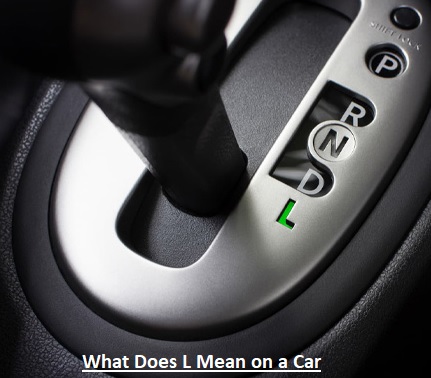
Does L Mean Low Range on a Hybrid or Electric Car?
Sometimes, but not always. Hybrid and electric vehicles may use L for increased deceleration, stronger regenerative braking, or a low-speed drive setting.
Regenerative braking uses the electric motor to slow the vehicle and send some energy back to the battery. In that case, L may not be a traditional low transmission gear because many hybrids and electric vehicles do not use a conventional multi-speed automatic transmission.
Some vehicles use B instead of L for stronger downhill braking. Others provide settings through a touchscreen, paddle shifters, or drive-mode controls.
Do not assume that L has the same effect across gasoline cars, hybrids, and electric vehicles. Look for the explanation in the vehicle’s manual.
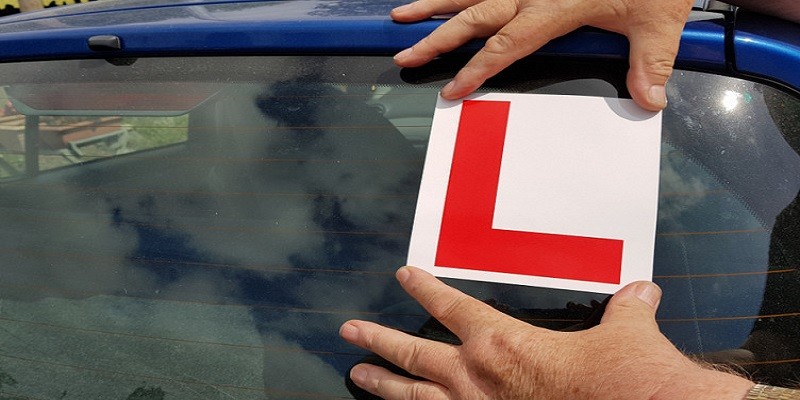
What Does L Mean on the Dashboard?
The meaning depends on where the L appears.
L beside the gear selector
This usually means the transmission is in Low mode. It is a selected driving range, not a fault.
L on the instrument display
It may show the current transmission range, selected gear, or a special drive mode. Some vehicles display a letter and number together, such as L1 or L2.
A warning symbol that looks like an L
A warning icon may only resemble the letter L. It could indicate low oil pressure, low coolant, a lighting fault, or another issue. Read the text message and check the manual rather than guessing from the shape alone.
If the L indicator flashes, appears with a check-engine light, or comes with poor shifting, have the vehicle diagnosed. A steady L selected by the driver is usually normal; a flashing transmission indicator may signal a fault.

Does Driving in L Damage the Car?
Using L correctly should not damage the transmission. The setting exists for situations where lower gears improve control or pulling power.
Damage becomes more likely when a driver uses the setting incorrectly, such as:
- Keeping the vehicle in L at high speed
- Allowing the engine to over-rev
- Ignoring harsh shifts or warning lights
- Using low gear to control speed while neglecting overheated brakes
- Towing beyond the vehicle’s rated capacity


Most modern automatic transmissions include controls that prevent certain harmful shifts. Still, those controls differ by vehicle, and they do not repair worn fluid, damaged clutches, or other mechanical problems.
If you smell burning fluid, see smoke, hear grinding, or lose drive power, stop when safe. Do not continue testing L on the road.
Common Questions About L on a Car
Can I shift from D to L while driving?
Often, yes, but the safe speed and procedure vary. Many vehicles permit the change at low or moderate speeds. Others may require the car to be nearly stopped. Check the owner’s manual before shifting while moving.
Will L make my car go faster?
No. L usually improves low-speed pulling force, not top speed. The car may respond more quickly at low speeds, but it will reach high engine speed sooner and may not shift into higher gears.
Does L help with braking?
It can help slow the vehicle through engine braking. It does not replace the brake pedal, and it may not provide enough stopping force for an emergency.
Should I use L in snow?
Not automatically. L may help you move slowly and reduce unwanted shifts, but it can also increase wheel torque and cause wheel spin. Use the snow or winter mode if your vehicle has one, and drive gently.
Why does my car stay in L?
The transmission may be operating normally because L is designed to limit higher gears. Move the selector back to D when you no longer need low-range operation. If the selector is in D but the display remains in L, or if the transmission will not shift, seek service.
Key Takeaways
- L usually means Low gear or Low range.
- It can improve control on steep hills and provide stronger engine braking.
- It may help with heavy loads, towing, and slow travel.
- It is not meant for normal high-speed driving.
- L has different functions in some hybrids and electric vehicles.
- The owner’s manual gives the correct meaning for your specific car.
- A flashing indicator, harsh shifting, or loss of power may require professional service.
Conclusion
When you see L on a car’s gear selector, it usually means Low. Use it for controlled, low-speed driving, steep hills, engine braking, or certain heavy-load situations. Return to D when normal driving resumes.
Because manufacturers use different transmission systems, confirm the details in your owner’s manual. If L appears as a warning rather than a selected gear, or if the car shifts harshly, have the vehicle inspected.
