

You can test a car battery with a voltmeter, a load tester, or a professional battery analyzer.
Learning how can i test a car battery can save you time, money, and a frustrating no-start morning. A few simple checks can show whether the battery is charged, weak, damaged, or being drained by another electrical fault.
What You Need to Test a Car Battery
Before learning how can i test a car battery, gather the right tools. Most home tests need only a digital multimeter, but extra tools can provide a clearer answer.
You may need:
• Digital multimeter with DC voltage settings
• Safety glasses and work gloves
• Battery terminal brush
• Battery charger
• Load tester or electronic battery tester
• Flashlight
• Vehicle owner’s manual
A digital multimeter is the best starting point. It measures battery voltage without placing a heavy load on the battery. A load tester goes further by checking how the battery performs when it must deliver power.
Always work in a ventilated area. Keep sparks, cigarettes, and open flames away from the battery. Lead-acid batteries can release hydrogen gas, which can ignite.
How Can I Test a Car Battery With a Multimeter?
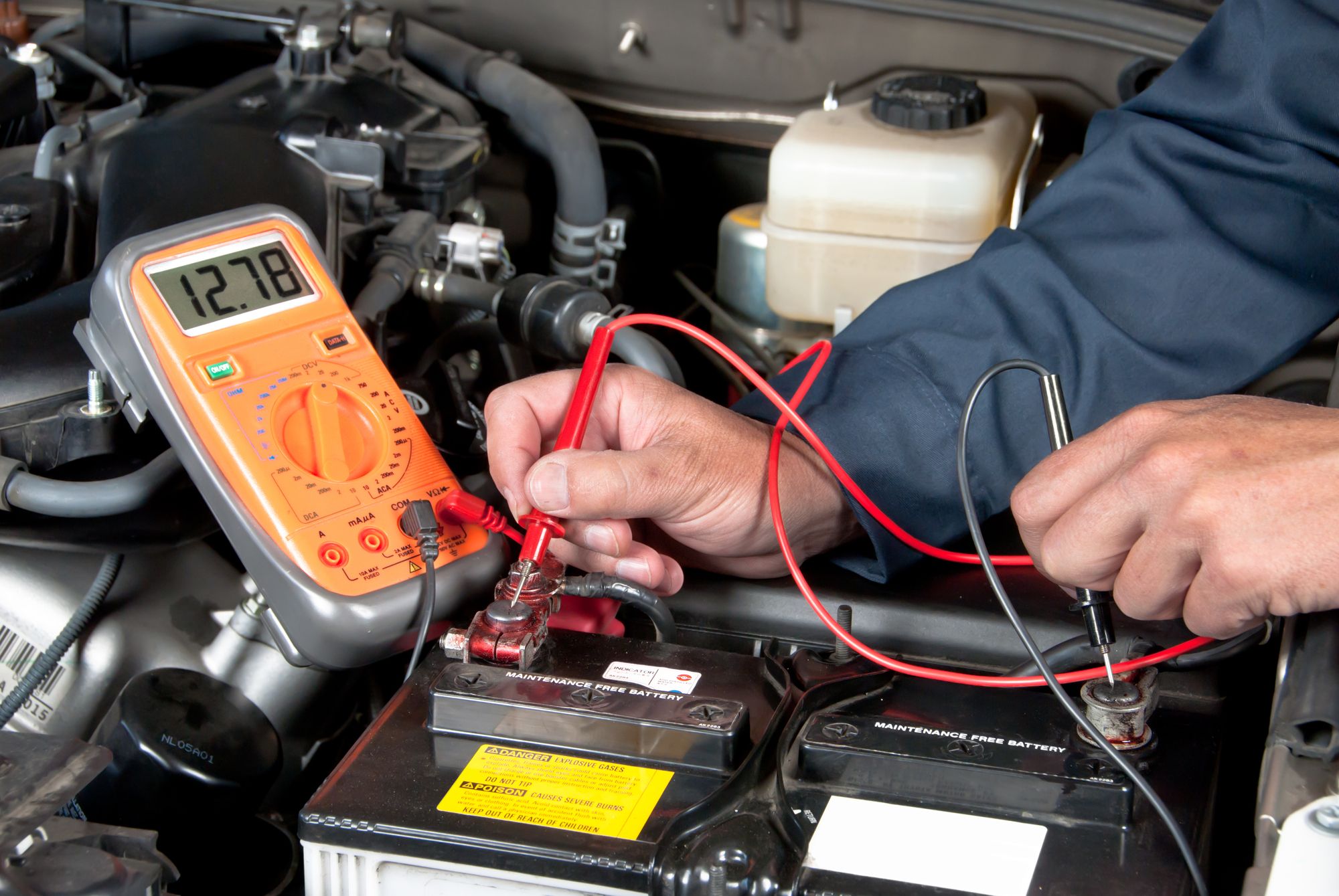
Testing a car battery with a multimeter is simple. The most useful test checks the battery after the vehicle has been off for several hours.
Follow these steps:
- Turn off the engine, lights, radio, heater, and accessories.
- Let the car sit for at least one hour. Overnight is even better.
- Set the multimeter to DC volts.
- Choose a voltage range above 12 volts if the meter is not automatic.
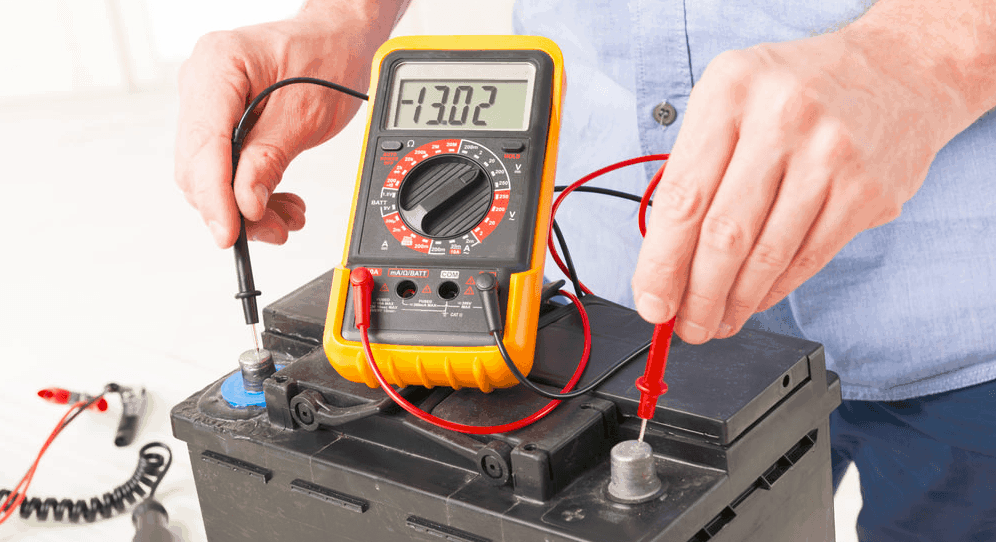
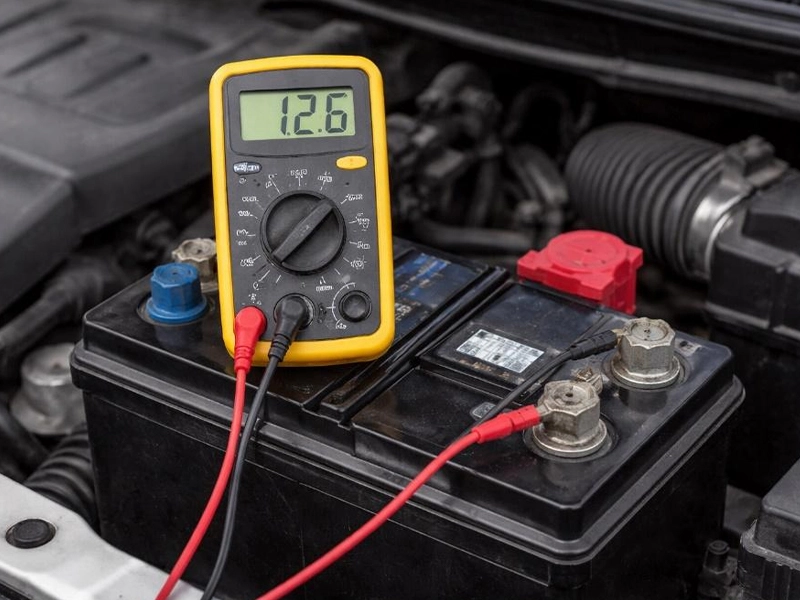
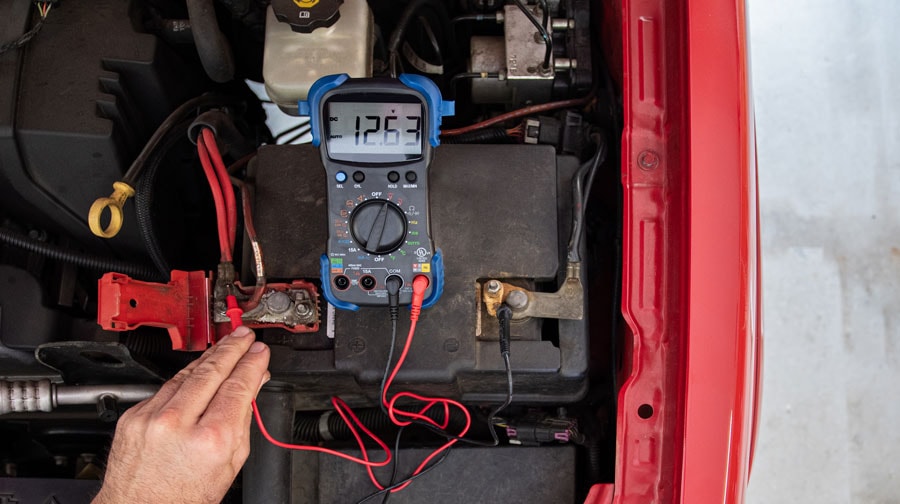
- Touch the red probe to the positive battery terminal.
- Touch the black probe to the negative battery terminal.
- Read the number on the display.
The positive terminal usually has a plus sign and a red cover. The negative terminal often has a minus sign and connects to the vehicle body through a ground cable.
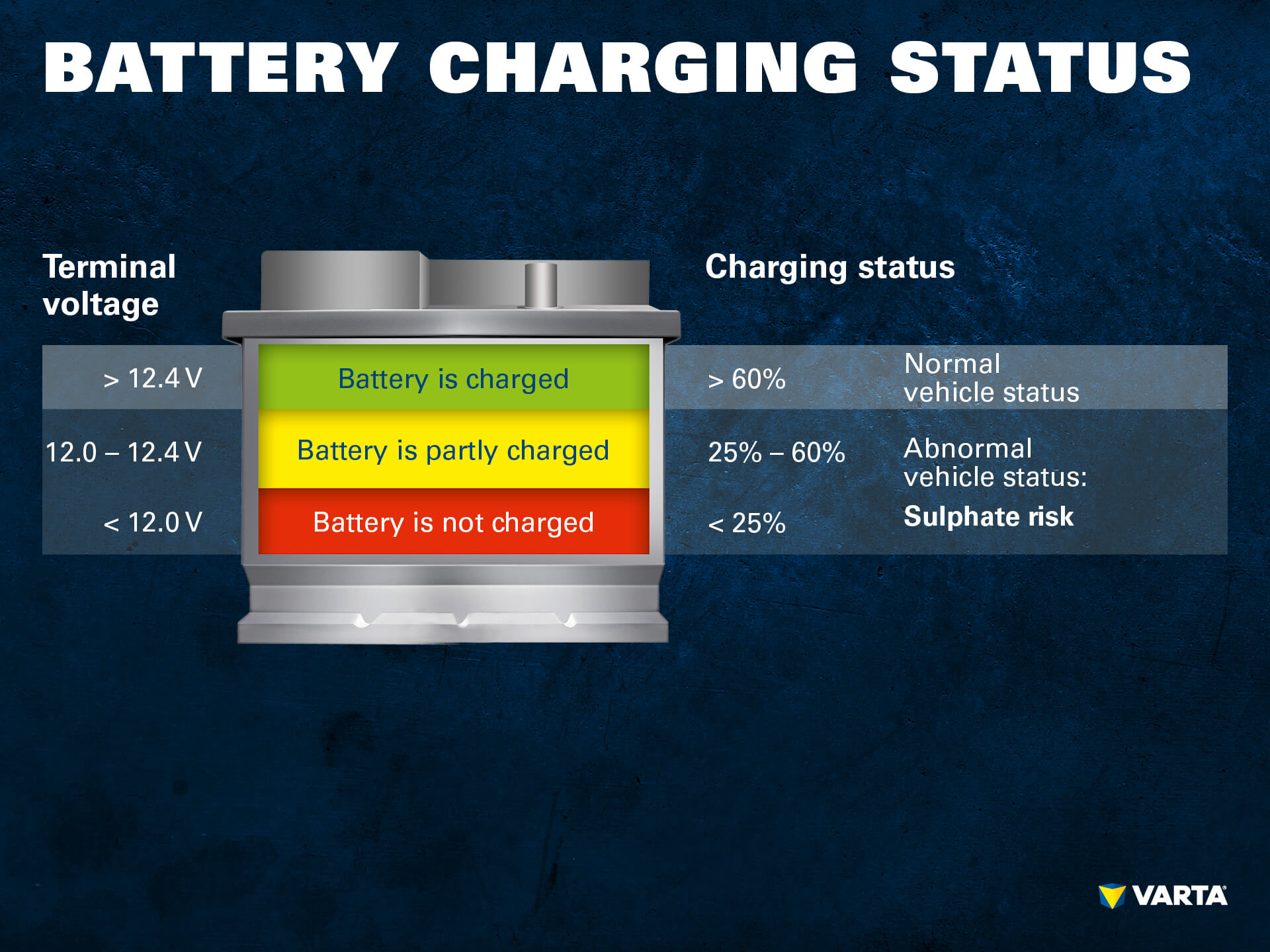
A healthy, fully charged 12-volt battery should usually read about 12.6 to 12.8 volts at rest. The exact number can vary with temperature, battery design, and recent driving conditions.
Use this guide:
| Resting voltage | Approximate charge | Likely condition |
|---|---|---|
| 12.6 to 12.8 volts | 100% | Fully charged |
| 12.4 volts | About 75% | Usable but not fully charged |
| 12.2 volts | About 50% | Partly discharged |
| 12.0 volts | About 25% | Very weak |
| Below 11.9 volts | Nearly empty | Charge and retest |
A low reading does not always mean the battery is bad. The alternator may not have charged it, or a light may have remained on. Charge the battery fully, let it rest, and test it again.
One mistake I often see is testing the battery right after driving. The charging system can leave a temporary surface charge. This may make the battery look healthier than it is. Waiting several hours gives a more useful result.

How to Test a Car Battery While the Engine Is Running
A battery test should also include the charging system. The alternator charges the battery while the engine runs and powers the vehicle’s electrical systems.
To check the charging voltage:
- Start the engine.
- Let it idle for a few minutes.
- Keep the multimeter connected to the battery terminals.
- Read the voltage.
- Turn on the headlights and blower motor.
- Check the voltage again at idle and at about 1,500 to 2,000 rpm.
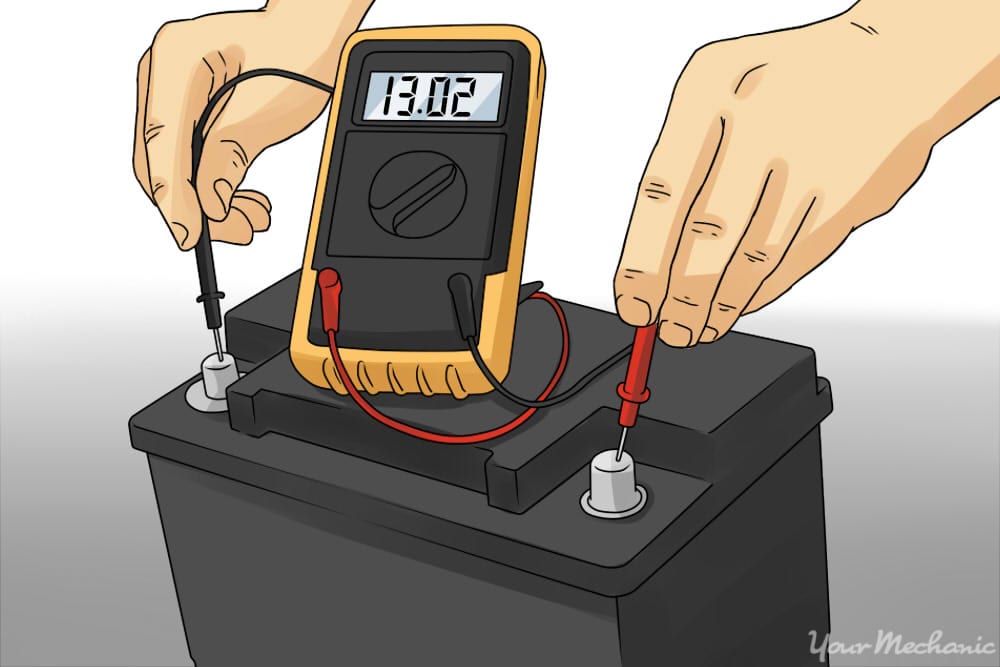
Most conventional charging systems should produce about 13.7 to 14.7 volts with the engine running. Some newer vehicles use smart charging systems, so their voltage may change during normal operation.
A reading below about 13 volts may suggest a charging problem, a loose belt, poor cable connection, or a weak alternator. A reading above about 15 volts may point to a voltage regulator problem. Both conditions require further diagnosis.
Do not disconnect the battery while the engine runs. Older advice sometimes suggested this method, but it can damage modern vehicle electronics. A multimeter is safer and more accurate.
If the engine starts slowly and the running voltage is normal, the battery may be weak. If the battery keeps losing charge and the running voltage is low, inspect the alternator and charging circuit.
How Can I Test a Car Battery Under Load?
A resting voltage test tells you how much charge the battery has. It does not fully show how well the battery performs during engine starting. A load test measures that performance.
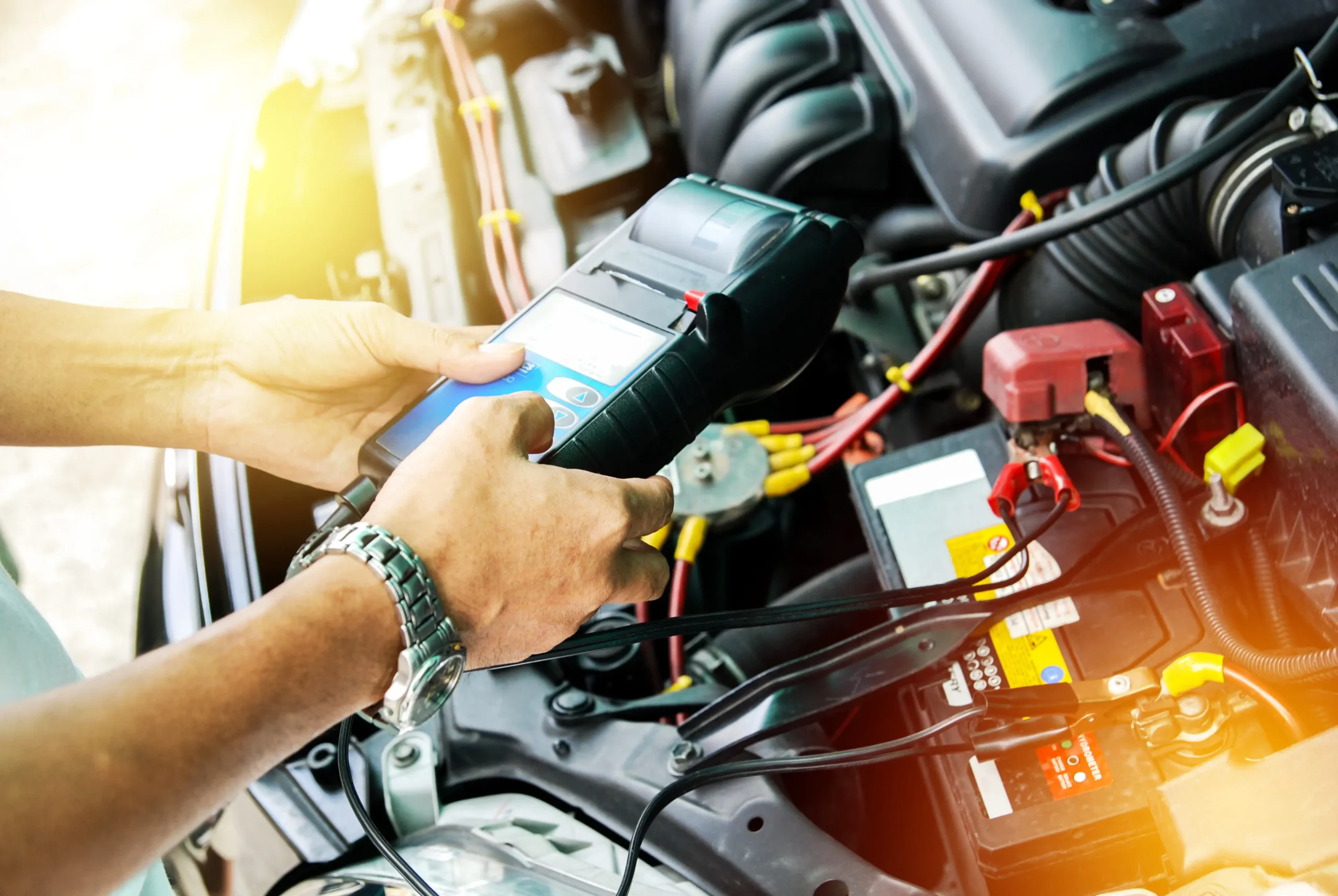
A traditional load tester places a controlled electrical demand on the battery. The test normally lasts about 15 seconds. The tester compares the voltage under load with the battery’s cold cranking amp, or CCA, rating.
A common rule is that the battery should stay above about 9.6 volts at 70 degrees Fahrenheit during a 15-second load test. Cold temperatures can change the result, so always follow the tester instructions and battery specifications.
The general process is:
- Fully charge the battery.
- Turn off the engine and all accessories.
- Connect the tester as directed.
- Check the battery’s CCA rating.
- Apply the correct load.
- Watch the voltage during the test.
- Stop the test if the battery drops too low or the tester indicates failure.
Never hold a load longer than the tester allows. Excessive loading can heat the battery and damage the tester.
A battery may show 12.6 volts at rest but fail under load. This often happens when the battery has sulfated plates or an internal fault. Think of resting voltage as checking a runner’s pulse and a load test as asking that runner to climb stairs.
Many parts stores offer a free electronic battery test. These testers estimate battery health, starting power, and remaining life. They are helpful, but they are not perfect. A battery that is very cold, very low, or recently charged may produce an inaccurate result.
How Can I Test a Car Battery Without a Multimeter?
If you do not have a multimeter, you can still look for warning signs. These checks cannot replace an electrical test, but they can help you decide whether the battery needs attention.
Watch for:
• Slow engine cranking
• Clicking when you turn the key
• Dim headlights before starting
• Interior lights that fade quickly
• Repeated jump-starts
• A swollen or cracked battery case
• Corroded or loose terminals
• A battery that is more than three to five years old
You can also ask an auto parts store, repair shop, or roadside service provider to test the battery. Many stores use an electronic conductance tester at no cost.
Do not rely on the color of a battery indicator alone. Built-in indicators usually measure only one cell, not the entire battery. A green indicator does not guarantee that the battery can start the engine.
Do not test battery strength by repeatedly turning the key. This drains the battery and can overheat the starter. If the car clicks once or cranks very slowly, stop and test the battery properly.
How to Check the Battery Terminals and Cables
A battery can be healthy while the vehicle still has a starting problem. Dirty, loose, or damaged connections can block current flow between the battery, starter, and charging system.
With the engine off, inspect:
• The positive and negative terminals
• The ground cable connection to the body
• The ground cable connection to the engine
• The positive cable near the starter
• Signs of white, blue, or green corrosion
• Cracks, swelling, or leaking around the battery case
Before cleaning a terminal, switch off the vehicle and remove the key. Wear eye protection. Do not allow a metal tool to touch the positive terminal and the vehicle body at the same time.
Clean light corrosion with a battery terminal brush. Make sure the connections are tight, but do not overtighten them. A damaged cable may need replacement rather than cleaning.
A useful voltage drop test can reveal hidden cable problems. While someone cranks the engine, measure voltage between the battery’s positive terminal and the starter’s positive connection. Then check between the battery’s negative terminal and the starter or engine block.
A large voltage drop suggests resistance in a cable or connection. The exact acceptable limit depends on the vehicle, but a total drop around 0.5 volts or more during cranking often deserves investigation.
This is one of the most important lessons when learning how can i test a car battery: a battery test is not the same as a complete starting-system test.
How Temperature Affects Car Battery Testing
Temperature affects both battery capacity and test results. Cold weather reduces the chemical activity inside a lead-acid battery, so the battery has less starting power when temperatures fall.
A battery may crank normally in warm weather but struggle during winter. In very hot weather, battery fluid can evaporate and internal corrosion can increase. Heat often shortens battery life, even though cold weather makes the problem more noticeable.
For the most reliable result:
• Test the battery near room temperature when possible.
• Use the tester’s temperature setting if it has one.
• Compare the result with the battery’s rated CCA.
• Do not charge or test a frozen battery.
• Replace a battery with a swollen, cracked, or leaking case.
A frozen battery can crack when charged. If you suspect freezing, move the vehicle to a warm place and inspect the case before connecting a charger.
Battery ratings also matter. A battery rated at 600 CCA should not be judged by the same standard as a smaller battery rated at 400 CCA. Use the label and the vehicle manufacturer’s specifications.
How Can I Test a Car Battery for a Parasitic Drain?
A parasitic drain occurs when an electrical device keeps using power after the vehicle is shut off. Some power use is normal because systems such as alarms, clocks, and computers remain active. Excessive drain can discharge a healthy battery overnight.
Common causes include:
• A glove box or trunk light that stays on
• An aftermarket stereo or alarm
• A phone charger left connected
• A faulty relay
• A control module that does not enter sleep mode
• A damaged wire
• A door, hood, or trunk switch that does not close
To test for a drain, the battery should be charged first. Then turn off the vehicle, close the doors, lock the car, and wait for the vehicle’s computers to go to sleep. This may take 20 to 45 minutes, depending on the vehicle.
A technician can connect an ammeter in series with the negative battery cable. The vehicle’s service information should provide the expected sleep current. Many modern vehicles need a very low reading, but some have higher normal draw.
Do not place a standard multimeter across the battery terminals while it is set to amps. This can create a short circuit and damage the meter. It can also blow the meter fuse.
If the drain is too high, technicians often remove one fuse at a time. When the current drops, the related circuit becomes a strong suspect. This test can be complex on newer vehicles, so professional help is wise.
Common Reasons a Car Battery Fails
Understanding battery failure makes test results easier to interpret. Most car batteries do not fail from one single cause. Age, heat, deep discharge, and poor maintenance often work together.
Common causes include:
Age
Most automotive batteries last about three to five years, although climate and driving habits can change that range. A battery may still start the car at four years but have little reserve left.
Repeated short trips
Short trips may not give the alternator enough time to replace the energy used during starting. Over time, the battery can remain partly discharged and develop sulfation.
Extreme heat
Heat speeds up chemical reactions and can damage internal parts. Hot climates often reduce battery life even when the vehicle starts easily.
Deep discharge
Leaving headlights or accessories on can drain the battery. A jump-start may get the vehicle moving, but a deeply discharged battery may need a slow, complete recharge.
Corrosion
Corrosion increases resistance at the terminals. It can cause slow cranking, charging problems, and misleading test results.
Incorrect battery size
A battery with the wrong physical size, CCA rating, or reserve capacity may not meet the vehicle’s needs. Start-stop vehicles may also require a specific AGM or enhanced flooded battery.
A battery can pass one test and fail soon after. Tests show the battery’s condition at that moment. They cannot predict every future internal failure.
How to Charge a Car Battery Before Testing
Testing a partly discharged battery can lead to the wrong conclusion. If the battery is safe to charge, use a compatible charger before performing a final test.
Choose a charger designed for the battery type. Some vehicles use flooded lead-acid batteries, while others use AGM or gel batteries. The charger should have the correct mode for that battery.
Basic charging steps include:
- Turn off the vehicle.
- Place the charger in a dry, ventilated area.
- Connect the red charger clamp to the positive terminal.
- Connect the black clamp to the negative terminal or approved ground point.
- Select the correct battery type and charging rate.
- Let the charger complete its cycle.
- Turn off the charger before removing the clamps.
A low charging rate is usually gentler than a high-rate boost. Follow the charger instructions and never charge a damaged, leaking, or frozen battery.
After charging, allow the battery to rest before taking a voltage reading. If the voltage falls quickly from a full reading to about 12.2 volts or lower, the battery may have poor capacity.
Charging a failing battery may restore voltage for a short time. It does not repair damaged plates or an internal short.
What Battery Test Results Really Mean
A single number rarely tells the entire story. Combine the resting voltage, cranking behavior, charging voltage, and physical condition.
Use this simple guide:
• About 12.6 volts at rest and normal cranking: The battery is likely healthy.
• About 12.2 volts at rest: Charge it fully and retest.
• Normal resting voltage but slow cranking: Check the load test, cables, and starter.
• Low voltage with the engine running: Inspect the alternator and charging system.
• Battery passes but goes dead overnight: Look for a parasitic drain.
• Swollen or leaking case: Replace the battery and avoid charging it.
• Good battery test but one loud click: Inspect the starter circuit.
The vehicle’s symptoms matter. A rapid clicking sound often means low battery voltage or poor connection. A single click may point to the starter solenoid or starter motor. No sound at all may involve the ignition switch, neutral safety switch, relay, or wiring.
When testing a car battery, avoid replacing parts based on one symptom alone. Good diagnosis follows the evidence from several tests.
Safety Tips for Testing a Car Battery
Car batteries are useful but hazardous. They can produce explosive gas, corrosive acid, and very high short-circuit current.
Follow these safety rules:
• Wear safety glasses when working near the battery.
• Keep flames, sparks, and cigarettes away.
• Remove metal jewelry before handling the battery.
• Use insulated tools when possible.
• Connect positive and negative leads correctly.
• Do not place tools on top of the battery.
• Never test a frozen, cracked, or leaking battery.
• Keep children and pets away from the work area.
• Follow the vehicle and tester instructions.
If acid touches your skin, rinse with plenty of clean water. If it reaches your eyes, flush them immediately and seek medical care.
Some vehicles have batteries in the trunk, under a seat, or beneath the hood with remote test points. Use the manufacturer’s recommended connection points. This is especially important on vehicles with battery monitoring systems.
Stop the test if the battery becomes hot, swells, leaks, or produces a strong rotten-egg smell.
When to Replace the Battery
Replace the battery when it fails a proper load or electronic test, cannot hold a charge, or has physical damage. A battery with a cracked case, severe swelling, or leakage is not safe to keep in service.
Consider replacement when:
• The battery fails after a full charge.
• The resting voltage drops quickly after charging.
• The engine cranks slowly in normal weather.
• The battery repeatedly needs a jump-start.
• The case is swollen or damaged.
• The battery is past its expected service life.
Choose a replacement with the correct group size, terminal layout, CCA rating, and reserve capacity. Some vehicles need battery registration after installation. This process tells the vehicle’s charging system that a new battery is installed.
Vehicles with start-stop systems may need an AGM or EFB battery. Installing the wrong type can shorten battery life and cause charging problems.
Recycle the old battery through an auto parts store, recycling center, or approved collection site. Automotive lead-acid batteries contain valuable materials and should not go into household trash.
Frequently Asked Questions About How Can I Test a Car Battery
How can I test a car battery at home?
Use a digital multimeter to measure voltage across the battery terminals with the engine off. A fully charged 12-volt battery usually reads about 12.6 to 12.8 volts after resting.
Can I test a car battery while the engine is running?
Yes. With the engine running, measure the voltage at the battery terminals to check the charging system. Many vehicles show about 13.7 to 14.7 volts, but smart charging systems may vary.
How can I test a car battery without a multimeter?
Look for slow cranking, clicking, dim lights, corrosion, or repeated jump-starts. For a reliable answer, have an auto parts store or repair shop perform a battery and charging-system test.
What voltage means that a car battery is bad?
A reading below about 12.0 volts after the battery has rested suggests a major discharge or possible failure. Charge the battery and test it again before replacing it.
How long should a car battery last?
Many car batteries last about three to five years. Climate, driving habits, maintenance, vibration, and battery type can make the actual life shorter or longer.
Can a car battery have 12 volts and still be bad?
Yes. A battery can show normal resting voltage but fail under the heavy load required to start the engine. A load tester or electronic battery analyzer can reveal this problem.
Should I replace a battery that passes a test?
Not always. If it passes a proper test and the vehicle starts normally, continue using it. Replace it if it has physical damage, repeatedly loses charge, or causes starting problems despite passing a basic test.
Conclusion
Testing a car battery starts with a resting voltage check, but the best diagnosis also includes a load test, charging-system test, cable inspection, and parasitic-drain check. A fully charged battery often reads about 12.6 volts at rest, while a running vehicle commonly shows roughly 13.7 to 14.7 volts.
Use safe tools, test under the right conditions, and do not replace the battery based on one reading alone. If the results remain unclear, a professional battery analyzer can quickly separate a weak battery from an alternator, starter, cable, or electrical-drain problem. Try these checks before your next no-start situation, and share your battery-testing experience or questions in the comments.