

A car may squeak when you turn because a steering, suspension, brake, tire, or belt part is rubbing or working under extra load. The cause is often minor, such as a dry rubber bushing. But a worn ball joint, tie rod, wheel bearing, or steering part can affect control and needs prompt service.
The sound’s timing gives the best clue. A squeak while turning at low speed may point to the suspension or steering system. A squeal when the engine runs may come from a belt. A click during sharp turns may suggest a constant-velocity (CV) joint rather than a simple squeak.
Avoid guessing based on sound alone. Check when the noise happens, whether the steering feels normal, and whether the car pulls, shakes, or leaks fluid.
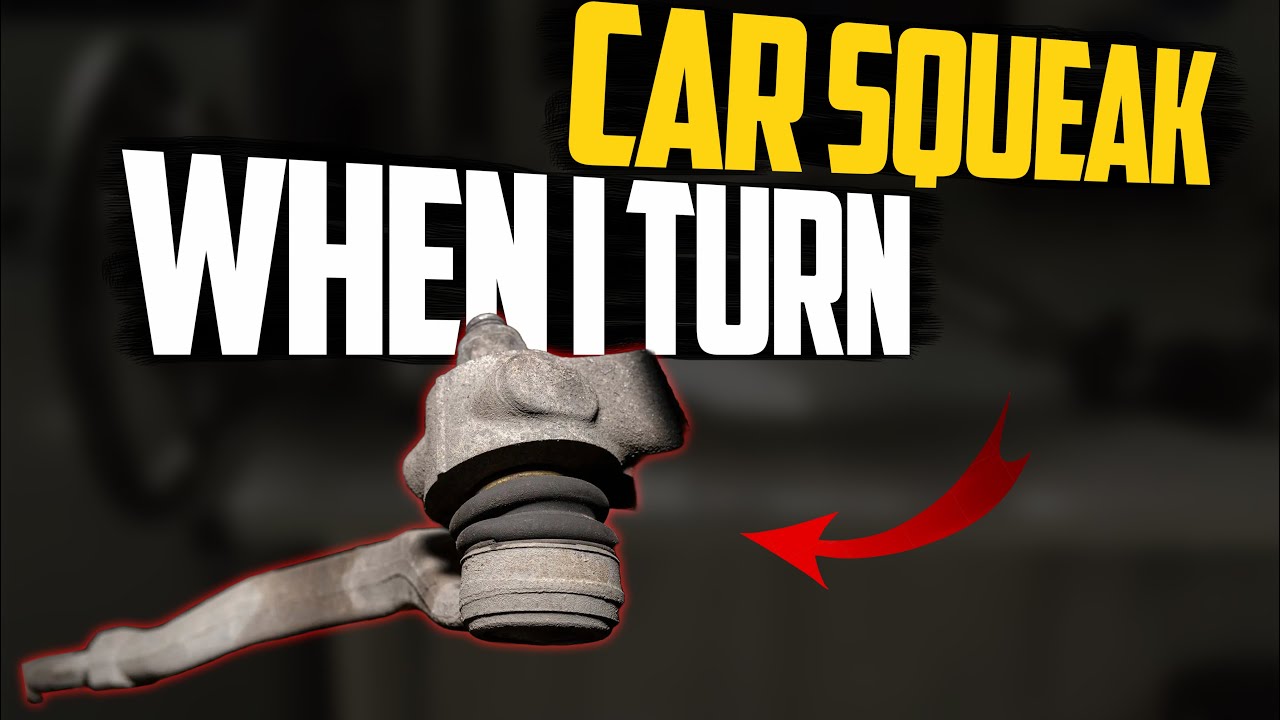
What the Squeak Sounds Like and When It Happens
The sound’s pattern can narrow the cause before a mechanic inspects the car. Pay attention to whether the car is moving, whether the steering wheel is near full lock, and whether the sound changes with speed.


| What you notice | Possible cause |
|---|---|
| Squeak while turning the wheel while parked | Strut mount, steering joint, tire scrub, power steering load, or belt |
| Squeak during slow turns over bumps | Control-arm bushing, sway-bar bushing, ball joint, or strut mount |
| Squeal only when the engine is running | Serpentine belt, belt tensioner, or pulley |
| Clicking during tight turns while moving | Outer CV joint |
| Scraping or rubbing during turns | Tire contacting the liner, bent brake shield, or loose underbody part |
| Noise with vibration or steering looseness | Tie rod, ball joint, wheel bearing, or other safety-related fault |
| Noise after rain or a car wash | Temporary brake surface rust or moisture on a belt may be involved |
A squeak that occurs only when the front suspension moves usually differs from a noise that follows engine speed. Ask someone to listen from outside the vehicle, but keep them clear of moving wheels and traffic.
Turning while parked versus turning while moving
Turning the wheel while the car is stopped places high force on the steering system and makes the tires drag across the pavement. Some vehicles may make a brief tire scrub or light groan in this situation.
Do not hold the steering wheel against full lock for more than a moment. On vehicles with hydraulic power steering, this can sharply increase pump pressure and noise. Electric power steering systems do not use hydraulic fluid, but they can still make normal motor or tire sounds under heavy load.
A noise that happens only while parked is less likely to be a CV joint. A noise that appears during a moving turn, especially with clicking, deserves closer inspection.
Squeak, squeal, click, and grind are not the same
- Squeak: Often comes from rubber, a dry joint, or light friction.
- Squeal: May come from a belt or brake contact.
- Click or pop: Can indicate a CV joint, spring, or steering joint.
- Groan: May come from power steering load, a strut bearing, or tire scrub.
- Grind: Can indicate metal contact, a damaged bearing, or a brake problem.
Sound descriptions are useful clues, not a final diagnosis.

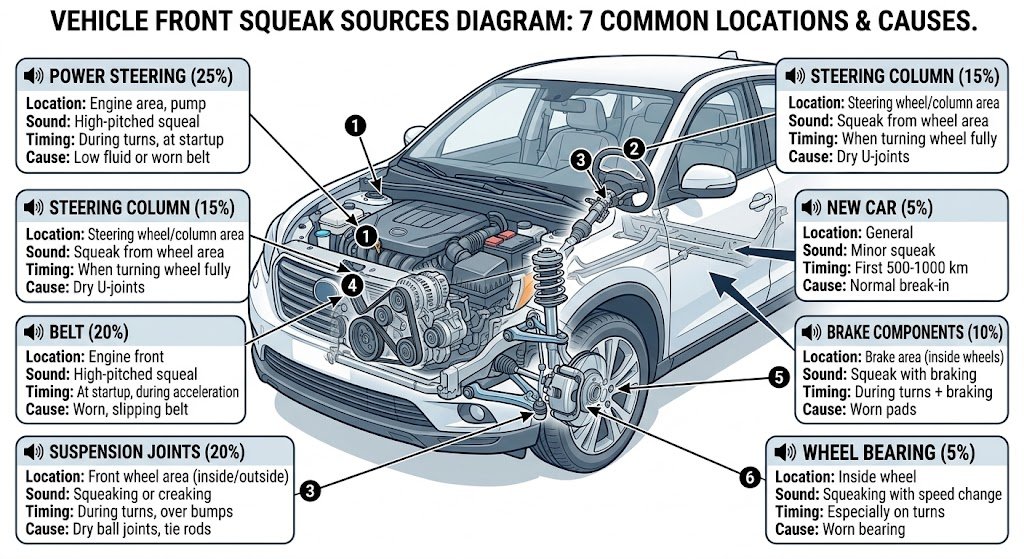
Common Reasons a Car Squeaks When Turning
The most common causes involve parts that move, twist, or carry extra weight during a turn. The correct repair depends on the vehicle’s design, mileage, road conditions, and maintenance history.
Dry or worn suspension bushings
Rubber bushings cushion the control arms and sway bar. When a bushing dries, cracks, shifts, or wears out, it may squeak as the suspension twists.
This noise often appears when you turn into a driveway, cross a speed bump, or enter a parking lot. It may be louder in cold or dry weather. A visual check may show cracked rubber, but some worn bushings look normal until the suspension is loaded.
Do not spray random lubricant on a bushing. Some rubber parts can swell or deteriorate when exposed to petroleum-based products. A technician should identify the material and use a compatible lubricant only when the part is designed for lubrication. A worn bushing usually needs replacement, not a temporary spray.


Strut mount or strut bearing problems
Many front-wheel-drive cars use a MacPherson strut. The upper strut mount and bearing allow the strut to turn with the steering.
A worn or dry strut bearing can make a squeak, groan, or popping sound as you turn the wheel. You may feel a small jump or bind through the steering wheel. The noise can be worse when the car is stationary.
Because the strut supports part of the vehicle’s weight, replacement requires proper equipment and safe procedures. Do not loosen the large spring-retaining hardware unless you have the correct tools and training. A compressed coil spring can release a dangerous amount of energy.
Ball joints, tie rods, and other steering joints
Ball joints and tie rods connect steering and suspension parts. Their protective boots keep grease in and dirt out. If a boot tears, grease can escape and water or grit can enter.
These parts may squeak, but they can also cause clunks, looseness, wandering, uneven tire wear, or poor steering response. A worn joint is not a cosmetic issue. If the joint has excessive play, the wheel can move out of its intended position.
Have the car inspected promptly if the squeak comes with:
- A loose or wandering steering feel
- A clunk when braking or accelerating
- Uneven or rapid tire wear
- A steering wheel that no longer stays centered
- A wheel that appears tilted
- A visible torn joint boot or grease leak
Low or contaminated hydraulic power-steering fluid
Some vehicles use hydraulic power steering. Low fluid can let air enter the system and cause whining, groaning, or squealing when you turn.
Check the owner’s manual before adding fluid. The correct fluid may be labeled power-steering fluid or may require a specified automatic transmission fluid. Using the wrong fluid can damage seals or other components.
Look for wetness near the power-steering pump, hoses, steering rack, and reservoir. A low level usually means there is a leak or another fault. Adding fluid without finding the cause only delays the repair.
Many newer vehicles use electric power steering and have no hydraulic reservoir. Do not add fluid to a container unless the owner’s manual identifies it as part of the steering system.
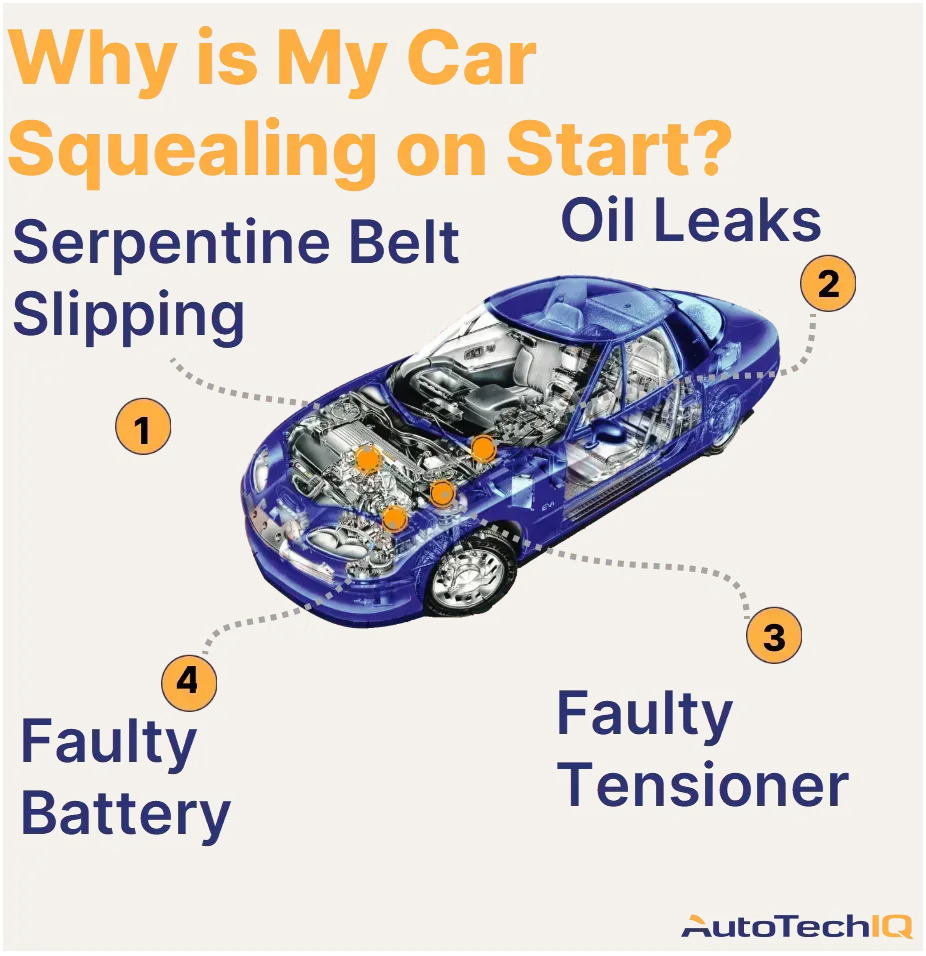
Serpentine belt, tensioner, or pulley
A serpentine belt drives accessories such as the alternator, air-conditioning compressor, and, on some vehicles, the hydraulic power-steering pump. A worn, loose, contaminated, or misaligned belt can squeal when the steering system places extra load on the engine.
This noise may happen while the car is stopped because the engine is still running. It often changes with engine speed and may also appear when the air conditioner is switched on.
Never place fingers, clothing, or tools near a running belt. A technician can check belt condition, tension, alignment, and pulley bearings. Belt dressing may hide the sound briefly but does not correct the underlying problem.
Tires rubbing on the wheel well
A tire may touch the inner fender liner, splash shield, suspension part, or bodywork during a sharp turn. This can happen after installing different wheels or tires, lowering the vehicle, damaging a liner, or bending a component after a pothole strike.


Look for fresh black marks or shiny scuffing on the tire sidewall and nearby plastic. Do not crawl under a car supported only by a jack. If the tire is damaged or the rubbing is severe, avoid driving until the cause is found.
Tire pressure also matters. An underinflated tire changes the tire’s shape and can increase steering effort and sidewall flex. Use the pressure listed on the driver-door placard, not the maximum pressure molded into the tire.
Brake dust shield or hardware contact
A thin metal shield behind the brake rotor can bend after road debris or wheel work. It may touch the rotor and create a scrape or squeak that changes during turns.
Loose brake hardware, a worn brake pad, or a stone trapped near the rotor can create similar sounds. A brake noise that comes with pulling, vibration, a hot wheel, or reduced stopping power needs immediate attention.
Do not reach behind a wheel after driving. Brake components can be hot enough to cause burns.
CV joint wear
A worn outer CV joint usually makes repeated clicking or popping during a tight, slow turn under power. It is more common during acceleration than while the car is parked.
Inspectors may find a split CV boot or grease sprayed around the inside of the wheel. Replacing a damaged boot early may sometimes prevent further wear, but a joint that is already clicking often needs more extensive repair.
A CV joint is less likely when the noise is a simple squeak that occurs only as you turn the steering wheel while stopped.
How to Check the Problem Safely
Start with observations that do not require lifting the vehicle or removing parts. Stop the test if the car feels unstable, the steering becomes difficult, or you hear grinding or a heavy clunk.
1. Record the exact conditions
Write down:
- Whether the car is parked or moving
- Whether the engine is running
- Whether the noise occurs left, right, or both ways
- Whether the steering is near full lock
- Whether the road is smooth, rough, wet, or cold
- Whether braking, accelerating, or using the air conditioner changes the sound
- Whether warning lights are on
This information can save diagnostic time.
2. Check the tires and wheel wells
With the car parked on level ground, inspect the front tires. Look for:
- Low pressure
- Uneven tread wear
- Cuts, bulges, or exposed cords
- Fresh scuff marks
- A loose plastic liner
- Debris near the tire
Use a tire-pressure gauge when the tires are cold. Correct the pressure according to the vehicle placard.


3. Check for steering-fluid leaks if applicable
Only do this if the vehicle has a hydraulic power-steering reservoir. Compare the level with the markings and inspect for wet hoses or fluid around the pump and steering rack.
Do not open a hot reservoir. Use only the fluid specified in the owner’s manual. If the level is very low, the steering is hard, or fluid is actively leaking, arrange service rather than continuing to drive normally.
4. Test the sound at low speed
In an empty parking area, drive slowly with the windows down. Make gentle left and right turns. Do not perform tight turns near pedestrians, parked cars, or traffic.
Then drive slowly over a small, normal road rise if the vehicle feels stable. Note whether the noise follows suspension movement or only steering angle.
Do not recreate a dangerous symptom at speed. A suspected wheel, steering, or suspension problem is not a reason to test the car aggressively.
5. Inspect only what you can see safely
You may look through the wheel openings for a damaged liner, torn rubber boot, leaking fluid, or a bent brake shield. Do not place any part of your body under a vehicle supported only by a jack.
A proper joint or wheel-bearing check may require lifting the vehicle and unloading the suspension in a specific way. That work is best left to a qualified technician unless you have the correct stands, tools, service information, and training.
When Is a Squeak Dangerous?
A squeak alone does not prove that a part is about to fail. However, a squeak combined with a change in steering, braking, or wheel position should be treated as a safety concern.
Stop driving and arrange help if you notice:
- Sudden loss of power steering or very heavy steering
- A steering wheel that feels loose or disconnected
- Grinding, repeated loud clunks, or metal-on-metal scraping
- A wheel that wobbles or appears tilted
- Severe vibration while turning
- A tire rubbing heavily or showing sidewall damage
- A brake warning light, steering warning light, or other critical warning
- Fluid rapidly leaking near a wheel or steering component
- The vehicle pulling sharply to one side
- Reduced braking performance
If the car remains stable and the sound is mild, a short drive to a repair shop may be reasonable. Keep the speed low and avoid highways until the problem is checked. If the steering or braking system behaves differently, use a tow service.
The National Highway Traffic Safety Administration recommends checking for safety recalls by vehicle identification number (VIN). A recall search does not diagnose a squeak, but it can identify an unresolved safety repair for your specific vehicle.

What a Repair Shop Will Check
A technician will usually begin by confirming the noise under the same conditions you described. The inspection may include the front suspension, steering joints, tires, brake hardware, power-steering system, belt drive, and wheel bearings.
The shop may place the vehicle on a lift, inspect boots and bushings, check steering and suspension play, examine tire contact marks, and listen while turning the wheel. If the noise is intermittent, a clear recording and written description can help.
A proper diagnosis should identify the failed part and the reason it caused the noise. For example, “front suspension noise” is not as useful as “right front strut bearing binds when the wheel turns.” Ask whether the repair requires an alignment.
An alignment is often needed after replacing or moving steering or suspension parts. It may not be needed for every repair, such as a simple belt replacement, but the technician should explain why it is or is not recommended.


Questions to ask before approving work
- Which part made the noise?
- Is the part worn, damaged, leaking, or simply in need of adjustment?
- Does the problem affect steering or braking safety?
- Is the vehicle safe to drive before repair?
- Will the repair change wheel alignment?
- Are both sides worn, or only one?
- What other damage caused the failure?
- What warranty applies to the repair?
Repair prices vary widely by vehicle, location, labor rate, and part choice. A shop should inspect the car before giving a reliable estimate.

Common Mistakes to Avoid
Spraying lubricant without finding the source
A spray can quiet a bushing or joint for a short time while allowing wear to continue. Some products can damage rubber or contaminate brake parts.
Adding the wrong power-steering fluid
Fluid types are not interchangeable across all vehicles. Check the owner’s manual or service information first.
Replacing the belt when the real problem is a pulley
A belt can squeal because a tensioner, idler pulley, or driven accessory is failing. Replacing only the belt may not solve the noise.
Ignoring a noise after a pothole or curb impact
A bent wheel, damaged tire, shifted liner, or altered alignment can cause rubbing and steering problems. Have the vehicle checked if the noise began after an impact.
Jacking up the car without proper support
A factory jack is for changing a tire under the instructions in the owner’s manual. It is not a safe substitute for properly rated jack stands during inspection or repair.
Assuming every turn noise comes from the steering wheel
The steering wheel only tells you when the noise occurs. The source may be a belt, tire, brake, suspension part, or drive axle.
Frequently Asked Questions
Why does my car squeak when I turn left but not right?
A one-sided squeak may come from a worn bushing, strut mount, steering joint, tire-rubbing point, or brake shield on one side. The direction of the turn changes the load on each part. A technician can compare both sides under the same conditions.
Why does my car squeak when I turn the wheel while parked?
The front tires scrub against the pavement, and the steering and suspension carry a high load when the vehicle is stationary. A brief tire sound can be normal, but repeated squeaking may indicate a strut bearing, dry bushing, hydraulic steering problem, or belt issue.
Can low tire pressure cause a squeak when turning?
Low pressure can increase tire flex and steering effort, and it may contribute to rubbing. It is not the only possible cause. Check the pressure on all four tires using the driver-door placard as the reference.
Is it safe to drive a car that squeaks when turning?
It depends on the other symptoms. A mild noise with normal steering, braking, and tire condition may allow a cautious trip to a shop. Do not drive normally if the car pulls, shakes, grinds, leaks, has loose steering, or shows tire damage.
Why does my car click instead of squeak when I turn?
Repeated clicking during a tight turn under acceleration often points to an outer CV joint. A single pop may come from a spring, strut mount, or suspension joint. The sound should be inspected rather than diagnosed by noise alone.
Bottom Line
A car squeaks when turning because a component is rubbing, twisting, or carrying extra load. Start by noting when the sound occurs, checking tire pressure and visible rubbing, and looking for warning signs. If steering feels loose or heavy, braking changes, a wheel wobbles, or the noise becomes a grind or clunk, stop driving and have the vehicle towed or inspected promptly.
Use the owner’s manual for fluid type, tire pressure, and lifting instructions. A qualified technician can separate a harmless tire scrub from a worn steering or suspension part before it becomes a larger safety problem.


