

Introduction
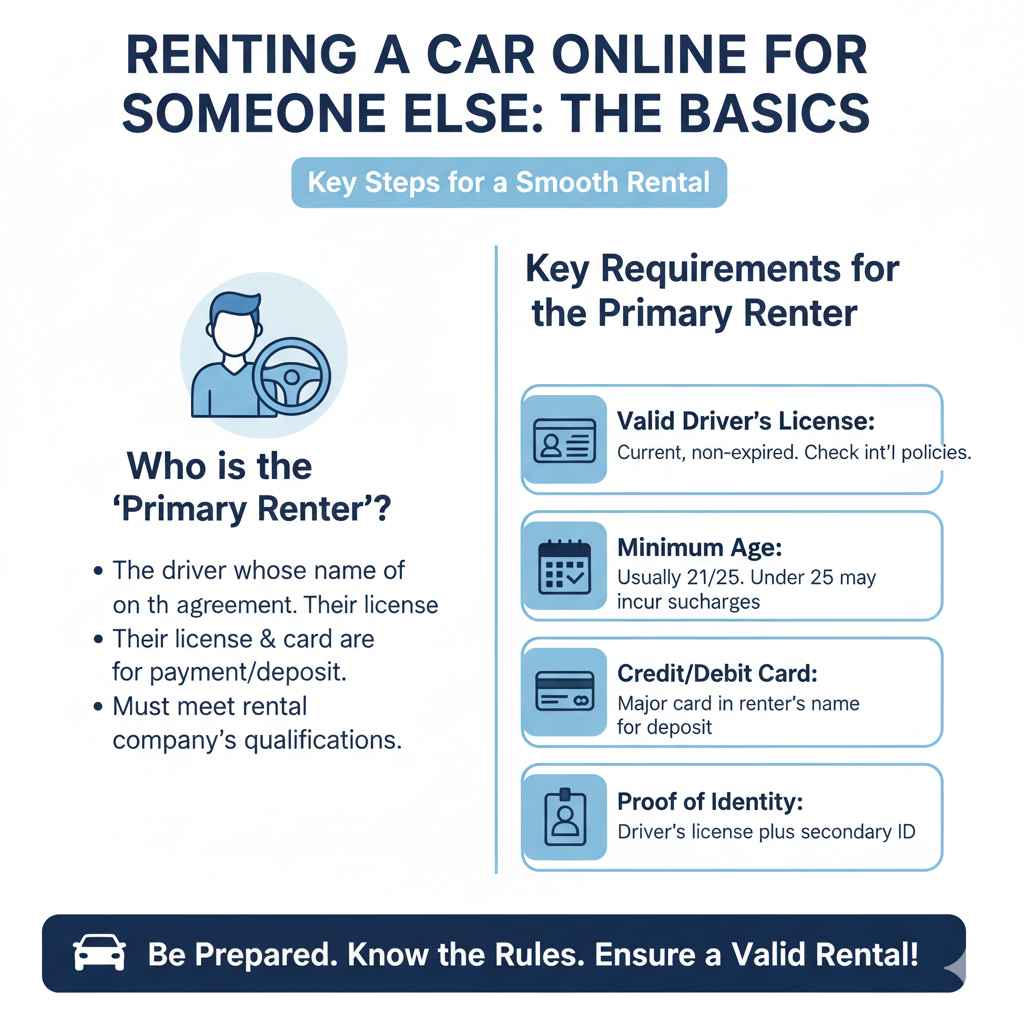
Yes, you can often pay for or book a rental car for someone else in the United States. However, the person who will drive the car usually must be listed as the primary renter, meet the rental company’s age and license rules, and appear at the counter with valid documents.
You generally cannot rent a car in your own name and simply give the keys to another person. That can violate the rental agreement, cancel coverage, and leave both of you responsible for damage, fees, or an accident.
The safest approach is to reserve the car using the actual driver’s name and ask the rental location how a third party can pay.
Can You Rent a Car for Someone Else?
You can usually make a reservation for another person, but the rental company will treat the driver as the responsible renter.
The person picking up the car will normally need to:
- Show a valid driver’s license.
- Meet the minimum age requirement.
- Provide a credit or debit card in their own name, when required.
- Meet the location’s deposit and payment rules.
- Sign the rental agreement.
- Accept responsibility for the car during the rental.
The person paying for the rental does not always need to be present. Yet this depends on the company, rental location, payment method, and booking type.
For example, a parent may pay for an adult child’s rental. A company may reserve a car for an employee. A travel agent may book a car for a client. In each case, the actual renter must still qualify to drive the vehicle.
The key difference: booking for someone versus renting in your name
These two actions are not the same:
| Situation | Usually allowed? | Main condition |
|---|---|---|
| Reserve a car for another person | Often | Use the driver’s correct name and details |
| Pay for another person’s rental | Often | The rental location must accept third-party payment |
| Add another person as a driver | Often | The extra driver must qualify and be listed |
| Rent the car yourself and hand it to someone else | Usually not | This may breach the rental agreement |
| Let an unlisted person drive | Usually not | The person must be added as an authorized driver |
Rental rules vary by company and branch. Enterprise, Avis, Budget, Hertz, National, Alamo, and other agencies publish general rules, but the local counter may apply extra conditions. Check the policy for the exact pickup location before paying.

How to Rent a Car for Another Person
Follow these steps to reduce the chance of a failed pickup.
1. Identify the actual renter
Enter the name of the person who will collect and drive the vehicle. Do not put your own name on the reservation just because you are paying.
The name should match the driver’s license. Small differences may cause a delay, especially when the reservation is prepaid or tied to a loyalty account.
2. Contact the pickup location
Ask the rental company these questions:
- Can I pay for another person’s rental?
- Must the cardholder be present?
- Can the driver use a card in their own name?
- Is a credit card required, or is a debit card accepted?
- What deposit will the driver need?
- Does the driver need proof of insurance?
- Can I add myself as a payer without becoming a driver?
- What documents must the driver bring?
The national website may show general rules. The local branch can confirm how those rules work for that reservation.
3. Check the driver’s eligibility
The driver should confirm:
- Minimum age.
- Valid license status.
- License language and format.
- Additional driver or young renter fees.
- International driving permit requirements, if applicable.
- Any restrictions on luxury, specialty, or larger vehicles.
Many U.S. rental companies rent to drivers age 25 and older without a young-driver fee. Drivers under 25 may still be eligible, but the fee and vehicle choices vary. Some locations do not rent to drivers below a set age.
4. Choose the correct payment method
Ask whether the driver must present a card in their own name. Many rental locations place a security hold on the card used at pickup.
A third party may pay the rental charge online, but the driver may still need their own card for:
- The security deposit.
- Fuel charges.
- Tolls.
- Traffic fines.
- Additional rental days.
- Damage claims.
- Other incidental costs.
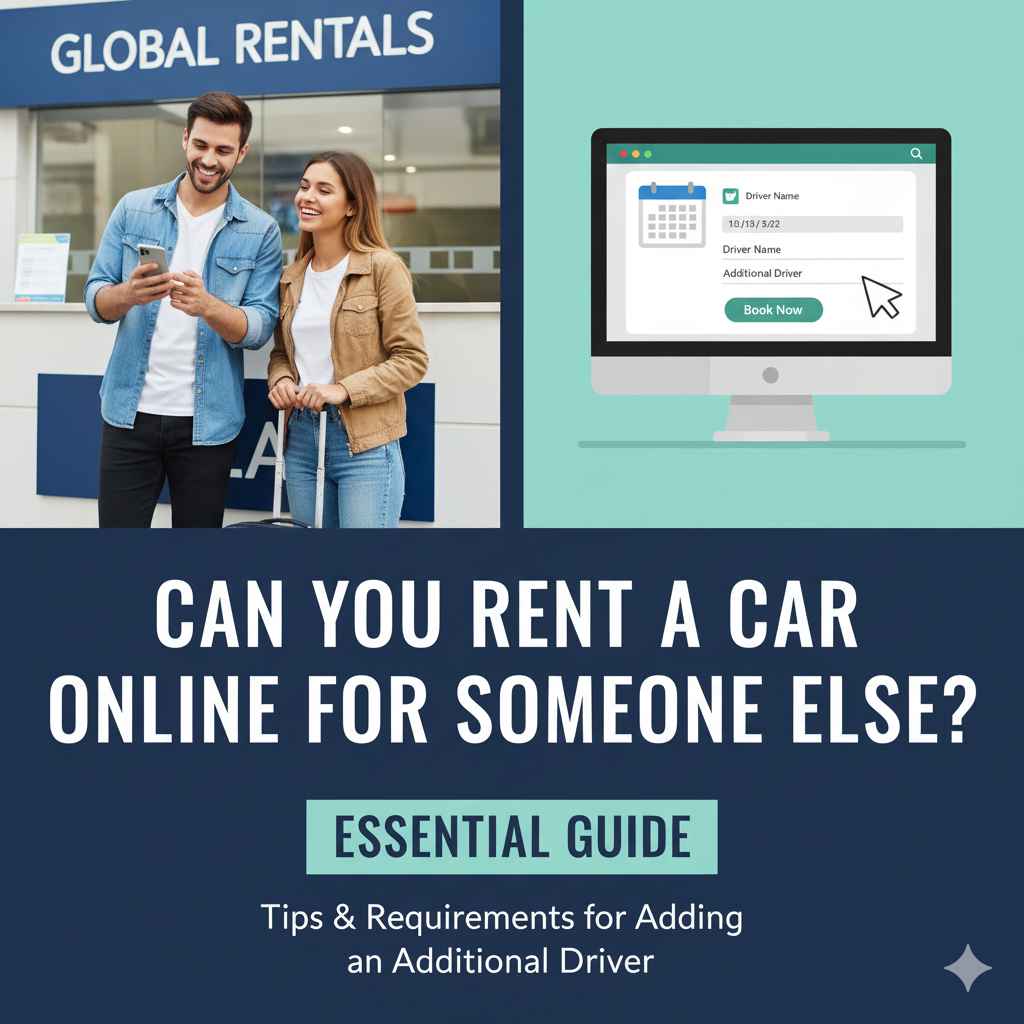
5. Put every driver on the agreement
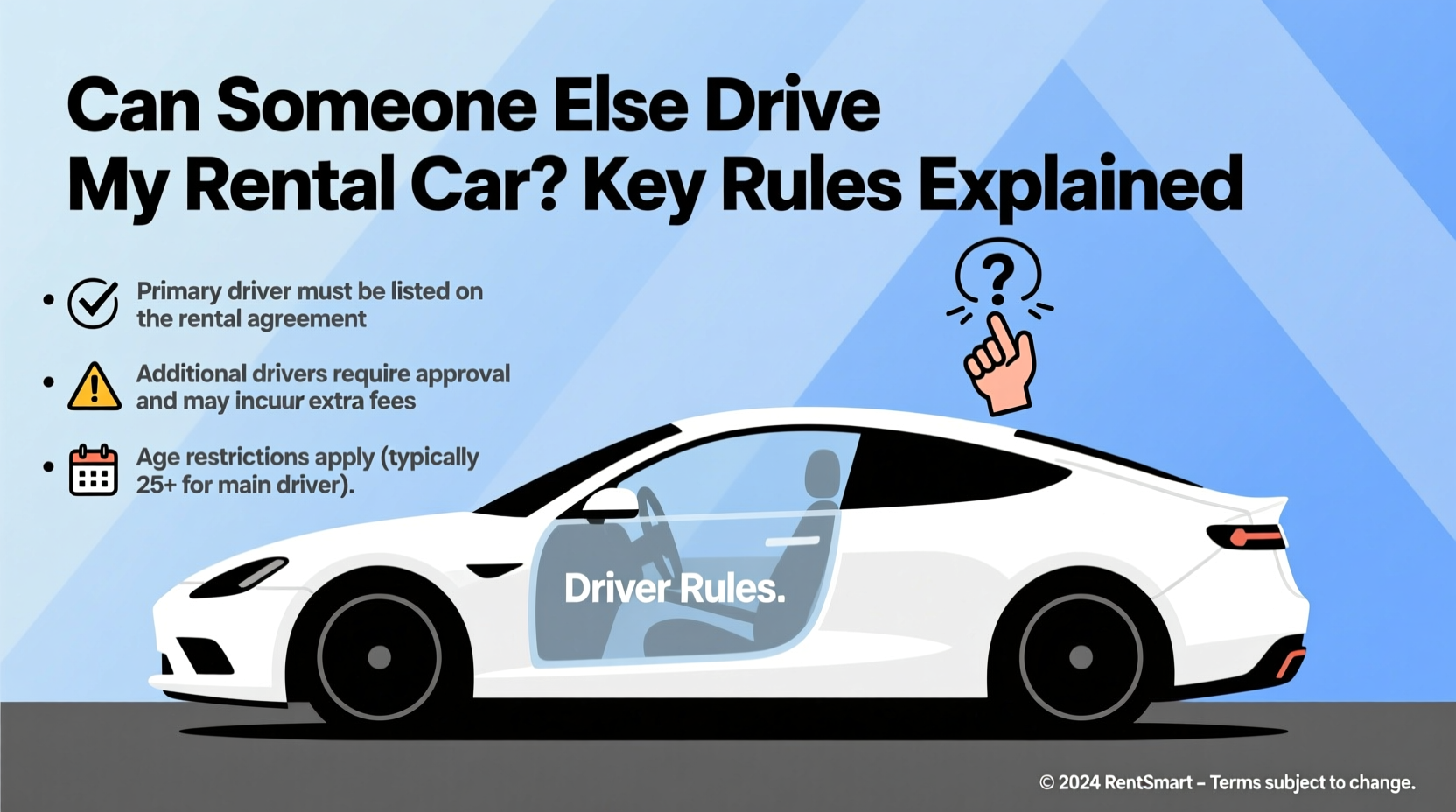
Only listed drivers should drive the rental car. The company may allow a spouse or domestic partner to drive without a separate fee in some states or under some policies, but do not assume this applies everywhere.
The additional driver must usually show a license and meet the same basic requirements as the primary renter.
6. Confirm the reservation before pickup
A day before pickup, call or review the reservation. Confirm:
- The driver’s name.
- Vehicle class.
- Pickup time.
- Payment method.
- Deposit amount.
- Insurance choice.
- Additional driver status.
- One-way or out-of-state travel rules.
A reservation is not always a guarantee that the driver will qualify at the counter. The branch may still verify identity, payment, age, and documents.
Can Someone Else Pay for My Rental Car?
Often, yes. But the answer depends on how the payment is made.
Paying online
Some bookings allow one person to pay online while another person picks up the vehicle. The driver may still need a card at the counter.
Prepaid reservations can have stricter rules. The company may require the driver to present the card used for payment, or it may require a completed third-party payment form.
Paying at the counter
The person paying at pickup may need to be present. Some companies allow a non-renter to pay, while others require the renter to use a card in their own name.
If you want to pay in person but will not drive, ask about a third-party credit card authorization form. This may let the rental company charge your card while the renter completes the agreement.
Not every branch accepts this option. The company may also ask for identification from the cardholder or place special limits on the transaction.
Using a debit card
Debit card rules can be stricter than credit card rules. A rental location may require:
- Proof of a return travel itinerary.
- Two forms of identification.
- A larger deposit.
- A credit check.
- Restrictions on vehicle types.
- More money available in the checking account.
These rules differ by company, airport, neighborhood branch, and state. Confirm them before the driver arrives.
Using a business or corporate card
A company may pay for an employee’s rental through a corporate account or business card. The employee still needs to qualify as the renter.
The business should confirm whether its rental agreement covers:
- Employee drivers.
- Additional drivers.
- Personal use.
- Out-of-state travel.
- Vehicle damage.
- Liability claims.
- One-way rentals.
What Documents Does the Other Person Need?
The driver normally needs a current driver’s license and an accepted payment card. Extra documents may apply to international visitors, young drivers, or debit-card users.
Common pickup documents
The driver should bring:
- A valid driver’s license.
- A physical payment card in the driver’s name, if required.
- The reservation confirmation.
- A passport, when the license is not accepted by itself.
- Proof of return travel, if the location requires it.
- A third-party payment authorization form, if applicable.
- Proof of insurance, if requested or needed for the selected coverage.
A temporary paper license may not be accepted. Some branches also reject digital cards, mobile-wallet-only payment, prepaid cards, or cards without the renter’s name.
International drivers
A visitor from outside the United States may need a passport and a license that the rental agent can read. An International Driving Permit may be required by the rental company or local law, depending on the driver’s home country and the license language.
An International Driving Permit does not replace the original license. The driver generally needs both.
Check the rules with the rental company and the relevant state motor vehicle agency. The U.S. Department of State also provides general information for foreign visitors driving in the United States.

Who Is Responsible for the Rental Car?
The named renter is usually responsible for following the rental agreement. This can include responsibility for damage, late returns, fuel, tolls, tickets, and unauthorized drivers.
The person who pays may also face financial responsibility, depending on the payment agreement and the claim. Payment does not automatically make that person an authorized driver or remove the renter’s duties.
If an unlisted person drives
An unlisted driver may cause several problems:
- The rental company may charge an unauthorized-driver fee.
- Damage protection may not apply.
- The company may seek payment for the full repair cost.
- A credit card benefit may exclude the driver.
- An insurer may dispute the claim.
- The renter may breach the contract.
Adding the driver before they use the car is much safer than trying to fix the issue after an accident.
If the car is for a gift
A gift rental can work, but plan it carefully. The recipient should know:
- The pickup location.
- The rental dates.
- The vehicle class.
- The deposit amount.
- The payment rules.
- The insurance choice.
- The mileage or travel limits.
Do not assume that paying the full rental price also pays the deposit. The recipient may need available funds at pickup.
If the car is for an employee
Use the company’s rental account when possible. This can make billing and damage reporting clearer.
The employee should still review the agreement. A corporate booking may not cover personal trips, passengers who drive, or travel into Canada or Mexico.

How Rental Car Insurance Works When You Book for Someone Else
Rental car insurance and payment responsibility are separate questions. Paying for a rental does not automatically provide insurance.
Possible coverage may come from:
- The rental company’s loss damage waiver or collision damage waiver.
- The driver’s personal auto insurance.
- A credit card rental benefit.
- A business insurance policy.
- A travel insurance policy.
Coverage depends on the policy terms, vehicle type, rental length, location, driver, and reason for the rental.
Why the driver’s name matters
Many insurance products require the renter or driver to follow the rental agreement. If the person driving is not listed, coverage may be limited or denied.
Before pickup, the driver should ask the insurer or card issuer:
- Is the rental vehicle covered?
- Is liability covered, or only damage to the rental?
- Are SUVs, vans, trucks, and luxury cars included?
- Are rentals in the United States covered?
- Is personal use covered?
- Is the driver required to be the cardholder?
- Does the coverage pay first, or only after another policy?
Do not rely on a card benefit without reading its terms. Some benefits exclude rentals made for business use, rentals over a certain number of days, certain vehicle classes, or drivers who are not the account holder.

Examples: When It Works and When It Does Not
These examples show why the renter’s name and payment method matter.
Example 1: Parent pays for an adult child
A parent books the car using the adult child’s name. The child brings a valid license and a card for the deposit. The branch accepts third-party payment.
Likely result: The rental can proceed if the child meets all other requirements.
Example 2: Friend books the car in their own name
A friend reserves and pays for the car. The friend does not travel, but another person arrives to pick it up.
Likely result: The reservation may fail because the person at the counter is not the named renter. Change the reservation to the actual driver before pickup.
Example 3: Employer pays for an employee
The company makes the reservation and pays through a business account. The employee brings a license and follows the corporate rental rules.
Likely result: The rental can proceed if the account permits that employee to rent and the branch accepts the payment setup.
Example 4: Traveler uses a debit card
A traveler’s partner pays online. The traveler arrives with a debit card but does not have enough available funds for the deposit.
Likely result: The rental may be refused, even though the base rental price was already paid.
Example 5: Someone else drives after pickup
The renter collects the car and allows a friend to drive without adding the friend to the contract.
Likely result: The friend may be an unauthorized driver. Add the person before they drive, subject to the company’s rules.
Common Mistakes to Avoid
The most common mistake is treating a reservation as proof that the driver will receive the car. The counter agent still checks the renter’s identity, documents, payment, and eligibility.
Avoid these errors:
- Using the payer’s name instead of the driver’s name.
- Assuming online payment covers the deposit.
- Bringing a virtual card when a physical card is required.
- Using a prepaid card for the security hold.
- Letting an unlisted person drive.
- Ignoring young-driver fees.
- Buying coverage without checking exclusions.
- Assuming a spouse or partner is automatically covered.
- Failing to ask about travel across state or national borders.
- Choosing a vehicle that the driver’s payment method cannot support.
- Waiting until pickup to disclose a third-party payer.
- Assuming the airport and neighborhood branches have identical rules.
If the driver is refused, ask the branch for the exact reason. Do not pressure the agent to release the car without meeting the policy. Contact the booking company at once if the reservation details were entered incorrectly.
A Simple Checklist Before Booking
Use this checklist before you pay:
- The actual driver’s name is on the reservation.
- The driver meets the age requirement.
- The driver has an accepted license.
- The branch accepts the planned payment method.
- The driver has enough funds for the deposit.
- The third-party payer process is confirmed.
- All drivers will be added to the agreement.
- Insurance has been reviewed.
- The vehicle type is allowed for the driver.
- Travel outside the state or country is permitted.
- The pickup documents are ready.
- The reservation and branch phone number are saved.
The best confirmation is written proof from the rental company, such as an email or a note added to the reservation. Phone advice can be useful, but policies may still be applied at the pickup counter.

Frequently Asked Questions
Can I reserve a rental car for someone else online?
Usually, yes. Enter the actual driver’s name and check whether the payment method allows another person to pick up the vehicle. Some prepaid reservations require the cardholder to be present.
Can I use my credit card to pay for someone else’s rental car?
Often, but not always. The rental company may accept your card for the rental charge while requiring the driver to provide a card for the deposit. A third-party authorization form may be required.
Does the person paying need to be an authorized driver?
No. Payment and driving are separate roles. The payer does not need to drive, and a driver must be listed on the rental agreement even if someone else pays.
Can my spouse drive a rental car without being added?
Sometimes, depending on the company, location, state, and rental agreement. Do not assume automatic permission. Ask the rental branch and list the spouse when required.
Can someone else return the rental car?
The company may allow another person to return the vehicle, but this does not necessarily make that person an authorized driver. Ask the branch before allowing another person to operate or return the car.
Can I rent a car for someone under 25?
Possibly. Many U.S. companies rent to younger drivers with an added fee and restrictions. Age rules, fees, payment rules, and vehicle limits vary by location.
Can I rent a car for someone with a debit card?
Possibly, but debit-card rules are often stricter. The driver may need more identification, a larger deposit, proof of travel, or approval from the local branch.
Can I rent a car for someone who does not have personal auto insurance?
Yes, in many cases. The driver may buy coverage from the rental company or use another eligible policy. The driver should understand liability coverage and damage protection before declining or accepting any option.
Conclusion: The Safest Way to Do It
You can often arrange a U.S. rental car for someone else, but the actual driver should be the named renter. Confirm third-party payment, prepare the driver’s documents, reserve enough money for the deposit, and add every person who may drive.
Before booking, call the exact pickup location and ask for its current rules. That short check can prevent a rejected pickup, an unexpected deposit, or a serious coverage problem.
