

All-terrain tires are best for U.S. drivers who split their time between paved roads and light off-road surfaces such as gravel, dirt, sand, grass, and mild mud. They offer more off-road grip and stronger construction than most highway tires, while staying quieter and smoother on the road than mud-terrain tires.
They are a practical fit for pickup trucks, SUVs, and crossovers used for commuting, camping, hunting, towing, construction access roads, and weekend trail trips. However, they are not the best choice for every condition. Deep mud, severe winter ice, fast highway driving, and serious rock crawling may call for a different tire type.

What Are All-Terrain Tires?
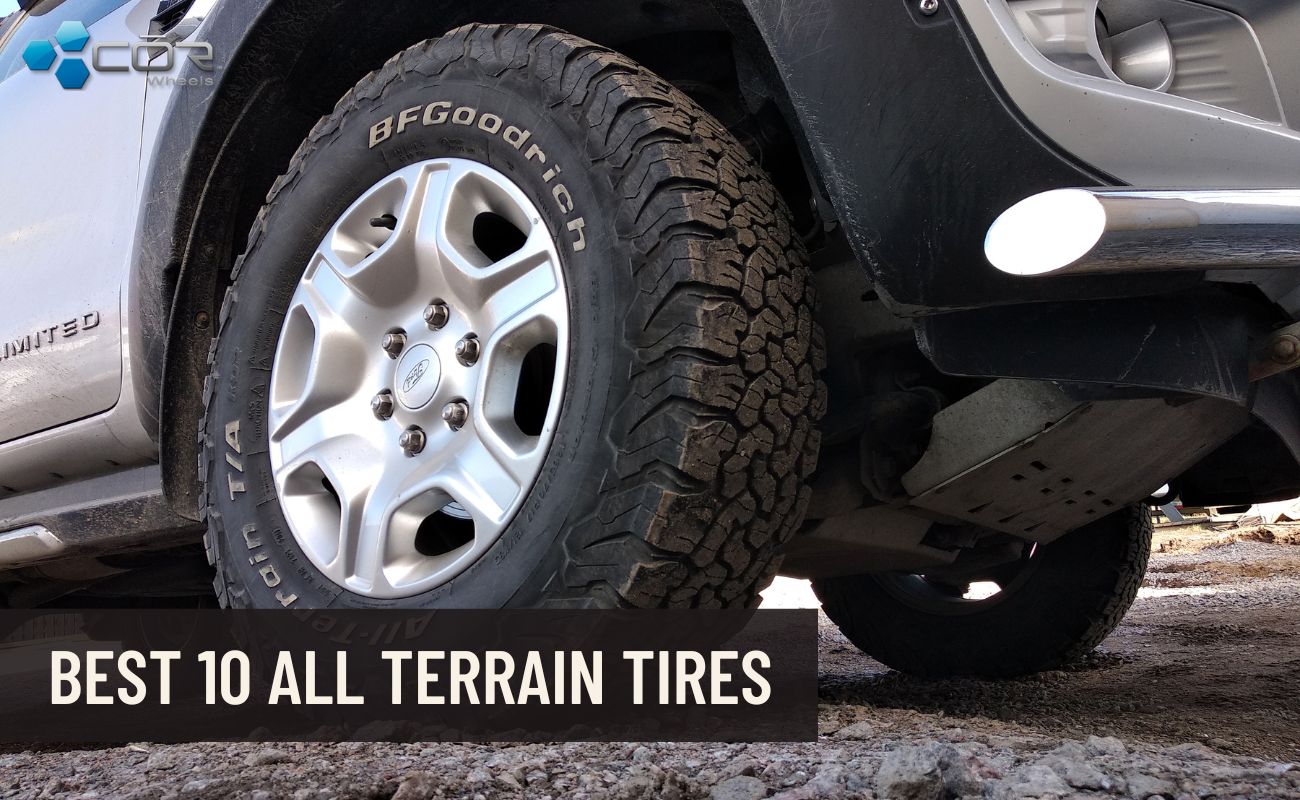
All-terrain tires, often called A/T tires, use a tread pattern and casing designed for both pavement and unpaved roads. Their tread blocks are usually larger and more open than those on highway tires. Many also have reinforced sidewalls and stone-ejecting features.
The goal is balance. An all-terrain tire must provide enough grip on loose ground without giving up too much road comfort, wet braking, fuel economy, or tread life.
Most all-terrain tires are designed for light trucks and SUVs. Some are also made for crossovers. Before buying one, check the tire size, load index, speed rating, and vehicle manufacturer’s requirements.
The U.S. Tire Manufacturers Association and National Highway Traffic Safety Administration both stress the need to use the correct tire size and maintain proper inflation.

What Are All-Terrain Tires Best For?
All-terrain tires are best for mixed driving where standard highway tires may lose traction but dedicated off-road tires would be excessive.
1. Gravel and dirt roads
This is one of the strongest use cases for an A/T tire. Its tread can bite into loose gravel and dirt better than a typical highway tire. Stronger sidewalls may also reduce the risk of damage from sharp stones.
That does not make the tire puncture-proof. Sharp rocks, low air pressure, excessive speed, and overloaded vehicles can still cause tire damage.
2. Light to moderate off-road trails
A/T tires work well on many forest roads, farm tracks, desert paths, and basic trails. They can handle uneven ground, shallow ruts, packed soil, and small rocks when driven at a safe speed.
Traction still depends on the tire design. Some all-terrain tires are made for mild trails, while others have more aggressive tread and stronger sidewall protection for harder terrain.
3. Gravel roads used for work or travel
Drivers who regularly reach rural homes, job sites, farms, campgrounds, or trailheads may benefit from all-terrain tires. They can reduce the compromise between daily road use and rough access roads.
For a vehicle that spends nearly all of its time on pavement, a highway tire may still provide better comfort and fuel economy.
4. Occasional sand and beach access roads
Some A/T tires perform well on firm sand and maintained beach access roads. The key is to avoid spinning the tires and to follow local rules.
Sand driving often requires lower tire pressure, but pressure changes must stay within the tire maker’s guidance. Lower pressure increases the risk of the tire separating from the wheel, especially during sharp turns. Reinflate before returning to normal road speeds.
5. Grass, fields, and muddy driveways
The open tread on an all-terrain tire can improve traction on wet grass and soft ground. It may also help on a muddy driveway or a short muddy section of trail.
A/T tires are not equal to mud-terrain tires in deep, sticky mud. Mud can fill the tread grooves and turn the tire into a smooth tire with little grip.
6. Light snow
Many all-terrain tires carry an M+S marking. This means the tire meets a traditional mud-and-snow tread definition. It does not mean the tire is a dedicated winter tire.
Some A/T tires also carry the three-peak mountain snowflake, or 3PMSF, symbol. The symbol indicates that the tire met a defined severe-snow traction test. Even a 3PMSF tire cannot match a true winter tire on ice and very cold roads.
For U.S. drivers in areas with regular snow and ice, such as parts of the Northeast, Upper Midwest, Rockies, and Alaska, winter tires may be the safer seasonal choice.
7. Towing and hauling on mixed roads
A/T tires can suit towing and hauling when their load rating matches the vehicle and trailer setup. Their stronger construction may help on gravel roads and rough camp access roads.
The tire itself does not increase the vehicle’s legal towing capacity. Stay within the vehicle maker’s limits for payload, axle weight, trailer weight, and tire pressure.
When Are All-Terrain Tires Not the Best Choice?
All-terrain tires are a compromise. Their wider range of use comes with trade-offs.
They may not be the best choice for:
- Mostly highway driving at high speeds
- Maximum fuel economy
- Very quiet road travel
- Deep mud and clay
- Serious rock crawling
- Frequent driving on glare ice
- Competitive off-road use
- Vehicles that require a specific low-rolling-resistance tire
A more aggressive tread can create more road noise. It can also increase rolling resistance, which may reduce fuel economy. The effect varies by tire, vehicle, alignment, load, road surface, and driving habits.
All-terrain versus highway-terrain tires
Highway-terrain tires, often called H/T tires, usually have smaller tread blocks and more continuous contact with the road. They are often better for:
- Quiet highway travel
- Wet pavement
- Long road trips
- Fuel economy
- Smooth handling
- Vehicles that rarely leave pavement
An H/T tire may be the better choice if your “off-road” use is limited to occasional gravel roads.
All-terrain versus mud-terrain tires
Mud-terrain tires, or M/T tires, use large tread blocks and wide voids to clear mud and loose soil. They are better for:
- Deep mud
- Loose rock
- Steep trails
- Severe off-road use
- Vehicles built for frequent trail driving
Their trade-offs often include more noise, harsher road manners, faster wear on pavement, and poorer wet-road behavior than less aggressive designs.
All-terrain versus winter tires
Winter tires use rubber compounds that remain more flexible in low temperatures. Their tread is designed to grip snow and ice.
An A/T tire may be useful in occasional snow, especially when it carries the 3PMSF symbol. But drivers who face frequent ice, packed snow, or freezing conditions should consider winter tires.

How to Choose the Right All-Terrain Tire
The best all-terrain tire depends on your vehicle, roads, weather, load, and driving habits. Start with the vehicle, not the tread pattern.
1. Confirm the tire size
Read the tire information placard on the driver’s doorjamb. You can also check the owner’s manual.
The replacement tire should match the vehicle maker’s required size unless a qualified tire professional confirms that a change is safe. A different diameter can affect:
- Speedometer readings
- Anti-lock braking systems
- Traction control
- Four-wheel-drive systems
- Ground clearance
- Steering clearance
- Load capacity
Do not assume that a taller or wider tire will fit because another vehicle uses it.
2. Match the load index and speed rating
The load index shows how much weight the tire can carry at its stated inflation pressure. The speed rating indicates the tire’s certified speed capability under specified test conditions.
For a truck used to tow or carry heavy loads, load capacity is especially important. Never replace a tire with one that has a lower load index than the vehicle requires.
3. Choose the tread for your actual roads
A mild all-terrain tire may be best for a daily driver that sees mostly pavement and occasional gravel. A more aggressive design may suit a truck that spends many weekends on rocky or muddy trails.
More tread is not automatically better. Aggressive tread can increase noise, reduce fuel economy, and feel less precise on wet pavement.
4. Look for the right winter marking
If snow is part of your normal driving, check for the 3PMSF symbol rather than relying only on the M+S marking.
The 3PMSF symbol is useful evidence of severe-snow performance. It does not guarantee equal performance among brands or models, and it does not replace safe speed, proper tread depth, or winter driving skill.
5. Consider the sidewall design
Some A/T tires include extra sidewall rubber or protective ribs. These features may help resist damage from rocks and trail debris.
They do not eliminate punctures. A reinforced sidewall may also add weight, which can affect ride quality and fuel use.
6. Check the warranty and service support
Review the treadwear warranty, road-hazard terms, and exclusions before buying. Warranty terms differ by brand and tire model.
A warranty is not a promise that the tire will last for a fixed number of miles. Rotation, alignment, inflation, load, road surface, and driving style all affect tread wear.

All-Terrain Tire Decision Table
The table below gives a starting point. It does not replace the vehicle owner’s manual or a tire professional’s fitment check.
| Driving pattern | Likely best tire type | Why |
|---|---|---|
| Nearly all pavement | Highway-terrain or touring tire | Better comfort, noise, and efficiency |
| Pavement plus gravel and dirt | Mild all-terrain tire | Balanced road and light trail performance |
| Daily driving plus regular trails | All-terrain tire | More loose-surface traction and durability |
| Deep mud and rough trails | Mud-terrain tire | Better mud clearing and off-road grip |
| Frequent snow and ice | Winter tire | Better cold-weather and ice traction |
| Heavy towing on mixed roads | Correctly rated all-terrain or highway tire | Depends on load, weather, and road surface |
| Sand-focused off-road driving | Specialized off-road setup | Requires tire choice, pressure control, and recovery planning |
The main question is not “Which tire has the most aggressive tread?” It is “Which tire matches the surface I drive on most often?”
How to Maintain All-Terrain Tires
Proper maintenance matters as much as tread design. An all-terrain tire with low pressure, uneven wear, or hidden damage may perform poorly on both pavement and trails.
Check tire pressure when the tires are cold
Use the pressure listed on the vehicle’s door placard unless the vehicle or tire maker gives different instructions. Do not use the maximum pressure molded into the sidewall as the normal setting unless it matches the vehicle requirement.
Check pressure at least monthly and before long trips. Temperature changes can alter pressure readings.
Inspect for trail damage
Look for:
- Cuts
- Cracks
- Bulges
- Exposed cords
- Punctures
- Missing tread blocks
- Stones trapped in grooves
- Uneven wear
A bulge may indicate internal damage. Do not continue driving on a tire with a bulge. Have it inspected by a qualified tire professional.
Rotate the tires
Follow the vehicle and tire maker’s rotation schedule. Rotation can help reduce uneven wear, especially on trucks and SUVs.
If the vehicle has different front and rear tire sizes, or directional tires, the rotation pattern may be limited.
Check alignment and suspension
Uneven wear on one edge of the tread can point to alignment, suspension, or inflation problems. Replacing tires without fixing the cause may lead to rapid wear on the new set.
Reinflate after off-road driving
If you lower pressure for a trail or sand, use an accurate gauge and reinflate before normal road driving. Driving at road speed with low pressure can create excess heat and damage.

Common All-Terrain Tire Mistakes
Several common assumptions can lead to poor performance or safety problems.
Mistake 1: Treating all A/T tires as the same
All-terrain is a category, not one fixed design. Some models favor quiet road driving. Others favor rocks, mud, snow, or heavy loads.
Read the tire’s specifications and intended use. Do not judge the entire category by one tire model.
Mistake 2: Assuming 4WD creates unlimited traction
Four-wheel drive can help a vehicle apply power on loose surfaces. It does not improve braking in the same way. The tires remain the main contact point with the road.
A four-wheel-drive vehicle with worn or unsuitable tires can still slide, hydroplane, or lose control.
Mistake 3: Using lower pressure without a plan
Lower pressure may improve flotation on some soft surfaces. Too little pressure can cause wheel damage, tire debeading, overheating, or sidewall failure.
Only adjust pressure when the tire maker and vehicle maker allow it for the situation. Use a gauge and reinflate before highway travel.
Mistake 4: Ignoring tire age
Tread depth is not the only measure of tire condition. Rubber changes with age, heat, sunlight, storage, and use.
Find the tire identification number and ask a tire professional to assess an older tire, especially if it shows cracks or has spent years in a hot climate.
Mistake 5: Expecting off-road tires to fix a vehicle setup
Recovery gear, suspension condition, alignment, driving technique, and ground clearance all affect trail performance. Tires are important, but they cannot overcome every vehicle limitation.

Key Takeaways
- All-terrain tires are best for mixed pavement, gravel, dirt, and light off-road use.
- They offer more loose-surface traction than highway tires.
- They are usually quieter and more road-friendly than mud-terrain tires.
- They may work in light snow, but M+S and 3PMSF markings have different meanings.
- Winter tires remain the stronger choice for frequent ice and severe winter conditions.
- Match tire size, load index, speed rating, and pressure to the vehicle.
- Inspect tires after trail use and reinflate before highway driving.
- Choose based on your most common roads, not the most extreme road you might encounter once a year.
Frequently Asked Questions
Are all-terrain tires good for everyday driving?
Yes. Many all-terrain tires are designed for daily use on paved roads. The trade-off is that they may produce more noise and use more fuel than highway or touring tires.
A mild A/T tire is usually a better daily-driver fit than a highly aggressive model if most of your miles are on pavement.
Are all-terrain tires good in rain?
They can perform well in rain, but wet traction varies by tire model, tread design, rubber compound, speed, and tread depth.
Do not assume that large tread blocks guarantee better wet braking. Replace worn tires and slow down when roads are wet.
Are all-terrain tires good in snow?
Some are suitable for light or moderate snow, especially when they carry the 3PMSF symbol. However, an all-terrain tire is not automatically a winter tire.
For frequent snow and ice, use winter tires if they fit your vehicle and driving needs.
Do all-terrain tires reduce gas mileage?
They can. A/T tires may weigh more and have greater rolling resistance than highway tires. The actual effect depends on the tire, vehicle, tire pressure, alignment, load, and driving conditions.
Keeping the tires at the correct pressure can help limit unnecessary fuel loss.
How long do all-terrain tires last?
There is no reliable single mileage figure for every A/T tire. Service life depends on tread compound, rotation, alignment, inflation, road surface, climate, load, and driving style.
Use tread wear, damage, age, and the tire maker’s guidance to decide when replacement is needed.
Conclusion
All-terrain tires are best for drivers who need one tire to handle both normal U.S. roads and occasional off-road travel. They suit gravel roads, dirt tracks, campgrounds, light mud, mild snow, and mixed daily use.
They are not a universal upgrade. Highway tires may be better for comfort and efficiency, mud-terrain tires may be better for deep off-road work, and winter tires may be better for regular ice and severe snow.
Before buying, check the vehicle placard, confirm the tire size and load rating, consider your local weather, and choose a tread design that matches the roads you actually drive.
