

Yes, you can usually buy a car with a learner’s permit in the United States. In most states, you do not need a full driver’s license to purchase a vehicle or have the title placed in your name.
The harder part is driving, registering, insuring, and financing the car. These rules vary by state, lender, insurer, and vehicle. A learner’s permit lets you drive only under set conditions. It does not give you the same rights as a full driver’s license.
Before buying, check your state motor vehicle agency, insurance company, and lender. You may buy the car, but you still need legal registration and insurance before driving it on public roads.

What Does “Permit” Mean?
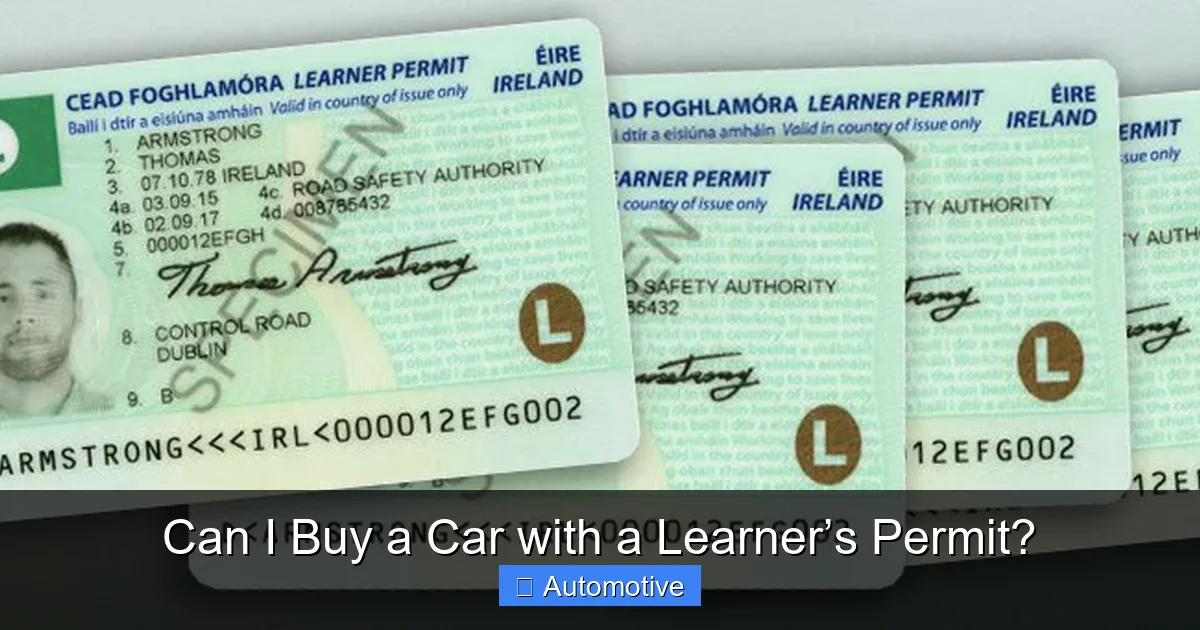
In this article, “permit” means a learner’s permit issued by a U.S. state. It does not mean a temporary registration permit, parking permit, or commercial driving permit.
A learner’s permit normally allows a new driver to practice with a qualified adult in the vehicle. Common restrictions may include:
- Driving only with a licensed adult who meets age requirements
- No solo driving
- Limits on night driving
- Limits on passengers
- No phone use while driving
- Required completion of driver training or supervised practice
Each state sets its own rules. The National Highway Traffic Safety Administration explains that graduated driver licensing systems place limits on new drivers while they gain experience. You can review your state’s rules through USA.gov’s state motor vehicle agency directory.
A permit affects how you may drive the car. It does not always affect whether you may buy it.
Can You Buy and Own a Car With a Learner’s Permit?
In most cases, yes. A person with a learner’s permit can usually buy a vehicle and become its owner.
Buying a vehicle and driving a vehicle are separate legal acts. The purchase creates ownership. The permit controls whether, when, and with whom you may drive.
You will usually need:
- A valid learner’s permit or other government-issued identification
- Proof of address
- A bill of sale or purchase agreement
- The vehicle title
- Payment or approved financing
- Proof of insurance when required
- State registration and tax documents
Some states or dealers may ask for additional documents. A parent or guardian may also need to sign documents if the buyer is under 18 or under the state’s contract age.
Title ownership
The vehicle title identifies the legal owner. You may be able to place the title in your name even if you have only a permit.
However, title rules can differ from registration rules. A state may allow you to own the car but require a licensed driver, parent, guardian, or co-owner for registration or insurance.
Registration
Registration gives you permission to use the vehicle on public roads. It is not the same as owning the car.
Before you pay, ask your state motor vehicle office:
- Can a person with a learner’s permit register a car?
- Must a parent or guardian sign?
- Can the vehicle be titled in the buyer’s name?
- What proof of insurance is required?
- Can the buyer receive plates without a full license?
Do not assume that the dealer’s answer applies to every state. Dealers often know their local process, but your state agency makes the final decision.

Can You Register a Car With a Permit?
You may be able to register a car with a learner’s permit, but the answer depends on your state and age.
Some states focus on vehicle ownership and insurance rather than requiring the owner to hold a full driver’s license. Other states may require extra steps. For example, a parent or legal guardian may need to sign documents for a minor.
Registration may also be difficult if you cannot obtain insurance. Most states require liability insurance before issuing registration or plates. The insurer may ask who will drive the car, where it will be kept, and whether the permit holder is listed as a driver.
The safest process is:
- Contact your state DMV or motor vehicle agency.
- Ask about title and registration rules for a permit holder.
- Obtain an insurance quote before buying.
- Confirm that the insurer will cover the vehicle and the people who will drive it.
- Complete the title, tax, registration, and plate process.
Use your state agency’s official website rather than a general online checklist. State requirements, fees, deadlines, and forms can change.
Can You Get Car Insurance With a Learner’s Permit?
Usually, yes, but you should speak with the insurer before buying the car.
A person with a learner’s permit may be covered under a parent’s or household policy. The insurer may require the permit holder to be listed as a household driver. The policy may also require the vehicle owner to be named on the policy.
Insurance companies may ask:
- Who owns the car?
- Who will drive it most often?
- Who will supervise the permit holder?
- Where is the car kept?
- Is the permit holder a household member?
- Is the vehicle financed?
- What coverage limits does the lender require?
Do not rely on the idea that a permit holder is automatically covered. Coverage can depend on the policy language and state law.
Before purchase, request written confirmation or a clear explanation from the insurer. Ask whether the car may be registered in your name and whether all expected drivers are covered while using it.
Why insurance matters when financing
A lender usually requires more than the minimum liability coverage. It may require collision and comprehensive coverage because the lender has a financial interest in the car.
If you cancel required coverage, the lender may buy force-placed insurance or treat the missed coverage as a loan violation. That coverage can cost more and may protect the lender more than you.
Can You Finance a Car With a Permit?
You may be able to finance a car with a learner’s permit, but approval is not guaranteed.
Auto lenders usually review:
- Credit history
- Income
- Employment
- Debt-to-income ratio
- Down payment
- Vehicle age and mileage
- Loan amount
- Proof of insurance
- State and lender requirements
A permit may be accepted as identification by some lenders. Others may require a full driver’s license. The lender may also require a co-signer, especially if the buyer is under 18, has little credit, or has no steady income.
The Consumer Financial Protection Bureau recommends comparing the annual percentage rate, loan term, total interest, and total cost before accepting an auto loan. A lower monthly payment may result from a longer loan term, not from a cheaper vehicle.
Financing options
| Option | What may help | Main limitation |
|---|---|---|
| Cash purchase | No lender approval or loan interest | You still need title, registration, and insurance |
| Credit union loan | May offer direct preapproval | Membership and credit rules may apply |
| Dealer financing | Convenient and may offer several lenders | Dealer-arranged rates and fees can vary |
| Co-signed loan | May help with limited credit or income | The co-signer is responsible if payments stop |
| Family purchase | May avoid immediate financing | Ownership and insurance must be documented correctly |
Get preapproval before visiting the dealership when possible. This gives you a clearer budget and makes it easier to compare the dealer’s offer.
Never let someone “buy the car in their name” as a shortcut unless you fully understand the title, loan, and insurance consequences. The person named on the loan may remain legally responsible for every payment.
Can You Drive the Car Home With a Permit?
Yes, but only if your trip follows your learner’s permit rules and the vehicle is legally ready to drive.
You may need:
- Valid registration or a legal temporary tag
- Required insurance
- A qualified supervising driver
- A valid permit
- Proof of purchase
- A vehicle that is safe to operate
- Compliance with passenger and time restrictions
A permit holder generally cannot drive alone from the dealership. Ask a fully licensed driver to drive the vehicle, or arrange delivery. This avoids a common and costly mistake: buying a car legally but driving it illegally.
A dealer’s temporary tag does not remove the permit restrictions. The tag may allow the vehicle to be driven while registration is pending, but it does not turn a permit into a full license.
Can you test-drive a car with a permit?
You may be allowed to test-drive a car with a permit if a licensed adult or dealership employee is present and the test drive follows state and dealer rules.
Dealerships may set stricter policies. Some may refuse a test drive by a permit holder because of insurance or liability concerns. You can still inspect the car, request a vehicle history report, and ask a licensed driver to conduct the road test.
Do not drive alone just because a salesperson gives permission. State permit rules control your legal ability to drive.
What Should You Do Before Buying a Car With a Permit?
Use this checklist before signing a purchase agreement.
1. Check your permit restrictions
Read your permit paperwork or state driver handbook. Confirm the rules for:
- Supervising drivers
- Passenger limits
- Night driving
- School, work, or medical trips
- Phone use
- Required vehicle equipment
2. Call your state motor vehicle agency
Ask about title, registration, plates, taxes, and minor-owner rules. Write down the answer and the name of the office or webpage you used.
3. Get an insurance quote
Give the insurer the vehicle identification number, or VIN, if available. Explain that the owner has a learner’s permit and identify every person who may drive the car.
4. Set a complete budget
Include more than the sale price:
- Sales tax
- Title and registration fees
- Dealer fees
- Insurance
- Fuel
- Maintenance
- Repairs
- Loan interest
- Parking
- Required safety equipment
5. Inspect the vehicle
For a used car, obtain an independent inspection before purchase if possible. A vehicle history report can reveal reported accidents, title problems, odometer issues, or salvage history, but it cannot replace a physical inspection.
6. Review the contract
Check the vehicle price, taxes, fees, down payment, interest rate, loan term, monthly payment, and cancellation terms. Do not sign blank forms.
7. Arrange legal transport
Plan for a licensed driver to take the vehicle home. Confirm that temporary tags and insurance are active before anyone drives it.
8. Practice legally
Use the car only under the conditions listed on your permit. Keep a supervised practice log if your state requires one.
Common Problems When Buying a Car With a Permit
The most common problems involve registration, insurance, financing, and illegal driving—not the purchase itself.
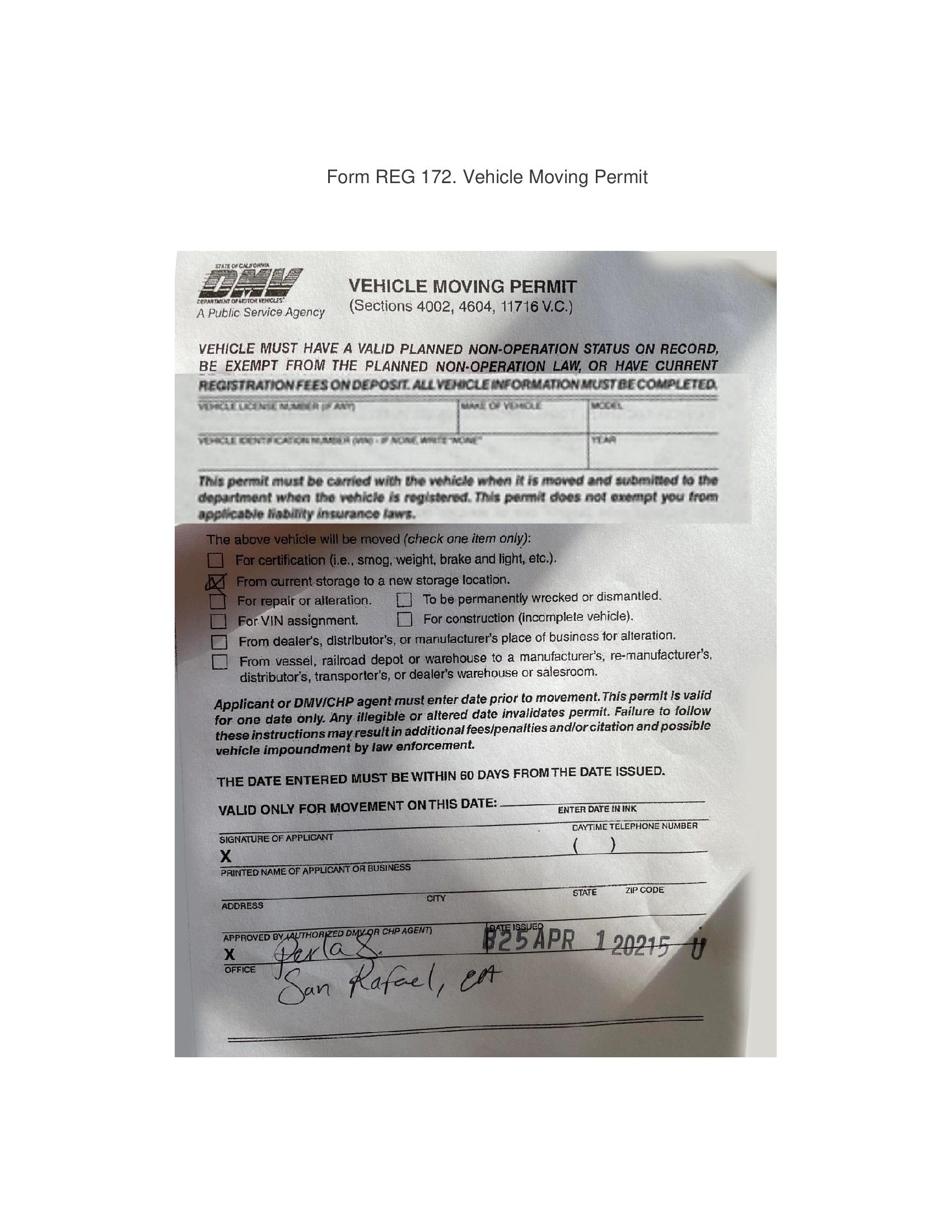
The DMV will not issue plates
Possible reasons include missing insurance, incomplete title documents, unpaid taxes, age restrictions, or a state rule requiring a parent or guardian.
Ask the DMV what exact document is missing. Do not rely on a dealer’s guess.
The insurer will not cover the vehicle
The insurer may reject the arrangement because the permit holder owns the car, the household driver was not disclosed, or the requested coverage is unavailable.
Ask whether adding a parent, guardian, or experienced primary driver changes the policy. Never hide the likely driver to obtain a lower quote.
The lender rejects the application
A permit may not satisfy the lender’s identification or underwriting rules. Low income, thin credit, or a high loan amount may also cause denial.
Consider a lower loan amount, a larger down payment, a credit union, or a qualified co-signer. Compare the total cost, not only the monthly payment.
The dealer says the deal requires a full license
That may be a dealer policy rather than a universal legal rule. Ask whether the issue concerns the sale, financing, registration, insurance, or test drive. Each issue may have a different solution.
The car has no legal way home
Do not drive it alone. Use a licensed driver, dealer delivery, or a properly licensed transport service.
Permit Holder Car-Buying Example
Suppose a 17-year-old has a learner’s permit and wants to buy a used car.
The teenager may be able to purchase the car, but several separate questions must be answered:
- Can the teenager sign a binding purchase contract?
- Can the title be placed in the teenager’s name?
- Does the state allow registration by a minor?
- Must a parent sign the DMV forms?
- Will the parent’s insurer cover the vehicle?
- Does the lender require a parent as a borrower or co-signer?
- Who can legally drive the car home?
A practical arrangement may involve a parent as the registered owner, insured owner, or co-signer. But that choice has legal and financial effects. The person named on the title, insurance policy, or loan may carry responsibility for taxes, claims, repairs, and missed payments.
Do not choose an ownership structure only to make the transaction faster. Match the title, loan, insurance, and actual use of the car.

Permit Versus Full License: What Changes?
A full driver’s license mainly changes your driving rights. It does not automatically remove every ownership or financing requirement.
| Issue | Learner’s permit | Full driver’s license |
|---|---|---|
| Buy a vehicle | Often allowed | Usually allowed |
| Own the title | Often allowed, subject to state rules | Usually allowed |
| Drive alone | Usually not allowed | Usually allowed if otherwise qualified |
| Test-drive a car | May require supervision or dealer approval | Usually easier |
| Register the vehicle | State-specific | Usually simpler |
| Obtain insurance | Often possible | Usually simpler |
| Get a loan | Depends on lender and finances | Depends on lender and finances |
| Drive the car home | Usually requires a qualified driver | Usually allowed if registration and insurance are active |
The key point is simple: a permit may be enough to buy a car, but it may not be enough to use the car independently.

Frequently Asked Questions
Can I buy a car with a learner’s permit and no license?
Often, yes. You may be able to buy and title the vehicle, but your state, insurer, and lender may impose extra requirements. You still cannot drive alone if your permit does not allow solo driving.
Can a minor buy a car with a permit?
Possibly, but minors may face contract, title, registration, and financing limits. A parent or guardian may need to sign documents or be listed on the title, registration, insurance policy, or loan.
Can I put the car in my name with a permit?
In many states, yes. Check your state motor vehicle agency for age and registration rules. Ownership does not give you permission to drive without following permit restrictions.
Can I get a car loan with no driver’s license?
Some lenders may accept other identification or a learner’s permit, while others require a full license. Credit, income, vehicle type, down payment, and a co-signer can also affect approval.
Can I buy a car from a private seller with a permit?
Usually, yes, if the seller provides a valid title and the transaction follows state law. Before paying, check the VIN, lien status, title condition, bill of sale requirements, insurance, and registration process.
Conclusion: Should You Buy a Car With a Permit?
You can often buy a car with a learner’s permit in the United States. The purchase is usually easier than the next steps: insuring the vehicle, registering it, financing it, and driving it legally.
Before buying, confirm four things:
- Your state will title and register the vehicle as planned.
- An insurer will cover the car and its expected drivers.
- The lender accepts your permit or has approved a co-signer.
- A licensed driver can legally take the car home.
If any one of these points is uncertain, pause the purchase and contact the DMV, insurer, or lender directly. A few calls before signing can prevent an expensive problem after the sale.
