

Introduction
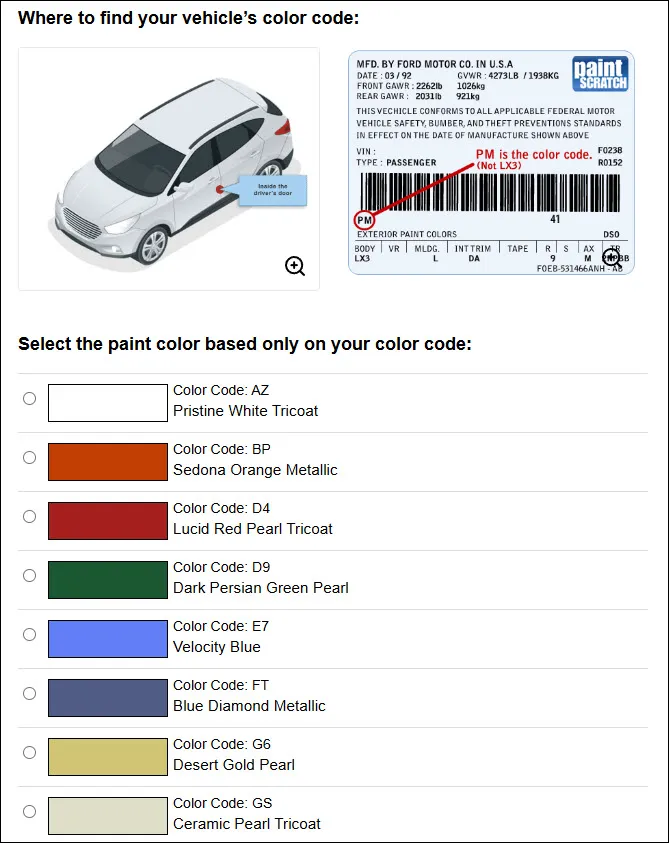
In the United States, you can usually find your car’s paint code on a factory label inside the driver’s door jamb. If it is not there, check the glove box, trunk, spare-tire well, under the hood, or the radiator support. Your owner’s manual, dealership, and vehicle identification number (VIN) can also help confirm the code.
The paint code is not the same as the VIN. The VIN identifies the vehicle. The paint code identifies the factory color and, in some cases, the paint finish.
Finding the correct code matters before you buy touch-up paint. A color name such as “red,” “silver,” or “pearl white” is not precise enough. One model may use several similar shades in the same year.

What Is a Car Paint Code?
A car paint code is a short group of letters, numbers, or both. The vehicle maker uses it to identify the original exterior paint color.
You may see the paint code next to labels such as:
- Color Code
- Paint
- C/TR
- PNT
- EXT PNT
- BC/CC
- COLOR
- Trim/Paint
The code may be printed on a metal plate, a paper label, or a sticker. It may also appear as part of a longer group of numbers.
Do not confuse the paint code with these other codes:
| Label or number | What it identifies |
|---|---|
| VIN | The vehicle’s unique 17-character identity |
| Engine code | The engine type |
| Trim code | Interior materials or equipment |
| RPO code | Factory options, common on General Motors vehicles |
| Part number | A replacement part |
| Paint code | The vehicle’s exterior color |
A VIN can help a dealer find factory build information. However, the VIN itself usually does not show the paint color as a simple color code.
Where to Look for the Paint Code
The driver’s door area is the best first place to look. If you do not find it there, inspect the other common label locations in a set order.
1. Check the driver’s door jamb
Open the driver’s door and inspect the vertical frame and the door edge. Look for a manufacturer label near the tire-pressure information, VIN, or vehicle weight data.
The paint code may be easy to miss because it can be much smaller than the VIN. Use a flashlight and clean dust from the label with a soft, dry cloth.
Do not remove the label. Take a clear photo instead.
2. Look inside the glove box
Some vehicles place the paint label inside the glove box or on its side wall. Check the upper, lower, and side surfaces.
Older cars may use a paper build sheet or a small plate rather than a modern sticker.
3. Inspect the trunk and spare-tire well
Open the trunk and check:
- The underside of the trunk lid
- The trunk hinge area
- The side walls
- The floor beneath the carpet
- The spare-tire cover
- The spare-tire well
A label may be hidden beneath the carpet or removable floor panel. Lift these parts carefully so you do not tear them.
4. Check under the hood
Look at the:
- Firewall
- Radiator support
- Inner fenders
- Strut towers - Underside of the hood
Some vehicles use a plate or label in the engine bay. Avoid touching hot parts, belts, fans, and electrical connections. Check only when the engine is off and cool.
5. Search the vehicle documents
The paint code may appear in:
- The owner’s manual packet
- The original window sticker
- A factory build sheet
- A service record
- A body repair invoice
- A vehicle order document
A past repair invoice can help, but treat it as a clue. The shop may have recorded a product formula, not the original factory paint code.

How to Read the Label
The paint code is often near other information, so you must identify the right field rather than copy the longest number.
For example, a label may contain:
- A VIN
- A tire-pressure rating
- A build date
- A trim code
- A paint or color code
- Several option codes
Look for words such as PNT, COLOR, or C/TR. On some General Motors vehicles, the paint information may appear among several RPO codes. On other brands, the code may be a short combination such as two letters and a number.
A code can look different by brand and model year. Examples of paint-code formats include:
1G3NH-731PUXWA8555
These are examples of formats, not a universal list. Never choose a code because it looks similar to one you found online.
Take a photo before ordering paint
Take a close photo of the full label and a second photo of the suspected paint-code line. Include the vehicle make, model, and year when you save the image.
This helps a dealer or paint supplier check whether you read:
- A zero or the letter O
- A one or the letter I
- A five or the letter S
- A hyphen or a slash
- A code from the trim field instead of the paint field
What If You Cannot Find the Label?
If every common location is empty, use the VIN to ask a franchised dealer or qualified automotive paint supplier for help. Give them the full 17-character VIN, make, model, model year, and body style.
A dealer may be able to access factory build data or a manufacturer parts system. That information can confirm the original paint code, but access and accuracy can vary by brand, model year, and vehicle history.
You can also try:
- The manufacturer’s owner website.
- The original window sticker or build sheet.
- A body shop with access to a professional paint database.
- A vehicle history file that includes factory equipment data.
- A paint supplier that supports your vehicle’s make and year.
Online VIN decoders are useful for confirming basic vehicle details. They may not return the actual paint code. A result that lists “white,” “black,” or “silver” is not enough to order an exact match.
If the vehicle has been repainted, the factory code may still identify the original color but not the color currently on the panel.
How to Confirm the Code Before Buying Paint
Confirm the code in at least two ways when possible. For example, compare the door-jamb label with a dealer lookup or compare the label with the manufacturer’s parts information.
Then check the paint product details. Make sure the product is made for:
- Your vehicle’s make
- Your model year
- Your exact paint code
- Your paint system, such as basecoat or single-stage paint
- Your repair type, such as a pen, bottle, aerosol, or spray-gun formula
Ask whether the color requires a separate clear coat. Many modern factory finishes use a basecoat followed by clear coat. A color product may not include the clear coat.
Paint code versus color match
The paint code gives you the correct starting formula. It does not guarantee that new paint will look identical to an older vehicle.
Paint can change because of:
- Sun exposure
- Weather
- Washing and chemicals
- Previous repairs
- Clear-coat aging
- Different paint batches
- Differences in application
For a small chip, an exact code match is often suitable. For a large panel or visible blend, a body shop may need to compare the paint with the vehicle and adjust the formula.
Where to test the paint
Test the product in a hidden area, such as:
- The inside edge of a door
- A lower bumper edge
- The underside of a trunk lip
Let the paint dry as directed before judging the color. Wet paint may look darker or glossier than the finished repair.

Choosing the Right Repair Method
The best product depends on the size and depth of the damage.
| Damage | Practical option | Main limitation |
|---|---|---|
| Tiny stone chip | Touch-up pen or small bottle | May leave a raised spot |
| Small scratch through the color | Touch-up paint and clear coat | Needs careful cleaning and layering |
| Long scratch or several chips | Small spray repair or body-shop work | Requires more surface preparation |
| Peeling clear coat | Professional refinishing | Touch-up paint will not restore the failed clear coat |
| Dent with chipped paint | Body-shop repair | The panel needs shaping as well as paint |
| Rust around damage | Rust repair and refinish | Paint alone can hide the problem temporarily |
If bare metal is exposed, the panel may need primer before color. Follow the product label. Do not apply paint over dirt, wax, loose rust, or oil.
For a large repair, matching the color is only one part of the job. Surface preparation, spray technique, blending, drying time, and clear-coat application all affect the result.
Common Mistakes to Avoid
Using the VIN as the paint code
The VIN is a vehicle identifier, not usually the paint code. Use it to support a dealer lookup, not as a substitute for the paint field on the label.
Ordering by the color name alone
“Blue” can describe many different factory colors. Use the code, not only the name.
Reading the trim code by mistake
Manufacturers often place trim and paint information close together. Confirm the label heading before copying the characters.
Ignoring the paint finish
A solid color, metallic color, pearl color, and tri-coat color can require different application steps. A pearl or tri-coat finish may be harder to match with a simple pen.
Assuming an older car has the original color
A car may have had a full repaint or a panel replacement. If the label color does not match the vehicle, ask a body shop to inspect the car and measure or compare the existing finish.
Skipping clear coat
If the product instructions call for clear coat, do not treat the color coat as the final layer. Clear coat protects the finish and affects gloss.
Applying paint in unsafe conditions
Do not spray automotive paint near flames, sparks, heaters, or poor ventilation. Read the product safety label, wear the listed protective equipment, and follow the local disposal rules for leftover paint and solvents.

A Simple Paint-Code Search Checklist
Use this order:
- Open the driver’s door.
- Check the door jamb and door edge.
- Look for PNT, COLOR, C/TR, or a similar label.
- Check the glove box.
- Inspect the trunk, trunk lid, and spare-tire well.
- Check under the hood when the engine is cool.
- Review the owner’s manual, window sticker, and service papers.
- Photograph the label.
- Confirm the code with a dealer or trusted automotive paint supplier.
- Match the repair product to the code and finish.
You have likely found the right code when the label field clearly refers to paint or color, the code matches the vehicle’s make and model information, and a dealer or paint supplier confirms it.
Verification Sources and Limits
This guide follows the common identification process used by vehicle owners, dealers, and automotive paint suppliers: locate the factory label, identify the paint field, and verify the result with manufacturer or professional records.
For vehicle identity, use the official National Highway Traffic Safety Administration VIN Decoder. For brand-specific information, check the manufacturer’s official owner-manual site or contact a franchised dealer.
A VIN lookup may confirm the vehicle but may not provide its paint code. Manufacturer databases also differ. If the vehicle has been repainted, the original factory record may not describe the finish currently on the car.

Key Takeaways
- Start with the driver’s door jamb.
- Search the glove box, trunk, spare-tire well, and engine bay if needed.
- Look for PNT, COLOR, C/TR, or a similar label.
- Do not mistake the VIN or trim code for the paint code.
- Use the full VIN to ask a dealer for help when the label is missing.
- Confirm the paint finish and clear-coat requirements before repairing damage.
- A factory code may not match a vehicle that has faded or been repainted.
FAQs
Can I find my car’s paint code by VIN?
Sometimes. A dealer or manufacturer system may use the VIN to retrieve the vehicle’s original paint information. The VIN itself usually does not display the paint code, and free online VIN decoders may not include it.
Is the paint code in the owner’s manual?
Usually, the owner’s manual explains vehicle features but may not list the individual car’s paint code. Check the manual packet, build sheet, window sticker, or a label on the vehicle.
What if the paint code label is damaged or missing?
Use the VIN and contact a franchised dealer or automotive paint supplier. If the car may have been repainted, ask a body shop to compare the existing finish before you order paint.
Can a paint store match my car without the code?
A professional body shop or automotive paint supplier may be able to match the color by inspecting or measuring the vehicle. A code-based match is often easier for small repairs, but faded or repaired paint may need a custom adjustment.
Does a touch-up pen need clear coat?
It depends on the product. Some pens include a color coat and clear coat, while others require a separate clear layer. Follow the product instructions for your exact paint system.
Conclusion
To find the paint code for your car, check the driver’s door jamb first, then search the glove box, trunk, spare-tire well, and under-hood areas. Identify the field marked for paint or color, not the VIN or trim code.
If the label is missing, use the VIN to request a factory paint lookup from a dealer or qualified paint supplier. Before applying the product, confirm the finish, test the color in a hidden spot, and remember that faded or repainted panels may need a professional match.
