

Introduction
A car air conditioner removes heat and moisture from the air inside the cabin. It does this by moving heat from the cabin to the outside, much like a refrigerator.
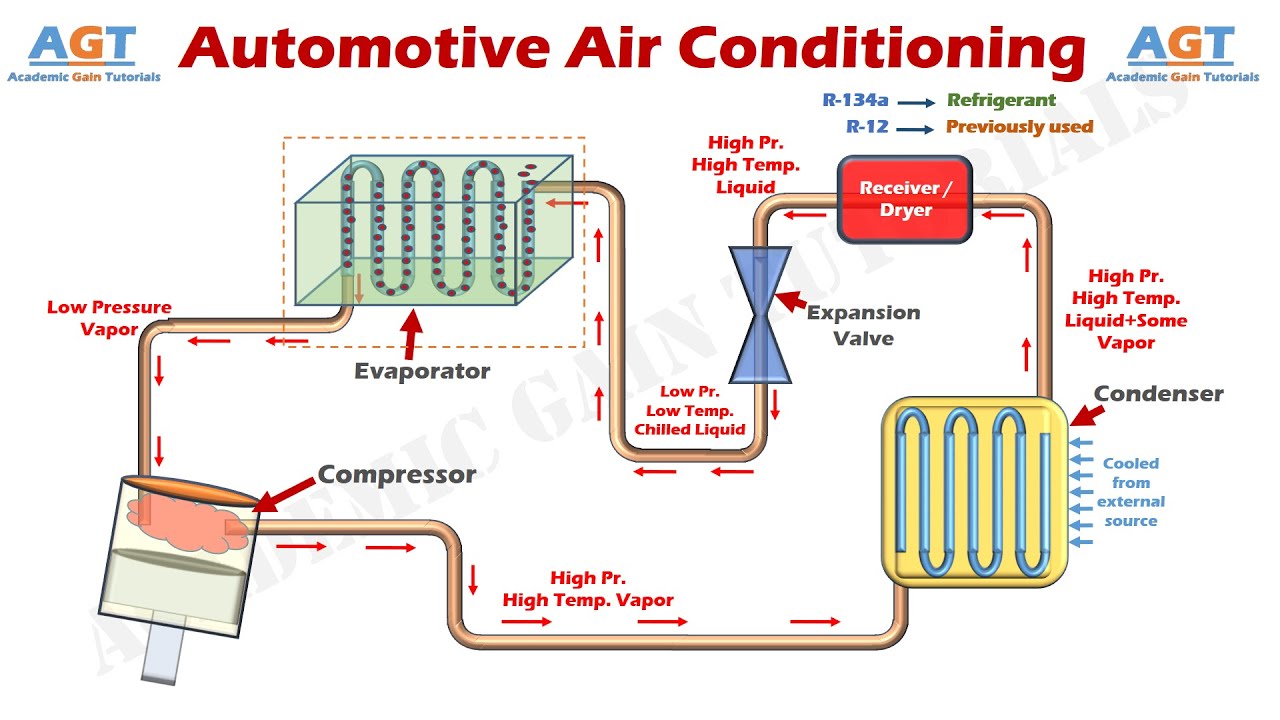
When you turn on the A/C in a car in the United States, the system uses a refrigerant, compressor, condenser, expansion device, and evaporator. The refrigerant changes pressure and state as it travels through these parts. A blower then pushes cooled air through the vents.
The process is simple in principle:
- The compressor pressurizes the refrigerant.
- The condenser releases heat outside the vehicle.
- The expansion device lowers the refrigerant pressure.
- The evaporator absorbs heat from cabin air.
- The blower sends the cooler, drier air into the cabin.
The details vary by vehicle. A gasoline car may use an engine-driven compressor, while an electric vehicle often uses a high-voltage electric compressor.
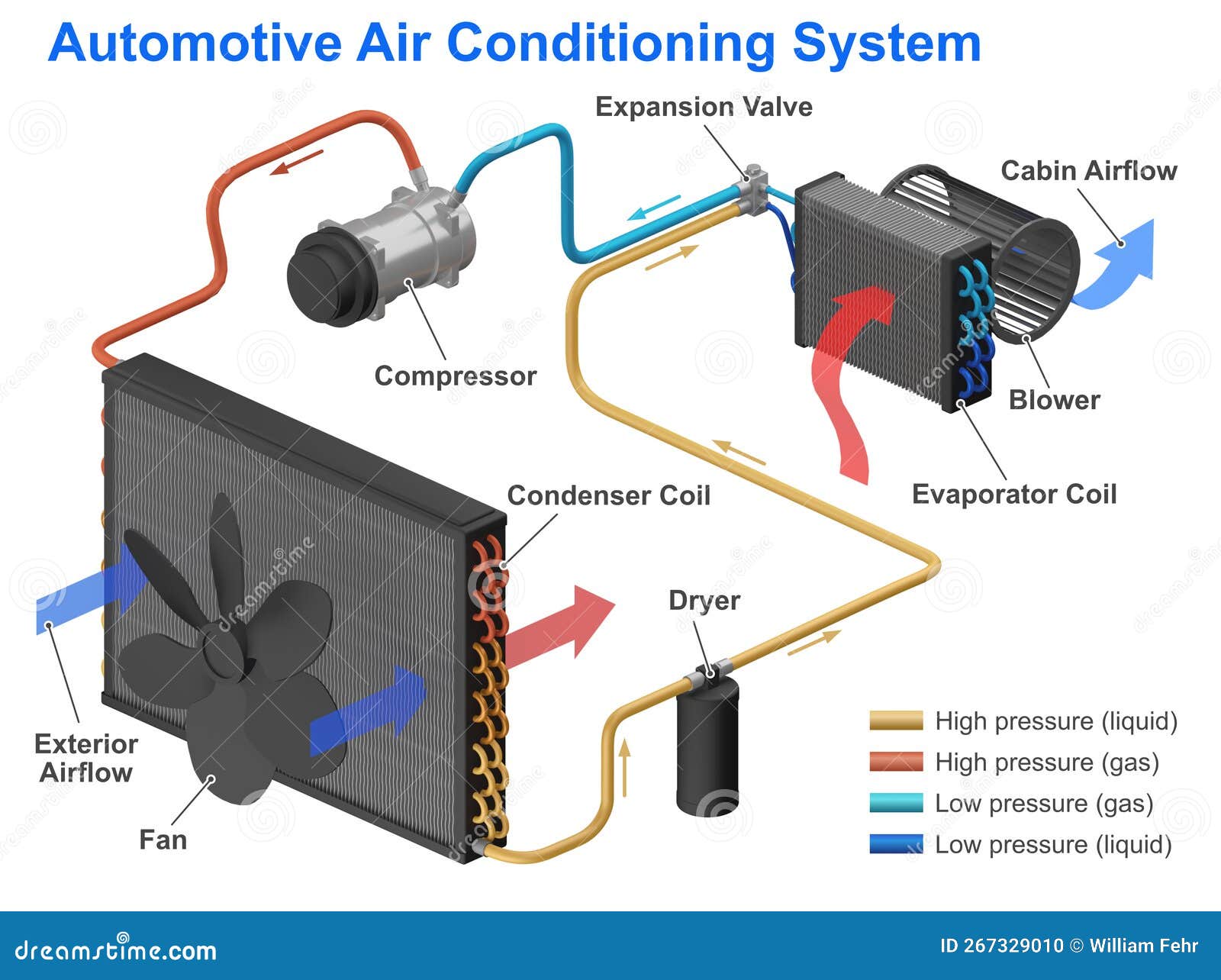
The Main Parts of a Car A/C System
Each part has a specific job. If one part fails, the whole cooling cycle may become weak or stop.
Compressor
The compressor is the pump at the center of the system. It draws in low-pressure refrigerant vapor from the evaporator and compresses it into a hot, high-pressure vapor.
In many gasoline vehicles, the engine turns the compressor through a belt. An electromagnetic clutch may connect or disconnect the compressor when cooling is needed.
Many newer vehicles use a variable-displacement compressor. This design can change its output instead of switching fully on and off each time.
Electric vehicles use an electric compressor. It can run without the engine and may continue working while the vehicle is charging or preconditioning the cabin.
Condenser
The condenser sits near the radiator, usually at the front of the vehicle. Hot refrigerant vapor flows through its small tubes.
Air passing over the condenser carries heat away. As the refrigerant loses heat, it changes from a high-pressure vapor into a high-pressure liquid.
This is why the area near the front of a running vehicle can be hot. The condenser is releasing cabin heat into the outside air.
Receiver-Drier or Accumulator
The system usually has either a receiver-drier or an accumulator.
A receiver-drier is commonly used with an expansion valve system. It stores liquid refrigerant, removes moisture, and helps filter debris.
An accumulator is commonly used with a fixed orifice tube system. It helps prevent liquid refrigerant from reaching the compressor, where it could cause damage.
Moisture is a serious problem in an A/C system. It can freeze at the expansion device or react with refrigerant oil and form corrosive compounds.
Expansion Valve or Orifice Tube
The expansion device creates a pressure drop. This causes the liquid refrigerant to become much colder.
Some vehicles use a thermostatic expansion valve. Others use a fixed orifice tube. The design differs, but the purpose is similar: control refrigerant flow and lower its pressure before it enters the evaporator.
Evaporator
The evaporator is usually inside the dashboard housing. Low-pressure refrigerant enters it as a cold fluid mixture.
The cabin blower pushes warm cabin air across the evaporator fins. Heat moves from the air into the refrigerant. The refrigerant then boils into a vapor.
The air leaves the evaporator cooler than before. Moisture in the air also condenses on the cold surface and drains under the vehicle.
Blower Motor and Cabin Air Filter
The blower motor moves air through the system. Its speed controls how much air comes from the vents.
The cabin air filter catches dust, pollen, and other particles before air reaches the blower and evaporator. A dirty filter may reduce airflow, even when the refrigerant charge is correct.
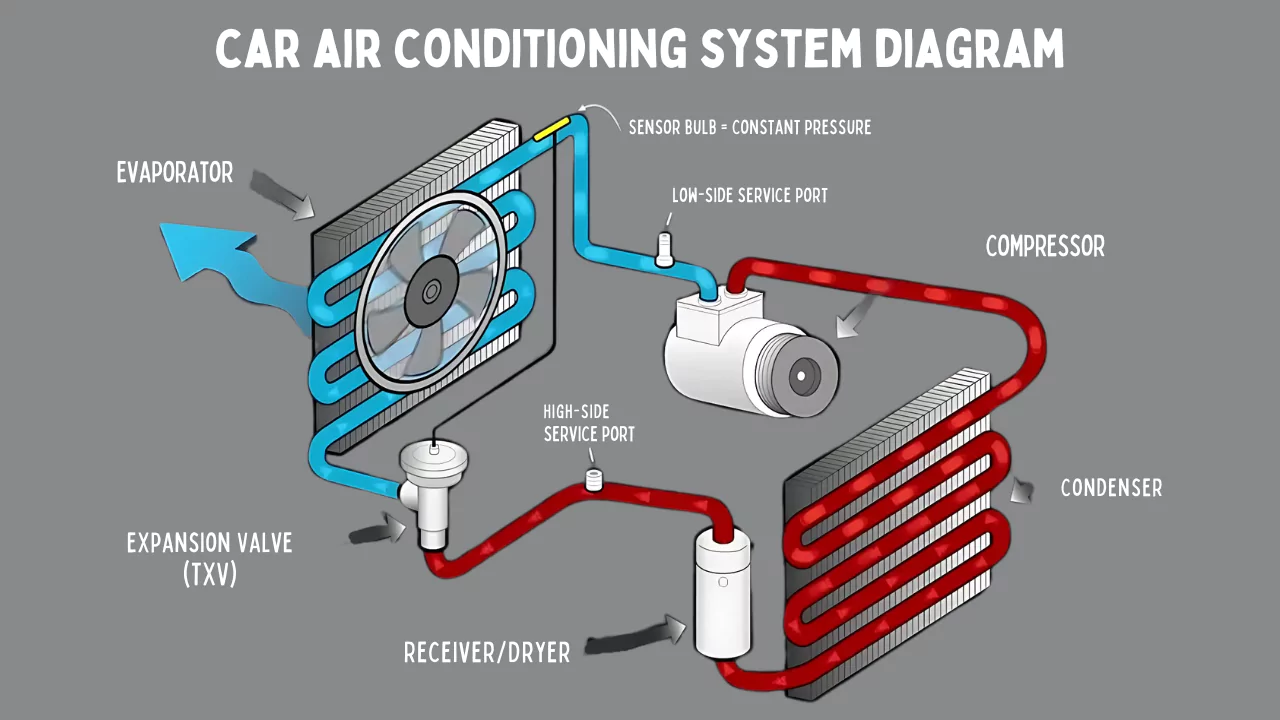
How the Car A/C Refrigeration Cycle Works
The car air conditioner works through a continuous closed-loop cycle. The refrigerant does not normally get used up. If the system needs frequent recharging, a leak may be present.
Step 1: The Compressor Raises Pressure
The compressor receives cool, low-pressure refrigerant vapor from the evaporator. It squeezes the vapor and sends out a hot, high-pressure vapor.
Compression raises both the refrigerant pressure and temperature. This gives the refrigerant enough heat to release energy through the condenser.
Step 2: The Condenser Releases Heat
The hot refrigerant enters the condenser at the front of the vehicle. Outside air flows across the condenser as the car moves or as the cooling fan runs.
The refrigerant gives up heat to the outside air. It changes into a high-pressure liquid.
The condenser does not create cold. It removes heat that was collected inside the cabin.
Step 3: The Expansion Device Lowers Pressure
The high-pressure liquid travels to the expansion valve or orifice tube. This small device restricts flow.
As the pressure drops, the refrigerant becomes much colder. It leaves the expansion device as a cold, low-pressure liquid and vapor mixture.
Step 4: The Evaporator Absorbs Cabin Heat
The cold refrigerant enters the evaporator inside the cabin air box. The blower pushes warm air over the evaporator.
Heat moves from the cabin air into the refrigerant. The refrigerant boils and becomes a low-pressure vapor.
The air is now cooler. Water vapor also turns into liquid water on the evaporator surface. That water leaves through a drain tube.
Step 5: The Refrigerant Returns to the Compressor
The low-pressure vapor returns to the compressor. The cycle then repeats.
A simple way to picture the system is this:
Cabin heat → refrigerant → condenser → outside air
The A/C system moves heat. It does not make cold air from nothing.
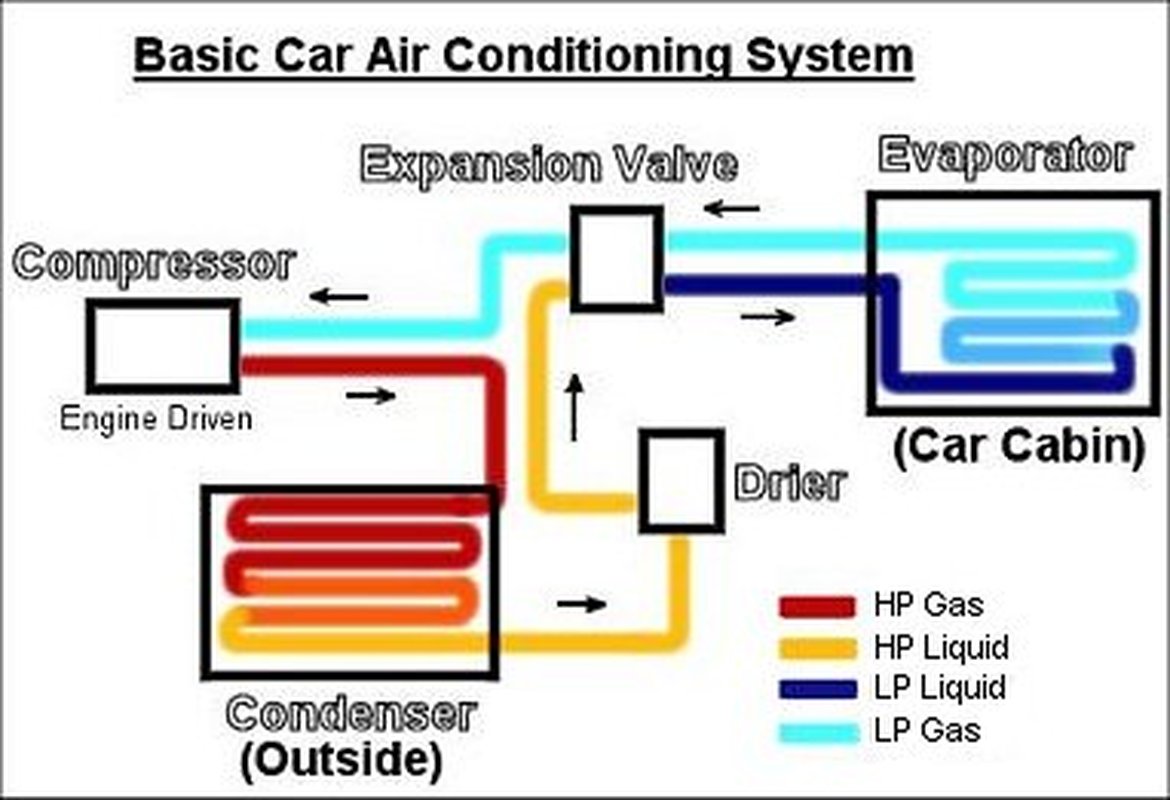
Why Car A/C Also Removes Humidity
Car A/C removes water from the air as well as heat. This helps explain why the system is useful during rain and cold weather.
When damp cabin air touches the cold evaporator, water condenses on the evaporator fins. The water collects in a drain pan and exits below the vehicle.
This is why a small puddle under a parked car after using the A/C is often normal. Clear water near the passenger side may simply be condensation.
The defroster often turns on the A/C compressor automatically, even when you select warm air. The system dries the air before it reaches the windshield. Dry air clears fog faster than warm, damp air alone.
If the drain becomes blocked, water may collect inside the vehicle. A wet passenger-side carpet, musty smell, or water dripping from the dashboard can point to a drain problem.
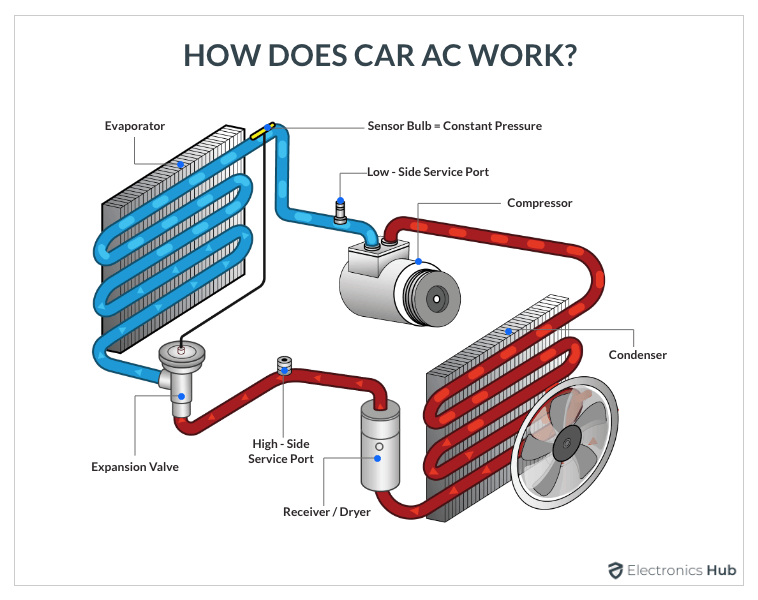
How the A/C Controls Temperature and Airflow
The A/C system does more than switch cooling on and off. Several controls decide how much air reaches the cabin and how cold it feels.
Temperature Control
In a basic system, the A/C cools the air and the heater warms some of it again. The blend door controls how much air passes through the heater core.
In other systems, the system changes compressor output or refrigerant flow to match the selected temperature.
Recirculation Mode
Recirculation mode sends cabin air back through the evaporator instead of drawing in outside air.
This usually cools the cabin faster because the system keeps treating air that is already cooler. It can also reduce the load on the compressor.
Fresh-air mode is still useful. It can reduce odors, limit stale air, and help clear some window fog. Follow the vehicle owner's manual if the car has automatic air-quality controls.
Fan Speed
A higher fan speed moves more air across the evaporator. This can cool the cabin faster, but the air may feel less cold at the vent because it moves quickly.
A lower fan speed may produce colder vent air but less total airflow.
Automatic Climate Control
Automatic climate control uses sensors to manage temperature, fan speed, air direction, and sometimes recirculation.
The system may change settings without obvious input. For example, it may increase airflow when the cabin is hot or engage the A/C during defrost.

Why a Car A/C System Stops Blowing Cold Air
Weak cooling has more than one possible cause. Check the easiest and safest items first.
| Symptom | Possible cause | Useful first check |
|---|---|---|
| Little air comes from the vents | Dirty cabin filter, weak blower, blocked intake | Check the cabin filter and fan speeds |
| Strong airflow but warm air | Low refrigerant, compressor problem, blend-door fault | Check whether the compressor operates and seek diagnosis |
| Cold air while driving but warm air at idle | Cooling fan fault, low airflow across condenser, low refrigerant | Inspect fan operation without touching moving parts |
| A/C works for a short time, then stops | Evaporator icing, pressure protection, electrical fault | Turn the system off and arrange a proper inspection |
| Bad smell from vents | Mold or debris near the evaporator or filter | Replace the filter and inspect the drain and air box |
| Water inside the cabin | Blocked evaporator drain or leaking heater-related components | Stop using the system if the carpet becomes wet and seek service |
| Clicking or belt noise | Clutch, pulley, belt, or compressor problem | Turn off the A/C if the noise is severe |
| Windows stay foggy | A/C not operating, high humidity, blocked drain, wrong air mode | Use defrost with fresh air and A/C if the vehicle allows it |
Low refrigerant is common, but it is not normal for refrigerant to disappear. A low charge often means there is a leak.
Adding refrigerant without finding the leak may provide only short-term cooling. Overcharging can also reduce performance and damage system parts.
Safe Checks You Can Make
You can safely check these items in many vehicles:
- Confirm that the A/C button is on.
- Set the temperature to cold.
- Select a suitable vent mode.
- Try recirculation.
- Check the cabin air filter.
- Look for leaves or debris blocking the front condenser.
- Check whether air comes from every selected vent.
- Look for water dripping below the vehicle after A/C use.
Do not place your hands near belts, fans, pulleys, or the compressor while the engine is running. Electric vehicles can have high-voltage components that remain dangerous even when the vehicle appears quiet.
Car A/C Refrigerants in the United States
Many older vehicles in the United States use R-134a. Many newer vehicles use R-1234yf. Some older vehicles used R-12, but it is no longer the normal refrigerant for modern service.
R-1234yf has a much lower global warming impact than R-134a. It is mildly flammable, so the vehicle must use the correct refrigerant and approved service equipment.
The refrigerant label is usually under the hood. Never guess based on the vehicle's age or use a substitute that the manufacturer does not approve.
The U.S. Environmental Protection Agency regulates the handling of motor vehicle air-conditioning refrigerants. Under EPA Section 609 rules, technicians who service mobile A/C systems for payment must use approved equipment and hold the required certification.
The EPA also warns against releasing refrigerant into the atmosphere. A professional shop should recover refrigerant before opening the system.
Why Refrigerant Type Matters
Using the wrong refrigerant can cause:
- Poor cooling
- Excessive pressure
- Compressor damage
- Chemical incompatibility
- Equipment contamination
- Safety risks during service
Read the label under the hood and the vehicle service information. A refrigerant recharge kit should match the exact refrigerant listed for that vehicle.

Can You Recharge Car A/C Yourself?
A do-it-yourself recharge may seem simple, but it can create problems if the system has a leak or the wrong amount enters the system.
A proper A/C service normally includes:
- Identifying the refrigerant type.
- Recovering any existing refrigerant.
- Testing for leaks.
- Repairing the leak when found.
- Evacuating air and moisture with a vacuum pump.
- Adding the exact refrigerant mass specified by the manufacturer.
- Checking system pressures and outlet temperature.
- Confirming that the compressor, fans, and controls work correctly.
Pressure alone does not show the correct refrigerant charge under every condition. Temperature, humidity, engine speed, airflow, refrigerant mass, and system design all affect pressure readings.
Avoid products that contain sealers unless a qualified technician confirms that they are suitable. Sealers can contaminate professional recovery and recycling equipment.
A qualified technician is the safer choice when the system is empty, a leak is suspected, a component must be replaced, or the vehicle is an electric or hybrid model.

How to Keep Your Car A/C Working Well
Routine use and basic checks can help prevent avoidable problems.
- Run the A/C for a few minutes each month, even in cool weather, unless the owner's manual says otherwise.
- Replace the cabin air filter at the interval listed in the maintenance schedule.
- Keep leaves and dirt away from the cowl intake and condenser.
- Use the A/C with defrost to remove windshield moisture.
- Do not ignore unusual belt, clutch, or compressor noises.
- Have a leak repaired instead of repeatedly adding refrigerant.
- Use the correct refrigerant and oil for the vehicle.
- Keep the condenser and radiator area clear, but do not bend the delicate fins.
- Ask a technician to inspect the system if cooling changes sharply or the compressor cycles abnormally.
A/C performance also depends on engine cooling. If the radiator fan does not work, the air conditioner may blow warm at low speed or while stopped.

Car A/C vs. Electric Vehicle A/C
The basic heat-transfer process is similar in gasoline cars and electric vehicles. The main difference is how the compressor gets power.
A gasoline vehicle often uses an engine belt. The compressor may stop when the engine stops, unless the vehicle has a special system.
An electric vehicle uses an electric compressor powered by the high-voltage battery. This lets the A/C run while the vehicle is parked and can support cabin preconditioning.
Heating is different, too. A gasoline car can use waste engine heat for cabin heat. An electric vehicle may use a resistance heater or a heat pump.
An EV heat pump can move heat into or out of the cabin. This may use less energy than resistance heating in suitable conditions, but performance depends on outside temperature and the vehicle design.
Never work on high-voltage A/C parts without the training and equipment required for that vehicle.

Frequently Asked Questions
Does car A/C use gas?
Yes, in a gasoline vehicle, the A/C compressor adds load to the engine. That can increase fuel use, especially during hot weather, at low speeds, or while idling. The exact effect varies by vehicle, weather, driving speed, and A/C setting.
In an electric vehicle, the A/C uses battery energy rather than gasoline directly.
Why does water drip under my car when the A/C is on?
The water is usually condensation from the evaporator. Warm, damp air reaches the cold evaporator, and moisture collects there before draining outside.
Water inside the cabin is not normal. It may indicate a blocked drain or another leak.
Should I use recirculate with the A/C?
Recirculation often cools the cabin faster because it reuses air that is already cooler. Fresh-air mode can help reduce stale air and may help with some fogging conditions.
Use the mode that fits the situation and follow the owner's manual.
Why does the A/C work better while driving?
The condenser needs airflow to release heat. Vehicle speed provides airflow, and the engine may also run at a different speed.
If the system is cold on the road but warm at idle, a cooling fan problem, blocked condenser, or low refrigerant level may be involved.
How often should car A/C be recharged?
There is no universal recharge interval. A sealed system should not need regular refilling.
If the refrigerant level is low, the system should be checked for a leak before more refrigerant is added.
Conclusion
A car air conditioner works by moving heat from the cabin to the outside. The compressor raises refrigerant pressure, the condenser releases heat, the expansion device lowers pressure, and the evaporator absorbs heat and moisture from cabin air.
For a quick first check, confirm the settings, inspect the cabin filter, look for blocked airflow, and watch for unusual noises or water inside the vehicle. Do not open the refrigerant circuit or handle high-voltage A/C parts without the right training and equipment.
If the system needs repeated recharging or stops cooling at idle, arrange a proper diagnosis rather than guessing with a recharge can.
