

Introduction
For readers in the United States comparing tire costs abroad, a Goodyear tire in the Philippines usually costs about ₱3,500 to ₱25,000 per tire. The final price depends on the tire size, product line, vehicle type, seller, and current promotions.
A small passenger-car tire may cost less than ₱5,000. A larger SUV tire, performance tire, or run-flat tire can cost more than ₱15,000. Installation, wheel balancing, delivery, and old-tire disposal may add to the bill.
Prices change often, so use the figures below as a buying guide rather than a fixed quotation.

Goodyear Tire Price Range in the Philippines
The most common Goodyear tire prices fall into these broad ranges:
| Tire type | Typical price per tire | Estimated price for four tires |
|---|---|---|
| Small passenger car | ₱3,500–₱5,500 | ₱14,000–₱22,000 |
| Compact sedan | ₱4,000–₱7,000 | ₱16,000–₱28,000 |
| Mid-size sedan or crossover | ₱5,500–₱10,000 | ₱22,000–₱40,000 |
| SUV or pickup truck | ₱7,000–₱16,000 | ₱28,000–₱64,000 |
| Large SUV or light truck | ₱10,000–₱25,000 | ₱40,000–₱100,000 |
| Performance or specialty tire | ₱8,000–₱25,000 or more | ₱32,000–₱100,000 or more |
These are planning ranges for new Goodyear tires sold in the Philippine market. They are not a live dealer price list. A dealer may quote less during a sale or more for a rare size, imported stock, or a newer model.
A complete replacement set often includes more than the tire price. Ask whether the quote includes:
- Mounting
- Wheel balancing
- New tire valves
- Alignment
- Delivery
- Disposal of old tires
- Taxes or service fees
A low online price may not be the lowest final cost if these services are charged separately.

Goodyear Tire Prices by Common Tire Size
Tire size is one of the strongest price factors. A larger tire uses more rubber and may require a stronger casing, higher load rating, or special construction.
The table below shows practical price examples for common size groups.
| Common size group | Typical vehicle use | Approximate Goodyear price |
|---|---|---|
| 175/65R14 | Small hatchback or compact sedan | ₱3,500–₱5,000 |
| 185/65R15 | Small to mid-size sedan | ₱4,000–₱6,500 |
| 195/65R15 | Sedan, taxi, or family car | ₱4,500–₱7,000 |
| 205/55R16 | Sedan or compact crossover | ₱5,500–₱8,500 |
| 215/60R16 | Sedan, crossover, or MPV | ₱6,000–₱10,000 |
| 225/65R17 | Crossover or SUV | ₱7,000–₱12,000 |
| 235/65R17 | SUV or pickup | ₱8,000–₱14,000 |
| 265/65R17 | Pickup or larger SUV | ₱9,000–₱16,000 |
| 265/60R18 and larger | SUV or premium pickup | ₱12,000–₱25,000 or more |
These figures are approximate because the same size may be available in several Goodyear product families. A standard touring tire will usually cost less than a high-performance tire in the same size.
Do not choose a tire by size alone. The complete marking also includes:
- Load index
- Speed rating
- Construction type
- Run-flat status
- Original-equipment specifications
- Wet-road and comfort characteristics
For example, two tires marked 215/60R16 may fit the same wheel but have different load ratings and speed ratings. Always compare the complete specification with the vehicle maker’s recommendation.

What Changes the Price of a Goodyear Tire?
Tire model
Goodyear sells several types of tires. Touring tires are often made for quiet daily driving and long road use. Performance tires may use more advanced tread designs and compounds. SUV and truck tires need stronger construction and higher load capacity.
The model name can therefore change the price even when the tire size stays the same.
Tire size
A 14-inch tire usually costs less than an 18-inch tire. Width also matters. A wide tire normally requires more material and may be less common in local inventory.
Vehicle type
A tire for a small hatchback is usually cheaper than one for a Toyota Fortuner, Ford Everest, Mitsubishi Montero Sport, or full-size pickup. SUV tires also tend to have higher load ratings.
Stock age and availability
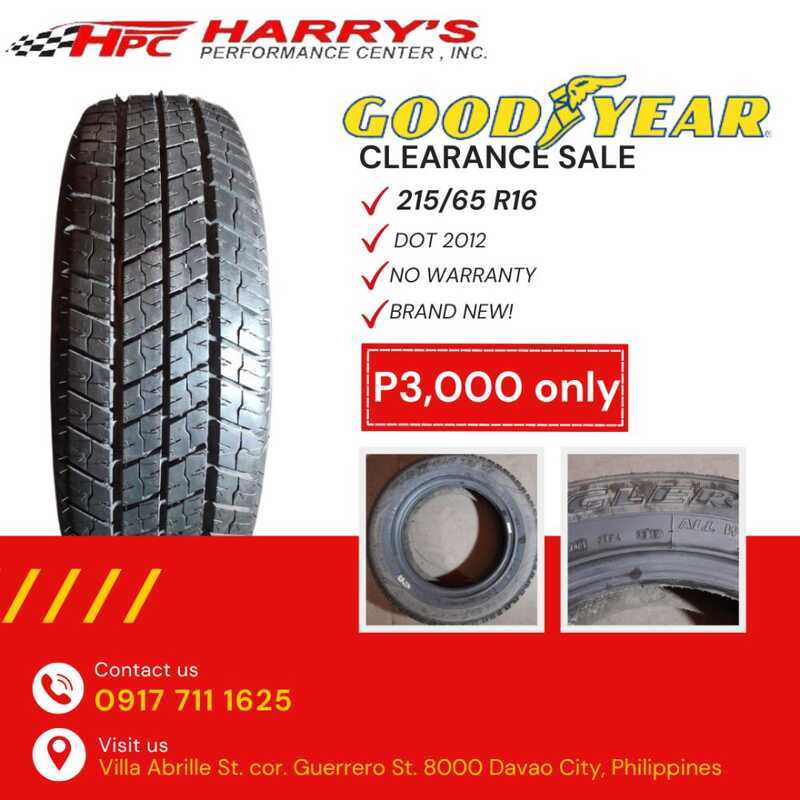
Rare sizes can cost more because dealers carry fewer units. Some sellers may also discount older stock. Check the DOT date code on the sidewall before buying.
The code shows the week and year of manufacture. For example, a code ending in 2525 means the tire was made in the 25th week of 2025. A tire that has sat in storage is not automatically unsafe, but buyers should ask how it was stored and review the seller’s warranty terms.
Seller and location
Prices may differ between:
- Goodyear-authorized dealers
- Tire chains
- Independent tire shops
- Online marketplaces
- Automotive service centers
- Provincial and Metro Manila retailers
Delivery costs and local supply can affect the final price. Compare the complete installed price, not only the online listing.
Promotions
Dealers may offer discounts for four tires, free balancing, free alignment, cashback, or installment payment. Read the terms carefully. Some offers apply only to selected models, sizes, banks, or dates.

Goodyear Product Lines and Expected Pricing
The exact lineup changes by market and stock. Still, product categories can help explain why prices differ.
Touring tires
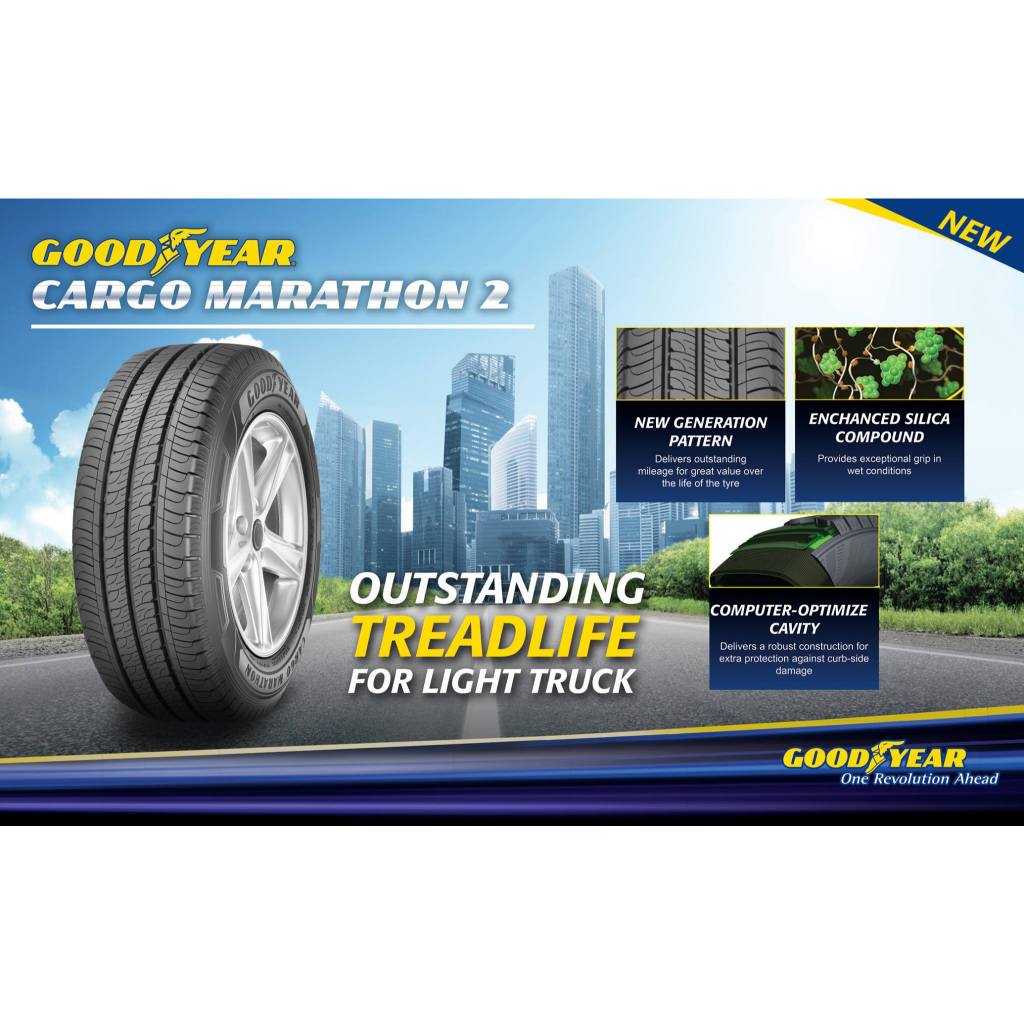
Touring tires are designed for normal city and highway use. They often focus on ride comfort, road noise, tread life, and wet-road control.
For small and mid-size cars, a touring tire may cost about ₱3,500 to ₱8,000 per tire, depending on size and model.
Performance tires
Performance tires may provide sharper steering and stronger grip at higher speeds. They often cost more and may wear faster than a comfort-focused touring tire.
A performance Goodyear tire may cost approximately ₱7,000 to ₱18,000 per tire, with larger sizes costing more.
SUV and pickup tires
SUV and pickup tires need suitable load capacity. Some are built mainly for paved roads, while others have more aggressive tread for gravel or light off-road use.
Expect roughly ₱7,000 to ₱16,000 per tire for many SUV and pickup sizes. Specialty sizes can exceed this range.
Run-flat tires
Run-flat tires allow limited travel after a loss of air pressure, but they require a compatible vehicle and wheel system. They are usually more expensive than standard tires.
A run-flat Goodyear tire may cost ₱10,000 to ₱25,000 or more per tire, depending on size and availability.
Do not replace a run-flat tire with a standard tire without checking the vehicle requirements. The change may affect the warning system, handling, spare-tire plan, and warranty.

How Much Does a Full Set of Four Goodyear Tires Cost?
A full set of four Goodyear tires may cost about ₱14,000 to ₱100,000, depending on the vehicle.
Here are hypothetical examples:
Example 1: Small sedan
- Tire size: 175/65R14
- Price per tire: ₱4,200
- Four tires: ₱16,800
- Mounting and balancing: ₱1,000–₱2,000
- Estimated total: ₱17,800–₱18,800
Example 2: Mid-size sedan
- Tire size: 205/55R16
- Price per tire: ₱6,800
- Four tires: ₱27,200
- Mounting and balancing: ₱1,000–₱2,000
- Estimated total: ₱28,200–₱29,200
Example 3: SUV
- Tire size: 265/65R17
- Price per tire: ₱11,500
- Four tires: ₱46,000
- Mounting and balancing: ₱1,500–₱3,000
- Alignment, if needed: ₱500–₱1,500
- Estimated total: ₱48,000–₱50,500
These calculations are examples, not dealer quotes. A promotion may reduce the cost, while a rare tire size or premium model may raise it.
When replacing only two tires, ask the shop where to install them. In many cases, the tires with better remaining tread should be placed on the rear axle, but the correct choice depends on the vehicle, drivetrain, tire condition, and manufacturer guidance. A qualified tire technician should inspect the set.
How to Check the Correct Goodyear Tire Price
Use this process before you order.
1. Read the tire size
Look at the sidewall or the vehicle information label. A marking such as 205/55R16 91V contains several details:
- 205: tire width in millimeters
- 55: sidewall height as a percentage of width
- R: radial construction
- 16: wheel diameter in inches
- 91: load index
- V: speed rating
The driver’s door-jamb label is usually the best starting point. The owner’s manual may list additional approved sizes.
2. Record the full specification
Write down the size, load index, speed rating, and any special marking. Look for terms such as:
- XL, meaning extra load
- Run-flat markings
- SUV or light-truck construction
- Original-equipment markings
- Directional tread requirements
3. Compare at least three sellers
Ask each seller for the same information:
- Exact Goodyear model
- Tire size and rating
- Manufacturing date
- Warranty
- Installation cost
- Balancing cost
- Alignment cost
- Delivery time
- Total installed price
This prevents a basic tire from being compared with a premium model that only shares the same size.
4. Check the tire date and condition
Ask for a clear photo of the sidewall if buying online. Avoid tires with damaged packaging, exposed rubber damage, deep cuts, or signs of poor storage.
Never buy a tire with a damaged bead. The bead is the part that seals the tire against the wheel.
5. Confirm the warranty
Ask what the warranty covers and who handles a claim. Coverage may differ for manufacturing defects, road damage, uneven wear, punctures, incorrect inflation, and improper alignment.
6. Get the final written quote
A useful quote should show the number of tires, price per tire, services, taxes, delivery, and total amount. Keep the invoice and tire photographs after installation.

Is a Cheap Goodyear Tire in the Philippines a Good Deal?
A low price can be a good deal when the tire is genuine, correctly sized, reasonably fresh, and sold with clear warranty support. It can be a poor deal when the tire is old, mismatched, damaged, or missing installation costs.
Before paying, check these points:
- Is the seller authorized or established?
- Is the tire brand and model clearly stated?
- Does the size match the vehicle?
- Is the load and speed rating correct?
- Is the manufacturing date visible?
- Does the seller provide an official receipt?
- Is there a written warranty?
- Are mounting and balancing included?
- Is the tire suitable for the vehicle’s use?
Be careful with listings that show only a brand name and a very low price. Ask for the complete model name and sidewall markings. A listing may use a stock photo that does not show the actual tire being sold.

Installation and Maintenance Costs to Include
The cost of owning a tire includes more than the purchase price.
Mounting and balancing
Mounting places the tire on the wheel. Balancing corrects weight differences that can cause vibration. These services are often included in a shop purchase but may cost extra online.
Wheel alignment
Alignment is needed when the wheels point at incorrect angles. Warning signs include:
- Vehicle pulling to one side
- Uneven tread wear
- An off-center steering wheel
- Steering that feels unstable
- Tires wearing quickly on one edge
Alignment cannot repair a bent wheel, worn suspension part, or damaged tire. The shop should inspect those parts first.
Tire rotation
Rotation helps spread wear across the vehicle. Follow the vehicle manual or tire maker’s guidance. Some tires cannot be rotated in the usual pattern because they are directional or have different front and rear sizes.
Air pressure checks
Use the vehicle maker’s recommended cold inflation pressure. Do not use the maximum pressure printed on the tire sidewall as the normal target unless the vehicle maker says so.
Check pressure when the tires are cold, especially before a long trip. Philippine heat, heavy traffic, rough roads, and high loads can make tire care more important.

Common Mistakes When Buying Goodyear Tires
Choosing the lowest price without checking the model
A lower price may reflect a different model, size, load rating, or stock date. Compare like with like.
Buying the wrong size
A tire that fits the wheel may still be wrong for the vehicle. Incorrect width, diameter, load capacity, or speed rating can affect steering and clearance.
Replacing only one tire
One new tire can have a different diameter and tread depth from the others. This may affect handling and, on some all-wheel-drive vehicles, the drivetrain. Ask a qualified technician before replacing a single tire.
Ignoring the tire date
Tires age even when they are not used. A date check is especially useful when a seller offers a large discount.
Skipping balancing
A vehicle can appear to drive normally at low speed but vibrate at highway speed. Balancing is a small cost compared with the inconvenience of uneven wear.
Mixing unsuitable tires
Avoid mixing different tire types or construction on the same axle unless the vehicle maker or tire professional approves the setup. Never mix a temporary spare with normal tires as a permanent replacement.

Where to Verify Goodyear Prices in the Philippines
Start with the official Goodyear Philippines website and its dealer or product information. Then compare established tire retailers and local authorized dealers.
When contacting a seller, send this short message:
Please quote four Goodyear tires for a [vehicle year and model]. The required size is [full tire marking]. Please include the exact model, tire date, warranty, mounting, balancing, alignment, delivery, and total installed price.
This format makes it easier to compare quotes. It also reduces the risk of receiving a price for the wrong size or a different product line.
Online marketplaces may have useful deals, but check the seller rating, return policy, receipt, warranty process, and delivery condition. A tire is a safety-critical part, so seller accountability matters.
Frequently Asked Questions
How much is one Goodyear tire in the Philippines?
One Goodyear tire commonly costs about ₱3,500 to ₱25,000 or more. Small car tires are usually near the lower end. Large SUV, pickup, performance, and run-flat tires can reach the upper end.
How much is a set of four Goodyear tires?
A set of four may cost about ₱14,000 to ₱100,000 or more. The main factors are size, model, load rating, and availability. Add installation and alignment if they are not included.
Are Goodyear tires expensive in the Philippines?
Goodyear is generally priced in the mid-range to premium segment. Some models cost more than budget brands, but the comparison should include the exact model, warranty, tire age, and services.
How long do Goodyear tires last?
There is no single mileage figure that applies to every driver. Tire life depends on inflation, alignment, road quality, heat, load, driving style, storage, and rotation. Inspect the tread and sidewalls often, and replace a tire with serious damage or unsafe wear.
Should I buy Goodyear tires online?
Online buying can work if the seller provides the exact model, correct size, recent stock information, warranty, receipt, and professional installation. Avoid listings that do not show the full specifications or seller details.
What is the best Goodyear tire for my car?
The best model depends on the vehicle’s approved size, driving conditions, load, budget, and priorities. Start with the vehicle maker’s required size and rating, then compare touring, performance, SUV, or specialty options within that specification.
Conclusion
A Goodyear tire in the Philippines usually costs ₱3,500 to ₱25,000 per tire, while a complete set can range from about ₱14,000 to ₱100,000 or more. Small passenger cars tend to cost less, while SUVs, pickups, large wheels, performance tires, and run-flat designs cost more.
For an accurate quote, check the full tire marking, compare the same Goodyear model across several sellers, verify the manufacturing date, and request the total installed price. The safest purchase is not always the cheapest listing; it is the tire that matches the vehicle, has clear seller support, and is installed and maintained correctly.
