

Fixing a car AC usually costs $150 to $1,500, depending on the failed part, vehicle, and repair shop.
Knowing how much to fix AC in car helps you avoid surprise bills. A simple recharge may cost little, while a failed compressor can cost more than the car’s monthly payment. This guide breaks down common prices, repair causes, diagnostic fees, and ways to make a smart choice before approving work.
How Much to Fix AC in Car: Average Cost
The average car air conditioning repair costs between $150 and $1,500 in the United States. Minor fixes sit near the low end. Major parts, such as the compressor or evaporator, push the price much higher.
Here is a general cost guide:
| AC problem or service | Typical cost |
|---|---|
| AC diagnosis | $50 to $150 |
| Refrigerant recharge | $100 to $250 |
| Leak repair | $200 to $1,000 |
| Blower motor replacement | $250 to $650 |
| AC condenser replacement | $450 to $1,100 |
| AC evaporator replacement | $800 to $2,000 |
| AC compressor replacement | $700 to $1,500 |
| Expansion valve replacement | $300 to $700 |
| Cabin air filter replacement | $40 to $120 |
| Full AC system repair | $1,000 to $2,500 or more |
These prices include common labor and parts, but local rates vary. Luxury cars, electric vehicles, older cars, and models with hard-to-reach parts often cost more.


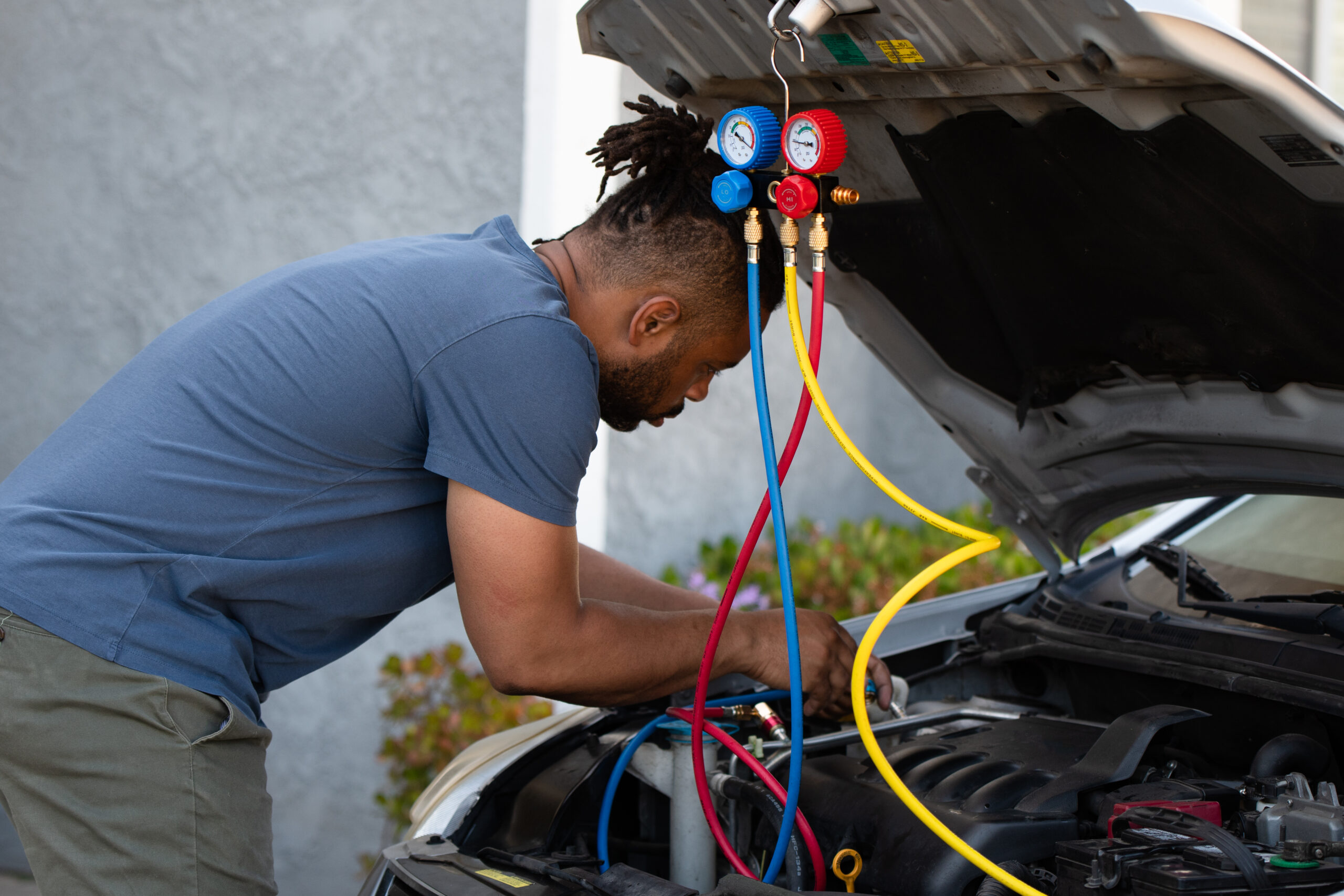
A quick refrigerant recharge may seem like the best deal. Yet, low refrigerant usually means the system has a leak. Adding refrigerant without fixing that leak is like filling a bucket with a hole in the bottom.
What Changes the Cost of Car AC Repair?
Several factors determine how much to fix AC in car. The failed component matters most, but it is not the only concern.
The damaged part
An AC system has many parts that work together. These include the compressor, condenser, evaporator, receiver-drier, expansion valve, hoses, sensors, and blower motor.
A failed cabin filter costs little to replace. A failed compressor requires more labor, more parts, and often a system flush.
Labor rates
Most repair shops charge about $90 to $180 per hour in labor. Dealerships may charge more, especially for newer or luxury vehicles.
A repair that takes one hour may cost less than $200. A repair that takes six or seven hours can add more than $1,000 in labor alone.
Vehicle design
Some evaporators sit deep inside the dashboard. Reaching one may require removing much of the dash. The part itself may not be expensive, but the labor can be substantial.
Compact cars often have lower repair costs. Large SUVs, luxury vehicles, and cars with complex climate systems can cost more.
Refrigerant type
Older cars may use R-134a refrigerant. Many newer cars use R-1234yf, which is more expensive. Some hybrid and electric vehicles use special electric compressors that need proper service procedures.
Using the wrong refrigerant can damage the system. It can also create a safety risk and lead to a much larger repair bill.
Parts quality
Original equipment manufacturer parts usually cost more than aftermarket parts. Cheap parts may reduce the first bill, but they can have shorter warranties or a higher failure rate.


Ask whether the estimate includes:
• New parts
• Refrigerant
• Labor
• Shop fees
• Taxes
• Warranty coverage
• System testing

Common Car AC Problems and Their Repair Prices
Understanding the problem can make how much to fix AC in car easier to estimate. The symptoms often point toward the likely cause, but only proper testing can confirm it.
Low refrigerant
Low refrigerant is one of the most common AC problems. The system may blow cool air at first, then become warm. Cooling may also improve when driving fast but weaken at idle.
A recharge often costs $100 to $250. If the system has a leak, the total repair may range from $200 to more than $1,000.
Refrigerant leak
Leaks can occur in hoses, seals, the condenser, the evaporator, or the compressor. A technician may use dye, an electronic detector, or nitrogen pressure testing to find the leak.
A small hose repair may cost $200 to $500. An evaporator leak can cost $800 to $2,000 because of the labor involved.
Failed AC compressor
The compressor acts like the heart of the AC system. It moves refrigerant through the system and creates the pressure needed for cooling.
Signs of a bad compressor include:
• Warm air from the vents
• Grinding or rattling sounds
• A seized pulley
• A slipping or broken belt
• AC that works only sometimes
Replacing the compressor usually costs $700 to $1,500. If the compressor fails internally, metal debris may spread through the system. The technician may then recommend replacing the condenser, expansion valve, and receiver-drier too.
Bad condenser
The condenser sits near the front of the vehicle. Road debris, corrosion, and accidents can damage it.
A condenser replacement usually costs $450 to $1,100. The repair may include refrigerant recovery, vacuum testing, new seals, and a recharge.
Failed evaporator
The evaporator absorbs heat from the cabin. It is often located inside the dashboard or HVAC case.
An evaporator repair can cost $800 to $2,000 or more. This is one of the most expensive AC repairs because access takes time.


Blower motor or resistor failure
A blower motor pushes air through the vents. If the fan works only on one speed or does not run at all, the blower motor or resistor may be the cause.
The usual repair range is $250 to $650. A fuse, relay, wiring issue, or control module can cause similar symptoms.
Electrical or sensor problem
A bad pressure sensor, fuse, relay, wiring connection, or climate control module may prevent the AC from working.
Electrical repairs can cost $100 to $600. Diagnosis is important because replacing a compressor will not solve a wiring problem.
Symptoms That Tell You Your AC Needs Repair
The symptoms can help you understand how much to fix AC in car before visiting a shop. They cannot replace a professional diagnosis, but they can give you useful clues.
The air is warm
Warm air may result from low refrigerant, a failed compressor, a blocked condenser, or an electrical fault. If the air is slightly cool but not cold, low refrigerant is a common possibility.
If the air is completely warm and the compressor does not engage, the system may have a pressure or electrical issue.
The airflow is weak
Weak airflow often points to a clogged cabin filter, blocked vent, failing blower motor, or damaged air door. Refrigerant level does not usually cause weak airflow.
Replacing a cabin filter is often a simple and low-cost fix. Many owners overlook this small part.
The AC works while driving but not at idle
This can happen when the condenser fan is not working. At road speed, air moves through the condenser. At idle, the electric fan must provide that airflow.
A fan motor, relay, fuse, or control problem may be responsible. Continuing to use the AC this way can increase system stress.
Strange sounds appear
Clicking, squealing, grinding, or rattling may indicate a compressor, pulley, belt, or tensioner problem. Turn off the AC if the noise is severe.
A damaged compressor can spread debris through the system. Early inspection may prevent a more expensive repair.
The vents smell bad
A musty smell often comes from moisture, mold, or bacteria near the evaporator. A dirty cabin filter can make the smell worse.
A professional cleaning may cost $80 to $250. A damaged or leaking evaporator requires a larger repair.


Water appears inside the cabin
A small amount of water under the car after using the AC is normal. It comes from condensation and usually drains outside.
Water on the floor inside the car may mean a clogged drain tube. Clearing the drain often costs $100 to $300.

How a Professional Diagnoses a Car AC Problem
A good diagnosis is the first step in learning how much to fix AC in car. A technician should not simply add refrigerant and send you away.
A proper inspection may include these steps:
- Check the AC controls, blower motor, fuses, and relays.
- Inspect the belt, compressor, hoses, condenser, and visible connections.
- Measure high-side and low-side refrigerant pressure.
- Test for leaks with dye, an electronic detector, or pressure testing.
- Check compressor operation and condenser fan performance.
- Test vent temperature and airflow.
- Recover, evacuate, and recharge refrigerant when needed.
- Confirm that the system cools correctly after repair.
Modern cars may also require a scan tool. Climate control systems can store fault codes that do not trigger the regular check engine light.
A technician should explain the failed part, show evidence, and provide a written estimate. Be cautious when a shop recommends a major repair without testing.

Can You Fix Car AC Yourself?
Some basic AC tasks are suitable for a careful vehicle owner. Others require special tools and training.
You may safely handle simple jobs such as:
• Replacing the cabin air filter
• Checking the AC fuse
• Cleaning leaves from the condenser
• Inspecting visible belts and hoses
• Checking whether the blower works
Refrigerant work is different. Refrigerant must be recovered and handled with approved equipment. Releasing it into the atmosphere is harmful and may violate environmental rules.
Do not open pressurized AC lines. Do not mix refrigerants. Do not use sealant products unless a qualified technician specifically recommends them.
A DIY recharge can also hide a leak or overfill the system. That may damage the compressor and increase how much to fix AC in car later.


How to Save Money on Car AC Repair
You do not need to choose the cheapest estimate automatically. The goal is a fair repair that lasts.
Use these steps:
- Get a diagnosis before approving parts.
- Ask for a written estimate.
- Compare at least two reputable shops.
- Ask whether the shop has experience with your vehicle.
- Confirm the refrigerant type.
- Ask about parts and labor warranties.
- Request photos or test results when possible.
- Separate urgent repairs from recommended maintenance.
- Avoid repeated refrigerant recharges without leak repair.
- Check whether your vehicle has a service campaign or warranty coverage.
Independent repair shops often charge less than dealerships. However, a dealership may have better access to model-specific tools and technical information.
A low estimate is not always a bargain. If a shop skips leak testing or uses poor-quality parts, you may pay twice.
One useful lesson from real-world repair cases is to ask, “What caused the failure?” Replacing a compressor without checking contamination, airflow, or electrical faults can lead to another failure.
Is It Worth Fixing the AC on an Older Car?
Whether the repair makes sense depends on the car’s value, condition, and expected future use. How much to fix AC in car should be compared with the vehicle’s overall condition, not just its age.
A $900 repair may be reasonable for a reliable car worth $8,000. The same repair may not make sense for a rusty car worth $2,000 that also needs tires, brakes, and engine work.
Consider these questions:
• Does the engine and transmission work well?
• Is the vehicle safe and reliable?
• How long do you plan to keep it?
• Is the repair covered by a warranty?
• Will the repair improve the car’s resale value?
• Are other major repairs coming soon?
Comfort also matters. In hot climates, working AC is more than a luxury. It can reduce driver fatigue and keep the cabin safe for children, older adults, and pets.
If the estimate is high, ask about a second opinion. A trusted technician can explain whether repair, replacement, or continued use is the most sensible option.

How Long Does a Car AC Repair Take?
The repair time depends on the failed part. A cabin filter or fuse may take 15 to 30 minutes. A refrigerant recharge may take about an hour when no leak is found.
Typical repair times include:
• Leak inspection: 30 minutes to two hours
• Hose replacement: One to three hours
• Condenser replacement: Two to four hours
• Compressor replacement: Three to six hours
• Evaporator replacement: Six to twelve hours or more


The shop may need extra time to order parts or retest the system. A proper repair should include a vacuum test and performance check.
Do not judge a repair only by how quickly the shop finishes. AC systems need correct pressure, clean components, and a verified seal.
Car AC Maintenance Tips
Routine maintenance can help reduce repair costs, although no maintenance plan can prevent every failure.
Follow these practical tips:
• Run the AC for about 10 minutes each month, even in cool weather.
• Replace the cabin air filter as the owner’s manual recommends.
• Keep leaves and dirt away from the condenser.
• Watch for oily spots near AC hoses or components.
• Pay attention to new noises or weak airflow.
• Use the correct refrigerant and compressor oil.
• Have unusual smells or poor cooling checked early.
• Avoid placing heavy objects against interior vents.
Running the AC briefly during winter can keep seals lubricated. It also helps you notice problems before the first hot day of summer.
Regular service does not mean adding refrigerant every year. A healthy sealed system should not need frequent recharging.
Frequently Asked Questions About How Much to Fix AC in Car
How much does it cost to recharge a car AC?
A car AC recharge usually costs $100 to $250. The price may be higher if the vehicle uses R-1234yf refrigerant or if the shop finds a leak.
Why is my car AC blowing warm air?
Warm air can result from low refrigerant, a failed compressor, a bad condenser fan, an electrical fault, or a blocked component. A pressure and system test can identify the real cause.
How much does it cost to replace a car AC compressor?
Replacing a car AC compressor commonly costs $700 to $1,500. If the old compressor spreads metal debris, additional parts and flushing may raise the bill.
Can I drive a car with a broken AC compressor?
You can often drive the car if the compressor is not locking up and the belt remains safe. However, stop using the AC if you hear grinding or see belt damage, because a seized compressor can affect the serpentine belt.
Is a car AC leak expensive to fix?
A small hose or seal leak may cost $200 to $500. An evaporator leak can cost $800 to $2,000 because the dashboard may need to come out.
How can I tell if my car needs refrigerant?
Poor cooling, intermittent cold air, or cooling that improves at higher speed may suggest low refrigerant. These signs are not proof, so a technician should check system pressures and test for leaks.
Does a cabin air filter affect AC cooling?
Yes, a clogged cabin filter can restrict airflow and make the AC feel weak. Replacing it is usually far cheaper than repairing major AC components.
Conclusion
How much to fix AC in car depends on the failed part, labor rate, refrigerant type, and vehicle design. Expect about $100 to $250 for a basic recharge, but major compressor or evaporator repairs may cost $700 to $2,000 or more.
Do not approve a large repair based only on warm air from the vents. Get a proper diagnosis, ask for a written estimate, compare trusted shops, and repair leaks instead of repeatedly adding refrigerant. Use these steps to make a confident choice, and share your experience or questions with a trusted automotive professional.
