

To register a car in Texas, gather proof of ownership, insurance, identification, and visit your county tax office.
Learning how to register a car in Texas is easier when you know which forms, fees, and deadlines apply to your situation. This guide explains the process for new residents, buyers, people with out-of-state vehicles, and anyone renewing a Texas registration.
What Texas Car Registration Means
Vehicle registration connects your car to the state’s official records. It shows that you have met Texas requirements for ownership records, insurance, taxes, and registration fees.
In Texas, the county tax assessor-collector usually handles registration. The Texas Department of Motor Vehicles, or TxDMV, sets the main rules, but your local county office processes many applications.
You generally need to register a vehicle when:
• You buy a car from a private seller or dealer
• You move to Texas with a car registered in another state
• You receive a vehicle as a gift or inheritance
• You bring a car into Texas from another country
• Your current Texas registration is about to expire
The process is similar for most vehicles, but the documents and taxes can change based on where you bought the car and how long you have owned it.
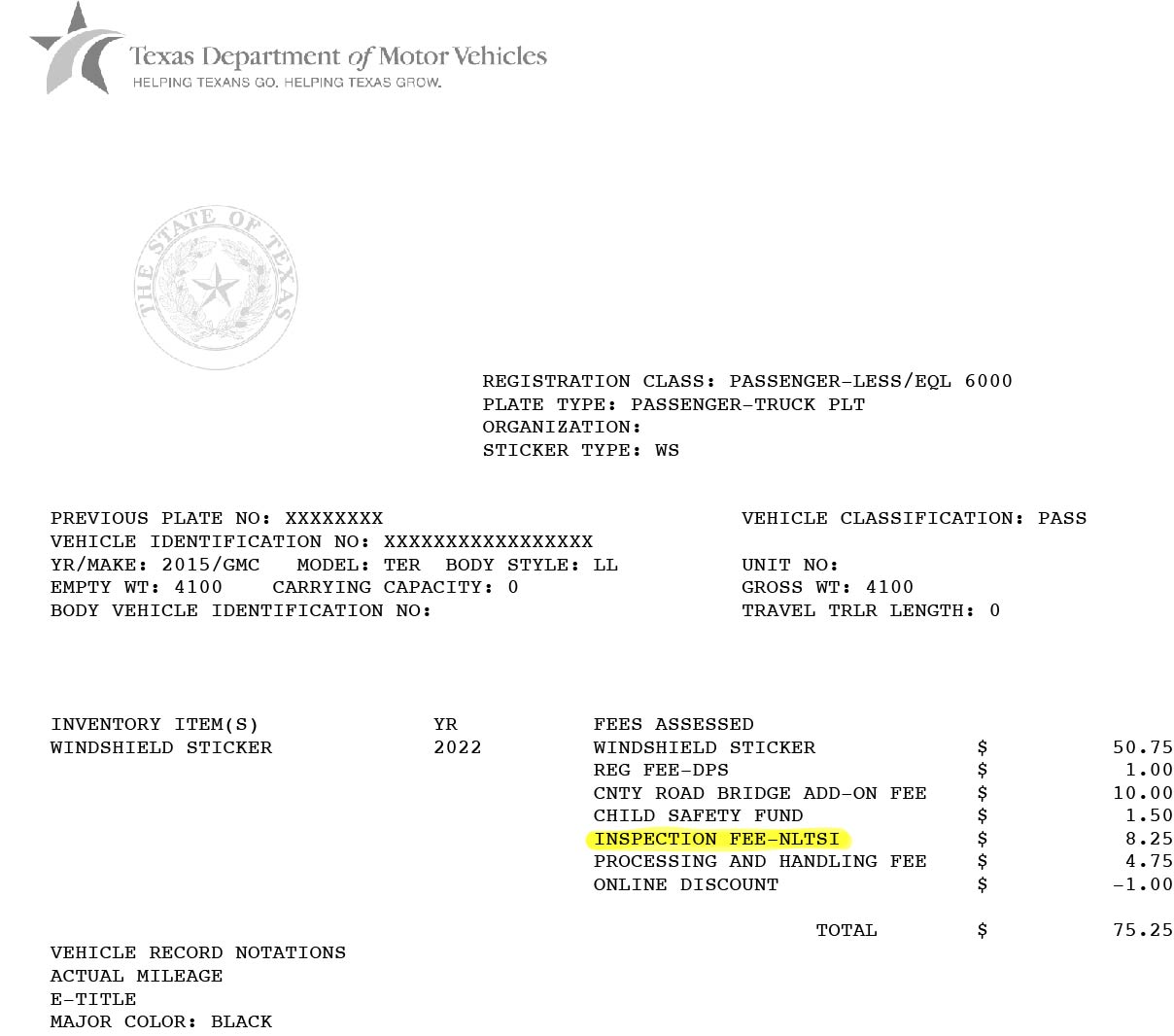
How to Register a Car in Texas: Step-by-Step
The safest way to register a car in Texas is to prepare your paperwork before visiting the county tax office. A missing document can turn a short visit into a second trip.
1. Get Texas auto insurance
Texas requires drivers to carry minimum liability insurance. For most passenger vehicles, the minimum coverage is commonly described as 30/60/25:
• $30,000 for bodily injury per person
• $60,000 for bodily injury per accident
• $25,000 for property damage per accident
Your insurer will give you a Texas insurance card. The county office may verify your coverage through the state’s insurance database, but you should still bring proof.
Insurance must be issued by a company authorized to operate in Texas. A policy from your former state may not be enough after you become a Texas resident.
2. Collect proof of ownership
Proof of ownership depends on the vehicle’s history. Bring the original or acceptable document whenever possible.
Common ownership documents include:
• Texas title
• Out-of-state title
• Manufacturer’s Certificate of Origin for a new vehicle
• Properly assigned title from a private seller
• Dealer purchase documents
• Lienholder information, when a lender holds the title
• Gift affidavit, when the car was transferred as a gift
If you bought the car from a private seller, check that the seller signed the title correctly. The vehicle identification number, or VIN, must match the car and the paperwork.
3. Complete Form 130-U
Form 130-U is the Application for Texas Title and/or Registration. It asks for information about:
• The buyer and seller
• Vehicle identification
• Purchase price
• Odometer reading
• Lienholder details
• Insurance information
• Tax and registration details
Both the buyer and seller may need to sign parts of the form. Errors in the purchase price, VIN, or odometer reading can delay the title and registration process.
4. Get a vehicle inspection or emissions check if required
Texas changed its inspection rules for many noncommercial vehicles on January 1, 2025. A standard safety inspection is no longer required for most noncommercial vehicles.
However, vehicles registered in certain Texas counties still need an emissions test. Emissions testing applies in areas such as the Houston, Dallas-Fort Worth, Austin, and El Paso regions.
The exact requirement can depend on:
• The county where you register the car
• The vehicle’s model year
• The vehicle’s weight and type
• Whether the vehicle is commercial
• Whether the vehicle is being registered for the first time in Texas
Check your county’s current TxDMV instructions before visiting an inspection station. This is one of the most important parts of learning how to register a car in Texas because county rules can affect your timing.
5. Visit your county tax office
Take your documents to the county tax assessor-collector’s office. Some counties allow appointments, while others accept walk-ins or provide online services.
Bring:
• Proof of insurance
• Government-issued identification
• Ownership documents
• Completed Form 130-U
• Inspection or emissions paperwork, if required
• Payment for taxes and fees
• Lienholder information, if applicable
The office will review your documents, calculate the amount due, and issue your registration receipt and sticker if the application is approved.
6. Place the registration sticker correctly
Texas no longer issues a windshield sticker for most vehicles. The registration record is linked to your license plate, and the registration sticker is generally placed on the vehicle’s rear license plate.
Follow the placement instructions included with your sticker. Keep your receipt because it can help prove registration while records update.
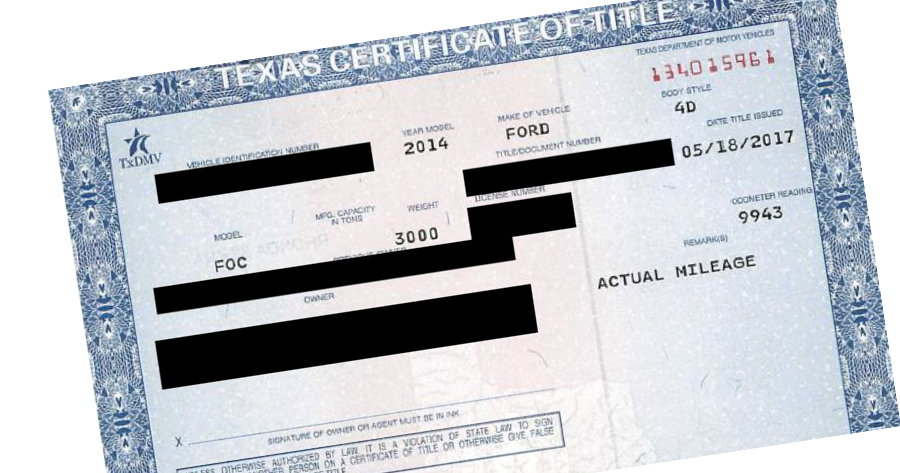
Documents Needed to Register a Car in Texas
Knowing what to bring can save time. The required documents depend on whether the vehicle is new, used, financed, gifted, or coming from another state.
For a typical Texas vehicle registration, prepare:
• Valid government-issued photo identification
• Proof of Texas liability insurance
• Texas title or other ownership proof
• Form 130-U
• Odometer disclosure, when required
• Vehicle inspection or emissions proof, when required
• Lienholder information, if the vehicle is financed
• Payment for title, registration, and tax charges
Registration for a car bought from a Texas dealer
Dealers often submit title and registration paperwork for the buyer. Ask the dealer whether it will complete the filing or whether you must visit the county office.
Keep your buyer’s order, temporary permit, financing documents, and insurance card. If the dealer does not complete the filing within the expected period, contact the dealer and your county tax office.
Registration after a private-party purchase
A private sale requires more care. The seller should properly assign the title, and the buyer should submit the title application and transfer paperwork promptly.
Before paying, compare:
• The VIN on the dashboard with the VIN on the title
• The seller’s name with the name on the title
• The odometer reading with the title disclosure
• The lien status with the seller’s statements
Never leave the seller’s name on the title after buying the car. That can create a title-jumping problem and make registration much harder.
Registration for a financed vehicle
If a lender holds the title, provide the lender’s name and address on Form 130-U. The county office and lender will coordinate the electronic title record.
Make sure the lender has your correct mailing address. A title or registration problem can become more difficult if the lender’s information is outdated.
Texas Registration for New Residents
New Texas residents must transfer their vehicle registration after establishing residency. Texas generally requires new residents to register their vehicles within 30 days of moving to the state.
You may need:
• Out-of-state title or registration
• Proof of Texas insurance
• Government-issued identification
• Form 130-U
• Vehicle inspection or emissions documentation, if required
• Proof of the vehicle identification number
• Payment for title, registration, and applicable taxes
A vehicle brought from another state may need a VIN inspection or verification. The county tax office can tell you which verification document applies to your vehicle.
New residents may also owe a Texas new resident tax instead of the standard motor vehicle sales tax. The amount and eligibility rules can change, so confirm the current charge with TxDMV or your county office.
A common mistake is waiting until the out-of-state registration expires. Texas’s deadline is based on becoming a resident, not simply on the old registration’s expiration date.
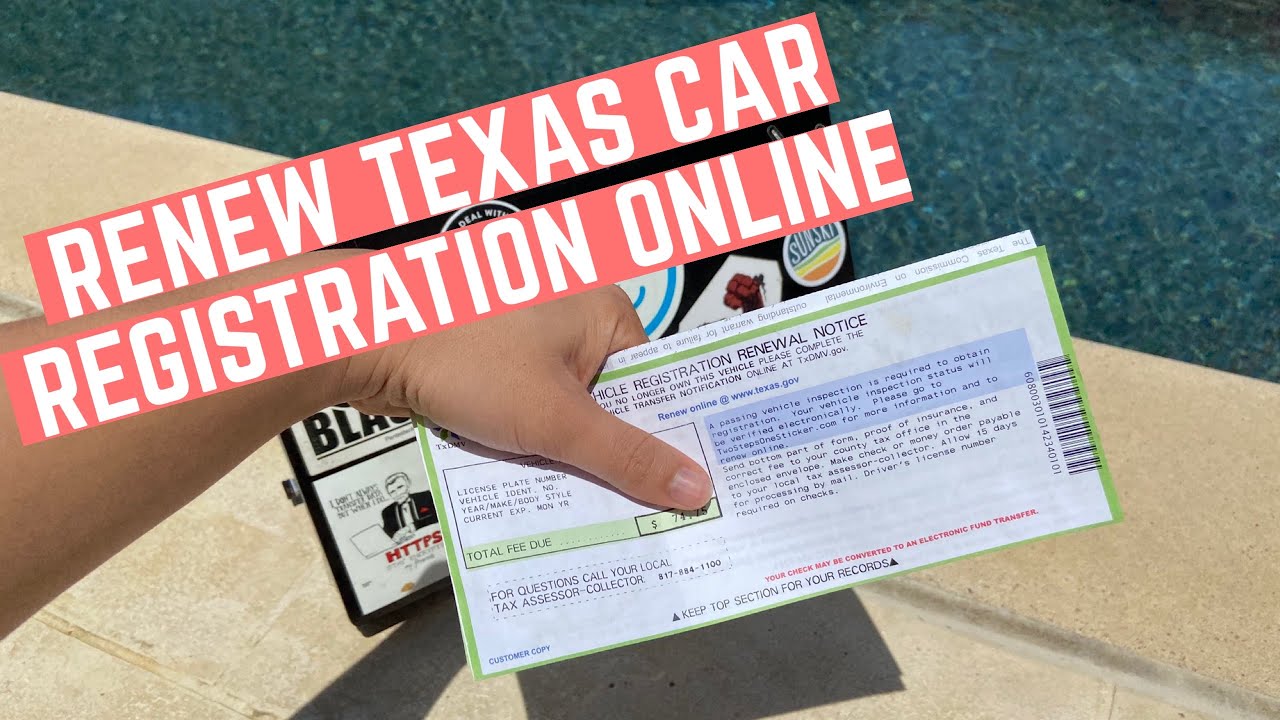
Texas Vehicle Registration Fees and Taxes
The cost to register a car in Texas depends on several factors. There is no single price that applies to every vehicle or county.
Typical charges may include:
• Base registration fee
• Local county road and bridge fees
• Processing and handling fees
• Title application fee
• Motor vehicle sales tax
• New resident tax, when applicable
• Emissions or inspection-related charges
• Specialty plate fees
• Late registration penalties
• Lien recording fees
The standard state registration fee for many passenger vehicles is commonly listed as $51.75. Local fees and other charges are added to that amount.
Texas motor vehicle sales tax is generally 6.25% of the taxable purchase price. A private-party sale may require documentation of the purchase price, and the state can review transactions that appear unusually low.
If a vehicle was a gift, different tax rules may apply. A gift affidavit and other paperwork can be required. Do not simply write “gift” on the title without checking the correct procedure.
For an accurate estimate, use the TxDMV fee calculator or contact your county tax office. Online estimates may not include every local charge.
When to Register a Car in Texas
Timing matters because late registration can lead to penalties and driving problems.
You generally should register:
• A newly purchased vehicle within the required title and registration period
• An out-of-state vehicle within 30 days of becoming a Texas resident
• A renewal before the expiration month ends
• A transferred vehicle as soon as possible after the sale
Texas dealers may issue a temporary permit while permanent paperwork is processed. A private buyer may need a temporary permit to drive legally while completing the title and registration process.
Do not assume the seller’s plates or registration protect you after a private sale. Ask the county tax office about a temporary permit if you need to drive the car before registration.
What happens if registration is late?
Late registration can result in:
• Late fees
• Penalties
• Problems during a traffic stop
• Difficulty proving legal operation
• Additional title or tax complications
If your registration has been expired for a long time, you may need to pay back fees or provide extra documents. Contact the county office before driving the vehicle.
How to Renew Texas Car Registration
Renewing a Texas registration is usually simpler than registering a vehicle for the first time.
You may be able to renew:
• Online
• By mail
• In person at a county tax office
• At an approved participating location
Online renewal may require your registration renewal notice, license plate number, VIN, insurance information, and payment. Some vehicles are not eligible for online renewal, especially when a title issue, insurance problem, inspection requirement, or address issue exists.
The registration renewal notice is helpful, but you may not always need the paper notice. Your county’s online system can explain what information is required.
Renew early enough to allow for mailing and processing. Waiting until the final day is risky, especially if your county requires an emissions test or your insurance record has not updated.

How to Register a Car in Texas Without a Title
Registering a car without a title is difficult because Texas must verify ownership. A bill of sale alone may not be enough for a standard registration.
Start by identifying why the title is missing:
• The lender has not released it
• The previous owner lost it
• The vehicle came from another state
• The title contains an error
• The vehicle was abandoned
• The seller never transferred ownership
If the seller lost the title, ask the seller to obtain a certified replacement title before completing the sale. If a lien appears on the record, contact the lender for a lien release.
A bonded title may be an option in some cases. This process requires ownership evidence, a vehicle inspection or verification, and a surety bond. It does not guarantee that every ownership dispute will disappear.
Contact the county tax office or TxDMV before buying a vehicle with no title. A cheap car can become expensive when the ownership history is unclear.

Common Problems When Registering a Car in Texas
Most registration delays come from small paperwork errors rather than complex legal issues.
VIN mismatch
A single wrong digit can stop the application. Compare the VIN on the car, title, insurance card, and Form 130-U.
Missing seller signature
A title without the proper seller signature may not transfer ownership. Do not accept a partially completed title without asking the county office what must be corrected.
Insurance record not found
Your insurance may be active, but the state system may not show it yet. Bring your insurance card and ask your insurer to confirm the policy information.
Unpaid lien
A lien must be released or properly recorded. Ask for a lien release if the seller claims the loan was paid.
Incorrect sales price
Writing an inaccurate purchase price can cause tax problems. Use the real amount paid and keep proof of payment.
Wrong county
Register the vehicle through the county where you live. A person who moves within Texas must update the registration address and county information.
Expired temporary permit
Do not keep driving after a temporary permit expires. Contact the dealer, county office, or TxDMV to ask about the next legal step.
A practical lesson from many registration cases is simple: take clear photos of every document before handing it over. Good records are like a spare key; you hope not to need them, but they can save you when something goes wrong.
Can You Register a Car Online in Texas?
Some Texas registration services are available online, but not every application qualifies. Online renewal is the most common option.
You may need to visit the county office in person when:
• You recently bought the vehicle
• You are registering an out-of-state vehicle
• The title has a problem
• A lien must be added or removed
• The vehicle needs a VIN verification
• Your insurance record cannot be confirmed
• You owe taxes or fees that require review
• The vehicle is not eligible for online renewal
Use official TxDMV and county websites. Be careful with websites that charge extra fees for services available directly through the state or county.
Tips to Make Texas Registration Easier
A few minutes of preparation can prevent hours of delay.
• Call the county office before you go if your situation is unusual.
• Check every VIN digit twice.
• Bring original documents and copies when possible.
• Carry a current insurance card.
• Keep the bill of sale and proof of payment.
• Ask the seller to complete the title before you pay.
• Confirm whether emissions testing applies in your county.
• Save your receipt after registration.
• Update your address with the county and your insurance company.
• Use official government websites for fees and forms.
If you are buying from a private seller, meet at or near the county tax office when practical. This can help both people resolve title questions before the money changes hands.
The most useful habit is to build a small registration folder. Keep the title documents, insurance card, bill of sale, inspection papers, receipts, and lender information together.
Frequently Asked Questions About How to Register a Car in Texas
How much does it cost to register a car in Texas?
Many passenger vehicles start with a state registration fee of $51.75, but the final amount includes local fees, processing charges, taxes, and possible title costs. Use the official state fee calculator or ask your county tax office for the most accurate total.
Do I need a Texas driver’s license to register a car?
You need acceptable identification and proof that you meet Texas registration requirements. A Texas driver’s license is commonly used, but the county office can explain which alternative documents may be accepted in your case.
How long do I have to register a car after moving to Texas?
New residents generally have 30 days to register a vehicle after moving to Texas. You should also obtain Texas insurance and complete any required inspection or emissions steps promptly.
Can I register a car in Texas with an out-of-state title?
Yes, but you may need the out-of-state title, proof of insurance, a VIN verification, Form 130-U, and other documents. The exact requirements depend on the vehicle’s origin and your county.
Can someone else register my car for me?
Another person may be able to submit the paperwork, but authorization and identification may be required. Contact your county tax office before sending someone on your behalf.
Do I need a safety inspection to register my car in Texas?
Most noncommercial vehicles no longer need a standard safety inspection as of January 1, 2025. Emissions testing still applies to qualifying vehicles in certain Texas counties, and other vehicle types may have different rules.
Can I drive a car after buying it from a private seller?
You should not rely on the seller’s registration or plates after the sale. Ask the county tax office about a temporary permit and complete the title and registration process as soon as possible.
Conclusion
Registering a car in Texas requires the right ownership documents, Texas insurance, a completed Form 130-U, and payment of the applicable taxes and fees. New residents, private buyers, financed vehicles, and out-of-state cars may need extra steps, so checking with your county tax office is wise.
Prepare your paperwork, verify the VIN, confirm inspection or emissions rules, and do not ignore the registration deadline. Use official TxDMV resources for current forms and fees, then share this guide with anyone learning how to register a car in Texas.