

A small dent can often be removed at home if the paint is still intact, the metal is not sharply creased, and the panel is easy to reach. In the United States, the safest first step is to inspect the dent, check your vehicle’s repair guidance, and choose a method that matches the panel and damage.
You may be able to fix a shallow dent with a plunger, a dent-pulling kit, or careful access from behind the panel. If the paint is cracked, the dent has a sharp fold, or the panel is made from aluminum, professional paintless dent repair (PDR) is usually the better choice.
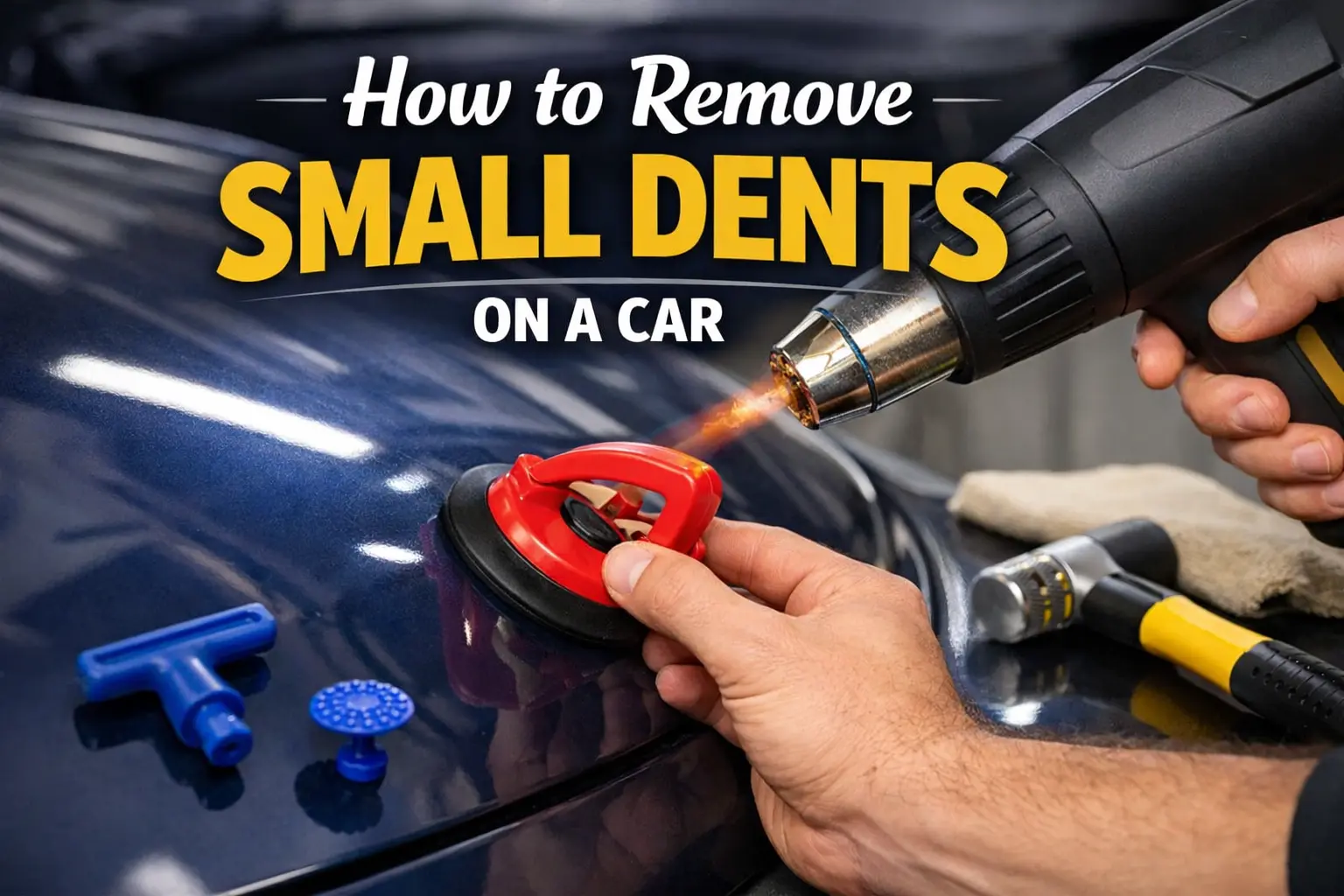
Can You Remove a Small Dent Yourself?
Yes, many small dents can be improved or removed without repainting. The best results come from shallow dents with smooth edges and no damage to the paint.
A dent is a low spot in a car panel. It forms when an object pushes the metal or plastic inward. A crease is different. It has a sharp line or fold, and it is harder to repair without special tools.


Before you begin, check these points:
- The paint is not chipped, split, or peeling.
- The dent has smooth, rounded edges.
- The panel is not badly stretched.
- There is no rust around the damage.
- You can reach the back of the panel, or you can use a proper pulling tool.
- The dent is not close to a major body line, sensor, light, or glass edge.
A small dent in a steel door may respond well to gentle pressure from behind. A dent in a plastic bumper may need controlled heat. A sharp dent on an aluminum panel may need a technician because aluminum behaves differently from steel.
Paintless dent repair is the professional version of this process. A PDR technician uses special rods, lights, and controlled pressure to move the panel back into shape while keeping the original paint.
What You Need Before You Start
Gather the right tools before touching the panel. Good lighting matters as much as the tool because a dent can look flat from one angle and deep from another.
Basic supplies
You may need:
- Clean water
- Car wash soap
- Two microfiber towels
- A bright work light or inspection lamp
- A rubber plunger
- A hair dryer or heat gun with low and high settings
- Work gloves
- Plastic trim tools
- A dent puller designed for automotive panels
- Hot glue and pull tabs, if using a glue-pull kit
- Rubbing alcohol for removing glue residue
- Painter’s tape
Wash the panel first. Dirt can hide a paint crack and can scratch the clear coat when you press or pull the dent.
Use a work light at a low angle. The reflection will show the dent’s shape and help you see whether the panel is moving evenly.
Check access behind the panel
Look for a safe way to reach the rear of the dent. This may require removing an interior door panel, trunk liner, wheel-well liner, or other trim.
Do not remove trim near an airbag unless you know the vehicle’s service procedure. Some doors, pillars, and roof areas contain airbags or wiring. A trim panel can also hide sharp metal edges and electrical parts.
Your vehicle’s owner’s manual may explain where airbags and electrical parts are located. Service information from the vehicle maker is more reliable than a general video for model-specific removal steps.


Method 1: Use a Plunger for a Shallow Dent
A clean rubber plunger can work on a broad, shallow dent when the panel is flexible and the surface is smooth. It is less useful on a crease or a dent with a sharp edge.
Steps
- Wash and dry the area.
- Wet the panel lightly with clean water.
- Place the plunger over the center of the dent.
- Press gently to create a seal.
- Pull the plunger straight toward you.
- Check the panel after each pull.
- Stop if the paint begins to crack or the metal does not move.
Use a small cup-style plunger rather than a large toilet plunger when possible. The rubber should sit fully on a flat part of the panel.
Do not jerk the plunger. A hard pull can stretch the metal or pull the panel too far. Several light pulls are safer than one strong pull.
This method works best on:
- Broad door dings
- Shallow dents on steel doors
- Dents on flat sections of a quarter panel
- Some plastic bumper dents
It usually does not work well on:
- Sharp creases
- Dents on a body line
- Deep dents
- Dents beside a panel edge
- Panels with chipped paint
Signs of success
The dent should rise in small stages. The reflection from the work light should become smoother. If one small spot rises while the rest stays low, stop and reassess.
A panel that looks better from one angle may still have a low spot. Check it from several angles before deciding that the repair is complete.

Method 2: Warm a Plastic Bumper and Push the Dent Out
Plastic bumper covers can sometimes be reshaped with controlled heat. This method is for flexible plastic, not for metal body panels.
First, find the bumper material marking on the back of the cover if possible. Common markings include types of automotive plastic such as PP or TPO. The marking does not guarantee that heat will fix the damage, but it can help identify the material.
Steps
- Wash and dry the bumper.
- Remove any loose trim near the dent.
- Warm the area with a hair dryer or a heat gun on its lowest safe setting.
- Keep the heat moving.
- Warm a wide area around the dent, not just the center.
- Press the dent outward from behind with a gloved hand.
- Let the bumper cool while it holds its corrected shape.
A hair dryer is slower but easier to control. If you use a heat gun, keep it moving and stay well back from the surface. Too much heat can blister the paint, distort the plastic, or damage nearby lamps and trim.
Do not pour boiling water over a bumper. It can cause burns, damage nearby parts, and may not provide even heat. Controlled warm air is easier to stop and adjust.
This method will not repair a bumper that is cracked, torn, deeply folded, or pulled away from its mounts. In those cases, the cover may need repair or replacement.

Method 3: Push the Dent Out From Behind
Pushing from behind is close to the basic idea used in paintless dent repair. It can work well, but it requires patience and a soft touch.


Steps
- Find a safe access point behind the dent.
- Place a work light so its reflection crosses the damaged area.
- Locate the highest point of the dent from behind.
- Apply light pressure with a rounded plastic or padded tool.
- Move around the dent instead of forcing the center.
- Check the reflection after each small push.
- Stop when the panel returns to its original shape.
Do not press directly against a sharp tip, a wiring harness, or a thin panel edge. A hard metal tool can leave a new high spot or damage the paint from the underside.
Think of the metal as a shallow bowl. You do not flatten a bowl by forcing its center upward in one move. You work around the low area and slowly guide the metal back into shape.
A professional technician may use metal rods with different bends and tips. Household screwdrivers, hammers, and bare steel tools are poor substitutes because they can cause more damage.

Method 4: Use a Glue-Pull Dent Repair Kit
A glue-pull kit uses hot glue, a plastic tab, and a pulling bridge or slide hammer. It can work when you cannot reach the back of the panel.
This method needs more care than a plunger. The glue must bond to a clean surface, and the pull must be controlled.
Steps
- Clean the dent and surrounding paint.
- Choose a tab that matches the dent’s size.
- Apply automotive hot glue to the tab.
- Place the tab in the correct part of the dent.
- Let the glue cool and bond.
- Pull slowly with the bridge tool.
- Remove the tab with the manufacturer’s recommended method.
- Clean away glue residue with a suitable solvent.
- Inspect the panel and repeat only if needed.
Use a glue-pull kit made for automotive panels. Do not use random construction adhesive or permanent glue. It may damage the clear coat and be difficult to remove.
The tab location matters. Pulling the deepest part first can sometimes bring the dent up, but it can also create a high spot. Experienced users often work from the outer part of the dent toward the center.
Avoid this method in very hot or very cold conditions. Temperature changes can affect glue bonding and paint safety. Test the glue-removal process in a hidden area if you are unsure how the finish will react.
A glue pull may not work on loose paint, repainted panels, or fragile clear coat. It can lift paint if the bond between the paint and panel is weak.

Method 5: Use a Dent Puller With Care
A screw-in dent puller can remove deep damage, but it is not a good first choice for a small cosmetic dent. It usually requires drilling a hole in the panel.
Once you drill the panel, the repair may require filler, sanding, primer, paint, and corrosion protection. This changes a simple dent repair into a body repair.
For that reason, avoid a screw-in puller unless:
- The panel will be replaced or refinished.
- You already understand body repair.
- The dent is too deep for paintless repair.
- You have a plan to seal and refinish the drilled area.


Do not use a slide hammer directly on a painted panel without the correct attachment and method. A strong pull can stretch the metal and create several new high spots.
For most small dents, a plunger, gentle pressure from behind, or a professional PDR service is safer than drilling.

How to Choose the Right Method
Use the damage, panel material, and paint condition to guide your choice.
| Dent condition | Best first option | Main risk |
|---|---|---|
| Shallow dent on a steel door | Gentle pressure from behind | Creating a high spot |
| Broad dent with smooth paint | Rubber plunger | Poor seal or uneven pulling |
| Small dent with no rear access | Glue-pull kit | Lifting weak paint |
| Dent in a plastic bumper | Controlled warm air and hand pressure | Overheating the plastic |
| Sharp crease | Professional PDR | Stretching the metal |
| Dent on an aluminum panel | Professional PDR | Cracking or marking the panel |
| Cracked or chipped paint | Body shop assessment | Rust and paint failure |
| Dent near a body line | Professional assessment | Permanent distortion |
Steel is usually more forgiving than aluminum. Aluminum can be harder to reshape and may crack if it is repeatedly worked. Some modern vehicles also use high-strength steel, mixed materials, bonded panels, and complex braces.
The panel’s construction matters more than the dent’s size alone. A tiny dent in a difficult spot may be harder to fix than a larger dent in a flat steel door.

When You Should Not Try a DIY Dent Repair
Skip DIY repair when the damage suggests a structural, paint, or safety issue.
Contact a qualified auto body shop or PDR technician if:
- The paint is cracked or missing.
- Rust is visible.
- The dent has a sharp crease.
- The metal has a hole or tear.
- The panel is stretched or rippled.
- The dent is near a radar sensor, camera, headlamp, or parking sensor.
- The damage is on a roof pillar, door pillar, or structural rail.
- An airbag warning light is on.
- A door, hood, trunk, or liftgate no longer aligns.
- The bumper is cracked or its mounts are damaged.
- You cannot access the panel without handling an airbag.
- The vehicle has a salvage, flood, or major collision history.
A dent can hide damage behind the panel. This is especially true after a collision rather than a parking-lot ding.
If your car is leased, check the lease company’s wear-and-use rules before making a repair. If the damage came from a collision, review your auto insurance policy and deductible before paying for work. Do not assume a claim will save money; a claim can have policy and repair-history effects that vary by insurer and state.

Common Mistakes That Make Dents Worse
The wrong tool can turn a small dent into a paint and body repair.
Using dry ice
Dry ice is often promoted as a quick dent fix. The sudden temperature change is difficult to control, and the method is not a reliable repair for modern painted panels. It may do nothing, or it may stress the paint and panel.
Heating the paint too much
A heat gun can damage clear coat, plastic, badges, lamps, and trim. Keep heat moving and use the lowest useful setting.
Pulling too hard
A dent should move in small steps. A strong pull can create a high spot or stretch the panel.
Using suction on a sharp dent
Suction works only when the tool can seal and the panel can move evenly. It cannot erase a crease.


Working on dirty paint
Grit can scratch the clear coat under a plunger, tab, or towel.
Ignoring paint damage
A dent with exposed metal can begin to rust. Removing the dent does not replace the need for proper primer and paint protection.
Hammering the outside
Hitting the painted surface can chip paint and create a low spot around the original damage. Body hammers and dollies require skill and a clear repair plan.

How Much Does Small Dent Repair Cost?
The cost depends on the dent’s size, location, panel material, paint condition, and local labor rates in the United States.
A do-it-yourself repair may cost little if you already have basic tools. A quality glue-pull kit or dent tool adds more cost, but it may still be less than professional service.
Professional paintless dent repair is often priced by the number of dents, their size, access, and difficulty. A dent near a body line, brace, sensor, or panel edge usually takes more skill than a simple door ding.
Traditional body repair costs more when the paint is damaged. It may involve:
- Filling or reshaping the panel
- Sanding
- Primer
- Color-matched paint
- Clear coat
- Blending paint into nearby panels
- Corrosion protection
Ask for a written estimate. Confirm whether the price includes tax, materials, paint blending, trim removal, and any warranty on the work.
The cheapest repair is not always the lowest total cost. A failed DIY attempt can add paint damage and make a professional repair harder.

How to Tell Whether the Repair Worked
Inspect the panel in bright, angled light. A successful repair should have:
- A smooth reflection
- No sharp high spot
- No remaining low spot
- No cracked or lifted paint
- No loose trim
- Correct panel gaps
- Normal operation of doors, locks, lights, and sensors
Run a clean microfiber cloth over the area without pressing hard. It should glide smoothly. Look at the panel from the front, side, and rear.
If the panel looks good but the paint has a crack, the dent is not fully repaired. Seal and refinish the damage as soon as practical, or ask a body shop to assess it.
If the dent improves but does not disappear, stop rather than repeating stronger pulls. The next step may require PDR tools, panel removal, or refinishing.


Frequently Asked Questions
Can boiling water remove a dent from a car?
Boiling water may soften some plastic bumper covers, but it is not a dependable method for metal panels. It can also cause burns and damage nearby parts. Controlled warm air is safer and easier to stop.
Can a plunger remove a dent from a car door?
A plunger may remove a shallow dent from a broad, smooth part of a door. It is unlikely to fix a sharp crease, body-line dent, or deep impact.
Will a hair dryer remove a dent?
A hair dryer can help warm a plastic bumper before you push the dent out. It normally does not provide enough heat to reshape a steel door, and using intense heat on paint can cause damage.
Is paintless dent repair better than DIY repair?
PDR is usually the safer choice when the dent is near a body line, has a crease, affects aluminum, or needs access behind trim. DIY repair may be reasonable for a shallow dent with sound paint and easy access.
Will a small dent cause rust?
A dent alone does not create rust. Rust becomes a concern when the impact damages the paint, primer, or bare metal. Inspect chips and cracks after the dent is removed.
Final Recommendation
Start with the least aggressive method that fits the damage. Clean the panel, inspect the paint, use good light, and make small changes rather than forceful pulls.
For a shallow dent on a flat steel panel, try gentle pressure from behind or a proper plunger. For a flexible plastic bumper, use controlled warm air and hand pressure. Choose professional paintless dent repair when the dent is creased, near a body line, on aluminum, or close to safety equipment.
If the paint is broken or the panel no longer aligns, stop the DIY repair and get a body shop assessment. A careful decision at the start can prevent a small dent from becoming a costly repair.
