

Seal entry points, remove food and nesting material, park wisely, and inspect your car often.
The question “does how to keep mice out of your car” matters because mice can chew wires, build nests, and leave harmful droppings behind. After dealing with rodent-prone storage areas and vehicle inspections, I’ve found that prevention works best when you combine cleanliness, physical barriers, and regular checks. This guide explains how to keep mice out of your car with practical steps that protect both your vehicle and your wallet.
Why Mice Get Inside Cars
Mice do not enter cars because they like the vehicle itself. They enter because it offers shelter, warmth, food smells, and protection from rain and predators. A parked car can feel like a small, safe house.
The risk rises in fall and winter. Mice often search for warm places when temperatures drop. An engine bay may stay warm after driving, while a parked car can provide dry space for nesting.


Common reasons mice enter cars include:
• Food wrappers, crumbs, and spilled drinks inside the cabin
• Pet food or birdseed stored near the vehicle
• Leaves, grass, and debris under the hood
• Long periods of parking without movement
• Gaps near the cabin air filter, vents, wiring, or wheel wells
• A car parked beside tall grass, wood piles, sheds, or trash bins
A mouse can fit through a hole about the size of a dime. Some gaps may look too small to matter, but rodents have flexible bodies and strong teeth.
Understanding this behavior makes it easier to answer the question, “does how to keep mice out of your car” without relying on one weak trick. You need to remove the reasons mice want to stay.

Signs That Mice Are Already in Your Car
Finding one sign does not always prove that mice live inside your car. Several signs together, however, should prompt a careful inspection.
Look for these clues:
• Small dark droppings on the floor, seats, or under the hood


• Shredded paper, fabric, insulation, or dried grass
• A strong musky or stale odor
• Chewed wires, plastic, foam, or hoses
• Nest material near the battery, air filter, or engine cover
• Dashboard warning lights caused by damaged wiring
• Scratching sounds when the car is parked
• Food stores, such as seeds or nuts, in hidden areas
Mice may build nests inside the air intake area, glove box, trunk, or engine compartment. Their nests can block airflow and create a fire risk if they sit near hot engine parts.
Do not touch droppings or nesting material with bare hands. Rodent waste can carry germs, and dry waste may release particles into the air. Wear gloves, avoid sweeping or vacuuming dry material, and use a disinfectant to wet it before removal. Open the doors and windows to improve airflow.
If you find extensive contamination, a dead rodent, or heavy wire damage, contact a professional detailer, mechanic, or pest control specialist.

How to Keep Mice Out of Your Car
The best method uses several simple actions at once. Think of your car as a room. You would not leave food on the floor, ignore a broken window, or allow clutter to pile up. The same rule applies here.
1. Remove Every Food Source
Clean the cabin after meals, road trips, and family outings. Even a few cracker crumbs can attract mice.
Take out:
• Fast-food bags
• Candy wrappers
• Empty drink cups
• Pet treats
• Food containers
• Reusable grocery bags with food odors


Check under the seats and inside door pockets. A small spill can keep producing a smell long after the surface looks dry.
If you carry pet food, store it in a sealed container and remove it when you park. Do not leave birdseed, livestock feed, or trash beside the car.
2. Clean the Engine Bay
Leaves and nesting material can collect beneath the hood. Remove debris with gloves and inspect around the battery, air filter housing, and engine cover.
Do not spray water directly onto sensitive electrical parts. If the engine bay needs deep cleaning, follow the vehicle manual or use a professional service.
3. Close Gaps and Entry Routes
Inspect the areas where wires, cables, and hoses pass through the vehicle’s firewall. Also check the cabin air intake, wheel wells, and damaged plastic panels.
A mechanic can help identify safe areas to seal. Never block a drain, exhaust outlet, ventilation path, belt, fan, or moving part. Improper sealing can create new problems.
Hardware cloth or metal mesh can work well over large openings when installed correctly. Mice can chew many soft materials, so foam alone is not a strong long-term barrier.
4. Drive the Car Often
Regular movement makes the vehicle less attractive as a permanent shelter. Driving also lets you notice new odors, warning lights, or unusual sounds early.
If the car sits for weeks, ask someone to start and move it according to the owner’s manual. Simply starting the engine for a short time may not be enough. The vehicle should be operated safely and legally.
5. Keep the Parking Area Tidy
Move the car away from:
• Tall weeds
• Wood piles
• Compost bins
• Outdoor pet food
• Leaf piles
• Storage sheds
• Dense shrubs
A clean parking area removes hiding spots. Trim plants near the driveway and keep rubbish in sealed containers.
This is the practical answer to “does how to keep mice out of your car”: remove food, reduce shelter, block entry points, and make the car a poor place to live.

Best Mouse Deterrents for Cars
Many people ask about peppermint oil, dryer sheets, ultrasonic devices, and commercial repellents. Some may make a vehicle smell unpleasant for a short time, but their results vary.


Peppermint Oil and Strong Scents
Strong scents may discourage some mice briefly. However, scent fades, especially in an engine bay exposed to heat, air, and moisture.
If you use an essential oil product, keep it away from painted surfaces, wiring, belts, hot parts, children, and pets. Never soak electrical components or place loose cotton balls where they can contact moving parts.
Dryer Sheets
Some drivers place dryer sheets under the hood or inside the cabin. They may mask odors, but they do not block entry or remove nesting conditions. Replace them often, and keep them away from fans, belts, and hot surfaces.
Ultrasonic Repellents
Ultrasonic devices have mixed results. Sound may not reach every area of a vehicle, and mice can become used to repeated conditions. Treat these devices as an extra layer, not your main defense.
Commercial Rodent Repellents
Vehicle-safe repellents may help when used exactly as directed. Read the label and check whether the product is safe for cars, pets, children, and outdoor use.
The main lesson is simple: no spray or scent can replace sanitation and physical prevention. When readers ask, “does how to keep mice out of your car,” I recommend viewing repellents as backup tools rather than guaranteed solutions.

How to Protect Car Wires From Mice
Mice often chew wiring because their teeth keep growing. Chewing helps wear those teeth down. Some wire coatings may also contain materials that attract rodents, although food and nesting shelter are usually the bigger factors.
Inspect wiring for:
• Exposed copper
• Tooth marks
• Missing insulation
• Loose connectors
• Warning lights
• Intermittent electrical problems
Do not use household tape as a permanent repair. Automotive wiring needs the correct connectors, insulation, and protection from heat and moisture.
A mechanic may add rodent-resistant tape, conduit, or protective mesh. These products can reduce damage, but they do not make wires impossible to chew.
If the check engine light, airbag light, or battery light appears after a mouse problem, stop guessing. Electrical faults can affect safety systems. Have the car inspected by a qualified technician.
One costly mistake is repairing visible wire damage while ignoring the nest. The mouse may return and damage the new repair. Remove the cause, then fix the wiring.


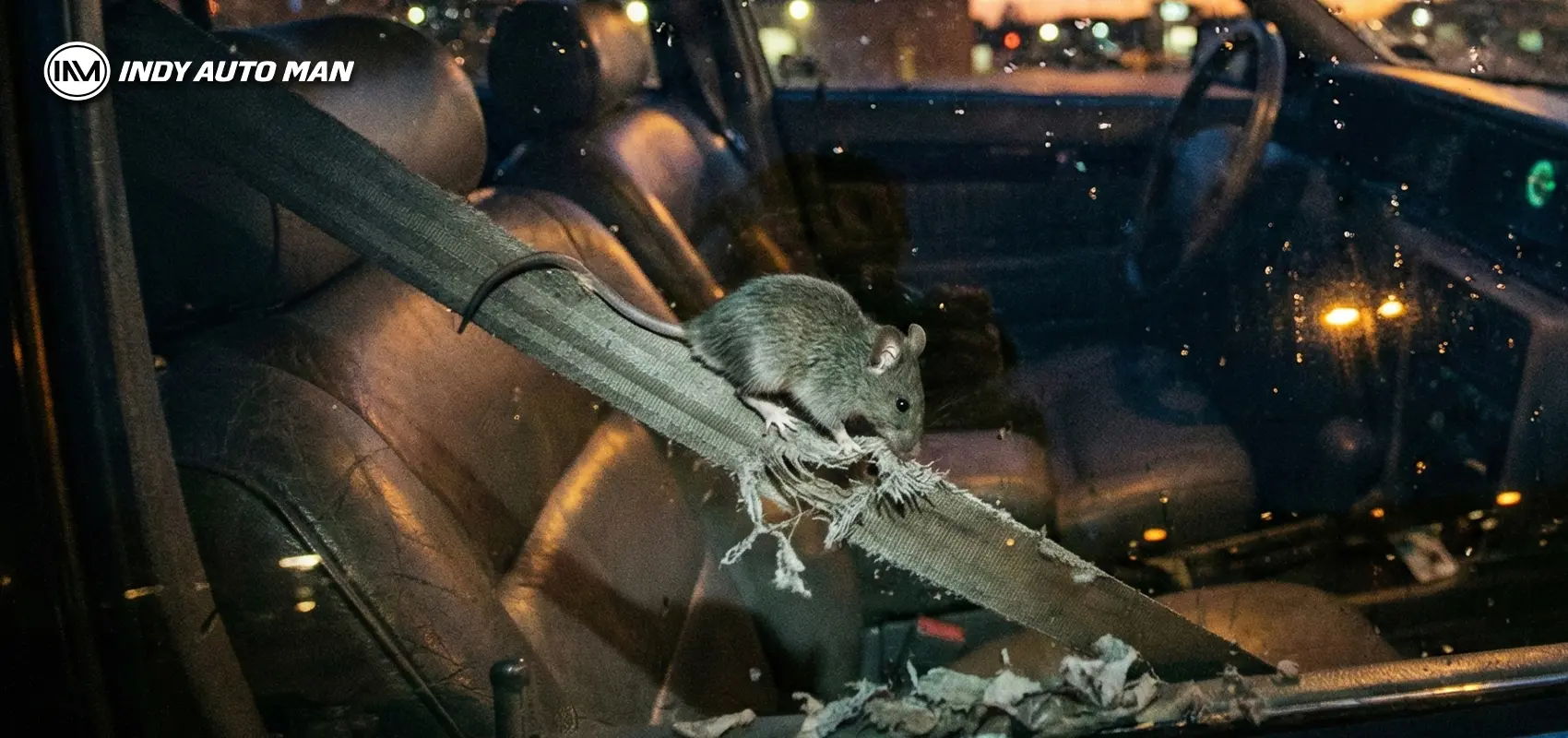
How to Clean a Car After Mice
Wear disposable gloves and, when cleaning heavy contamination, use eye protection and a suitable mask. Open the doors and windows and allow the car to air out.
Follow these steps:
Remove loose items from the cabin and trunk.
Look for nests under seats, in the glove box, near the spare tire, and around the air filter.
Spray droppings and nesting material with disinfectant until wet.
Wait for the label’s stated contact time.
Pick up the waste with paper towels.
Place waste in a sealed bag.
Clean hard surfaces with an approved disinfectant.
Wash cloth items according to their care labels.
Replace contaminated cabin air filters.
Wash your hands well after removing gloves.
Do not dry sweep, brush, or vacuum rodent waste before wetting it. Those actions can send contaminated particles into the air.
If the odor remains, the nest may be inside the ventilation system, insulation, or carpet padding. A professional automotive detailer can remove panels and treat areas that are hard to reach.

Common Mistakes That Attract Mice
Good intentions can sometimes make the problem worse. Avoid these common mistakes:
• Leaving the hood open for long periods outdoors. It may improve visibility, but it does not stop mice from entering and can expose the engine to weather.
• Relying only on mothballs. They can create strong fumes and may be unsafe around people and pets. They are not a complete vehicle solution.
• Placing poison inside the car. A poisoned mouse may die in the dashboard or ventilation system, causing a severe odor. Rodenticide can also harm pets and wildlife.
• Using traps where children or pets can reach them. If traps are needed, place them safely and follow local rules.
• Sealing every opening without understanding its purpose. Some openings drain water or support ventilation.
• Ignoring a small nest. A small nest can become a large one quickly.
• Parking over food crumbs or spilled drinks. Odors remain even when the spill is hard to see.
The most reliable answer to “does how to keep mice out of your car” is a routine, not a single product. Clean the car, inspect it, and reduce nearby shelter.
A Simple Weekly Prevention Routine
A short weekly check can prevent expensive repairs. It is especially useful if your car is parked outside, stored for a long time, or located near fields and wooded areas.
Use this routine:
• Empty all food and trash from the cabin.


• Check the floor, seats, trunk, and glove box.
• Open the hood and look for leaves or nesting material.
• Inspect visible wiring for chew marks.
• Check beneath the car for droppings or disturbed debris.
• Confirm that doors, windows, and the trunk close fully.
• Move the car regularly when safe.
• Keep nearby plants, rubbish, and stored materials under control.
Take photos when you find damage. Pictures can help a mechanic compare changes and may support an insurance claim, depending on your policy.
In my experience, the biggest improvement comes from small habits done often. A five-minute check is far easier than replacing a wiring harness or removing a dashboard to find a hidden nest.
When to Call a Professional
Call a mechanic when you see damaged wiring, warning lights, a nonworking safety feature, or signs of a chewed fuel or brake line. These systems can be dangerous to repair without the right tools and knowledge.
Contact pest control when mice keep returning despite cleaning and sealing. The source may be nearby, such as a crawl space, shed, wall, or food storage area.
Professional help is also wise when:
• Droppings cover a large area
• A nest is inside the ventilation system
• The vehicle has a strong odor that will not go away
• You find a dead animal
• Multiple cars are affected
• A child, pet, or person with breathing problems may have been exposed
A professional inspection costs money, but it may prevent larger expenses. Electrical damage, odor removal, and interior replacement can cost far more than early prevention.
Frequently Asked Questions About Does How to Keep Mice Out of Your Car
What is the best way to keep mice out of your car?
The best approach is to remove food, clean debris, seal safe entry points, and inspect the vehicle often. Parking away from tall grass and wood piles also reduces the chance of an infestation.
Does how to keep mice out of your car depend on where you park?
Yes. Cars parked near fields, sheds, trash, dense plants, or wood piles face a higher risk. A clean, open parking area gives mice fewer places to hide and travel from.
Do peppermint oil and dryer sheets keep mice away from cars?
They may discourage some mice for a short time, but their effect is not reliable or permanent. Use them only as extra measures, never as a replacement for cleaning, sealing, and inspection.
Can mice damage a car engine?
Yes. Mice can chew electrical wires, insulation, hoses, and plastic parts. Their nests can also block air passages or sit near hot engine components.
Should I put mouse poison inside my car?
No. Poison can create a hidden dead mouse and a strong odor inside the dashboard or ventilation system. It can also endanger children, pets, and wildlife.
How often should I check my car for mice?
Check weekly if your car is parked outside or stored near vegetation, food, or buildings. During cold weather, inspect more often because mice seek warm shelter.
Can I drive a car after finding mouse droppings?
You may need to clean the contaminated area first and confirm that no wiring or safety system is damaged. If you find a nest, strong contamination, or chewed wires, arrange a professional inspection before driving.
Conclusion
Keeping mice out of your car requires more than one scent, gadget, or quick fix. Remove food, clear nesting material, park in a clean area, seal safe gaps, and inspect the vehicle on a regular schedule. These simple steps answer “does how to keep mice out of your car” in a practical way and can prevent costly wire and interior damage.
Start with a five-minute inspection today. Clean the cabin, check beneath the hood, and move nearby attractants away from the parking area. For more vehicle care guidance, explore related maintenance resources or share your own mouse prevention tip in the comments.