

You can pull a small car dent out with heat, suction, glue, or gentle pressure from behind.
Knowing how to pull a dent out of a car starts with one key fact: not every dent needs a body shop. Small, shallow dents on flexible panels can often be improved at home. However, sharp creases, damaged paint, aluminum panels, and dents near edges need more care. This guide explains the safest methods, the tools you need, and when professional paintless dent repair is the better choice.

What to Know Before You Pull a Dent Out of a Car
A dent is a low spot where the metal or plastic panel has moved inward. The repair method depends on the panel material, dent size, dent depth, paint condition, and location.
Before learning how to pull a dent out of a car, inspect the damage in good light. Wash and dry the area so dirt does not hide cracks or scratches.
Check these points:
• The paint is still smooth and unbroken.
• The dent has soft, rounded edges.
• The panel is not folded or sharply creased.
• The dent is away from the wheel arch, body line, hood edge, or door edge.
• You can reach the back of the panel, or a suction cup can seal to the front.
Paint acts like a protective shell. If it has cracked, pulling the metal may lift more paint. That can lead to rust, especially on steel panels exposed to rain and road salt.
A useful rule is simple: shallow dents are often repairable, while sharp dents are less forgiving. A dent about the size of a softball may respond well to a home method. A deep dent with a tight crease may need a technician with specialized tools.
How to Pull a Dent Out of a Car With a Suction Cup
A suction cup dent puller is one of the easiest tools for a shallow dent. It works best on a smooth, clean panel with a broad, gentle depression.
You can buy a small automotive suction cup puller at many auto parts stores. Avoid using a bathroom plunger on painted bodywork. Its rubber may not seal well, and its shape may push the panel in the wrong place.
Follow these steps:
Wash the panel with car soap and water.
Dry the surface with a clean microfiber towel.
Place the suction cup at the center of the dent.
Lock the handle if the tool has a locking mechanism.
Pull slowly and steadily.
Release the cup and inspect the panel.
Repeat with small adjustments if the dent improves.
Do not jerk the tool. A sudden pull can create a high spot around the dent. Think of the metal as a thin drum skin. Slow pressure helps it return to shape, while a hard tug can make a new problem.
This method may not work if the dent has a sharp center, a deep crease, or a damaged surface. It also cannot repair chipped paint.
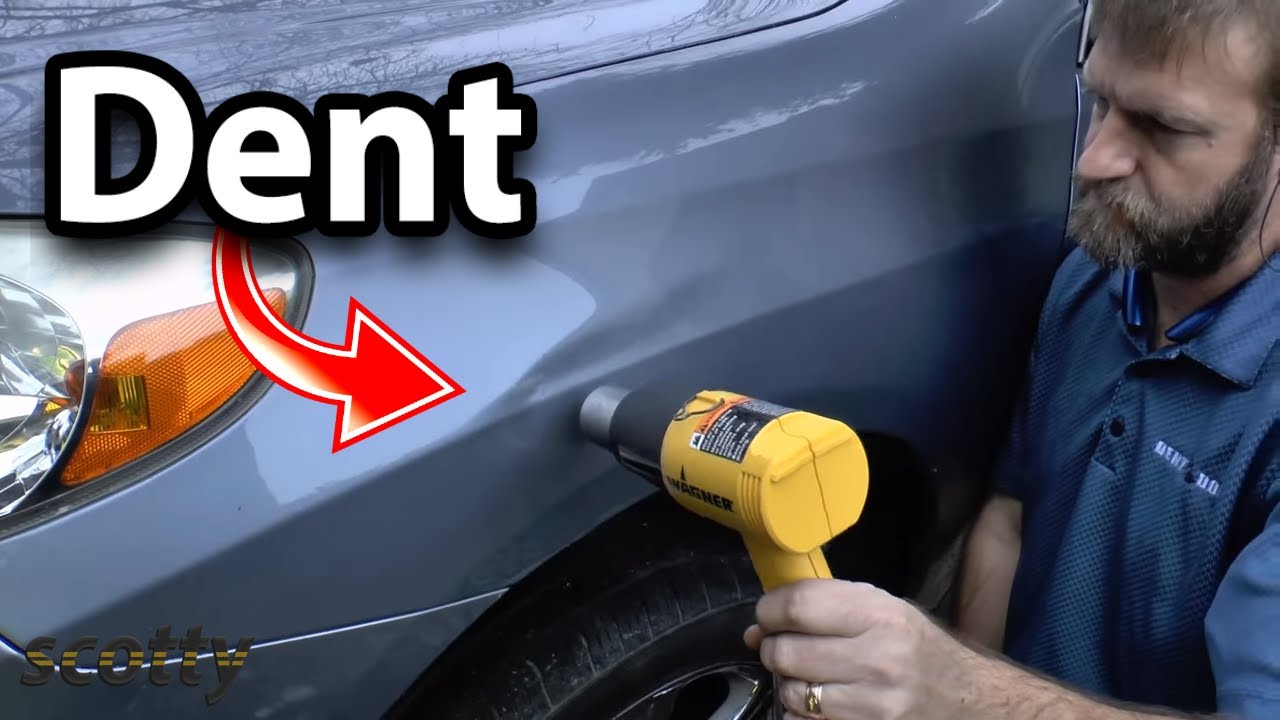
How to Pull a Dent Out of a Car With Heat
Heat can make some plastic panels more flexible. This method is most useful for plastic bumpers, not large steel body panels.
You can use a hair dryer or a heat gun on its lowest setting. A hair dryer is safer for beginners because it produces less intense heat.
Use this process:
Clean the damaged area.
Warm the panel from several inches away.
Move the heat source constantly.
Test the panel after two or three minutes.
Push the dent gently from behind if you can reach it.
Let the panel cool in its corrected position.
Never hold a heat gun in one place. Excess heat can soften paint, warp plastic, damage trim, or burn your skin. Wear gloves and keep the tool away from fuel, solvents, and other flammable items.
Some people pour boiling water over a plastic bumper. This can work in limited cases, but it has risks. Hot water can cause burns, damage nearby lights, or affect sensors and wiring. Warm air gives you more control and is usually the safer choice.
Heat is not a good answer for a steel door dent. Steel may expand slightly, but household heat will not make it safely return to its original shape.
How to Pull a Dent Out of a Car From Behind
Pushing a dent out from behind is close to professional paintless dent repair. The goal is to move the metal gradually without cracking the paint or creating a bump.
First, find out whether the back of the panel is accessible. You may need to remove a door panel, trunk liner, wheel-well liner, or interior trim. Do not force trim clips, because broken clips can cause rattles and water leaks.
Use a rounded plastic tool, a smooth wooden handle, or a proper dent repair rod. Avoid screwdrivers and sharp metal objects. They can puncture the panel or leave pressure marks.
Work in small movements:
• Start at the outer edge of the dent.
• Apply light pressure toward the center.
• Check the surface after each push.
• Move around the dent instead of pressing one spot repeatedly.
• Stop when the panel looks level from several angles.
The metal has memory, but it also has limits. If you push too hard, you can create a high spot. A high spot reflects light differently and may look worse than the original dent.
Professionals often use a reflection board or a bright line pattern to see small changes in the panel. At home, place a straight light source near the dent and watch how its reflection bends. This simple trick helps you see low and high spots.

How to Pull a Dent Out of a Car With a Glue Puller
A glue puller attaches a tab to the outside of the dent. You then use a slide hammer or pulling bridge to lift the damaged area.
This method can help when you cannot reach the back of the panel. It is common in paintless dent repair, but it requires control and the right glue temperature.
Basic steps include:
Clean the panel with an approved surface cleaner.
Choose a tab that fits the dent.
Heat the glue according to the tool instructions.
Apply the glue to the tab.
Place the tab in the lowest part of the dent.
Let the glue cool fully.
Pull with short, controlled movements.
Remove the tab with the recommended glue remover.
Do not use excessive force. A glue puller can lift paint from a weak or previously repaired panel. It may also leave a high spot if the tab is too small or placed incorrectly.
Never use harsh solvents without testing them first. Some products can dull clear coat or stain plastic trim. Work in a shaded, ventilated area, and follow the tool maker’s safety directions.
For a first repair, practice on an old panel if possible. The technique is easier to learn when the vehicle is not your daily driver.
How to Pull a Dent Out of a Car Without Damaging the Paint
The paint is often more valuable than the dent repair itself. Modern automotive paint has several layers, including primer, color coat, and clear coat. A repair that saves the metal but damages the clear coat may create a costly repaint.
Use these habits:
• Wash the area before using any tool.
• Keep metal tools smooth and clean.
• Use low pressure at first.
• Avoid working in extreme cold.
• Do not drill holes unless you plan a full body repair.
• Stop if you hear cracking or see paint movement.
• Protect nearby trim with masking tape.
Cold weather makes paint and plastic less flexible. If possible, work in a dry garage at a moderate temperature. Direct sunlight can also make the panel too hot, especially when using glue or a heat gun.
If the dent is on a body line, be extra careful. Body lines add strength to a panel. A dent crossing one may resist simple methods and may require precise metal reshaping.
Tools You May Need
The best tool depends on the dent. Do not buy a large kit before you understand the damage.
Useful tools include:
• Microfiber towels
• Car wash soap
• A suction cup dent puller
• A hair dryer
• Plastic trim tools
• A paintless dent repair rod
• A glue puller kit
• Isopropyl alcohol approved for automotive use
• Nitrile gloves
• Eye protection
• A portable work light
A flashlight or reflection board is especially helpful. Small changes in the metal can be hard to see under normal garage lighting.
Avoid improvised tools with sharp edges. Hammers, screwdrivers, and bare metal bars can stretch the panel or break the paint. If you use a rubber mallet, it should be part of a controlled repair process, not a way to pound the dent at random.

Common Mistakes When Pulling a Dent Out of a Car
Many failed repairs come from using too much force too soon. People often see the dent and want to remove it in one dramatic pull. Body panels rarely respond well to that approach.
Common mistakes include:
• Pulling a deep crease with a small suction cup
• Applying heat to painted steel
• Using boiling water near electrical parts
• Pressing directly on a sharp crease
• Ignoring cracked paint
• Working without checking the back of the panel
• Removing trim without knowing where the clips are
• Using strong chemicals on clear coat
• Continuing after a high spot appears
One lesson from hands-on dent work is that patience matters more than strength. A slow repair gives you time to watch the metal. A fast repair can stretch it permanently.
Take photos before you begin. Photograph the dent from the front, side, and an angle. This helps you compare progress and provides useful evidence if you decide to contact a repair shop or insurer.
When You Should Not Pull the Dent Yourself
DIY dent repair is not always the best choice. Some damage needs professional tools, paint matching, or panel replacement.
Contact a professional paintless dent repair technician when:
• The paint is cracked, chipped, or peeling.
• The dent has a sharp crease.
• The panel edge is folded.
• The dent is near a structural support.
• The vehicle has aluminum or high-strength steel panels.
• The dent is close to a radar sensor or camera.
• The panel has previous body filler or repainting.
• The damage affects a door latch, hood, trunk, or safety system.
Modern vehicles may place parking sensors, blind-spot sensors, cameras, and radar units behind or near body panels. Poor repair work can affect sensor alignment. After a collision, follow the vehicle maker’s inspection requirements.
Paintless dent repair is often a good option when the paint remains intact. A trained technician can use special rods, lights, and controlled pressure to restore the panel without repainting it. The final cost depends on the dent’s size, location, depth, and access.
How Much Does Dent Repair Cost?
The cost varies by location and damage. A basic home suction cup or dent puller may cost less than a professional inspection. A professional repair can range from a modest fee for a small door ding to much more for a large crease or difficult panel.
Factors that affect the price include:
• Dent size
• Dent depth
• Panel material
• Paint damage
• Access to the back of the panel
• Whether a body line is affected
• Whether trim must be removed
• Whether repainting is needed
Paintless dent repair is usually less expensive than traditional bodywork when the paint is intact. Traditional repair may involve sanding, filler, primer, paint, and clear coat.
Insurance coverage depends on your policy and the cause of the damage. A deductible may make a small repair cheaper to pay for yourself. Ask for an estimate before filing a claim, because a claim can affect future rates in some situations.

A Safe Step-by-Step Plan for Beginners
If you are unsure how to pull a dent out of a car, use this simple plan.
Clean and inspect the dent.
Check for cracked paint and sharp edges.
Confirm that the panel is steel or flexible plastic.
Start with the least aggressive method.
Try a suction cup on a shallow, smooth dent.
Use gentle heat only on suitable plastic panels.
Consider backside pressure only if you can access the area safely.
Check the panel after every small adjustment.
Stop if the dent becomes a high spot.
Contact a professional if the repair does not improve quickly.
The best DIY repair is not always the one that removes every mark. Sometimes the smart result is stopping before you create damage that costs more to fix.
Frequently Asked Questions
Does how to pull a dent out of a car depend on the dent size?
Yes. Small, shallow dents with soft edges are the best candidates for DIY repair. Large dents, sharp creases, and dents near panel edges usually need professional tools and skill.
Can boiling water pull a dent out of a car?
Boiling water may help reshape some flexible plastic bumpers, but it is not a reliable method for metal panels. It can cause burns and may damage paint, lights, sensors, or nearby wiring.
Does how to pull a dent out of a car work with a plunger?
A proper automotive suction cup can help with a shallow dent on a clean, smooth panel. A household plunger is less predictable and may not create the right seal or pulling force.
Can I pull a dent out if the paint is cracked?
You can sometimes move the metal, but DIY pulling may cause more paint to peel. The exposed metal can rust, so professional repair is safer when paint is cracked or missing.
Is paintless dent repair better than a DIY dent puller?
Paintless dent repair is usually better for dents with intact paint, especially when the damage is deep, creased, or hard to access. A trained technician can control pressure and reduce the risk of high spots.
Does how to pull a dent out of a car damage the clear coat?
It can if you use too much force, excess heat, harsh chemicals, or a poorly bonded glue tab. Clean the panel, use gentle pressure, and stop immediately if the paint or clear coat begins to move.
Conclusion
Learning how to pull a dent out of a car is possible when the damage is small, shallow, and free from paint cracks. Start with a clean inspection, choose the least aggressive method, and use slow pressure instead of force. Suction cups can help with smooth dents, while gentle heat may work on some plastic bumpers.
Sharp creases, damaged paint, body lines, aluminum panels, and sensor areas deserve professional attention. Protecting the paint and panel is more important than completing a fast DIY repair. Check the dent carefully, work patiently, and consider a paintless dent repair estimate when the damage is beyond your tools. Share your repair experience or explore more vehicle care guides before starting your next project.
