

A car’s water pump circulates coolant through the engine and radiator to control operating temperature.
Understanding what does a water pump do in a car helps you spot cooling system trouble before it becomes an expensive engine repair. The pump is a key part of the cooling system, working with coolant, the thermostat, radiator, hoses, and cooling fans to move heat away from the engine. This guide explains how it works, what failure looks like, and how to protect your car.
What Does a Water Pump Do in a Car?
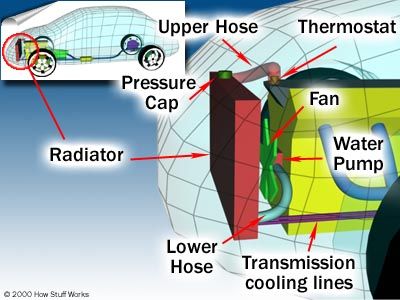
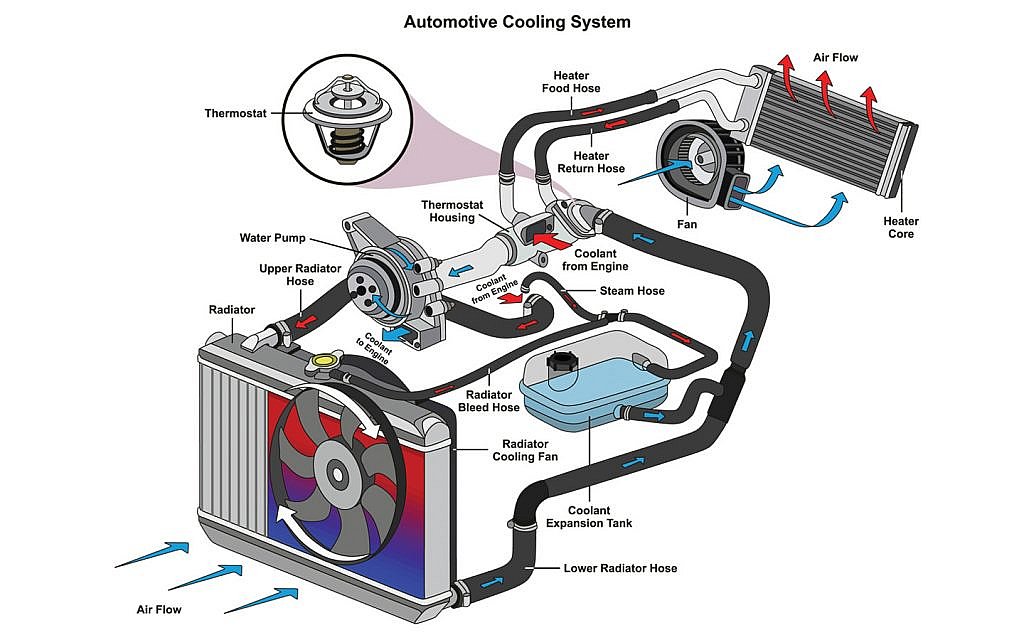
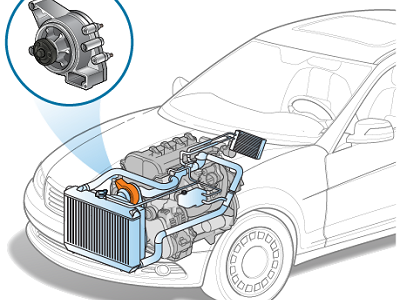
The water pump moves coolant through the engine’s cooling passages. Coolant absorbs heat from the engine block and cylinder head, then flows to the radiator. The radiator releases that heat into the air before the cooled liquid returns to the engine.
Although many people call it a “water pump,” modern cars use a mix of water and antifreeze called engine coolant. Plain water can freeze, boil, and cause corrosion, so it is not a suitable long-term replacement.
The water pump helps keep the engine within its normal operating temperature range. This matters because an engine that runs too hot can suffer serious damage, while an engine that stays too cool may waste fuel and create excess emissions.
Think of the pump as the cooling system’s heart. The heart moves blood through the body, while the water pump moves coolant through the engine.
The basic coolant path
In most vehicles, coolant follows this general path:
- The water pump pushes coolant into the engine.
- Coolant absorbs heat around the cylinders and combustion chambers.
- The hot coolant flows toward the thermostat.
- Once the engine reaches operating temperature, the thermostat opens.
- Hot coolant travels to the radiator.
- Air passing through the radiator removes heat.
- The cooler liquid returns to the water pump.
The exact path can vary by vehicle design. Some engines use electric pumps, multiple pumps, or complex cooling circuits for turbochargers, hybrid systems, and cabin heating.

How Does a Car Water Pump Work?
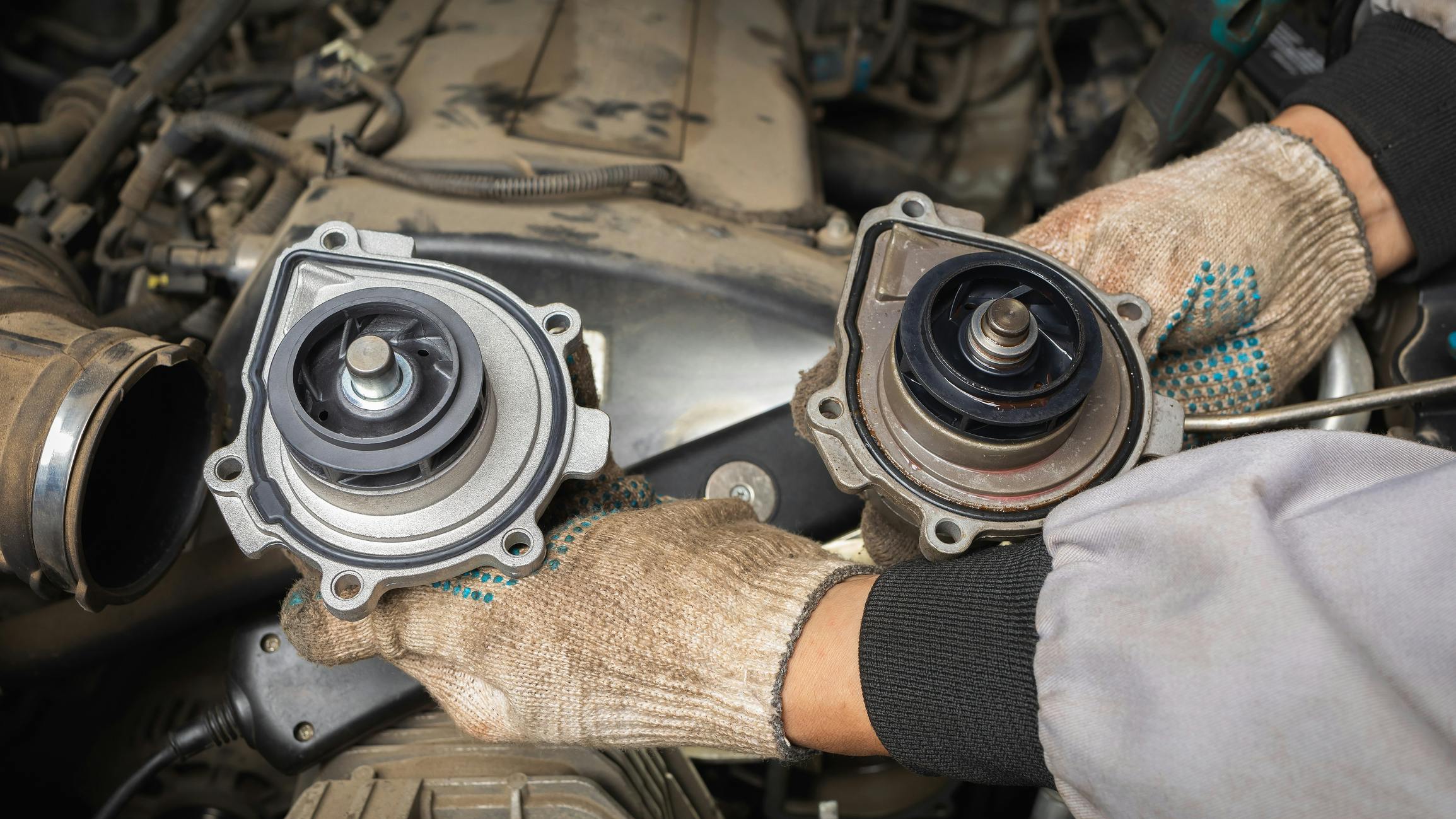
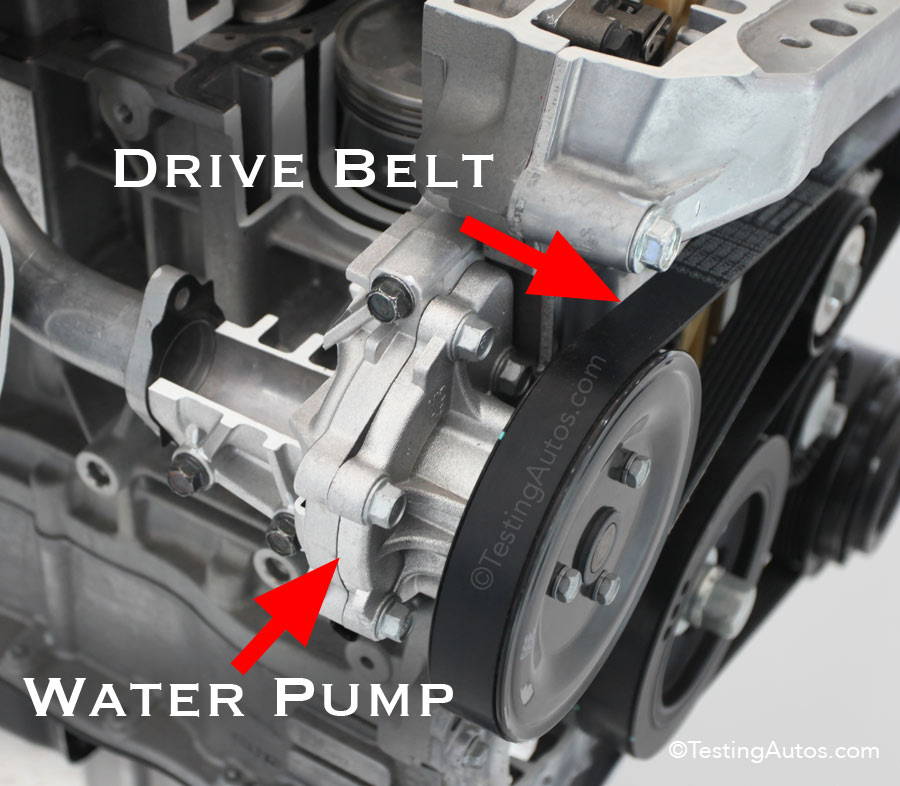
A traditional water pump uses an impeller, which is a small wheel with curved blades. The impeller spins inside the pump housing and pushes coolant through the engine. In many vehicles, the pump is driven by the serpentine belt or the engine’s timing belt.
A belt-driven pump turns faster as engine speed rises. This helps move more coolant when the engine is working hard. The pump does not cool the liquid by itself. Instead, it keeps coolant moving so the radiator can remove heat.
Most water pumps contain these main parts:
• Impeller: The spinning part that moves coolant.
• Pump housing: The casing that directs coolant through the system.
• Shaft and bearing: These let the impeller spin smoothly.
• Mechanical seal: This keeps coolant from leaking along the shaft.
• Pulley or drive gear: This connects the pump to the engine or an electric motor.
Modern vehicles may use an electric water pump. The engine computer can control its speed based on coolant temperature, engine load, and driving conditions. This design can improve fuel economy and allow cooling to continue for a short time after the engine shuts off.
A common mistake is to think the pump creates cooling on its own. It only circulates coolant. The radiator, thermostat, fans, coolant mixture, and airflow must all work correctly for the system to control temperature.
Where Is the Water Pump Located?
The water pump location depends on the engine design. On some engines, it sits on the front of the engine and is easy to see after removing a belt or cover. On others, it is mounted behind the timing belt cover.
A front-mounted pump may be driven by the serpentine belt. A timing-belt-driven pump is hidden inside the engine’s timing system. This second design can make replacement more expensive because the timing belt and related parts may need to come off first.
Electric water pumps may sit away from the main engine. Some are placed near the radiator, turbocharger, battery cooling system, or heater circuit.
Your vehicle owner’s manual or factory repair information can show the exact location. Avoid relying only on online photos because the same model may use different engines in different years or markets.

Why Is the Water Pump Important?
The water pump prevents hot spots from building inside the engine. Combustion creates extreme heat, and metal parts can warp or crack if that heat is not controlled.
A working cooling system protects important engine parts, including:
• Cylinder heads
• Head gaskets
• Pistons
• Valves
• Turbochargers
• Engine oil
• Plastic and rubber cooling components
When coolant stops flowing, the temperature can rise quickly. A dashboard temperature gauge may not show the full danger at once, especially if coolant is low or air surrounds the temperature sensor.
This is why overheating should never be ignored. Continuing to drive with an overheating engine can turn a water pump repair into a head gasket, cylinder head, or complete engine replacement.
The pump also supports cabin heat. Hot coolant flows through the heater core, which acts like a small radiator inside the dashboard. The blower motor pushes air across the heater core and into the passenger compartment.
If coolant does not circulate, the heater may blow cold air even when the engine temperature gauge appears normal.
Signs of a Bad Water Pump
A failing water pump may show one clear symptom or several symptoms at once. Some signs are easy to notice, while others require a pressure test or inspection.
Coolant leaking near the pump
A worn pump seal may allow coolant to escape through a small drain hole called a weep hole. You may see green, orange, pink, blue, or yellow fluid near the front of the engine, depending on the coolant type.
Do not identify coolant by color alone. Manufacturers use different formulas and colors, and mixing the wrong types can create problems.
A small leak can become a large leak without warning. If the pump is driven by the timing belt, coolant may also damage the belt and shorten its life.
Whining, grinding, or squealing sounds
A damaged pump bearing may create a growling, grinding, or whining noise. The sound often changes with engine speed.
A loose pulley can also produce noise. Never place your hands near a running belt or pulley. A trained technician can use safe listening tools and inspection methods to locate the source.
Engine overheating
An overheating engine is one of the most serious signs of a cooling system problem. A bad water pump can cause overheating, but so can a failed thermostat, blocked radiator, low coolant, damaged fan, or trapped air.
The correct diagnosis matters. Replacing the pump will not fix an electrical fan problem or a blocked radiator.
Steam or coolant smell
Steam from under the hood or a sweet coolant smell may indicate a leak. Stop the vehicle as soon as it is safe.
Never remove the radiator cap while the engine is hot. Pressurized coolant can spray out and cause severe burns. Wait until the engine is fully cool before checking the system.
Poor cabin heat
Weak or inconsistent heat can point to low coolant, air in the system, a restricted heater core, or poor coolant circulation. A water pump with a damaged impeller may move too little coolant to warm the heater core.
Temperature changes while driving
If the gauge rises in traffic but drops when the vehicle moves, the cooling fan or airflow may be at fault. If the temperature changes at random, the system may have low coolant, air pockets, a thermostat issue, or a failing pump.
What Causes a Water Pump to Fail?
Water pumps can last for many years, but they are not permanent parts. Their life depends on the vehicle, coolant condition, belt tension, climate, and maintenance history.
Common causes of failure include:
• Worn bearings: Bearings can lose their smooth operation and create noise or pulley movement.
• Failed seals: A damaged seal allows coolant to leak from the pump.
• Corrosion: Old or incorrect coolant can attack metal parts and internal surfaces.
• Contaminated coolant: Rust, dirt, stop-leak products, or mixed coolant types can damage the pump.
• Excessive belt tension: A belt that is too tight can overload the pump bearing.
• Loose or damaged belts: Poor belt contact can reduce pump speed or cause overheating.
• Broken impeller: The impeller may crack, loosen, or erode over time.
• Frozen coolant: A poorly protected cooling system can freeze and damage components.
• Improper installation: Incorrect torque, sealant, belt alignment, or bleeding can cause early failure.
One lesson technicians often learn is that the coolant itself deserves as much attention as the pump. Fresh, correct coolant helps protect seals and metal surfaces. Ignoring coolant service can shorten the life of every cooling system part.
How to Test a Water Pump
A water pump diagnosis should begin with the whole cooling system. A leak does not always come from the pump, and overheating does not always mean the pump has failed.
A basic inspection may include:
- Check the coolant level only when the engine is cold.
- Look for leaks around the pump, hoses, radiator, thermostat housing, and reservoir.
- Inspect the drive belt for cracks, glazing, fraying, or poor tension.
- Listen for unusual bearing noise with safe equipment.
- Check for pulley wobble when the engine is off.
- Use a cooling system pressure tester to locate leaks.
- Confirm that the thermostat opens at the correct temperature.
- Check radiator fan operation and electrical controls.
- Look for proper coolant circulation after the engine warms up.
- Scan for engine fault codes when the vehicle uses electronic cooling controls.
Some water pumps cannot be confirmed through a simple visual inspection. An internal impeller may be damaged while the pump housing looks normal. A professional may need service data, temperature readings, scan-tool information, or a flow test.
Do not open the cooling system or test a hot engine without the correct tools and safety steps. Hot coolant can cause serious injuries.

Water Pump Replacement: What to Expect
Replacing a water pump may be a simple job on one car and a major repair on another. Labor time depends on the pump location and the parts that must be removed.
A typical replacement may involve:
• Draining the coolant
• Removing belts, covers, or pulleys
• Removing the old pump
• Cleaning the mounting surface
• Installing a new gasket or seal
• Fitting the replacement pump
• Reinstalling and correctly tensioning the belt
• Refilling the cooling system
• Bleeding trapped air
• Checking for leaks and proper temperature
If the pump is driven by the timing belt, many technicians recommend replacing the belt, tensioner, and idler pulleys at the same time. The extra parts may add cost, but repeating the labor later can be more expensive.
Use a pump that meets the vehicle manufacturer’s specifications. Very cheap parts may have poor bearings, weak seals, or impellers that do not match the original design.
After replacement, the system must be filled with the correct coolant and purged of air. Air pockets can reduce circulation, cause poor cabin heat, and create overheating.
Mechanical vs. Electric Water Pumps
Most older vehicles use mechanical water pumps. These pumps are connected to the engine by a belt and run whenever the engine runs.
Electric water pumps use an electric motor instead of a belt. They can operate independently of engine speed, which offers several benefits:
• More precise coolant flow
• Better fuel efficiency
• Flexible cooling for turbochargers and hybrid systems
• Continued cooling after the engine shuts off
• Easier packaging in some engine designs
Electric pumps also have different failure points. The motor, wiring, control module, fuse, relay, or communication system may fail. A scan tool and wiring diagnosis may be needed.
Do not assume that an electric water pump is better in every situation. It may improve control, but it can also be more costly to diagnose and replace.

How to Prevent Water Pump Problems
Good maintenance can reduce the chance of sudden cooling system failure. It cannot prevent every problem, but it gives the pump a better working environment.
Follow these practical steps:
• Use the coolant type listed in the owner’s manual.
• Replace coolant at the recommended interval.
• Never run the vehicle with a low coolant level.
• Repair small leaks quickly.
• Inspect belts and pulleys during routine service.
• Avoid using stop-leak products unless a qualified professional recommends them.
• Watch the temperature gauge during every drive.
• Stop driving if the engine overheats.
• Keep radiator fins clear of heavy dirt, leaves, and debris.
• Replace related timing belt parts when the service schedule requires it.
A useful habit is to check the coolant reservoir once a month when the engine is cold. The level should remain between the marked lines. A falling level usually means a leak or another cooling system problem, even if you do not see coolant on the ground.
Can You Drive With a Bad Water Pump?
Driving with a suspected bad water pump is risky. A small leak or noisy bearing can become a complete failure, and the engine may overheat within minutes.
If the temperature gauge moves above normal, warning lights appear, steam rises, or the heater suddenly blows cold air, pull over safely. Turn off the engine and allow it to cool before checking anything.
Do not pour cold water into a hot engine. A sudden temperature change can damage metal parts, and the cooling system may still be pressurized.
If the vehicle must be moved, use a tow service rather than taking the chance. A tow bill is usually far less than an engine replacement.
Frequently Asked Questions About What Does a Water Pump Do in a Car
What does a water pump do in a car?
A water pump circulates coolant through the engine and radiator. This movement carries heat away from the engine and helps maintain a safe operating temperature.
How long does a car water pump last?
Many water pumps last roughly 60,000 to 100,000 miles, but service life varies by vehicle, coolant condition, belt tension, and driving conditions. Always follow the manufacturer’s maintenance schedule.
Can a bad water pump cause overheating?
Yes. A failing pump may leak, lose bearing support, or move too little coolant. However, a thermostat, radiator, fan, hose, or low coolant level can cause similar overheating symptoms.
What does a failing water pump sound like?
A failing pump may make a grinding, whining, or growling sound that changes with engine speed. Belt problems and other pulleys can make similar noises, so proper diagnosis is important.
Can a water pump leak without making noise?
Yes. A damaged seal can leak coolant before the bearing becomes noisy. Look for coolant residue, a falling reservoir level, or a sweet smell near the engine.
Does the water pump affect the heater?
Yes. The pump helps move hot coolant through the heater core. Poor circulation can cause weak or inconsistent cabin heat.
Is it safe to drive with a water pump leak?
It is not safe to continue driving with a known water pump leak. The coolant level can drop quickly, leading to severe overheating and costly engine damage.
Conclusion
A water pump circulates coolant so your engine can release heat through the radiator. It also supports cabin heat and helps protect the engine from overheating, warped parts, and head gasket damage.
Watch for leaks, unusual noises, poor cabin heat, temperature changes, and warning lights. Use the correct coolant, maintain belts, and stop driving if the engine overheats. If you suspect a pump problem, arrange a proper inspection before a small repair becomes a major engine failure.
Check your owner’s manual for the correct coolant and service interval, and share this guide with another driver who wants to understand their car’s cooling system.
