

Your car may shake when you accelerate because of worn axles, bad mounts, tire faults, or engine misfires.
When a car shakes under power, it is telling you that one part of the engine, drivetrain, wheels, or suspension is not working smoothly. The timing of the vibration matters: a shake during acceleration often points to a load-related fault, while a shake at one road speed may suggest a tire or wheel problem. This guide explains the likely causes, safe checks, repair costs, and warning signs that need fast attention.
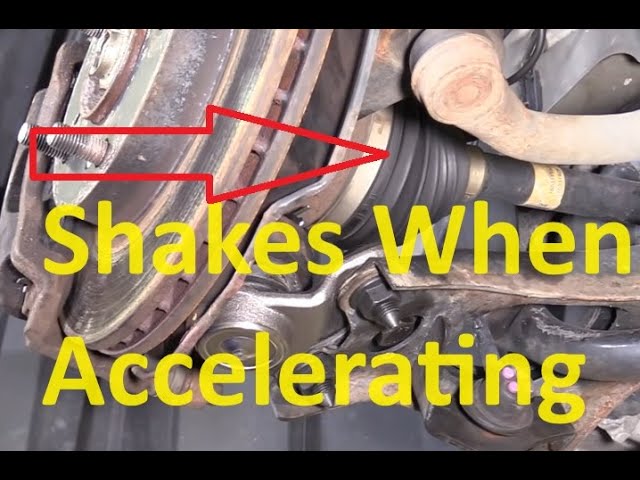
Why does my car shake when I accelerate?
Your car shakes when you accelerate because acceleration places extra force on the engine and drivetrain. A weak part may seem fine while cruising but vibrate when torque travels through it.
The most common causes include:
• Worn constant velocity joints or drive axles
• Damaged engine or transmission mounts
• An engine misfire
• Unbalanced or damaged tires
• Bent wheels
• Worn suspension or steering parts
• A failing driveshaft or universal joint
• Transmission problems
• Loose lug nuts or other unsafe hardware
The best clue is when the shaking starts. Does it happen only when you press the gas? Does it continue when you let off? Do you feel it in the steering wheel, seat, or whole body? These details help separate a tire issue from a drivetrain or engine issue.
A small vibration can become a major repair if ignored. For example, a worn axle joint can damage nearby parts, while a loose wheel can create a serious safety risk.
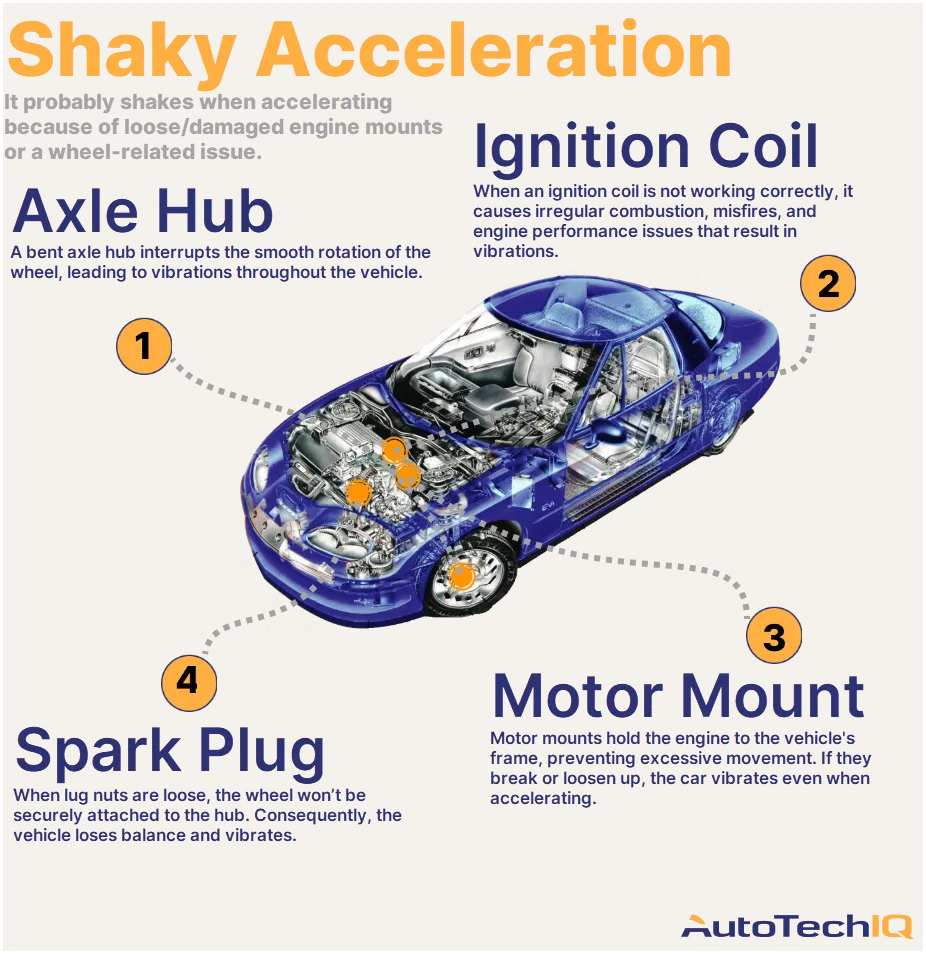
Common causes of shaking during acceleration
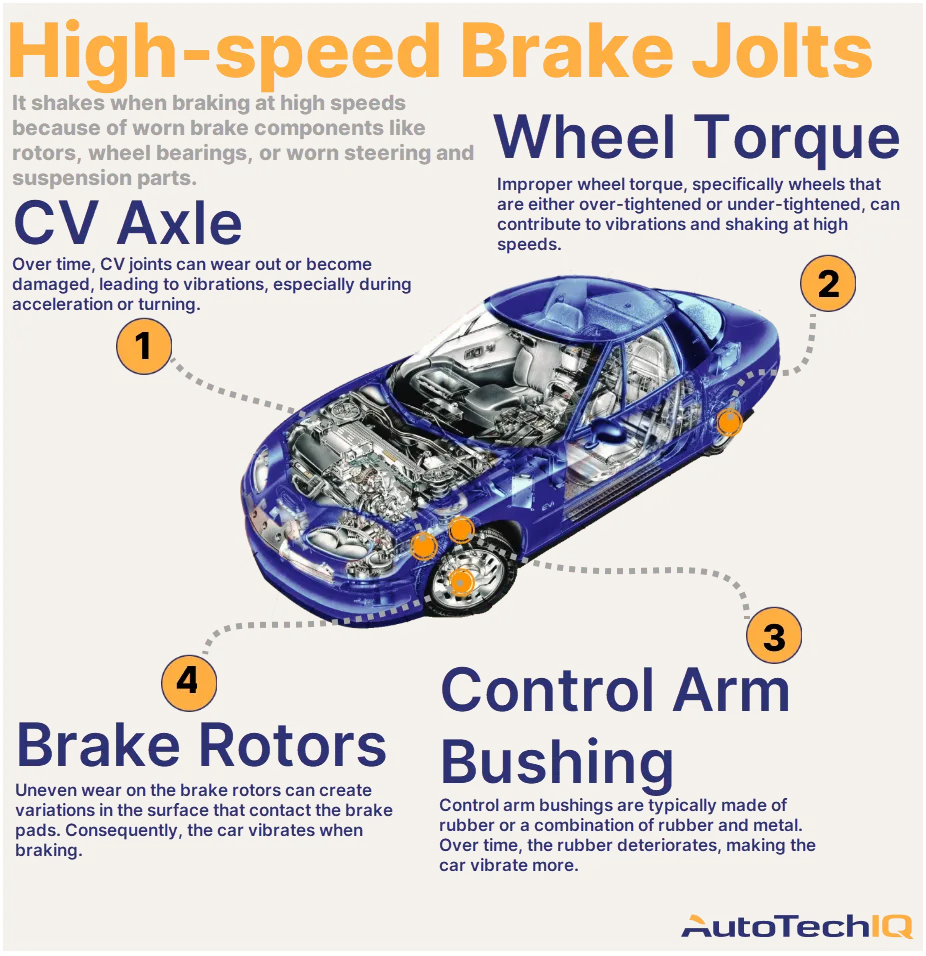
Worn CV joints or drive axles
Front wheel drive cars use drive axles to send power from the transmission to the wheels. Each axle has constant velocity joints, often called CV joints, that allow the wheels to move and turn.
An inner CV joint can cause a shudder or vibration when you accelerate. The shake may become weaker when you release the gas. A clicking sound during a tight turn often points to an outer CV joint.
Look for these signs:
• Vibration that gets worse under hard acceleration
• Clicking during sharp turns
• Grease spread around the inside of a wheel
• A torn rubber CV boot
• A clunk when shifting from reverse to drive
A damaged axle is one of the most common reasons why your car shakes when you accelerate, especially in a front wheel drive vehicle.
Bad engine or transmission mounts
Engine mounts hold the powertrain in place. They also absorb normal engine movement. When a mount breaks or becomes soft, the engine can move too far when you press the accelerator.
You may feel a deep thump, hear a clunk, or notice strong vibration through the seat and floor. The car may shake more when shifting into drive, reverse, or first gear.
Some mounts use rubber. Others use fluid-filled chambers or electronic controls. A leaking hydraulic mount can fail even when it does not look completely broken.
Engine misfire
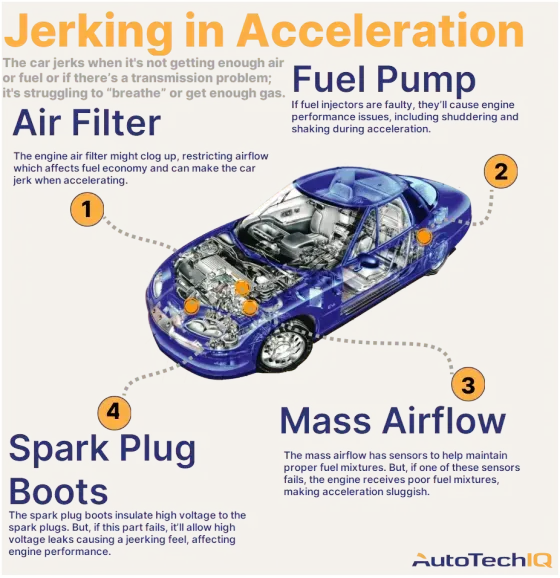
An engine misfire occurs when one or more cylinders fail to burn the air and fuel mixture correctly. The result can feel like shaking, hesitation, or stumbling during acceleration.
Common causes include:
• Worn spark plugs
• A weak ignition coil
• A damaged fuel injector
• Low fuel pressure
• A vacuum leak
• Poor engine compression
• A faulty sensor
An engine misfire often comes with a check engine light. If the light flashes, reduce speed and stop driving as soon as it is safe. A severe misfire can send unburned fuel into the catalytic converter and cause expensive damage.
Unbalanced or damaged tires
Tire problems usually cause vibration at a certain speed, such as 45 to 65 miles per hour. However, acceleration can make the shake feel stronger because the tires carry more load.
Check for:
• Uneven tread wear
• A bulge in the sidewall
• A separated belt
• Flat spots
• Missing wheel weights
• Low or uneven tire pressure
A tire with internal belt separation may look almost normal at first. Do not keep driving on a tire with a bulge, deep cut, or sudden loss of pressure.
Bent wheel or loose lug nuts
A pothole, curb, or road impact can bend a wheel. The vehicle may then shake as the wheel rotates. Aluminum wheels can bend without showing a large crack.
Loose lug nuts are less common but far more urgent. If the shaking began after a tire change or wheel service, stop and check the lug nuts. Do not drive until a qualified person confirms that the wheel is secure.
Worn suspension or steering parts
Suspension parts do not always cause a shake only during acceleration. Still, acceleration can shift the vehicle’s weight and expose looseness in the system.
Possible parts include:
• Ball joints
• Tie rod ends
• Control arm bushings
• Wheel bearings
• Struts
• Sway bar links
A worn suspension part may also cause wandering, uneven tire wear, clunking, or poor steering response. These faults affect control, so they deserve prompt inspection.
Driveshaft or universal joint problems
Rear wheel drive and all wheel drive vehicles use a driveshaft to send power to the wheels. A worn universal joint, center support bearing, or driveshaft can cause a vibration under acceleration.
The vibration may come from the floor rather than the steering wheel. You may also hear a clunk when shifting between drive and reverse.
A driveshaft spins at high speed. Do not inspect or repair it while the vehicle is running. A professional should check it on a lift.
Transmission or differential faults
A transmission problem can feel like a drivetrain shake. Low fluid, worn internal parts, a failing torque converter, or a damaged differential may cause shuddering under load.
You may notice:
• Delayed gear changes
• Harsh shifts
• Slipping
• A burnt smell
• Fluid leaks
• A humming or whining sound
Some automatic vehicles develop torque converter shudder during light acceleration. The correct repair depends on the vehicle and the fluid condition, so avoid guessing or adding random additives.

How the location and timing of the shake help
The place where you feel the vibration is a useful diagnostic clue. It is not a final diagnosis, but it can narrow the search.
• Steering wheel: Suspect front tires, front wheels, steering parts, or front axles.
• Seat or floor: Suspect rear tires, driveshafts, rear axles, or engine mounts.
• Whole vehicle: Suspect a major misfire, severe mount problem, or broad tire issue.
• Brake pedal: Suspect brake rotor runout if the shake happens during braking.
• Gas pedal: Suspect drivetrain vibration or an engine issue under load.
Timing matters just as much.
• Shake only while accelerating: Look closely at axles, mounts, driveshafts, and engine performance.
• Shake at a steady speed: Check tire balance, wheel condition, and alignment.
• Shake while turning: Inspect CV joints, wheel bearings, and steering parts.
• Shake while braking: Inspect rotors, calipers, and suspension parts.
• Shake at idle: Look for engine mounts, misfires, and air or fuel problems.
• Shake during gear changes: Check mounts, transmission operation, and driveline joints.
This simple pattern check can prevent a common mistake: replacing tires when the real fault is a worn axle.
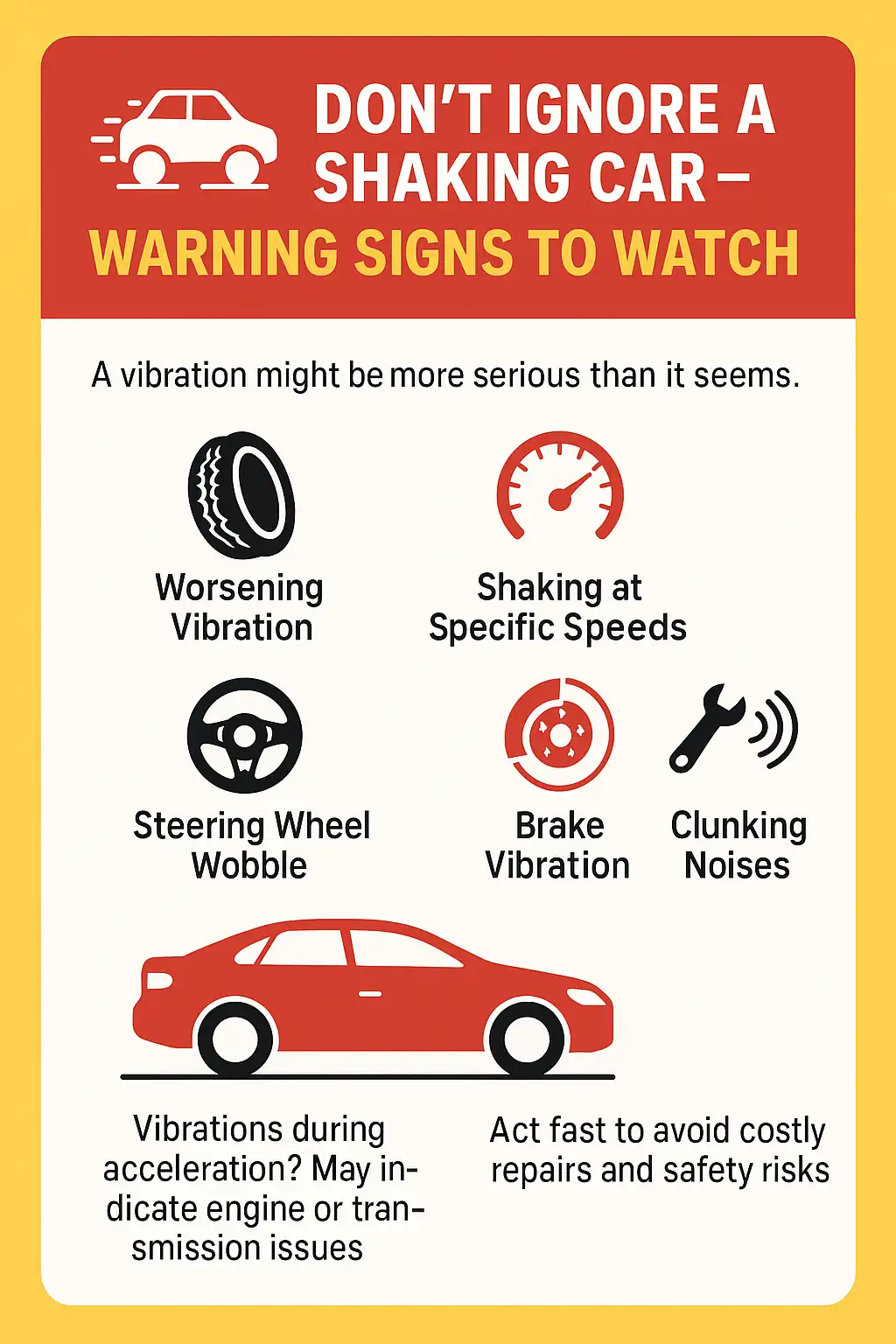
What to check before visiting a mechanic
You can perform a few safe checks at home. Do not crawl under a car supported only by a jack. Use proper jack stands, or leave underbody work to a professional.
Check the warning lights
A check engine light can reveal an engine misfire or sensor problem. An ABS, traction control, or stability control light may point to a wheel speed sensor or related fault.
A flashing check engine light is urgent. Stop driving if possible and arrange a diagnosis.
Check tire pressure
Use a reliable gauge when the tires are cold. Compare each reading with the pressure listed on the driver’s door label, not the maximum pressure printed on the tire.
Do not judge pressure by looking at the tire. A tire can be badly underinflated while appearing normal.
Inspect the tires and wheels
Look for bulges, cuts, exposed cords, uneven wear, and objects in the tread. Check whether a wheel weight has fallen off. If the vibration started after hitting a pothole, mention that to the technician.
Notice when the problem occurs
Write down:
• Vehicle speed
• Engine speed
• Road surface
• Gear
• Whether you are accelerating or coasting
• Whether the steering wheel shakes
• Any noise, smell, or warning light
This information can save diagnostic time. A clear description is often more useful than simply saying, “The car shakes.”
Avoid risky tests
Do not rev the engine with the vehicle raised. Do not place your hands near belts, axles, fans, or rotating parts. Do not continue driving to “see if it gets better” when the vehicle shakes severely.
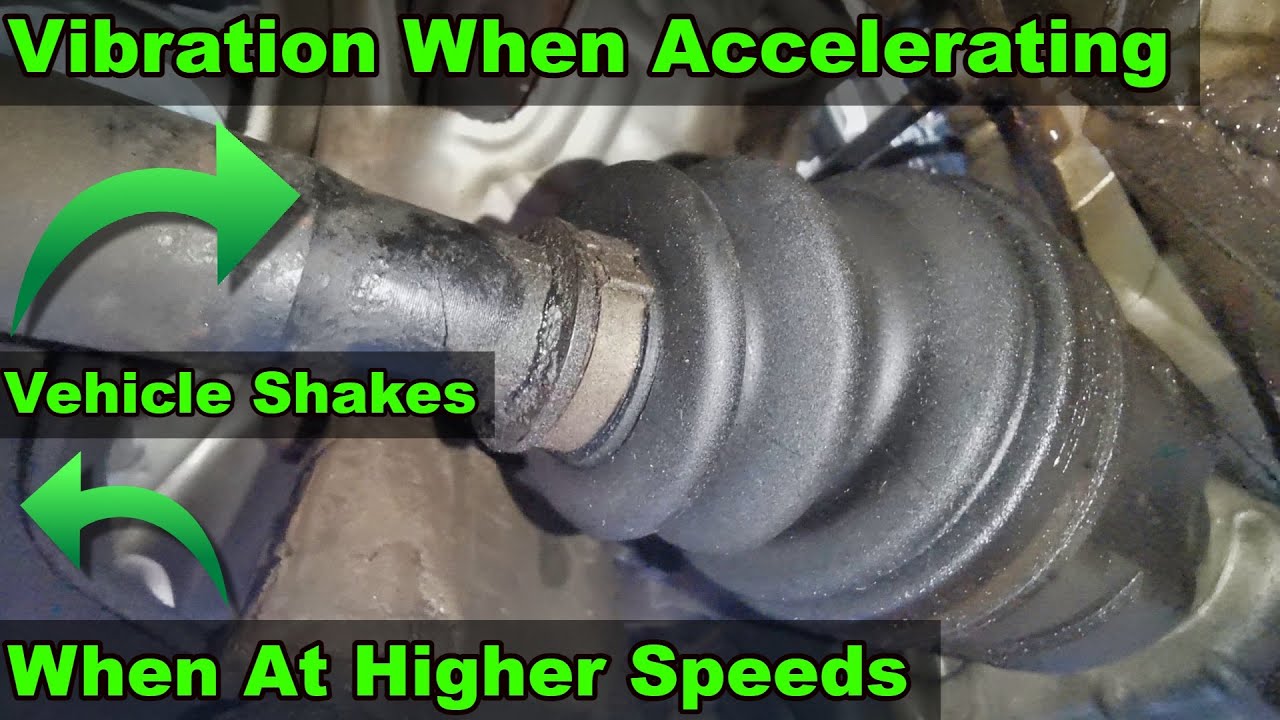
How a mechanic diagnoses acceleration vibration
A good diagnosis starts with a road test. The technician should reproduce the vibration under safe conditions and note the speed, gear, throttle position, and direction of travel.
The inspection may include these steps:
- Scan the vehicle computer for fault codes and misfire data.
- Inspect tire condition, pressure, balance, and wheel runout.
- Check engine and transmission mounts for movement or damage.
- Inspect CV boots, axles, universal joints, and driveshaft supports.
- Check suspension and steering parts for looseness.
- Test the engine’s ignition, fuel, and air systems.
- Inspect transmission fluid and look for leaks.
- Measure components when visual inspection is not enough.
A scan tool can help, but it cannot identify every mechanical problem. A vehicle may have no stored code even when an axle, tire, mount, or driveshaft is failing.
In repair work, the most reliable diagnosis combines symptoms, physical inspection, measurements, and a controlled road test. Parts should not be replaced based on a code alone.
Repair costs and what affects them
Repair prices vary by vehicle type, location, part quality, and labor time. A simple tire balance may cost far less than a transmission repair. Luxury, electric, all wheel drive, and performance vehicles may require specialized parts and procedures.
Typical cost factors include:
• The failed part
• Access to the part
• Original equipment or aftermarket parts
• Four wheel alignment needs
• Additional damage
• Local labor rates
• Diagnostic time
A loose wheel or damaged tire should be treated as a safety repair, not a cost comparison exercise. For less urgent faults, request a written estimate that separates diagnosis, parts, labor, shop fees, and taxes.
Ask the shop:
• What test confirmed the failure?
• Is the vehicle safe to drive?
• Does the repair require an alignment?
• Are other parts worn?
• What warranty covers the repair?
• Can I see the damaged part?
A trustworthy shop should explain the evidence in clear language. Be cautious when a shop recommends several expensive parts without showing how each one relates to the symptom.

Is it safe to drive when your car shakes during acceleration?
It depends on the severity and the cause. A light vibration that has stayed the same may allow a short trip to a repair shop, but it still needs attention.
Stop driving and arrange help if you notice:
• A flashing check engine light
• A loose or unstable steering feel
• A tire bulge or rapid pressure loss
• Loud clunking or grinding
• Strong shaking that worsens quickly
• Burning smells or smoke
• A wheel that appears loose
• Loss of power or difficulty controlling the car
If the vehicle shakes violently, do not test it at higher speed. Pull over safely, switch on your hazard lights, and call roadside assistance.
The risk is not only further damage. A failed tire, axle, steering joint, or driveshaft can affect control of the vehicle.
Mistakes to avoid when your car shakes
One common mistake is blaming the transmission immediately. Transmission faults can cause vibration, but tires, axles, mounts, and engine misfires are often simpler explanations.
Another mistake is changing parts without testing. Replacing spark plugs, tires, or engine mounts at random can waste money and leave the original problem untouched.
Avoid these habits:
• Ignoring a flashing warning light
• Driving on a damaged tire
• Using tire pressure from the tire sidewall
• Assuming a new part must be good
• Skipping a wheel balance after tire service
• Forgetting to check lug nut torque
• Using stopgap additives before diagnosis
• Jacking the car on an unsafe surface
I have seen many vibration complaints become harder to solve because a driver continued driving for weeks. The early symptom was often small. The final repair became larger after a worn part damaged another component.
The practical lesson is simple: record the symptom, check the obvious safety items, and get a proper inspection before buying parts.

How to prevent acceleration vibration
You cannot prevent every failure, but regular care can reduce the risk.
• Maintain the recommended tire pressure.
• Rotate tires at the interval listed in the owner’s manual.
• Balance tires after installation or when vibration begins.
• Inspect tires after pothole impacts.
• Follow the service schedule for engine and transmission fluids.
• Replace torn CV boots before the joint loses grease.
• Have new tires and wheels checked for runout.
• Use the correct torque on wheel fasteners.
• Repair warning lights instead of clearing them.
• Avoid harsh impacts and overloaded driving when possible.
Keep service records and note when a vibration first appeared. A timeline helps a technician connect the problem with recent tire work, road damage, or maintenance.
Modern vehicles also have different needs. Electric cars have fewer engine parts but still use tires, axles, mounts, bearings, and suspension components. Do not assume an electric vehicle cannot have a drivetrain vibration.
Frequently Asked Questions About Why Does My Car Shake When I Accelerate
Why does my car shake when I accelerate from a stop?
A shake from a stop often comes from a worn engine mount, damaged CV joint, clutch problem, or engine misfire. The best clue is whether the car also clunks, loses power, or shakes while idling.
Can bad spark plugs make my car shake when I accelerate?
Yes. Worn spark plugs or weak ignition coils can cause an engine misfire, especially under load. A check engine light and uneven engine sound often support this cause.
Can low tire pressure cause shaking during acceleration?
Low or uneven tire pressure can affect stability and create vibration, though it more often causes a problem at certain speeds. Check all four tires when cold and use the pressure on the door label.
Why does my car shake only at high speed?
A high speed shake often points to tire imbalance, a bent wheel, tire damage, or worn suspension parts. Do not ignore it, since a damaged tire or loose wheel can become dangerous.
Is an alignment needed if my car shakes when I accelerate?
An alignment may be needed if the vehicle pulls, the steering wheel is off center, or the tires wear unevenly. Alignment alone usually does not fix a drivetrain vibration caused by an axle, mount, or driveshaft.
Can a bad transmission cause my car to shake?
Yes. A failing torque converter, worn internal transmission part, low fluid, or damaged mount can cause shuddering. Transmission symptoms often include harsh shifts, slipping, delayed engagement, or fluid leaks.
Should I keep driving if my car shakes when I accelerate?
Do not keep driving if the shake is severe, worsening, or paired with a flashing warning light, loud noise, tire damage, or steering trouble. If the vibration is mild, arrange an inspection soon and avoid high speeds or hard acceleration.
Conclusion
Your car shakes when you accelerate because a component is struggling under added force. The most likely causes are worn axles, bad engine mounts, engine misfires, tire or wheel problems, suspension wear, driveshaft faults, or transmission issues.
Pay attention to where and when the vibration occurs. Check tire pressure and visible damage, record the symptoms, and seek professional diagnosis before replacing parts. If the shaking is severe or affects steering, stop driving and get help.
A quick inspection can protect your safety and prevent a small fault from becoming a costly repair. If this guide helped, share your symptoms or explore more vehicle maintenance resources before your next drive.
