

If you drive a car, truck, or SUV in the United States, the safest starting point is the tire size listed on the driver-side door-jamb label or in your owner’s manual. In most cases, you need an all-terrain tire in the same size, load range, load index, and speed rating as the factory tire.
You may choose a different size only after checking wheel width, suspension clearance, steering clearance, gearing, speedometer accuracy, and the vehicle’s axle weight limits. A tire shop or qualified installer should confirm the fit before you buy.

The Short Answer: Start With the Factory Tire Size
Your vehicle maker selected the original tire size to work with the suspension, brakes, steering, wheels, gearing, and electronic systems. That makes the factory size the best baseline for all-terrain tires.
Look for the tire information label on the driver-side door frame. It often lists:
- Original tire size
- Recommended cold tire pressure
- Front and rear tire pressures
- Spare tire size
- Maximum vehicle load
You can also find the size on the sidewall of your current tire. However, the sidewall does not always show the best load or pressure information for your vehicle. Use the door label and owner’s manual first.
For example, if your vehicle label says 265/70R17 115T, your first choice should be an all-terrain tire with:
- The same 265/70R17 size
- A load index of at least 115
- A speed rating of at least T, unless the vehicle maker allows another rating
- A construction type that matches the vehicle’s needs
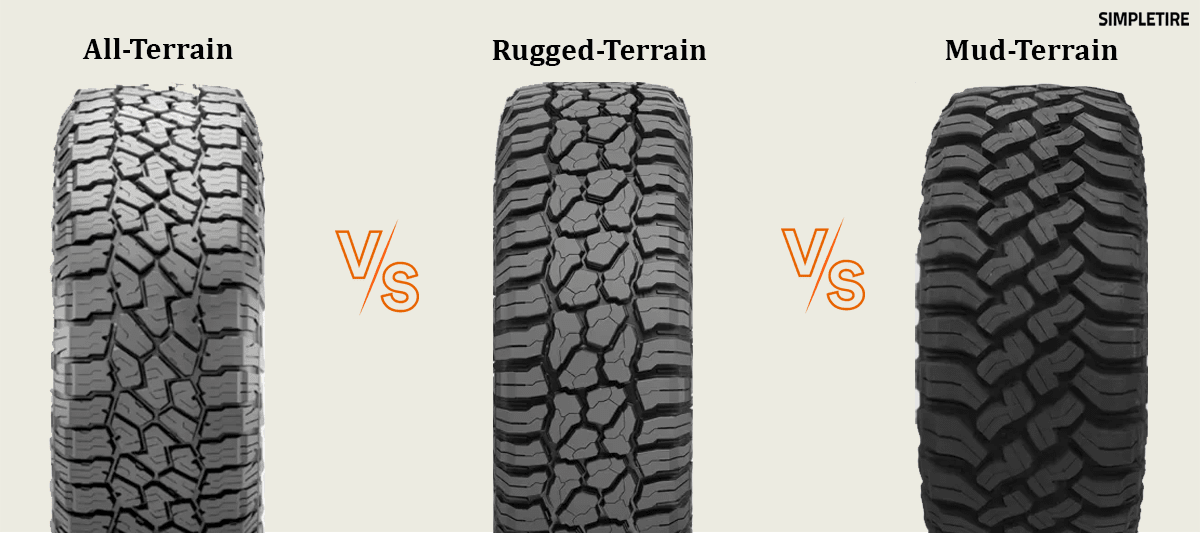
A different all-terrain tread pattern does not require a different tire size. You can often move from an all-season tire to an all-terrain tire while keeping the same size.

How to Read an All-Terrain Tire Size
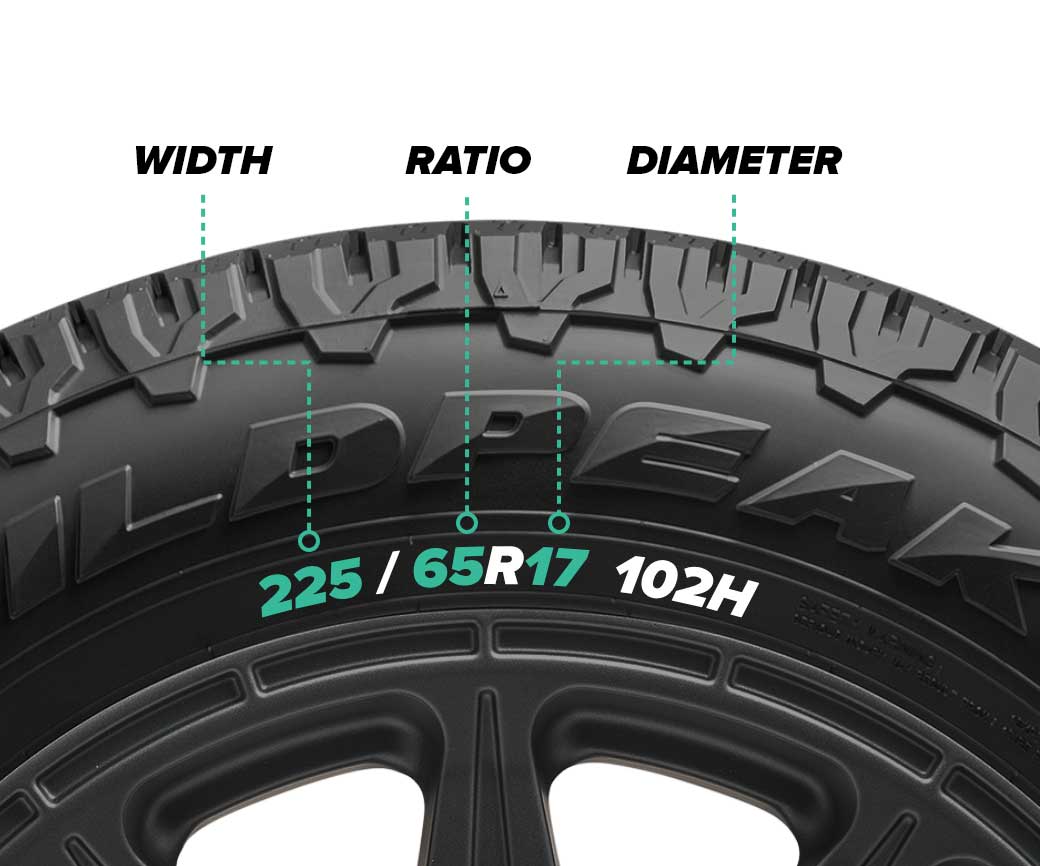
A tire code looks complex, but each part gives useful information. Consider this example:
265/70R17 115T
| Marking | Meaning |
|---|---|
| 265 | Tire width in millimeters |
| 70 | Sidewall height as a percentage of width |
| R | Radial construction |
| 17 | Wheel diameter in inches |
| 115 | Load index |
| T | Speed rating |
Tire width: 265
The first number is the tire’s nominal width in millimeters. A 265 tire is about 265 millimeters wide, although the measured width can vary by brand, tread design, and wheel width.
A wider tire may offer a larger contact area on some surfaces. It can also:
- Rub the fender or suspension
- Increase steering effort
- Follow road grooves more strongly
- Add weight
- Reduce fuel economy
- Fit poorly on a narrow factory wheel
Wider is not automatically better for snow, mud, or trail use.
Aspect ratio: 70
The second number is the aspect ratio. A 70-series tire has a sidewall height equal to 70% of its section width.
For a 265/70 tire:
265 × 0.70 = 185.5 millimeters
The actual sidewall can differ slightly because tire dimensions vary by model.
A taller sidewall can improve ride comfort and help protect the wheel on rough roads. A shorter sidewall may offer sharper handling but gives the wheel less protection from impacts.
Wheel diameter: 17
The last number is the wheel diameter in inches. A tire marked R17 must fit a 17-inch wheel.
A 17-inch tire cannot fit a 16-inch or 18-inch wheel. You must match the tire’s wheel diameter to the wheel exactly.
Load index and speed rating
The load index shows the maximum load the tire can carry under specified conditions. The speed rating shows the maximum sustained speed associated with the rating under standardized conditions.
Do not select a tire with a lower load index or speed rating than the vehicle maker specifies. For many trucks and SUVs, load capacity matters more than a small change in tread width.
You can look up load index values through the Tire and Rim Association or the tire maker’s technical data. The exact capacity also depends on inflation pressure and tire construction.

How to Choose the Right All-Terrain Tire Size
Use this five-step process before ordering tires.
1. Record the factory size
Write down every part of the tire information shown on the door label. Do not record only the first three numbers.
For example, note the complete specification:
245/75R16 111T
The load index and speed rating may be just as important as the physical size.
2. Decide whether you need a stock-size tire
For most drivers, stock size is the right answer. It is usually the simplest option when you want:
- Better traction on dirt and gravel
- A more durable tread
- Improved performance on light trails
- More sidewall protection
- No major change to vehicle systems
A stock-size all-terrain tire can improve rough-road grip without creating the fitment problems linked to oversized tires.
3. Check the tire’s real dimensions
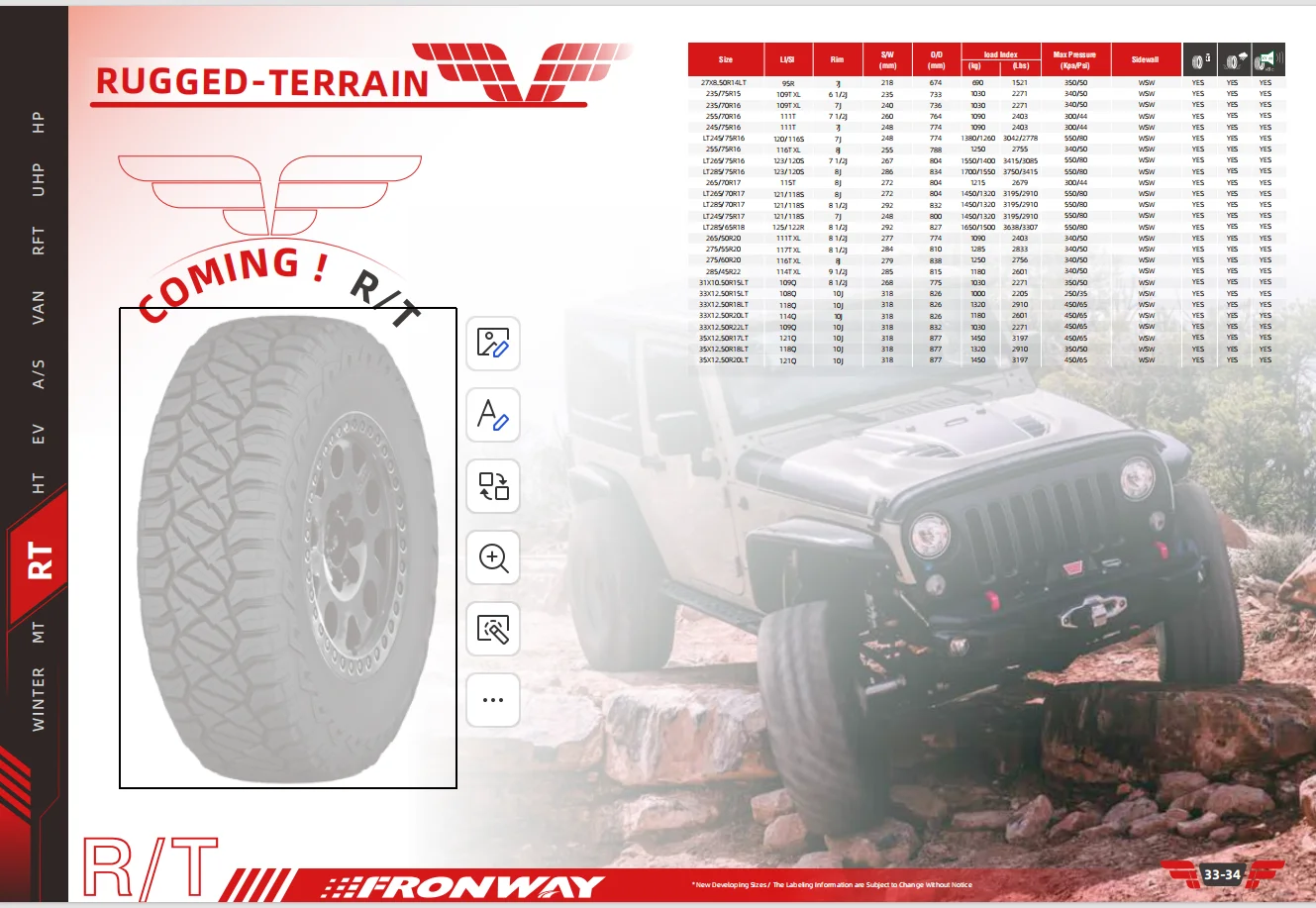
Two tires with the same listed size may not measure exactly the same. Compare the manufacturer’s specifications for:
- Overall diameter
- Section width
- Approved rim width
- Maximum load
- Tread width
- Maximum inflation pressure
- Weight
This matters because an aggressive all-terrain tread can have large shoulder blocks and side lugs. Those features may make the tire wider than a highway tire with the same size code.
4. Confirm wheel and vehicle clearance
The tire must clear all nearby parts through the full range of motion. A proper check includes:
- Front suspension parts
- Upper control arms
- Steering components
- Brake parts
- Inner fenders
- Wheel wells
- Mud flaps
- Rear suspension parts
- Body panels
The check must include steering fully left and fully right. It should also account for suspension compression, not just the vehicle sitting on level ground.
5. Confirm the load requirement
Every tire must carry its share of the vehicle’s weight. Compare the tire’s load index with the factory requirement.
For trucks, consider the weight of:
- Passengers
- Fuel
- Tools
- Camping gear
- Towing equipment
- Cargo in the bed
- A trailer’s tongue weight
Never use tire size alone to judge load capacity.

Common All-Terrain Tire Size Options
The right size depends on your vehicle. The following examples show common formats, not universal fitments.
| Vehicle type | Common size format | Main consideration |
|---|---|---|
| Compact crossover | 225/65R17 | Keep diameter and load rating close to stock |
| Midsize SUV | 245/65R17 or 245/70R17 | Check wheel width and fender clearance |
| Half-ton pickup | 265/70R17 or 275/65R18 | Compare P-metric and LT load ratings |
| Heavy-duty pickup | LT275/70R18 or similar | Match the required load range and axle needs |
| Jeep-style 4x4 | 255/75R17 or similar | Check suspension lift, offset, and steering clearance |
These sizes are examples only. A size that fits one trim may not fit another trim of the same vehicle. Factory wheels, brakes, suspension parts, and axle ratings can differ.
Always verify the exact year, make, model, trim, drivetrain, wheel size, and suspension setup.

Should I Get Bigger All-Terrain Tires?
Larger tires can improve ground clearance and provide more sidewall, but they also create trade-offs. A larger diameter tire can affect:
- Speedometer accuracy
- Odometer readings
- Engine rpm
- Transmission shift points
- Acceleration
- Braking feel
- Fuel use
- Steering effort
- Spare tire fit
- Safety-system calibration
A taller tire can also reduce the mechanical advantage of the engine. The vehicle may feel slower, especially when carrying a load or climbing hills.
A larger tire may rub even if it appears to fit while parked. Rubbing can happen only during a turn, while backing up, or when the suspension compresses over a bump.
A useful diameter calculation
You can estimate tire diameter with this formula:
Diameter = (2 × sidewall height ÷ 25.4) + wheel diameter
For a 265/70R17 tire:
Sidewall height = 265 × 0.70 = 185.5 mm
Diameter = (2 × 185.5 ÷ 25.4) + 17
Diameter ≈ 31.6 inches
For a 285/70R17 tire:
Sidewall height = 285 × 0.70 = 199.5 mm
Diameter = (2 × 199.5 ÷ 25.4) + 17
Diameter ≈ 32.7 inches
This hypothetical change adds about 1.1 inches to overall diameter. The vehicle rises by only about half that amount, because the increase is split above and below the wheel center.
The actual tire diameter may differ from the estimate. Use the tire maker’s published specifications for a final comparison.
P-Metric or LT All-Terrain Tires?
The label on the sidewall can include P, LT, or no letter. These markings describe different tire systems.
P-metric tires
P-metric tires are designed mainly for passenger vehicles. They often provide:
- Lower weight
- A softer ride
- Lower rolling resistance
- Better road comfort
They may suit crossovers, SUVs, and light-duty pickups used mainly on pavement.
LT tires
LT means Light Truck. LT tires are built for truck applications and may offer:
- Higher load capacity
- Stronger construction
- Better resistance to some impacts
- A firmer ride
- More weight
- Higher rolling resistance
LT tires are not automatically safer or better for every vehicle. Their higher load capability does not allow you to exceed the vehicle’s gross axle weight rating, gross vehicle weight rating, wheels, or suspension limits.
Some LT tires use load ranges such as C, D, or E. Load range describes the tire’s construction and pressure capability. It does not replace the need to check the actual load index and vehicle requirements.
For a daily-driven crossover, an LT all-terrain tire may add weight and harshness without a useful benefit. For a work truck that carries heavy loads or travels on rocky trails, an LT tire may be more appropriate if the vehicle and wheel support it.

How Much Load Capacity Do You Need?
Choose a tire that meets or exceeds the vehicle maker’s original load requirement. The tire should carry the vehicle at the recommended cold inflation pressure.
Do not simply inflate a replacement tire to its maximum sidewall pressure. The pressure printed on the sidewall is not always the correct operating pressure for your vehicle.
Use the pressure listed on the door-jamb label unless a qualified tire professional or the vehicle maker provides a specific alternative. The pressure label is normally based on the factory tire size and the vehicle’s expected load.
A tire with a higher maximum load does not increase the vehicle’s legal or mechanical carrying capacity. The limiting part may be:
- The axle
- The wheel
- The suspension
- The brakes
- The frame
- The manufacturer’s weight rating
The National Highway Traffic Safety Administration recommends checking tire condition and pressure regularly. The agency also explains that underinflation can increase heat buildup and affect handling.

What Size All-Terrain Tires Are Best for Snow and Mud?
There is no single best size for every snow or mud condition. Tire design, pressure, vehicle weight, driving skill, and terrain all matter.
For snow, a narrower tire can sometimes cut through loose snow more effectively than a very wide tire. However, winter performance depends heavily on the rubber compound and tread design. Many all-terrain tires are not a substitute for a dedicated winter tire, especially on ice or packed snow.
For mud, aggressive tread voids can help clear mud. A wider tire may float on soft ground, while a narrower tire may dig down to a firmer surface. Both outcomes can be useful or harmful depending on the trail.
For rocks, sidewall height and construction matter. A taller sidewall can provide more protection from sharp edges, but it must still have enough load capacity for the vehicle.
In every case, match the tire to the terrain you actually drive. A tire chosen for occasional gravel roads may not be suitable for deep mud, desert rocks, or severe winter travel.

Will Bigger Tires Affect My Speedometer?
Yes. If the replacement tire has a larger overall diameter, it travels farther with each wheel rotation. The speedometer may then show a lower speed than the vehicle is actually traveling.
For example, if the original tire measures 31.6 inches and the replacement measures 32.7 inches:
Change = (32.7 − 31.6) ÷ 31.6 × 100
Change ≈ 3.5%
At an indicated 60 mph, the vehicle could be traveling about 62 mph if the system does not correct for the change. This is a simplified example. Actual results depend on the vehicle and tire measurements.
A modest size change may be correctable on some vehicles. Others may require dealer programming, a compatible scan tool, or a specific calibration process. Ask the vehicle maker or a qualified shop before changing size.

Will All-Terrain Tires Fit My Current Wheels?
A tire must be approved for the width of the wheel. The tire maker publishes an approved rim-width range for each tire size.
Do not mount a tire that is too wide for the wheel simply because the diameter matches. The wrong wheel width can change the tire’s shape, handling, bead seating, and clearance.
Also check wheel offset. Offset controls how far the wheel sits inward or outward. A wheel with more outward offset may create fender clearance problems. A wheel that sits farther inward may contact suspension parts.
Before changing wheels or tires, confirm:
- Tire size
- Wheel diameter
- Wheel width
- Offset
- Bolt pattern
- Center bore
- Brake clearance
- Load rating
- TPMS compatibility
Some vehicles require tire-pressure monitoring sensors. A tire shop should confirm that the sensors work with the vehicle’s system after installation.

Common Mistakes to Avoid
Choosing only by appearance
A tire that looks rugged may be too heavy, too wide, or too low in load capacity for your vehicle. Check the specifications, not just the tread pattern.
Ignoring the door-jamb pressure
The correct pressure is based on the vehicle, not only the tire. A new all-terrain tire may need a different pressure only when the vehicle maker or tire professional provides a documented fitment recommendation.
Using the maximum sidewall pressure
The maximum pressure is not a universal target. Overinflation can reduce the contact patch and make the ride harsh. Underinflation can increase heat and wear.
Mixing different sizes
Avoid mixing tire sizes on the same axle. On four-wheel-drive and all-wheel-drive vehicles, different rolling diameters can place stress on the drivetrain.
If you must replace fewer than four tires, follow the vehicle maker’s instructions. Some systems require tires with closely matched tread depth and diameter.
Forgetting the spare
A full-size spare should match the rolling diameter of the tires in use. A small temporary spare is designed for limited use. After installing it, follow the speed and distance limits printed on the spare or in the owner’s manual.
Assuming a lift kit solves every problem
A lift may create room for a taller tire, but it does not automatically solve steering, brake, gearing, wheel-offset, or suspension problems. Lifted vehicles may need additional alignment and fitment checks.
A Simple Decision Guide
Use this guide when deciding what size all-terrain tires you need:
| Your situation | Best starting point |
|---|---|
| Mostly pavement with occasional dirt | Factory size, P-metric if approved |
| Frequent gravel and rough roads | Factory size with durable all-terrain construction |
| Heavy loads or work use | Verify LT construction, load index, and load range |
| Rocky trails | Consider more sidewall and confirmed clearance |
| Deep mud | Compare tread design, width, and clearance |
| Snow and ice | Consider a severe-snow-rated all-terrain or winter tire |
| Want larger tires | Confirm diameter, width, offset, rubbing, gearing, and calibration |
The key trade-off is simple: stock size reduces fitment risk, while a larger size may add clearance but requires more checks and may reduce road performance.

FAQs About All-Terrain Tire Size
Can I put all-terrain tires on my stock wheels?
Usually, yes, if the all-terrain tire matches the wheel diameter and fits the wheel’s approved rim-width range. Confirm the tire’s load index, speed rating, clearance, and pressure requirements before installation.
Do all-terrain tires need to be the same size as my current tires?
They should normally match the factory size unless a qualified professional confirms a different fitment. Matching the size helps preserve clearance, gearing, speedometer accuracy, and drivetrain operation.
Are wider all-terrain tires better?
Not always. Wider tires may offer useful flotation in some conditions, but they can rub, weigh more, reduce fuel economy, and perform poorly in narrow snow or mud conditions. Choose width based on the vehicle and terrain.
Should I choose LT tires for an SUV?
Only if the vehicle, wheel, and intended use justify them. LT tires may offer stronger construction and higher load capacity, but they can also make the ride firmer and increase weight. Check the manufacturer’s fitment guidance.
How do I know if larger tires will rub?
Compare the new tire’s published width and diameter with the original tire, then inspect clearance at full steering lock and during suspension compression. A professional fitment check is the safest option, especially with aftermarket wheels or a modified suspension.
Final Recommendation
For most drivers, the right all-terrain tire size is the factory size shown on the driver-side door label, with an equal or higher load index and the required speed rating. This approach gives you better trail and gravel traction without changing the vehicle’s basic fitment.
Choose a larger tire only after checking the full system: wheel width, offset, suspension and body clearance, load capacity, drivetrain effect, speedometer accuracy, spare-tire fit, and local inspection rules.
Before ordering, provide a tire shop with your vehicle’s exact year, make, model, trim, drivetrain, wheel size, and suspension modifications. That final check can prevent rubbing, handling problems, and an expensive tire mismatch.
