

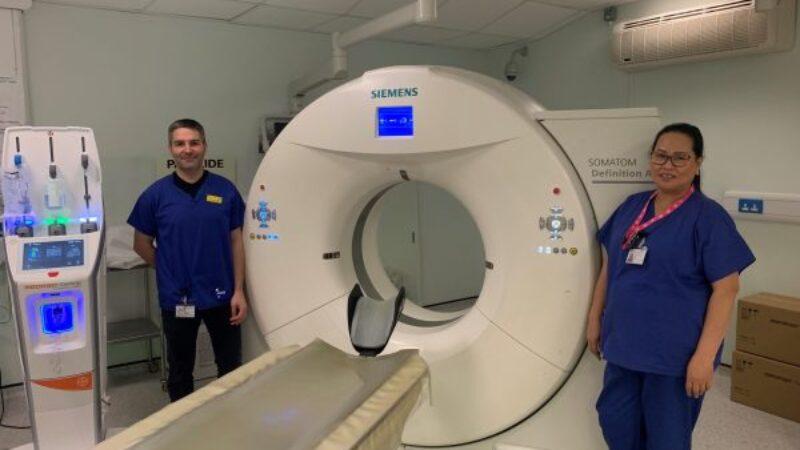
Some urgent care centers in the United States offer CT scans, but many do not. Most urgent care clinics use exams, X-rays, lab tests, and sometimes ultrasound. If a CT scan is needed, the clinic may send you to an imaging center or an emergency department.
The right choice depends on your symptoms. A mild injury, simple infection, or minor illness may fit urgent care. Severe pain, trouble breathing, signs of stroke, major injury, or possible internal bleeding usually need an emergency room.

Can urgent care centers perform CT scans?
Yes, some can—but CT scans are not standard at every urgent care clinic. CT access depends on the clinic’s equipment, staff, hours, location, and medical services.
A CT scan, also called computed tomography, uses X-rays and computer images to create detailed views inside the body. It can show problems that a basic X-ray may miss, such as:
- Bleeding in the brain
- Kidney stones
- Appendicitis
- Lung clots or other chest problems
- Internal injuries
- Some broken bones
- Severe abdominal pain causes
- Certain infections or masses
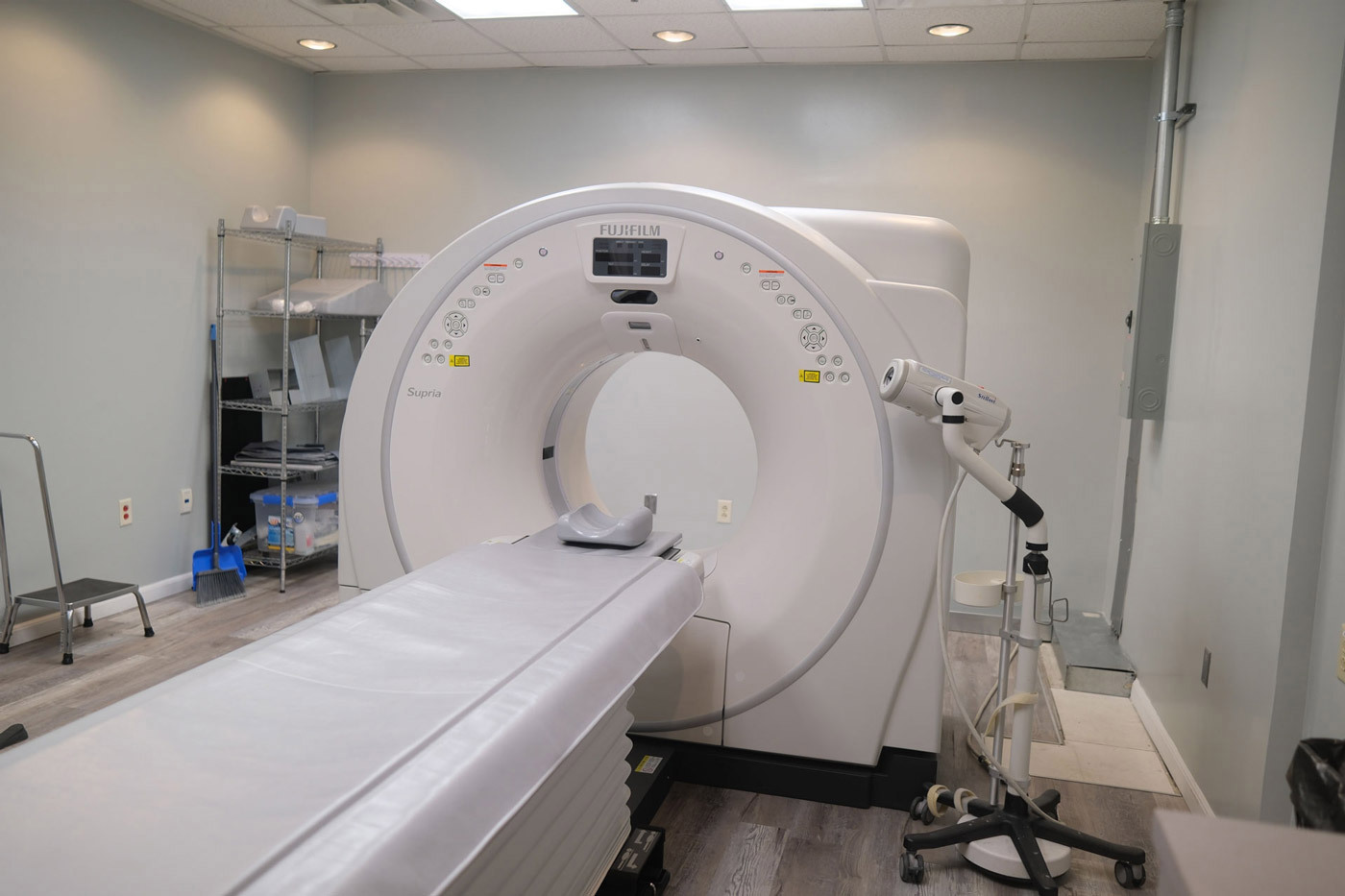
Many urgent care centers do not have a CT scanner on site. A CT unit is large and costly. It also needs trained staff, image review, safety checks, and systems for handling contrast dye when it is used.
Some larger urgent care centers do offer limited CT services. Others work with a nearby radiology practice. In that case, the urgent care clinician may examine you first and then arrange a scan elsewhere.
Why urgent care may not offer CT
Urgent care centers are built to treat problems that need prompt attention but are not usually life-threatening. Their services often include:
- Physical exams
- Treatment for colds, flu, and infections
- Wound care and stitches
- Sprain and strain care
- Basic X-rays
- Pregnancy tests
- COVID-19 and flu tests
- Blood and urine tests
- Treatment for minor burns
A CT scan may be outside the clinic’s normal scope. If your condition could become dangerous while you wait, the urgent care team may send you straight to an emergency department instead.

When should you go to urgent care instead of the ER?
Go to urgent care for a stable problem that needs same-day care but does not appear life-threatening. Go to an emergency department for symptoms that may involve a serious or rapidly worsening condition.
Use this guide as a general starting point:
| Situation | Usual first choice |
|---|---|
| Mild to moderate sinus pain | Urgent care or primary care |
| Minor cut that may need stitches | Urgent care |
| Mild ankle injury | Urgent care |
| Possible simple fracture | Urgent care if stable |
| Sudden weakness on one side | Emergency department; call 911 |
| Severe chest pain | Emergency department; call 911 |
| Major car crash injury | Emergency department; call 911 |
| Severe abdominal pain with fainting | Emergency department |
| Head injury with confusion or repeated vomiting | Emergency department |
| Trouble breathing | Emergency department; call 911 |
| Possible stroke | Emergency department; call 911 |
Urgent care is not a substitute for emergency care. A patient may need a CT scan, surgery, IV medicine, specialist care, or close monitoring. Those services are more available in a hospital emergency department.
Call 911 for emergency warning signs
Call 911 in the United States if you have:
- Trouble breathing
- Severe chest pressure or pain
- New confusion
- Fainting
- A seizure
- Sudden trouble speaking
- Sudden weakness or numbness
- A severe allergic reaction
- Uncontrolled bleeding
- A serious injury
- Blue lips or gray skin
Do not drive yourself if you may have a stroke, heart attack, serious head injury, or another urgent condition.

How to find out whether an urgent care offers CT scans
Call before you go. Do not assume that a clinic has CT equipment just because it has an X-ray machine.
Ask these questions:
- Do you perform CT scans at this location?
- Can you scan the body part I may need checked?
- Do you accept walk-ins for CT imaging?
- Does a clinician need to examine me first?
- Can you scan patients who may need contrast dye?
- Do you treat children or pregnant patients?
- Will a radiologist review the images?
- How soon will the results be available?
- Will you send me to a hospital if the scan shows a serious problem?
- What insurance and payment rules apply?
A clinic may have CT equipment but still lack the right scan protocol for your condition. For example, a kidney stone scan, head scan, and lung scan use different settings and clinical decisions.
You can also check the urgent care’s official website. Look for a services page that specifically lists “CT,” “computed tomography,” or “CAT scan.” If the site only lists X-rays, do not assume CT is available.
What to bring
Bring:
- Your photo ID
- Insurance card
- A list of medicines
- A list of allergies
- Details about past surgeries
- Information about kidney disease
- Pregnancy information, if relevant
- Prior imaging records, if available
Tell the clinician about blood thinners, diabetes medicines, kidney problems, and any chance of pregnancy. These details may affect the scan or the use of contrast.
What happens if urgent care cannot do the CT scan?
The clinic may refer you to an imaging center, a hospital, or the emergency department. The safest destination depends on your symptoms and how stable you are.
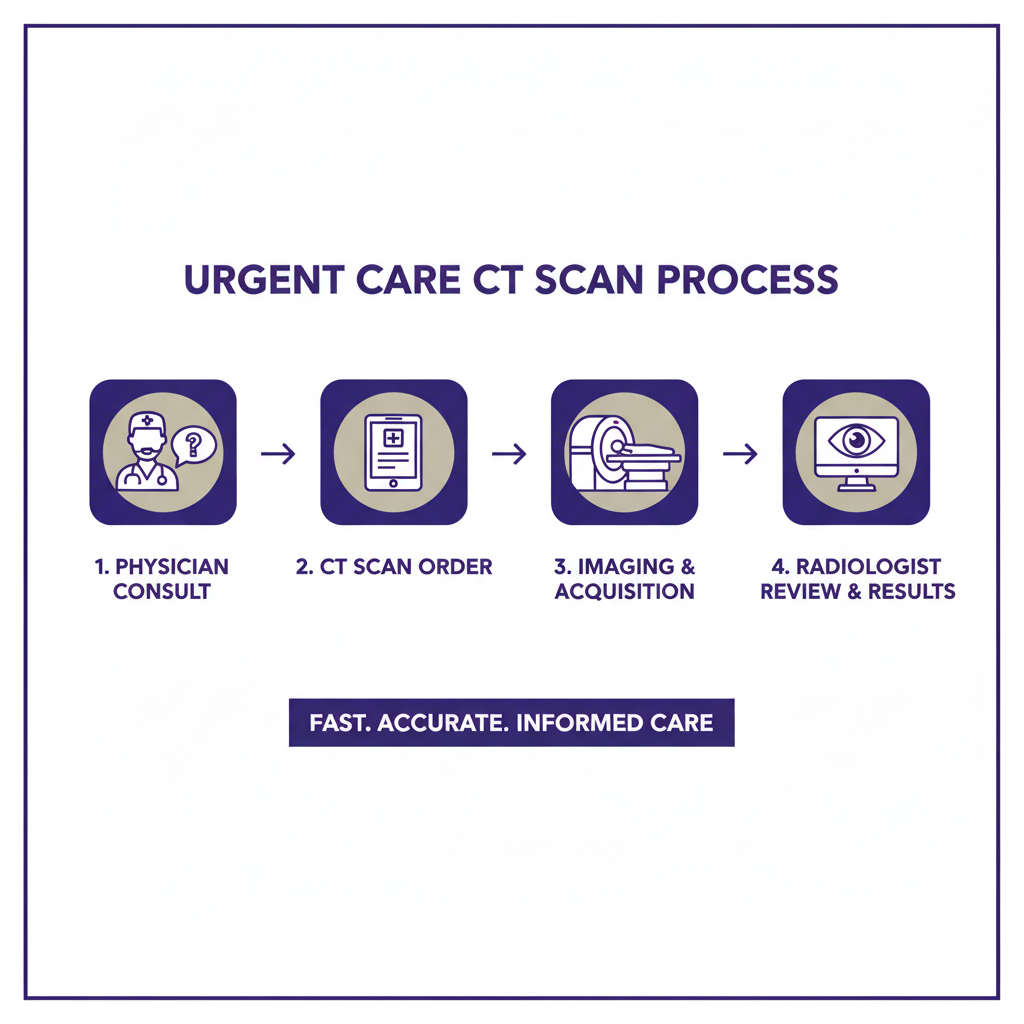
There are three common paths:
1. Referral to an outpatient imaging center
This may work when you are stable and the scan is not an emergency. The urgent care clinician may provide an order for the CT scan. The imaging center then performs the scan and sends a report to the ordering clinician.
This path may cost less than an emergency department visit, but it may take longer. It may also require insurance approval.
2. Transfer to an emergency department
Urgent care may send you to the ER if the scan could show a serious condition or if you need treatment beyond the clinic’s resources. Examples include possible internal bleeding, a serious head injury, or severe abdominal pain.
The transfer may happen by private vehicle if you are stable. If you are not stable, the clinic may call an ambulance.
3. Direct referral to another medical service
Some clinics have a local agreement with a hospital or imaging group. They may arrange a same-day scan or advise you where to go. Ask whether you need to check in again and whether your insurance requires a referral.
A referral does not always mean that a CT scan is medically necessary. The clinician will decide based on your symptoms, exam, medical history, and other test results.
Do urgent care centers use X-rays instead of CT scans?
Often, yes. X-rays are more common at urgent care centers than CT scans. X-rays are useful for many common problems, especially suspected fractures and some chest conditions.
An X-ray creates a flat image. A CT scan creates many cross-sectional images that can be combined into a more detailed view. CT usually gives more information, but it also uses more radiation and may cost more.
For example:
- An X-ray may help identify a broken wrist.
- A CT scan may show complex facial fractures.
- An X-ray may help assess some lung problems.
- A CT scan may be needed for a serious chest injury.
- An X-ray may help detect some bowel blockages.
- A CT scan may help assess appendicitis or internal bleeding.
A normal X-ray does not always rule out a serious problem. If symptoms are severe or continue to worsen, seek further care even after a normal test.
Ultrasound may also be used in some urgent care settings. It does not use ionizing radiation, but it cannot answer every medical question. The best test depends on the body part, symptoms, timing, and suspected condition.
Is a CT scan safe?
CT scans are widely used, but they are not risk-free. They use ionizing radiation, which can slightly increase the long-term risk of cancer. The risk from one medically appropriate scan is generally considered small, but the scan should still have a clear clinical reason.
The U.S. Food and Drug Administration advises patients to discuss the benefits and risks of imaging tests with a health professional. Children are more sensitive to radiation than adults, so pediatric scans should use settings suited to the child.
Tell the clinician if you:
- Are pregnant or might be pregnant
- Have had many recent CT scans
- Have kidney disease
- Have had a reaction to contrast in the past
- Have asthma or severe allergies
- Take certain diabetes medicines
CT scans with contrast
Some CT scans use contrast material to make blood vessels or organs easier to see. Contrast may be given through a vein or, for some exams, by mouth.
Most people tolerate contrast well. Possible reactions include itching, rash, nausea, or a warm feeling. Severe reactions are uncommon but can occur. Kidney function may matter before contrast is given, especially in people with known kidney disease.
Do not refuse a needed scan because of fear alone. Instead, tell the medical team about your health history and ask why the scan is needed, what alternatives exist, and what risks apply to you.

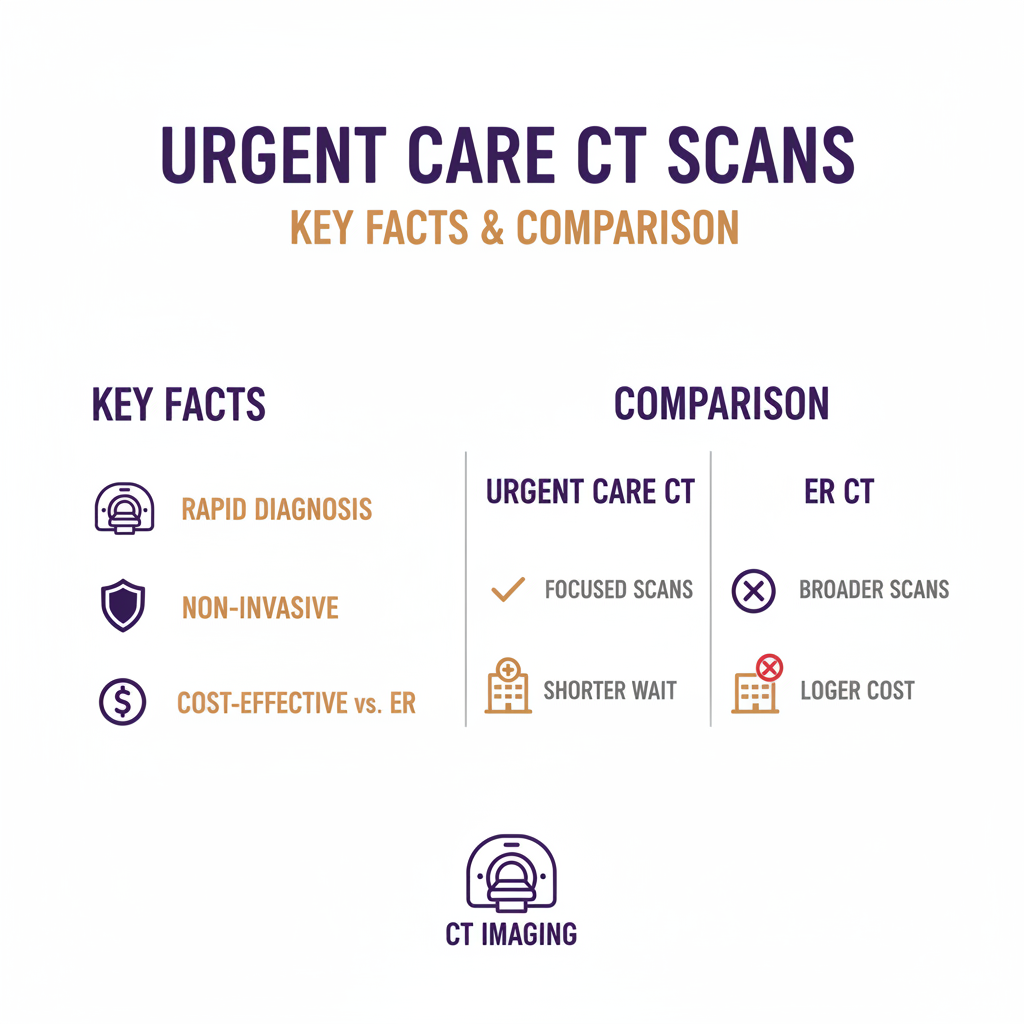
How much does an urgent care CT scan cost?
The price varies widely in the United States. Your cost may depend on the body part scanned, use of contrast, location, insurance plan, deductible, facility fee, and whether a radiologist reads the images.
An urgent care visit and the CT scan may appear as separate charges. You may receive bills from:
- The urgent care clinic
- The imaging facility
- The radiologist
- A laboratory, if blood tests are needed
- An ambulance, if you are transferred
Before a non-emergency scan, ask the clinic and your insurance company for an estimate. Ask whether the imaging site is in network and whether prior authorization is required.
Do not delay emergency care to compare prices. If symptoms suggest a serious emergency, go to the ER or call 911. Cost questions can be handled after you are safe.
Common mistakes to avoid
Several mistakes can delay the right care.
Assuming every urgent care has a CT scanner
Many do not. Call the exact location, not just the company’s general phone line.
Choosing urgent care for a medical emergency
A clinic may not have the staff, equipment, or specialist support needed for a severe problem. Go to the ER for dangerous symptoms.
Asking for a CT without explaining the symptoms
The clinician needs to know what happened, when it began, what makes it better or worse, and whether it is getting worse. A CT is not always the best test.
Forgetting to mention pregnancy or kidney disease
These facts can affect imaging choices and contrast safety.
Treating a normal scan as the end of care
A CT scan can miss some problems, and symptoms can change. Follow the discharge instructions and return for care if symptoms worsen.

Frequently asked questions
Can urgent care order a CT scan?
Yes. A clinician at urgent care may order a CT scan if the symptoms and exam support it. The scan may take place at the clinic, an imaging center, or a hospital.
Can urgent care do a CT scan for a head injury?
Some urgent care centers can. Many will instead send patients to an emergency department, especially after a major injury or when there are warning signs such as confusion, fainting, repeated vomiting, seizure, or worsening headache.
Can urgent care diagnose appendicitis without a CT scan?
A clinician may suspect appendicitis from your symptoms, exam, and lab results. CT, ultrasound, or MRI may help confirm the diagnosis. Suspected appendicitis often needs emergency department evaluation because surgery or hospital care may be required.
Is urgent care cheaper than the ER for a CT scan?
It may be, but not always. The total cost depends on the facility, insurance, scan type, professional fees, and follow-up care. Emergency care is the safer choice when symptoms could be life-threatening.
Should I go to urgent care or an imaging center for a CT scan?
If a doctor has already ordered a non-urgent CT and you are stable, an imaging center may be appropriate. If you have severe, sudden, or worsening symptoms, seek urgent medical evaluation rather than arranging an outpatient scan on your own.
Key takeaways
- Some U.S. urgent care centers offer CT scans, but many do not.
- Call the exact clinic before you go.
- Urgent care may refer you to an imaging center or emergency department.
- Severe symptoms, major injuries, stroke signs, chest pain, and breathing problems need emergency care.
- Tell the medical team about pregnancy, kidney disease, allergies, and prior contrast reactions.
- Ask about insurance, referrals, contrast, and where the images will be reviewed.
Conclusion
Urgent care may perform CT scans, but availability varies by location. The clinic may also order the scan elsewhere or send you to the ER when the condition could be serious.
For a stable problem, call ahead and ask about CT access, cost, referrals, and timing. For severe or rapidly worsening symptoms, skip the urgent care search and call 911 or go to the nearest emergency department.
