

Introduction
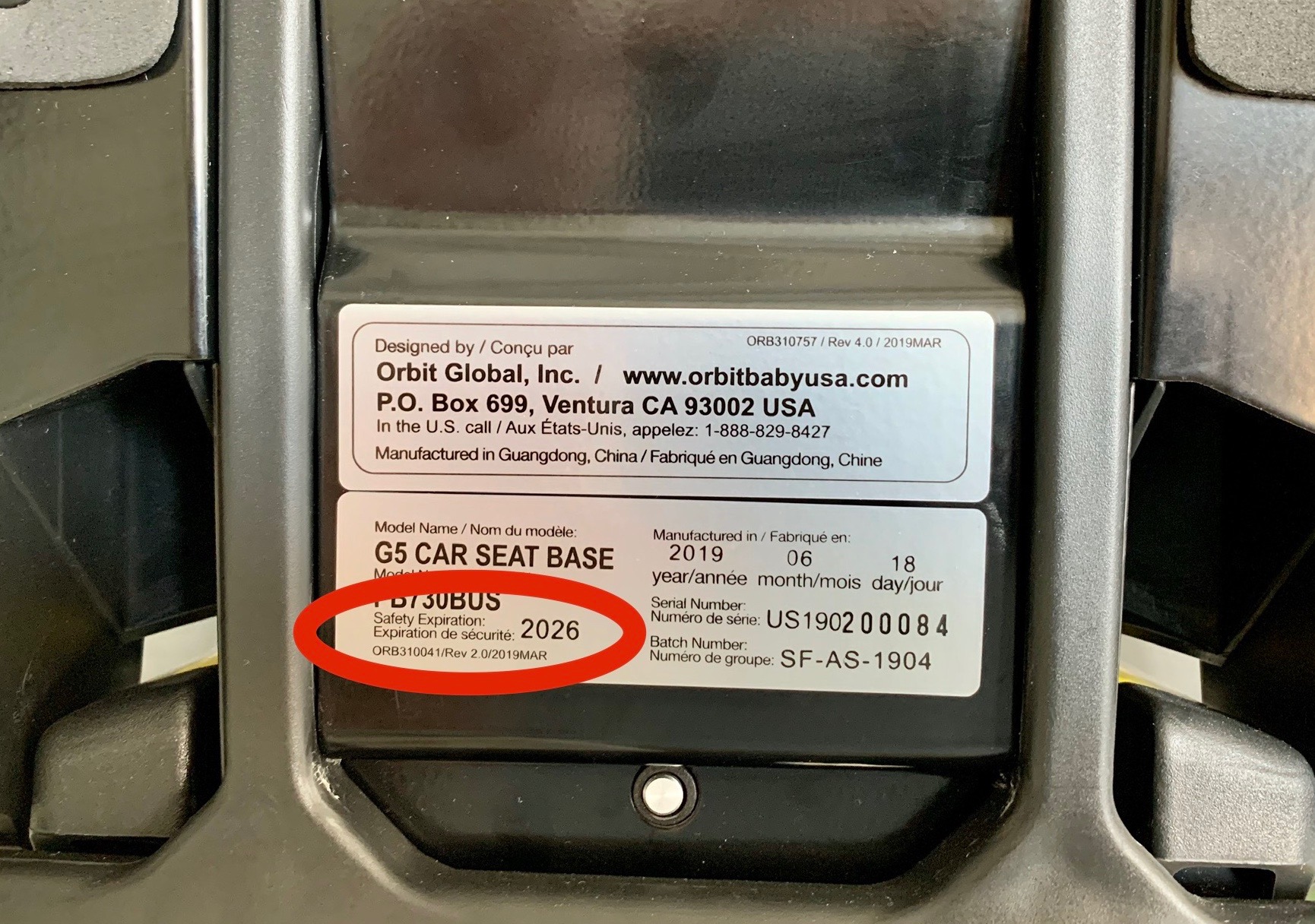
In the United States, the car seat expiration date is usually printed on a white or gray label. Check the back, side, bottom, or base of the seat. Look for words such as “Do not use after,” “Expiration date,” “Expires on,” or “Date of manufacture.”
Some seats do not show a clear expiration date. Instead, the manufacturer may give a service life in the owner’s manual. If you cannot find the date, identify the seat’s brand and model, then contact the manufacturer before using it.
A car seat is a safety device, not a lifetime product. Plastic, harness parts, foam, and labels can wear over time. U.S. car seat makers set the useful life for their products, so the correct date depends on the brand and model.
Where to Look for the Expiration Date
Start with the seat itself. You usually do not need to remove the cover or take apart the harness.


Check these areas in order:
The back of the car seat
Look behind the seat shell, near the top, or beside the instruction label.The bottom of the seat
Turn the seat over only when it is safe and easy to handle. The date may be molded into the plastic or printed on a sticker.The side of the seat
Search near the harness label, belt path, or side-impact padding.The detachable base
Infant car seats often have a base with its own label. Check both the carrier and the base.The underside of the carrier
An infant seat may show the date beneath the seating area or near the handle hinge.The owner’s manual
The manual may explain the service life. It may also show where the date label is located.
Look for a label that also lists the model name, model number, serial number, manufacture date, and compliance information. The expiration information may be in small print.
Common date labels
A car seat may use one of these formats:
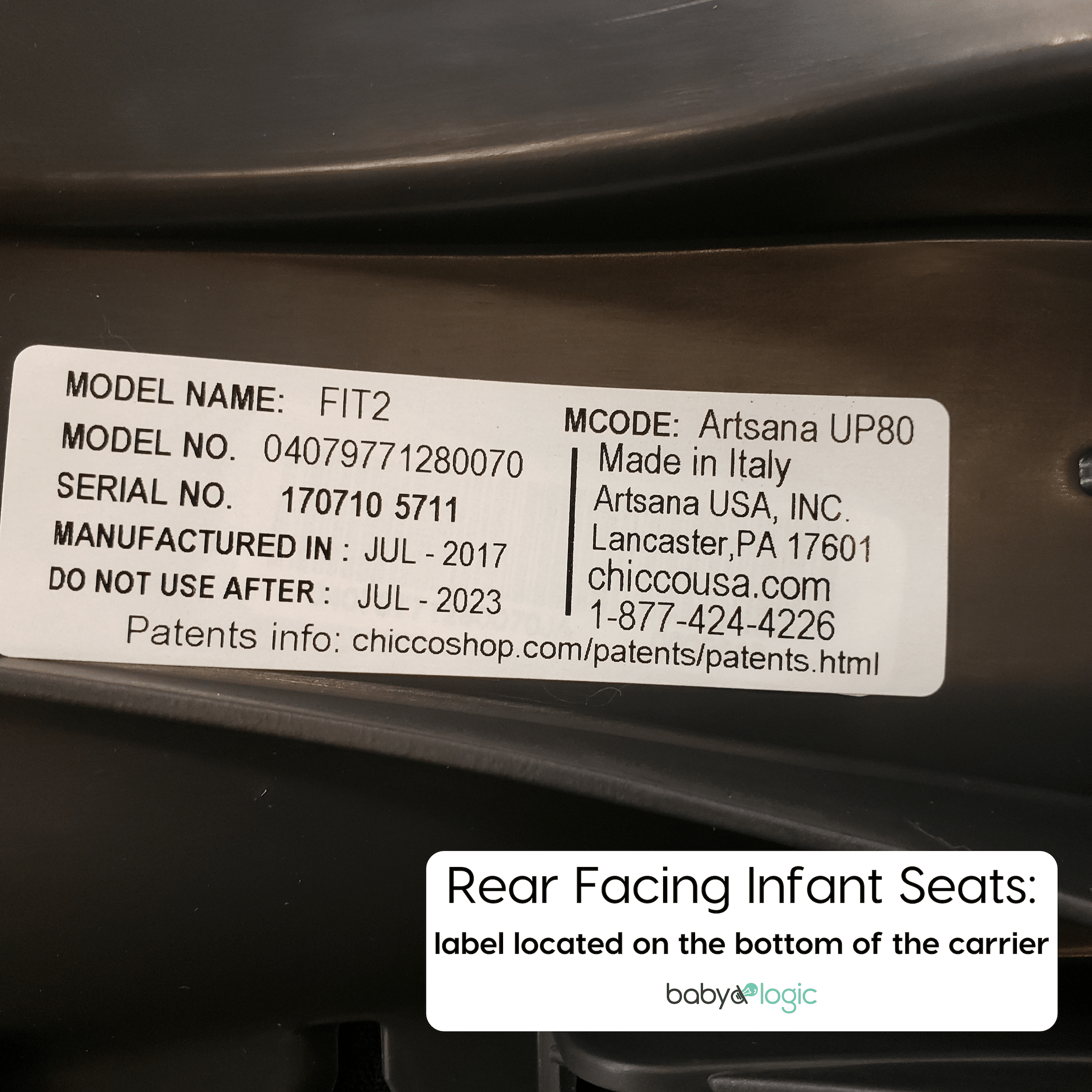
- “Do not use after December 2029”
- “Expires 10 years after date of manufacture”
- “Useful life: 6 years from manufacture date”
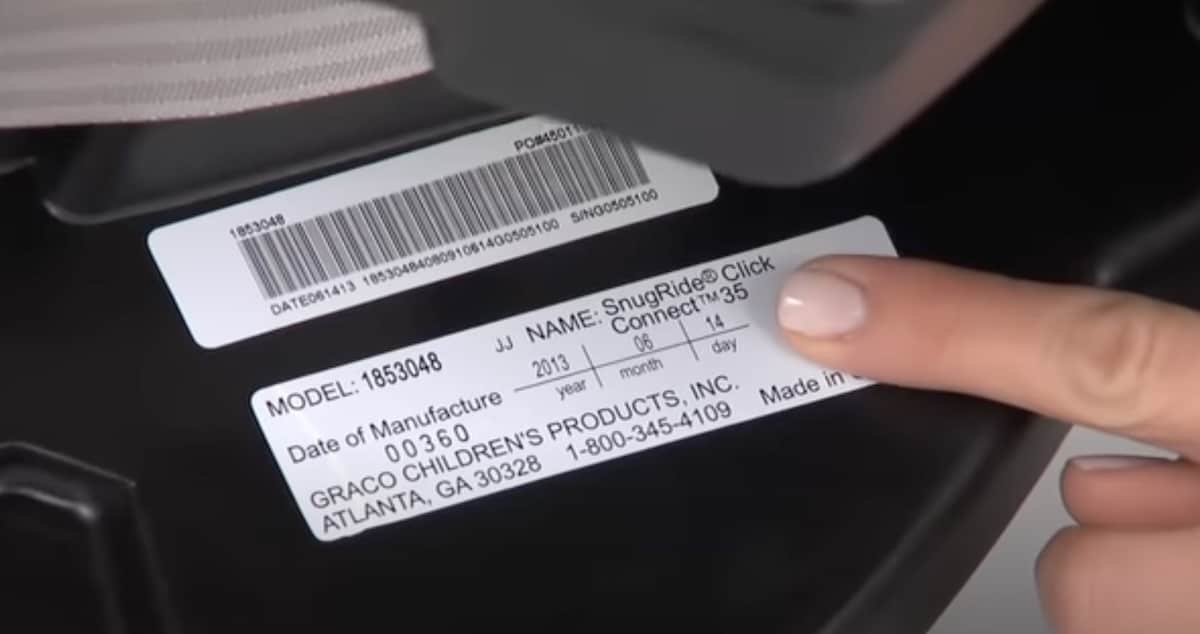
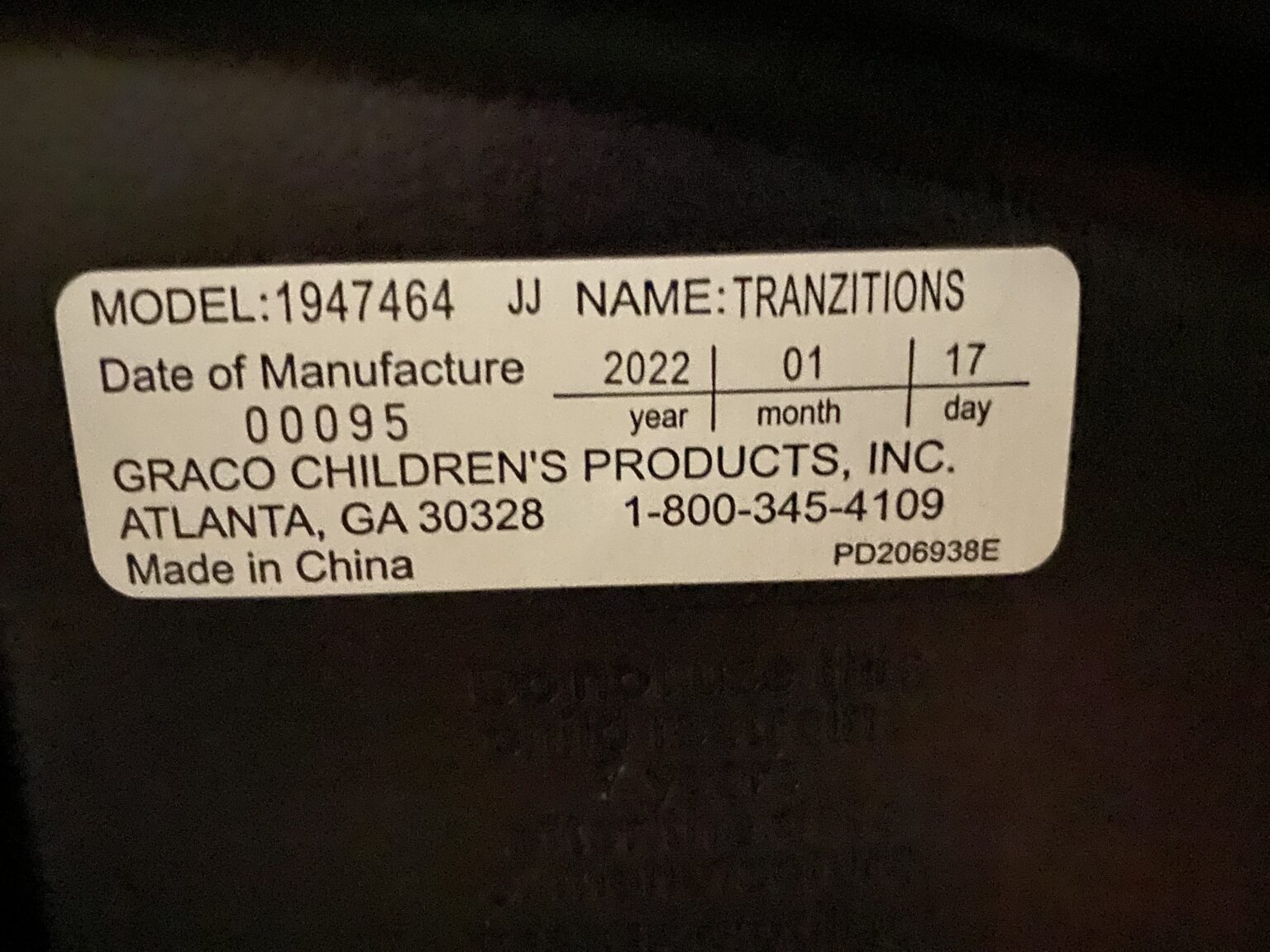
- “Manufactured: 05/2023”
- A stamped month and year on the plastic shell
A manufacture date is not always the expiration date. You may need to add the manufacturer’s stated service life.
For example, if a manufacturer says a seat expires six years after manufacture and the label says May 2023, the seat would generally expire in May 2029. Follow the exact wording in the manual or on the label. Do not guess if the manufacturer gives a different rule.
How to Find the Date on Different Types of Car Seats
The location can change by seat type. The following checks cover most seats sold in the United States.
Infant car seats
Check the bottom or back of the carrier first. Then inspect the detachable base.
The carrier and base may have different labels. They are designed to work together, but each part can have its own manufacture date and service-life information. If either part is expired, do not keep using that part unless the manufacturer confirms it is still allowed.
Also check the area beneath the infant seat’s fabric cover. Do not remove the cover unless the manual allows it. Replacing or routing the cover incorrectly can affect the way the seat works.
Convertible car seats
Check the back, bottom, and sides of the shell. The label may be close to the rear-facing or forward-facing belt path.


A convertible seat can serve a child for several years, but its expiration date does not reset when you change the seat from rear-facing to forward-facing. The clock usually starts from the manufacture date, not from the date your child begins using a new mode.
All-in-one car seats
Look at the outer shell and the bottom of the seat. All-in-one seats may work as rear-facing seats, forward-facing seats, and booster seats. The expiration date normally applies to the seat as a whole.
Do not assume the booster mode lasts longer than the harness mode. Use the service-life rule supplied for that model.
Booster seats
Check the back, underside, and side labels. A high-back booster may have a separate back section that connects to the bottom portion. Follow the manufacturer’s instructions for both pieces.
A backless booster may have a small label on the underside. If the label is worn away, contact the manufacturer with the model and serial number.

What the Manufacture Date Means
The manufacture date tells you when the seat was made. It does not automatically tell you when the seat expires.
Manufacturers use different service-life periods. Some publish a number of years from the manufacture date. Others print a direct “do not use after” date. The correct calculation depends on the exact brand and model.
Use this simple method:
Expiration date = manufacture date + manufacturer’s stated service life
Hypothetical example
- Manufacture date: August 2022
- Stated service life: 10 years from manufacture
- Calculated expiration: August 2032
This is only an example. Do not apply a six-year or 10-year rule to a different brand without checking its instructions.
The date of purchase usually does not control expiration. A seat could sit in a store or garage for months before someone buys it. That is why manufacturers commonly base the service life on the manufacture date.
If you bought a new seat that was made several years earlier, check the remaining service life. Ask the retailer or manufacturer about the date before using it.

How Long Do Car Seats Last in the United States?
There is no single expiration period for every car seat sold in the United States.
The manufacturer sets the useful life for each model. Many seats have a service life of about six to 10 years from the manufacture date, but that range is not a universal rule. Some models may have a different period.
The National Highway Traffic Safety Administration explains that federal law does not set one expiration date for all child safety seats. Manufacturers determine the useful life of their seats. The NHTSA car seat guidance advises parents to check the seat and the manufacturer’s instructions.


For the most reliable answer:
- Find the brand and model.
- Locate the manufacture date or direct expiration date.
- Read the owner’s manual.
- Check the manufacturer’s official website.
- Contact the manufacturer if the information is unclear.
Do not use an average service life as a substitute for model-specific instructions.

What to Do If You Cannot Find the Expiration Date
Do not use a car seat with an unknown expiration date until you verify it.
First, search the seat carefully. Use a flashlight and check the rear, bottom, sides, and base. Look for a label that may be partly hidden by the vehicle seat or fabric.
Next, find the model number. It may appear on the same label as the manufacture date. Write down:
- Brand name
- Model name
- Model number
- Serial number
- Manufacture date
- Any label text you can read
Then use the manufacturer’s official contact page or customer service number. Send a clear photo of the label if requested.
Do not rely on a random online chart. A similar-looking seat may have a different expiration rule. Do not infer the date from the child’s age, the date of purchase, or the date printed on a registration card.
If the label is damaged
A missing label creates a safety problem because you may not be able to confirm the seat’s age, model, recall status, or installation information. Ask the manufacturer whether it can identify the seat from the remaining markings.
If the manufacturer cannot confirm the seat’s identity and service life, replace it with a seat that has clear labels and instructions.

Should You Use an Expired Car Seat?
No. Replace a car seat after its stated expiration date.
An expired seat may look clean and intact, but you may not know whether its materials still meet the manufacturer’s intended service life. The seat may also have outdated instructions, worn labels, missing parts, or no longer-supported replacement components.
Expiration is not the only reason to replace a seat. Replace it sooner if:
- It was involved in a moderate or serious crash.
- The shell is cracked, bent, or damaged.
- The harness is frayed, cut, or badly worn.
- The buckle does not latch or release correctly.
- Parts are missing.
- The seat was recalled.
- You do not know its history.
- You cannot confirm its model or manufacture date.


NHTSA advises replacing a car seat after a moderate or severe crash. For a minor crash, the seat must meet every condition in NHTSA’s minor crash guidance. When in doubt, ask the seat maker.
Do not give an expired seat to another family. Mark it as unusable and follow local disposal rules. Cutting the harness or writing “DO NOT USE” on the seat can help prevent someone from taking it from the trash and using it.

Expiration Date vs. Car Seat Recall
An expiration date and a recall are different.
- Expiration relates to the age and stated service life of the seat.
- A recall relates to a safety defect or required corrective action.
A seat can be within its service life and still be recalled. An expired seat can also have no recall listed. Check both issues.
Use the seat’s model number and date of manufacture to search the NHTSA Recalls database. You can also check the manufacturer’s recall page.
If the seat is recalled, follow the recall notice. The remedy may involve a repair kit, replacement part, replacement seat, or other instruction. Stop using the seat when the recall notice says to do so.
Registering a new seat with the manufacturer can help you receive future recall notices. Registration does not extend the expiration date.
Common Mistakes to Avoid
A few mistakes can lead to unsafe decisions.
Mistake 1: Using the purchase date
The purchase date usually does not start the service-life period. Use the manufacture date or the direct expiration date supplied by the manufacturer.
Mistake 2: Applying one rule to every brand
“Car seats last 10 years” is not a universal U.S. rule. Check the exact model.
Mistake 3: Checking only the carrier
For an infant seat, inspect both the carrier and base. Each component may have its own label.
Mistake 4: Ignoring a missing label
A missing label can hide key information. Contact the manufacturer before use.
Mistake 5: Treating expiration as the only safety check
A seat can be unsafe before it expires because of a crash, damage, missing parts, poor fit, or a recall.
Mistake 6: Using household cleaners or altering the seat
Do not drill, sew, glue, paint, or add unapproved padding to a car seat. Clean it only as the manual permits. Changes can affect the harness or shell.


Mistake 7: Trusting an unknown used seat
A used seat is risky when you do not know its full history. Ask whether it has been in a crash, whether all parts are present, and whether it has been recalled. If the owner cannot answer, choose a new seat.
Quick Decision Table
Use this table as a first check, not as a replacement for the owner’s manual.
| What you find | What it means | Next step |
|---|---|---|
| A direct expiration date | The manufacturer gives the final use date | Stop using the seat after that date |
| A manufacture date and service life | You must calculate the date | Follow the model’s manual |
| No date, but a clear model number | The seat may be identifiable | Contact the manufacturer |
| No label or model number | The seat cannot be reliably verified | Do not use it |
| A recall notice | The seat may have a safety defect | Follow the recall remedy |
| Crash history | The seat may need replacement | Apply NHTSA and manufacturer guidance |
| Missing or damaged parts | The seat may not work as designed | Replace or obtain an approved part |

Frequently Asked Questions
Where is the expiration date on a Graco car seat?
Check the label on the back, bottom, or side of the seat. Some Graco models show a direct “Do not use after” date, while others list a manufacture date and service-life information. Use the label and the manual for your exact model.
Where is the expiration date on a Chicco car seat?
Look on the underside, back, or side of the seat and on the infant base if one is included. Chicco model instructions explain how to read the manufacture and expiration information. Check both the carrier and base.
Is the expiration date stamped into the plastic?
Sometimes. A manufacturer may print the date on a sticker, mold it into the shell, or list only the manufacture date. A molded code may not be easy to interpret, so confirm it with the manual or manufacturer.
Can I use a car seat after the expiration date if it looks new?
No. A good appearance does not extend the manufacturer’s stated service life. Replace the seat after its expiration date.
Can I use a car seat without an expiration date?
Only after the manufacturer confirms the seat’s model and service life. If you cannot verify the seat’s age, identity, and condition, do not use it.
Conclusion
The expiration date on a U.S. car seat is usually on a label placed on the back, side, bottom, or base. Look for “Do not use after,” “Expires on,” or a manufacture date paired with a service-life rule.
Use the exact instructions for your brand and model. Do not rely on the purchase date or a general six-year or 10-year rule. If the label is missing, the seat has been recalled, or its history is unknown, contact the manufacturer or replace the seat.
Next step: Find the seat’s model number and date label today, then compare them with the manufacturer’s official instructions and the NHTSA recall database.
