

For most vehicles in the United States, all-terrain tires should be inflated to the cold tire pressure listed on the driver-door placard or in the owner’s manual. That number is set for the vehicle, its weight, its suspension, and its original tire size. It is usually somewhere between 30 and 40 PSI, but the correct pressure may be lower or higher.
Do not use the number molded into the tire sidewall as your normal setting. That number is the tire’s maximum allowed cold inflation pressure, not the recommended pressure for your vehicle.
Introduction
All-terrain tires do not have one universal PSI setting. A midsize SUV, half-ton pickup, and heavy-duty truck may use similar-looking tires but need very different pressures.
The safest starting point is simple: check the yellow and white certification label on the driver-side doorjamb. Look for separate front and rear values, then check the tires when they are cold. Vehicle makers, the National Highway Traffic Safety Administration (NHTSA), and tire manufacturers all treat the vehicle placard as the primary guide for normal road use.

The Short Answer: Use the Vehicle’s Recommended PSI
Set all-terrain tires to the vehicle manufacturer’s recommended cold inflation pressure unless a tire or vehicle manufacturer gives a specific alternative for a different load or use.
The correct pressure may appear in several places:
- The driver-side doorjamb label
- The inside of the fuel-door area on some vehicles
- The owner’s manual
- The vehicle manufacturer’s service information
- A tire-pressure monitoring system display, where available
The front and rear pressures may not be the same. A pickup carrying a heavy load may require more pressure in the rear tires. Always follow the separate front and rear numbers when the label provides them.
Why the tire sidewall number is different
The sidewall may show wording such as:
“Maximum load XXXX lb at maximum pressure 50 PSI”
That statement describes the tire’s maximum rated load at its maximum cold pressure. It does not tell you how much air your vehicle needs for normal driving.
Using the sidewall maximum on a lightly loaded SUV or pickup can make the ride harsh and reduce the tire’s contact patch. It may also reduce grip on wet pavement, gravel, or uneven roads. Using too little pressure can cause heat buildup, poor handling, rapid shoulder wear, and tire damage.
What “cold PSI” means
Check pressure when the vehicle has been parked for about three hours, or when it has traveled less than one mile at low speed. Driving heats the air inside the tire and raises the pressure. That higher reading is not a reason to release air.
A tire that reads 35 PSI when hot may return to the correct cold pressure after it cools. Let the tires cool before making a final adjustment.
How to Find and Set the Correct PSI
Follow this process for reliable readings:
- Find the vehicle placard. Open the driver’s door and inspect the doorjamb, door edge, or nearby pillar.
- Read the front and rear values. Some vehicles use one pressure for all four tires. Others do not.
- Check the tires when cold. Avoid checking right after highway driving.
- Use a quality tire gauge. Digital and dial gauges can both work well when used correctly.
- Adjust each tire separately. Do not assume all four tires have the same pressure.
- Replace the valve caps. They help keep dirt and moisture away from the valve core.
- Drive briefly and confirm the TPMS light is off. Some vehicles need a short drive or a reset procedure after adjustment.
Check the spare tire as well. A full-size spare may need the same pressure as the road tires, while a temporary spare often has a much higher specified pressure.
A simple example
Imagine the door placard says:
| Tire position | Recommended cold pressure |
|---|---|
| Front | 35 PSI |
| Rear | 35 PSI |
Set all four tires to 35 PSI when cold, even if the all-terrain tire sidewall says the tire can hold 50 PSI.
If the placard says 35 PSI in front and 40 PSI in the rear, use those separate values. The difference may reflect the vehicle’s weight balance, suspension design, or expected cargo load.

Does an All-Terrain Tire Need More PSI?
Usually, no. Changing from a highway tire to an all-terrain tire does not automatically change the vehicle’s recommended PSI.
The correct pressure depends on more than the tread pattern. Important factors include:
- Tire size
- Tire construction
- Load index
- Load range
- Wheel size
- Vehicle weight
- Cargo and passenger load
- Front-to-rear weight balance
- Intended speed and road use
If the replacement tire has the same approved size and load rating as the original tire, the vehicle placard is normally the right starting point.
What if the all-terrain tire is a different size?
A different tire size can change the correct pressure. A larger tire is not automatically safe at the same PSI, and a higher-load tire is not automatically safe at its maximum sidewall pressure.
When the size, load index, or construction changes, check:
- The tire manufacturer’s load-and-inflation data
- The vehicle manufacturer’s fitment guidance
- The wheel’s width and load rating
- Any requirements for TPMS sensors
- Clearance at full steering lock and suspension travel
For a major size change, ask a qualified tire professional to confirm the correct pressure. The goal is to support the vehicle’s required load with an adequate safety margin, not simply to copy the pressure printed on another tire.
Do LT all-terrain tires need more air?
Light-truck, or LT, tires often have stiffer construction and higher load ratings than passenger tires. They may require more pressure for a given load, but the correct value still depends on the vehicle and the tire’s load-and-inflation table.
A heavy-duty pickup with LT tires may use 60, 70, or more PSI under certain loads. That does not mean every LT tire should be inflated that high. The maximum pressure on the sidewall remains a limit, not a universal target.
Recommended PSI for Different Driving Conditions
Normal street driving, highway travel, towing, and off-road use do not always call for the same pressure. The table below gives the correct decision method rather than one pressure for every vehicle.
| Driving condition | Starting point | Important caution |
|---|---|---|
| Daily street driving | Door-placard cold PSI | Use the front and rear values shown |
| Highway driving | Door-placard cold PSI | Do not lower pressure for comfort |
| Heavy cargo | Vehicle manual or placard load guidance | Confirm rear-axle and tire load limits |
| Towing | Vehicle and tire manufacturer guidance | Consider tongue weight and axle loads |
| Gravel roads | Usually placard PSI | A small adjustment may be appropriate only with guidance |
| Slow off-road travel | Manufacturer-approved lower pressure | Air back up before returning to pavement |
| Sand or deep mud | Vehicle, tire, and recovery guidance | Low pressure raises debeading and sidewall risks |
On-road driving
Use the placard pressure for paved roads. This includes commuting, highway trips, and ordinary city driving.
Lowering pressure for a softer ride may sound harmless, but it can increase sidewall flex and heat. It can also make steering feel less precise. At highway speed, use the vehicle’s recommended pressure unless a qualified source gives a specific alternative.
Heavy loads and towing
Extra cargo increases the load on the tires. Towing also changes the load on the rear axle and can affect handling.
Start with the vehicle manual and door placard. Some trucks provide different pressures for unloaded driving, full-load driving, or towing. Never exceed the tire’s maximum load, the wheel’s rating, the axle rating, or the vehicle’s gross axle weight rating.
A tire-pressure adjustment cannot make an overloaded vehicle safe.
Lowering PSI for Off-Road Driving
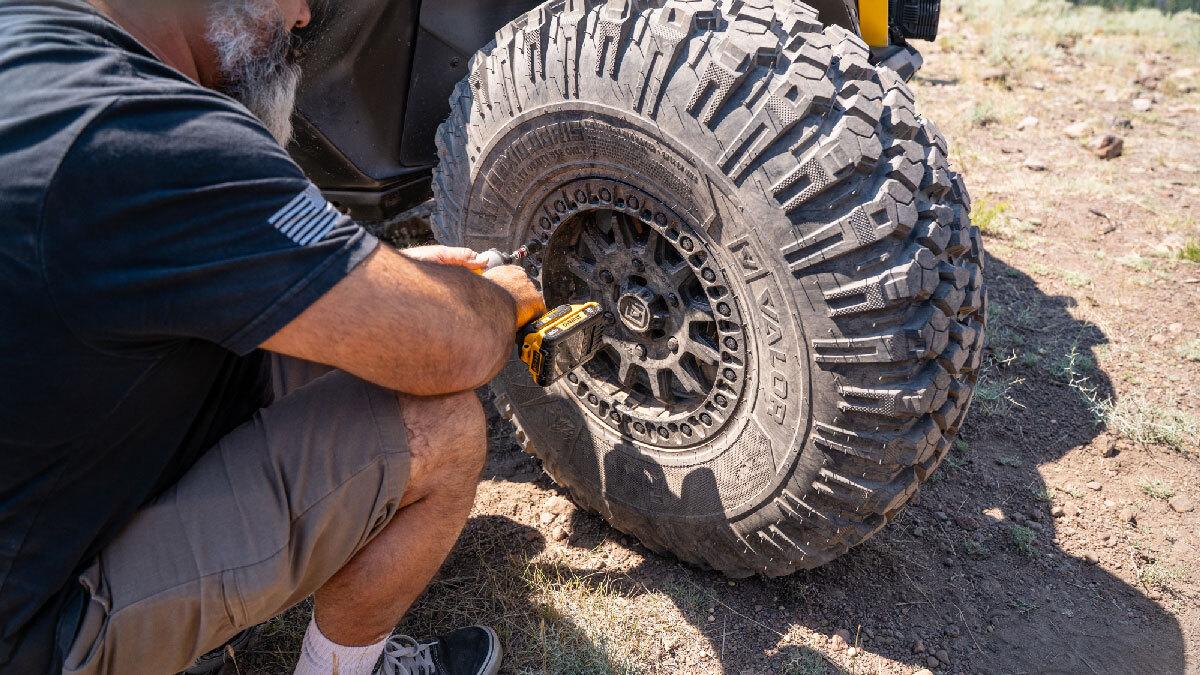
Lowering pressure can improve traction on some low-speed surfaces because the tire can flex and place more tread on the ground. It may help on rocks, sand, and uneven trails. However, lower pressure also increases the risk of sidewall damage, wheel damage, heat buildup, and debeading.
There is no single safe off-road PSI for every all-terrain tire. The correct setting depends on the tire, wheel, vehicle weight, terrain, speed, and whether the wheel uses a beadlock system.
Use a cautious method
If you plan to air down:
- Check the tire and vehicle manufacturer’s guidance first.
- Start with a modest reduction from the normal cold pressure.
- Keep speed low.
- Avoid sharp steering inputs.
- Watch for sidewall pinching, wheel strikes, and tire slippage.
- Stop and raise pressure if the tire rolls on the wheel or feels unstable.
- Carry a reliable compressor and an accurate gauge.
- Reinflate before driving on pavement or at highway speeds.
Some off-road drivers use pressure ranges around 18–24 PSI on certain vehicles and tires, but this is not a universal recommendation. It may be too low for a heavy vehicle, a narrow wheel, a high-speed trail section, or a tire without suitable sidewall support.
Beadlock wheels do not remove every risk. They may help retain the tire bead in specialized off-road use, but they still require correct assembly, torque, inspection, and pressure limits.
Airing back up matters
Driving several miles on pavement with very low pressure can create excess heat and damage the tire. Reinflate all tires to the correct road pressure before returning to normal traffic.
Do not rely only on a dashboard TPMS warning. Many systems warn only after pressure falls well below the recommended setting.
How Temperature Changes Tire Pressure
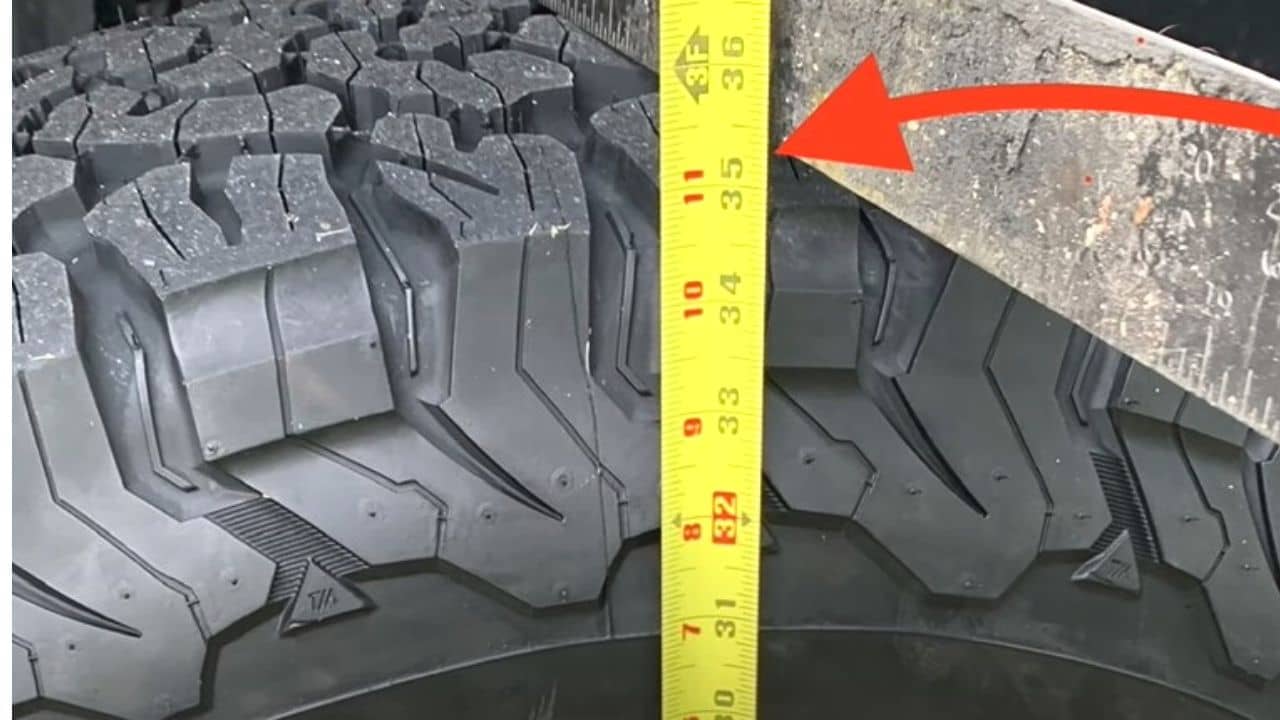
Tire pressure changes with air temperature. As the air inside a tire warms, pressure rises. As it cools, pressure falls.
A common rule of thumb is a change of about 1 PSI for every 10°F change in temperature, although the actual change can vary. This is useful for understanding seasonal changes, not for replacing the vehicle placard.
What to do during cold weather
Set the tires to the placard pressure when cold. If the temperature drops sharply overnight, check the tires again in the morning and add air if needed.
Do not remove air from a tire simply because the pressure rises after driving. A hot reading is expected. Releasing air at that point can leave the tire underinflated when it cools.
In the United States, many vehicles display a TPMS warning during the first cold morning of winter. Check the pressure with a gauge rather than assuming the sensor is wrong.
How Pressure Affects All-Terrain Tire Performance
Tire pressure changes the shape of the tread and sidewall. That affects grip, comfort, fuel use, steering, and wear.
Too much pressure
Overinflation may cause:
- A firmer, harsher ride
- Less tread contact on some surfaces
- Reduced grip on loose or wet roads
- Faster wear near the center of the tread
- More impact harshness over potholes
Too little pressure
Underinflation may cause:
- Slower steering response
- Excessive sidewall flex
- Increased heat buildup
- Poor fuel economy
- Shoulder wear
- Bead or rim damage
- A higher risk of tire failure
The right pressure is a balance. More air is not always safer, and less air is not always better for traction.
Use tread wear as a clue, not the only test
Uneven wear can suggest a pressure problem, but it can also result from alignment, worn suspension parts, incorrect rotation, overloading, or tire damage.
Common patterns include:
- Center wear: may indicate excessive pressure
- Both shoulder areas worn: may indicate low pressure
- One shoulder worn: may indicate alignment or suspension issues
- Cupping or scalloping: may indicate balance or suspension problems
Check pressure with a gauge first. If the wear continues after correcting pressure, have the vehicle inspected.
Should Front and Rear All-Terrain Tires Have the Same PSI?
Only if the vehicle placard says so. Many vehicles use the same pressure at all four corners, but some require a higher rear pressure because of cargo or axle loading.
Never match all four tires by guesswork. Read the placard carefully. It may list different values for:
- Front and rear axles
- Normal and maximum loads
- Cold pressure
- Temporary spare pressure
- Different tire sizes
If the vehicle has a tire-pressure monitoring system, it may show pressure by tire position. Use that display as a monitoring tool, but confirm readings with a gauge when a warning appears.

Common Mistakes to Avoid
Several simple mistakes can lead to poor all-terrain tire performance.
Mistake 1: Setting pressure to the sidewall maximum
The sidewall maximum is not the vehicle’s normal target. Use the door placard instead.
Mistake 2: Checking pressure after a long drive
Hot tires show higher pressure. Wait for the tires to cool before adjusting them.
Mistake 3: Using the same PSI after changing tire size
A different size or load rating may require a new load-and-inflation assessment.
Mistake 4: Lowering pressure for highway comfort
Low pressure can increase flex and heat. Use the placard setting for regular road travel.
Mistake 5: Trusting TPMS alone
TPMS is a warning system, not a replacement for regular pressure checks. Federal rules require it to warn when pressure is significantly below the placard value, but it may not warn about small pressure differences.
Mistake 6: Forgetting the spare
A flat spare does not help in an emergency. Check it at the same time as the road tires.
Mistake 7: Ignoring slow leaks
If one tire loses pressure repeatedly, inspect it for a nail, valve leak, wheel damage, or bead leak. Do not keep adding air without finding the cause.
When to stop driving
Avoid driving on a tire that has:
- A visible bulge or split
- Exposed cords
- Severe tread damage
- A damaged valve
- A strong pull or vibration
- A rapid pressure loss
- Signs of bead separation
Use the spare or call a qualified tire service. A tire that looks acceptable from the outside may still have internal damage.
A Practical PSI Check Schedule
Check all-terrain tire pressure:
- At least once each month
- Before a long trip
- Before carrying a heavy load
- Before towing
- After driving on rough terrain
- When the seasons change
- Whenever the vehicle handles differently
- Whenever the TPMS warning appears
A monthly check is a useful minimum. Off-road use, large temperature changes, and slow leaks may require more frequent checks.
Inspect the tread and sidewalls during the same check. Look for cuts, stones, nails, bulges, missing valve caps, and uneven wear.

Quick Decision Table
Use this table when you need a fast answer.
| Question | Correct action |
|---|---|
| What PSI should I use on the street? | Use the cold PSI on the driver-door placard |
| The tire says 50 PSI. Should I use 50? | No, unless the vehicle or tire guidance specifically requires it |
| Can all four tires use the same pressure? | Only if the placard says so |
| Should I lower PSI for sand or rocks? | Only with suitable off-road guidance and low speeds |
| Can I drive fast after airing down? | No; reinflate before highway driving |
| The pressure is high after driving. Should I bleed it? | No; check again when cold |
| I changed to LT tires. Should I use maximum PSI? | No; check load-and-inflation guidance |
| One tire keeps losing air. What should I do? | Have the tire, valve, and wheel inspected |
Key Takeaways
- The correct all-terrain tire pressure is the vehicle’s recommended cold PSI.
- Find it on the driver-door placard or in the owner’s manual.
- Do not use the tire sidewall maximum as the normal pressure.
- Front and rear pressures may differ.
- Check pressure when the tires are cold.
- Lower pressure only for suitable, low-speed off-road conditions.
- Reinflate before returning to pavement or highway speed.
- Check for leaks if one tire repeatedly loses pressure.
- A different tire size or load rating may require professional guidance.
FAQs
Is 35 PSI good for all-terrain tires?
It may be correct for some vehicles, but not all. Use 35 PSI only when the vehicle placard or an approved tire-and-load calculation supports it.
Should all-terrain tires be inflated to the maximum PSI?
No. The maximum sidewall pressure is a limit tied to the tire’s maximum rated load. It is not automatically the correct pressure for your vehicle.
Do larger all-terrain tires need lower pressure?
Not always. Larger tires may have different load ratings, construction, and air volume. The correct pressure must support the vehicle’s load and remain compatible with the wheel and tire.
What PSI should all-terrain tires have in snow?
For public roads, use the vehicle’s normal cold pressure. Do not lower pressure for snow unless a qualified tire or vehicle source gives a specific reason. Proper tread, speed, braking distance, and tire condition matter more than randomly changing PSI.
How often should I check all-terrain tire pressure?
Check it at least monthly and before long trips, towing, heavy loads, or off-road travel. Check more often when temperatures change quickly or a tire loses air.
Final Recommendation
For everyday driving in the United States, set your all-terrain tires to the cold PSI printed on the driver-door placard, not the maximum number on the tire sidewall. Check each tire with a gauge, follow separate front and rear values, and inspect for leaks or damage.
If you changed tire size, switched to LT tires, tow heavy loads, or drive technical trails, use the tire manufacturer’s load data and vehicle guidance before changing pressure. When the information conflicts or the tire shows damage, stop and ask a qualified tire professional to inspect it.
