

For most people in the United States, hospice does not pay for a caregiver to stay in the home 24 hours a day, every day. Medicare hospice usually covers scheduled visits and support from a hospice team. It may cover continuous home care for a short period during a documented crisis, but this is not the same as permanent round-the-clock home care.
The exact benefit can differ under Medicaid, Medicare Advantage, or private insurance. Ask the hospice provider and the health plan to explain what they will approve, for how long, and who will provide the care.
What hospice care at home usually covers
Hospice care focuses on comfort, symptom control, emotional support, and family support when a person has a terminal illness. In the U.S., the Medicare hospice benefit is available to people who meet Medicare’s eligibility rules and choose hospice instead of treatment aimed mainly at curing the terminal illness.
A hospice team may include:
- Hospice nurses
- Physicians or nurse practitioners
- Social workers
- Home health aides
- Chaplains or spiritual counselors
- Bereavement counselors
- Volunteers
- Physical, occupational, or speech therapists when related to the hospice plan of care
Hospice can provide care in a private home, apartment, assisted living facility, nursing home, or other setting. The location does not change the main rule: routine hospice care is usually intermittent, not continuous.
Types of hospice care under Medicare
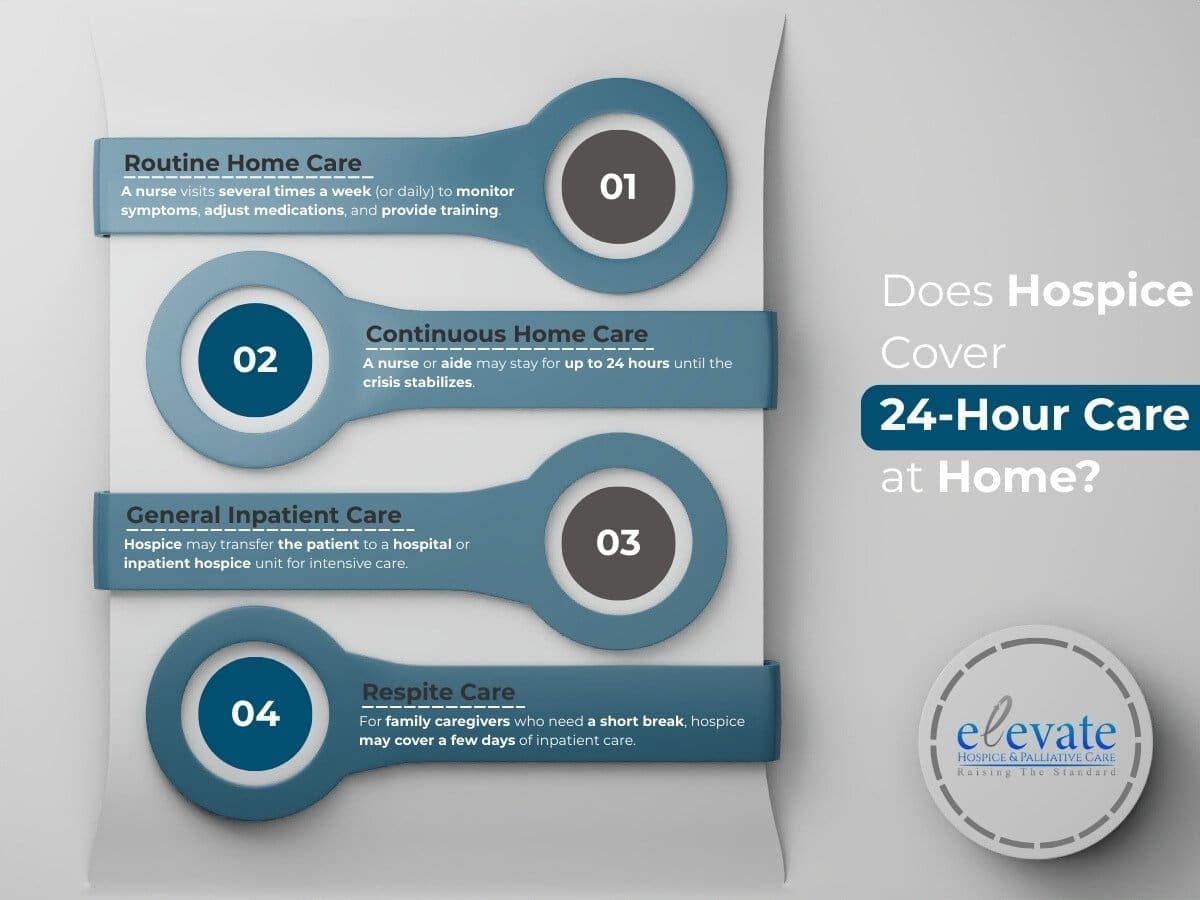
Medicare organizes hospice care into four levels:
| Hospice care level | What it means | Is it 24-hour home care? |
|---|---|---|
| Routine home care | Regular hospice visits and support at home or in another residence | No |
| Continuous home care | Intensive nursing or aide care during a short-term crisis | Sometimes, but only for a limited period |
| General inpatient care | Short-term care in a Medicare-approved hospice facility, hospital, or nursing facility | Yes, in an inpatient setting—not usually at home |
| Inpatient respite care | Short-term inpatient care to give the unpaid caregiver a break | No, this moves the patient to an approved facility |
Under Medicare rules, continuous home care is intended for a crisis, such as severe pain, uncontrolled symptoms, or acute distress that cannot be managed through routine visits. Medicare describes continuous home care as generally lasting 8 to 24 hours per day, and only for a short period while the crisis is managed.
Hospice must assess the person and document the need. A family’s wish for someone to remain in the home at all times does not, by itself, qualify for continuous home care.

Why routine hospice is not 24-hour caregiving
Routine hospice care is built around a plan of care. The hospice team visits according to the person’s symptoms and needs. A nurse may visit several times a week, while a hospice aide may help with bathing, dressing, grooming, or other personal care during scheduled visits.
The hospice team usually does not provide a staff member who remains in the home between visits. The family or another caregiver may still need to provide:
- Meals and fluids, when appropriate
- Turning and repositioning
- toileting help
- Medication reminders
- Supervision
- Fall prevention
- Help with confusion or wandering
- Overnight monitoring
- Emergency support between visits
Hospice nurses are available by phone at all times. That does not mean a nurse is physically present at all times. If symptoms change, the family should call the hospice number rather than wait for the next scheduled visit.
Hospice aide visits are not the same as private-duty care
A hospice aide may help with basic personal care. The aide’s visits are scheduled and usually limited in length. The number and frequency of visits depend on the plan of care.
This differs from private-duty home care, which may provide a caregiver for several hours, overnight, or around the clock. Private-duty care is often paid for by the patient or family. Some long-term care insurance policies, Medicaid programs, veterans’ benefits, or state programs may help, but coverage rules vary.
The hospice plan may coordinate with a private caregiver. However, hospice does not automatically pay for that caregiver.

When hospice may cover continuous home care
Hospice may approve continuous home care when a patient has a short-term medical crisis related to the terminal illness. The goal is to stabilize symptoms so the patient can return to routine hospice care or, when needed, receive inpatient hospice care.
Examples may include:
- Severe pain that remains uncontrolled after medication changes
- Serious shortness of breath
- Repeated vomiting that prevents comfort
- Severe agitation or delirium
- Uncontrolled bleeding
- Other rapidly changing symptoms that need close clinical monitoring
The hospice nurse or physician must evaluate the situation. The hospice then decides whether continuous home care is clinically appropriate under the patient’s plan of care.
Continuous home care may involve nurses, hospice aides, or both. The exact staffing pattern can change during the crisis. It is not necessarily one nurse or aide sitting beside the patient for every minute.
What continuous home care does not cover
Continuous home care generally does not apply simply because:
- The family caregiver is tired
- The patient should not be left alone
- The patient needs help with daily tasks
- The family works during the day
- The patient needs overnight supervision
- The family wants a caregiver present for reassurance
- The patient has dementia but no acute hospice crisis
These needs may still be real and urgent. They usually require a different service, such as private-duty home care, adult day care, respite services, assisted living, or a nursing facility.

What pays for 24-hour care at home?
The payer depends on the kind of care needed and the person’s insurance.
Medicare
Traditional Medicare hospice may pay for hospice services related to the terminal illness. It does not normally pay for long-term, custodial, round-the-clock home care.
Medicare may cover:
- Hospice nursing visits
- Hospice aide visits
- Medical equipment, such as a hospital bed or oxygen, when related to the hospice diagnosis
- Certain medications related to the terminal illness
- Short-term continuous home care during a crisis
- Short-term inpatient respite care
- Short-term general inpatient hospice care
- Counseling and emotional support
Medicare generally does not cover:
- A permanent private-duty caregiver
- Long-term 24-hour supervision
- Room and board in the patient’s home
- Services unrelated to the terminal illness
- Household tasks that are not part of the hospice plan
- Long-term custodial care in a nursing home
The official Medicare hospice coverage guide explains the main benefit and its limits.
Medicare Advantage
Medicare Advantage plans must cover the Medicare hospice benefit, but the plan may manage other health services differently. When a person elects hospice, Medicare generally pays the hospice benefit directly through Original Medicare, even if the person previously used a Medicare Advantage plan.
Ask the hospice and the plan:
- Who will pay for the hospice services?
- Who will pay for unrelated medical care?
- Does the plan offer in-home support beyond the hospice benefit?
- Are there approved agencies or limits on caregiver services?
Medicaid
Medicaid may provide more home-based support than Medicare, but each state sets its own rules. Coverage may come through:
- State Medicaid personal care
- Home- and community-based services waivers
- Personal attendant programs
- Community support programs
- Nursing home or facility benefits
Medicaid eligibility, waiting lists, income rules, and authorized hours vary by state. Contact the state Medicaid office or the person’s managed-care plan.
Long-term care insurance
A long-term care policy may cover custodial care at home. The policy may require a certain level of functional loss, a waiting period, approved agencies, or a plan of care from a licensed professional.
Read the policy’s definitions of:
- Home care
- Custodial care
- Personal care
- Caregiver
- Daily or monthly benefit
- Elimination period
- Care coordination
Veterans benefits
Some veterans and surviving spouses may qualify for the VA Homemaker and Home Health Aide program, respite care, or other home-based services. Eligibility depends on clinical need, enrollment, service availability, and VA assessment.

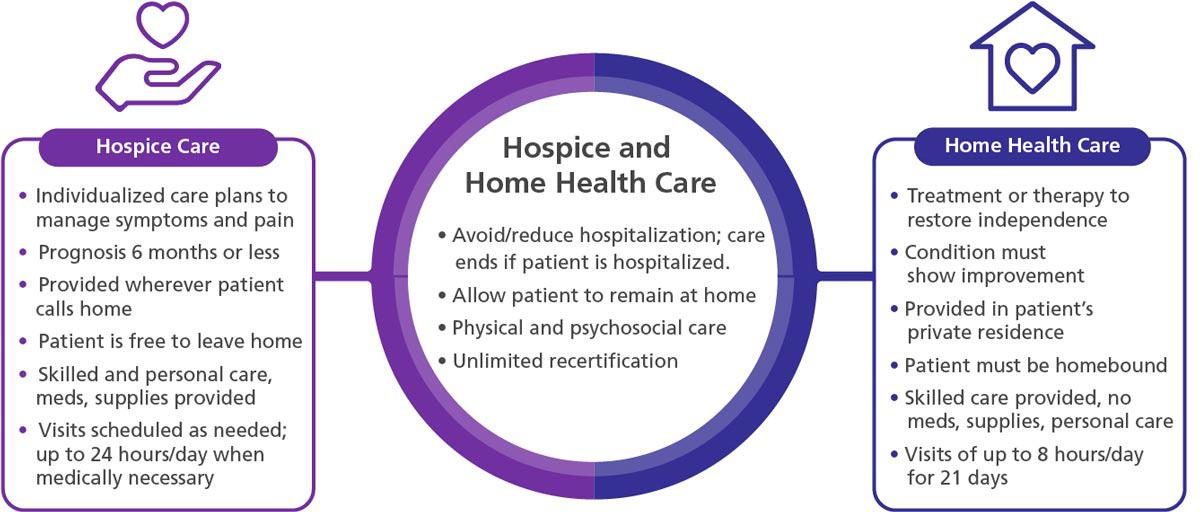
Hospice versus home health and private-duty care
These services serve different purposes. The right choice depends on whether the main need is comfort at the end of life, skilled treatment, personal care, or constant supervision.
| Service | Main purpose | Can it provide 24-hour care? | Typical payment source |
|---|---|---|---|
| Hospice | Comfort and support during a terminal illness | Only short-term continuous care during a crisis | Medicare, Medicaid, or private insurance |
| Home health | Skilled nursing or therapy after illness, injury, or surgery | Usually no | Medicare or private insurance |
| Private-duty home care | Personal care, supervision, and companionship | Yes, if arranged and paid for | Private pay, Medicaid, long-term care insurance, or some VA programs |
| Personal care services | Bathing, dressing, toileting, meals, and similar help | Sometimes, based on program rules | Medicaid, private pay, or other programs |
| Assisted living | Housing, meals, supervision, and personal care | Staff may be present, but care models vary | Usually private pay, long-term care insurance, or limited benefits |
| Nursing facility | Twenty-four-hour nursing and residential care | Yes, in a facility | Medicaid, private pay, Medicare for limited skilled stays |
Home health is often confused with hospice. Medicare home health does not normally pay for full-time custodial care, even when a person is homebound. It covers eligible skilled services under specific conditions.
Private-duty agencies may offer shifts such as:
- Four-hour visits
- Eight-hour shifts
- Overnight care
- Live-in care
- 24-hour coverage using multiple caregivers
“Live-in” and “24-hour care” are not always the same. A live-in caregiver may have scheduled sleep and meal breaks. Ask the agency how many hours of active care it guarantees and whether a second caregiver is required.

How to ask hospice for more help
Start with the hospice nurse or on-call number. Explain the change in plain terms:
- What symptom changed?
- When did it begin?
- How severe is it?
- What medicine or treatment was tried?
- Can the patient eat, drink, breathe, sleep, or use the bathroom?
- Is the patient at risk of falling or harming themselves?
- Is the caregiver unable to provide safe care?
Ask these direct questions:
- Does this meet the hospice definition of a crisis?
- Can a nurse come to the home now?
- Would continuous home care be appropriate?
- How long would it last?
- Would general inpatient hospice be safer?
- Can hospice help arrange private-duty care or respite?
- Which services are covered, and which would the family pay for?
- What should we do if the symptoms return overnight?
Request a written care plan if the answer is unclear. The plan should identify the services, visit schedule, medicines, equipment, emergency number, and caregiver responsibilities.
If the hospice does not respond, contact the hospice supervisor or medical director. Medicare beneficiaries can also contact 1-800-MEDICARE (1-800-633-4227) or the local State Health Insurance Assistance Program for help understanding coverage.

What to do if no one can safely stay with the patient
A person who needs constant supervision may not be safe with routine hospice visits alone. Call the hospice right away if the patient has uncontrolled symptoms or the caregiver cannot provide safe care.
Ask about these options:
- Continuous home care during a qualifying crisis
- General inpatient hospice
- Inpatient respite care
- A hospice social worker
- Private-duty home care
- Medicaid personal care or waiver services
- VA homemaker or home health aide services
- Assisted living
- Skilled nursing facility placement
- Family caregiver support or local respite programs
Do not stop essential medicines or move the patient without discussing the plan with the hospice team. If there is an immediate danger—such as severe trouble breathing, uncontrolled bleeding, a fall with serious injury, or a threat of harm—call 911 unless the hospice has provided a different emergency plan and the situation is consistent with the patient’s documented wishes.
Hospice can also help with advance care planning. Keep the following available:
- Hospice phone number
- Medication list
- Physician and pharmacy contacts
- Health care proxy information
- Do-not-resuscitate or other medical orders, if applicable
- Preferred hospital or facility
- Insurance cards
- Emergency instructions
Common mistakes about 24-hour hospice care
Mistake 1: Assuming hospice means a caregiver is always present
Hospice is a medical and support benefit. It is not usually a 24-hour sitter service.
Mistake 2: Waiting until the crisis becomes dangerous
Call hospice when symptoms begin to change. Early contact gives the team more choices.
Mistake 3: Treating routine aide visits as guaranteed daily care
Aide visits depend on the care plan, staffing, and patient needs. Ask for the expected schedule.
Mistake 4: Assuming Medicare pays for long-term custodial care
Medicare hospice does not normally cover permanent round-the-clock personal care at home.
Mistake 5: Paying an agency before checking the service terms
Ask whether the caregiver is an employee or independent contractor, whether the agency is licensed, whether it carries liability insurance, and what happens if a caregiver calls out.
Mistake 6: Ignoring caregiver burnout
Exhaustion can create safety risks for both the patient and caregiver. Tell the hospice social worker or nurse when the current plan is no longer manageable.

Frequently asked questions
Does hospice send someone to stay overnight?
Usually, no. Hospice may arrange a visit or respond by phone overnight, but routine hospice does not normally provide an overnight caregiver. Overnight continuous care may be approved for a short-term crisis.
Does hospice pay for a home health aide every day?
It may provide hospice aide visits when they are part of the plan of care. The visits are not the same as daily, full-time home care, and the schedule can vary.
Can hospice pay for a private caregiver?
Usually not through the standard Medicare hospice benefit. A separate payer, such as Medicaid, long-term care insurance, VA benefits, or private funds, may cover private-duty care.
Does hospice cover nursing home care?
Hospice may cover hospice services in a nursing home, but it usually does not pay the nursing home’s room and board. Medicaid, private funds, or another benefit may cover the facility stay.
Can a patient receive hospice and home health at the same time?
A person generally cannot receive Medicare-certified home health services for the same terminal condition while receiving the Medicare hospice benefit. Hospice may provide skilled nursing and other services within its own benefit. Ask the hospice and insurer about services for unrelated conditions.
Key takeaways
- Routine hospice does not usually cover 24-hour care at home.
- Medicare hospice may cover continuous home care for a short-term crisis, often 8 to 24 hours per day.
- Hospice aide visits are scheduled and are not the same as a full-time caregiver.
- Medicaid, VA programs, long-term care insurance, or private payment may help cover ongoing home care.
- Call the hospice team as soon as symptoms worsen or the caregiver can no longer provide safe care.
Conclusion
Hospice can provide strong support at home, but it is not normally a source of permanent 24-hour caregiving. The key question is whether the patient has a short-term medical crisis or an ongoing need for supervision and personal care.
Call the hospice nurse and ask for a care assessment. If the need is ongoing, ask the hospice social worker to help explore Medicaid, VA benefits, long-term care insurance, private-duty agencies, respite care, or a safer care setting.
