

Introduction
Place your newborn on their back in a rear-facing car seat, with their bottom and back flat against the seat. The five-point harness should sit snugly over the baby, with the chest clip at armpit level. Keep the baby’s head centered, remove bulky clothing, and follow both the car seat manual and your vehicle manual.
In the United States, car seats must be used according to the manufacturer’s instructions and applicable state law. The National Highway Traffic Safety Administration (NHTSA) and the American Academy of Pediatrics (AAP) recommend rear-facing travel for infants and young children.
A newborn can look very small in a car seat. That can make the harness feel hard to adjust. With the right steps, you can create a secure fit without adding unsafe padding or changing the seat’s design.
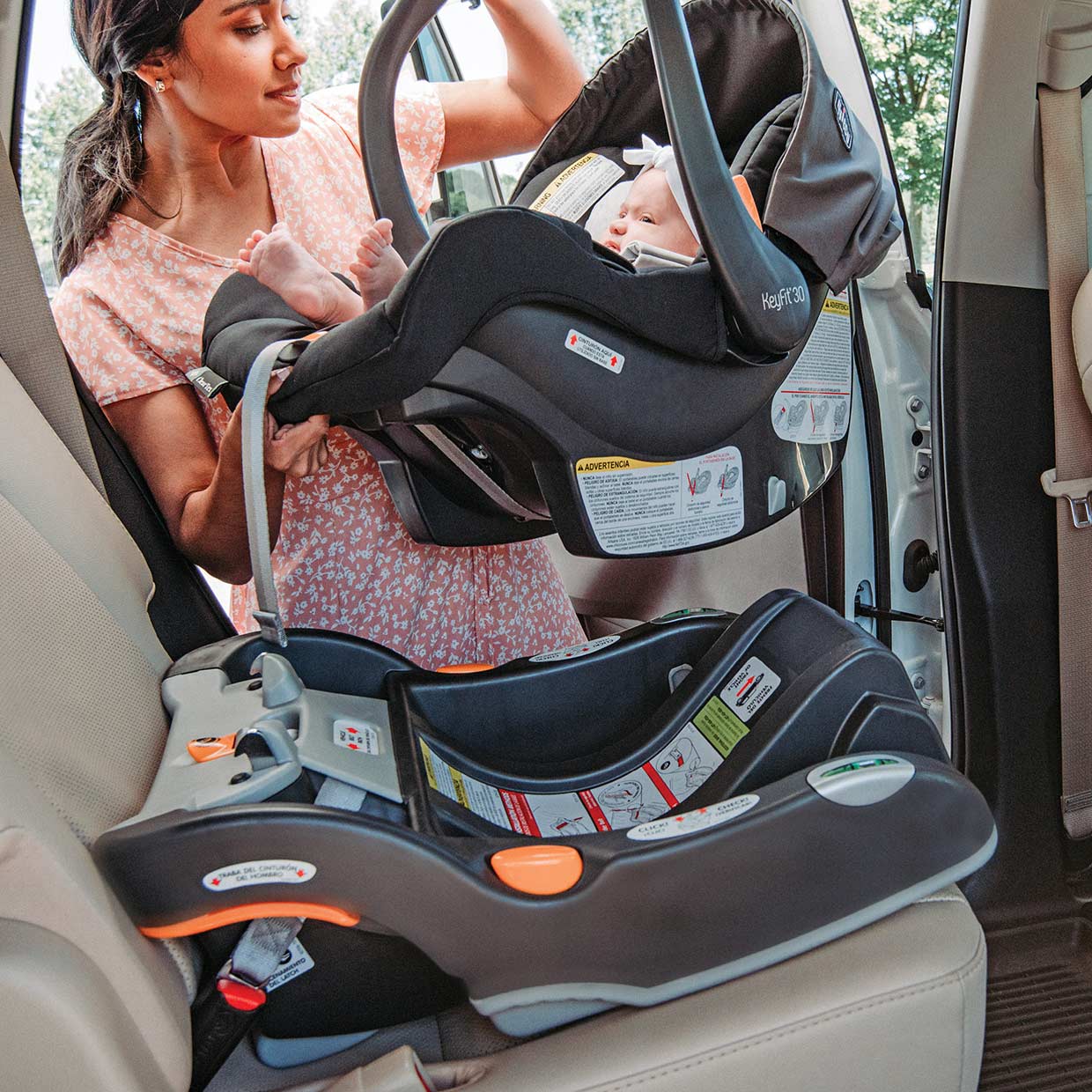
What You Need Before Placing Your Newborn in the Seat
Gather these items before you start:
- The car seat and its complete instruction manual
- Your vehicle owner’s manual
- The infant insert supplied with the seat, if the manual says to use it
- A properly installed rear-facing seat
- A thin blanket for use over the harness, if needed
- A second adult, if available, to help hold the newborn during the first setup
Check the car seat label for the following information:
- The rear-facing weight and height limits
- The allowed recline positions
- The correct harness slot position
- Whether the seat allows a newborn insert
- The approved vehicle belt paths
- The lower-anchor weight limit, if using LATCH
A seat may be installed with either the vehicle seat belt or the lower anchors, depending on the seat and vehicle instructions. Do not use both systems unless the manufacturer specifically allows it.
Check the seat’s expiration date and condition
Do not use a seat with an unknown history. Avoid a seat that has:
- Been involved in a moderate or severe crash
- Missing parts or labels
- Broken plastic
- Frayed harness webbing
- A recalled model
- An unknown expiration date
You can check recalls through the NHTSA car seat inspection and recall resources. The car seat manual is the final source for model-specific instructions.
How to Place a Newborn in a Car Seat: Step by Step
Follow these steps after the car seat is installed correctly.
1. Set the car seat at the correct rear-facing angle
Use the recline position and angle indicator shown in the manual. Newborns have limited head and neck control, so the correct angle helps keep the head from falling forward.
A baby’s chin should not rest tightly on the chest. If the head falls forward, stop and correct the angle before driving. Do not solve the problem by placing a pillow, towel, or cushion under the baby.
Only use a recline adjustment approved by the manufacturer. Some seats allow a tightly rolled towel under the front edge of the seat. Others do not. Follow the manual for your exact model.
2. Loosen the harness before placing the baby inside
Press the harness-release button and pull the shoulder straps forward. Make enough room to lower the baby into the seat without forcing the arms through tight straps.
Place the harness straps to the sides of the seat. This prevents you from accidentally placing the baby on top of a strap.
3. Lower the baby into the seat
Support the newborn’s head and neck with one hand. Use your other hand to support the upper body and bottom.
Lower the baby straight down into the seat. The baby’s back and bottom should rest flat against the seat shell. Do not place the baby on top of a blanket, coat, cushion, or extra insert.
The baby should face the rear window. A rear-facing seat supports the head, neck, and spine during a sudden stop or crash.
4. Check the baby’s position
Before buckling the harness, check these points:
- The baby’s bottom is all the way back in the seat.
- The back is flat against the seat.
- The shoulders are between the harness straps.
- The head is centered between the side wings.
- The legs are inside the seat and can bend naturally.
- The baby is not leaning sharply to one side.
- The chin is not pressed to the chest.
Newborns may appear curled because their bodies are still developing. A natural bend in the hips and knees is fine. Do not force the legs straight.
5. Buckle the crotch buckle
Bring the two buckle tongues together and insert them into the crotch buckle. Listen for a click.
The buckle should sit low on the baby’s body, near the diaper area. It should not press into the belly or rest high on the chest.
If the crotch buckle seems too far away, check whether the seat has approved buckle positions. Move it only as the manual permits.
6. Place the shoulder straps over the baby
Bring each harness strap over the baby’s shoulder. For a rear-facing newborn, the harness straps should come from at or below the baby’s shoulders.
The straps should lie flat. Remove any twists before tightening them. Do not route the straps under the baby’s arms or behind the back.
Some seats have different harness paths for rear-facing and forward-facing use. Use the rear-facing path shown in the manual.
7. Tighten the harness
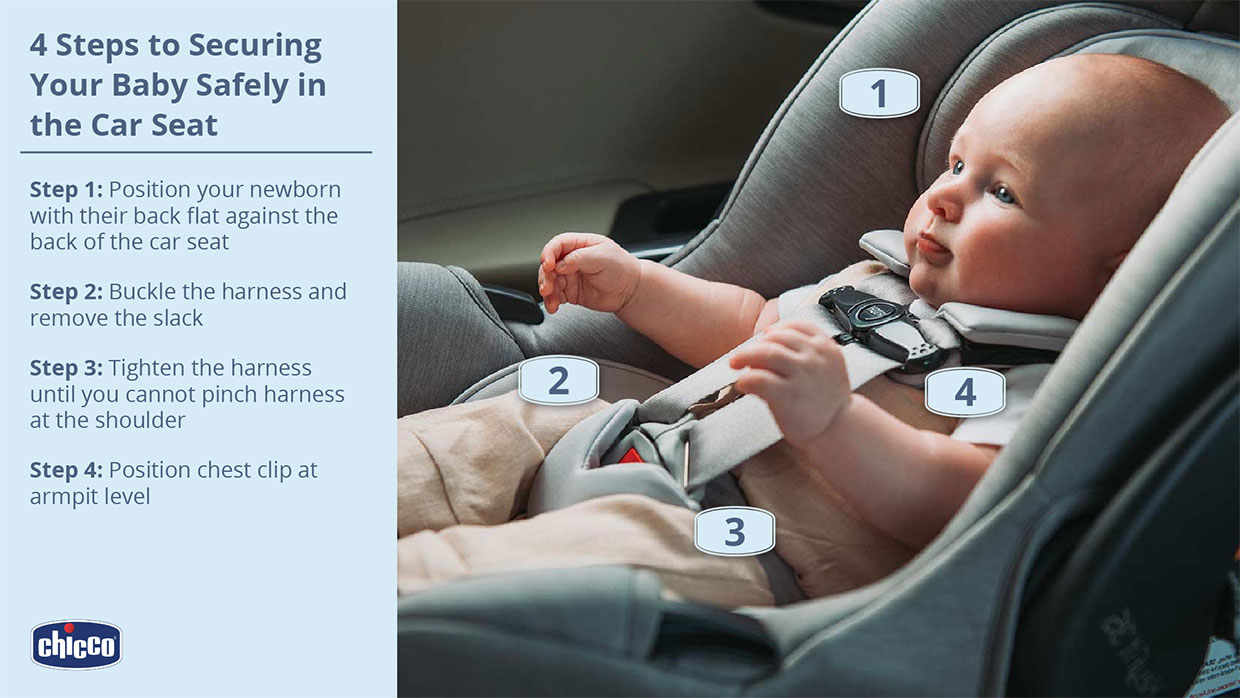
Pull the harness-adjuster strap until the harness is snug against the baby’s body.
Use the pinch test at the shoulder. Try to pinch the harness webbing between your thumb and forefinger. If you can pinch extra webbing, tighten the harness. You should not be able to gather a fold of loose strap.
Do not judge the fit by how it looks across the baby’s clothing. Bulky clothing can hide slack.
The harness may feel snug. That is expected. It should not make the baby’s skin turn pale, cause a visible pressure injury, or interfere with breathing. If you see a problem, loosen the harness and check the baby’s position and the seat’s adjustment settings.
8. Position the chest clip
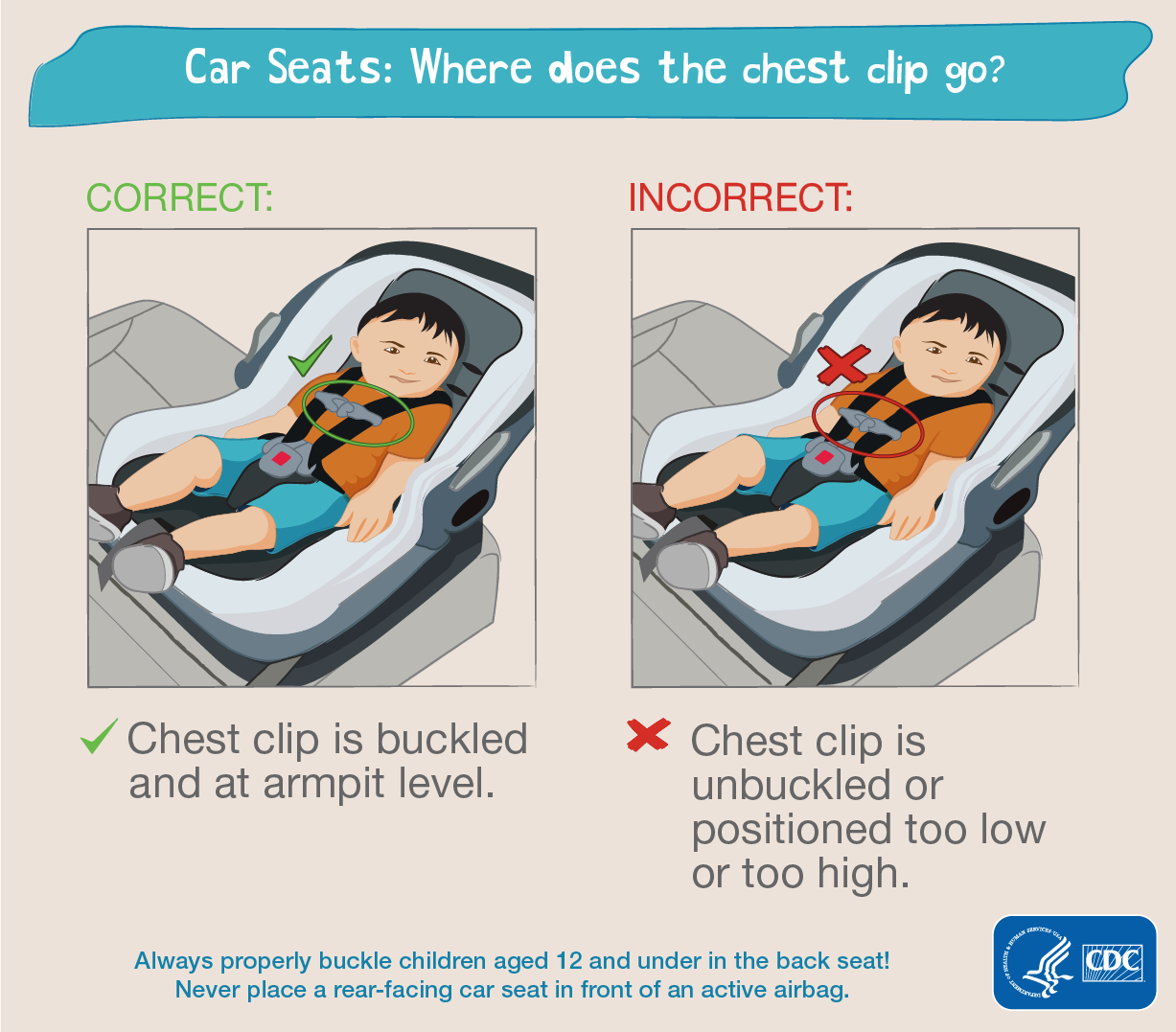
Slide the chest clip to the baby’s armpit level. The clip should sit across the chest, not on the neck or stomach.
The chest clip helps keep the shoulder straps in the correct position. It is not a substitute for a snug harness.
9. Add warmth over the harness only
Never place a thick coat, snowsuit, bunting, or blanket between the baby and the harness. The extra material can compress in a crash and leave the harness too loose.
Instead:
- Buckle and tighten the harness first.
- Place a thin blanket over the secured harness.
- Keep the baby’s face uncovered.
- Check that the blanket cannot cover the nose or mouth.
Some car seats allow a specific cover made for that model. Do not use an aftermarket cover unless the manufacturer approves it.
10. Do a final fit check
Before driving, confirm:
- The harness is snug.
- The chest clip is at armpit level.
- The straps are flat and untwisted.
- The baby’s head is in a safe position.
- The baby’s face is visible.
- No padding or coat is under the harness.
- The seat has not moved more than the amount allowed by the manual, commonly less than 1 inch at the belt path.
- The car seat is installed in the back seat whenever possible.
If the fit fails, take the baby out and start again. Do not try to adjust a poorly positioned newborn while driving.
How a Newborn Should Fit in a Rear-Facing Car Seat
A correct newborn fit has three key features: support, alignment, and snugness.
Support
The baby’s back and bottom should touch the seat. The infant insert should be used only if it came with the seat or is specifically approved by the manufacturer.
Do not add:
- Rolled towels behind the baby’s back
- Pillows under the baby’s head
- Aftermarket head supports
- Thick padding under the bottom
- Strap covers that affect harness fit
Some manuals allow rolled receiving blankets beside the baby’s torso after the harness is tightened. If your manual allows this, keep the rolls outside the harness and away from the baby’s head and neck.
Alignment
The newborn should sit centered, with the head between the side wings. A slight side lean may happen with a very small baby, but the head should not slump forward.
If the baby continues to lean, check the recline angle and harness fit. If you cannot correct the position, contact the car seat manufacturer or a certified child passenger safety technician.
Snugness
The harness should touch the baby’s body without visible slack. The straps should not twist, bunch, or sit below the shoulders.
A chest clip that is too low can allow the shoulder straps to spread apart. A chest clip that is too high can press against the neck. Armpit level is the usual position for a properly adjusted chest clip.
Where Should a Newborn Sit in the Car?
Place the car seat in the back seat, facing the rear of the vehicle. The center position is not automatically safest because it depends on the vehicle’s approved belt paths and the seat’s installation instructions.
Choose the position that gives you the most secure installation. You should be able to tighten the seat correctly without forcing the belt at an unusual angle.
Never place a rear-facing car seat in front of an active passenger airbag. A deploying airbag can cause severe injury or death to an infant.
If you use LATCH, confirm that the vehicle and car seat allow the lower anchors at that seating position. Many vehicles restrict center-seat LATCH use. Do not connect lower anchors to a position that the vehicle manual does not approve.
After installation, hold the car seat near the belt path and test it from side to side and front to back. Movement should be minimal and within the limit stated in the manual.
Common Newborn Car Seat Mistakes
Small errors can change how well the harness protects a newborn. Watch for these common problems.
Putting the baby in with a winter coat
A thick coat creates space between the baby and the harness. Use normal indoor clothing and place a blanket over the harness after buckling.
Using an unapproved insert
Many parents worry that a newborn looks too small. Adding a soft insert may seem helpful, but it can alter the harness position or change how the baby moves in a crash.
Use only the insert supplied with the seat or one approved in writing by the manufacturer.
Leaving slack in the harness
If you can pinch the harness webbing at the shoulder, tighten it. The harness should not hang away from the baby’s chest.
Placing the chest clip too low
The chest clip belongs at armpit level. It should not sit on the abdomen.
Putting the harness straps above the shoulders
For rear-facing use, the straps usually come from at or below the shoulders. Check the manual because harness designs vary.
Reclining the seat too far or too little
The angle indicator must be within the approved range. A seat that is too upright may allow the head to fall forward. A seat that is too reclined may not install correctly.
Using a head support outside the seat
Do not attach products to the car seat unless the manufacturer approves them. Loose items can become hazards during a crash.
Turning the baby forward too soon
Keep the child rear-facing until reaching the seat’s rear-facing height or weight limit. NHTSA and the AAP support keeping children rear-facing as long as the seat allows.
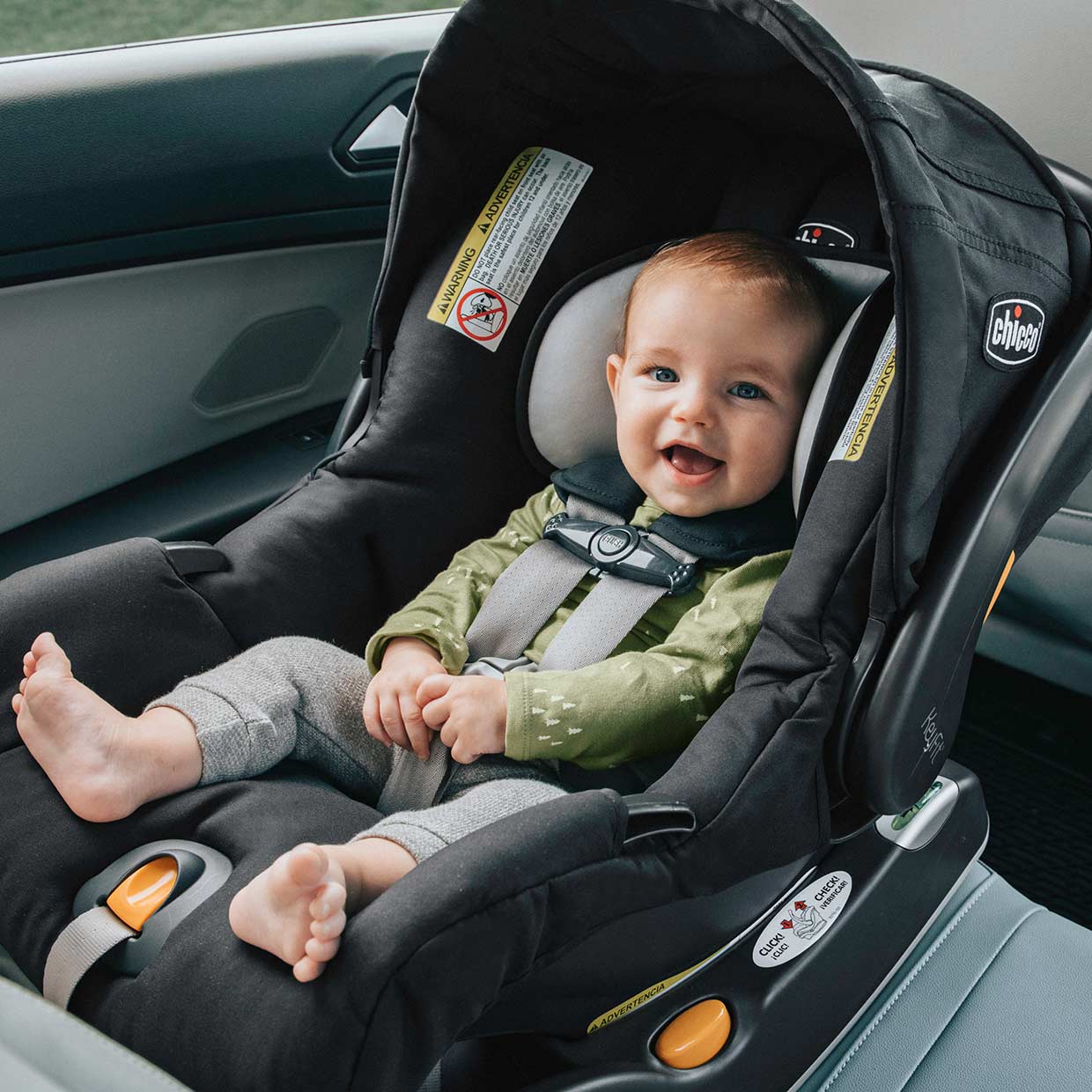
What to Do If Your Newborn Slumps or Cries
A newborn may cry in the car seat even when the fit is correct. First, pull over safely before making any adjustment.
If the baby’s head falls forward:
- Check that the seat is at the correct recline angle.
- Confirm that the baby’s bottom is fully back in the seat.
- Check that the harness is snug.
- Remove any padding that is not approved.
- Recheck the manual’s newborn instructions.
If the baby leans to one side:
- Check that the seat is level.
- Confirm that the harness straps are even.
- Make sure the baby is centered before tightening the harness.
- Use side support only if the manual allows it.
If the newborn still cannot maintain a safe position, stop using the setup until you receive help. A certified Child Passenger Safety Technician can inspect the seat and show you how to use it. You can find inspection help through the NHTSA child passenger safety locator.
For a premature or medically fragile baby, ask the baby’s health care professional about travel before leaving the hospital. Some newborns need a special car seat assessment or a car bed because of breathing, oxygen, or positioning concerns.

How to Tell if the Newborn Car Seat Fit Is Correct
The setup is ready when all of these statements are true:
- The seat is rear-facing.
- The seat is installed according to both manuals.
- The seat has little movement at the belt path.
- The baby’s back and bottom are flat against the seat.
- The head is supported and the chin is off the chest.
- The shoulder straps come from the correct rear-facing slots.
- The harness lies flat and passes the pinch test.
- The chest clip is at armpit level.
- The face is uncovered.
- No thick clothing or unapproved padding is under the harness.
If even one of these points is uncertain, do not guess. Read the manual or ask a certified technician to check the installation.

When to Get Professional Car Seat Help
Ask for help when:
- The seat will not install tightly.
- You cannot identify the correct harness slots.
- The newborn’s head repeatedly falls forward.
- The baby does not fit within the seat’s minimum size.
- The vehicle manual and car seat manual appear to conflict.
- The car seat has been in a crash.
- The seat is missing parts or has been recalled.
- Your baby was premature or has a medical condition that affects breathing or posture.
A certified Child Passenger Safety Technician can provide hands-on education. The technician does not replace your pediatrician or manufacturer instructions, but can help identify installation and harness errors.
The manufacturer’s customer service department can also answer questions about inserts, recline settings, harness positions, and approved accessories.

Newborn Car Seat Checklist
Use this short checklist each time you place your newborn in the car:
- Rear-facing position
- Correct recline angle
- Bottom and back flat against the seat
- Head centered
- Harness straps at or below the shoulders
- Harness flat and snug
- No pinchable slack
- Chest clip at armpit level
- No bulky coat under the harness
- Face uncovered
- Seat secure at the belt path
- Baby monitored by an adult when possible
The goal is not to make the baby look perfectly still. The goal is to keep the baby’s body supported and the harness correctly positioned.

Frequently Asked Questions
Can a newborn wear a hat in a car seat?
A thin hat may be acceptable if it does not cover the face or change the harness fit. Avoid thick hats that push the head forward or interfere with the seat’s head support. Never cover the baby’s face.
Can I use a rolled towel to support my newborn?
Only if the car seat manual allows it. Some manufacturers permit tightly rolled blankets beside the baby after the harness is secured. Do not place a towel behind the baby, under the baby, or beneath the harness unless the manual specifically permits that use.
Should the chest clip be at the neck or stomach?
No. Place the chest clip at armpit level, across the center of the chest.
Can I use both LATCH and the seat belt?
Usually, no. Use the installation method listed in the car seat and vehicle manuals. Use both only when the manufacturer clearly approves it.
Is it safe for a newborn to sleep in a car seat outside the car?
A car seat is designed for travel, not routine sleep. When you arrive, move the sleeping baby to a firm, flat sleep surface as soon as practical. Keep the baby’s face uncovered and follow safe-sleep guidance from the AAP.
Final Takeaway
Place your newborn flat and centered in a rear-facing car seat. Tighten the five-point harness until you cannot pinch slack, position the chest clip at armpit level, and keep coats and unapproved inserts out from under the harness.
Before the first trip, read both manuals and arrange a car seat check if anything feels unclear. A correct fit should feel snug, stable, and supported—not padded or loose.
U.S. Sources and Further Guidance
- National Highway Traffic Safety Administration: Car Seats and Booster Seats
- NHTSA: Find a Child Passenger Safety Technician
- American Academy of Pediatrics: Car Seats and Booster Seats
- American Academy of Pediatrics: Safe Sleep
- NHTSA: Vehicle Safety Recalls
Conclusion
A newborn belongs in a properly installed, rear-facing car seat with a snug, flat harness and no bulky clothing underneath. Check the recline angle, support the baby’s head and back, and use only parts approved for that seat.
If the baby slumps, the seat moves too much, or the instructions are unclear, pause the trip and get help from the manufacturer or a certified Child Passenger Safety Technician.
