Can You Wash Car Seat Covers: Safe Cleaning Guide
Yes, you can usually wash a child car seat cover if it is removable and the car seat manual allows it. Most covers can be washed with mild soap on a gentle cycle or by hand, then air-dried. Do not wash the harness straps, buckle, foam, or shell unless the manufacturer specifically permits it.
For families in the United States, the safest rule is simple: follow the instructions for your exact car seat model. Car seat designs vary, and cleaning a cover the wrong way can shrink it, damage its fire-resistant treatment, or make it difficult to reinstall correctly.
Check the Car Seat Manual Before Washing
The car seat manual is the best source for washing instructions because each manufacturer uses different fabrics, padding, fasteners, and harness systems. Look for sections called “Cleaning,” “Care and Maintenance,” or “Removing the Cover.”
If you no longer have the manual, search the manufacturer’s U.S. website using the model name and model number. The model number is often printed on a label on the side, back, or bottom of the seat. Do not rely only on a general video or instructions for a similar-looking seat.
The manual should tell you:
- Whether the cover can go in a washing machine
- Whether hand washing is required
- Which soap or detergent is allowed
- Whether bleach or fabric softener is prohibited
- How the cover should be dried
- How to clean the harness straps
- How to clean the buckle
- Whether the padding or infant insert can be washed
The National Highway Traffic Safety Administration advises caregivers to use the car seat according to the manufacturer’s instructions. That guidance matters during cleaning, too. A cover is part of a tested child restraint system, not just a loose piece of fabric.
What if you cannot find the manual?
Contact the car seat manufacturer before washing the cover. Give the company the exact model name, model number, and manufacture date if available.
Do not guess based on the cover’s appearance. Two seats from the same brand may have different cleaning rules.

How to Wash a Removable Car Seat Cover
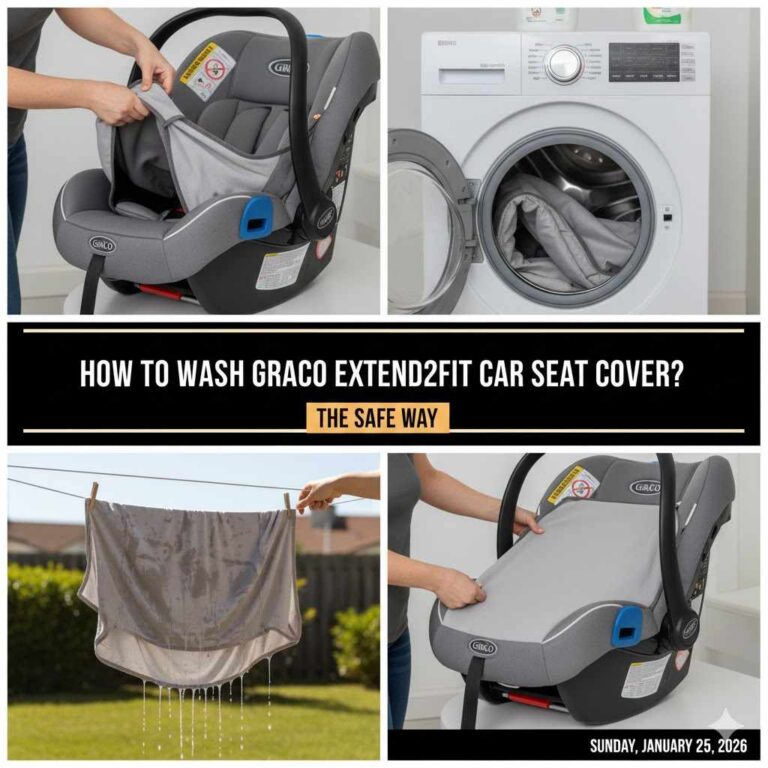
If the manual allows machine washing, use the gentlest method listed by the manufacturer. The following process works for many removable fabric covers, but the manual for your seat takes priority.
1. Remove the cover carefully
Take photos before removing the cover. Capture the path of every elastic loop, hook, button, and harness opening.
Remove only the parts that the manual identifies as removable. Do not pull hard on sewn areas or force padding through small openings. Marking or photographing each step can make reassembly much easier.
2. Remove crumbs and loose dirt
Shake the cover outdoors or vacuum it with a soft brush attachment. This removes crumbs, sand, pet hair, and other grit before washing.
Avoid scraping hard against the fabric. Rough treatment can damage the cover or its stitching.
3. Treat stains gently
Use a small amount of mild soap and cool or lukewarm water. Dab the stain instead of rubbing it aggressively.
Avoid these products unless the manufacturer specifically approves them:
- Bleach
- Ammonia
- Strong disinfectants
– Solvent-based cleaners - Fabric softener
- Stain removers with harsh chemicals
These products may weaken fibers, change the texture of the cover, or leave residue that the manufacturer did not approve.
4. Wash using the approved method
Many covers can be washed in a washing machine on a delicate or gentle cycle. Some require hand washing.
Use:
- Mild detergent
- Cool or lukewarm water
- A low-agitation cycle, if machine washing is allowed
- A mesh laundry bag only if it does not interfere with the manufacturer’s instructions
Do not assume that “cold wash” means “any detergent is safe.” Check the manual for detergent limits.
5. Air-dry the cover
Air-dry the cover unless the manual clearly allows a dryer. High heat can shrink fabric, damage elastic, or alter the way the cover fits over the seat.
Lay the cover flat or hang it as the instructions recommend. Keep it away from direct heat sources such as radiators, heaters, and hot vents.
Do not put the cover back on while it is damp. Moisture can promote odor and mildew, and a damp cover may not fit correctly.
6. Reinstall the cover exactly
Use your photos and the manual to put every part back in its original position. Make sure:
- All elastic loops and hooks are attached
- The cover is not twisted
- Harness slots line up with the correct height
- Padding is in its original position
- No fabric blocks the harness path
- The cover does not interfere with the buckle
- Nothing is loose or bunching under the child
The cover should fit smoothly. If it pulls away from the shell, blocks a slot, or will not sit flat, stop using the seat until the problem is resolved.
Can You Wash the Harness Straps?
Usually, you should not put car seat harness straps in a washing machine or dryer. Many manufacturers allow spot cleaning with mild soap and water, followed by air-drying.
The harness is a safety-critical part of the restraint. Do not:
- Soak the harness unless the manual allows it
- Use bleach or strong cleaners
- Scrub it with a stiff brush
- Iron it
- Put it in a dryer
- Use solvents or disinfecting sprays
- Replace it with generic webbing
Do not remove the harness unless the manual gives clear instructions. Some harness systems are difficult to route correctly, and incorrect routing can reduce protection in a crash.
If the straps are heavily soiled, damaged, frayed, cut, melted, or contaminated with a substance that will not come out with approved cleaning, contact the manufacturer. The company may provide replacement parts or tell you whether the seat should be replaced.

How to Clean the Car Seat Buckle
A buckle often collects crumbs and sticky residue. Start by checking the manual because buckle designs differ.
A common manufacturer-approved approach is to remove loose debris and rinse the buckle with clean water if the manual allows it. Work the buckle several times while rinsing so debris can leave the mechanism. Then let it dry fully before use.
Do not use:
- Oil
- Lubricant
- Household cleaners
- Bleach
- Vinegar mixtures unless the manual specifically permits them
- Sharp tools inside the buckle
Do not force a buckle that is stuck. If it does not click, release, or remain latched correctly, stop using the seat and contact the manufacturer.
A proper buckle should click securely and release when the release button is pressed. If you are unsure whether it works correctly, have the seat checked by a certified Child Passenger Safety Technician.
Can You Wash the Foam Padding and Infant Insert?
Only wash foam padding or an infant insert when the manual says it is washable. Some inserts can be hand-washed, while others should be wiped with a damp cloth.
Do not remove foam from a cover unless the instructions tell you to do so. Foam can tear, lose its shape, or be difficult to put back correctly.
Never add extra padding, blankets, head supports, or aftermarket inserts under or behind a child unless the car seat manufacturer approves that specific product for that seat. The U.S. Department of Transportation and child passenger safety guidance emphasize using the restraint as directed, without unapproved additions.
If an infant is cold, place a blanket over the child after the harness is tightened. Do not put a bulky coat or blanket under the harness because thick material can compress in a crash and leave the harness too loose.
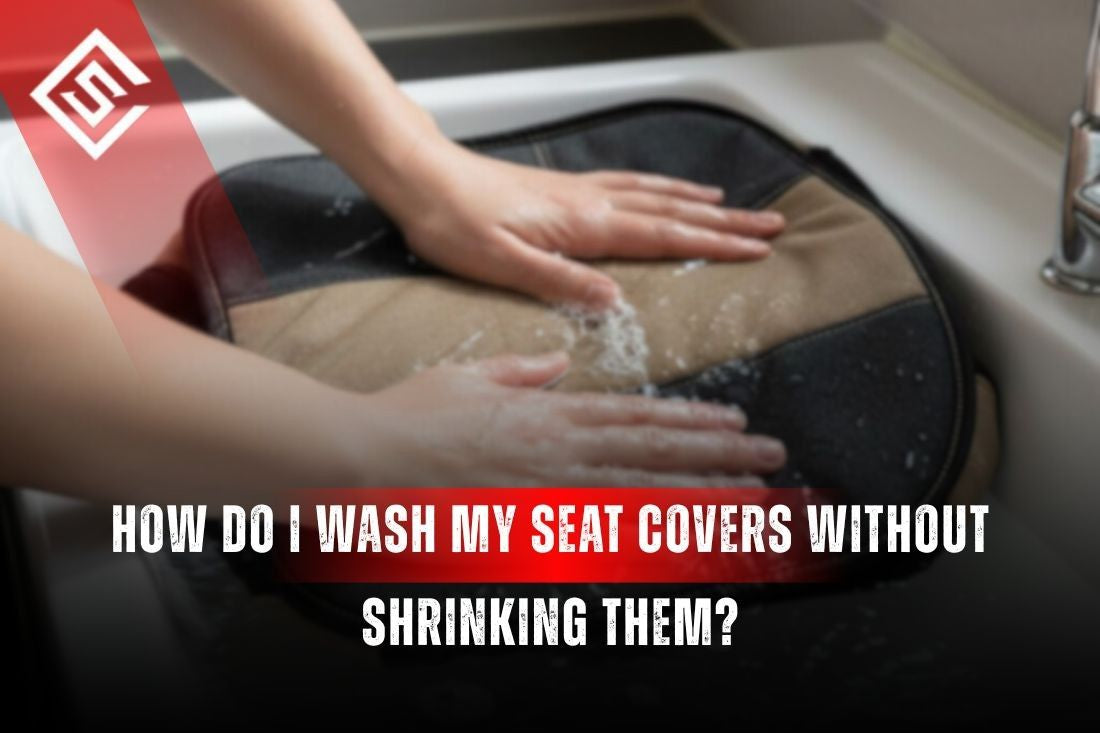
Cleaning Instructions by Car Seat Part
Use this table as a quick guide, but follow the exact manual for your model.
| Car seat part | Usual cleaning approach | Main caution |
|---|---|---|
| Removable fabric cover | Gentle wash or hand wash if approved | Avoid heat and harsh chemicals |
| Harness straps | Spot clean with mild soap and water if approved | Do not machine wash or soak unless directed |
| Buckle | Remove debris and rinse only if approved | Never use oil or sharp tools |
| Plastic shell | Wipe with mild soap and water | Do not use abrasive cleaners |
| Foam padding | Wash only if the manual permits it | Do not reshape or remove it without instructions |
| Infant insert | Follow the model-specific care label | Do not use unapproved inserts |
| LATCH or tether hardware | Wipe as directed | Do not lubricate or modify hardware |
The main distinction is between removable fabric and structural or restraint parts. Fabric usually tolerates mild washing. Harnesses, buckles, foam, and hardware require more caution because they affect how the child restraint works.

What to Do About Vomit, Milk, Urine, or Other Messes
Clean bodily fluids as soon as practical, but do not rush into using strong disinfectants. Remove the child from the seat, take off washable parts, and follow the manual for each component.
For a removable cover:
- Remove solid material with paper towels or a disposable cloth.
- Blot liquid rather than rubbing it deeper into the fabric.
- Wash the cover using the approved method.
- Air-dry it completely.
- Check for odor, stains, damaged stitching, or shrinkage before reinstalling it.
For harness straps, buckle parts, and foam, use only the method allowed by the manufacturer. If contamination has entered the buckle or soaked deeply into the harness, ask the manufacturer whether replacement parts are available.
A cover that still smells after proper washing may need replacement. Do not mask the smell with fragrance sprays or essential oils.

Common Mistakes to Avoid
The most common cleaning mistakes involve treating a car seat like ordinary clothing. A car seat cover is removable, but the full restraint is a safety device.
Avoid these errors:
- Washing the entire car seat
- Using bleach or strong disinfectants
- Drying the cover on high heat
- Putting harness straps in the washing machine
- Removing the harness without instructions
- Adding a non-approved seat liner or cushion
- Reinstalling the cover from memory
- Using a seat with a buckle that does not work smoothly
- Continuing to use a seat after a crash without checking the manufacturer’s replacement guidance
- Buying a generic replacement cover that was not made for the exact model
Do not use a car seat if the cover has shrunk enough to affect harness routing or buckle access. Do not use it if the shell, harness, buckle, or attachment points are damaged.
How Often Should You Wash a Car Seat Cover?
Wash the cover when it is visibly dirty, has a strong odor, or has been contaminated by food, drinks, or bodily fluids. Routine washing is not needed on a fixed schedule.
Frequent washing can cause wear, especially if the cover is dried with heat or scrubbed hard. A removable washable liner may reduce mess, but it must be approved for the exact seat and must not change how the harness fits.
For regular upkeep:
- Vacuum crumbs often
- Wipe the plastic shell with approved cleaner
- Check the buckle for debris
- Inspect harness straps for damage
- Check that the cover remains correctly attached
- Review the manual after any major cleaning
A clean seat is useful, but correct fit and undamaged parts matter more than appearance.

What If the Cover Shrinks or Will Not Fit?
Stop using the seat until the cover is correctly installed. Do not stretch it over the shell, cut openings, sew new slots, or leave fasteners undone.
Possible causes include:
- Hot water
- A hot dryer
- The wrong cover for the model
- Padding placed in the wrong position
- A twisted elastic loop
- A cover that was not fully opened during removal
- Fabric damage from chemicals
Compare the cover with the manual and your removal photos. If the fit still looks wrong, contact the manufacturer for help or a replacement cover.
A replacement cover should come from the manufacturer or an approved source for the exact model. A cover that fits physically may still be unsuitable if it changes the tested design.
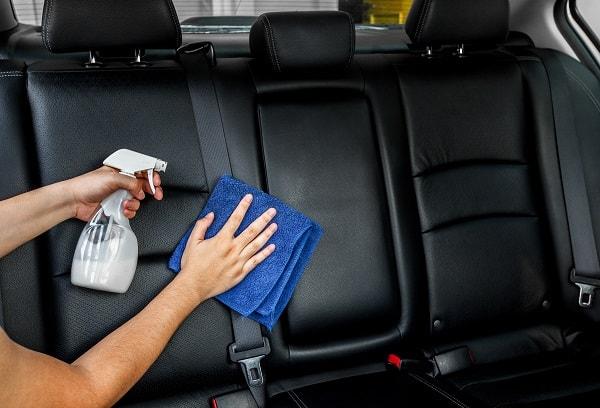
Child Car Seat Covers vs. Vehicle Seat Covers
“Car seat cover” can mean two different products.
A child car seat cover is the fabric cover that belongs to an infant seat, convertible seat, all-in-one seat, or booster. Its cleaning instructions are controlled by the child restraint manufacturer.
A vehicle seat cover is an accessory placed over the vehicle’s bench or bucket seat. It may be washable, but it must not interfere with the child restraint, seat belt, lower anchors, or tether.
Do not place a thick or loose vehicle seat cover beneath a child car seat unless the car seat manufacturer and vehicle-seat-cover maker approve that use. Added material can affect how tightly the restraint sits on the vehicle seat.
If your vehicle has side airbags built into the seat, use only a vehicle seat cover designed and approved for that airbag system. Check the vehicle owner’s manual before installing one.

When Should You Replace the Cover or the Entire Car Seat?
Replace the cover when it is torn, badly stained, permanently misshapen, or no longer fits correctly. Contact the manufacturer first because an approved replacement may be available.
The entire car seat may need replacement after a moderate or severe crash, depending on the manufacturer’s instructions and the crash circumstances. NHTSA recommends replacing a car seat after a moderate or severe crash. Even when a crash seems minor, check the manufacturer’s crash-replacement policy.
Replace the seat if:
- The expiration date has passed
- The seat has missing or damaged parts
- The harness is cut, frayed, or burned
- The buckle does not work correctly
- The shell is cracked
- The seat’s history is unknown after a used purchase
- The manufacturer issued a recall
- The seat no longer fits the child within its height or weight limits
Check recalls through the manufacturer and the NHTSA recall database. A replacement cover does not make an expired or damaged seat safe to use.
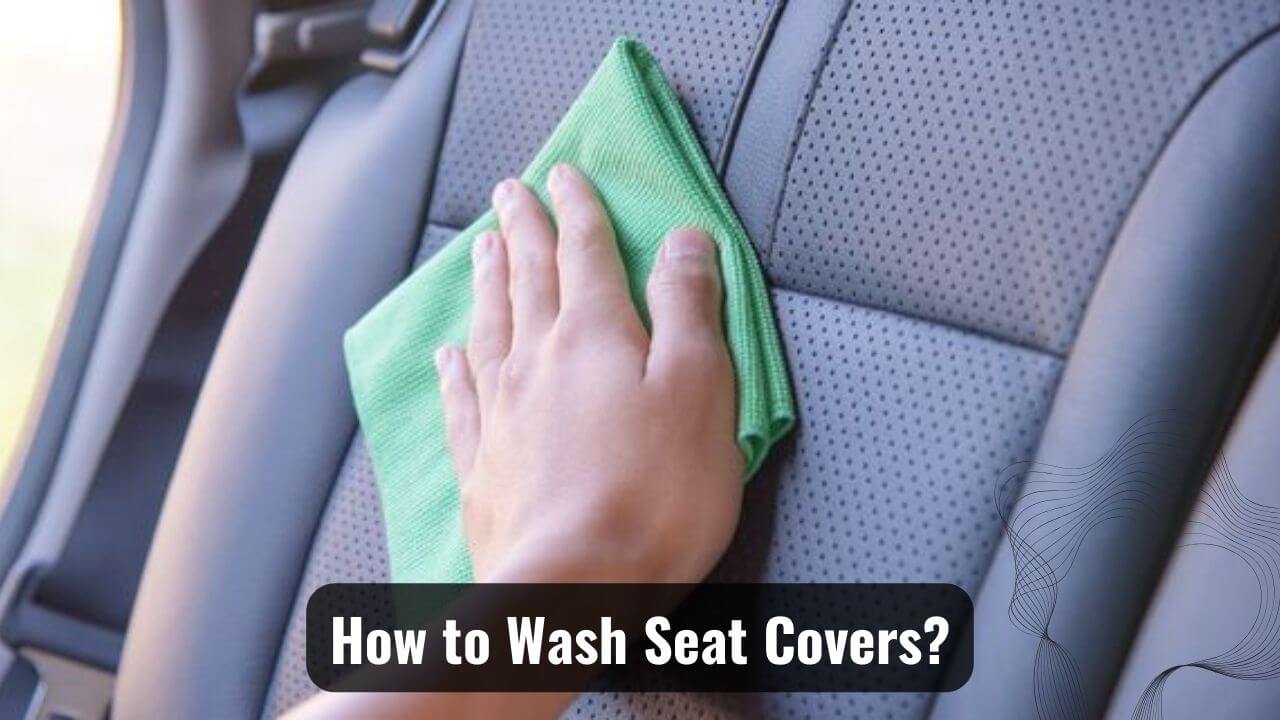
Quick Checklist Before Your Child Rides Again
Before putting the cleaned seat back into service, confirm:
- The cover is completely dry
- The cover matches the exact seat model
- All loops, hooks, and fasteners are secured
- Harness straps are flat and correctly routed
- The buckle clicks and releases as designed
- No foam or padding is missing
- No cleaner residue remains
- The seat is installed according to the manual
- The child fits within the seat’s current limits
- No coat, blanket, cushion, or insert is under the harness unless approved
If any part fails this checklist, do not use the seat until the issue is corrected.
Frequently Asked Questions
Can I put a car seat cover in the dryer?
Usually, air-drying is safer. Use a dryer only if the manual specifically allows it and gives a heat setting. High heat may shrink the cover or damage elastic.
Can I wash a Graco, Britax, Chicco, or Evenflo car seat cover?
Many models from these brands have removable, washable covers, but instructions vary by model. Check the exact manual rather than relying on the brand name alone.
Can I use Lysol or disinfectant spray on a car seat cover?
Do not use disinfectant spray unless the manufacturer approves it. Strong chemicals may damage fabric, webbing, foam, or fire-resistant treatments.
Can I wash a car seat cover with regular laundry detergent?
Use only the detergent type allowed by the manual. When the instructions are unclear, mild detergent without bleach, fabric softener, or strong additives is the safer choice, but contacting the manufacturer is best.
How do I clean a car seat after a child vomits?
Remove and wash the cover according to the manual. Spot-clean the harness only as directed, and inspect the buckle for residue. Contact the manufacturer if fluid entered the buckle or soaked deeply into the harness.
Can I use a towel under my child’s car seat?
Do not place a towel, blanket, cushion, or other material under the seat unless the car seat manufacturer approves it. Added material can affect installation and stability.
Final Answer
You can usually wash a removable child car seat cover, but only according to the instructions for the exact model. Use mild soap, gentle washing, and air-drying unless the manual says otherwise. Keep the harness, buckle, foam, and shell out of the washing machine unless the manufacturer gives specific permission.
Before the next ride, make sure the cover is dry, correctly installed, and not interfering with the harness or buckle. When in doubt, contact the manufacturer or seek help from a certified Child Passenger Safety Technician.