
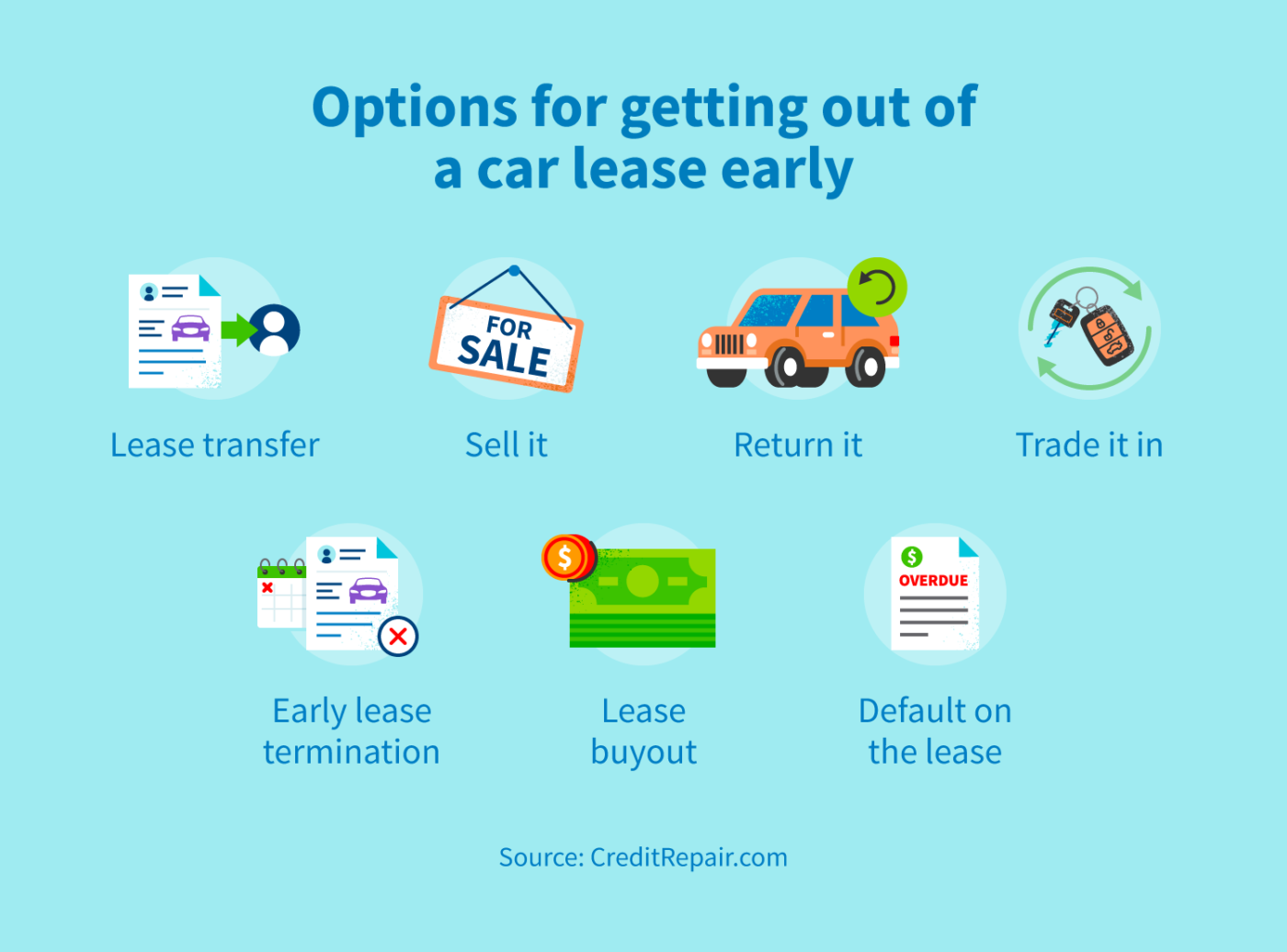
Leaving a car lease early in the United States can be costly, but you have several possible paths. You may be able to transfer the lease, buy the car, trade it in, negotiate an early return, or wait until the lease ends. The best choice depends on your contract, the car’s value, your remaining payments, mileage, and the rules of the leasing company.
Start by asking the leasing company for an official early-termination quote. Do not rely on a dealer’s estimate alone. Your contract and the leasing company’s written payoff figures control the amount you owe.
What does it mean to get out of a car lease?
Getting out of a car lease means ending your legal obligation before the scheduled lease-end date. A lease is not the same as a loan. You usually do not own the vehicle, so you cannot simply sell it without following the leasing company’s rules.
Most car leases have an early-termination section. It may explain:


- The remaining payments
- An early-termination fee
- The car’s estimated value
- A disposition fee
- Mileage charges
- Wear-and-use charges
- Taxes and government fees
- Any unpaid late fees or other costs
Federal law requires many consumer leases to disclose key costs, including early-termination terms. The Consumer Financial Protection Bureau and the Federal Trade Commission offer general information about vehicle financing and leasing.
Your lease contract may use terms such as:
- Lessor: The company that owns the vehicle and leases it to you.
- Lessee: You, the person using the vehicle and making the payments.
- Residual value: The vehicle’s estimated value at the end of the lease.
- Capitalized cost: The agreed value used to calculate the lease payment.
- Payoff or buyout amount: The amount needed to purchase or otherwise settle the lease.
- Disposition fee: A fee that may apply when you return the vehicle at lease end.
- Early-termination charge: The amount charged when you end the lease before its scheduled date.
A lease is a contract. Stopping payments or leaving the car at a dealership does not cancel that contract.
1. Ask the leasing company for an early-termination quote
The first step is to contact the company named on your lease statement. Ask for a written quote that shows the full cost of ending the lease on a specific date.
Ask these questions:
- What is my exact early-termination amount?
- Does the quote include all remaining payments?
- Is there an early-termination fee?
- Will I owe a disposition fee?
- How will you calculate mileage and excess wear?
- Are taxes, registration fees, or other charges included?
- Can I return the vehicle to a dealer?
- Can another person assume the lease?
- Can I buy the car now?
- How long is the quote valid?
The quote may change each day because it can include unpaid charges, interest, taxes, or a changing payoff amount. Save the quote and ask how the company will confirm that your account is closed.
Do not stop making payments while you investigate. Until the leasing company confirms that your obligation has ended, missed payments can damage your credit and may lead to collection activity.
Why early termination can be expensive
A lease payment usually covers the vehicle’s expected depreciation, rent charge, taxes, and other costs during the lease term. If you return the car early, the leasing company may have to sell it sooner than planned.
The company may compare:
- The amount you still owe under the lease
- The vehicle’s current value
- The cost of selling or remarketing the vehicle
- Fees and unpaid charges


That difference can create a large bill. The exact formula depends on the lease contract and applicable law.
2. Transfer the lease to another driver
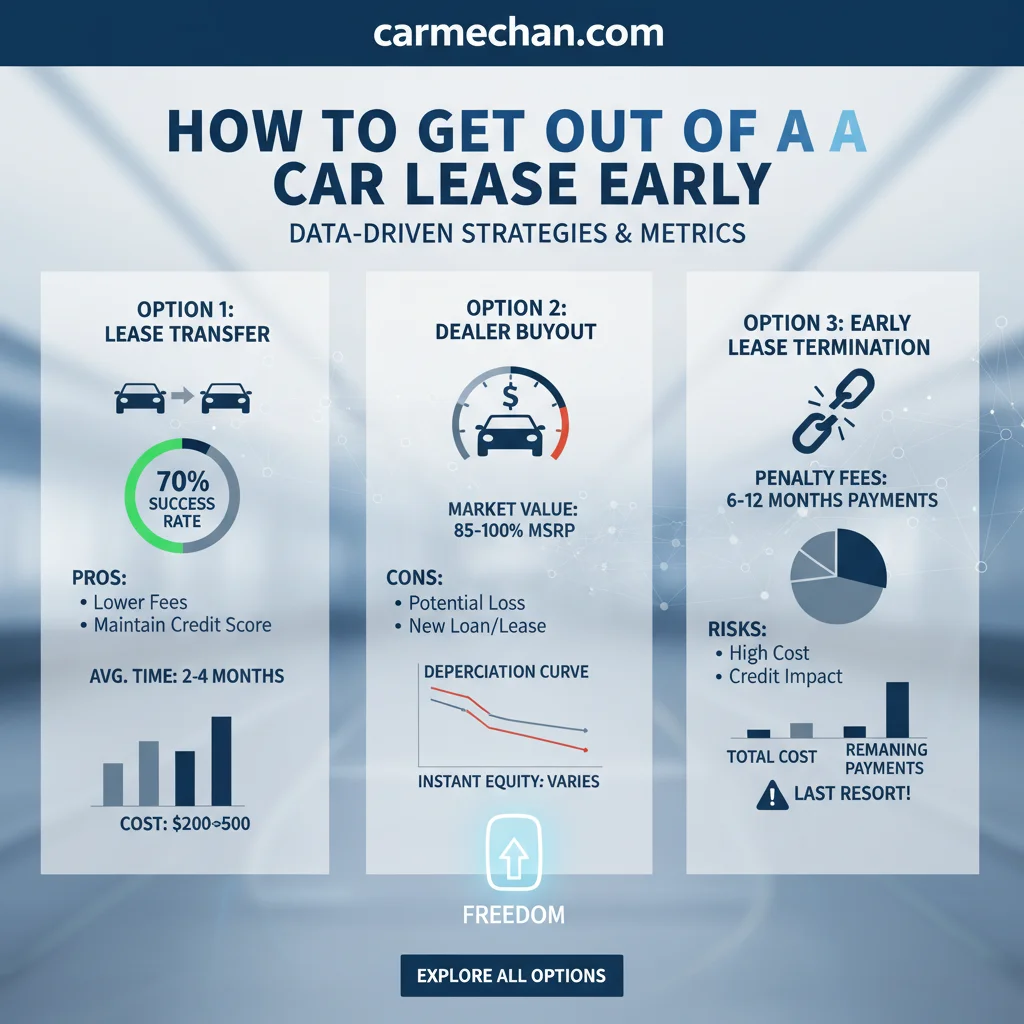
A lease transfer, also called a lease assumption, lets another qualified person take over the remaining payments. This can be one of the least expensive ways to leave a lease, but it is not available for every contract.
The leasing company must approve the new driver. It may review the person’s:
- Credit history
- Income
- Debt
- Insurance
- Driver’s license
- State of residence
You may also pay a transfer or administrative fee. Some lease contracts require you to remain responsible if the new driver fails to pay or damages the vehicle. Read the transfer agreement carefully.
Steps for a lease transfer
- Check your contract for an assignment or assumption clause.
- Call the leasing company and confirm whether transfers are allowed.
- Ask whether you remain liable after the transfer.
- Confirm all transfer fees and required documents.
- Find a qualified replacement driver.
- Submit the application through the leasing company.
- Wait for written approval.
- Keep copies of the signed transfer documents.
Some online lease-transfer marketplaces help match drivers. They do not replace the leasing company’s approval. A listing on a website does not prove that the transfer will be accepted.
A transfer may be difficult if only a few months remain, the payment is high, or the car has substantial mileage. You may need to offer an incentive, such as paying the transfer fee or making a cash contribution. Put any agreement in writing.
3. Buy the car and sell it or keep it
Many leases include a purchase option. You may buy the car before the lease ends, although the exact price can differ from the scheduled end-of-lease residual value.
Ask the leasing company for a current purchase-option quote. It may include:
- The purchase price
- Remaining lease charges
- A purchase-option fee
- Sales tax
- Title and registration fees
- State or local fees
- Any unpaid balance
If you buy the vehicle, you become responsible for financing, insurance, repairs, registration, and resale.
When a lease buyout may make sense
A buyout may be worth considering when:
- The car’s market value is higher than the purchase quote.
- You want to keep the vehicle for several more years.
- You have exceeded the mileage allowance.
- The vehicle has condition issues that would create return charges.
- You can obtain affordable financing.
- You need to sell the vehicle and the transaction creates enough value to cover all costs.
For example, suppose the lease buyout quote is $24,000. Taxes and fees add $2,000, making the total $26,000. If dealers or private buyers would pay about $28,000, the apparent $2,000 difference may not be your actual profit.
Selling costs, registration, loan payoff timing, and taxes can reduce or eliminate it.

Get written purchase offers from several sources before deciding. A dealer’s trade-in estimate is not the same as a guaranteed purchase price.
Important restriction: who can buy the leased vehicle?
Some leasing companies allow only the lessee or an authorized dealer to purchase the car. Some may not allow a third-party buyer to buy the vehicle directly. Ask the leasing company before arranging a sale.
Never assume you can sell the car privately while the leasing company still holds title. Confirm the title process, payoff process, and required documents first.

4. Trade in the leased car
A dealer may offer to take your leased vehicle and put you into another car. This can be convenient, but it does not automatically make the lease disappear.
The dealer must determine:
- The amount needed to settle the lease
- The vehicle’s trade-in value
- Any positive or negative equity
- The price and financing terms of the replacement vehicle
How to calculate lease equity
Use this simple formula:
Estimated equity = vehicle offer − lease payoff amount
Example:
- Dealer’s purchase offer: $25,000
- Leasing company payoff: $27,000
- Estimated negative equity: $2,000
The $2,000 shortfall may be added to the next loan or lease. That raises the new vehicle’s cost, even if the dealer says the old lease was “paid off.”
A dealer may also use rebates, a larger down payment, or a longer loan term to make the new payment look affordable. Compare the total amount financed and total cost, not just the monthly payment.
Ask for these figures in writing:
- Vehicle selling price
- Trade-in value
- Lease payoff
- Negative or positive equity
- Taxes and fees
- Cash due at signing
- Annual percentage rate
- Loan term
- Total amount financed
Trading in a lease can be practical when the vehicle has positive equity or when the leasing company and dealer offer a favorable settlement. It is risky when negative equity is rolled into a new contract.

5. Return the car early through the leasing company
You can usually return a leased vehicle before the scheduled date, but an early return is not normally free. The leasing company may charge an early-termination amount based on the contract.
This option may be useful if you can no longer afford the car and other choices are not available. Before returning it, compare the early-termination quote with the cost of:


- A lease transfer
- A buyout
- A dealer trade
- Keeping the vehicle until lease end
Ask whether the company offers hardship assistance, payment relief, or another approved solution. Do not assume that a hardship request changes the contract unless the company confirms it in writing.
Before the inspection or return:
- Remove personal items.
- Remove toll tags and parking passes.
- Gather both keys and all equipment.
- Check the tire condition.
- Repair only damage that is likely to cost less than the charge.
- Photograph each side of the vehicle, the interior, wheels, glass, and odometer.
- Record the date and mileage.
- Use the approved return location.
- Get a signed receipt showing the vehicle was returned.
A vehicle return receipt proves delivery. It does not always prove that you owe nothing. Wait for the final account statement and dispute errors promptly.

6. Wait until the lease ends
If the lease is close to its scheduled end, waiting may cost less than ending it early. At lease end, you typically choose among the options listed in your contract:
- Return the vehicle
- Buy the vehicle
- Replace it with another vehicle
- Request a lease extension, if available
You may still owe a disposition fee, excess mileage charges, and excess wear charges. Your contract should explain the mileage allowance and the company’s standards.
Before the end date, ask for a pre-return inspection if the leasing company offers one. This may identify damage before you return the vehicle. It does not guarantee that the final bill will match the inspection.
Check:
- Odometer mileage
- Tires and wheels
- Windshield and windows
- Bumpers and body panels
- Missing equipment
- Mechanical warning lights
- Interior stains, burns, and tears
Do not make expensive repairs without comparing the repair price with the leasing company’s charge. A repair may not reduce the charge dollar for dollar.

Which option is cheapest?
There is no universal cheapest option. Use the same calculation for each path.
| Option | Main cost to compare | Often fits |
|---|---|---|
| Lease transfer | Transfer fee and any incentive | A driver who wants to leave with several months remaining |
| Buyout and keep | Purchase quote, taxes, and financing | Someone who likes the car and wants to own it |
| Buyout and sell | Purchase cost compared with a real buyer offer | A vehicle with positive equity |
| Dealer trade | Payoff minus trade value | Someone replacing the vehicle who has manageable equity |
| Early return | Early-termination quote and return charges | Someone who needs to exit quickly |
| Wait for lease end | Remaining payments plus end fees | A lease that is nearly finished |
A practical comparison formula
Calculate the total cost from today, not just the next monthly payment.
For each option, include:
- Payments still due
- Taxes
- Transfer or termination fees
- Mileage charges
- Wear charges
- Purchase fees
- Registration fees
- Financing costs
- Dealer incentives
- Cash you must pay now
The best option is usually the one with the lowest total cost that you can complete legally and safely.

What not to do when ending a lease
Avoid these common mistakes:


Stopping payments
This does not cancel the lease. It can lead to late fees, credit reporting, collections, repossession, and a deficiency balance.
Voluntarily surrendering the car without a written settlement
Giving the vehicle back may still leave you owing money after the leasing company sells it. A voluntary surrender can also harm your credit.
Focusing only on the monthly payment
A lower payment can hide a longer loan, a larger amount financed, or negative equity from the old lease.
Assuming the dealer owns the car
The leasing company usually owns the vehicle. The dealer cannot change your lease terms without the lessor’s approval.
Paying for an unapproved lease transfer
A private agreement with another driver may not release you from the contract. Use the leasing company’s formal process.
Ignoring insurance
Keep required insurance until the leasing company confirms that your responsibility has ended. Canceling coverage too soon can violate the contract and state law.

Can you get out of a car lease because of financial hardship?
Financial hardship does not usually cancel a lease automatically. However, the leasing company may offer temporary relief, a payment plan, a transfer, or another option.
Contact the company before missing a payment. Explain the problem and ask for the available programs in writing. Keep records of:
- The date and time of each call
- The representative’s name
- Promised actions
- Payment amounts
- Due dates
- Written notices
If the company gives unclear or conflicting information, request a supervisor or written account history. You can also review consumer resources from the CFPB and your state attorney general.
For a large disputed balance, possible fraud, bankruptcy, or a serious contract dispute, speak with a consumer-law attorney or a qualified nonprofit credit counselor. State law can change the rights and remedies available to you.

Frequently asked questions
Can I return a leased car to any dealership?
Not always. Your lease may name approved return locations or require you to use a dealer in a specific network. Ask the leasing company before returning the vehicle.
Does someone else taking over my lease remove my name?
Only if the leasing company releases you in writing. Some contracts keep the original lessee responsible after a transfer.
Can I sell a leased car to CarMax or another dealer?
Possibly, but the leasing company controls the payoff and title. Some lessors restrict third-party purchases. Get the current rules and payoff quote before accepting an offer.
Will ending a lease early hurt my credit?
It may not hurt your credit if you fully satisfy the contract and pay on time. Missed payments, collections, repossession, and an unpaid deficiency can harm your credit.


Are early lease termination fees negotiable?
Sometimes, but there is no general right to have them waived. Ask about a transfer, hardship program, goodwill adjustment, or other approved option. Get any agreement in writing.
Conclusion: choose the exit with the lowest total cost
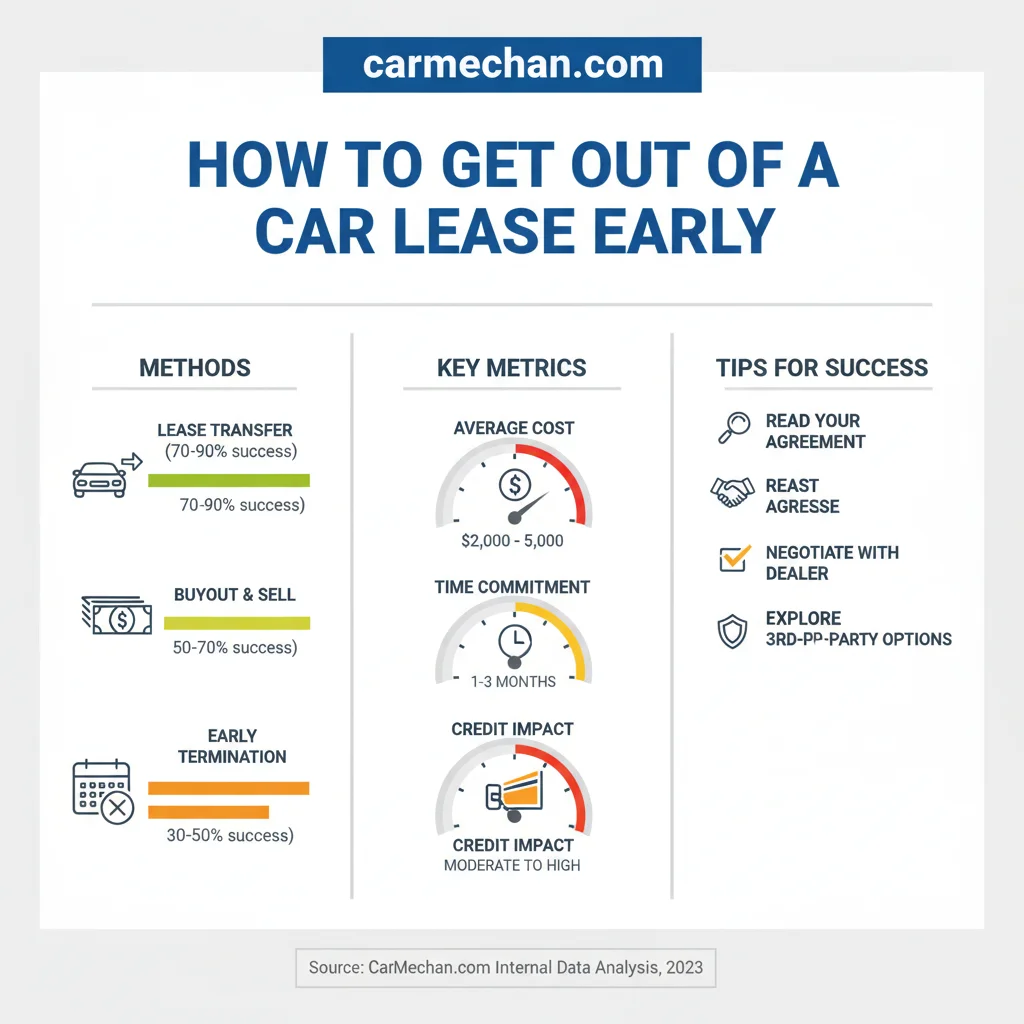
To get out of a car lease, first obtain the leasing company’s written payoff and early-termination figures. Then compare a lease transfer, buyout, trade-in, early return, and waiting until lease end.
The safest process is simple: keep making payments, confirm every number in writing, protect your insurance, and do not sign a replacement deal until you understand the total cost. If the amount is large or the contract is disputed, get advice from a qualified consumer-law professional before acting.